Nebraska Crappie Daily Limit
There's nothing quite as frustrating as landing a beautiful stringer of crappie, only to second-guess whether you've remembered the daily limit correctly, risking a penalty. It’s a common worry that can cast a shadow over an otherwise perfect day on the water. This comprehensive guide is here to clear up all the confusion around the Nebraska crappie daily limit, helping you fish confidently and responsibly.
Understanding the Nebraska Crappie Daily Limit
Navigating fishing regulations can feel like deciphering a complex code sometimes, but when it comes to crappie in Nebraska, understanding the limits is crucial for every angler. The Nebraska Game and Parks Commission sets these rules to ensure healthy fish populations and fair fishing opportunities for everyone.
Statewide Crappie Bag Limit
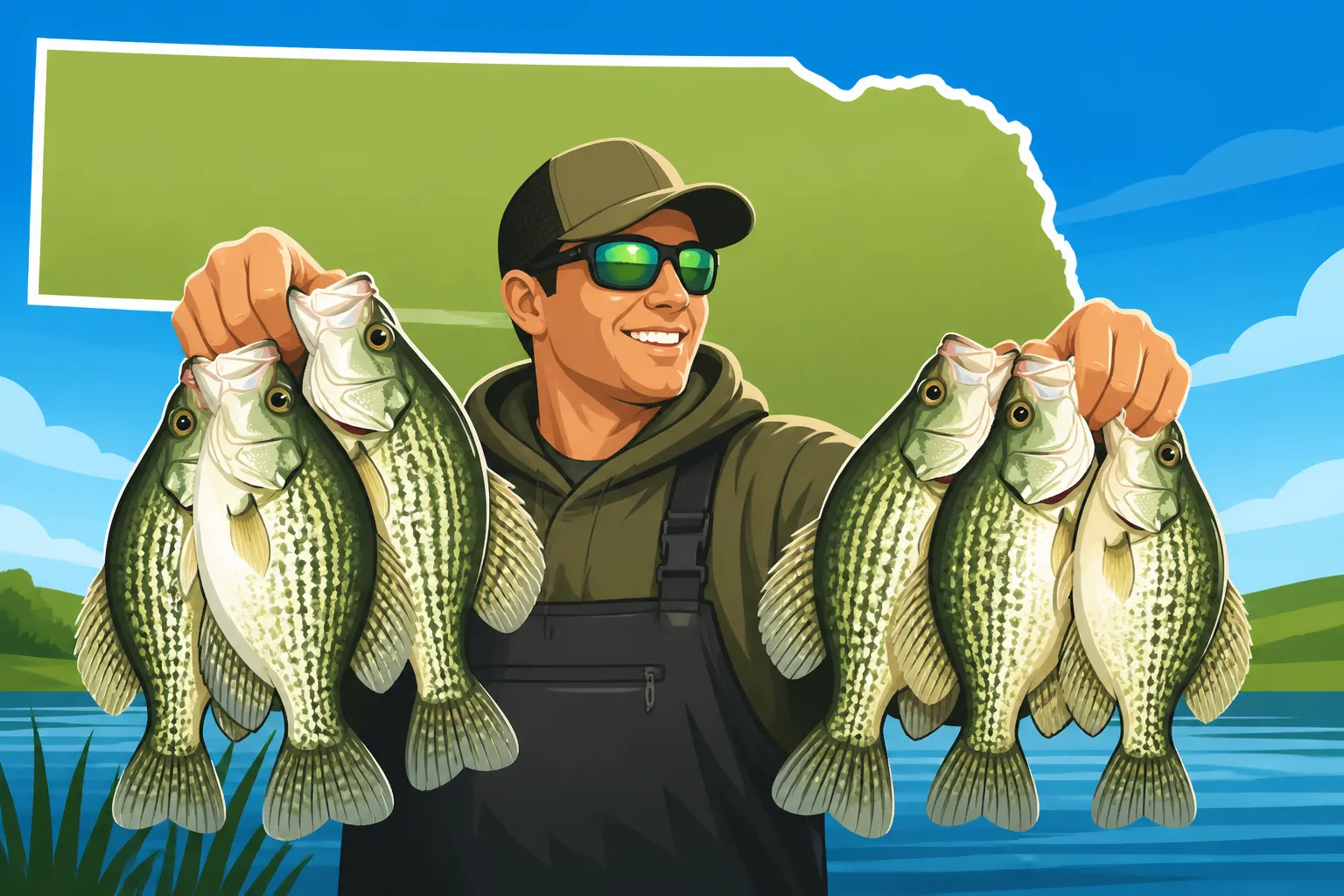
For most waters across the great state of Nebraska, the general rule of thumb for crappie is a daily bag limit of 15 fish. This means that in any 24-hour period, from midnight to midnight, you are allowed to harvest and keep up to 15 crappie. This applies to both black crappie and white crappie, as they are often grouped together under the general crappie regulation. It’s a pretty straightforward number, but the nuance often comes in remembering what counts towards that daily limit and what happens if you’re fishing multiple days or at special locations. Think of it like this: if you head out at sunrise to your favorite cove and have a banner day, once you've kept 15, it's time to switch to catch-and-release or head home.
It's also important to distinguish the daily bag limit from the possession limit. While your daily bag is 15, the statewide possession limit for crappie is 30 fish. The possession limit refers to the total number of crappie an individual may have in their possession, whether that’s in a cooler on your boat, back at your campsite, or stored in your freezer at home. This is especially important for anglers planning multi-day trips. If you catch 15 crappie on day one, you can keep them. If you then go out on day two, you can catch another 15. Now you have 30 crappie, which meets your possession limit. On day three, you would need to consume or process some of your fish before you could legally keep more, even if you’re still within a daily limit for that particular day. It's a system designed to prevent overharvesting over extended periods. For more in-depth details on how this works for all species, you can check out the guide on Nebraska Fishing Daily Bag and Possession Limits.
Special Regulations at Specific Waterbodies
While the 15-crappie daily limit is the standard across much of Nebraska, it’s absolutely critical to understand that certain lakes, reservoirs, or even stretches of river might have their own unique, special regulations. These are put in place by the Nebraska Game and Parks Commission for very specific reasons, often to manage a particular fishery that might be struggling, is overpopulated, or needs protection to grow larger fish.
For example, a lake might have a more restrictive daily limit, perhaps only 10 crappie, or even a length limit, meaning crappie under a certain size (e.g., 9 inches) must be released, or perhaps only crappie within a certain slot (e.g., 9-12 inches) can be kept. These variations are less common for crappie than for some other species like walleye or bass, but they do exist, and it’s up to every angler to know the specific rules for the water they are fishing. A perfect example of where you might find such specific rules could be popular spots like Branched Oak Lake or even smaller community ponds that are heavily fished. Always consult the most current Nebraska Fishing Guide, available online or at permit vendors, before you head out. Don't rely solely on what you remember from last season, as regulations can change! You can find a lot of information in the official Where to Find the Nebraska Fishing Regulations Booklet.
Why Crappie Limits Exist
It’s easy to look at a regulation and just see a restriction on your fun, but every single fishing limit, especially for popular panfish like crappie, is in place for very important ecological and recreational reasons. These aren't just arbitrary numbers; they're carefully calculated to ensure the future of fishing in Nebraska.
Protecting Crappie Populations for the Future
One of the primary reasons for daily limits is to protect the overall health and sustainability of crappie populations. Crappie are prolific breeders, but they can also be very susceptible to overharvesting, especially in smaller lakes or ponds. Imagine if there were no limits – a few anglers with great luck could quickly deplete a substantial portion of the crappie population in a given water body. This isn't just bad for next week's fishing trip; it can have long-lasting, negative impacts on the entire ecosystem.
Limits help prevent this by spreading the harvest among more anglers over time. They allow enough crappie to survive and reproduce, ensuring that there will be plenty of fish for future generations. This is particularly true for larger, older crappie, which are vital for strong spawning efforts. Without limits, we'd quickly see a decline in both the number and size of crappie available, turning once-great fishing spots into barren waters. The Nebraska Game and Parks Commission constantly monitors fish health and angler pressure to adjust these limits as needed, all with the goal of long-term sustainability. It’s all part of the broader strategy covered in Nebraska Fishing Regulations Explained.
Ensuring Fair Access for All Anglers
Beyond the biological necessities, daily limits also play a crucial role in the social aspect of fishing. They promote fairness among all anglers. Nobody wants to show up at their favorite fishing hole only to find that someone else has taken every fish in sight. Limits ensure that the resource is shared more equitably.
Consider a busy weekend at a popular spot like Pawnee Lake. If one angler could keep 50 crappie, that would dramatically reduce the chances for others, especially families or new anglers, to catch anything. By setting a reasonable daily limit, everyone has a better chance of going home with a respectable catch. It encourages a "take what you need, leave some for others" mentality, fostering a sense of community and shared responsibility on our waters. This spirit of community is vital for keeping our traditions alive and ensuring that everyone gets a shot at a great fishing experience.
Practicalities of Following the Rules
Knowing the rules is one thing, but actually implementing them while you're out on the water is another. Sometimes it's the little details that trip us up, especially when the fish are biting fast and furious!
Counting Your Catch and Possession Limits
This is where organization really comes in handy. When you’re fishing for crappie, especially if you’re catching a lot, it’s easy to lose track. A simple tip is to keep a mental count, but even better, consider using a clicker counter, often available at tackle shops or even on Amazon, to keep an accurate tally as you put fish in your livewell or cooler. This helps you avoid an accidental overharvest.
Remember the distinction we talked about earlier:
- Daily Bag Limit: The number of fish you can legally keep within a single 24-hour period (midnight to midnight). For crappie, this is generally 15.
- Possession Limit: The total number of fish you can have in your possession at any given time, regardless of when they were caught. For crappie, this is generally 30.
So, if you're on a multi-day trip, say camping near Lake McConaughy, you can catch 15 crappie on Saturday, and those count towards your Saturday daily limit and your overall possession limit. If you catch another 15 crappie on Sunday, you now have 30 crappie total, hitting your possession limit. You cannot keep any more crappie until some of those fish have been eaten or processed and are no longer "in your possession." Game wardens are very serious about these limits, and ignorance is rarely an excuse.
What to Do If You Exceed the Limit
Okay, let's be honest, sometimes mistakes happen. Maybe you miscounted, or perhaps you genuinely didn't know about a specific lake's special regulation until it was too late. While unintentional, exceeding the limit is still a violation, and the penalties can range from warnings and fines to confiscation of your catch and even your fishing equipment in serious cases. The specific consequences for infractions like these are outlined in Nebraska Fishing Violation Penalties.
If you realize you’ve accidentally gone over the limit while still on the water, the best course of action is to immediately cease fishing for that species and, if possible, release any excess fish before you leave the water. Be aware that returning fish to the water after they have been kept in a livewell or cooler for a long time might not be successful, especially in warm weather, so responsible handling and timely release are crucial. However, it's always better to attempt a release than to knowingly transport an illegal number of fish. The absolute best strategy, though, is prevention: know the rules for your chosen fishing spot before you even cast your first line. Having a current copy of the Nebraska Fishing Guide, perhaps even a digital version on your phone, is like having an insurance policy against accidental violations.
Tips for Responsible Crappie Fishing
Beyond just staying within the legal limits, being a responsible angler means practicing good stewardship of our natural resources. This includes how we handle the fish we don't keep and how we identify our catch.
Catch and Release Best Practices
Even when you're targeting crappie for a delicious meal, there will inevitably be fish you catch that you don't intend to keep. Perhaps they're too small, or maybe you've already filled your daily limit. Practicing proper catch and release techniques ensures those fish swim away healthy to be caught another day.
Here are a few pointers:
- Handle with Care: Minimize the time the fish is out of the water. If possible, keep the fish in the water while unhooking it.
- Wet Hands: Always wet your hands before touching a fish. Dry hands can remove the protective slime coat, making the fish susceptible to disease.
- Support the Fish: Support the fish horizontally, especially larger ones, to avoid damaging internal organs or its jaw.
- Quick Release: Use needle-nose pliers or a de-hooking tool (a great addition to any tackle box, easily found on Amazon) to quickly remove hooks. If a fish is deeply hooked, it's often better to cut the line as close to the hook as possible rather than tearing sensitive tissue trying to remove it.
- Revive if Necessary: If a fish seems sluggish, hold it gently in the water, facing into a mild current, until it can swim away on its own.
Responsible catch and release is a cornerstone of conservation and helps maintain vibrant crappie populations. You can learn more about this in our guide on Catch and Release Best Practices in Nebraska.
Identifying Crappie Species Black vs. White
Nebraska is home to both black crappie and white crappie, and while the daily limit is generally the same for both, it's good practice to know the difference. Sometimes, specific local regulations might distinguish between them, or simply, it’s good to know what you’ve caught! They often share similar habitats and can be caught using similar techniques, like fishing around brush piles, as discussed in How to Catch Crappie Around Brush Piles.
Here’s a quick rundown of their main differences:
| Feature | Black Crappie | White Crappie |
|---|---|---|
| Color Pattern | Irregular, scattered black speckles/spots | Vertical bars or rows of spots |
| Dorsal Spines | 7-8 dorsal fin spines | 5-6 dorsal fin spines |
| Body Shape | More rounded, disc-like body | More elongated body |
| Mouth | Upper jaw extends to middle of eye | Upper jaw extends to front of eye |
| Habitat | Prefers clearer, cooler water, more vegetation | Tolerates murkier, warmer water, less vegetation |
While these differences can be subtle, especially for smaller fish, observing the dorsal fin spines is usually the most reliable way to differentiate between them. Again, for the purpose of the Nebraska crappie daily limit, they are typically counted together, but knowing your species adds to your angling expertise! For a more detailed look, check out Nebraska Black Crappie vs White Crappie.
Knowing the specific regulations and practicing ethical angling ensures that our crappie fisheries remain strong and enjoyable for everyone. Happy fishing, and may your stringers be full, but always within the limit!
Nebraska Crappie Limits Summary Table
Here's a quick overview of the current crappie daily bag and possession limits in Nebraska, always keeping in mind that local rules can vary:
| Regulation Type | Limit (Number of Fish) | Notes |
|---|---|---|
| Statewide Daily Bag | 15 | Max number of crappie you can keep in one calendar day (midnight to midnight). Applies to black and white crappie. |
| Statewide Possession | 30 | Total number of crappie you can have in your possession at any time (boat, cooler, home freezer). |
| Specific Waterbodies | Varies | Some lakes/reservoirs may have reduced bag limits or length limits. Always check local regulations. |
Remember, this table is a summary. Always refer to the most current Nebraska Fishing Guide for the definitive rules for the specific water you plan to fish.
Disclaimer
The information provided in this guide is intended for general informational purposes only and is subject to change. While we strive to provide accurate and up-to-date content, fishing regulations are regularly updated by the Nebraska Game and Parks Commission. It is the sole responsibility of each angler to consult the official Nebraska Fishing Guide and specific local signage before engaging in any fishing activity to ensure compliance with all current laws and regulations.