Branched Oak Lake Striped Bass Fishing Tips
Alright, let's talk about Branched Oak Lake! It can be incredibly frustrating when you hear whispers about awesome striped bass fishing at a place like Branched Oak, but then you show up and feel completely lost. These hard-fighting fish are notoriously tricky, always moving, and figuring out their patterns requires local knowledge and some dedicated effort. This guide is here to break down exactly how to approach Branched Oak Lake for striped bass, from the gear you need to the best spots and tactics for every season.
Understanding Branched Oak Lake's Unique Striped Bass Fishery
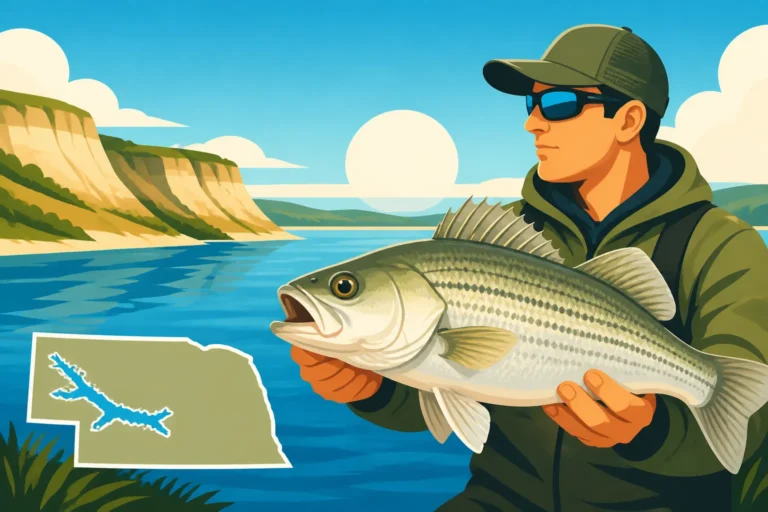
Branched Oak Lake, located just northeast of Lincoln, is a real gem in the Nebraska fishing scene, and it's especially known for its fantastic striped bass population. Unlike some other species, stripers aren't native to Nebraska, so their presence here is thanks to the diligent stocking efforts by the Nebraska Game and Parks Commission. But it's not just the stocking that makes Branched Oak special; it's a perfect storm of conditions that allow these fish to thrive and grow to impressive sizes.
Why Branched Oak is a Striped Bass Hotspot
The secret to Branched Oak's thriving striped bass population lies primarily in its ample forage base and suitable habitat. The lake is absolutely loaded with gizzard shad, which are like candy to striped bass. These schooling baitfish provide a constant, high-energy food source, allowing the stripers to pack on weight quickly and reach those exciting trophy sizes. Without this abundant food, the stripers wouldn't be nearly as healthy or numerous.
Beyond the food, Branched Oak offers a diverse underwater landscape that stripers appreciate. You'll find a good mix of open water, submerged creek channels, points, humps, and even some standing timber in deeper sections. This variety gives the striped bass plenty of places to ambush prey, escape the summer heat, or chase shad schools. The lake's size, at over 1,800 acres, also means there's plenty of room for these pelagic fish to roam and for anglers to find their own piece of water. The strategic stocking programs ensure a continuous supply of young stripers, maintaining a robust population year after year.
Striped Bass Behavior in Branched Oak
Understanding how striped bass behave throughout the year is your first step to consistent success. These aren't your typical ambush predators; stripers are highly migratory and often school up, constantly chasing bait. Their behavior is heavily influenced by water temperature, available forage, and light conditions. In spring, as water temperatures rise, stripers become more active and will move into shallower areas to feed aggressively after the colder months. You'll often find them cruising points and flats where baitfish are congregating.
As summer heats up, the stripers will generally retreat to deeper, cooler waters, often suspending over creek channels or near the thermocline if one forms. This is when their movements can be a bit more predictable, as they're seeking comfort and oxygen. During this time, they might feed heavily during dawn, dusk, or even at night. Fall is often considered a prime time to target Branched Oak stripers. As the water cools, the shad schools become more concentrated, and the stripers go on a serious feeding binge, trying to bulk up for winter. They can be found in a wide range of depths, often pushing bait against banks or over main lake points. Finally, in winter, while challenging, they can be caught in deeper basins, often schooled tight to the bottom, though this is a less common pursuit here compared to other seasons like summer or fall.
Essential Gear for Branched Oak Striped Bass
Having the right equipment can make all the difference when you're targeting striped bass at Branched Oak. These fish are powerful fighters, and if your gear isn't up to snuff, you'll be left with broken lines and tales of "the one that got away." Investing in quality tackle will not only increase your chances of landing a trophy but also enhance your overall fishing experience.
Rods, Reels, and Line Selection
For Branched Oak striped bass, you'll want a medium-heavy to heavy action spinning or baitcasting rod, typically in the 7 to 8-foot range. This length provides excellent casting distance for covering water and enough backbone to handle a powerful striper. A fast or moderate-fast action will give you sensitivity for detecting subtle bites while still providing plenty of power for hooksets. When it comes to reels, a 3000-5000 series spinning reel or a robust low-profile baitcasting reel (like a 200 or 300 size) is ideal. Make sure it has a smooth drag system, as these fish will make strong runs.
Line choice is critical. Most anglers opt for a braided main line, usually 20-40 pound test. Braid offers superior casting distance, sensitivity, and strength with a small diameter. Since braid is visible, tie on a fluorocarbon leader of 15-30 pound test. Fluorocarbon is nearly invisible underwater and offers excellent abrasion resistance against the fish's rough mouth or any submerged structure. Mono can also be used, especially for topwater presentations or certain trolling setups, but braid with a fluoro leader is often the most versatile setup for How to Catch Striped Bass and Wipers. If you're looking to upgrade your setup, our guide on Best Rods and Reels for Nebraska Fishing offers some excellent suggestions that would work well for these powerful fish.
Top Lures and Baits for Success
Striped bass are opportunistic feeders, so a variety of lures and baits can be effective. When it comes to artificials, deep-diving crankbaits are a staple, especially when trolling open water or along contours. Look for models that can reach depths of 10-25 feet and come in natural baitfish colors like shad, chrome, or bluegill patterns. Soft plastic swimbaits, rigged on weighted swimbait hooks or jig heads, are incredibly versatile. They can be cast and retrieved, slow-rolled, or even vertically jigged. Sizes from 4 to 7 inches are common.
Jerkbaits work wonders when stripers are suspended or feeding near the surface, mimicking injured baitfish. Spoons, both casting and jigging spoons, can be deadly when fish are schooling deep. Topwater lures like poppers, walking baits, and prop baits create a commotion that can draw stripers up from surprising depths, especially during low-light conditions. As for live bait, fresh gizzard shad are king. If you can net or cast-net your own, you'll have a significant advantage. Shiners, large minnows, or even cut bait can also entice a strike, particularly when fished on a slip-sinker rig near the bottom.
Critical Accessories for Striped Bass Anglers
Beyond your rod and reel, a few key accessories will make your Branched Oak striped bass fishing trips much more successful and enjoyable. First and foremost, a quality fish finder with sonar and GPS is almost non-negotiable for serious striper anglers. These devices allow you to locate schools of baitfish, identify striped bass holding in open water or near structure, and mark productive areas for future trips. Our guide to Best Fish Finders for Nebraska Lakes can help you choose the right one.
A large, rubberized landing net is essential for safely landing and handling powerful stripers. Avoid nets with knotty mesh, which can damage fins and remove protective slime from the fish. Long-nose pliers or a hook remover are also crucial for quickly and safely unhooking fish, especially if they've swallowed the bait. If you're fishing from a boat, make sure you have all the required safety equipment as outlined in the Nebraska Boat Safety Equipment Requirements. Lastly, a good cooler filled with ice is indispensable for keeping any harvested fish fresh, especially on hot summer days. Don't forget sun protection – a wide-brimmed hat, polarized sunglasses (to spot subtle underwater movements), and sunscreen are non-negotiable for long days on the water.
Proven Techniques for Catching Striped Bass at Branched Oak
Catching striped bass consistently at Branched Oak often requires a blend of searching, observation, and adapting your tactics. These fish are nomadic, meaning they're constantly on the move, chasing their food source. So, don't get too comfortable in one spot for too long unless you're actively seeing fish or getting bites.
Trolling and Open Water Strategies
Trolling is arguably one of the most effective ways to cover vast expanses of open water at Branched Oak and locate active striped bass. It allows you to present multiple lures at various depths simultaneously, greatly increasing your chances of intercepting a roaming school. Start by targeting main lake points, submerged humps, creek channels, and the edges of flats. Use a GPS to maintain a consistent speed, typically between 2.5 and 3.5 mph, though you'll want to experiment to find what the fish prefer on any given day.
Deep-diving crankbaits, swimbaits, and umbrella rigs are popular choices for trolling. Vary the depth of your lures by adjusting line length, using lead-core line, or employing downriggers if you have them. Planer boards can be incredibly useful for spreading out your lines and covering an even wider path, especially when fish are shallower or spooky. Pay close attention to your fish finder for bait balls or schools of stripers, then adjust your trolling path to run directly through or around them. If you're new to trolling, check out our guide on How to Troll for Walleye in Nebraska as many of the principles apply to stripers too.
Locating and Targeting Stripers with Electronics
Modern sonar technology is a game-changer for striped bass fishing. Your fish finder isn't just for depth; it's your window into the underwater world, helping you identify structure, baitfish, and the stripers themselves. Learn to interpret the screen. Baitfish will often appear as dense clouds or schools of dots, while striped bass will show up as larger, often elongated arches or thick lines, sometimes hovering just below or within the bait.
Use your side imaging or down imaging to scan wide areas for schools of fish or interesting underwater features like old roadbeds or submerged timber that might be holding bait. Once you mark fish, use your GPS to pinpoint their location and either troll through them, cast to them, or even vertically jig if they're holding tight to a specific piece of structure. Many anglers use the "trail of crumbs" approach on their sonar – if you see scattered bait or small fish, keep moving in that general direction until you find the mother lode of stripers. Remember, stripers are often found near their food, so finding the bait is often key to finding the stripers.
Shoreline and Bank Fishing Opportunities
While many anglers target Branched Oak stripers from a boat, don't discount the opportunities available to bank anglers, especially during certain times of the year. Spring and fall can offer excellent shore fishing as stripers move closer to the banks to chase shad. Focus on accessible points, riprap areas, and dam faces where deeper water is within casting distance or where current might concentrate bait.
Long casting rods are beneficial for reaching out to where the fish might be. Popular tactics include throwing large spoons, heavy jigs with swimbaits, or even live bait on a slip-sinker rig. Early mornings and late evenings are often the most productive times for bank anglers, as stripers might move into shallower water under low light conditions. The marina area, dam, and some of the more accessible points around the lake can be productive. While you won't cover as much water as a boater, a patient and observant bank angler can definitely connect with some impressive Branched Oak stripers. You might even consider using an online service like FishingBooker to find a local guide who specializes in shore-based striper fishing, to learn the best spots quickly.
Seasonal Breakdown for Branched Oak Striped Bass Fishing
Striped bass behavior at Branched Oak is highly seasonal, meaning your tactics need to adapt throughout the year. What works in spring won't necessarily be effective in summer, and vice-versa. Understanding these patterns is key to consistent success.
Spring: Pre-Spawn and Early Season Tactics
As the ice melts (if any was present) and water temperatures begin to climb into the 50s Fahrenheit, Branched Oak stripers become incredibly active. This is often called the "pre-spawn" period, though striped bass don't naturally spawn in Branched Oak; they simply become very active as their metabolism kicks into high gear after winter. They'll move out of their deeper winter haunts and follow baitfish into shallower coves, main lake points, and flats that warm up faster.
This is an excellent time for casting lures from shore or boat. Focus on areas receiving direct sunlight, especially on the northern banks, where water warms up quickest. Jerkbaits, medium-diving crankbaits, and soft plastic swimbaits retrieved with a steady pace can be very effective. Look for visual signs of activity, like nervous baitfish skipping on the surface. As the water approaches the mid-60s, post-spawn fatigue (from the general "spring run") might set in briefly, but they quickly recover and resume aggressive feeding. Check out our overall guide on Spring Fishing in Nebraska for more general tips that can apply to this season.
Summer: Deep Water and Night Fishing
When the brutal Nebraska summer heat arrives, pushing water temperatures into the 70s and 80s, Branched Oak stripers will seek refuge in deeper, cooler water. They'll often suspend over the old creek channels, near the dam, or around the deepest humps and points in the lake. This is when your fish finder becomes your best friend for locating these deep-water schools.
Trolling deep-diving crankbaits or umbrella rigs set to specific depths where fish are marked is a prime strategy. Vertical jigging spoons or heavy swimbaits can also be effective if you're marking a tight school directly below the boat. However, many experienced Branched Oak striper anglers swear by night fishing during the summer. Under the cover of darkness, stripers will often move shallower to feed aggressively, pushing shad to the surface or against shorelines. Casting topwater lures, large swimbaits, or even fishing live bait under lights can be incredibly productive after sunset. Remember to be extra cautious when boating at night and always have your Nebraska Boat Safety Equipment Requirements in order.
Fall: Feeding Frenzy and Preparation for Winter
Fall is often hailed as one of the most productive seasons for Branched Oak striped bass. As the lake water begins to cool down from its summer highs, the gizzard shad start to school up tightly, and the stripers go on an absolute feeding frenzy, trying to gorge themselves before winter sets in. This aggressive behavior makes them highly susceptible to a variety of tactics.
You'll find stripers chasing bait in open water, pushing them against shorelines, or hammering them over main lake points and humps. Look for birds diving, which is a dead giveaway that shad are being driven to the surface by feeding stripers. Trolling crankbaits, casting large spoons, or working soft plastic swimbaits are all excellent choices. Topwater action can also be spectacular during the early morning or late evening hours in fall. The fish are typically found in a wider range of depths, from shallow feeding flats to deeper channels, so being versatile with your presentations is key. Many anglers find Booking a FishingBooker guide during this time can greatly improve chances of a trophy catch. Our article on Fall Fishing in Nebraska provides more insights into the seasonal shifts.
Here's a quick overview of seasonal tactics:
| Season | Typical Water Temp | Primary Locations | Effective Techniques | Best Lures/Baits |
|---|---|---|---|---|
| Spring | 50s-60s°F | Shallow coves, points, flats, dam area | Casting, Trolling (medium depth) | Jerkbaits, Medium Crankbaits, Soft Swimbaits, Live Shad |
| Summer | 70s-80s°F | Deep channels, humps, thermocline, open water | Trolling (deep), Vertical Jigging, Night Casting | Deep Crankbaits, Umbrella Rigs, Spoons, Topwater (night), Live Shad |
| Fall | 60s-50s°F | Open water, points, humps, shorelines (bait balls) | Trolling, Casting, Surface Lures (active schools) | Spoons, Crankbaits, Large Swimbaits, Topwater, Live Shad |
Disclaimer
Fishing conditions, regulations, and fish behavior can change rapidly. Always consult the latest Nebraska Game and Parks Commission regulations before heading out. Safety should always be your top priority on the water.