How to Troll for Walleye in Nebraska
It's frustrating, isn't it? You spend hours on the water, driving around, casting, and reeling, but those elusive Nebraska walleye seem to have a knack for avoiding your bait. Covering vast stretches of water efficiently is the key to consistent walleye success, and that's precisely where trolling shines. This guide is your comprehensive roadmap to mastering the art of trolling for walleye across Nebraska's diverse lakes and reservoirs, helping you unlock more bites and bring home a healthier stringer.
Understanding Walleye Behavior for Trolling Success
Before you even think about dropping a line, understanding what makes walleye tick is paramount. These fish are creatures of habit, influenced heavily by the changing seasons and the underwater topography. Knowing where they're likely to be, and why, will save you countless hours of aimless cruising.
Seasonal Movements and Depths
Walleye are highly migratory, moving significantly throughout the year in response to water temperature, forage availability, and spawning instincts. In the spring, as ice melts and water temperatures hover in the low 40s to low 50s, walleye migrate to shallower areas, often gravelly or rocky flats and points, to spawn. This is a crucial time, and you'll often find them concentrated in 5-15 feet of water, making them prime targets for shallower trolling passes. As the post-spawn period arrives and water warms into the mid-50s and 60s, they often recuperate in slightly deeper water nearby before scattering.
Summer is when Nebraska's walleye typically move to deeper, cooler water. They'll relate to thermoclines (if present), deep humps, main lake points, and structural elements like old river channels or submerged roadbeds. Trolling depths can range from 20 to 40 feet or even deeper, depending on the lake and time of day. When fall arrives and water temperatures begin to drop again, walleye often transition back to shallower feeding grounds, mirroring some spring patterns but with a renewed aggressive feeding behavior as they pack on weight for winter. This is a fantastic time for active trolling, as they can be found from 10 to 30 feet, often chasing baitfish schools.
Preferred Structure and Habitat
Walleye are structure-oriented fish, always looking for ambush points or areas where baitfish congregate. When you're out on the water, whether it's the sprawling expanse of Lake McConaughy or a smaller reservoir like Branched Oak Lake, you need to be thinking about what lies beneath. Points that extend out into the lake, especially those with steep drop-offs or transition areas, are classic walleye holding spots. Humps – elevated areas on the lake bottom surrounded by deeper water – are also magnets for baitfish and, consequently, walleye.
Beyond points and humps, look for ledges where the depth changes abruptly, or the edges of old creek and river channels. These underwater highways provide travel corridors and feeding lanes for walleye. Flats, particularly those with scattered rock, gravel, or subtle depth changes, can also hold schools of feeding fish, especially during low-light conditions. Understanding how to interpret your sonar to identify these structures is vital. Mastering How to Read a Fish Finder for Walleye will give you a significant advantage, allowing you to effectively target these prime habitats and present your lures right where the fish are holding.
Essential Gear for Trolling Walleye in Nebraska
Trolling for walleye isn't just about throwing a lure out the back of the boat and hoping for the best. It's a precise method that requires the right tools to present your baits effectively and accurately. Having the appropriate rods, reels, line, and electronics can make all the difference in a successful day on the water.
Rods, Reels, and Line Selection
For serious walleye trolling, you'll want dedicated trolling rods. These are typically medium-heavy power rods with a moderate action, ranging from 7 to 9 feet in length. The longer length helps spread out your lines when running multiple rods and provides a softer tip to absorb the shock of a big walleye strike without pulling the hooks, while still offering enough backbone to handle a decent fish. Look for rods with durable guides and comfortable handles, especially if you're going to be holding them for extended periods or running them in rod holders.
Matching your rods with good line-counter reels is a game-changer. These reels allow you to precisely measure how much line you have out, which is critical for replicating successful trolling passes and hitting specific depths. Brands like Daiwa and Okuma offer excellent line-counter reels that are robust and reliable. As for line, many anglers prefer a 10-20 lb test braided mainline for its sensitivity and thin diameter, which helps lures run deeper. However, a fluorocarbon leader (10-15 lb test) is almost always recommended at the business end, providing invisibility to wary walleye and abrasion resistance. Some anglers still prefer monofilament for its stretch and shock absorption, particularly with certain crankbait presentations. You can find a wide array of options, from robust trolling rods to precise line-counter reels and various fishing lines, on platforms like Amazon, often with reviews to help you make an informed choice.
Trolling Motors and Electronics
A reliable trolling motor is not just a convenience; it's a necessity for effective walleye trolling. Precision speed control is paramount, especially when subtle changes in speed can trigger bites. Electric bow-mounted trolling motors, particularly those with GPS anchoring features (like Minn Kota's Spot-Lock or Lowrance's Ghost), allow you to maintain an exact speed and course, even in wind or current. This frees you up to focus on rod management and fish finding. The ability to creep along at 1.0-2.5 mph consistently is what often separates successful trollers from those just burning fuel.
Beyond simply moving the boat, your electronics package is your eyes and ears underwater. A quality fish finder with clear side imaging and down imaging capabilities is invaluable. It allows you to identify not only individual fish but also schools of baitfish, structural elements like humps, points, and ledges, and even submerged timber or brush piles where walleye might be hiding. Learning How to Read a Fish Finder for Walleye is a skill that will dramatically increase your trolling efficiency. Combine this with detailed lake mapping (Navionics, Humminbird LakeMaster, or Lowrance C-MAP are popular choices), and you can precisely navigate contours and mark waypoints on productive trolling passes. This allows you to return to productive stretches repeatedly, maximizing your time in the strike zone.
Mastering Trolling Techniques for Nebraska Walleye
Once you've got your gear sorted, it's time to dive into the specific techniques that make trolling so effective for Nebraska walleye. Different situations call for different presentations, and having a diverse toolkit will make you a more versatile and successful angler.
Crankbait Trolling Strategies
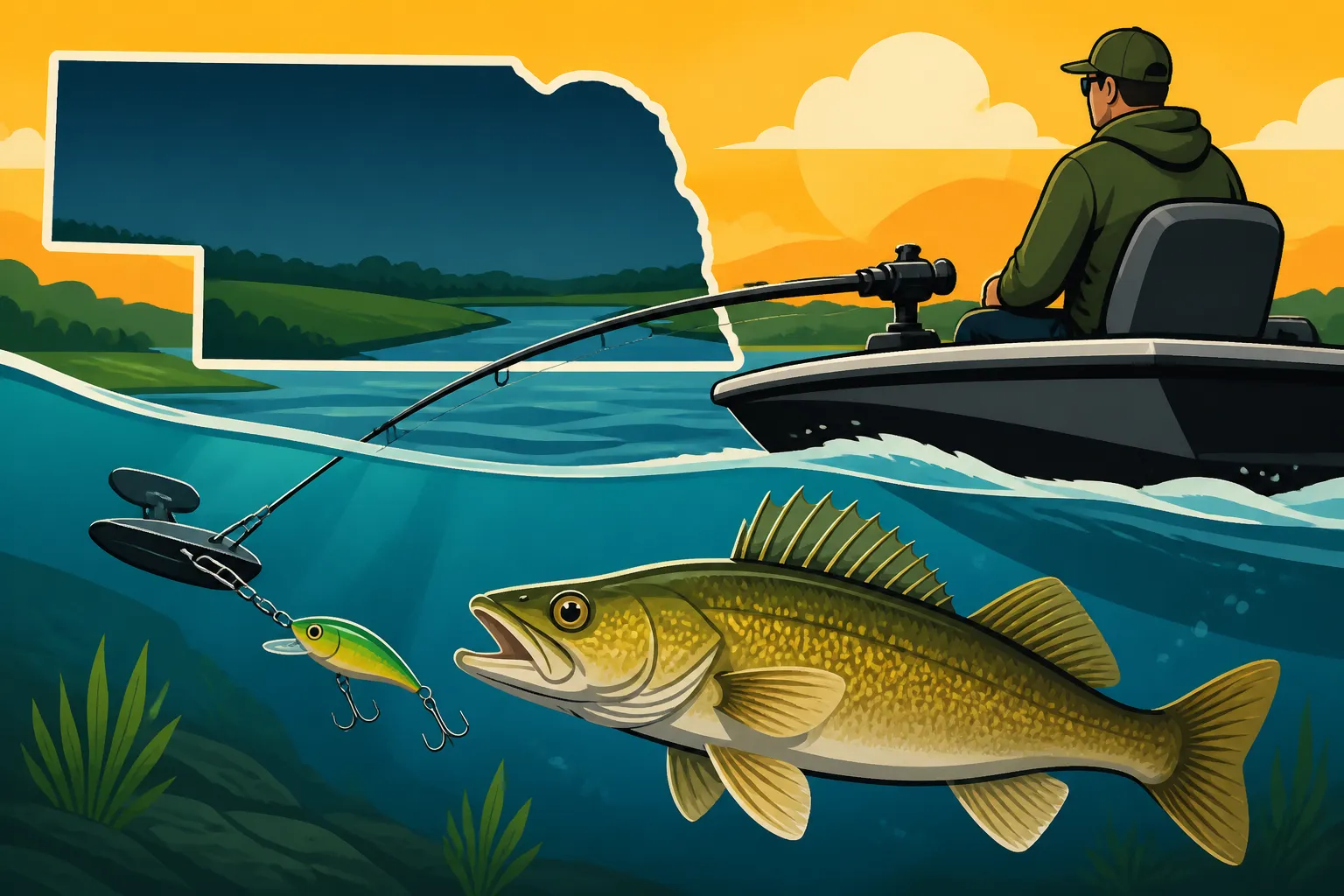
Crankbaits are arguably the most popular choice for trolling walleye, especially in Nebraska's large reservoirs. The key is matching your crankbait's dive depth to the depth where the walleye are holding. You'll need a selection of crankbaits that dive to various depths – shallow divers for spring and fall, medium divers for active fish over flats, and deep divers for summer walleye relating to thermoclines or main lake structure. Pay attention to dive curve charts provided by manufacturers; these indicate how deep a lure will run at a given speed with a certain amount of line out.
Color choice can be critical, and it often depends on water clarity and light conditions. Natural baitfish patterns (perch, shad, shiner) are usually a good starting point in clear water, while brighter colors (chartreuse, orange, firetiger) can be more effective in stained or turbid water or on cloudy days. Trolling speed is also crucial; typically, 1.5 to 2.5 mph is a good range for crankbaits, but don't be afraid to experiment with subtle speed changes – a slight acceleration or deceleration can often trigger a hesitant bite. For added depth and stealth, some anglers opt for leadcore line or snap weights to get their crankbaits deeper than they would naturally dive. For a deeper dive into lure selection, check out our guide on Best Bait for Nebraska Walleye.
Spinner Rigs and Bottom Bouncers
When walleye are holding tight to the bottom, especially over irregular terrain, spinner rigs presented on bottom bouncers are incredibly effective. A bottom bouncer is essentially a lead weight with a wire arm that keeps your bait just off the bottom, preventing snags while maintaining contact with the lakebed. The weight of the bottom bouncer should be chosen based on depth and trolling speed – typically 1/2 to 2 ounces, with heavier weights for deeper water or faster speeds. The goal is to keep the bouncer occasionally ticking the bottom without dragging excessively.
The spinner rig itself consists of a leader, beads, a clevis with a spinner blade, and one or two hooks. The spinner blade creates flash and vibration, attracting walleye. Blade styles (Colorado, Indiana, Willowleaf) and colors can be experimented with to find what's working. The most common bait for spinner rigs is a live nightcrawler, threaded onto the hooks, but a lively minnow or leech can also be deadly. Trolling speeds for spinner rigs are generally slower than for crankbaits, often in the 0.8 to 1.5 mph range, to give the live bait a natural action. This setup is particularly effective when walleye are spread out along contours or over large flats, as it allows you to cover ground while presenting a natural, enticing offering.
Planer Boards and Spreader Rigs
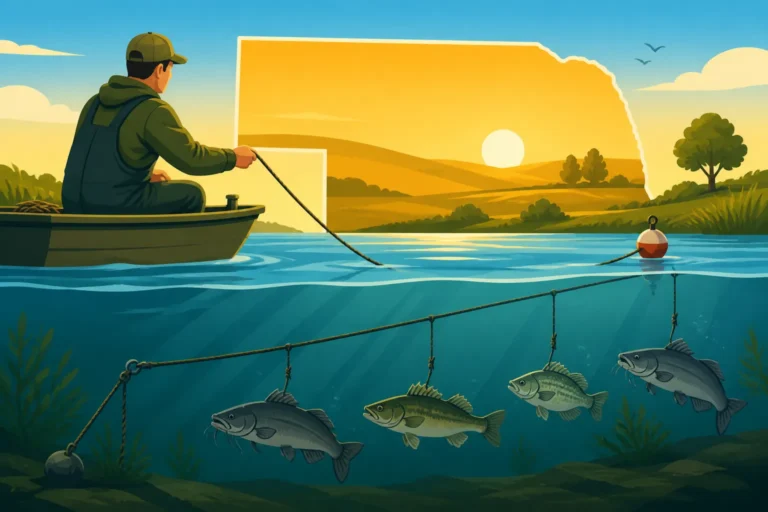
For covering maximum water and presenting baits to wary walleye, planer boards are an indispensable tool. These boards attach to your fishing line and run out to the side of the boat, allowing you to troll multiple lines far away from the disturbance of your boat's motor. This is especially effective in clear water or during bright daylight conditions when fish might be spooked by boat traffic. You can run anywhere from two to eight or more lines (within Nebraska's legal limits for Nebraska Fishing Regulations Explained) using planer boards, each at a different distance from the boat and potentially with a different lure or depth.
Setting up planer boards involves clipping your line into the release mechanism on the board, letting it run out, and then deploying the board. When a fish strikes, the board "releases" or flags, indicating a bite. It takes some practice to manage multiple boards without tangles, but the ability to cover a wide swath of water makes it worth the effort. Spreader rigs, while less common for general walleye trolling, can be used in specific situations where you want to present two baits vertically at different depths from a single line, often using weights and leaders. For large bodies of water like Lake McConaughy, planer boards are almost a given, allowing anglers to spread out their crankbaits or spinner rigs over a much broader area and increase their chances of intersecting a school of active walleye.
Speed, Depth, and Patterning Walleye
Trolling isn't just about driving in a straight line; it's a dynamic process of constant adjustment, observation, and refinement. The most successful walleye trollers are those who can quickly diagnose what the fish want and adapt their approach accordingly.
Optimal Trolling Speeds and Adjustments
Getting your trolling speed just right is a critical factor, and it's rarely a static number. For most crankbaits, a speed range of 1.8 to 2.5 mph is a good starting point, but some days walleye prefer a faster retrieve, pushing 3 mph, while other days a slower 1.5 mph might be the ticket. When running spinner rigs with live bait, speeds typically drop to 0.8 to 1.5 mph to allow the bait to swim naturally. The key is to pay attention to your lures' action; they should be wobbling or spinning effectively without looking unnatural.
Factors like water temperature, fish activity levels, and baitfish behavior all influence the ideal speed. If the water is cold or fish are lethargic (common in early spring or late fall), slower speeds are often more productive. If baitfish are scattering rapidly, a faster presentation mimicking a fleeing meal might be better. Don't be afraid to make subtle speed changes – a half-mile-per-hour increase or decrease, or even momentary accelerations and decelerations (often called "S-turns"), can often provoke a strike from a following walleye. Monitor your GPS speed closely and experiment until you start getting bites, then try to replicate that exact speed.
Precision Depth Control and Lure Presentation
Hitting the right depth is arguably even more important than speed. Walleye are often very depth-specific, sometimes holding in a very narrow band of water. This is where your line-counter reels and detailed knowledge of your lures' dive curves come into play. For crankbaits, knowing how much line to let out to reach a specific depth is crucial. Factors like line diameter (thinner line runs deeper), trolling speed, and even current can affect your lure's running depth.
When using bottom bouncers, you'll want to adjust their weight and your speed to ensure they are making occasional contact with the bottom without dragging too much. This "tick, tick, tick" tells you you're in the strike zone where bottom-dwelling walleye are likely to be found. For suspended fish over deep water, particularly common in summer, using precise electronics to locate the thermocline or schools of baitfish, and then presenting your lures at or just above that depth, is key. Many walleye anglers on Nebraska's larger lakes use dive charts and apps to accurately predict lure depth, ensuring their presentation is perfectly aligned with the fish's location.
Developing a Productive Trolling Pattern
Finding the fish is often the hardest part, especially on expansive waters. Start by identifying promising areas based on seasonal patterns and structure (points, humps, channels). Don't just make one pass; start by trolling in a broad pattern, perhaps an S-curve or zigzag, to cover different depths and present your lures from various angles. As soon as you get a bite, mark that spot on your GPS. Then, immediately turn around and make another pass through that exact area, paying close attention to the depth, speed, and lure that produced the fish.
Developing a pattern means more than just finding one fish. It's about finding what the fish prefer on a given day. Experiment with different crankbait colors and styles, spinner blade combinations, and live bait choices. Try different depths, even just a few feet up or down. Pay attention to how many feet of line are out, your boat speed, and even the direction of your pass relative to the wind or current. Once you consistently catch fish, you've established a pattern. This could be "purple crankbait, 2.2 mph, 25 feet of line out, over the south side of the main lake hump at 18 feet." Replicate that until the pattern changes, which it inevitably will. This meticulous approach is how serious walleye anglers consistently find success, transforming a random bite into a productive trolling run.
Trolling Specific Nebraska Walleye Waters
Nebraska boasts some fantastic walleye fisheries, each with its own quirks and prime trolling zones. While the general principles of trolling remain the same, adapting your approach to the specific characteristics of each body of water will yield better results.
Lake McConaughy Trolling Tactics
Lake McConaughy, affectionately known as "Big Mac," is arguably Nebraska's premier walleye destination. Its vast size and varied topography, including deep channels, expansive flats, and numerous points, make it ideal for trolling. Due to its clear water, walleye here can be especially wary. Trolling with planer boards to spread out your lines and present baits away from the boat is often very effective. Deep-diving crankbaits in natural baitfish patterns (like shad or perch imitations) are frequently used, especially during the summer months when walleye descend to cooler depths, often in the 25-40 foot range.
During spring and fall, walleye will move shallower, and trolling medium-diving crankbaits over flats and points in 10-20 feet of water can be very productive. Look for areas with rock or gravel transitions, or submerged humps that top out around these depths. The area around Kingsley Dam, particularly the North Shore and the "flats" south of the dam, are notorious walleye haunts. Early morning and late evening often see walleye moving shallower to feed aggressively. Many anglers find detailed information and local tips through our Lake McConaughy Walleye Fishing guide, which provides more granular advice specific to this massive reservoir.
Merritt Reservoir and Branched Oak Lake Insights
Merritt Reservoir, located in the Sandhills, offers a different trolling experience. Known for its clear water and excellent muskie and walleye populations, Merritt's walleye tend to relate closely to its sandy and gravelly points, submerged timber, and deep creek channels. Because of the clear water, light fluorocarbon leaders and natural-colored baits often perform best. Trolling crankbaits that mimic perch or shad are popular, as are spinner rigs tipped with nightcrawlers. Trolling speeds might need to be slightly slower in Merritt's clear waters to give wary walleye more time to inspect the bait.
Branched Oak Lake, near Lincoln, offers accessible walleye fishing, though it can be a bit trickier than Big Mac or Merritt. Its stained to turbid water conditions often make brighter crankbait colors (firetiger, chartreuse) more effective. Walleye in Branched Oak tend to relate to the old creek channels, submerged timber, and the edges of weed lines. Trolling medium-diving crankbaits or even bottom bouncers with spinner rigs can be productive. The lake has numerous fingers and coves, so focusing your trolling efforts around main lake points and transitions into deeper water will increase your success. While known for its robust panfish population, particularly crappie (see Branched Oak Lake Crappie Fishing), its walleye fishery should not be underestimated, especially with consistent trolling efforts.
Common Trolling Mistakes and How to Avoid Them
Even with the best gear and knowledge, it's easy to fall into common traps that can lead to an unproductive day. Recognizing these mistakes and actively working to avoid them will significantly improve your trolling success.
Not Adjusting to Conditions
One of the biggest blunders many trollers make is sticking to a single game plan, regardless of what the fish or the conditions are telling them. You might have found a pattern that worked last week, or even earlier that morning, but conditions on the water are constantly changing. Wind direction and speed, cloud cover, water temperature fluctuations, and even barometric pressure can all impact walleye behavior. For example, on a sunny, calm day with clear water, walleye might move deeper and prefer subtle, natural presentations. On a windy, cloudy day with stained water, they might move shallower and respond better to aggressive, brightly colored baits.
The solution is constant experimentation and observation. Don't be afraid to change your trolling speed by half a mile per hour, switch crankbait colors, or try a different depth on one of your lines. If you're not getting bites after 30-45 minutes in a promising area, don't just keep grinding it out; make a significant change. Check your electronics for baitfish schools or signs of walleye moving. Consider whether the fish have moved shallower or deeper, or if they've become more active or lethargic. Adjusting your strategy dynamically is a hallmark of a truly skilled walleye troller. For broader insights, our Nebraska Fishing Seasons Explained guide can help you anticipate how fish behavior changes throughout the year.
Overlooking Subtle Details
Fishing is a game of details, and trolling is no exception. It's easy to get complacent when you're covering vast amounts of water, but neglecting the small things can cost you bites. For instance, line twist can wreak havoc on a lure's action, making it spin unnaturally instead of wobbling enticingly. Regularly check your line for twists, nicks, or fraying, and re-tie often. A sharp hook is absolutely non-negotiable; even the slightest dullness can result in missed strikes or lost fish. Carry a hook sharpener and use it religiously throughout the day.
Another overlooked detail is ensuring your baits are running true. Sometimes, a crankbait can get out of tune, causing it to swim off to one side. Most crankbaits have a small line-tie eye that can be gently bent with pliers to correct its swimming action. Similarly, check your spinner blades to ensure they're spinning freely. Lastly, don't forget the importance of fresh bait if you're using spinner rigs. A lively nightcrawler or minnow is far more attractive than a sluggish, half-dead one. These small details, when compounded, can be the difference between an empty livewell and a successful day. Before heading out, always ensure your Nebraska Annual Fishing Permit is up-to-date through the GoOutdoorsNE Online Permit System to avoid any additional headaches!
Trolling Presentation Comparison Table
To help you quickly compare different trolling options, here's a table summarizing key aspects of popular walleye trolling presentations:
| Presentation | Typical Depth Range | Optimal Speed (mph) | Best Conditions | Target Walleye Behavior | Pros | Cons |
|---|---|---|---|---|---|---|
| Crankbaits | 5 – 40+ feet | 1.8 – 2.8 | All-around, open water, active fish | Chasing bait, suspended, reaction bite | Covers water, various depths, durable | Can be spooked in clear, shallow water |
| Spinner Rigs | Bottom – 20 feet | 0.8 – 1.5 | Bottom-oriented, irregular structure | Less active, feeding on bottom | Natural presentation, live bait appeal | Slower, can snag, bait management |
| Bottom Bouncers | Bottom – 20 feet | 0.8 – 1.5 | Rough bottom, precise depth control | Bottom-oriented, structure-hugging | Fewer snags, maintains contact | Heavier, can be cumbersome |
| Planer Boards | Surface – 40+ feet | 1.5 – 2.8 | Wide coverage, clear water, wary fish | Spread out, easily spooked | Covers vast area, less boat spook | Complex setup, prone to tangles |
Disclaimer
Fishing regulations, including license requirements, bag limits, and specific gear restrictions, can change. Always consult the latest Nebraska Game and Parks Commission regulations booklet or their official website before heading out on your fishing trip. The information provided in this guide is for general informational purposes only and should not be considered legal advice.