Sherman Reservoir Wiper Fishing
If you've ever felt the sheer frustration of targeting hard-fighting wiper and coming up empty-handed, especially on a vast lake like Sherman Reservoir, you're not alone. These feisty hybrids can be elusive, and cracking their code often feels like solving a complex puzzle. But don't despair! This comprehensive guide is here to unravel the mysteries of Sherman Reservoir wiper fishing, equipping you with the knowledge, techniques, and specific spots to make your next trip a resounding success. We'll delve deep into understanding these magnificent fish and how to consistently put them in your net.
Understanding Wiper in Nebraska Waters
The world of Nebraska fishing offers some incredible opportunities, and for many anglers, the wiper stands out as a true thrill. These aren't just any fish; they're a testament to thoughtful fisheries management and provide some of the most exhilarating battles you'll experience on the water.
What Exactly is a Wiper?
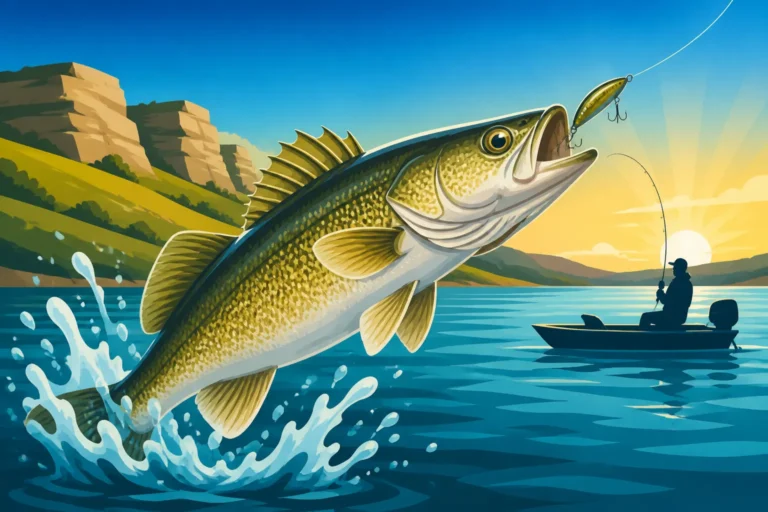
Let's clear up some confusion right away. A wiper, often affectionately called a "hybrid stripers" or "hybrid white bass," isn't a naturally occurring species. Instead, it's a crossbreed created by fisheries biologists, specifically a hybrid of a female striped bass and a male white bass. This genetic blend gives them the best traits of both parents: the aggressive feeding habits and strong fight of a striped bass, combined with the hardiness and prolific nature of a white bass. In Nebraska, these fish are stocked in several reservoirs, and they thrive where there's ample forage.
Wipers are easily recognizable by their broken, irregular horizontal stripes running along their silver bodies, unlike the distinct, unbroken lines you might see on a pure striped bass. They grow surprisingly fast and can reach impressive sizes, often exceeding 10-15 pounds in well-managed waters. Their power is legendary; once hooked, they make blistering runs and put every piece of your tackle to the test. They're built for speed and power, designed to chase down baitfish in open water. This makes them an exciting target for sport anglers looking for a real challenge.
Why Sherman Reservoir is a Wiper Hotspot
Now, why all the fuss about Sherman Reservoir when it comes to wipers? Well, Sherman is practically tailor-made for these powerful hybrids. Located in central Nebraska, near Loup City, this expansive lake spans over 2,800 acres when full and boasts a fantastic forage base, primarily abundant gizzard shad, which is exactly what wipers love to eat.
The reservoir's diverse underwater topography, including deep channels, submerged timber, rocky points, and expansive flats, provides an ideal environment for wipers to hunt and ambush prey. The water clarity can vary, offering different challenges and opportunities depending on the season and recent weather. The Nebraska Game and Parks Commission (NGPC) actively manages Sherman Reservoir's fish populations, ensuring healthy stocks of wiper and their primary food source. This consistent stocking and excellent habitat mean that Sherman regularly produces not just numbers of wipers, but also trophy-sized fish that make any angler's heart pound. It’s truly one of the premier spots in the state if you're looking to tangle with these fantastic fighters. Many local anglers, and those who travel from afar, consider a trip to Sherman a rite of passage for serious wiper enthusiasts.
Essential Gear and Tackle for Sherman Reservoir Wiper
Before you even think about hitting the water, let's talk about what you'll need. Wiper fishing at Sherman Reservoir isn't a finesse game; it's about power and durability. These fish hit hard and fight dirty, so your gear needs to be up to the task.
Rods, Reels, and Line Choices
When it comes to your setup, think robust. A medium-heavy to heavy power spinning or baitcasting rod, typically 6'6" to 7'6" in length, with a fast action tip is usually perfect. The fast action allows for precise casting and excellent sensitivity to detect those subtle takes, while the medium-heavy backbone gives you the leverage to steer a hard-charging wiper away from structure. You'll want a rod that can handle the violent head shakes and long runs these fish are famous for.
For reels, a high-quality spinning reel in the 3000-4000 size range or a sturdy baitcasting reel with a reliable, smooth drag system is crucial. That drag system is your best friend when a 10-pound wiper decides to strip line off your spool. Don't skimp here! As for line, many anglers prefer a 20-30 pound braided line for its incredible strength, zero stretch for sensitivity, and excellent casting distance. If you're using braid, adding a 10-15 pound fluorocarbon or monofilament leader of about 3-4 feet can be beneficial, especially in clearer water, as it offers a bit of stretch and is less visible to the fish. If you prefer straight mono or fluoro, step up to a 12-17 pound test to ensure you have enough backbone. For a deeper dive into selecting the right tools, check out our guide on Best Rods and Reels for Nebraska Fishing.
Top Lures and Baits
Wipers are opportunistic predators, and they love to chase. This means a variety of artificial lures can be highly effective. The key is often to mimic the local forage, primarily gizzard shad, which populate Sherman Reservoir.
- Lipless Crankbaits: These are a staple for wiper. Brands like Rat-L-Trap, Bill Lewis Lures, or Strike King Redeye Shad in chrome, white, or shad patterns are deadly. Rip them through schools of bait or over submerged humps.
- Deep-Diving Crankbaits: When wipers are holding deeper, a deep-diver like a Rapala Shad Rap or a Strike King Series 5 can reach them. Trolling these can be incredibly productive.
- Swim Baits: Paddle-tail swimbaits on a jig head (½ to 1 oz) are fantastic for imitating injured baitfish. White, silver, or chartreuse are popular choices. Cast and retrieve with a steady motion, or let it sink and retrieve with a lift-and-drop.
- Jerkbaits: Suspending jerkbaits in shad patterns are excellent, especially in cooler water or when fish are less aggressive. Twitch, pause, twitch, pause – this erratic action can trigger vicious strikes.
- Spoons: Casting spoons (e.g., Kastmaster, Little Cleo) or vertical jigging spoons are effective when wipers are schooling vertically or suspended over deep water.
- Jigs: Bucktail jigs or soft plastic grub tails on heavy jig heads can work well, particularly when fish are holding tight to structure or near the bottom.
- Live Bait: While artificial lures are popular, don't underestimate live bait. Gizzard shad, large minnows, or shiners, fished under a bobber or on a bottom rig, can be irresistible to wipers, especially when they're finicky.
When choosing colors, consider the water clarity. Chrome and white are great for sunny days and clear water, while chartreuse and brighter patterns can be better in stained or cloudy conditions. For more insights on lures that attract similar species, you might find our article on Best Lures for the White Bass Run in Nebraska helpful, as wipers share many feeding characteristics with their white bass relatives.
Here's a quick reference table for popular wiper lures at Sherman Reservoir:
| Lure Type | Best Conditions | Retrieval Style | Target Depth |
|---|---|---|---|
| Lipless Crankbaits | Active fish, schooling bait, covering water | Steady retrieve, rip-pause, yo-yo | Shallow to Mid-depth |
| Deep-Diving Cranks | Deeper suspended fish, trolling | Trolling, steady retrieve | Mid-depth to Deep |
| Swimbaits | Imitating injured bait, targeting structure | Steady retrieve, lift-drop | All depths |
| Jerkbaits | Cooler water, less aggressive fish, clear conditions | Twitch-pause-twitch, erratic action | Shallow to Mid-depth |
| Spoons | Schooling fish, vertical jigging, casting for distance | Fast retrieve, vertical jigging, flutter on the fall | All depths |
| Jigs (Bucktail/Grub) | Near bottom, around structure, slower retrieve | Bouncing, dragging, slow retrieve with hops | Mid-depth to Deep |
Mastering Wiper Fishing Techniques at Sherman Reservoir
Catching wiper at Sherman isn't always about brute force; it's often about understanding their behavior, their preferred haunts, and adapting your approach. These fish are constantly on the move, chasing baitfish, and a successful angler knows how to stay ahead of them.
Trolling and Casting Strategies
Trolling is undeniably one of the most effective ways to cover water and locate active wiper schools on a large reservoir like Sherman. The key is to present your lures at the right depth and speed. Use deep-diving crankbaits or even umbrella rigs, if permitted, to target wipers suspended over deeper water or along prominent contour lines. Pay close attention to your fish finder; look for baitfish schools and arcs indicating larger fish. Troll at speeds typically between 2.5 to 4.0 mph, experimenting until you find what triggers bites. Vary your depths by adjusting line length or using lead core line if necessary. Often, wipers will be found chasing bait in the 15-30 foot range, but this can change hourly. Consider zig-zagging your boat to change the action of your lure and cover more of the water column.
Casting is another highly effective method, especially when you can visibly see wipers busting on the surface, pushing baitfish to the top. This "topwater bite" is exhilarating! When you see this, cast lipless crankbaits, spoons, or topwater lures directly into the commotion. Retrieve aggressively to simulate a fleeing baitfish. If fish aren't surfacing, target main lake points, humps, and submerged timber. Fan cast the area to cover as much water as possible, varying your retrieve speed until you find the sweet spot. Sometimes a fast, erratic retrieve is best; other times, a slower, more deliberate action will draw strikes. Having a good understanding of how to find fish on deep structure, as detailed in guides like How to Fish Deep Structure for Summer Walleye, can directly translate to wiper success, as both species often relate to similar underwater features.
Seasonal Approaches for Wiper Success
Wiper behavior changes significantly with the seasons, and tailoring your approach to these shifts is crucial for consistent success.
- Spring (March – May): As water temperatures rise into the 50s and 60s, wipers become incredibly active. They'll often move into shallower water, particularly in creek arms and bays, to follow gizzard shad that are also moving up to spawn. Focus your efforts in these areas, casting lipless crankbaits, swimbaits, or even vertical jigging spoons on main lake points leading into these shallower areas. The area near the dam and the mouths of Mud and Oak Creek can be particularly hot during this time. The pre-spawn feeding frenzy can be incredible, with wipers aggressively hitting almost anything that moves.
- Summer (June – August): This is often a time when wipers move deeper to find cooler, more oxygenated water. They'll relate to the thermocline (the layer where water temperature changes rapidly) if one forms, or suspend over deep water, often near submerged humps, old river channels, and main lake points. Trolling deep-diving crankbaits or vertical jigging spoons become highly effective. Look for schools of baitfish on your fish finder, and wipers won't be far behind. Early mornings, late evenings, and even night fishing can produce excellent results as wipers move shallower to feed under low-light conditions.
- Fall (September – November): As water temperatures begin to drop, wipers enter a "feed-up" mode, gorging themselves in preparation for winter. This is a fantastic time for aggressive fishing. They'll often follow baitfish back into shallower bays and flats, but also continue to relate to main lake points and structure. Casting spoons, lipless crankbaits, and large swimbaits can be incredibly productive. The fish are often more spread out but actively chasing bait, making covering water with trolling or power casting a great strategy.
- Winter (December – February): Wiper fishing slows down significantly in winter as water temperatures plunge. If you're ice fishing on Sherman (which is popular for other species), you might occasionally pick up a wiper by vertical jigging spoons or small blade baits in deep water, but it's generally not their prime season. Most serious wiper anglers shift their focus until spring. For a broader understanding of how the seasons influence fishing across Nebraska, our Nebraska Fishing Seasons Explained guide offers valuable context.
Key Wiper Fishing Locations on Sherman Reservoir
Finding the fish is half the battle, and knowing the productive zones on Sherman Reservoir will drastically improve your chances of success. It's a big lake, but certain areas consistently hold wiper.
Key Structures and Forage Areas
Wiper are drawn to areas where they can ambush baitfish. On Sherman, this means focusing on the following structures:
- The Dam Face and Spillway Area: The dam itself creates a natural current break and attracts baitfish, making it a prime feeding ground for wipers. Always check regulations regarding fishing near the dam and spillway. Inflows can also create current that aggregates bait.
- Old River Channel and Submerged Timber: The Loup River channel winds through Sherman Reservoir, and the edges of this channel, especially where submerged timber remains, are excellent ambush points. Wipers will cruise these deeper highways, particularly in summer and fall. Your fish finder will be your best friend here, helping you pinpoint these subtle depth changes and hidden cover.
- Main Lake Humps and Points: Any prominent underwater hump or point extending into the main lake is a magnet for wipers. These features disrupt currents and concentrate baitfish. Trolling crankbaits over and around these structures or casting spoons to the tops and sides can be highly effective. The deeper points towards the western end of the reservoir, and those near the dam, are often key.
- Creek Mouths and Inlets: Areas where creeks like Mud Creek and Oak Creek flow into the reservoir are critical, especially in spring and fall. These shallower zones warm up faster in spring and offer abundant food. Wipers will move in and out of these areas, particularly during low-light conditions.
Using a quality fish finder is almost non-negotiable for serious wiper fishing on Sherman. Look for large schools of baitfish, often appearing as dense clouds on your screen, and then search for the larger, distinct arcs or lines of wipers lurking nearby, either above, below, or within the bait. Our guide on Best Fish Finders for Nebraska Lakes can help you choose the right electronics for your boat. For more general information about this fantastic waterbody, be sure to read our dedicated guide on Sherman Reservoir Fishing.
Access Points and Boating Considerations
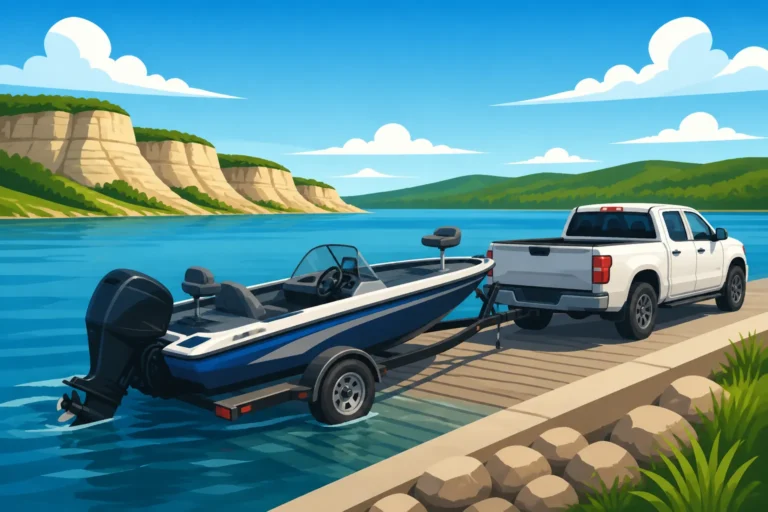
Sherman Reservoir offers several public access points for anglers, primarily boat ramps. The most popular include:
- Loup City Bay Area: This area usually has a well-maintained ramp and offers easy access to the main lake. It's a good starting point for exploring the central and western parts of the reservoir.
- West End Ramps: There are ramps on the western side of the lake that provide access to the upper reaches and creek arm areas, which can be productive in spring.
- Dam Area Ramps: Ramps closer to the dam allow quick access to this often-productive structure.
When navigating Sherman, always be mindful of wind conditions. Being a large, open body of water, it can get very rough very quickly, especially with strong winds from the north or south. Always check the weather forecast before heading out. Ensure your boat is equipped with all necessary safety gear, including enough life jackets for everyone on board, a throw cushion, a whistle, and navigation lights if you plan to be out during low light. Having a good understanding of Nebraska Boat Registration and Equipment Requirements is essential for safe and legal operation on any Nebraska waterbody. If you're new to the lake or prefer a guided experience, searching for local fishing guides on platforms like FishingBooker can connect you with experienced captains who know Sherman Reservoir inside and out, offering invaluable local knowledge and increasing your chances of a successful trip.
Rules, Regulations, and Conservation
Fishing on any public waterbody comes with responsibilities, and knowing the specific rules for Sherman Reservoir and Nebraska wipers is paramount. Adhering to these regulations ensures the sustainability of this fantastic fishery for generations to come.
Understanding Nebraska Wiper Regulations
The Nebraska Game and Parks Commission sets clear regulations for fishing all species, including wiper. These rules are designed to maintain healthy fish populations and provide quality angling experiences. For white bass, wiper, or striped bass (in aggregate), the daily bag limit is generally 10 fish, with a possession limit of 20. This means you can keep up to 10 fish caught in a single day, but you cannot have more than 20 fish total in your possession (e.g., at home in your freezer) from previous trips.
Crucially, there's also a length limit often in place: only one fish from your daily bag can be 16 inches or longer. This regulation protects larger, potentially spawning fish, helping to ensure the future of the wiper population. Always double-check the current Nebraska Fishing Regulations Explained booklet or the NGPC website before heading out, as rules can change. Violating these regulations can result in fines and loss of fishing privileges, which nobody wants! Beyond the legal aspects, practicing responsible catch-and-release, especially for any fish you don't intend to keep, is crucial. Handle fish gently, minimize their time out of water, and use appropriate tools like de-hookers to ensure they swim away strong. If you're keen on targeting these powerful fish, it's also worth noting the broader guidelines on How to Catch Striped Bass and Wipers, which provide context on their behavior and management.
Enhancing Your Wiper Fishing Experience
Beyond just knowing the rules and techniques, there are ways to truly enhance your wiper fishing experience at Sherman Reservoir. One of the best ways to shorten the learning curve is to tap into local knowledge. Check online forums, local bait shops in Loup City or surrounding towns, and fishing reports from the NGPC for the latest information on bite patterns, water conditions, and productive areas. These resources often provide real-time insights that can save you hours of searching.
Another excellent option, especially if you're new to Sherman or targeting wipers for the first time, is to consider hiring a local fishing guide. These professionals spend countless hours on the water and possess an intimate understanding of the reservoir's nuances, current fish patterns, and the subtle techniques that make all the difference. Websites like FishingBooker are a great resource for finding reputable guides in the Sherman Reservoir area, allowing you to compare options and book an outing with confidence. A good guide not only puts you on fish but also teaches you invaluable skills and local secrets. Always be prepared for Nebraska's unpredictable weather. Pack rain gear, extra layers, plenty of water, and sunscreen. A successful day on the water isn't just about catching fish; it's about being comfortable, safe, and truly enjoying the natural beauty of Sherman Reservoir.
Disclaimer
The information provided in this guide is for general informational purposes only and is based on general fishing knowledge and publicly available Nebraska fishing regulations. Fishing conditions, regulations, and fish behavior can change rapidly. Always consult the most current Nebraska Game and Parks Commission regulations booklet or website before fishing to ensure compliance. Personal safety is paramount; always wear a life jacket when boating, and be aware of weather conditions. The author and publisher are not responsible for any incidents or accidents that may occur from following the advice in this guide.