How to Catch Crappie Around Brush Piles
It’s a tale as old as time for Nebraska anglers: you know crappie love structure, and those submerged brush piles are screaming "fish here!" But actually getting your bait into that gnarly mess, enticing a bite, and then, the real challenge, getting that fish out without getting hopelessly snagged and losing your favorite jig? That’s where the frustration often kicks in. Many of us have spent more time re-tying than reeling, or simply given up on those honey holes that seem impenetrable. This comprehensive guide is here to unravel the mystery of fishing brush piles for crappie, offering practical strategies and gear advice to help you confidently target these elusive panfish in Nebraska’s waters.
Understanding Crappie and Brush Piles in Nebraska
Crappie are fascinating fish, and their love affair with brush piles isn't just a quirk; it's deeply rooted in their biology and survival instincts. If you want to consistently catch them, understanding this relationship is key.
Why Crappie Love Brush Piles
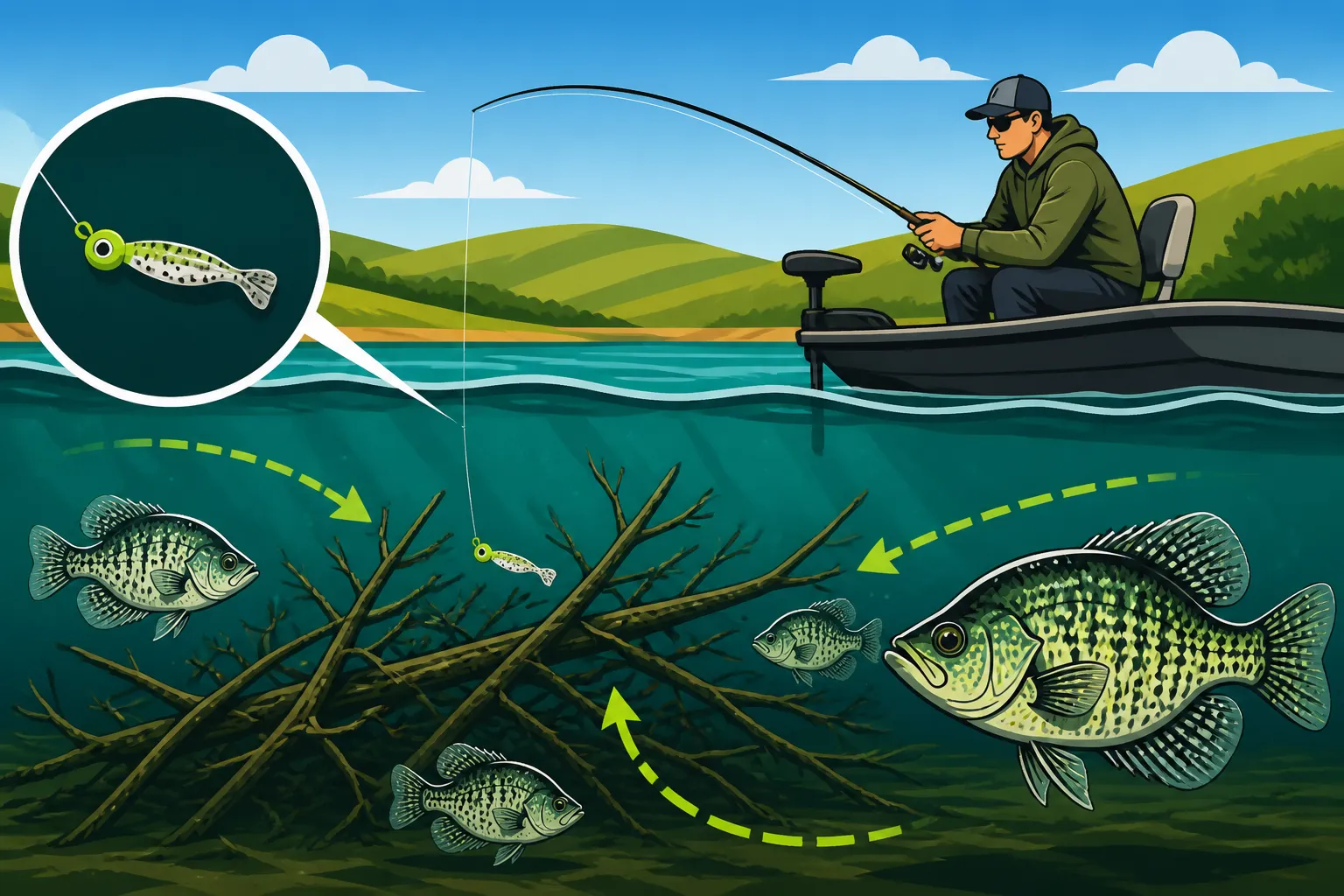
Think about it from a crappie's perspective. They’re relatively small fish, constantly on the lookout for a meal, but also trying to avoid becoming one themselves. Brush piles, whether natural or man-made, offer the perfect sanctuary. First and foremost, they provide incredible cover. When a hawk flies overhead, or a bigger predator like a walleye or a northern pike comes cruising by, crappie can instantly dart into the dense branches, disappearing from sight. This sense of security allows them to conserve energy and ambush unsuspecting prey.
Beyond safety, brush piles are magnets for the crappie's food source. Smaller baitfish, insects, and crustaceans all find shelter and forage within the intricate network of submerged limbs. It's like a bustling underwater cafeteria with built-in hiding spots. Furthermore, brush piles tend to stabilize the bottom, attracting algae and microscopic organisms, which form the base of the aquatic food chain. In Nebraska's sometimes open and featureless reservoirs, a well-placed brush pile becomes an oasis, concentrating crappie that would otherwise be widely dispersed.
Identifying Productive Brush Piles Natural vs. Man-Made
Not all brush piles are created equal, and knowing the difference between natural and man-made structures can drastically improve your success rate. Natural brush piles are often formed by fallen trees, beaver activity, or accumulated debris from floods in rivers and lakes. These tend to be more random in their placement and shape, often following shorelines where trees might have toppled. They can be incredibly effective, especially if they've been submerged for a long time, allowing algae and invertebrates to colonize them. Look for these near old river channels, creek beds, or along steep banks where erosion is common.
Man-made brush piles, on the other hand, are intentionally placed by anglers or wildlife agencies to enhance fish habitat. The Nebraska Game and Parks Commission, for example, often sinks old Christmas trees or bundles of cedar branches in certain lakes to create these hotspots. These are fantastic because they are usually placed in strategic locations — near ledges, creek channels, or main lake points – to maximize crappie attraction. Many public lakes in Nebraska have documented habitat projects, and checking local fishing reports or the Game and Parks website can sometimes reveal maps of these structures. Even private landowners often sink brush in their farm ponds to boost fishing, creating fantastic opportunities if you can get permission.
Seasonal Crappie Movement and Brush Piles
Crappie's relationship with brush piles shifts throughout the year, mirroring their seasonal movements. In spring, as water temperatures rise and the spawn approaches, crappie will move shallower. They might still use brush piles, especially those in 5-15 feet of water, as staging areas before moving to shallower spawning grounds. Often, the bigger females will hang slightly deeper on these piles, while males move up to prepare nests. Understanding How to Catch Crappie in Spring involves paying close attention to these staging patterns.
During summer, as surface temperatures soar, crappie retreat to deeper, cooler water. This is when those brush piles in 15-30+ feet of water become absolute goldmines. They provide the perfect combination of shade, cover, and access to cooler oxygenated water. They'll suspend within these piles, often around the thermocline if one exists, waiting to ambush baitfish. Fall sees crappie begin to move back shallower as water cools, often relating to brush piles on flats or along transitional breaks, fattening up for winter. And yes, even in winter, especially under the ice, deep brush piles are crucial for crappie, offering a stable environment and shelter from harsh conditions.
Essential Gear for Brush Pile Crappie Fishing
Getting your bait into a brush pile and getting a fish out requires a specific approach to gear. You can't just use your everyday open-water setup and expect success without a lot of frustration.
Rods, Reels, and Line Selection
When targeting crappie in brush piles, you need a rod that offers a delicate touch for detecting subtle bites, but also enough backbone to quickly pull a fish away from snags. Many seasoned anglers opt for a medium-light to medium action spinning rod, typically 6 to 7 feet long. The extra length can help with casting accuracy and leading fish out of cover. A fast tip is crucial for sensitivity, letting you feel every bump and tick, but a softer mid-section allows the fish to load up without tearing the hook out of their papery mouths. For those who prefer a more direct approach, especially for vertical jigging or dipping, a jigging pole or "spider rig" setup can be incredibly effective, allowing precise bait placement directly into the cover.
Pair your rod with a lightweight spinning reel in the 1000 to 2000 series. Smooth drag is non-negotiable; crappie have delicate mouths, and a sticky drag can lead to lost fish. For line, this is where many arguments start, but for brush pile fishing, braided line is a game-changer. A 6-10 lb test braided line offers superior sensitivity, minimal stretch, and incredible abrasion resistance, which is vital when rubbing against submerged wood. The thin diameter also cuts through the water better, helping your jig get down faster. A short leader of 4-6 lb fluorocarbon or monofilament (12-24 inches) can be tied to the braid for invisibility, or you can go straight braid if the water isn't super clear. The reduced stretch of braid also helps immensely in ripping your jig free from minor snags. You can find a wide array of reliable braided lines on Amazon to suit your preference and budget.
Optimal Baits and Lures for Brush Piles
Crappie in brush piles are often looking for an easy meal, and their preferences can change daily. The key is to present something small, appealing, and versatile enough to navigate the cover. Small jigs, typically 1/16 to 1/8 ounce, are the undisputed champions. They can be tipped with tiny soft plastics, often called "crappie tubes," "grubs," or "minnow profiles." Colors vary widely depending on water clarity and sunlight, but always have a selection of natural colors (smoke, green pumpkin) for clear water, and brighter colors (chartreuse, pink, orange) for stained or muddy conditions. Many anglers swear by a particular color on certain Nebraska lakes, so don't be afraid to experiment!
Live bait is another phenomenal option. Small minnows, hooked lightly through the lip or back, are irresistible to crappie. Present them under a slip bobber or tight-lined with a small split shot. Don't forget about waxworms or tiny pieces of nightcrawler on a small hook for those tougher days. Sometimes, the natural appeal of live bait is all it takes. For deeper brush piles or suspended crappie, blade baits or small spoons can also work when vertically jigged, mimicking a dying baitfish, though these can be more prone to snagging. For a deeper dive into bait choices, check out our guide on the Best Bait for Nebraska Crappie.
Crappie Jig Rigs and Presentations
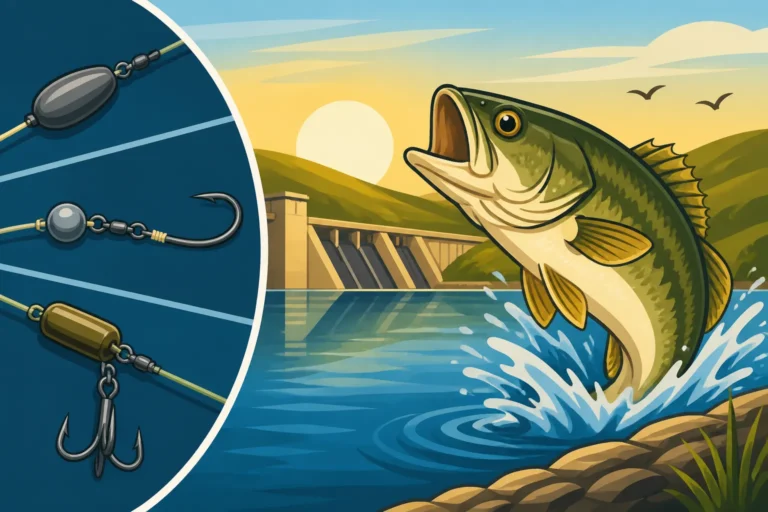
Getting your bait into the "strike zone" within a brush pile without snagging is an art form. The simplest and often most effective rig is a single jig tied directly to your leader. The streamlined profile helps it slide through branches. For vertical presentations, a drop-shot rig can be surprisingly effective. Tie a jig or hook with a minnow about 12-18 inches above a sinker, allowing the bait to suspend directly above the structure while the weight sits on the bottom or near the branches. This keeps your bait in the crappie's face longer.
Another popular setup, especially when crappie are aggressive or suspended, is a double jig rig. This involves tying one jig directly to your main line, then a second jig about 12-18 inches above it on a short dropper line. This allows you to present two different baits or colors at slightly different depths, increasing your chances of finding the crappie's preferred offering. However, be warned: a double jig rig also doubles your chances of snagging! A single, lightweight jig is often the safest bet when working tight cover. Remember to keep your knots strong, as you'll be putting them to the test when pulling fish from the timber.
Locating and Approaching Brush Piles
Finding those hidden crappie havens is half the battle, and once you've found them, how you approach them makes all the difference. Spooking the fish before you even cast is a rookie mistake we all make initially.
Using Electronics to Find Hidden Cover
Modern fish finders are invaluable tools for brush pile crappie fishing. Side-imaging and down-imaging sonar units, like those from Humminbird or Lowrance, can paint incredibly detailed pictures of what's beneath and to the sides of your boat. You can literally "see" individual branches, baitfish clouds, and even the crappie themselves nestled within the cover. When scanning, look for irregular bumps, dark blobs, or distinct tree shapes on your screen. Often, crappie will show up as small arches or distinct dots, sometimes stacked vertically within the pile. Pay attention to how high off the bottom they are suspended.
Even basic 2D sonar can show you brush piles as a dense, fuzzy return on the screen. The key is to drive slowly over areas you suspect might hold structure, methodically scanning until you identify those fish-holding spots. Don't just look for "brush"; look for "brush with fish." Many anglers spend hours idling around, marking every piece of structure they find, which leads us to the next point.
Mapping and Marking Productive Spots
Once you've identified a promising brush pile with your electronics, immediately mark it on your GPS. This way, you can return to it later, even if conditions change. Some anglers even use specific waypoints to denote if it's a deep pile, a shallow one, or if they caught fish there previously. Over time, you'll build a personal "crappie brush pile map" for your favorite lakes, making future trips much more efficient. Many advanced units allow you to save notes with your waypoints, like "Crappie, 15ft, Summer."
For those without advanced GPS or just wanting a low-tech backup, a simple marker buoy can be invaluable. Once you find a pile, toss out a marker a safe distance away (upwind or upstream) so you don't spook the fish. This gives you a visual reference point for casting or positioning your boat. Remember, the goal is to pinpoint the cover without alarming its inhabitants.
Stealthy Boat Positioning and Casting
Crappie can be incredibly spooky, especially in clear water. How you approach and position your boat around a brush pile is critical. Always try to approach from upwind or upstream, using your trolling motor sparingly and gently, or even better, using a shallow water anchor like a Power-Pole or Talon to hold you in place once you're in position. Avoid dropping an anchor directly over the pile, as the noise can send crappie scattering.
Once positioned, make long, accurate casts that land your bait softly a few feet beyond the brush pile. This allows your jig to sink naturally into the cover without a splash that might alarm the fish. If the crappie are suspended higher in the pile, a lighter jig might be needed to achieve a slower fall rate that gives them time to react. If you're fishing from shore, casting accuracy is even more vital. Try to cast parallel to the brush pile's edge or just beyond it, then slowly work your bait into the fish's zone. Remember, quiet is key! For those fishing from a small craft, understanding Nebraska Boat Registration and Equipment Requirements is also crucial for a safe and legal outing.
Mastering Brush Pile Crappie Techniques
Getting your bait to the fish is one thing; making them bite and then landing them is another. These techniques are designed to maximize your hook-up ratio and minimize frustrating snags.
Vertical Jigging and Dipping Tactics
When crappie are tightly packed into a brush pile, vertical jigging or dipping is often the most effective method. This technique allows for precise bait placement and maximum control. If you have a trolling motor with a Spot-Lock feature, position your boat directly over or slightly upwind/upstream from the brush pile. Drop your jig straight down, watching your fish finder to see the jig descend right into the heart of the cover. Gently raise and lower your rod tip, imparting a subtle jigging action. The key is often a very slow, subtle movement. Sometimes, just holding the jig perfectly still at the crappie's eye level is all it takes.
"Dipping" is similar but usually done with a longer pole (often 10-14 feet or more) without a reel. You literally lower your jig directly into small pockets within the brush, gently working it up and down. This is particularly effective in dense cover where casting is impossible. The instant a crappie bites, use the stiffness of the pole to quickly lift the fish out of the cover and swing it into the boat. This reduces the chance of the fish burying itself deeper in the branches.
Casting and Retrieving Around Edges
Crappie don't always hang deep inside the densest part of a brush pile. Often, especially if they're actively feeding or in transition, they'll be found along the edges of the structure. This is where casting and retrieving comes into play. Make casts that land your jig just past the visible (or sonar-identified) edges of the brush. Let the jig sink slowly, then retrieve it with a slow, steady retrieve or a subtle lift-and-drop motion, trying to keep it just above the branches. The goal is to tick the top of the branches without getting snagged.
Vary your retrieve speed and depth until you find what triggers a bite. Sometimes a faster retrieve to trigger a reaction strike works; other times, a slow, painstaking crawl is necessary. Pay close attention to your line; a sudden slack or a slight twitch might be a crappie inhaling your jig. Be ready to set the hook quickly. If you're fishing from shore, this technique is especially vital, as it allows you to cover more water around the accessible perimeter of the brush. Our guide on How to Fish From Shore in Nebraska has more tips for maximizing your reach.
Dealing with Snags and Retrieving Baits
Snags are an inevitable part of brush pile fishing; it's a rite of passage! The key is to minimize them and know how to deal with them when they happen. First, always try to keep your bait just above the brush if possible. When you feel a "thunk" that isn't a fish, immediately stop reeling, point your rod tip directly at the snag, and gently pull. Sometimes the jig will pop free. If not, give a few sharp "twangs" on the line with your finger.
If still snagged, try releasing some line and letting it go slack, then quickly reeling up the slack and snapping your rod tip. The sudden jerk can sometimes dislodge the jig. If all else fails, and you're in a boat, you might need to slowly motor directly over the snag, vertically pulling your line. Often, the angle change will free the jig. If using braid, you can usually pull hard enough to bend out a hook or break the line at the knot, saving the bulk of your tackle. Investing in a good jig retriever, easily found on Amazon, can also save you a lot of money and frustration over time. It's a weight on a cord that you slide down your line to "thump" the snagged lure free.
Seasonal Considerations for Brush Pile Crappie
Crappie don't just stay put in a brush pile year-round. Their behavior changes dramatically with the seasons, and so should your brush pile strategy.
Spring Spawning and Nearby Brush Piles
Ah, spring! The air warms, the water warms, and crappie are on the move. In the early spring, as water temperatures hit the mid-40s to low 50s, crappie will begin to stage on brush piles found in slightly deeper water – say, 10 to 20 feet – often near a channel or a flat that leads to shallower spawning coves. These piles serve as important staging grounds where they congregate and feed heavily before the main event. Look for bigger females holding tightly to the cover, while males might already be starting to scout shallower areas.
As water temperatures rise into the mid-50s to low 60s, crappie will move shallower to spawn, typically seeking out vegetation, submerged timber, or even rocky bottoms in 3-8 feet of water. While the densest brush piles might not be their primary spawning beds, nearby brush can still be excellent. They will use it as refuge from predators or as a feeding ambush point adjacent to their nests. Focus on brush piles located on points, in creek arms, or just outside major spawning flats. A slow retrieve with a small jig or a minnow under a slip bobber worked around these shallower piles can be incredibly effective.
Summer Deep Water Brush Pile Strategies
When the scorching Nebraska summer sun heats up the lakes and reservoirs, crappie typically retreat to cooler, deeper waters. This is prime time for targeting brush piles in 15 to 30+ feet of water. During the hottest parts of the day, crappie will suspend within these deep piles, often relating to the thermocline – the layer where warmer surface water meets cooler deep water. They might be just above it, in it, or just below it, seeking stable temperatures and higher oxygen levels.
The challenge here is presenting your bait at the exact depth the crappie are holding. Your fish finder is your best friend. Look for baitfish activity around these deep piles, as crappie will be close by. Vertical jigging or slow trolling with multiple rods (known as spider rigging) is highly effective. Use heavier jigs (1/8 to 1/4 oz) to get down quickly, or tip jigs with minnows. Pay close attention to the bite; summer crappie bites can be incredibly subtle, feeling like just a slight pressure or tick on the line. Hotspots like Lake McConaughy Crappie Fishing or Branched Oak Lake Crappie Fishing are known to produce fantastic summer catches on deep brush.
Fall Transition and Winter Holds
As summer fades and fall begins, crappie become much more active, feeding aggressively to build up fat reserves for winter. They'll start to spread out more, but brush piles remain key ambush points. During the fall turnover, when surface water cools and mixes with deeper water, crappie might be found at various depths. As the water continues to cool, they’ll start consolidating on brush piles near main lake channels, secondary points, or along steep banks. They're often found a bit shallower than in summer, but still relating to deep water access.
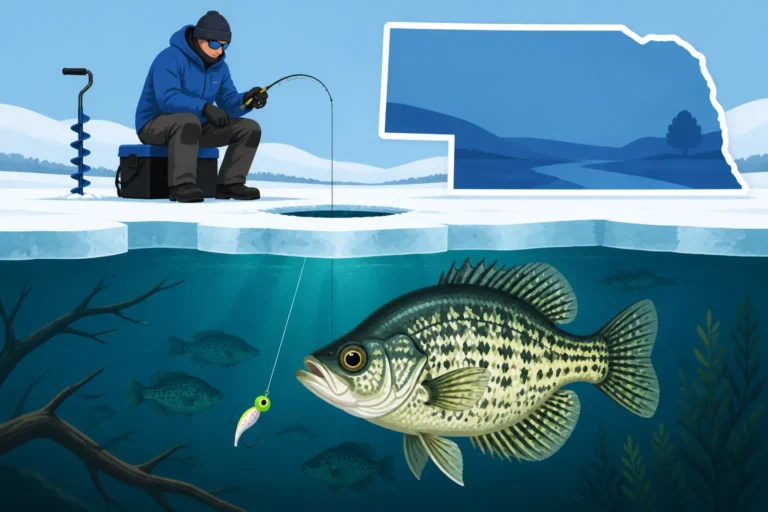
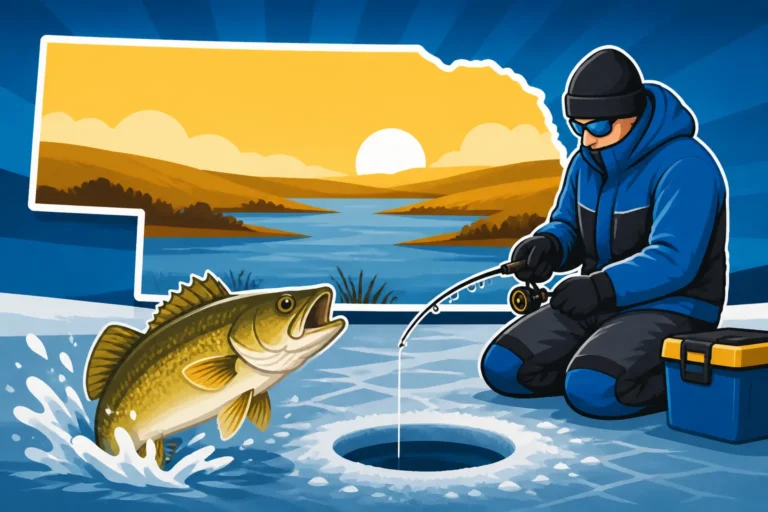
Winter is when brush piles truly become crappie magnets, especially for ice anglers. Under a blanket of ice, deep brush piles in 15-30 feet of water provide stable temperatures, security, and a consistent food source. Crappie will often suspend motionless within these piles. Ice fishing for crappie on brush requires precision. Use small, sensitive ice rods, tiny jigs (1/32 to 1/16 oz), and often a live minnow or a waxworm. A flasher or an underwater camera is essential for seeing your bait and the fish. Lower your bait to the depth where you see crappie on your electronics and hold it steady, with only the most subtle jiggle. Learn more about staying safe and effective with our Nebraska Ice Fishing Safety Tips.
Nebraska-Specific Brush Pile Hotspots
While brush piles are a universal crappie magnet, knowing where to find them in Nebraska can give you a significant advantage. The state has many fantastic waters with intentional habitat work or natural cover.
Public Lakes Known for Brush Piles
Many of Nebraska's larger reservoirs and state recreation areas are prime candidates for brush pile crappie fishing. The Nebraska Game and Parks Commission regularly undertakes habitat improvement projects, and these often include placing submerged brush. Popular spots include:
- Branched Oak Lake (near Lincoln): This large reservoir is well-known for its crappie fishery, and habitat work has included sinking numerous cedar trees and other brush structures. Anglers often find crappie relating to these in creek channels and along old roadbeds.
- Pawnee Lake (near Lincoln): Another Lincoln-area gem, Pawnee also benefits from habitat work, offering excellent crappie opportunities around its many submerged structures.
- Johnson Lake (south of Lexington): This Central Nebraska reservoir is known for its diverse fishery, and crappie will often be found in brush piles, especially during summer and fall. Anglers often target brush in the deeper southern end.
- Lewis and Clark Lake (near Yankton, SD/Crofton, NE): While a border water, the Nebraska side offers fantastic crappie fishing, and the sprawling reservoir has numerous natural and man-made structures that hold crappie. Look for them in the bays and around submerged timber.
- Harlan County Reservoir (near Republican City): This large western Nebraska reservoir is a crappie powerhouse, with many submerged trees and brush piles in its numerous coves and creek channels.
Always check the latest fishing reports from the Nebraska Game and Parks Commission website or local bait shops for up-to-date information on brush pile locations and crappie activity.
Farm Ponds and Private Waters
Don't overlook the incredible crappie fishing opportunities in Nebraska's thousands of farm ponds and private lakes. While public access might be limited, if you can secure permission from a landowner, these smaller waters can be crappie factories. Many landowners intentionally sink Christmas trees, old tires, or other forms of brush to enhance their pond's fishing. These private brush piles are often less pressured and can hold truly massive crappie.
When fishing private ponds, respect the landowner's property and always practice catch and release or only keep what you need, unless otherwise instructed. Small boats or even bank fishing can be incredibly effective on these smaller, more intimate waters. The crappie in these environments will still relate to brush piles, though often in shallower water than in large reservoirs. If you're lucky enough to find a productive farm pond with brush piles, you might just find your new secret crappie honey hole! Remember that Do You Need a License to Fish on Private Land in Nebraska? is a common question, and generally, if the pond is stocked and you're not the landowner, you will need one.
Disclaimer
Fishing regulations, conditions, and fish populations can change. Always consult the latest Nebraska Game and Parks Commission regulations booklet before heading out. This guide is for informational purposes only, and safe fishing practices, including wearing life jackets and being aware of weather conditions, are always recommended.