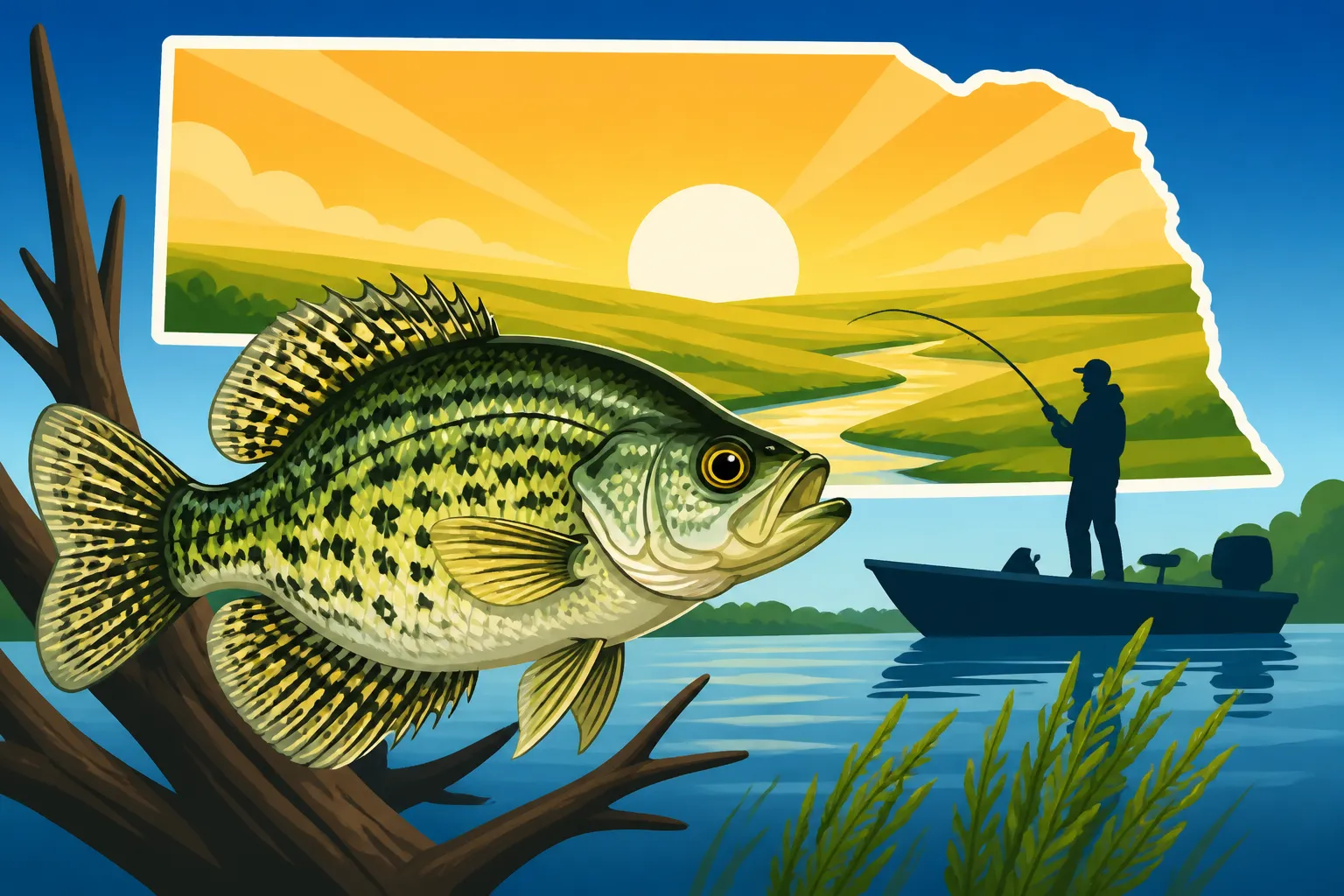
Crappie Fishing in Nebraska
Trying to figure out the best way to consistently catch crappie in Nebraska can sometimes feel like solving a mystery, especially with the ever-changing seasons and diverse waters we have across the state. Whether you're a seasoned angler looking to fine-tune your approach or a newcomer eager to land some slabs, it’s easy to get overwhelmed by all the information out there. This comprehensive guide is here to demystify crappie fishing in the Cornhusker State, offering practical advice, proven techniques, and insights into where these popular panfish hide, so you can enjoy more successful days on the water.
Understanding Nebraska Crappie: The Elusive Panfish
Crappie are one of Nebraska's most sought-after panfish, and for good reason! They're delicious to eat, put up a fun fight on light tackle, and can be found in a wide variety of our lakes, reservoirs, and rivers. But before we dive into how and where to catch them, it's helpful to understand a bit about these fish themselves. Knowing their habits, preferences, and how they differ can significantly increase your success.
Black Crappie vs. White Crappie in Nebraska
When you're out chasing crappie in Nebraska, you're primarily targeting two distinct species: the black crappie and the white crappie. While they share many similarities, understanding their subtle differences can help you tailor your approach. Often, anglers will catch both in the same outing, but they do have slightly different preferences when it comes to habitat and feeding. The biggest frustration for many is not knowing which one they're truly targeting or if their current tactics are optimized for one over the other.
Black crappie, as the name suggests, tend to have a darker, more mottled appearance with irregular dark spots scattered across their silvery-olive bodies. A key identification feature is their dorsal fin, which usually has 7 or 8 spines. They generally prefer clearer, cooler water with abundant submerged vegetation or brush piles. Think of them as the slightly pickier eaters, often hanging closer to cover in more pristine environments. You might find them schooling tighter around specific submerged trees or deep weed lines.
White crappie, on the other hand, are typically lighter in color, often with several distinct vertical bars or stripes on their sides, rather than random spots. They usually have 5 or 6 dorsal fin spines. White crappie are often more tolerant of turbid (cloudier) water and are frequently found in larger reservoirs and rivers with silty bottoms, often associating with standing timber, riprap, or brushy creek channels. They tend to be a bit more nomadic, roaming in looser schools and sometimes feeding more aggressively in open water areas, especially if there's baitfish present. While both are fantastic sport fish, recognizing which species you're catching can inform your future location choices and presentation styles. For more detailed insights, you can read up on Nebraska Black Crappie vs White Crappie.
Crappie Habitat Preferences
Crappie, whether black or white, are highly structure-oriented fish. They love to hang around anything that provides cover, shade, and ambush points for prey. This is why when you hear anglers talking about "crappie spots," they're almost always referring to some type of submerged structure. This preference often frustrates new anglers who cast into open water with little success, not realizing crappie are hiding just feet away in dense cover.
In Nebraska's diverse waters, this means seeking out various types of cover. This can include natural elements like submerged timber, fallen trees, brush piles, rock piles, weed beds (especially lily pads or coontail), and even old creek channels. In many of our reservoirs, man-made structures are also huge crappie magnets. Think about boat docks, bridge pilings, riprap shorelines, sunken roadbeds, and even fish habitat structures intentionally placed by the Nebraska Game and Parks Commission. These structures provide protection from predators, shade from harsh sunlight, and concentrate baitfish – everything a crappie needs to thrive. The key is to remember that crappie will often suspend in or just above this cover, rather than directly on the bottom, so understanding their depth preference is crucial.
Crappie Behavior and Lifecycle
Understanding crappie behavior throughout the year is perhaps the most critical piece of the puzzle for consistent success. Crappie are cold-blooded, which means their activity levels are heavily influenced by water temperature. This leads to distinct patterns of behavior through their lifecycle and across the seasons. Many anglers get discouraged because they use the same tactics year-round, failing to adapt to what the crappie are doing.
In early spring, as water temperatures begin to rise (typically into the 50s Fahrenheit), crappie move from deeper wintering holes into shallower, warmer water, often near spawning areas. This is a pre-spawn feeding frenzy where they're actively bulking up. The spawn itself occurs when water temperatures hit the mid-60s, usually from late April through June in Nebraska. During this time, they move onto flats, in coves, or around submerged brush in just a few feet of water, making them highly accessible. Males will guard the nests, and both sexes can be aggressive. Post-spawn, they'll gradually move back to slightly deeper cover as the water continues to warm.
Throughout the summer, crappie often retreat to deeper, cooler water, typically suspending over structure or in old creek channels, especially during the heat of the day. They might move shallower to feed during low-light conditions like dawn, dusk, or night. Fall sees them regrouping and feeding heavily again in preparation for winter, often schooling up in predictable locations around deeper cover. Finally, in winter, they gather in large schools in deep water, often suspending over bottom structure or in main lake basins, and can be caught through the ice or by boat in open water. Knowing these seasonal movements is like having a secret map to their hideouts!
Best Times to Fish for Crappie in Nebraska
Timing is everything in crappie fishing. What works in April might be completely ineffective in August. Nebraska's distinct seasons dictate crappie behavior, movements, and feeding patterns. Anglers who consistently catch crappie are those who understand how to adapt their strategies throughout the year. It's frustrating to hit your favorite spot only to find no fish, simply because you're fishing it at the wrong time of year or with the wrong presentation for the season.
Spring Crappie Fishing: The Spawn
Spring is, without a doubt, the most popular and often the most productive time to target crappie in Nebraska. As the ice melts and water temperatures climb, crappie begin their annual migration from deeper wintering areas toward the shallows to spawn. This pre-spawn and spawn period is when they are most accessible and often most aggressive. Typically, this action starts when water temperatures consistently reach the low to mid-50s Fahrenheit, really kicking off when the surface temperatures hit the mid-60s.
During the pre-spawn, crappie will stage in slightly deeper water just outside their spawning grounds. They're actively feeding to gain energy for spawning, making them very catchable. As temperatures rise further, they move into shallow coves, along protected shorelines, and into brushy areas in just a few feet of water. Look for areas with submerged timber, cattails, lily pads, or even flooded terrestrial vegetation. Males will move in first to prepare nests, followed by females to lay eggs. Small jigs tipped with minnows or soft plastics, fished under a bobber, are deadly during this time. Fan-casting these shallow areas and patiently working your way through cover can lead to incredible numbers. How to Catch Crappie in Spring offers more focused advice on these prime weeks.
Summer Crappie Fishing: Deep Water Strategies
Once the spring spawn is over and water temperatures really heat up, crappie tend to retreat to deeper, cooler water. This is where many anglers get frustrated, as the shallow bite dries up and finding them becomes more challenging. However, summer crappie fishing can be incredibly rewarding if you know where to look and how to fish. The key is understanding that they'll often suspend in the water column rather than hugging the bottom.
During the dog days of summer, crappie will often relate to deep structure such as old creek channels, humps, ledges, submerged timber on main lake points, or deep brush piles. They'll form tighter schools and suspend at depths where the water temperature is most comfortable for them and where baitfish are abundant. This might be 10, 15, or even 25 feet deep, often over water that's much deeper. Vertical jigging directly over these submerged structures, using small jigs or minnows, is highly effective. You might also find success with spider rigging, where multiple rods are deployed from the front of the boat to cover a wider area, slowly trolling baits at a precise depth. Early morning, late evening, and even night fishing can also produce good results as crappie move slightly shallower to feed during low light conditions.
Fall Crappie Fishing: Feeding Frenzy
Fall is another fantastic time for crappie fishing in Nebraska, often rivaling spring in terms of action, though with different patterns. As the scorching summer heat gives way to cooler temperatures, the entire aquatic ecosystem begins to change. The water starts to cool down, and crappie sense the approaching winter, triggering a serious feeding spree. They know they need to pack on fat reserves to survive the lean months ahead, and this makes them very aggressive. Many anglers overlook fall crappie, missing out on some of the best fishing of the year.
During autumn, crappie will begin to move from their deep summer haunts, often pushing shallower, but usually not as shallow as during the spring spawn. They will congregate in larger schools, often found around main lake points, channel swings, and the edges of vast flats that have access to deep water. Look for large schools of baitfish, as crappie will follow their food source. Areas with standing timber, brush piles, or even submerged rock formations can be prime spots. Trolling small crankbaits or spider rigging with jigs and minnows can be very productive as crappie actively chase down food. As the water cools further, they'll gradually transition back to their deeper wintering holes, making those transition areas key.
Winter Crappie Fishing: Ice and Open Water
Nebraska winters offer unique crappie fishing opportunities, both through the ice and, in milder years, in open water. While the pace of fishing slows down, winter can be incredibly rewarding for those willing to brave the elements, often yielding some of the biggest crappie of the year. The biggest challenge for many is staying warm and knowing where to find fish that are much less active.
For ice anglers, crappie will typically school up in deep water, often suspending just off the bottom or in the middle of the water column over the deepest parts of a lake or reservoir. Areas with subtle depth changes, submerged humps, or standing timber in deep basins are prime locations. Using a fish finder to locate schools is almost essential. Small jigs, often tipped with a live minnow, waxworm, or a plastic grub, are the go-to baits. Gently jigging them vertically just above the fish is key, as crappie are often lethargic. You’ll need to be patient, and sometimes move frequently to stay on active schools. Check out Nebraska Ice Fishing Regulations for important safety and legal information.
In open water during winter (when ice conditions don't allow safe access, or on larger reservoirs that may not fully freeze), crappie will remain in their deep wintering patterns. This means targeting deep main lake basins, old creek channels, and significant submerged structure. Trolling with light gear and small jigs or minnows, or vertical jigging directly over schools spotted on your electronics, are effective techniques. Focus on days with stable weather patterns, as sudden cold fronts can shut down the bite quickly.
Top Nebraska Crappie Fishing Spots
Nebraska may not be the first state that comes to mind for crappie fishing, but we have some truly phenomenal waters if you know where to look. From expansive reservoirs to smaller, community-focused ponds, there are opportunities for every angler. The challenge is often narrowing down the endless possibilities and figuring out which bodies of water consistently produce.
Major Reservoirs and Lakes
Nebraska's large reservoirs are often the crown jewels for crappie fishing, offering vast expanses of water and diverse habitats that can hold massive schools of crappie. These larger bodies of water often require a boat to access the best spots, though some offer excellent bank fishing in key areas, especially during the spring spawn.
- Branched Oak Lake: Located near Lincoln, Branched Oak Lake Crappie Fishing is renowned for its excellent crappie population. This large reservoir has extensive standing timber, submerged brush piles, and old creek channels that crappie absolutely love. In spring, the shallow coves are prime, while summer and fall see crappie suspend over deeper timber and along channel edges. It's a fantastic lake for both black and white crappie.
- Harlan County Reservoir: Down in south-central Nebraska, Harlan County is a massive body of water known for its abundant fish populations, including some truly impressive crappie. It's a fertile reservoir with numerous submerged trees and brush. Crappie here can be found relating to old river channels, main lake points, and brush piles. Spider rigging and trolling are popular methods here, especially in the summer and fall.
- Sherman Reservoir: Nestled in the Sandhills, Sherman offers a unique crappie fishing experience. It's a deep lake with plenty of standing timber, making it a crappie paradise. Anglers often target brush piles and cedar trees that have been intentionally placed, as well as natural timber. Ice fishing for crappie here can be exceptional, with large schools suspending in deep water.
- Lewis and Clark Lake: On the border with South Dakota, this massive Missouri River impoundment offers incredible crappie fishing. The lake has numerous coves, submerged timber, and drop-offs. Crappie will often school up in the deeper sections, especially around the old river channel and tributary mouths. Its vastness means a good fish finder is invaluable for locating active schools.
- Lake McConaughy: While famous for walleye and striped bass, "Big Mac" also holds a respectable population of crappie, particularly white crappie. They often relate to the abundant submerged cedar trees and brush piles found in many of the lake's coves and bays, especially in the central and upper lake regions. In the spring, the coves warm up quickly, drawing crappie into shallower areas.
Rivers and Smaller Water Bodies
Don't overlook Nebraska's rivers and smaller lakes; they can offer fantastic, often less-pressured crappie fishing. These spots can be particularly good for bank anglers or those with smaller boats, providing more intimate fishing experiences.
- Missouri River: The mighty Missouri River, particularly its calmer backwaters, oxbows, and tributary mouths, can hold some incredible crappie. Look for areas with current breaks, fallen trees, and deeper scour holes. Fishing in slack water areas off the main current is often most productive. Remember to check regulations for specific border water rules, as they might differ.
- Platte River: While primarily known for catfish, the Platte River and its associated sandpit lakes can also offer decent crappie fishing. The sandpit lakes, in particular, often have good populations, especially those with some submerged structure or brush. Fishing around downed trees or bridge pilings in slower moving sections of the river can also yield crappie.
- Calamus Reservoir: Another Sandhills gem, Calamus is a beautiful lake with good crappie populations, often found around its numerous submerged cedar trees and brush piles. It offers a more serene fishing experience than some of the larger, busier reservoirs.
- Swanson Reservoir: Located in southwest Nebraska, Swanson is another large impoundment that can produce good numbers of crappie, especially in its timbered coves and along creek channels.
- Box Butte Reservoir: Out in the panhandle, Box Butte provides a more remote crappie fishing opportunity. It's a shallower, fertile lake where crappie often relate to submerged vegetation and brush.
Urban and Community Ponds
For those seeking convenient, family-friendly options, Nebraska's urban and community ponds are invaluable. Many of these ponds are regularly stocked and managed to provide easy access and good fishing opportunities for a variety of species, including crappie. They’re perfect for a quick outing or introducing kids to fishing.
- Holmes Lake (Lincoln): A popular urban lake, Holmes Lake often has a solid crappie population, particularly in and around its submerged brush and weed beds. It's a great spot for bank anglers, especially during the spring.
- Standing Bear Lake (Omaha): Omaha offers several urban lakes with crappie, and Standing Bear is a good example. Look for crappie around the standing timber, submerged brush, and bridge structures. Like most urban ponds, accessibility is a huge plus.
- Zorinsky Lake (Omaha): Another excellent Omaha option, Zorinsky Lake has good crappie numbers. Anglers often find success near brush piles and the lake's deeper contours.
- Fremont Lakes State Recreation Area: This complex of sandpit lakes offers numerous opportunities for crappie. Each lake can have its own nuances, but generally, fishing around submerged brush, docks, and drop-offs will produce.
- Many smaller community ponds across the state, often part of city parks or managed wildlife areas, hold crappie. These spots often benefit from artificial habitat structures placed by local groups or the state. Checking the Nebraska Game and Parks Commission's fishing reports or local bait shop intel is always a good idea for these smaller, more localized fisheries. Many times, these ponds are overlooked by anglers focused on bigger lakes, but they can offer surprisingly good action.
Essential Crappie Fishing Gear
You don't need a boatload of expensive gear to catch crappie, but having the right tools for the job makes a huge difference in your success and enjoyment. Many anglers get frustrated trying to use heavy bass gear for crappie, which often results in missed bites and less sensitivity. Tailoring your setup specifically for crappie will make you a much more effective angler.
Rods, Reels, and Line Selection
The finesse nature of crappie fishing calls for lightweight, sensitive tackle. This setup allows you to feel the subtle bites of crappie, which can sometimes feel like nothing more than a slight tap or the line going slack.
- Rods: Look for light to ultralight action spinning rods. A good length is typically 6 to 7 feet. The lighter action allows for better bite detection and makes even small crappie feel like a trophy. A fast tip is also beneficial for quick hooksets. Telescopic crappie poles, sometimes called "jig poles," are also popular, especially for spider rigging or fishing dense cover, allowing you to easily drop a bait into tight spots. You can find excellent options on Amazon from brands like St. Croix or Ugly Stik.
- Reels: Pair your ultralight rod with a small spinning reel, typically in a 500 to 1000 size. These reels are lightweight and designed for lighter lines, providing smooth drag for fighting fish and effortless casting of small baits.
- Line: For crappie, light line is paramount. Monofilament or fluorocarbon lines in the 4 to 6-pound test range are ideal. Monofilament is more forgiving with stretch and easier to tie knots with, while fluorocarbon offers greater sensitivity and is nearly invisible underwater. Many anglers also use braided line (6-10 lb test) for its incredible sensitivity and strength, often adding a 2-4 foot fluorocarbon leader with a small swivel to maintain stealth and reduce line twist. Choosing the right line can make a world of difference when crappie are being finicky.
Terminal Tackle: Hooks, Weights, Bobbers
Terminal tackle for crappie is generally small and subtle. The goal is to present your bait or lure as naturally as possible without spooking the fish.
- Hooks: When fishing with live minnows, small Aberdeen hooks (size 4 to 8) are excellent. Their thin wire bends out rather than breaking if snagged, and they cause minimal damage to minnows. For soft plastics, jig heads are the primary hook.
- Jig Heads: These are crucial for crappie fishing. Weights typically range from 1/32 ounce up to 1/8 ounce, with 1/16 and 1/8 ounce being the most versatile for deeper water or windy conditions. For shallower water or very light bites, 1/32 ounce or even 1/64 ounce can be deadly. Choose jig heads with sharp, strong hooks. Colors can matter too – unpainted, black, or red are popular.
- Weights/Sinkers: Split shot weights are common for adding a bit more casting distance or getting a minnow down faster. Tiny bullet weights or sliding sinkers are used for Carolina-rigging plastics or live bait near the bottom. The goal is to use just enough weight to get your bait to the desired depth and maintain control.
- Bobbers/Floats: Bobbers are your visual strike indicator and help present baits at a precise depth. Slip bobbers are incredibly versatile for crappie fishing, allowing you to fish at any depth without casting issues. They slide up and down your line, stopped by a small bobber stop, which means you can fish deep water with ease. Fixed bobbers are good for shallow water. Look for sensitive bobbers that offer little resistance to a biting fish. Thill bobbers are a popular choice on Amazon.
Crappie-Specific Baits and Lures
Crappie have a relatively small mouth, so baits and lures need to be appropriately sized. The variety available can be overwhelming, but a few staples will cover most situations.
- Live Minnows: The classic crappie bait, live minnows are hard to beat, especially when crappie are finicky or during cooler water periods. They offer natural scent and action. Hook them lightly through the lips or just behind the dorsal fin for best presentation.
- Soft Plastic Jigs: These are perhaps the most versatile crappie lures. Tiny tube jigs, grubs (curly tail and straight tail), hair jigs, and various crappie "plastics" imitating minnows or insects are all highly effective. Colors are extremely important and can change by water clarity and sunlight. Chartreuse, white, black, and various greens are common starting points. Having a good assortment of colors and shapes, readily available on Amazon, is wise.
- Spinnerbaits/Road Runners: Small, 1/16 to 1/8 ounce spinnerbaits or "Road Runner" style jigs (jig head with an underspin blade) can be very effective, especially when crappie are aggressive or scattered. The flash and vibration can draw fish from a distance.
- Small Crankbaits: For aggressive crappie or when trolling, tiny crankbaits that dive to different depths can be productive. Shad-imitating colors are usually a safe bet. They excel at covering water and triggering reaction strikes.
- Tubes and Marabou Jigs: Tube jigs offer a compact profile with a lot of action, while marabou jigs pulsate and breathe in the water, offering a lifelike appearance. Both are excellent choices for vertical jigging or slow retrieves.
- Scent Attractants: Adding a dab of crappie-specific scent to your soft plastics or even live minnows can sometimes make a difference, especially in murky water or during slow bites.
| Gear Category | Recommended Specifications | Key Considerations |
|---|---|---|
| Rod | 6-7 ft, Ultralight to Light Action, Fast Tip | Sensitivity for subtle bites, manageable length |
| Reel | 500-1000 size Spinning Reel | Smooth drag, lightweight, balance with rod |
| Line | 4-6 lb Monofilament/Fluorocarbon; 6-10 lb Braid | Monofilament for stretch, Fluorocarbon for sensitivity/stealth, Braid for strength |
| Jig Heads | 1/32 oz to 1/8 oz (1/16 & 1/8 most common) | Match to depth and lure size, sharp hook essential |
| Hooks (Minnows) | Size 4-8 Aberdeen Hooks | Thin wire to prevent snags, minimize minnow damage |
| Bobbers | Slip Bobbers (sensitive), Fixed Bobbers | Depth control, bite indication, minimal resistance |
| Soft Plastics | Tubes, Grubs, Hair Jigs, Minnow Imitations | Variety of colors (chartreuse, white, black), sizes |
| Live Bait | Small Minnows, Waxworms | Always a reliable choice, particularly in cold water |
Effective Crappie Fishing Techniques
Knowing where crappie live and what gear to use is a great start, but the real magic happens in your presentation. Crappie can be incredibly finicky, and presenting your bait or lure in the right way at the right depth can mean the difference between a full livewell and a frustrating skunk. Many anglers make the mistake of using one-size-fits-all techniques, rather than adapting to the conditions and the crappie's mood.
Jigging and Vertical Presentation
Vertical jigging is perhaps the most fundamental and effective crappie fishing technique, especially when fish are schooled up or holding tight to structure. It’s about getting your bait right in front of their faces, often with minimal movement.
- Targeting Structure: This technique excels when crappie are holding in submerged timber, brush piles, under docks, or in deep creek channels. Use your fish finder to pinpoint schools or dense cover. Position your boat directly over the fish or structure.
- The Drop and Lift: Drop your jig (typically a small soft plastic, hair jig, or live minnow on a jig head) straight down to the desired depth. Once at depth, gently lift your rod tip a few inches, then let the jig fall on a semi-slack line. The bite often occurs on the fall. Sometimes a completely still presentation is best, just holding the jig motionless for several seconds.
- Feeling the Bite: Crappie bites can be incredibly subtle – sometimes it's just a slight weight, a faint tick, or the line simply going slack. Pay close attention to your line and the feel through your rod. With ultralight tackle and sensitive line, you'll pick up on these subtle cues much better. If you’re fishing through the ice, a sensitive spring bobber attached to your rod tip can visually indicate the lightest of bites.
- Depth Control: This is critical. Crappie often suspend at very specific depths. If you're getting bites at 12 feet, but you're dropping your jig to 15, you're missing fish. A depth finder is a huge asset here, but even without one, note where your line is marked when you get a bite and try to repeat that depth precisely. This method is excellent for How to Catch Crappie Through the Ice.
Spider Rigging and Trolling
When crappie are more scattered or suspending over open water, or if you simply want to cover a lot of ground, spider rigging or trolling can be incredibly effective. This method is all about covering water and presenting multiple baits simultaneously.
- Spider Rigging: This technique involves mounting multiple rods (often 4-8) in specialized holders on the front of your boat, fanning them out like a spider's legs. Each rod has a jig or a live minnow rig, and you slowly push the boat forward, allowing the baits to cover a wide swathe of water at specific depths. This is particularly popular on larger Nebraska reservoirs like Harlan County or Lewis and Clark.
- Depth and Speed: The key to successful spider rigging and trolling is precise depth and speed control. Use different weight jigs, sinkers, or even small crankbaits on each rod to present at varying depths. A slow, steady speed (typically 0.5 to 1.5 mph) is usually best. Pay attention to which rod gets hit and adjust the depth and bait on other rods accordingly.
- Targeting Features: Troll along contour lines, across submerged humps, or over old creek channels. If you find a productive depth or structure, you can often turn and make multiple passes over it. This technique allows you to quickly locate active schools of crappie that might otherwise be missed.
- Crappie Trolling: Similar to spider rigging, but often involving fewer rods and sometimes slightly faster speeds with small crankbaits or larger jigs. This is effective when crappie are aggressive and chasing baitfish. Using a trolling motor with GPS capabilities for precise speed and course control can greatly enhance your success.
Casting and Retrieving
Casting and retrieving is a versatile technique that allows you to cover water efficiently, especially when crappie are shallower, chasing bait, or spread out along a bank. It's often the go-to method for bank anglers.
- Fan Casting: When you arrive at a new spot, especially a cove or a long bank, don't just cast in one direction. Fan cast by making casts in a wide arc, covering as much water as possible. This helps you locate active fish and determine their preferred depth or cover.
- Slow Roll: Many crappie will hit a slowly retrieved jig or small spinnerbait. Cast your lure out and let it sink to the desired depth. Then, retrieve it just fast enough to impart action to the lure, keeping it at that depth. Vary your retrieve speed until you find what the fish prefer.
- Pond Fishing: For smaller Nebraska ponds, casting a small jig or minnow under a bobber is extremely effective. Cast towards any visible cover like fallen trees, weed lines, or docks. Let the bait sit for a while, then give it a slight twitch. This is a fantastic way to catch How to Catch Crappie Around Brush Piles.
- Wind and Current: When casting, pay attention to wind and current. They can help you cover more water naturally or make it difficult to maintain depth. Adjust your jig weight or bobber setup accordingly. Sometimes, letting your jig drift with the current or wind can be incredibly effective, mimicking natural food movement.
Crappie Fishing Regulations in Nebraska
Staying on the right side of the law is just as important as catching fish. Nebraska has specific regulations for crappie, including daily bag and possession limits, and sometimes even specific length limits for certain bodies of water. Ignoring these rules can lead to fines and penalties, and nobody wants that kind of hassle. It’s a common frustration to hear of anglers who lose their catch or face legal trouble because they didn't check the current rules.
Statewide Crappie Limits and Rules
Nebraska's general statewide regulations provide a baseline for crappie fishing. These limits are in place to help manage fish populations and ensure healthy fisheries for everyone.
- Daily Bag Limit: The statewide daily bag limit for crappie is generally generous, allowing anglers to keep a good number of fish for the frying pan. Always check the most current Nebraska Game and Parks Fishing Guide, as these numbers can change. A "daily bag limit" means the maximum number of fish of a certain species you can legally possess from midnight to midnight.
- Possession Limit: The possession limit refers to the maximum number of fish you can have in your physical possession at any time, including those at your home or cabin. This is usually twice the daily bag limit. For example, if the daily limit is 15 crappie, the possession limit might be 30. This prevents anglers from accumulating large quantities over several days.
- No Length Limit (Typically): For crappie, there is often no statewide minimum length limit in Nebraska, meaning you can keep crappie of any size once they meet the bag limit. However, it is absolutely critical to check for site-specific regulations, as length limits are frequently imposed on individual lakes and reservoirs to improve the average size of crappie.
- Method of Take: Crappie can generally be taken by hook and line, with a limited number of poles allowed per angler. Always ensure your fishing methods align with state regulations.
For the most up-to-date figures on how many crappie you can keep, always refer to the current Nebraska Fishing Daily Bag and Possession Limits or the Nebraska Crappie Daily Limit section of the official regulations.
Site-Specific Regulations and Special Rules
This is where things can get a bit tricky and where many anglers inadvertently fall afoul of the rules. Many of Nebraska's prime crappie lakes have special regulations designed to protect their unique fisheries or to grow bigger fish.
- Length Limits: It is common for popular crappie lakes to have a minimum length limit (e.g., 10-inch minimum) or a slot limit (e.g., no crappie between 10 and 12 inches may be kept) to allow smaller fish to grow into larger "slab" crappie. These regulations are posted at boat ramps and access points, and are clearly listed in the fishing guide. Ignoring these is a surefire way to get a ticket. For instance, a lake might have an annual "harvest period" where certain sizes are legal to keep, outside of which all crappie must be released.
- Bag Limits: While the statewide daily bag limit is the general rule, some lakes may have a reduced daily bag limit for crappie to manage pressure on the fishery. Always check the lake-specific rules before you start fishing.
- Trophy Management Areas: Some areas might be managed specifically for trophy fish, meaning stricter regulations are in place to encourage the growth of larger crappie. This could include higher minimum length limits or even catch-and-release only periods.
- Examples: Specific regulations often apply to lakes like Branched Oak, Merritt Reservoir, and some of the larger Sandhills lakes. These can vary year by year, so always confirm before your trip. The Nebraska Game and Parks Commission website and their printed guides are the definitive sources for this information.
Required Licenses and Stamps
Before you even think about wetting a line for crappie in Nebraska, you need to make sure you have the proper licenses and stamps. This is a non-negotiable requirement for almost everyone who fishes in the state. The process to get your Nebraska Fishing License Guide is usually straightforward, but overlooking it is a common, and easily avoidable, mistake.
- Nebraska Fishing License: Almost all anglers 16 years of age and older need a valid Nebraska fishing license. There are different types of licenses available, including annual, multi-year, 1-day, 3-day, and even lifetime permits. Non-residents also need a specific non-resident license. Keep your license with you at all times while fishing, either physically or digitally on the GoOutdoorsNE app.
- Aquatic Habitat Stamp: In Nebraska, most anglers are also required to purchase an Aquatic Habitat Stamp in addition to their fishing permit. Funds from this stamp go directly towards improving and maintaining aquatic habitats across the state, which directly benefits crappie populations. This stamp is typically required for anyone who needs a fishing license. For more information, read Nebraska Aquatic Habitat Stamp Explained.
- Trout Stamp (Not for Crappie): While not required for crappie, if you ever decide to target trout in designated trout waters, you would also need a Nebraska Trout Stamp. It’s good to be aware of other stamps in case your fishing interests expand!
- Exemptions: There are some exemptions to needing a license, such as very young children, certain disabled individuals, and during specific free fishing days. Always check the regulations to see if you qualify for an exemption. However, if you're reading this guide, it's highly probable you'll need a license and the Aquatic Habitat Stamp.
Advanced Tips for Nebraska Crappie Anglers
Once you've got the basics down, you might feel like you're still missing something that separates the good anglers from the truly exceptional ones. It often comes down to a deeper understanding of the environment and how to leverage technology and intuition. The frustration of seeing another boat consistently pulling fish while you struggle is often a sign that it’s time to level up your approach.
Reading the Water and Structure
A truly successful crappie angler is a keen observer of their surroundings, both above and below the water. This skill often takes years to develop, but understanding the principles can accelerate your learning curve significantly.
- Understanding Contours: Crappie often relate to subtle changes in depth. Look for creek channel bends, humps, points, and drop-offs. These contour lines can be highways for crappie moving from deep to shallow water, and ambush points for feeding. Learning to read a contour map (either on paper or digitally on your fish finder) is invaluable.
- Surface Clues: Don't just stare at your electronics. Look for birds diving, which often indicates baitfish schools being pushed to the surface. Observe the shoreline for fallen trees or brush that extends into the water – these are obvious crappie magnets. The wind direction can also push baitfish, and consequently crappie, to certain areas of a lake.
- Cover Types: Not all cover is equal. Crappie can be found in a variety of cover types (rock, wood, weeds), but they will often prefer one over another depending on the season and water temperature. During spring, wood and weeds in shallow coves are prime. In summer, deeper timber and brush piles are key. Pay attention to what kind of cover is producing fish and try to replicate that pattern elsewhere.
- Water Clarity and Color: Water clarity influences crappie behavior and lure choice. In clearer water, crappie are more sight-dependent, so natural colors and stealthy presentations are best. In stained or muddy water, vibration, scent, and bright colors (like chartreuse or orange) can be more effective. Knowing how to adapt to clarity changes is a hallmark of a skilled crappie angler.
Using Electronics for Crappie
In today's fishing world, modern electronics are almost a superpower for crappie anglers, drastically cutting down the time it takes to find fish. If you're not using them, you're at a significant disadvantage, leading to endless searching and frustration.
- Fish Finders/Sonar: A quality fish finder is your window into the underwater world. It allows you to see schools of baitfish, individual crappie (often appearing as arches or distinct dots), and the structure they relate to. Learn to interpret the screen. A single, large arc might be a big crappie, while a cloud of smaller dots could be a crappie school or baitfish.
- Side Imaging/Down Imaging: Many modern units offer side imaging or down imaging capabilities. Side imaging lets you scan wide areas to the left and right of your boat, revealing submerged timber, brush piles, or old roadbeds that you might otherwise miss. Down imaging provides a photo-like view directly beneath your boat, making it easier to identify the type of structure and distinguish fish from cover.
- GPS and Mapping: Integrated GPS on your fish finder allows you to mark waypoints of productive spots (like brush piles or schools of fish), making it easy to return to them later. Detailed lake maps show contours, creek channels, and sometimes even marked habitat structures. You can even create your own custom maps by logging sonar data. These tools are invaluable for navigating large reservoirs and consistently finding your crappie hotspots.
- Live Sonar (e.g., Garmin LiveScope, Lowrance ActiveTarget): For the ultimate edge, live sonar systems offer real-time, three-dimensional views of fish and structure around your boat. This allows you to see crappie react to your lure, understand their movements, and even target individual fish. While a significant investment, it has revolutionized crappie fishing for many serious anglers, letting them precisely present a jig right to a crappie they can see on the screen.
Adapting to Weather and Water Conditions
Crappie, like all fish, are highly influenced by environmental factors. Learning to read these cues and adapt your strategy is crucial for consistent success in Nebraska's often unpredictable weather. Don't be that angler who leaves because the weather isn't "perfect"— learn to fish through it!
- Cold Fronts: A sudden drop in air temperature or a sharp bluebird sky after a warm front often signifies a cold front. This usually makes crappie less active and can push them deeper or cause them to suspend tighter to cover. During a cold front, slow down your presentation, downsize your baits, and focus on vertical presentations or subtle jigging. The bite will likely be very light.
- Wind: Wind can be a blessing or a curse. A moderate chop on the water can break up the surface, making fish feel more secure and less wary of boats. It can also concentrate baitfish and oxygenate the water. However, too much wind makes boat control difficult and can make feeling subtle bites nearly impossible. On windy days, target wind-blown points (where baitfish might be pushed), or seek out more protected coves and shorelines that still have access to deeper water.
- Rain and Runoff: Light rain can sometimes improve fishing, especially in summer, as it adds oxygen and often leads to a more aggressive bite. Heavy rains and significant runoff, however, can muddy the water, lower water temperatures (in spring), or raise water levels dramatically. In muddy water, focus on areas where the water is slightly clearer (e.g., protected coves), or use baits with more vibration and scent. Fish often move shallower when water levels rise, so check flooded timber or newly submerged vegetation.
- Barometric Pressure: While not universally agreed upon, many anglers believe barometric pressure plays a role. A rising or stable barometer is often associated with more active fish, while a rapidly falling barometer (indicating approaching storms) or a very low, stable barometer can make fish less active. This often means adjusting your speed and presentation accordingly. How Barometric Pressure Affects Fishing in Nebraska explains this in more detail.
Conservation and Responsible Crappie Fishing
As much as we love catching crappie, it's our responsibility as anglers to ensure these populations remain healthy for future generations. Nebraska's crappie fisheries are a valuable resource, and practicing responsible fishing habits helps sustain them. The worst thing we could do is overharvest or neglect the habitats that make crappie fishing so enjoyable.
Catch and Release Best Practices
While crappie are excellent table fare, sometimes you catch a fish that’s either too small, too big (a valuable breeder), or simply not needed for the dinner plate. Knowing how to properly release a fish gives it the best chance of survival.
- Handle With Care: Minimize the amount of time the fish is out of the water. Handle crappie with wet hands to protect their slime coat, which is their primary defense against disease. Avoid squeezing their body, especially around the internal organs.
- Hook Removal: Use needle-nose pliers or a dehooking tool to quickly remove hooks. If the fish is deeply hooked and removing the hook would cause significant damage, it's often better to cut the line as close to the hook as possible. Crappie often have a better chance with a hook left in than with severe internal damage from removal.
- Revive If Needed: If a crappie looks stressed or lethargic upon release, gently hold it upright in the water, facing into a mild current, allowing water to flow over its gills. Move it back and forth slightly until it regains strength and swims away on its own.
- Minimize Stress in Hot Water: In summer, when water temperatures are high, crappie can be particularly susceptible to stress. If you're planning to release fish, try to fish in cooler parts of the day, or consider not targeting crappie during extreme heat if catch-and-release is your primary goal. For those you plan to keep, use a livewell or cooler with ice to preserve quality.
Protecting Crappie Habitats
Healthy crappie populations depend on healthy habitats. As anglers, we can contribute to protecting and improving the environments where crappie live.
- "Leave No Trace": Always pack out everything you pack in. This includes old fishing line, bait containers, and any other trash. Pollution degrades water quality and harms fish and wildlife.
- Respect Private Property: When fishing from the bank or gaining access to smaller ponds, always respect private property boundaries and seek permission when necessary. Maintaining good relationships with landowners ensures continued access for all anglers.
- Prevent Aquatic Invasive Species (AIS): Invasive species like zebra mussels or Eurasian watermilfoil can devastate crappie habitats and entire ecosystems. Always "Clean, Drain, Dry" your boat, trailer, and all fishing gear after leaving a body of water. Remove all plants, mud, and debris, drain all water, and allow everything to thoroughly dry before moving to another lake. This is a critical step to ensure our lakes remain healthy.
- Support Habitat Projects: Many state agencies and local conservation groups work on projects to enhance crappie habitat, such as building and sinking brush piles or restoring shorelines. Supporting these efforts, through your license and stamp purchases, or through volunteer work, is vital.
Ethical Angler Behavior
Being a responsible angler extends beyond just following the rules; it's about embodying a code of ethics that respects the fish, the environment, and fellow anglers.
- Follow Regulations: This is the most basic ethical responsibility. Know and follow all Nebraska Fishing Regulations Explained, including bag, possession, and length limits for crappie on the specific body of water you're fishing. Don't push the limits or try to skirt the rules.
- Respect Other Anglers: Give other anglers plenty of space. Don't crowd someone's fishing spot, especially if they were there first. Be courteous at boat ramps and launch areas.
- Only Keep What You'll Eat: While legal limits allow you to keep a certain number of fish, it's ethical to only harvest what you and your family can reasonably consume. Practicing selective harvest, keeping medium-sized crappie for eating and releasing the largest breeders, can often lead to healthier fisheries in the long run.
- Report Violations: If you witness poaching or significant violations, report them to the Nebraska Game and Parks Commission. Protecting our fisheries is a community effort.
By understanding crappie, mastering proven techniques, and fishing responsibly, you can enjoy years of successful crappie fishing adventures across the great state of Nebraska. Get out there, explore, and tight lines!
Disclaimer
This article is for general informational purposes only and does not constitute professional advice. Laws, prices and regulations vary by location and change over time. Consult a qualified professional for guidance on your specific situation.