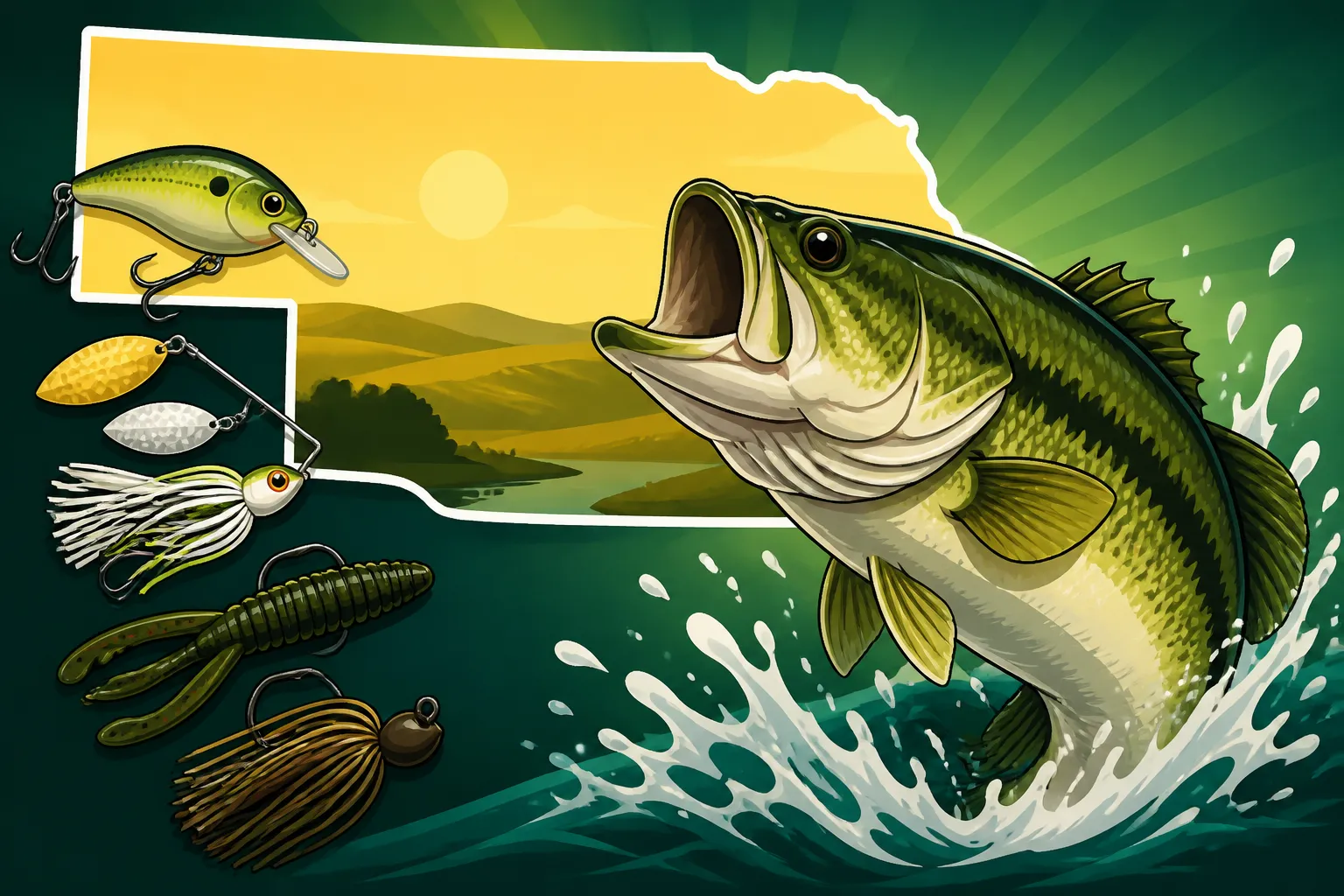
Best Lures for Nebraska Bass
It can be incredibly frustrating to head out to your favorite Nebraska fishing hole, armed with high hopes, only to cast lure after lure without a single bite, especially when you know there are bass lurking below. We've all been there, staring at a tackle box full of options and wondering which one is actually going to entice those elusive largemouth and smallmouth bass. This comprehensive guide is here to cut through the confusion, helping you understand the best lures for Nebraska bass, how to present them, and when to use them effectively.
Understanding Nebraska Bass: Largemouth vs. Smallmouth
Before we dive into the exciting world of lures, it's crucial to understand the two main types of bass you'll encounter in Nebraska: largemouth and smallmouth. While they're both members of the black bass family, their preferred habitats, feeding habits, and even their fight are distinctly different, and knowing these differences is key to choosing the right lure. Trying to catch a smallmouth with a giant flipping jig meant for heavy cover largemouth might just leave you scratching your head.
Largemouth Bass: The Reservoir and Pond Dweller
The largemouth bass is probably what most people picture when they think of bass fishing. These green giants are famous for their aggressive strikes and their love for heavy cover. In Nebraska, you'll find largemouth thriving in a vast array of waters, from the sprawling reservoirs like Branched Oak Lake and Lake McConaughy to countless farm ponds, urban lakes, and the slower backwaters of rivers. They are structure-oriented fish, meaning they'll relate to anything that provides cover or ambush points. Think weed beds, lily pads, submerged timber, docks, rock piles, and even bridge pilings. Their diet is incredibly varied, including baitfish, crawfish, frogs, and even small birds or rodents, which means they're susceptible to a wide range of lures that imitate these food sources.
Largemouth bass are often characterized by their dark green backs fading to a lighter green or white belly, with a prominent dark horizontal stripe running along their sides. Their most defining feature, of course, is that mouth – when closed, the corner of their jaw extends past their eye. This big mouth allows them to engulf larger prey and larger lures, which gives us a lot of exciting options when selecting our tackle. Understanding their preference for cover and their opportunistic feeding nature is the first step toward successful largemouth fishing here in Nebraska.
Smallmouth Bass: River and Rocky Lake Warriors
While perhaps less prevalent than their largemouth cousins, Nebraska's smallmouth bass offer an exhilarating fight that many anglers swear by. You'll typically find these bronze beauties in clearer, cooler waters with rocky bottoms, strong current, or significant rock structure. Rivers like the Niobrara River, Loup River, and Elkhorn River hold excellent populations, as do some of our rockier reservoirs and lakes, particularly those with good current or deeper, clearer sections. Unlike largemouth that ambush from heavy cover, smallmouth often patrol rocky banks, submerged humps, and current breaks, actively hunting for crawfish, baitfish, and insects.
Smallmouth bass are easily identified by their bronze or brownish-green coloration, often with vertical bars or mottling on their sides, rather than a distinct horizontal stripe. When their mouth is closed, the corner of their jaw usually doesn't extend beyond the middle of their eye. They might not get as big as some largemouth, but what they lack in sheer size, they more than make up for in fighting spirit. They are notorious for their acrobatic jumps and powerful runs, making them an incredible sport fish. Targeting smallmouth often requires a different approach, focusing on smaller, more subtle presentations that mimic the forage found in their rocky, current-swept environments. Knowing these differences is paramount to choosing the right tool for the job. You can learn more about specific tactics in our guide to Nebraska Smallmouth Bass Fishing.
Must-Have Lure Categories for Largemouth Bass in Nebraska
When it comes to pursuing largemouth bass in Nebraska, having a diverse arsenal of lures is crucial. These fish can be finicky, and what works one day might be ignored the next. From the dense cover of a Sandhills pond to the open waters of a large reservoir, different situations call for different tactics.
Soft Plastics: Versatility is Key
If there's one category of lures that every Nebraska bass angler needs in their tackle box, it's soft plastics. These incredibly versatile baits can imitate everything from worms and crawfish to baitfish and leeches, and they can be rigged in countless ways to suit any situation. The beauty of soft plastics lies in their natural feel and subtle action, which often triggers bites from even the most cautious bass. Worms, creature baits, flukes, and tubes are all staple choices. For example, a Texas-rigged plastic worm or creature bait is virtually weedless, allowing you to punch through dense vegetation or wood where big bass hide. A weightless fluke twitched near cover can perfectly mimic a dying baitfish, a tactic that often works wonders in clear water.
When it comes to specific types, classic plastic worms in green pumpkin, black and blue, or junebug colors are always reliable. Try a 7-inch worm on a Texas rig in heavy cover, or a wacky-rigged 5-inch stick bait around docks or weed edges for a more subtle presentation. Creature baits, with their flapping appendages, are excellent for imitating crawfish on the bottom. You can find a huge variety of these on platforms like Amazon, making it easy to experiment with different shapes and sizes. Don't forget jig trailers either; adding a small creature bait or a grub to a bass jig can significantly enhance its appeal. The sheer range of soft plastic options means you can always find something to match the hatch or provoke a strike, no matter the conditions or the mood of the bass. For specific advice, check out our piece on Best Soft Plastic Worm Colors for Nebraska Ponds.
Crankbaits and Jerkbaits: Covering Water and Triggering Bites
When bass are actively feeding or you need to cover a lot of water to find them, crankbaits and jerkbaits are your go-to options. These hard-bodied lures are designed to dive to specific depths, wobble enticingly, and imitate fleeing baitfish. Crankbaits come in various shapes and sizes, from shallow-diving square bills that deflect off cover without snagging, to deep-diving models that can reach depths of 20 feet or more. Jerkbaits, on the other hand, are designed to be retrieved with a twitch-twitch-pause retrieve, mimicking an injured baitfish struggling to swim. That pause is often when the bass strikes, ambushing the seemingly vulnerable prey.
In Nebraska, a good selection of crankbaits is essential for fishing reservoirs like Harlan County Reservoir or Sherman Reservoir, which have varied bottom contours and structure. Shallow crankbaits are excellent for working rocky shorelines or over submerged grass beds, while medium and deep divers excel at targeting ledges, humps, and points. Look for colors that mimic local forage like shad, sunfish, or crawfish. Jerkbaits are particularly effective in cooler water temperatures, especially in spring and fall, when bass are more prone to suspend and react to erratic movements. They are also incredibly effective in clear water where bass can track a lure from a distance. Having a few different sizes and dive depths will ensure you're prepared for whatever the bass might be doing. For more detailed information on selection, see our guide on Best Crankbaits for Nebraska Bass.
Topwater Lures: The Thrill of the Surface Strike
There's nothing quite like the explosive thrill of a bass blowing up on a topwater lure. These baits work on the surface of the water, mimicking struggling baitfish, frogs, or even small rodents, and they can be incredibly effective during low-light conditions or when bass are feeding aggressively near the surface. Poppers, walk-the-dog baits, frogs, and buzzbaits are among the most popular topwater options. Poppers create a "chug" and splash, while walk-the-dog baits like a Heddon Super Spook glide side-to-side, tempting bass with an irresistible dance.
Topwater lures are generally most effective from late spring through early fall, especially during dawn, dusk, or on cloudy days. They shine in areas with abundant surface cover, such as lily pads, dense aquatic vegetation, or over submerged timber where bass feel secure ambushing prey from below. A hollow-bodied frog, for instance, can be fished directly over thick mats of weeds where other lures would snag instantly, making it a powerful tool for fishing shallow, overgrown areas. Buzzbaits, with their noisy propeller, call fish in from a distance and can be fantastic for covering water quickly along weed lines or shorelines. Don't forget that classic Zara Spook or a Strike King KVD Sexy Dawg for that walk-the-dog action! If you're looking for that heart-pounding strike, you'll definitely want a selection of these. Discover more about specific types in our article, Best Topwater Lures for Early Morning Bass.
Spinnerbaits and Chatterbaits: Flash and Vibration
When it comes to generating attention and triggering reaction strikes, spinnerbaits and chatterbaits are hard to beat. These lures combine flash, vibration, and often a skirted profile to create an irresistible presentation that bass simply can't ignore. Spinnerbaits feature one or more blades that spin, creating flash and vibration, along with a lead head and a skirt that pulsates through the water. They are remarkably snag-resistant, making them excellent for fishing through wood, weeds, and sparse cover.
Chatterbaits, or bladed jigs, feature a unique hexagonal blade attached to the front of a jig head. This blade vibrates wildly as the lure is retrieved, causing the jig and its skirt to shimmy and shake. This erratic, high-vibration action is incredibly enticing to bass, mimicking a baitfish trying to escape or a crawfish scuttling along the bottom. Both spinnerbaits and chatterbaits are excellent for covering water quickly, particularly in stained or murky conditions where their visual and sonic appeal helps fish locate them. They can be fished at various depths by simply adjusting retrieve speed and weight. Try a white or chartreuse spinnerbait in spring around spawning areas, or a black and blue chatterbait with a complementary trailer when fishing deeper structure. These baits are fantastic for triggering aggressive bites, especially when other lures aren't producing.
Key Lures for Targeting Smallmouth Bass in Nebraska Rivers and Lakes
Smallmouth bass fishing is a unique and exciting challenge, particularly in Nebraska's clearer rivers and rocky lakes. Their preferences lean towards baits that mimic their primary forage: crawfish, smaller baitfish, and insects. A subtle approach is often more effective, especially in highly pressured waters.
Jigs and Tubes: Imitating Forage on the Bottom
When it comes to smallmouth, jigs and tubes are absolute powerhouses. These lures excel at imitating crawfish, gobies, and other bottom-dwelling prey that make up a significant portion of a smallmouth's diet. A simple jighead paired with a soft plastic tube bait is incredibly effective. The tube, with its hollow body and tentacles, spirals enticingly on the fall and looks remarkably like a crawfish defending itself on the bottom. Smallmouth often pick them up on the initial fall or after a short hop. Fishing jigs and tubes requires a subtle feel, as smallmouth bites can sometimes be very light, feeling like a slight "tick" or just added weight.
Beyond tubes, various small finesse jigs, often paired with small plastic craw or grub trailers, can be deadly. Colors like green pumpkin, brown, and watermelon are excellent choices, mimicking the natural hues of crawfish and other bottom dwellers. When fishing rivers, casting upstream and allowing your jig or tube to drift naturally with the current, occasionally hopping it along the bottom, can be incredibly productive. For lake smallmouth, target rocky points, drop-offs, and humps, letting the bait sit on the bottom for extended periods. The slow, methodical approach with jigs and tubes often yields some of the biggest smallmouth, as it appeals to their natural inclination to feed on the bottom.
Small Crankbaits and Jerkbaits: Matching the Hatch
Smallmouth are often found feeding on smaller baitfish, so matching that profile with compact crankbaits and jerkbaits is crucial. Unlike the often larger lures used for largemouth, smallmouth prefer baits that are closer in size to the minnows and shiners they typically prey upon. Shallow-diving crankbaits that deflect off rocks are excellent for river sections with current, while suspending jerkbaits can be deadly when smallmouth are holding in deeper pockets or over submerged rock piles.
Look for crankbaits in colors that mimic shad, perch, or crawfish, with natural patterns often outperforming brighter, more aggressive colors in clear smallmouth waters. The key with jerkbaits is the retrieve – a sharp twitch-twitch-pause will make the lure dart and suspend, perfectly imitating an injured baitfish. The length of the pause can be critical, especially in cooler water; sometimes a 5-10 second pause is what it takes to trigger a strike. Manufacturers like Rapala and Lucky Craft offer excellent small crankbaits and jerkbaits that are specifically designed for smallmouth bass. Don't be afraid to experiment with different retrieve speeds and pause durations until you find what the smallmouth are responding to on a given day.
Inline Spinners and Spoons: River Favorites
For river smallmouth especially, inline spinners and small casting spoons are classics for a reason. These lures are simple, effective, and often very successful at attracting smallmouth from a distance due to their flash and vibration. Inline spinners, like the classic Mepps Aglia or Rooster Tail, consist of a weighted body, a spinning blade, and often a dressed treble hook. The blade creates a pulsating flash and vibration that smallmouth find irresistible, especially in moving water where they resemble a struggling baitfish or insect.
Casting spoons, while less common for bass than for other species, can be surprisingly effective for smallmouth, especially in deeper river pools or rocky lake areas. Small spoons, often in silver, gold, or copper finishes, flutter enticingly on the fall, mimicking dying baitfish. They can be cast out and retrieved with a steady retrieve, or jigged vertically near structure. When fishing either of these lures in current, cast slightly upstream and retrieve just fast enough to get the blade spinning or the spoon fluttering, letting the current do some of the work. These lures are particularly good when you're wading rivers and need a bait that covers water effectively and generates a quick strike from aggressive smallmouth. You can often find great multi-packs of these versatile lures on Amazon, perfect for filling out your smallmouth arsenal. When planning your river trips, be sure to check out our detailed guide on How to Catch Smallmouth Bass on the Niobrara River.
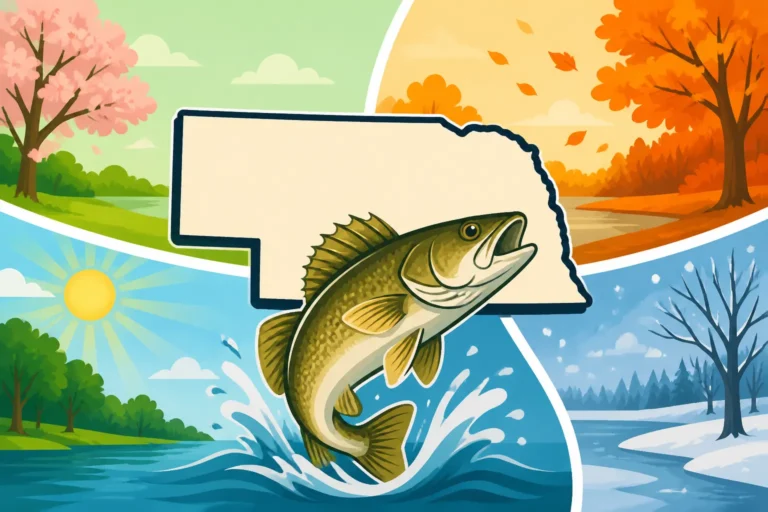
Adapting Your Lure Selection to Nebraska's Seasons
Nebraska's seasons play a massive role in bass behavior. Water temperature, available forage, and spawning cycles dictate where bass will be and what they'll be willing to bite. A successful angler understands these seasonal shifts and adjusts their lure choices accordingly.
Spring: Pre-Spawn and Spawning Strategies
Spring is a time of transition and excitement for Nebraska bass fishing. As water temperatures begin to rise from their winter lows, bass move from their deeper wintering grounds to shallower areas in preparation for spawning. This "pre-spawn" period is often characterized by aggressive feeding as bass bulk up for the energy-intensive spawning process. Large jerkbaits, lipless crankbaits, and spinnerbaits are excellent choices for covering water and finding these active fish. They'll often be staging on points, humps, and secondary breaks leading into spawning coves. As water temperatures climb into the mid-50s to low-60s (Fahrenheit), bass move onto their beds.
During the actual spawn, bass can be incredibly territorial and protective of their nests. While sight fishing for bedding bass can be effective, it's a controversial topic. Lures that can be precisely placed, like Texas-rigged soft plastics (lizards, tubes, or creature baits) or small jigs, can often trigger a strike from a bass guarding its bed. However, often the best approach during the spawn is to target areas just outside the primary spawning grounds, looking for pre-spawn or post-spawn fish that are more actively feeding. The fish that have just finished spawning are usually recuperating and might be less aggressive, but still catchable with subtle presentations. For a deeper dive into this exciting time, check out our guide on Spring Fishing in Nebraska.
Summer: Deep Water and Low-Light Tactics
When the heat of summer truly sets in across Nebraska, bass often move deeper to find cooler water and more stable oxygen levels. This doesn't mean they're impossible to catch, just that your tactics need to adapt. During the brightest parts of the day, bass will relate to deep structure: ledges, humps, submerged roadbeds, bridge pilings, and the thermocline (if present in larger reservoirs). Deep-diving crankbaits are fantastic for these situations, allowing you to quickly reach fish holding at depths of 15-25 feet. Heavy jigs with craw trailers, football jigs, and Carolina-rigged soft plastics are also excellent for working these deeper structures.
However, summer also offers incredible opportunities for shallow water bass during low-light periods. Early mornings, late evenings, and even night fishing can be incredibly productive, as bass move shallower to feed under the cover of darkness. This is prime time for topwater lures like poppers, buzzbaits, and walking baits. Flipping and pitching soft plastics into dense cover (like lily pads or heavy brush) can also yield big bites from shallow-holding bass that are seeking shade and ambush points. In extremely hot weather, slowing down your presentation and focusing on shade and oxygen-rich areas, such as near aerators or springs, can make all the difference. Read more about summer strategies in Summer Fishing in Nebraska.
Fall: Feeding Frenzy and Transition Zones
As summer transitions into fall, and water temperatures begin to drop, Nebraska bass enter a glorious "feeding frenzy." They know winter is coming and need to pack on weight, making them incredibly aggressive and willing to chase down lures. This is often one of the best times of year to catch both numbers and big bass. Initially, as temperatures cool, bass will still be somewhat spread out, chasing baitfish in open water. Lipless crankbaits, spinnerbaits, and swimbaits are excellent for covering these vast areas and imitating the shad and other baitfish that bass are gorging on.
As fall progresses and water temperatures continue to drop, bass will begin to follow baitfish into shallower coves and creek arms, concentrating in predictable patterns. This is a fantastic time for jerkbaits, especially suspending models, as bass often key in on dying baitfish that are stunned by the cold. Jigs and soft plastics become increasingly effective as bass start to settle into wintering patterns, relating more tightly to bottom structure. Look for transition zones where deeper water meets shallow flats, and areas where baitfish are abundant. The fall bite can be some of the most exciting fishing of the year, offering incredible action as bass aggressively chase down a wide variety of lures. Learn more about fall tactics in our detailed guide on Fall Fishing in Nebraska.
Enhancing Your Bass Fishing Success: Techniques and Considerations
Beyond just knowing which lures to throw, understanding how to present them and having the right gear can elevate your bass fishing game significantly. It’s not just about the lure itself, but how you make it dance.
Understanding Color and Presentation
Lure color is often debated among anglers, but there's no denying its importance, especially in Nebraska's diverse water conditions. Generally, bright colors like chartreuse, white, or firetiger work best in stained or murky water, as they provide better visibility and contrast. In clear water, more natural colors that mimic local forage, such as green pumpkin, watermelon, browns, and shad patterns, tend to be more effective. UV-reactive colors can also play a role, especially in deeper or low-light conditions. It’s good practice to start with natural colors in clear water and brighter colors in dirty water, then adjust based on the bass's response. The mood of the fish also influences color choice; sometimes a subtle natural color is key, while other times a bright, obnoxious color will trigger a reaction strike.
Presentation, however, can be even more critical than color. The speed of your retrieve, the pauses, the twitches – these are the nuances that make a lure come alive. For instance, a soft plastic worm might be most effective when slowly dragged along the bottom, mimicking a crawfish, while a jerkbait might require sharp snaps and long pauses to replicate a dying baitfish. Learning to "read" the fish and experiment with different retrieves is a skill that comes with practice. Sometimes, a subtle flutter on the fall is all it takes, while other times, an aggressive retrieve is needed to elicit a reaction strike. The best anglers are constantly experimenting until they crack the code on what the bass want that day.
Importance of Rod, Reel, and Line for Bass Fishing
Having the right gear for bass fishing isn't about being fancy; it's about being effective and efficient. Different lures and techniques call for different rods, reels, and lines. For heavier applications like flipping and pitching jigs into thick cover or throwing large swimbaits, a stout baitcasting setup with a heavy action rod and braided line is almost essential. This gives you the power to pull big bass out of dense cover and the sensitivity to feel subtle bites. A good quality baitcasting reel, such as those you can find on Amazon from brands like Shimano or Daiwa, provides the casting accuracy and power needed for these techniques. You can learn more about specific setups in our guide on Best Baitcasting Reels for Bass Fishing.
For lighter presentations, like finesse worms, small jerkbaits, or topwater poppers, a medium-heavy spinning rod and reel combo with fluorocarbon or monofilament line is often preferred. Spinning gear allows for easier casting of lighter lures and often provides better line management for techniques that require a lot of slack line. Line choice is also paramount: braided line offers incredible strength and sensitivity, ideal for heavy cover. Fluorocarbon is nearly invisible underwater and has low stretch, making it excellent for clear water and feeling subtle bites, while monofilament is more forgiving with stretch and floats, making it ideal for topwater. Often, anglers will combine lines, using braided mainline with a fluorocarbon leader for the best of both worlds. Understanding the properties of each type of line and how they interact with your chosen lure and technique will dramatically improve your success. For more on specific line choices, especially in clear water, refer to Best Fluorocarbon Leader for Clear Water Bass Fishing.
Reading the Water: Structure and Cover
No matter how good your lures are, if you're not putting them where the bass live, you're not going to catch fish. Learning to "read the water" and identify key structure and cover is a fundamental skill for any Nebraska bass angler. Structure refers to changes in the bottom contour, like drop-offs, humps, points, submerged roadbeds, or creek channels. Cover refers to physical objects like weed beds, lily pads, submerged timber (laydowns, brush piles, stumps), docks, bridge pilings, or rock piles. Bass will invariably relate to one or both of these, using them for ambush points, shade, protection, or as staging areas.
Think about how bass use these features. A largemouth might be tucked under a dock or deep within a weed mat, waiting to ambush unsuspecting prey. A smallmouth might be cruising a rocky point or holding just off a current break in a river. Understanding the seasonal patterns of how bass use these features is also key. In spring, they'll be in shallower spawning areas. In summer, they'll retreat to deeper, cooler water or dense shade. In fall, they'll follow baitfish into shallower coves. Utilizing electronics like a good fish finder can help immensely in locating submerged structure. Without a boat, focus on accessible shorelines, points, and visible cover. Whether you're fishing a vast reservoir like Lake McConaughy or a local farm pond, learning to identify these key holding areas will put your lures in front of more fish. For those who enjoy fishing local waters, our guide on How to Catch Largemouth Bass in Farm Ponds offers great insights.
Here's a quick reference table for some popular bass lures in Nebraska:
| Lure Type | Target Species | Best Conditions | Key Actions | Best Imitates |
|---|---|---|---|---|
| Soft Plastics | Largemouth, Smallmouth | All conditions, especially clear water | Slow drag, hop, twitch, pitch, flip | Worms, crawfish, baitfish |
| Crankbaits | Largemouth, Smallmouth | Active fish, covering water, varying depths | Steady retrieve, stop-and-go | Baitfish, crawfish |
| Jerkbaits | Largemouth, Smallmouth | Cooler water, clear water, suspended fish | Twitch-twitch-pause | Injured baitfish |
| Topwater Lures | Largemouth, Smallmouth | Low light, calm water, over cover | Pop, walk-the-dog, buzz | Baitfish, frogs, insects |
| Spinnerbaits | Largemouth, Smallmouth | Stained water, wind, cover, active fish | Steady retrieve, slow roll, pump | Baitfish, reaction bite |
| Chatterbaits | Largemouth, Smallmouth | Stained water, wind, cover, active fish | Steady retrieve, stop-and-go, jigging | Crawfish, fleeing baitfish |
| Jigs & Tubes | Largemouth, Smallmouth | Bottom fishing, subtle presentation | Hop, drag, swim, subtle shake | Crawfish, gobies, baitfish |
| Inline Spinners | Smallmouth | Rivers, clear water, active fish | Steady retrieve, drift with current | Baitfish, insects |
Disclaimer
Fishing regulations, license requirements, and local conditions can change. Always consult the latest Nebraska Game and Parks Commission regulations before heading out on the water. This guide is for informational purposes only and should not be considered legal advice.