Best Jig Head Weight for Deep Walleye
There's nothing quite as frustrating as feeling like you're just dragging a lead weight through the water, wondering if your bait is even reaching the walleye you know are down there. Or worse, feeling a tiny tick and wondering if it was a fish or just a rock because you couldn't quite discern the difference. Fishing deep for walleye, especially in Nebraska's expansive reservoirs and rivers, presents a unique challenge, and a huge part of cracking that code comes down to one often-overlooked detail: your jig head weight. This guide is all about helping you understand the crucial role jig head weight plays in deep water walleye success, so you can stop guessing and start catching.
Understanding Deep Water Walleye Behavior
Walleye are incredibly adept predators, and their behavior shifts dramatically based on environmental factors like light, temperature, and forage availability. When they move into deeper water, it's not just a casual stroll; it's a strategic move, and understanding why helps us pick the right tools for the job.
Why Walleye Go Deep
Several key reasons drive walleye to deeper parts of Nebraska's lakes and rivers. One of the primary factors is light sensitivity. Walleye have large, light-sensitive eyes, making them excellent low-light hunters. During bright, sunny days, especially in clear water bodies like Lake McConaughy, they'll often retreat to deeper, darker water to escape the harsh sun. It’s their natural way of seeking comfort and finding an advantage over their prey. Another significant draw is temperature. As surface waters warm up in the summer, deeper thermoclines offer cooler, more oxygenated water where they can be more comfortable and active.
Finally, food availability plays a huge role. Often, schools of baitfish will congregate in deeper water, following currents or seeking refuge themselves. Where the bait goes, the walleye will follow. So, if you're marking schools of shad or smelt on your sonar in 20-30 feet of water, chances are there are walleye lurking nearby. Understanding these motivations is the first step in knowing you need to get your bait down there effectively.
Reading the Bottom and Structure
Deep water isn't just a flat, featureless plain; it's a complex landscape with hidden treasures and hazards. Walleye love structure – anything that breaks up the monotony of the bottom and offers ambush points or shelter. This could be submerged humps, rocky points, old river channels, standing timber, or even the remnants of old roadbeds. Learning to read your sonar and identify these features is paramount.
When you're jigging deep, you're not just trying to hit a certain depth; you're trying to present your bait on or around specific pieces of structure where walleye are holding. A jig that's too light might drift away from the target before it gets down, while one that's too heavy might get snagged too easily or fall past the strike zone too quickly. Paying close attention to how your boat is drifting, how the wind is affecting your line, and what your fish finder is showing you about the bottom contour will help you decide if you're indeed fishing the structure effectively. Remember, walleye often hug the bottom, so your presentation needs to be right in their wheelhouse.
The Science Behind Jig Head Weight
Picking a jig head isn't just grabbing the first one you see. There's a subtle science to it, all about balance and creating the right presentation that appeals to those discerning walleye.
Factors Influencing Optimal Weight
The "optimal" jig head weight isn't static; it's a dynamic choice influenced by several factors. First, and perhaps most obvious, is depth. The deeper you're fishing, the heavier your jig generally needs to be to reach the bottom efficiently and maintain contact. However, it's not just about getting it there; it's about control.
Current is another massive factor, especially when fishing rivers like the Platte or specific areas of the Missouri River where current can be significant. Strong currents will sweep a light jig away, making it impossible to stay vertical or on structure. Even in reservoirs, subtle currents can exist, especially near dam spillways or narrows. Wind also plays a huge role. A strong breeze on a large reservoir like Harlan County or Lake McConaughy can create a substantial "bow" in your fishing line, making it incredibly difficult to feel bites or keep your jig close to the bottom. A heavier jig helps cut through the wind's influence on your line.
Finally, bait size matters. If you're tipping your jig with a large minnow, a substantial soft plastic, or a crawler harness, that bait itself adds drag and buoyancy. You'll need a heavier jig head to counteract that and ensure your presentation is sinking at the desired rate and staying in the strike zone. Finding that sweet spot often involves the principle of using the lightest possible jig head while still being able to maintain bottom contact and feel the bite. This allows for the most natural presentation. You can find a huge variety of jig heads at local bait shops or larger retailers like Bass Pro Shops, making it easy to experiment.
The Importance of Feel and Presentation
In deep water jigging, "feel" is everything. It's how you know if your jig is bumping rocks, dragging through mud, or being gently mouthed by a walleye. A jig head that's too light for the conditions will give you a "mushy" feel, making it hard to distinguish subtle bites from bottom contact. You'll spend more time wondering what's happening than actually reacting. Conversely, a jig head that's too heavy might plummet to the bottom so fast that you overshoot the fish, or it could feel so heavy that you miss the delicate tap of a walleye inhaling your bait.
The goal is a distinct "thump" when your jig hits the bottom, followed by a crisp sensation as you lift and drop it. This clear feedback allows you to react instantly to a strike. The presentation itself also depends on the jig weight. A lighter jig will have a slower, more enticing fall, fluttering down more naturally, which can be deadly when walleye are finicky. A heavier jig falls faster, which is great for covering water quickly or punching through strong current, but it might not have the same "hang time" in the strike zone. Understanding this balance is key to mastering deep water walleye.
Choosing the Right Jig Head Weight for Nebraska's Deep Walleye
So, how do you translate all this theory into practical application on a Nebraska lake or river? Let's break down some common scenarios and corresponding jig head weights.
Common Depths and Corresponding Weights
There's no single "magic" jig head weight that works everywhere, every time. Instead, it's about adapting to the specific conditions you face on a given day in Nebraska. Here’s a general guideline, but always be prepared to adjust:
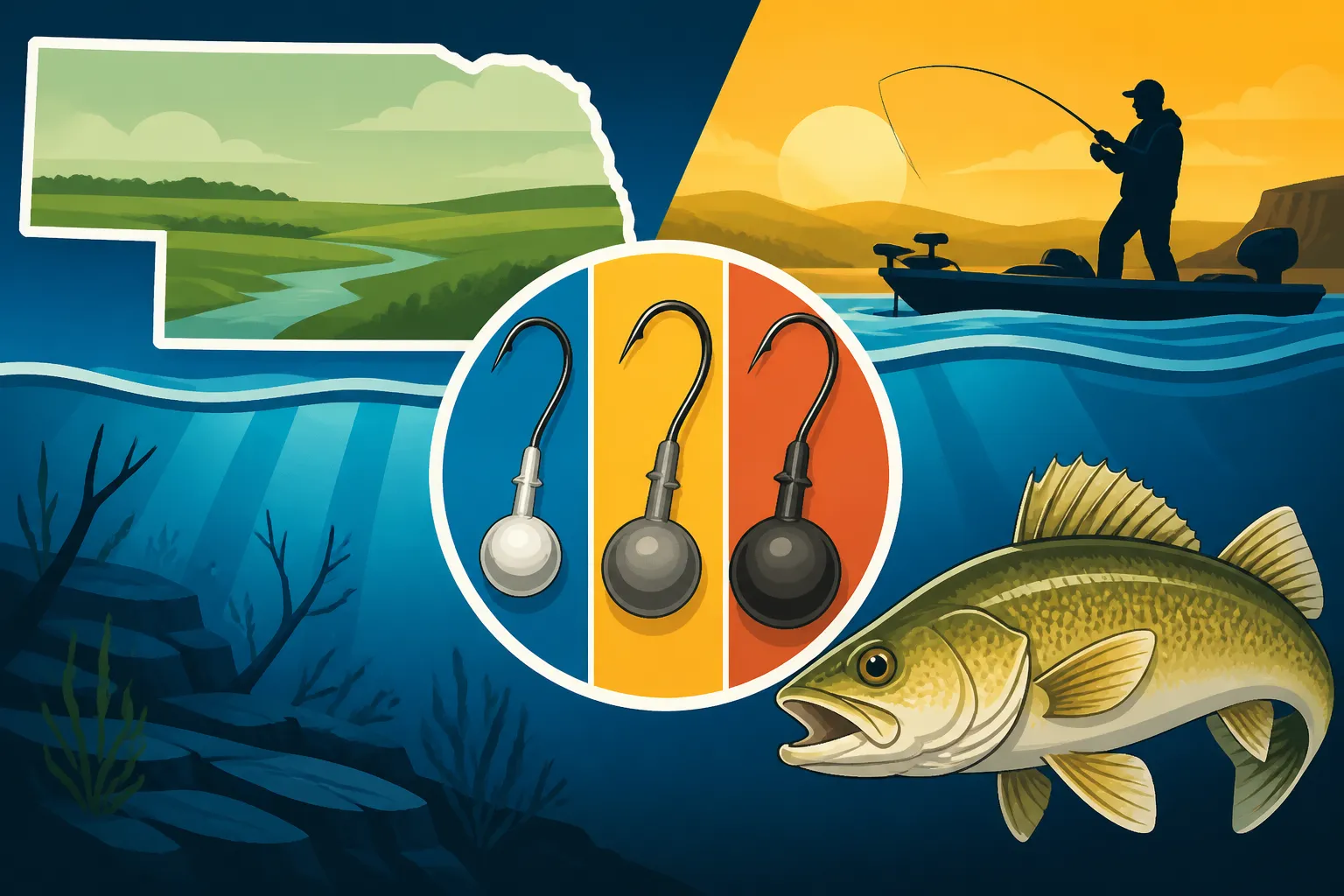
- 10-15 feet deep (lighter conditions): In these shallower "deep" areas, especially on calm days or with minimal current, a 1/8 oz to 1/4 oz jig head is often ideal. This weight allows for a slower fall, giving the walleye more time to react, and provides excellent feel for subtle bites. Think areas like the edges of drop-offs at Branched Oak Lake.
- 15-25 feet deep (moderate conditions): This is a very common depth range for walleye. Here, 3/8 oz to 1/2 oz jigs become your workhorses. They're heavy enough to get down quickly and maintain contact, even with some wind or current, while still offering a good presentation. These are great for fishing humps at Merritt Reservoir or deeper points on Lake McConaughy.
- 25-40 feet deep (deeper conditions or strong current/wind): When you're really plumbing the depths, or battling significant wind and current, you'll need to beef up your jig head. 5/8 oz to 3/4 oz (and sometimes even 1 oz or more) are necessary to effectively reach and work these depths. Without this weight, your line will bow out too much, and you'll lose all feel. This applies to vertical jigging in the main basin of large reservoirs or fishing specific holes in the Missouri River.
It's always a good idea to have a range of weights in your tackle box. If you're just starting out, a multi-pack of jigs with various weights can be a smart purchase, readily available from online retailers like Amazon or your local Bass Pro Shops. Best Jigs for Nebraska Walleye offers more specific recommendations for lure types.
| Depth Range (Feet) | Conditions (Wind/Current) | Recommended Jig Head Weight (Oz) | Primary Benefit |
|---|---|---|---|
| 10-15 | Light/Calm | 1/8 – 1/4 | Natural fall, excellent feel |
| 15-25 | Moderate | 3/8 – 1/2 | Versatile, good balance of depth & feel |
| 25-40+ | Strong/Deep | 5/8 – 1+ | Rapid descent, bottom contact in tough conditions |
Jig Head Styles and Their Impact
Beyond just weight, the style of your jig head can also make a difference in deep water. Different shapes are designed for different actions and presentations.
- Round Head Jigs: These are the most common and versatile. They offer a simple, straightforward fall and are excellent for vertical jigging directly beneath the boat. Their round shape helps them tumble and settle naturally on the bottom.
- Stand-Up Jigs: As the name suggests, these jigs are designed to stand up on the bottom when at rest, presenting your soft plastic or live bait upward in a more natural feeding posture. This can be deadly when walleye are sluggish and you need to keep your bait stationary yet visible. They're often slightly heavier in the front.
- Bullet or Football Head Jigs: These shapes are great for dragging along the bottom. The football shape, in particular, tends to rock and roll over rocks and structure with fewer snags than a round head. They're also effective for swimming presentations if you're trying to cover a bit more ground.
- Erie-Style Jigs: Often featuring a more elongated head, these jigs are popular for their ability to cut through current and descend quickly. They also provide a slightly different erratic action on the retrieve, which can trigger strikes.
While weight is paramount, considering the shape for specific presentations can fine-tune your deep water approach. If you're aggressively hopping a jig, a round head is fine. If you're trying to fish slowly and methodically, allowing your bait to "rest" on the bottom, a stand-up jig might give you an edge. How to Rig a Jig for Nebraska Walleye will delve into specific rigging setups that pair well with these various jig styles.
Advanced Tips for Deep Water Jigging
Once you've got the basics of jig head weight down, there are a few other tricks and techniques that can really elevate your deep water walleye game in Nebraska.
Line Choice and Sensitivity
Your choice of fishing line is absolutely critical when fishing deep. It's the direct connection between you and your jig, and any loss of sensitivity means lost bites.
- Braided Line: For deep water walleye, braided line is almost always the superior choice. It has virtually no stretch, meaning every bump, tick, and subtle weight change is transmitted directly to your rod tip. This enhanced sensitivity is invaluable when trying to distinguish between a light walleye bite and bottom structure. Use a mainline of 8-15 lb test braid. However, braid is highly visible, so you’ll almost always want to tie on a Best Fluorocarbon Leader for Clear Water Bass Fishing of 6-10 lb fluorocarbon. Fluorocarbon is nearly invisible underwater and has excellent abrasion resistance for fishing around rocks.
- Fluorocarbon Line: While fantastic as a leader, using straight fluorocarbon for your main line in very deep water can be a bit challenging. It has low stretch compared to monofilament, but it does stretch a bit more than braid. Its higher density also helps it sink faster, which can be an advantage. Some anglers prefer it for its stealth and feel, but braid with a fluoro leader generally offers the best of both worlds.
- Monofilament Line: Monofilament, with its significant stretch, is generally not recommended for deep water jigging. That stretch will dampen your feel, making it incredibly difficult to detect those subtle walleye bites at 20, 30, or even 40 feet down. Stick to mono for shallower applications or when targeting different species.
For more information, check out Best Fishing Line for Nebraska Walleye.
Experimentation and Adaptation
Fishing is rarely a static endeavor, and what worked yesterday or even an hour ago might not work now. The best deep water walleye anglers are constantly experimenting and adapting.
- Start with a mid-range weight: If you're unsure, begin with a 3/8 oz or 1/2 oz jig head in moderate depths. Then, pay close attention to how it feels. Are you losing bottom contact? Do you feel too much resistance? Is your line bowing heavily in the wind? Adjust up or down in weight from there.
- Observe fish activity: Your fish finder is your best friend. Are walleye suspended higher in the water column, or are they hugging the bottom? If they're suspended, a lighter jig might be better to maintain that suspended depth. If they're glued to the bottom, a heavier jig for more precise bottom contact is key.
- Consider the mood of the fish: Sometimes walleye are aggressive, and they'll slam anything that comes their way. Other times, they're finicky, barely mouthing the bait. When they're finicky, a slower, more natural fall from a lighter jig can make all the difference. When they're aggressive, you might get away with a heavier, faster-falling jig that covers more ground.
- Don't be afraid to change: If you're not getting bites, don't just keep doing the same thing. Change your jig head weight, try a different style, adjust your retrieve, or even change your fishing spot. Walleye in Nebraska's diverse waters, from the quiet Sandhills lakes to the bustling Lewis and Clark Lake, are always presenting new puzzles to solve. Being flexible is a hallmark of a successful angler. How to Fish for Walleye in Nebraska provides more general techniques that apply to this adaptability.
Deep water jigging for walleye in Nebraska is a rewarding pursuit that demands patience, precision, and an understanding of your gear. By carefully considering your jig head weight and how it interacts with the specific conditions you're facing, you'll be well on your way to more confident presentations and, most importantly, more fish in the boat or on the bank. Tight lines, fellow anglers!
Disclaimer
This article is for general informational purposes only and does not constitute professional advice. Laws, prices and regulations vary by location and change over time. Consult a qualified professional for guidance on your specific situation.