Best Landing Nets for Big Fish
There's nothing quite like the thrill of a big fish on the line here in Nebraska. You've battled it, played it carefully, and finally, it's right there, shimmering just below the surface. But then what? That crucial moment often separates a successful landing from a heartbreaking "one that got away" story. Many anglers, especially when targeting trophy-sized walleye, monster catfish, or powerful bass, underestimate the importance of a quality landing net. This guide is here to walk you through everything you need to know about choosing and using the best landing nets to safely and effectively land those substantial catches in Nebraska's diverse waters, ensuring both your success and the fish's well-being.
Why a Dedicated Landing Net is Absolutely Essential for Big Fish
When you're reeling in a significant fish, whether it's a huge channel cat from the Platte River or a hefty walleye from Lake McConaughy, the final moments are often the most critical and chaotic. Relying on hand-landing or trying to hoist a heavy, thrashing fish by the line can lead to disaster for both you and the fish. A properly chosen landing net isn't just a convenience; it's a vital piece of equipment that protects your catch, your gear, and yourself.
Protecting Your Catch and Ensuring a Safe Release
One of the primary reasons for using a dedicated landing net, especially for larger fish, is to minimize stress and injury to the fish. When a big fish is flopping around on the bank or boat deck, it can easily damage its fins, scales, or even its internal organs. A good net cradles the fish, keeping it contained and calm, making it easier to unhook and either release or quickly secure. For those practicing Catch and Release Best Practices in Nebraska, a net designed with fish safety in mind is non-negotiable.
Beyond physical injury, the prolonged fight and handling can quickly deplete a fish's energy, making it vulnerable after release. A quick, efficient netting process reduces the fight time and allows for a faster, less traumatic release. This is particularly important for species like walleye and bass, which can be sensitive to overhandling. Choosing the right net can drastically improve a fish's chances of survival post-release, which is something every responsible angler cares deeply about.
Angler Safety and Equipment Protection
Imagine hooking into a massive flathead catfish in the Missouri River. These fish are not only powerful but often come equipped with sharp fins and powerful jaws. Trying to hand-land such a creature without proper technique or protection can result in painful scrapes, punctures, or even broken skin. A sturdy landing net keeps your hands away from hooks and fins, providing a safe buffer between you and a potentially dangerous fish.
Furthermore, attempting to lift a heavy fish directly by the fishing line is a recipe for disaster. Your line, rod, or even your rod tip can snap under the strain, turning a triumphant moment into a costly mistake. The net distributes the fish's weight, allowing you to lift it safely without putting undue stress on your fishing tackle. This protects your valuable Best Rods and Reels for Nebraska Fishing and ensures you're ready for the next battle.
Understanding Different Types of Landing Nets for Nebraska Anglers
Just like there are different fishing techniques for different species, there are various types of landing nets, each designed for specific situations and fish sizes. For Nebraska anglers, understanding these differences is key to making an informed choice that will serve you well, whether you're targeting big channel catfish or trophy walleye.
Rubber-Coated and Knotless Mesh Nets: The Gold Standard for Fish Care
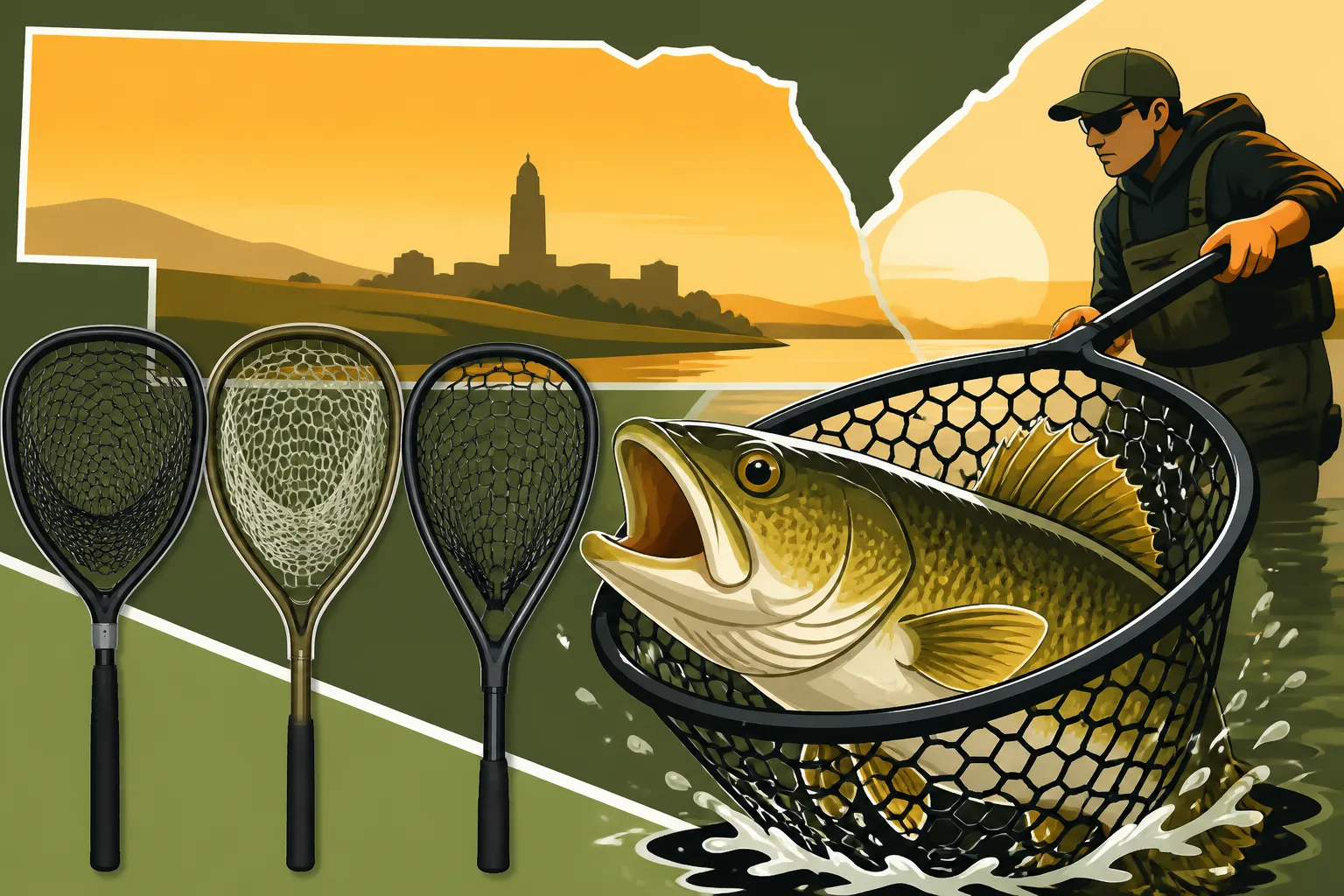
When it comes to big fish, especially those you intend to release, rubber-coated or knotless mesh nets are hands down the best choice. Traditional knotted nylon nets, while durable, can strip away a fish's protective slime coat, which acts as its first line of defense against disease. The knots can also cause fin damage and even gill trauma, particularly on larger, heavier fish struggling in the net.
Rubber-coated or fully rubber mesh nets are much gentler. Their smooth, flexible material minimizes friction, preserving the fish's slime coat. The larger, often hexagonal, mesh size also reduces tangles with hooks, which is a huge plus when trying to unhook a feisty fish quickly. This is especially vital when How to Catch Walleye in Nebraska, as their delicate fins and scales benefit greatly from gentle handling. These nets might feel a bit heavier and cost a little more, but for the health of your catch and the ease of hook removal, they are an invaluable investment.
Telescopic and Fixed-Handle Nets: Reach and Strength Considerations
The handle length of your landing net is a critical factor, directly impacting your reach and leverage.
-
Telescopic Handles: These are incredibly versatile, allowing you to extend the net's reach when needed, then collapse it for easy storage. This is particularly useful for bank fishing, wading, or when fishing from a smaller boat where space is limited. If you're How to Fish From Shore in Nebraska at a spot with high banks or a steep drop-off, a telescopic handle gives you the extra length to reach the water's edge and safely scoop your catch. They typically come with two or three extendable sections and twist-lock or push-button mechanisms.
-
Fixed-Handle Nets: Offering superior rigidity and strength, fixed-handle nets are often preferred by serious boat anglers or those who consistently target truly massive fish. Without moving parts, there's no weak point for the handle to flex or collapse under the weight of a heavy, struggling fish. The trade-off is their length, which can be cumbersome in tight spaces. For open water situations like Best Boats for Nebraska Reservoir Fishing or a spacious bass boat, a fixed-handle net might be the ultimate choice for stability and power.
Hoop Size and Net Depth: Tailoring to Your Target Species
The size of the net's hoop and the depth of the mesh bag are paramount when considering big fish. A net that's too small will simply not contain a large fish, leading to frustration and potential loss.
-
Hoop Size: For big walleye, bass, and especially channel catfish, you want a hoop that's generously sized, often 20-30 inches across. This allows you to scoop the fish head-first without having to force it, which is stressful for the fish and difficult for you. Think about the average size of the "big fish" you typically target. If you're consistently catching 5-pound bass, a 20-inch hoop might suffice. If you're dreaming of 20-pound plus flatheads, you'll want something much larger, perhaps a 30-inch hoop or even wider.
-
Net Depth: Deep nets are crucial for keeping a large, thrashing fish contained once it's in the net. A shallow net might allow a powerful fish to jump or swim out before you can secure it. For most big game fish in Nebraska, a net depth of at least 24-30 inches is recommended. This provides enough slack for the fish to settle comfortably in the bottom of the net, minimizing its ability to escape and giving you time to manage hooks. Best Landing Net Size for Big Catfish will certainly lean towards deeper, wider nets.
| Net Type | Ideal For | Pros | Cons |
|---|---|---|---|
| Rubber Mesh | Catch & Release, Delicate Species | Extremely fish-friendly, hook-free, no slime coat removal | Heavier, more expensive, can be bulky |
| Knotless Nylon | Good all-around, better than knotted | Lighter than rubber, less expensive, fairly fish-friendly | Can still snag hooks, may remove some slime if not handled carefully |
| Telescopic Handle | Versatile, Bank, Kayak, Small Boat | Adjustable reach, compact for storage, good for varying situations | Can flex or have weak points with very heavy fish, less rigid |
| Fixed Handle | Large Boats, Trophy Fish | Maximum strength and rigidity, excellent leverage for huge fish | Bulky, difficult to store in small spaces, limited reach |
| Large Hoop (25"+) | Walleye, Bass, Catfish, Pike | Ample room for big fish, less stress on fish, easier landing | Can be cumbersome to maneuver, takes up more space |
| Deep Net Bag (24"+) | Thrashing Fish, Long-bodied Fish, Pike | Keeps fish contained, reduces escapes, allows fish to rest comfortably | Can collect more water, heavier when wet |
Crucial Features to Consider When Buying a Big Fish Landing Net
Beyond the basic types, several specific features can make a significant difference in the performance, durability, and ease of use of your landing net. Thinking about these details before you buy will ensure you get a net that truly meets your needs for Nebraska Fishing.
Handle Material and Grip: Durability and Comfort
The handle is your connection to the net and the fish, so its material and grip are incredibly important.
- Aluminum: A popular choice due to its excellent strength-to-weight ratio. Aluminum handles are generally corrosion-resistant, which is essential for gear that will constantly be wet. Look for anodized aluminum for even better protection against the elements and saltwater, if you ever fish brackish waters outside of Nebraska.
- Fiberglass/Carbon Fiber: These materials offer superior strength and rigidity, often at a lighter weight than aluminum. Carbon fiber, in particular, is extremely strong but also more expensive. These are often found in high-end fixed-handle nets designed for ultimate performance.
- Wood: While beautiful and traditional, wooden handles are less common for big fish nets due to their weight and potential for rot if not meticulously maintained. They offer a classic aesthetic but aren't typically practical for heavy-duty use.
No matter the material, a comfortable, non-slip grip is crucial. EVA foam or rubberized grips provide excellent traction, even when wet, ensuring you maintain control when landing a powerful fish. A secure grip prevents the net from slipping out of your hands at that critical moment.
Hoop Material and Construction: Strength Where It Counts
The hoop is the framework that holds the net bag and takes the brunt of the fish's weight and struggles.
- Aluminum: Like handles, aluminum hoops are common, offering a good balance of strength and weight. They are durable and resist bending under normal use. Some nets feature reinforced aluminum tubing for extra strength.
- Fiberglass/Composite: These materials provide excellent rigidity and can be molded into aerodynamic shapes, making the net easier to maneuver through the water. They are also highly resistant to corrosion.
- Solid Construction: Look for hoops that are securely attached to the handle, ideally with a single, continuous piece of metal or composite. Any joints or folding mechanisms in the hoop itself can be potential weak points when dealing with a big, strong fish.
Net Material and Mesh Size: Hook-Friendly and Fish-Safe
We've already touched on rubber-coated and knotless nets, but it's worth reiterating their importance here.
- Rubber Mesh: This is the ultimate choice for fish care. Hooks almost never snag in rubber, making for incredibly quick and easy hook removal. This speeds up the release process and drastically reduces harm to the fish. The rubber is also heavy-duty and lasts a long time.
- Knotless Nylon: A good compromise, offering better fish protection than knotted nets but often being lighter and less expensive than full rubber. Make sure the mesh openings are large enough to prevent hooks from burying deep.
- Mesh Size: For big fish, a larger mesh size (think 1-2 inches) is generally better. It allows water to flow through more easily, reducing drag when you're sweeping the net. It also minimizes snagging on lures or treble hooks. Smaller mesh is typically reserved for panfish where tiny hooks and smaller fish are the norm.
Portability and Storage: Fitting into Your Fishing Lifestyle
Even the best net is useless if it's too cumbersome to bring along or store properly.
- Folding Hoops: Some larger nets feature a folding hoop design, allowing the entire hoop to collapse, significantly reducing the net's footprint for storage. This is excellent for anglers with limited boat space or those who transport their gear frequently.
- Sheaths/Carrying Bags: Many quality nets come with a carrying sheath or bag. This protects the net from damage during transport and prevents it from snagging on other gear in your boat or vehicle. It also keeps your car clean from any lingering fish slime or odors.
- Attachment Points: If you're kayak fishing or wading, look for nets with D-rings or other attachment points that allow you to clip the net to your vest, belt, or kayak. This keeps it out of the way until needed, then readily accessible for that unexpected trophy.
Matching Your Net to Nebraska's Big Fish and Fishing Scenarios
Nebraska offers a fantastic variety of fishing opportunities, from large reservoirs to winding rivers and countless farm ponds. The "best" landing net for you will largely depend on the specific species you're targeting and where you're doing your fishing.
Species-Specific Considerations: Walleye, Catfish, and Bass
Different fish species present different challenges and have varying needs when it comes to netting.
-
Walleye: These popular game fish are known for their delicate fins and fight, often making sudden runs right at the boat. For Walleye Fishing in Nebraska, a medium-to-large hoop (20-24 inches) with a moderately deep, rubber-coated net bag is ideal. The rubber prevents scale and slime loss, which is critical for their health, especially if you're releasing them. A telescopic handle can be useful for extending reach, especially in choppy water. Many serious walleye anglers consider brands like Frabill or Ego for their walleye-specific nets, often found at retailers like Bass Pro Shops.
-
Catfish (Channel, Flathead, Blue): Nebraska's catfishing scene is legendary, with channel catfish being abundant and flatheads growing to enormous sizes in rivers like the Missouri and Platte. For Channel Catfish Fishing in Nebraska or even bigger flatheads, you need a net with serious power. Look for a very large, wide hoop (25-35+ inches) and a deep, heavy-duty rubber mesh bag. The handle should be fixed or exceptionally strong and telescopic, providing maximum leverage against a fish that can weigh dozens of pounds and has incredible power. The large hoop helps you get the entire fish in easily, preventing its barbels and fins from snagging on the net's rim.
-
Bass (Largemouth, Smallmouth): While bass might not reach the sheer weight of a flathead, a trophy largemouth or smallmouth can put up an incredible fight with acrobatic jumps. For Largemouth Bass Fishing in Nebraska, a medium-sized (18-22 inch) rubber or knotless mesh net with a good depth is usually sufficient. Bass are often released, so fish-friendly materials are a priority. A net with a slightly shorter handle is often preferred for bass boats where quick, precise netting is needed.
Bank Fishing vs. Boat Fishing: Adapting Your Reach
Where you stand (or sit) while fishing dramatically impacts the kind of net you'll need.
-
Bank Fishing: If you primarily fish from shore, piers, or jetties, reach is your number one concern. A long, telescopic-handle net is almost a requirement, allowing you to extend the net out to the water's edge, often over obstacles or down a steep bank. The ability to collapse it for transport to your favorite Best Nebraska Lakes for Shore Fishing Without a Boat is also a huge advantage. You might need a net with an even longer handle than a typical boat net, sometimes extending to 8-10 feet.
-
Boat Fishing (Power Boat, Pontoon): From a larger boat, you typically have more deck space, and the net operator is usually closer to the water. A fixed-handle net often shines here for its strength and reliability. The length can be shorter (4-6 feet), as you're operating from a lower vantage point. For specific boat types, like bass boats, a compact but sturdy net that stows easily in a rod locker is often preferred. In larger vessels, you might even carry two nets: a primary big fish net and a smaller, quicker net for panfish or bait. For those enjoying Best Boats for Nebraska Reservoir Fishing, a net that clips securely to the boat's rail or stores neatly out of the way is ideal.
-
Kayak Fishing: Kayak anglers face unique challenges regarding space and stability. A net for kayak fishing needs to be compact, lightweight, and easily deployed with one hand. Telescopic or even fixed-handle nets with shorter handles (2-4 feet) are popular. They often have an attachment leash to prevent loss. The net should be buoyant, if possible, so it floats if dropped. A rubber or knotless mesh is essential for quick, tangle-free unhooking while maintaining stability in your Best Kayaks for Nebraska Fishing.
Proper Netting Technique and Fish Care
Having the best landing net means nothing if you don't know how to use it effectively and with care for the fish. Mastering proper netting technique will increase your landing success and ensure the well-being of your catch.
The Art of a Smooth Netting Operation
Timing and coordination are key to a successful netting. It's often a two-person job in a boat, but even solo anglers can master the technique.
-
Bring the Fish to the Net: This is paramount. The angler should guide the fish towards the net, not chase the fish with the net. Keep the fish's head up and near the surface, tiring it out and making it easier to maneuver. Once the fish is alongside the boat or shore, keep its head slightly out of the water, preventing it from making a sudden, powerful dive.
-
Net Head-First, Not Tail-First: Always aim to scoop the fish head-first. This makes it harder for the fish to dart away at the last second. As the fish's head enters the net, sweep upward and forward in one smooth, confident motion. Don't hesitate or jab at the fish. Once the fish is fully in the net, lift the hoop clear of the water and twist the net slightly to close the opening, preventing escape.
-
Communicate with Your Partner: If you have a netting partner, clear communication is vital. The angler calls out "net!" when the fish is ready, and the netter positions the net. The angler guides the fish into the net's path, and once it's in, the netter lifts. This prevents tangled lines, missed opportunities, and unnecessary stress on the fish. For How to Fight a Big Fish on Light Tackle, this teamwork becomes even more crucial.
Responsible Fish Handling and Release Practices
Once the fish is in the net, your responsibility to its well-being continues, especially if you plan to release it.
- Keep the Fish in the Water if Possible: If you're releasing the fish, try to keep it submerged in the net while you remove the hook. This keeps oxygen flowing over its gills and reduces its stress. If you need to bring it into the boat, do so quickly and efficiently.
- Handle with Care: Minimize direct contact with the fish's body, especially if you're not keeping it. If you must touch it, wet your hands thoroughly beforehand to protect its slime coat. Use appropriate tools like long-nosed pliers or hook removers to extract hooks quickly. For fish with sharp teeth, a jaw gripper can provide control without damaging the fish or endangering your hands.
- Revival Before Release: After unhooking, gently hold the fish in the water, supporting its belly, and allow water to flow over its gills until it regains its strength and can swim away under its own power. Do not simply toss a dazed fish back into the water. For more details, consult Catch and Release Best Practices in Nebraska.
Maintaining Your Landing Net for Longevity
A quality landing net is an investment, and like all good fishing gear, it requires proper care and maintenance to ensure it lasts for years of successful outings. Ignoring simple cleaning and storage can lead to odors, material degradation, and ultimately, a net that fails when you need it most.
Cleaning and Disinfection: Preventing Odors and Invasive Species
This is perhaps the most overlooked aspect of net ownership. Fish slime, scales, and bait residue can quickly build up, leading to unpleasant odors and, more importantly, the potential spread of aquatic invasive species.
- Rinse After Every Use: After each fishing trip, thoroughly rinse your net with fresh water. Use a hose to spray down the mesh and handle, removing any visible debris. Pay extra attention to corners and seams where gunk tends to accumulate.
- Soap and Water Wash (Periodically): Every few trips, or if the net starts to smell, give it a deeper clean with mild soap and water. A bucket of soapy water and a soft brush can help scrub away stubborn slime. Rinse thoroughly until no soap residue remains.
- Disinfection (Crucial for Invasive Species): To prevent the spread of aquatic invasive species like zebra mussels or certain fish diseases, it's a good practice to disinfect your net, especially if you fish in different bodies of water. A diluted bleach solution (1 part bleach to 10 parts water) or a commercial disinfectant spray can be used. Allow the net to air dry completely after rinsing the disinfectant. Always check Nebraska Game and Parks Commission guidelines for specific Nebraska Aquatic Invasive Species Stamp requirements and cleaning protocols.
Proper Storage and Inspection: Ready for the Next Catch
How you store your net when not in use significantly impacts its lifespan and readiness.
- Dry Completely Before Storing: Never store a wet net. Moisture trapped in the mesh or handle can lead to mildew, rot (for nylon), and corrosion (for metal components). Hang the net in a well-ventilated area until it is completely dry.
- Store Out of Direct Sunlight: UV rays can degrade rubber and nylon materials over time, making them brittle and prone to tearing. Store your net in a garage, shed, or a dark corner of your boat away from prolonged sun exposure. If your net comes with a sheath, use it.
- Regular Inspection: Before each outing, take a moment to inspect your net. Check the mesh for any tears or holes, especially around the hoop. Examine the handle for cracks, bends, or loose parts, especially if it's a telescopic model. Ensure all locking mechanisms are functioning correctly. Addressing small issues promptly can prevent a catastrophic failure when you're battling a trophy fish.
Where to Find Your Perfect Big Fish Landing Net
Finding the right landing net might seem like a small detail, but it can make a world of difference in your success and enjoyment on the water. Luckily, Nebraska anglers have several excellent options for purchasing their gear, whether you prefer to shop in person or online.
Online Retailers: Convenience and Selection
Online shopping offers an unparalleled selection, often with competitive pricing and the convenience of having your gear delivered right to your door.
- Amazon and Other Large Marketplaces: Sites like Amazon offer a vast array of landing nets from numerous brands. You can easily compare features, read customer reviews, and often find nets at different price points. Just be sure to check the seller's reputation and return policy. The sheer volume of choices can be overwhelming, but it also means you're likely to find exactly what you're looking for, from basic models to specialized Best Net for Releasing Fish Unharmed.
- Specialty Fishing Retailers Online: Websites for major outdoor retailers also have excellent online stores. These often provide more detailed product descriptions, expert recommendations, and sometimes exclusive brands or models. They often cater specifically to anglers, so their product selection is curated for fishing needs.
When shopping online, pay close attention to the product specifications: handle length (both extended and collapsed), hoop dimensions, and net material are all clearly listed. Don't assume a net is "big fish" ready without verifying these measurements.
Local Tackle Shops and Big Box Stores: Hands-On Experience and Expert Advice
For many anglers, there's no substitute for seeing and feeling a product before buying it. Local shops and larger sporting goods stores offer this advantage.
- Bass Pro Shops and Cabela's: These large outdoor retailers (which are often the same company) are fantastic resources for anglers. You can physically handle different nets, extend telescopic handles, and get a feel for their weight and balance. The staff often consists of experienced anglers who can provide valuable, local advice on what nets work best for specific Nebraska fisheries and species. They usually carry a wide range of brands, including their own in-house lines, and are a great place to explore options for Best Fishing Gear for Nebraska Anglers overall.
- Independent Tackle Shops: Don't overlook your local bait and tackle shop! These smaller businesses are often run by passionate anglers who know their local waters and the gear that performs best there. They might not have the sheer volume of a big box store, but their expertise and personalized recommendations can be invaluable. Plus, supporting local businesses helps keep our fishing communities vibrant.
- Department Stores with Sporting Goods Sections: While less specialized, some larger department stores might carry a basic selection of landing nets. These are often more budget-friendly options, which can be a good starting point for casual anglers, but might not offer the heavy-duty features required for consistent big fish encounters.
Regardless of where you purchase your net, always consider the warranty offered by the manufacturer. A good warranty can provide peace of mind, especially when investing in a more expensive, high-performance net.
Disclaimer
This article is for general informational purposes only and does not constitute professional advice. Laws, prices and regulations vary by location and change over time. Consult a qualified professional for guidance on your specific situation.