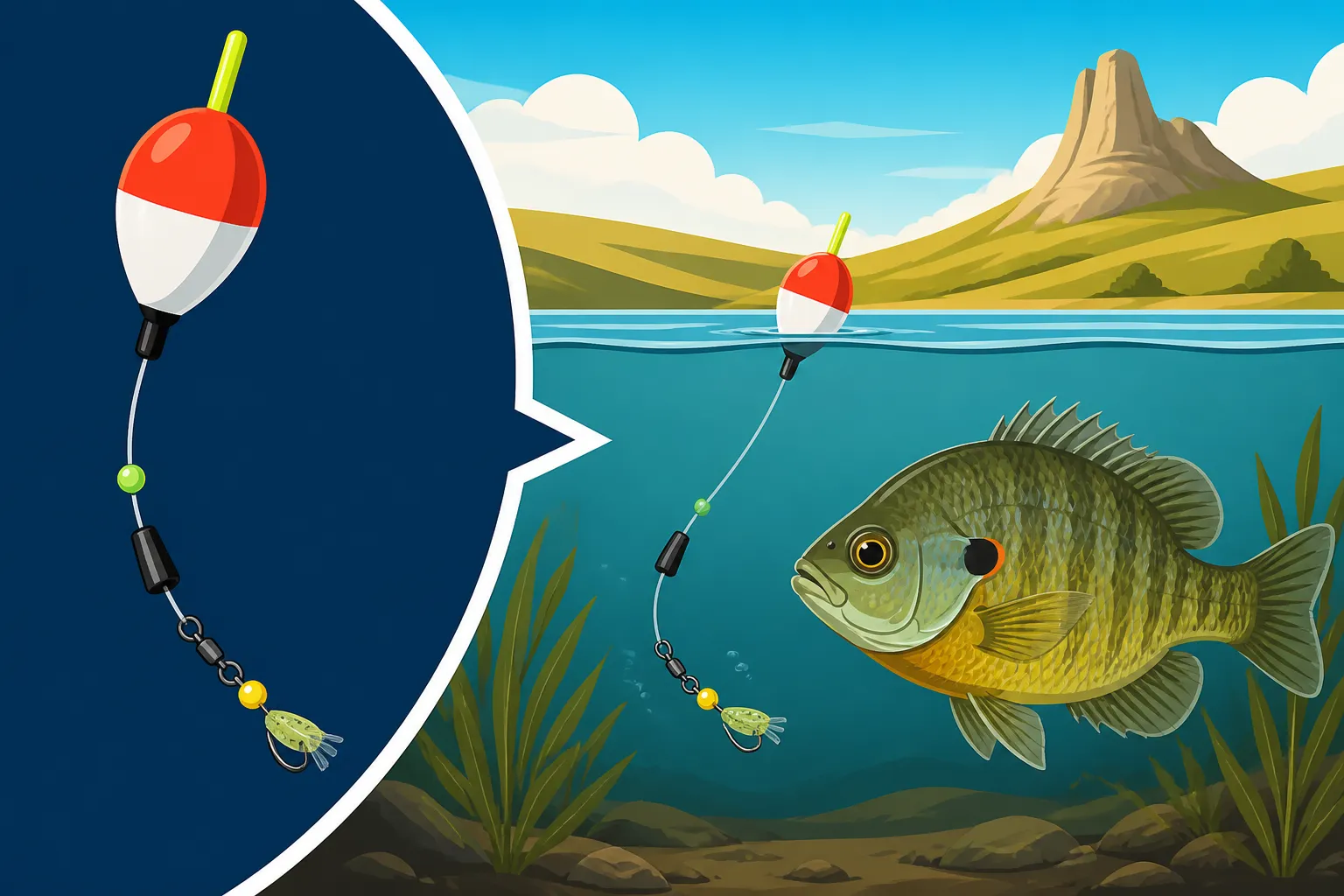
Best Slip Bobber Setup for Panfish
Many anglers, especially when introducing kids to the joys of fishing or simply trying to get their bait right into a tricky fishing zone, quickly hit a wall with traditional fixed bobbers. The constant frustration of casting tangled lines, or realizing that the fish are holding deeper than your rod is long, can really take the fun out of a peaceful day on a Nebraska lake or pond. This comprehensive guide is designed to eliminate those headaches, showing you exactly how to set up the best slip bobber rig for targeting panfish, ensuring you spend less time untangling and more time reeling in those feisty bluegill, crappie, and perch.
Why Slip Bobbers Are a Game Changer for Panfish in Nebraska
Panfishing in Nebraska offers some incredible opportunities, from quiet farm ponds brimming with bluegill to large reservoirs holding slabs of crappie. However, to consistently catch these wary fish, especially when they're holding at specific depths, you need a setup that offers precision and ease of use. That's where the humble slip bobber truly shines.
The Frustration of Fixed Bobbers
Picture this: you've found a promising spot, perhaps a fallen tree limb in a local pond, and you know the bluegill are holding right at the edge of the shade, about six feet down. You're using a standard fixed bobber, the kind that clamps onto your line. To reach that six-foot depth, you have to slide the bobber up your line, creating a long, unwieldy leader. When you try to cast, your tiny jig or worm rig ends up dangling awkwardly, often tangling around your rod tip or the main line itself. It's a mess, you're constantly fighting your tackle, and the fish are probably long gone by the time you get your bait in the water.
Or maybe you're out on a bigger body of water, like Branched Oak Lake, trying to find crappie suspended over a brush pile you located on your sonar. The brush pile is in 15 feet of water, and the crappie are 10 feet down. With a fixed bobber, you simply can't cast that far with such a long leader. Your accuracy suffers, your bait placement is off, and you're missing out on fish. These are common frustrations that can turn a relaxing fishing trip into a test of patience. We've all been there, staring at a tangled mess, wondering if it's even worth it. You might even feel like you need a completely different approach to Nebraska Pond Fishing Techniques or specialized Best Bank Fishing Rigs for Nebraska Reservoirs just to cope.
How Slip Bobbers Overcome Common Challenges
Enter the slip bobber, a simple yet ingenious solution to these very real problems. Unlike a fixed bobber, a slip bobber doesn't clamp onto your line. Instead, your fishing line runs through the bobber. Your desired depth is controlled by a small "bobber stop" knot or piece of material tied onto your line above the bobber. This means that when you reel in, the slip bobber slides down to your weight, making your entire rig compact and incredibly easy to cast, even with long leader lengths.
Once your cast lands, the weight of your bait and sinker pulls the line through the bobber until it hits the bobber stop, setting your bait at the precise depth you chose. This allows for unmatched depth control, letting you fish anywhere from a few inches under the surface to several feet deep, all while making casting a breeze. Imagine effortlessly casting your tiny crappie jig right next to that brush pile in Branched Oak, knowing your bait will settle exactly where those slabs are holding. It's especially fantastic when you're trying to figure out How to Catch Crappie Around Brush Piles because it gives you that exact depth presentation. No more tangles, no more fumbling with awkward leader lengths – just smooth casts and accurate bait presentation, increasing your chances of success significantly.
Essential Components of a Nebraska Panfish Slip Bobber Setup
Building the perfect slip bobber rig starts with selecting the right gear. For panfish, sensitivity and light tackle are key, allowing you to detect those subtle bites and enjoy the fight of even a small bluegill.
Choosing the Right Rod and Reel
For panfish, you want a rod that's sensitive enough to feel the lightest tap, but also has enough backbone to handle a decent-sized crappie or perch.
- Rod: An ultra-light or light action spinning rod, typically between 6 to 7 feet in length, is absolutely ideal. Look for a rod with a fast or extra-fast tip. This means the tip of the rod bends easily, which is crucial for detecting those barely-there bites from panfish, but the rest of the rod (the "backbone") remains stiff, giving you leverage to set the hook and fight the fish. Graphite rods are usually preferred for their sensitivity and light weight. A longer rod can also help with longer casts from shore.
- Reel: Pair your sensitive rod with a small spinning reel, often referred to as a "500" or "1000" series. These reels are lightweight and designed for lighter lines. A smooth drag system is paramount – panfish, especially crappie, have soft mouths, and a sticky drag can easily lead to a pulled hook. You'll find excellent options for specific Best Spinning Reels for Panfish at local tackle shops or online. If you're just starting, a pre-spooled Best Rod and Reel Combo for Beginners in Nebraska from a reputable brand like those found at Bass Pro Shops or even on Amazon can be a fantastic, cost-effective way to get started.
Selecting the Ideal Line
The line you choose is the direct connection between you and the fish, so it needs to be chosen wisely for sensitivity and subtlety.
- Monofilament Line: This is often the go-to choice for panfish. A 2 to 6-pound test monofilament line offers a good balance of strength, castability, and a bit of stretch, which can act as a shock absorber against sudden head shakes from a fish. Its low memory means fewer coils coming off the spool, reducing tangles. Clear or a low-visibility green color is usually best, especially in Nebraska's clearer waters, to avoid spooking fish.
- Fluorocarbon Line: Some anglers prefer fluorocarbon in the 4-pound test range for its near invisibility underwater and excellent abrasion resistance. It's also more sensitive than mono, allowing you to feel even fainter bites. However, it can be a bit stiffer and more expensive.
- Why not braided?: While braided line offers incredible strength for its diameter and zero stretch for maximum sensitivity, it's generally too visible and can be overkill for panfish. Its lack of stretch can also lead to hooks tearing out of soft panfish mouths more easily. Stick with mono or fluoro for the best panfish experience.
The Bobber, Stops, and Weights
These are the core components that give the slip bobber rig its magic.
- Slip Bobbers: Look for slender, sensitive slip bobbers made of balsa wood or high-quality plastic. The key is sensitivity – you want a bobber that offers minimal resistance to a biting fish. Bobbers with a thin, brightly colored antenna on top are fantastic for visibility and detecting even the lightest dips. Match the size of the bobber to the amount of weight you'll be using; a properly weighted bobber should stand upright in the water, with only the antenna showing.
- Bobber Stops: There are two main types:
- String Knots: These are small, adjustable knots that you cinch onto your main line. They're highly versatile as you can slide them up or down to change your depth. They pass easily through rod guides during casting.
- Plastic Stops: These are small, rubber or plastic pieces that slide onto your line. They're quick to adjust but can sometimes hinder casting if they're too bulky or get caught on a guide. Most anglers prefer the string knot variety for their smooth casting.
- Bobber Stop Beads: Always use a small plastic or glass bead immediately below your bobber stop knot. This bead prevents the small knot from pulling through the hole in your slip bobber. Choose a bead that's large enough not to pass through the bobber's line hole but small enough to easily pass through your rod guides.
- Weights: The goal with panfish is to use just enough weight to get your bait down to the desired depth and to make your bobber stand upright. Over-weighting will make your presentation unnatural and scare fish. Small split shot sinkers are perfect for this. Crimp one or two small split shots a few inches above your hook. The exact amount will depend on your bait and the size of your bobber. The best setup is one where the bobber barely floats, making it incredibly sensitive to a bite.
Hooks and Baits for Nebraska Panfish
The smallest details can make the biggest difference when it comes to panfish.
- Hooks: For panfish, small, sharp, fine-wire hooks are a must. Sizes 6, 8, or 10 are typical. Aberdeen hooks are popular due to their fine wire, which allows them to bend open when snagged, often saving your line and bobber, and their wider gap for better hook sets. For tiny baits like waxworms or maggots, even smaller hooks (size 12 or 14) might be appropriate.
- Baits:
- Live Bait: This is often king for panfish. Small minnows (especially for crappie and perch), red worms, nightcrawlers (pinched in half or smaller pieces for bluegill), waxworms, and maggots are all incredibly effective. Local bait shops, or even Amazon for specific products like artificial bait, usually have a great selection of live bait or lures that mimic them. For instance, if you're targeting bluegill, consider what constitutes the Best Bait for Bluegill and Sunfish.
- Artificial Lures: Tiny jigs (1/32 oz to 1/16 oz) tipped with a small plastic grub, tube, or even just the jig head itself, can be deadly, particularly for crappie. Experiment with colors – chartreuse, white, pink, and black are often good starting points in Nebraska. The key is a slow, natural presentation, often just letting the slip bobber drift the jig along. When considering Best Minnow Size for Crappie Fishing, remember small jigs can mimic small minnows effectively.
Assembling Your Slip Bobber Rig Step-by-Step
Setting up a slip bobber rig is straightforward once you know the sequence. Follow these steps, and you'll be ready to fish efficiently.
Tying on Your Slip Knot and Bead
This is the first and most crucial step, as it determines your fishing depth.
- Thread the Line: Take your main fishing line and thread it through the small plastic bobber stop bead. This bead is essential; it prevents the tiny bobber stop knot from slipping through the bobber itself.
- Tie the Bobber Stop Knot: Now, it's time to create the actual bobber stop. Many anglers use a specialized bobber stop knot tool, but you can easily tie one by hand. Take a piece of monofilament line (often heavier than your main line, say 10-15 lb test, so it cinches down better) about 6-8 inches long. Lay it parallel to your main line.
- Form Loops: Form a loop with the heavier line around your main line. Then, wrap the tag end of the heavier line around the main line and through the loop about 3-5 times.
- Cinch Down: Moisten the knot with a little saliva, and slowly pull both tag ends of the heavier line to cinch the knot down tightly onto your main line. Don't pull so hard that it damages your main line, but ensure it's snug.
- Trim Excess: Trim the tag ends of the bobber stop knot, leaving about 1/4 to 1/2 inch of line on each side. This allows for minor adjustments later and ensures it slides smoothly through your rod guides. You now have a small, adjustable knot on your main line.
Attaching the Bobber and Weight
With your stop knot and bead in place, the rest of the rig comes together quickly.
- Thread the Bobber: Slide your slip bobber onto your main line, ensuring the line goes through the top and bottom eyes or sleeve of the bobber.
- Add Weight: Now, attach your chosen weight (usually one or two small split shot sinkers) to your main line. The best placement for the weight is typically about 6-12 inches above where your hook will be tied. This allows your bait to fall naturally and present itself enticingly, yet still pulls the line through the bobber effectively. The exact amount of weight will depend on the size of your bait and the bobber's buoyancy. You want just enough weight so that your bobber stands upright in the water with only its top portion or antenna visible, making it highly sensitive to bites. Finding that perfect balance is key for Best Bobber Depth for Suspended Crappie and other panfish.
Tying Your Hook and Baiting Up
The final steps involve your terminal tackle and bait.
- Tie the Hook: Tie your small panfish hook onto the end of your main line. A simple Palomar knot or an improved clinch knot works perfectly and is strong for light lines. Make sure to moisten your knot before cinching it down to prevent weakening the line.
- Baiting Up: Now, carefully bait your hook with your chosen offering. If using a minnow, hook it lightly through the back (near the dorsal fin) or through both lips, ensuring it can swim freely and naturally. For worms, thread a small piece onto the hook, leaving a lively bit dangling. Waxworms or maggots can be hooked singly or in small clusters. The goal is a natural, appealing presentation that hides the hook as much as possible.
Mastering the Technique for Nebraska Panfish
Having the right gear is only half the battle; knowing how to use it effectively is where the real magic happens. Panfish, while often abundant, can be finicky, and a subtle approach can make all the difference.
Reading the Water and Locating Panfish
Panfish are creatures of habit and often relate to specific types of cover or structure. Learning to "read" the water will significantly increase your success.
- Structure and Cover: Look for anything that offers shelter, shade, or ambush points. This includes fallen trees, brush piles, submerged weed lines, boat docks, bridge pilings, and rocky outcroppings. Panfish use these areas for protection from predators and as feeding grounds.
- Depth and Temperature: Pay attention to the time of year and water temperature. In warmer months, panfish might be shallower, seeking shade or actively feeding. In cooler months or during the heat of the day, they often move to deeper water or suspend over deeper structure. If you have a fish finder, use it to pinpoint schools of fish or suitable structure. If not, don't fret – many fantastic panfish spots can be found by simply observing the water. Look for irregularities on the shoreline, changes in water depth, or areas where baitfish are schooling. Even without advanced electronics, you can still learn How to Locate Fish Without Electronics by understanding their habits.
- Adjusting Depth: The beauty of the slip bobber is its adjustable depth. Start by fishing at an assumed depth, perhaps half the water depth or right at the edge of visible cover. If you're not getting bites, adjust your bobber stop up or down in 6-12 inch increments until you find the fish's preferred depth. Sometimes, they're only a foot away from where you were originally fishing!
Presenting Your Bait Effectively
Once you've cast your slip bobber rig, the presentation of your bait is crucial.
- Gentle Casts: With light tackle and small baits, avoid violent, splashy casts that can spook fish. Aim for a gentle lob that allows your bait to settle softly on the water.
- Let It Settle: After your cast, give the rig time to settle. The weight will pull your line through the bobber until it hits your bobber stop, setting your bait at the desired depth. Watch your bobber as it settles; any unusual movement before it stands upright could indicate a bite on the fall.
- Subtle Movement: Panfish often prefer a natural, slow-moving bait. If you're fishing in still water, a slight twitch of the rod tip every minute or so can impart just enough action to your bait to entice a strike. In rivers or windy conditions, simply letting your bobber drift naturally with the current or wind can be incredibly effective. Sometimes, the less you do, the better, especially when trying to figure out How to Find Crappie in Cold Water when they are often lethargic.
When and How to Set the Hook
Panfish bites can range from aggressive plunges to incredibly subtle nudges. Patience and quick reflexes are both needed.
- The "Take": Watch your bobber like a hawk. A definitive pull under the water, a quick twitch followed by a slow sink, or even the bobber simply moving sideways are all indications of a bite. For very finicky fish, sometimes the bobber might just barely tilt or lay flat on the water's surface.
- The Pause: For many panfish, especially crappie and perch, it's often wise to pause for a second or two after the initial bite before setting the hook. This allows the fish to fully take the bait into its mouth. If you set the hook too early, you might pull the bait away from the fish.
- Gentle Hook Set: Once you're sure the fish has the bait, a gentle but firm sweep of the rod tip is usually sufficient to set the small, sharp hook. Avoid a jarring, powerful hook set, as this can tear the hook out of a panfish's delicate mouth. Remember, you're using light tackle, so let the rod and the smooth drag system do the work as you reel in your catch.
By mastering these techniques and trusting your slip bobber setup, you'll find yourself enjoying more successful and less frustrating panfishing trips across Nebraska's abundant waters.
Popular Panfish Baits and Their Best Uses
Choosing the right bait can often be the difference between a slow day and a bucket full of panfish. Here's a quick guide to some popular options.
| Bait Type | Best For | Pros | Cons |
|---|---|---|---|
| Live Minnows | Crappie, Perch, Small Bass | Natural movement, irresistible to predators | Can be fragile, harder to keep alive, hook carefully |
| Worms (Nightcrawlers, Red Worms) | Bluegill, Perch, Catfish (small) | Readily available, robust, universally appealing | Can be messy, larger pieces may deter smaller panfish |
| Waxworms/Maggots | Bluegill, Sunfish, Trout | Small, active, easy to handle, great for small mouths | Can be expensive, smaller profile may attract smaller fish |
| Small Jigs (1/32 – 1/16 oz) | Crappie, Perch, Bluegill (active) | Versatile, active presentation, good color options | Requires angler action, not "set it and forget it" |
| Soft Plastics (Tubes, Grubs) | Crappie, Bass (small), Aggressive Panfish | Durable, variety of colors, no need for live bait | Less natural scent, may require more technique |
| Corn (canned) | Bluegill, Carp (small) | Cheap, easy to use, sweet scent | Not natural, can be ignored by many species |
Finding the best options for your panfish pursuits can often involve a trip to a trusted outdoor retailer. Bass Pro Shops, for example, has a dedicated section for panfish tackle and bait, and you can also find specialized soft plastics and jigs readily available on Amazon, often with reviews from other panfish enthusiasts.
Mastering the slip bobber setup is truly a game-changer for any angler looking to maximize their success and enjoyment when chasing panfish in Nebraska. From the easy casting to the precise depth control, this simple rig removes so many common frustrations, allowing you to focus on the thrill of the bite and the satisfaction of reeling in a feisty bluegill, crappie, or perch. So, grab your gear, tie on that slip knot, and get ready for some fantastic fishing!
Disclaimer
This article is for general informational purposes only and does not constitute professional advice. Laws, prices and regulations vary by location and change over time. Consult a qualified professional for guidance on your specific situation.