Best Soft Plastic Worm Colors for Nebraska Ponds
It's incredibly frustrating to stand by a promising Nebraska pond, casting lure after lure, only to feel nothing. You know the fish are there, but getting them to bite can feel like a mystery, and often, the culprit is your soft plastic worm color not matching the conditions. This guide is dedicated to demystifying soft plastic worm color selection for Nebraska ponds, helping you understand why certain colors excel in different situations and ultimately increase your chances of a successful catch.
Understanding Pond Water Clarity and Its Impact on Lure Color
One of the biggest mistakes anglers make, especially in pond fishing, is ignoring water clarity. Nebraska ponds can range from crystal clear sandpits to murky, algae-laden farm ponds, and what works in one won't necessarily work in another. Thinking about the water's visibility is your first step in choosing the right soft plastic worm color.
Clear Water Conditions: The Art of Subtlety
When you're looking into a pond and can easily see the bottom or your lure several feet down, you're dealing with clear water. In these conditions, fish have excellent visibility and can scrutinize your presentation. They're often more wary, and loud, unnatural colors can spook them.
Here, the goal is to mimic natural prey as closely as possible. Think about the baitfish, crawfish, or even insects that might be in that pond. Soft plastic worms in realistic shades like green pumpkin, watermelon, or shades of brown and natural baitfish patterns often perform best. The key is subtlety, making your bait look like a delicious, easy meal that belongs there. Even a slight flash or shimmer from a flake in the plastic can make a big difference, subtly catching the light rather than screaming for attention. It's about convincing the fish your worm is the real deal, not a piece of plastic.
Stained or Murky Water Conditions: Making a Statement
On the flip side, many Nebraska ponds, especially after heavy rains or in agricultural areas, can be quite stained or murky. If you can only see your lure a foot or less below the surface, you're in stained water. Here, the rules change entirely. Fish rely less on sight and more on other senses, like the lateral line to detect vibrations and scent.
In these low-visibility conditions, you need your soft plastic worm to stand out. Bright, bold, and contrasting colors are your friends. Think about colors that create a strong silhouette against the dim light, or those that pop with vibrant hues. Black and blue combinations, chartreuse, or even vibrant junebug can be incredibly effective. The idea is to create a visual presence that fish can easily detect even with limited light penetration. Sometimes, a two-tone worm, like a black body with a blue tail, can offer the best of both worlds – a strong silhouette with a hint of eye-catching color. Don't be afraid to go "unnatural" in these situations; sometimes, the wilder, the better for getting noticed.
Tannic or Green Algae Bloom Water: Specific Challenges
Nebraska ponds sometimes present unique clarity challenges, such as heavily tannic water (often found in ponds surrounded by oak trees, giving the water a tea-stained look) or ponds experiencing significant green algae blooms. These conditions sit somewhere between clear and murky but have their own nuances.
Tannic water, while often "clear" in a sense, has a distinct yellowish-brown tint that can mute certain colors. In these situations, worms with a lot of red or orange undertones can do surprisingly well, as these colors can sometimes pop more effectively in tannin-stained water. On the other hand, heavy green algae blooms create a soupy, greenish murk. Here, colors that contrast sharply with the green are often best. Think black, blue, or even bright white. Sometimes, the fish are pushed below the bloom layer, and a worm that stands out against the dim light filtering through the algae becomes crucial. Nebraska Fishing Regulations Explained mentions how conditions can vary, and understanding these specific water types can give you an edge.
Top Soft Plastic Worm Colors for Nebraska Ponds and Why They Work
Alright, let's get down to the brass tacks: what are the go-to soft plastic worm colors that consistently produce in Nebraska ponds? While conditions always dictate the "best" choice, certain colors have earned their stripes for a reason, becoming staples in any savvy angler's tackle box.
Natural Hues: Green Pumpkin, Watermelon, and Junebug
These colors are the workhorses for a reason. They're subtle, natural, and incredibly versatile, making them perfect for a wide range of Nebraska pond scenarios.
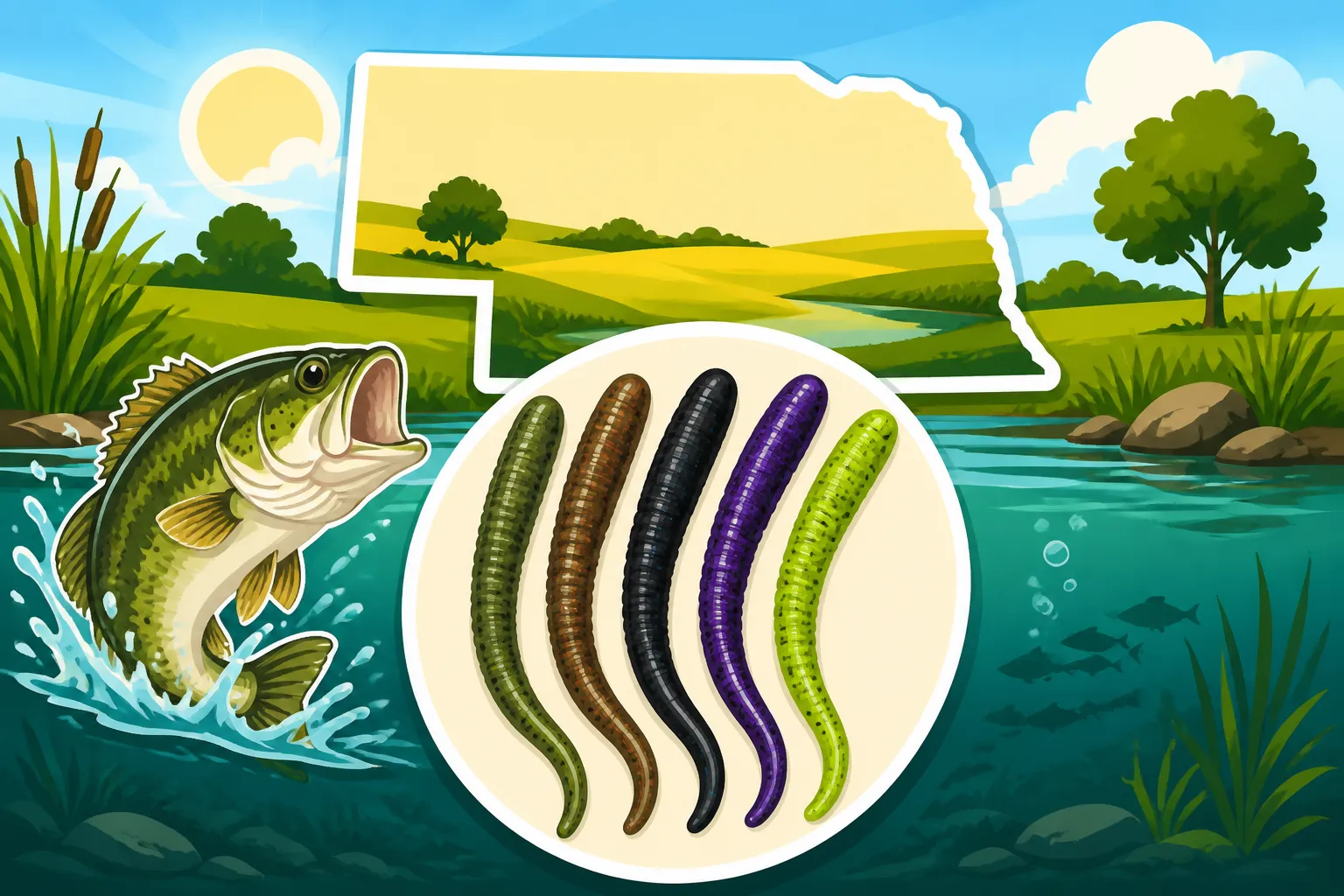
- Green Pumpkin: If you could only choose one soft plastic worm color for Nebraska ponds, green pumpkin would be a strong contender. It's a fantastic all-rounder. This color effectively mimics crawfish, bluegill, and other natural forage found in many ponds. It works exceptionally well in clear to lightly stained water, offering enough contrast to be seen without being overly aggressive. Many anglers swear by green pumpkin with various flakes (red, black, gold) to add subtle flashes. It's truly a chameleon color that adapts to many situations. I've had countless successes with green pumpkin worms fished around submerged timber or weed edges.
- Watermelon: Watermelon, often with red or black flakes, is another natural winner. It's particularly effective in clearer water, especially when there's a strong presence of vegetation. The translucent green hues blend in beautifully with aquatic plants, making it a stealthy choice. Fish feeding on smaller baitfish or insect larvae often key in on these lighter, more natural greens. A watermelon seed worm, for instance, has a natural look that can entice even the most finicky bass or panfish. It's less aggressive than green pumpkin, making it ideal for high-pressure ponds.
- Junebug: While sometimes grouped with natural colors, junebug (a deep, dark purple often with green or blue flakes) sits on the edge, offering a bit more pop. It's a fantastic transitional color, excelling in both clear water where it appears as a dark, natural silhouette, and stained water where its purple hue really comes alive. It's often mistaken for a crawfish or a large insect, especially during overcast conditions or in deeper water. I've found junebug to be particularly effective on those slightly overcast days when the water has a hint of stain. You can often find great junebug worms at your local Bass Pro Shops or through online retailers like Amazon, offering a wide array of options.
Bold & Contrasting Colors: Black/Blue, Chartreuse, and Bubblegum
When the conditions demand attention, these bold colors step up to the plate. They are designed to be seen and to elicit a reaction strike, especially when fish aren't actively feeding by sight.
- Black/Blue: This combination is a classic for stained or muddy water. The black creates a strong, distinct silhouette against the low light, while the blue adds a subtle flash or glow that can be surprisingly visible in dim conditions. Many anglers believe the blue mimics the "flash" of a wounded baitfish or the iridescent sheen of some crawfish. It's an excellent choice for fishing deep cover, heavy brush, or during low-light hours like dawn, dusk, or even night fishing. Nebraska Night Fishing Rules often suggest darker lures, and black/blue certainly fits the bill, allowing fish to easily detect its presence through vibration and contrast.
- Chartreuse: When you need to be noticed, chartreuse is your go-to. This vibrant, almost fluorescent yellow-green color is a powerhouse in heavily stained or muddy water. It reflects light incredibly well, making it highly visible even in the murkiest conditions. While it might seem unnatural, fish often react to it out of curiosity or aggression. It's a fantastic search bait color, helping you locate active fish quickly. Many anglers pair chartreuse worms with jig heads or use them as accent colors on spinnerbaits for added visibility. It's less about mimicking prey and more about triggering a predatory response.
- Bubblegum (or Pink): This might sound like a novelty, but don't underestimate the power of bubblegum or bright pink in specific situations. While not an everyday choice, it can be absolutely devastating in ultra-clear, highly pressured ponds, particularly for bass. There's a theory that fish haven't been conditioned to avoid this color, or perhaps it mimics some form of injured prey. It's also a surprisingly effective color in certain trout scenarios, particularly for stocked fish. If you've tried everything else in a clear pond and nothing is working, a bubblegum worm might just be the wild card you need to surprise a weary fish.
Specialty Colors for Specific Situations
Beyond the mainstays, there are a few other colors that can shine in particular Nebraska pond fishing scenarios, rounding out your soft plastic arsenal.
- White/Pearl: White or pearl soft plastics are excellent for mimicking baitfish. They offer high contrast in darker water and a natural shimmer in clearer water. They are especially effective when fishing near the surface or when targeting species like white bass or crappie that often feed on schools of minnows.
- Red/Orange: These colors can be fantastic when crawfish are a primary food source, especially during molting periods when crawfish shed their shells and appear reddish. They also work well in water with a brownish tint, where they can stand out.
Here's a quick reference table for common soft plastic worm colors and their optimal conditions in Nebraska ponds:
| Soft Plastic Worm Color | Best Water Clarity | Primary Purpose / Notes |
|---|---|---|
| Green Pumpkin | Clear to Lightly Stained | All-rounder, mimics crawfish/bluegill |
| Watermelon Seed | Clear to Lightly Stained | Subtle, blends with vegetation, wary fish |
| Junebug | Clear to Stained | Transitional, good silhouette, crawfish/insect |
| Black/Blue | Stained to Muddy | Strong contrast, low light, aggressive |
| Chartreuse | Stained to Muddy | High visibility, reaction strikes, search bait |
| Bubblegum (Pink) | Ultra Clear, Pressured | Novelty, triggers unconditioned bites |
| White/Pearl | Clear to Stained | Baitfish imitation, surface/suspended fish |
| Red/Orange | Brown/Tannic, Stained | Crawfish imitation, good in specific tints |
Factors Beyond Color: Action, Scent, and Rigging
While color is undeniably important, it's just one piece of the puzzle. The most perfect colored worm won't catch fish if it doesn't move right or if the fish can detect something unnatural about it. Considering the action, scent, and how you rig your soft plastic worm is equally crucial for success in Nebraska's diverse pond environments.
Worm Profile and Action: The Subtle Dance
Fish don't just see a color; they react to how a bait moves through the water. The profile and action of your soft plastic worm can often be the deciding factor between a strike and a missed opportunity.
- Ribbed Worms vs. Smooth Worms: Ribbed worms, like those commonly found in Bass Pro Shops, create more water displacement and vibration, which can be beneficial in stained water where fish rely on their lateral line. The ribs also hold scent better. Smooth worms, on the other hand, offer a more subtle, natural glide through the water, ideal for clear conditions or when fish are being finicky.
- Tail Action: Consider the tail design. Paddle tails create a strong thumping action, excellent for attracting attention. Curly tails offer continuous, undulating movement even at slow retrieves, making them deadly for hesitant fish. Straight-tail worms, often fished wacky or Neko style, have a subtle shimmy that mimics a dying baitfish or worm. Different situations call for different actions, so experiment with various styles to see what the fish prefer on any given day. Sometimes a subtle quiver is all it takes, other times a bold kick. How to Fish a New Reservoir You've Never Fished emphasizes the importance of understanding all bait characteristics, not just color.
The Power of Scent: An Olfactory Invitation
Fish, especially species like catfish and many panfish common in Nebraska ponds, have an incredible sense of smell. Adding scent to your soft plastics can be a game-changer, giving fish another reason to investigate and hold onto your bait longer.
- Scented Plastics: Many soft plastic worms come pre-impregnated with salt, garlic, or a fish-attractant scent. This built-in scent slowly releases into the water, creating an attractive trail that can draw fish in from a distance. These are excellent choices for slower presentations, where the bait sits in the strike zone for a longer period.
- Applied Scents: You can also purchase liquid or gel scents and apply them directly to your unscented or even pre-scented soft plastics. Popular options include garlic, anise, crawfish, or specific baitfish formulas. Applying scent can mask human odors, which can be a significant deterrent, and encourage fish to bite and hold on, giving you more time to set the hook. This is particularly useful when the bite is tough, or when you're fishing in murky water where visual cues are limited. A little dab of scent from a reputable brand can sometimes make all the difference, especially on an Amazon-ordered worm that might not have strong factory scent.
Effective Rigging Techniques for Ponds
How you present your soft plastic worm is just as important as its color and action. The right rigging technique can optimize your worm's performance and help you navigate the unique challenges of pond fishing.
- Texas Rig: The Texas rig is probably the most popular and versatile way to fish soft plastic worms in ponds, especially for bass. It's incredibly weedless, allowing you to punch through vegetation, pull over submerged timber, and fish heavy cover without snagging. This rig excels when you're targeting fish tucked away in dense cover. A small bullet weight allows it to sink into tight spots, and the hook point is buried in the plastic, preventing snags.
- Wacky Rig: The wacky rig involves hooking a straight-tail worm through its middle, allowing both ends to wiggle seductively as it falls. This creates an irresistible, natural action that often entices hesitant fish. It's best used in open water or around sparse cover, as it's not very weedless. This technique is especially good for highly pressured ponds where fish have seen every other presentation. Best Fishing Techniques by Season often highlights the wacky rig's effectiveness in spring.
- Carolina Rig: While often associated with larger bodies of water, a lighter Carolina rig can be effective in deeper Nebraska ponds, especially when fishing points, humps, or open flats. The weight is positioned a foot or two above the hook, allowing the worm to float or drag freely behind it, creating a natural, subtle presentation. This rig is great for covering ground and presenting a bait subtly off the bottom.
- Neko Rig: Similar to a wacky rig, the Neko rig involves inserting a small nail weight into one end of a straight-tail worm and hooking it through the middle. This causes the weighted end to hit the bottom while the other end floats and quivers, creating a unique, enticing action. It's a fantastic finesse technique for wary bass.
Seasonal Considerations for Pond Fishing in Nebraska
Nebraska's seasons bring dramatic changes to our ponds, impacting everything from water temperature and oxygen levels to fish metabolism and location. The best soft plastic worm colors and techniques can shift significantly throughout the year, so it's vital to adapt your approach to the season. Nebraska Fishing Seasons Explained goes into greater detail about these changes.
Springtime Strategies: Post-Spawn and Warming Waters
Spring is a time of transition and renewed activity for pond fish. As ice melts and water temperatures begin to rise, fish move into shallower areas to spawn and then recover.
- Pre-spawn: In early spring, fish are often lethargic but starting to think about feeding. Darker, natural colors like green pumpkin or black/blue can work well for slow presentations around pre-spawn staging areas. The fish are still somewhat cold, so a slow, deliberate retrieve is often key.
- Spawn: During the actual spawn, fish become highly territorial and aggressive. They may strike out of instinct to protect beds rather than hunger. Green pumpkin and watermelon seed worms are excellent choices, mimicking invaders near their nests. Targeting beds directly (if allowed and ethical for the species) with subtle presentations can be effective.
- Post-spawn: After the spawn, fish are often exhausted and scattered. They'll start feeding heavily to regain strength. This is a great time for a variety of natural colors, but also don't be afraid to try some junebug or even white/pearl worms, especially if you see schools of baitfish. Fish will often relate to the first new weed growth or shallow cover, seeking both food and shelter.
Summer Heat Tactics: Deep Water and Low Light
Nebraska summers can bring intense heat, which significantly affects pond fish. Warm surface temperatures and lower oxygen levels in shallow water often push fish deeper or into shaded, cooler areas.
- Deep Water: During the day, fish often retreat to the coolest, deepest parts of the pond, or seek out shade under docks, lily pads, or dense overhead cover. This is where darker soft plastic worms like black/blue or junebug, fished slowly and deliberately on Texas or Carolina rigs, can shine. The strong silhouette is key in the dim light of deeper water or heavy shade.
- Low Light Periods: Early mornings, late evenings, and even night fishing become prime times in the summer. During these cooler, low-light periods, fish will move shallower to feed. This is an excellent opportunity for natural colors like green pumpkin, but also for bold colors if the water is stained or if you're trying to create a strong profile against a low sun. Nebraska Ice Fishing Regulations are for a different season, but the principle of adapting to extreme conditions applies universally.
- Reaction Baits: Sometimes, in the heat of summer, a fast-moving, brightly colored worm (like chartreuse) on a retrieve can trigger a reaction strike from a lethargic fish that might not be actively feeding.
Fall Transition: Feeding Frenzies and Cooler Water
Fall is a fantastic time to fish Nebraska ponds. As water temperatures cool and days shorten, fish enter a "feeding frenzy" phase, bulking up for the coming winter.
- Active Feeding: Fish become incredibly active and aggressive, often chasing baitfish. This is a great time to experiment with a wider range of colors, both natural and bold. Green pumpkin, watermelon, and junebug remain solid choices, especially in clear water. However, if baitfish are abundant, white or pearl soft plastics can be very effective, imitating their preferred forage.
- Shifting Depths: Fish might be found at various depths as they follow baitfish schools. You might find them shallow during warm spells and deeper on colder days. Be versatile with your rigging and presentation.
- Weed Edges: As aquatic vegetation begins to die back, the remaining weed lines become magnets for baitfish and predators alike. Working soft plastic worms along these edges with natural colors can be highly productive. The cooling water often makes fish less wary, so they might be more willing to chase a well-presented worm.
Remember, every pond is unique, and fish behavior can vary day by day. Always pay attention to the conditions, start with versatile colors, and don't be afraid to experiment until you find what the fish are telling you they want!
Disclaimer
This article is for general informational purposes only and does not constitute professional advice. Laws, prices and regulations vary by location and change over time. Consult a qualified professional for guidance on your specific situation.