Best Trolling Motors for Nebraska Boats
Navigating Nebraska's diverse waterways, from the vast expanses of Lake McConaughy to the winding currents of the Platte River, often presents a unique challenge: maintaining precise boat control in varying conditions. Strong winds, fluctuating currents, and the need for a silent approach to those wary fish can make or break a fishing trip. This guide dives deep into choosing the best trolling motor for your Nebraska boat, helping you conquer these challenges and enhance your angling experience.
Understanding Trolling Motors: The Basics for Nebraska Anglers
Before you can pick out the perfect trolling motor, it’s important to understand what these fantastic pieces of equipment are and how they differ from your main engine. Think of them as your stealthy co-pilot, designed for precision and quiet operation, rather than brute force.
What Exactly Is a Trolling Motor?
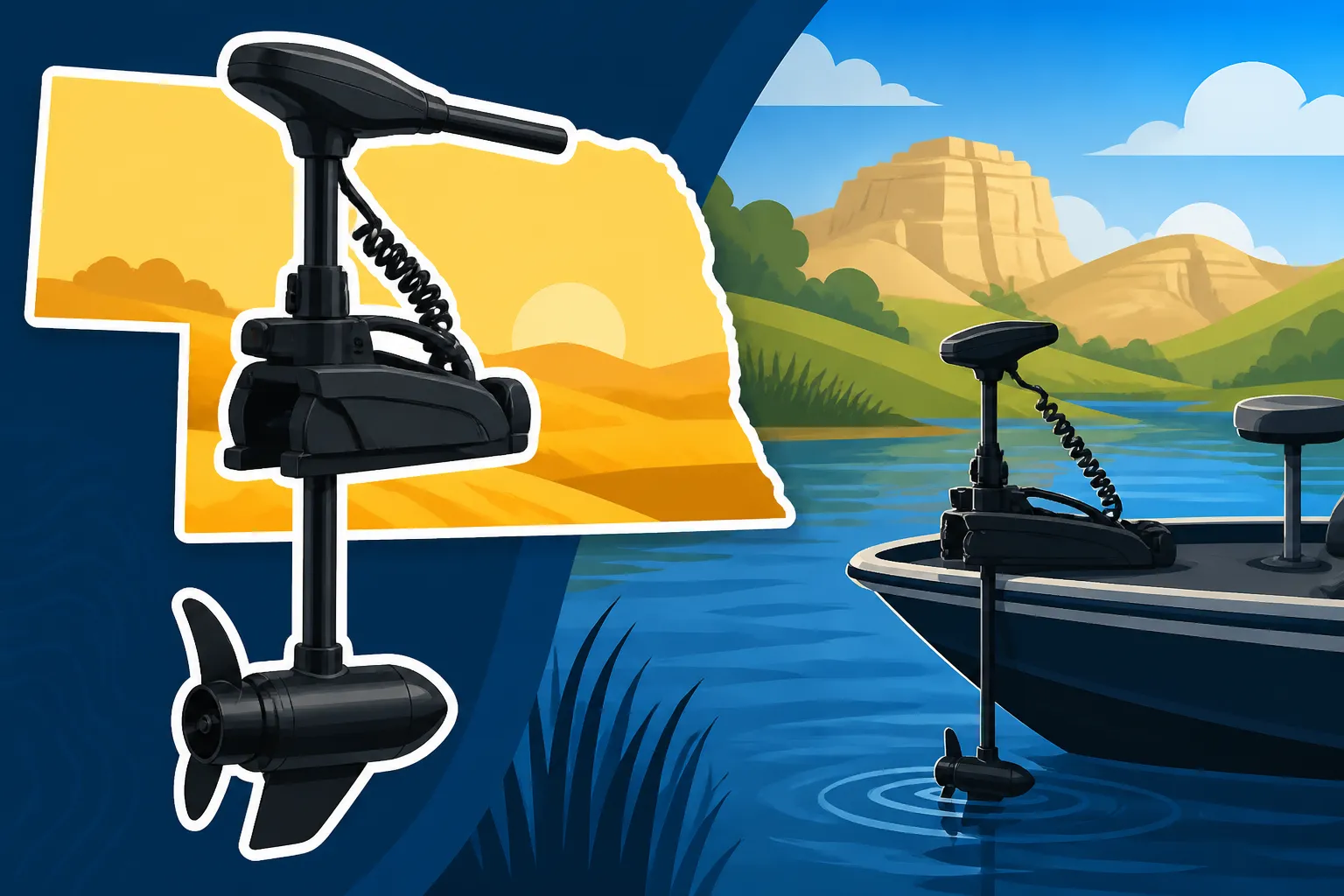
A trolling motor is essentially a self-contained electric propulsion system designed to mount on the bow or transom of your boat. Unlike your outboard or inboard motor, which is built for speed and long-distance travel, a trolling motor is engineered for slow, controlled movement. It allows anglers to quietly maneuver their boat, maintain a specific speed for trolling, or hold a position against wind and current without constantly running a noisy gasoline engine. This stealth factor is incredibly important in Nebraska's clearer lakes and rivers, where fish can be easily spooked by engine noise or vibrations. It’s not just about moving forward; it’s about subtle adjustments, turning on a dime, and staying right on top of that submerged structure where the walleye are hiding.
Many anglers find that once they've experienced the silent approach and effortless boat positioning a good trolling motor offers, they can't imagine fishing without one. It transforms the fishing experience, allowing you to focus on the bite rather than constantly fighting your boat's drift or getting blown off your spot.
Bow Mount vs. Transom Mount: Which is Right for You?
The first big decision you'll face is where to mount your trolling motor. Each option has its own set of advantages and is better suited for different types of boats and fishing styles common in Nebraska.
Bow-mount motors are the most popular choice for serious anglers, especially those in larger bass boats, walleye boats, or even substantial Jon boats. These motors pull the boat through the water rather than pushing it, offering superior steering control and maneuverability. When you're trying to follow a contour line, hold your boat against a crosswind on Lake McConaughy, or navigate tight spaces around submerged timber, a bow-mount motor gives you much finer control. They typically feature foot pedals or wireless remotes for hands-free operation, which is a huge benefit when you're busy casting or netting a fish. The downside? They generally require more complex installation and can be more expensive.
Transom-mount motors, on the other hand, attach to the stern of the boat, much like a small outboard. They are generally simpler, more affordable, and easier to install, making them a popular choice for smaller boats like canoes, kayaks, inflatable boats, or Jon boats that might not have space or a suitable platform for a bow mount. While they don't offer the same level of precise steering control as a bow-mount, they are excellent for basic propulsion and speed control, particularly when drifting or simply needing to move from one spot to another. For anglers in Nebraska who primarily fish smaller ponds, slow-moving rivers, or just need a secondary motor for occasional use, a transom-mount can be an ideal, cost-effective solution.
Thrust, Voltage, and Shaft Length: Key Specifications
Understanding these core specifications is crucial for selecting a trolling motor that can handle Nebraska's conditions and your boat size.
-
Thrust: Measured in pounds (lbs), thrust determines how much power your trolling motor can generate to move your boat. A general rule of thumb is to have at least 2 pounds of thrust for every 100 pounds of fully loaded boat weight (including gear, passengers, and engine). However, for windy conditions and strong currents typical of Nebraska's larger reservoirs like Merritt or Branched Oak, it’s always wise to err on the side of more thrust. If you're often fishing in heavy winds or strong river currents, consider going higher, perhaps 3-5 lbs of thrust per 100 lbs of boat weight. This ensures you can maintain control and fight the elements, rather than being blown around.
-
Voltage: Trolling motors typically come in 12V, 24V, or 36V configurations. Higher voltage motors generally deliver more thrust and can run longer on a single charge. A 12V system requires one deep cycle battery, 24V requires two, and 36V requires three. While a 12V motor might suffice for a small Jon boat on a calm pond, larger boats or those fishing demanding environments will definitely need a 24V or even a 36V system to provide enough power and runtime. Remember, more batteries mean more weight and space, but also greater endurance. For optimal performance, you'll want to ensure you have the Best Trolling Motor Battery Setup for a Full Day of Fishing.
-
Shaft Length: This is the distance from the top of the motor head to the propeller. The ideal shaft length depends on your boat's hull shape and how high your bow sits above the waterline. A good rule is to measure the distance from the top of your bow to the waterline and add 20 inches for bow-mount motors. For transom-mounts, measure from the transom to the waterline and add 16 inches. You want the propeller to be submerged at least 12 inches below the water's surface in choppy conditions to prevent it from coming out of the water and "cavigating," which reduces efficiency and spooks fish. On a choppy day on Lake McConaughy, an insufficient shaft length will leave you frustrated, with your prop repeatedly breaking the surface.
| Specification | What It Is | Why It Matters for Nebraska Anglers |
|---|---|---|
| Thrust | Measured in pounds (lbs) | Determines pushing/pulling power. Higher thrust needed for larger boats, strong winds, and currents (e.g., Missouri River, Lake McConaughy). Prevents being blown off course. |
| Voltage | 12V, 24V, or 36V | Affects power and runtime. Higher voltage (24V, 36V) offers more sustained thrust and longer battery life, crucial for extended trips on large reservoirs or battling strong currents. |
| Shaft Length | Distance from motor head to prop | Propeller must stay submerged. Longer shafts are essential for boats with high bows or for use in choppy water (e.g., windy days on Harlan County Reservoir) to maintain consistent thrust and prevent cavitation. |
| Mount Type | Bow or Transom | Bow mount (pulls) offers superior control and precision, ideal for larger fishing boats. Transom mount (pushes) is simpler, more portable, and suits smaller boats, kayaks, and calm waters (e.g., smaller farm ponds). |
| Control Type | Foot Pedal, Hand, or Wireless Remote | Foot pedals and wireless remotes free up hands for fishing. Hand control is direct and simple, often found on transom mounts. Wireless remotes are great for moving around the boat, especially for multi-species fishing. |
Essential Features for Nebraska's Diverse Waters
Modern trolling motors come packed with advanced features that can drastically improve your fishing experience, especially when dealing with Nebraska's varied fishing environments. These aren't just gadgets; they're tools that give you a serious edge.
GPS and Spot-Lock Technology
If there's one feature that has revolutionized trolling motors for serious anglers, it's GPS with "spot-lock" or anchor mode technology. For Nebraska anglers tackling big, windy reservoirs like Lake McConaughy or Harlan County Reservoir, this feature is an absolute game-changer. Imagine being able to cast to a specific submerged humps or riprap pile, and with the push of a button, your boat holds that exact position, even in strong winds or currents, without dropping an anchor.
Spot-lock technology uses GPS satellites to pinpoint your boat's location and automatically adjusts the trolling motor's speed and direction to keep you within a few feet of your chosen spot. This means no more constantly adjusting your position with a foot pedal, freeing up your hands to cast, reel, and fight fish. It's incredibly useful for jigging over structure, working a specific weed line, or simply taking a moment to re-rig. Brands like Minn Kota (with their i-Pilot Link) and MotorGuide (with Pinpoint GPS) have perfected this technology, making them incredibly popular choices at places like Bass Pro Shops. This feature truly unlocks new possibilities for boat control and precise bait presentation, particularly when fishing for species like walleye or bass that often relate to specific, small pieces of structure.
Sonar Integration and Compatibility
Another powerful feature for modern trolling motors is integrated sonar. Many high-end trolling motors come with a transducer built right into the lower unit, eliminating the need to mount a separate transducer to your transom or hull. This keeps your bow clutter-free and protects the transducer from damage.
This integrated sonar can then be directly linked to your fish finder display, giving you crystal-clear readings of what's directly beneath your trolling motor. This is incredibly valuable when you're slowly working a weed edge, inspecting a deep break line, or looking for schools of baitfish. Brands like Minn Kota's Universal Sonar 2 (US2) or Mega Imaging transducers, and MotorGuide's equivalent offerings, are designed to be compatible with a wide range of popular fish finder brands. This seamless integration means you're getting real-time, accurate data about depth, structure, and fish presence right where you're actively maneuvering your boat. For anglers who rely heavily on electronics to find and catch fish, the combination of a powerful trolling motor and integrated sonar is invaluable. It helps you effectively use techniques described in articles like How to Read a Fish Finder for Walleye.
Durability and Corrosion Resistance
Nebraska's fishing season can stretch across various conditions, from chilly spring mornings to blistering summer days, and from calm waters to choppy, wind-swept lakes. Your trolling motor needs to be built to withstand these elements year after year. Durability and corrosion resistance aren't just nice-to-haves; they're crucial for the longevity and reliable performance of your investment.
Look for motors constructed with marine-grade materials, such as heavy-duty composite shafts that flex on impact rather than breaking, and corrosion-resistant coatings on all metal components. Saltwater-rated motors, while not strictly necessary for freshwater Nebraska, often offer an even higher degree of protection against rust and wear, which can be beneficial in the long run. The internal components, wiring, and seals should also be robust enough to prevent water intrusion and resist the constant vibration and stress of regular use. Investing in a well-built motor means less time in the shop and more time on the water. Reputable brands understand these demands and build their motors to last, ensuring they can handle everything from a stray rock to years of exposure to the elements.
Matching a Trolling Motor to Your Nebraska Fishing Style and Boat
Nebraska offers a wonderfully diverse range of fishing opportunities, from massive reservoirs to intimate farm ponds and winding rivers. The "best" trolling motor isn't a one-size-fits-all solution; it truly depends on where and how you typically fish.
For Big Reservoirs: Lake McConaughy, Lewis and Clark, Harlan County
These vast bodies of water are where trolling motors truly shine and where high performance is absolutely essential. Lakes like McConaughy, Lewis and Clark, and Harlan County Reservoir are known for their strong winds, large waves, and the need to cover significant distances.
For these conditions, you'll want a bow-mount trolling motor with maximum thrust – often 80-112 lbs – powered by a 24V or 36V system. The longer runtime provided by more batteries is critical for full days on these expansive waters. A shaft length of at least 52-60 inches is often necessary to keep the propeller submerged in choppy conditions. Most importantly, GPS-enabled spot-lock technology is almost a necessity. This feature allows you to hold your boat precisely over structure, drift lines, or schools of fish, even when the wind is trying its best to push you off course. Without it, you'd spend more time wrestling the boat than actually fishing. For insights on appropriate vessels for these vast waters, check out Best Boat for Lake McConaughy Fishing. These motors also pair well with heavier, more stable fishing boats designed to handle open water.
For Rivers: Platte, Missouri, Niobrara
River fishing in Nebraska presents a different set of challenges and opportunities. The constant current of the Platte, Missouri, or Niobrara rivers means your trolling motor needs to be able to fight and navigate currents effectively, often while maintaining a specific speed for drift fishing or holding in eddies.
While some anglers might still opt for a bow-mount for ultimate control, a robust transom-mount motor can be very effective for smaller boats or when back-trolling the river. The key here is sufficient thrust to overcome the current, so don't skimp on power. A 12V or 24V system might be sufficient depending on the size of your boat and the strength of the current you typically face. Maneuverability is also key. You need a motor that allows you to quickly adjust your position to avoid snags or hold your boat in a specific seam. For techniques like moving along the Missouri River Fishing in Nebraska or navigating the numerous bends of the Niobrara, precise, responsive control is paramount. A durable, composite shaft is also beneficial here, as bumping into submerged logs or rocks is always a possibility in river environments.
For Smaller Lakes and Ponds: Urban Ponds, State Recreation Areas
Nebraska is dotted with countless smaller lakes, urban fishing ponds, and state recreation area waters that offer fantastic fishing, often for panfish, bass, and channel catfish. These waters generally present less demanding conditions, allowing for more flexibility in your trolling motor choice.
For smaller boats, canoes, or kayaks on these calmer waters, a simple transom-mount trolling motor with 30-55 lbs of thrust on a 12V system is often perfectly adequate. The focus here is on quiet propulsion for stealth and ease of transport. You won't typically need advanced GPS features, although a bow-mount with spot-lock could still be a luxurious addition for those who want ultimate hands-free control. Shorter shaft lengths will work fine, as large waves are less common. The emphasis shifts to portability, simplicity, and affordability. These motors are great for quietly sneaking up on bass in lily pads or gently cruising along a shoreline. You can often find excellent, basic options for these uses on Amazon or at local sporting goods stores. These waters are also excellent for beginners or families, so consider motors that are user-friendly.
Top Trolling Motor Brands and Models for Nebraska
When it comes to trolling motors, a few brands consistently rise to the top, known for their innovation, reliability, and performance. Understanding what each offers can help you make an informed decision.
Minn Kota: The Industry Standard
Minn Kota has long been considered the gold standard in the trolling motor world, and for good reason. They are renowned for their robust construction, innovative features, and wide range of models designed to meet every angler's needs. Many Nebraska anglers swear by Minn Kota, especially for their large reservoir fishing.
Their Ultrex model, for example, combines the precise, tactile control of a cable-steer foot pedal with the game-changing accuracy of their i-Pilot or i-Pilot Link GPS system, including the famous Spot-Lock. This means you can "feel" the motor's response while enjoying automatic boat positioning. The Terrova is another incredibly popular choice, offering effortless deploy and stow, a comfortable foot pedal, and full i-Pilot GPS integration, making it a workhorse for walleye and bass anglers across the state. For river anglers or those needing extreme durability, the Fortrex offers a rugged cable-steer system. Minn Kota motors are widely available at major retailers like Bass Pro Shops, and their reputation for reliability and customer support is a big draw. You can also find a variety of accessories and parts online.
MotorGuide: Strong Performance and Value
MotorGuide is another powerhouse in the trolling motor industry, often seen as a strong competitor to Minn Kota. They've made significant strides in recent years, particularly with their Pinpoint GPS technology, offering comparable features at often competitive price points.
Their Xi5 bow-mount motor is a direct rival to the Minn Kota Terrova, offering wireless control, precise steering, and MotorGuide's highly accurate Pinpoint GPS, which includes an anchor mode similar to Spot-Lock. It's a favorite for anglers looking for advanced features and reliable performance. The Xi3 offers a more streamlined, budget-friendly option with many of the same core features as the Xi5, making it an excellent choice for those wanting GPS functionality without the absolute top-tier price tag. MotorGuide motors are known for their quiet operation and solid construction. They are readily available through marine dealerships, sporting goods stores, and online platforms such as Amazon, making them accessible to anglers across Nebraska looking for a blend of performance and value.
Budget-Friendly Options and What to Look For
Not every angler needs a top-of-the-line trolling motor with all the bells and whistles, especially when first starting out or fishing smaller, calmer waters. There are many reputable budget-friendly options that can still significantly enhance your fishing experience.
When considering a more economical trolling motor, focus on the core necessities: adequate thrust for your boat and typical conditions, appropriate shaft length, and reliable basic functionality. Brands like Newport Vessels, Haswing, or even some entry-level models from Minn Kota and MotorGuide (often their hand-controlled transom mounts) can offer great value. You might forgo advanced GPS, integrated sonar, or wireless remote capabilities, but you'll still gain silent propulsion and improved boat control. Look for models with durable construction, simple controls, and good battery efficiency. Reading reviews from other anglers can be helpful to gauge real-world performance and reliability. Often, you can find solid deals on these types of motors on platforms like Amazon or during seasonal sales at sporting goods stores. Remember, a basic trolling motor is still a massive upgrade from rowing or constantly firing up your main engine.
Installation, Maintenance, and Troubleshooting Tips
Getting the most out of your trolling motor doesn't stop after the purchase. Proper installation, routine maintenance, and knowing how to troubleshoot common issues are key to a reliable and enjoyable experience on Nebraska's waters.
DIY Installation vs. Professional Setup
The decision to install your trolling motor yourself or hire a professional largely depends on your comfort level with tools, electrical wiring, and your specific motor's complexity.
DIY Installation: For many transom-mount motors and even some simpler bow-mount models, DIY installation is quite feasible. You'll need basic hand tools, a drill, and a good understanding of electrical wiring for connecting to your marine battery. Ensure you have the proper gauge wiring, a circuit breaker (usually recommended or required by the manufacturer), and secure battery connections. Take your time, follow the manufacturer's instructions precisely, and double-check all connections. There are many online tutorials, but if you're ever unsure about the electrical aspect, it's best to err on the side of caution. Remember, you're working with potentially high currents, so safety is paramount.
Professional Setup: For advanced bow-mount motors with GPS, integrated sonar, and intricate wiring, especially on larger boats, a professional installation is often worth the investment. Marine technicians have the expertise to ensure proper mounting, secure wiring, and correct integration with your boat's other electronics (like your fish finder). They can also ensure proper fusing and circuit protection, preventing potential electrical issues or even fires. This is particularly true if you're integrating with a complex system like Minn Kota's i-Pilot Link or MotorGuide's Pinpoint Gateway. A professional can save you headaches, ensure optimal performance, and prevent costly mistakes down the line. Many authorized dealers, including service centers associated with Bass Pro Shops, offer these services.
Battery Care and Charging for Optimal Performance
Your trolling motor is only as good as the battery (or batteries) powering it. Proper battery care is crucial for maximizing runtime and extending the lifespan of your deep cycle marine batteries, especially in Nebraska's varying temperatures.
- Deep Cycle Batteries: Always use deep cycle marine batteries, not starting batteries. Deep cycle batteries are designed for sustained power discharge over a long period, which is exactly what a trolling motor needs. Starting batteries are designed for short bursts of high power.
- Proper Charging: After every use, fully charge your batteries using a marine-specific charger. Avoid letting batteries sit discharged for extended periods, as this can lead to sulfation and permanent capacity loss. A multi-bank charger is ideal if you have multiple batteries, as it charges them simultaneously and independently.
- Maintenance: Regularly check battery terminals for corrosion and clean them as needed. For flooded lead-acid batteries, check the water levels periodically and top up with distilled water if necessary (wear protective gear).
- Winter Storage: During the colder Nebraska months, if your boat is stored outside or in an unheated garage, remove your batteries, fully charge them, and store them in a cool, dry place. Consider using a "maintainer" charger that keeps them topped off without overcharging, preventing deep discharge over the winter. This will ensure your batteries are ready to go when Spring Fishing in Nebraska arrives.
Common Issues and Quick Fixes
Even the best trolling motors can occasionally encounter problems. Knowing how to diagnose and address common issues can save your fishing trip.
- Motor Not Responding/No Power:
- Check Battery Connections: Ensure all terminals are clean and tight. Loose or corroded connections are a frequent culprit.
- Check Circuit Breaker: Trolling motors should have an inline circuit breaker. If it's tripped, reset it. If it keeps tripping, there might be a short or an overloaded circuit.
- Battery Charge: Is your battery actually charged? A quick check with a voltmeter can confirm.
- Propeller Tangled/Not Spinning:
- Weeds/Fishing Line: This is extremely common. Carefully turn off the motor, disconnect power (for safety!), and inspect the propeller for tangled weeds, fishing line, or debris. Clear it thoroughly. Many props are designed to be easily removable for cleaning.
- Damaged Propeller: A bent or chipped propeller can cause vibration and inefficiency. Carry a spare prop and the necessary tools for a quick change.
- Motor Intermittently Cuts Out:
- Loose Connections: Re-check all battery and motor connections.
- Weak Battery: Your battery might be low on charge or losing its capacity. Test it under load if possible.
- Overheating: If the motor is working extra hard against heavy current or weeds, it might overheat and temporarily shut down as a safety measure. Let it cool.
- GPS/Spot-Lock Not Working:
- Clear View of Sky: Ensure the GPS antenna has an unobstructed view of the sky.
- Interference: Other electronics on your boat could be causing interference. Try turning off non-essential electronics temporarily.
- Software Update: Sometimes a firmware update for the motor or remote can resolve software-related glitches.
- Calibration: Some systems require occasional calibration. Consult your manual.
By understanding these basics, and performing regular maintenance, you'll ensure your trolling motor remains a reliable companion on all your Nebraska fishing adventures.
Disclaimer
This article is for general informational purposes only and does not constitute professional advice. Laws, prices and regulations vary by location and change over time. Consult a qualified professional for guidance on your specific situation.