Can I Use My Nebraska Fishing License in South Dakota?
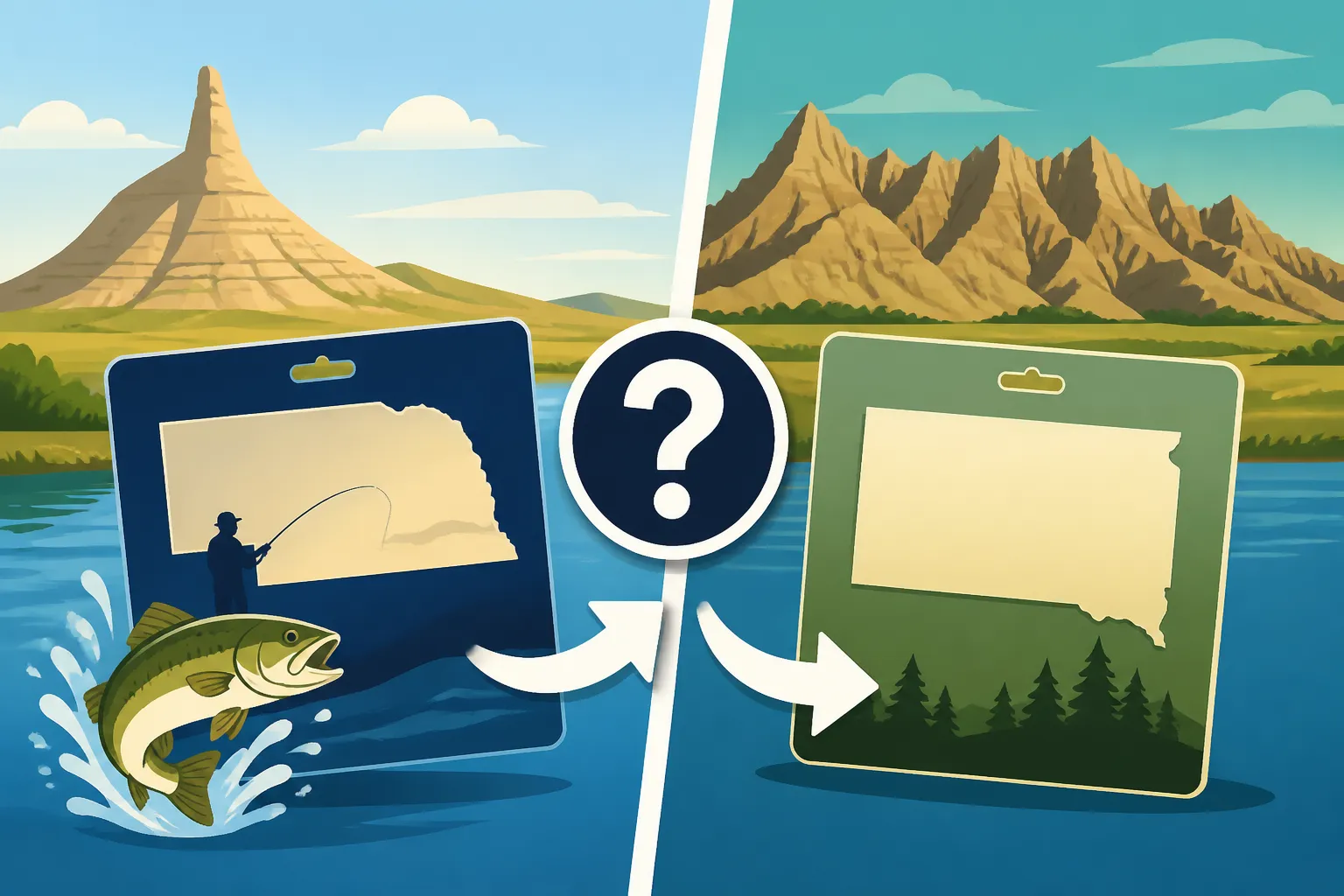
It's a really common point of confusion when you're looking to cast a line near a state border: does my Nebraska fishing license magically work in South Dakota waters? You're not alone in wondering, as state lines can be tricky when it comes to regulations. This guide will clear up that uncertainty, explaining the general rules and, more importantly, the specific exceptions for those beloved border waters like the mighty Missouri River and Lewis and Clark Lake.
The General Rule: Why Your Nebraska License Won't Work Across the Border
Let's get straight to it: for the vast majority of fishing spots, a Nebraska fishing license is only valid within the geographical boundaries of Nebraska. While it might seem convenient to use one license for two states, especially if you live close to the border, that's generally not how it works. Each state operates under its own jurisdiction when it comes to natural resources, and fishing licenses are a big part of that.
Understanding State Fishing Jurisdictions
Every state in the U.S., including Nebraska and South Dakota, has its own department responsible for managing fish and wildlife populations. In Nebraska, that's the Nebraska Game and Parks Commission (NGPC), and in South Dakota, it's the South Dakota Game, Fish and Parks (SDGFP). These agencies develop their own regulations, manage stocking programs, and, crucially, require their own specific licenses to fund these conservation efforts. When you purchase a Nebraska Fishing License Guide, you're contributing directly to the management of Nebraska's fisheries. The funds from your license sales stay within Nebraska to support local projects, fish stocking, habitat improvements, and enforcement within the state. The same goes for a South Dakota license; those funds support South Dakota's aquatic resources. So, unless there's a specific, written reciprocity agreement for a shared water body, your license is strictly for the state that issued it.
Imagine you're driving your car. Your Nebraska driver's license works in South Dakota because there's a reciprocal agreement between states for driving privileges. Fishing licenses, however, are much more akin to a state park entry permit—it gets you into that park, but not necessarily the one next door, unless a special pass exists. This system ensures that anglers are contributing to the conservation efforts of the state whose resources they are utilizing, which is a pretty sensible approach when you think about it.
The Legal Ramifications of Fishing Without a Valid License
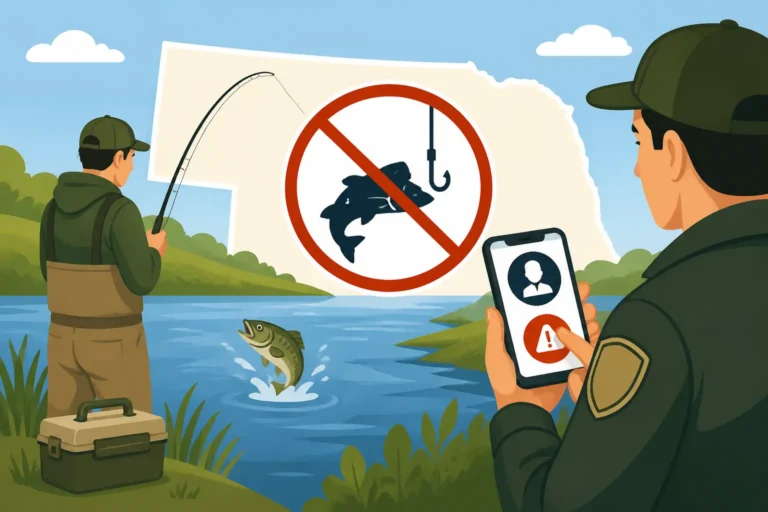
Fishing without a valid license in any state where one is required can lead to a heap of trouble that's far worse than missing out on a few bites. If you were caught fishing in a South Dakota lake with only your Nebraska license, you'd be considered to be fishing without a license in South Dakota. The penalties vary, but they can include significant fines, the confiscation of your fishing gear, and even the loss of your fishing privileges in both states through interstate wildlife compacts.
Picture this scenario: you're having a great day on the water, reeling in some nice walleye, and a South Dakota Game, Fish and Parks officer approaches for a routine license check. You proudly present your Nebraska license, only to be informed it's not valid there. What started as a peaceful outing can quickly turn into a legal headache. Fines can range from hundreds of dollars, and sometimes even include court costs. Furthermore, repeated offenses or fishing without a license for certain species can carry even stiffer penalties. It's truly not worth the risk, especially when it's so easy to get the right permit. Understanding the Nebraska Fishing Violation Penalties can give you a clear idea of how seriously these things are taken, and South Dakota's rules are equally stringent. It's always best to be absolutely certain you're covered before you cast.
The Key Exception: Border Water Agreements and Reciprocity
Now, here's where things get interesting and a little less straightforward – in a good way! There are specific, agreed-upon exceptions for certain shared border waters between Nebraska and South Dakota. These agreements are designed to make fishing more accessible for anglers who want to enjoy the shared resource without needing two separate licenses.
Focusing on the Missouri River
The grand Missouri River forms a significant portion of the border between Nebraska and South Dakota, and for this iconic waterway, there's a fantastic reciprocity agreement in place. If you possess a valid resident or nonresident fishing license from either Nebraska or South Dakota, you are generally permitted to fish the main stem of the Missouri River where it forms the boundary between the two states. This is a huge convenience for anglers, allowing seamless fishing from one bank to the other (or from a boat in the middle of the river) without having to worry about which state's jurisdiction you're currently in.
This means if you're a Nebraska resident with an Nebraska Resident Fishing License Requirements, you can launch your boat in Nebraska and fish all the way up to the South Dakota side of the river, and vice versa for South Dakota residents. It truly opens up a vast amount of water, including prime spots for walleye, catfish, and other popular species. However, it's absolutely crucial to remember that this reciprocity applies only to the main stem of the Missouri River. Tributaries, bays, or oxbow lakes that are entirely within one state's boundary are usually not covered by this agreement. For instance, if you venture into a creek that flows solely within South Dakota, you'd need a South Dakota license. Always double-check your maps and the specific regulations for the area you plan to fish. You can find more specific details in our guide on Missouri River Border Water Fishing License Rules.
Specifics of Lewis and Clark Lake
One of the most popular shared water bodies along the Nebraska-South Dakota border is Lewis and Clark Lake, which is actually an impoundment of the Missouri River. This means the same border water reciprocity applies here, making it a fantastic destination for anglers from both states. Whether you're chasing walleye, sauger, or panfish, a valid Nebraska or South Dakota fishing license will typically cover you for fishing the main body of Lewis and Clark Lake.
The beauty of this agreement means that if you're staying at a campground on the Nebraska side, like the Weigand Marina State Recreation Area, you can fish freely across to the South Dakota shoreline. Or if you're coming from the South Dakota side, you're equally covered. This simplicity is a huge draw for anglers who enjoy the diverse fishing opportunities Lewis and Clark Lake offers. However, the caveat about tributaries and wholly-enclosed waters still stands firm here. If you decide to explore a small bay or creek that is entirely within the geographical lines of South Dakota, you'd need a South Dakota license. The same applies if you're a South Dakota angler straying into a Nebraska-only tributary. It's a nuanced but incredibly important distinction to ensure you're always legal. Our comprehensive Lewis and Clark Lake Fishing Guide dives into even more detail about this fantastic fishery and its regulations.
What Defines "Border Water" for Reciprocity?
Defining "border water" for these special agreements isn't just a casual term; it's a legal and geographical designation. For Nebraska and South Dakota, this typically refers to the main channel of the Missouri River where it physically forms the boundary between the two states. It’s not just any water that happens to be near the border; it's the actual dividing line. This usually excludes areas like floodplains that might fill with water during high flows but are technically still within one state's designated territory.
The general rule of thumb is this: if you can look across the water and see the other state's designated land, and you are on the main stem of the river, you're usually good with either state's license. But as soon as you enter a bay, cove, or tributary that is entirely enclosed by the land of a single state, then that state's license requirements take over. For example, if you're fishing the Missouri River near Blair, Nebraska, you can fish the entire width of the river with a Nebraska license. But if you were to go up the Elkhorn River, which is entirely within Nebraska, you would clearly need your Nebraska license, and a South Dakota one would be useless there. Always consult the official fishing guides from both the NGPC and the SDGFP for the most up-to-date and specific maps and descriptions of these border water areas to avoid any misunderstandings.
What You Need to Fish in South Dakota (Beyond Border Waters)
If your fishing plans take you away from the main stem of the Missouri River and into any of South Dakota's fantastic inland lakes or rivers, then your Nebraska license is no longer your ticket to fish. At that point, you'll need to acquire a South Dakota fishing license, just like any other angler planning to fish exclusively within their borders.
Obtaining a South Dakota Fishing License
Getting a South Dakota fishing license is a straightforward process, very similar to purchasing your Nebraska permit. The primary way to purchase one is online through the South Dakota Game, Fish and Parks website. Their online system is user-friendly and allows you to quickly select the type of license you need, pay, and even print a temporary copy or save it to your phone. This is often the most convenient method for non-residents planning a trip.
Just like in Nebraska, South Dakota offers various license types to suit different needs. You'll find annual licenses, which are great if you plan multiple trips throughout the year. For shorter visits, they offer short-term permits, such as a 1-day, 3-day, or even 7-day nonresident fishing license. These are perfect for a quick weekend getaway or a week-long vacation to explore places like Lake Oahe or the Glacial Lakes region. You'll need to provide some personal information, similar to when you purchase your Nebraska Nonresident Fishing License Guide. Be aware that costs can differ significantly between resident and nonresident licenses. If you prefer to buy in person, South Dakota also has numerous licensed vendors, including bait shops, sporting goods stores, and convenience stores scattered across the state. This is especially handy if you've forgotten to purchase one online before you arrive. Many folks even purchase their licenses at a Cabela's store or find options for fishing gear and licenses through vendors listed on sites like Amazon, although the actual license purchase will be through official state channels.
Important South Dakota Regulations to Know
Acquiring the correct South Dakota fishing license is only half the battle. The other, equally crucial, part is understanding and adhering to their specific fishing regulations. Just because you're used to Nebraska's rules doesn't mean South Dakota's are the same. In fact, they can differ quite significantly, affecting everything from how many fish you can keep to what size they need to be, and even the types of bait or methods you can use.
For instance, South Dakota may have different Nebraska Walleye Bag Limits, length limits, or even slot limits on species like walleye or bass. What's legal to keep in Nebraska might be illegal in South Dakota. The same goes for Nebraska Catfish Bag Limits or crappie. They also have specific rules about tackle, such as the number of lines you can fish with, especially during ice fishing season. It's imperative to get a copy of the current South Dakota Fishing Handbook or access it online through the SDGFP website. This booklet is your bible for fishing in South Dakota and will outline all the specifics for general statewide regulations as well as special rules for individual lakes or river sections. Always take the time to review these rules before you hit the water, as ignorance of the law is no excuse, and wardens are out there to enforce them. A quick check can save you a lot of trouble and ensure you have an enjoyable, worry-free fishing experience.
Planning Your Cross-Border Fishing Trip
Stepping out into cross-border fishing, especially where reciprocity applies, can add a whole new dimension to your angling adventures. But it requires a bit more thoughtful planning than just hitting your usual local spot.
Preparing for Missouri River Border Water Fishing
If your goal is to fish the shared waters of the Missouri River, you're in for a treat, but careful preparation is key to a smooth trip. Firstly, always have your current Nebraska fishing license clearly accessible. While digital licenses on your phone through an app like GoOutdoorsNE are usually accepted, having a physical copy as a backup, perhaps laminated, can prevent any issues if your phone battery dies or you lose signal. Secondly, obtain a detailed map of the specific section of the Missouri River you plan to fish. You need to be crystal clear on where the main stem ends and where state-specific tributaries begin. Apps and GPS units can be incredibly helpful here, but a good old-fashioned waterproof paper map, which you can often pick up at local bait shops or order online from a retailer like Amazon, is always a reliable backup.
Consider the species you're targeting. Are you going for walleye, catfishing, or perhaps targeting white bass during a run? Research the typical fishing patterns and recommended baits and lures for that specific section of the Missouri River, as conditions can vary greatly. What works well at Gavins Point Dam might be different from what's effective further upstream. If you're using a boat, ensure all your Nebraska Boat Registration and Fishing Rules are in order and that you have all required safety equipment, as both states will expect compliance. Always be prepared for varying weather conditions on the river; it can be unpredictable, so pack layers and appropriate rain gear.
When a Full South Dakota License is Necessary
It's absolutely critical to understand the situations where your Nebraska license simply won't cut it, and a full South Dakota license is required. This applies any time you plan to fish a water body that is entirely within South Dakota's state lines and not part of the defined Missouri River border water reciprocity agreement.
This includes the vast majority of South Dakota's incredible fishing destinations, such as the large reservoirs like Lake Oahe, Lake Sharpe, Lake Francis Case, and Lake Vermillion. These are fantastic fisheries, but they are definitively South Dakota territory. The same goes for any of the smaller, picturesque lakes in the Glacial Lakes region, the Black Hills streams, or any of the countless smaller ponds and rivers. Even if a tributary flows into the Missouri River, if you're fishing it upstream from its confluence with the main river, within South Dakota, you will need a South Dakota license. Don't assume anything; when in doubt, get the South Dakota license. It's a small investment to avoid hefty fines and ensure your trip is legally compliant and stress-free. You can generally find information on How to Buy a Nebraska Fishing License Online to see how similar the process is for South Dakota's online system. Think of it as opening up a whole new world of fishing opportunities, rather than a bureaucratic hurdle.
Essential Gear Considerations for Border Waters
When you're venturing onto border waters like the Missouri River or Lewis and Clark Lake, it's wise to consider gear that gives you versatility and confidence, no matter which side of the invisible line you're technically on. First and foremost, a good quality GPS unit or a reliable fishing app on your phone with detailed mapping is invaluable. This helps you confirm your exact location relative to the border, especially when fishing tricky areas or near river mouths. Many anglers find excellent GPS-enabled fish finders or detailed mapping chips, sometimes available on Amazon, to be crucial for navigating these waters.
Beyond navigation, consider your primary targets. Walleye are king in many of these areas, so having a selection of jigs, crankbaits, and crawler harnesses in various colors and sizes, perfect for different depths and conditions, is a must. If you're boat fishing, a good trolling motor with GPS capabilities can make staying on course a breeze, especially in current or windy conditions. For catfish, heavy-duty rods and reels are essential, along with a variety of strong hooks and fresh bait. If you're like me, you probably have a favorite gear setup. When you're ready to upgrade or stock up on specific items, you might even consider checking out retailers like Amazon for specific brands or types of gear, from specialized fishing line to waterproof tackle boxes. Always ensure you have a robust landing net for those bigger fish, as well as a pair of long-nose pliers or a de-hooker for safe catch and release. Having a well-stocked first-aid kit is also a smart move, as you might be a bit further from immediate assistance on these larger water bodies.
| Feature / Location | Nebraska General Waters | South Dakota General Waters | Missouri River Border Waters |
|---|---|---|---|
| Required License | Nebraska Fishing License | South Dakota Fishing License | Nebraska OR South Dakota Fishing License (reciprocity) |
| Jurisdiction | Nebraska Game & Parks | SD Game, Fish & Parks | Shared / Reciprocal |
| Examples (Lakes) | Branched Oak Lake | Lake Oahe | Lewis and Clark Lake |
| Examples (Rivers) | Platte River | Cheyenne River | Main Stem of Missouri River |
| Tributaries/Bays | Nebraska License Required | SD License Required | License of the state the tributary/bay is physically within |
| Regulations Apply | Nebraska Regs | South Dakota Regs | Nebraska or South Dakota Regs (depending on which license you hold, check specifics for fish limits) |
| Where to Purchase | GoOutdoorsNE website, Vendors | SDGFP website, Vendors | As above, for the state of your choice |
Disclaimer
Please remember that fishing regulations can and do change. While this guide aims to be accurate and up-to-date, it is always your responsibility to consult the most current official regulations published by the Nebraska Game and Parks Commission and the South Dakota Game, Fish and Parks before heading out on the water.