How to Fish Standing Timber for Crappie
For any Nebraska angler, the sight of standing timber in a lake or reservoir is often a mix of excitement and trepidation. On one hand, you know those submerged trees are crappie magnets, holding schools of slabs just waiting to be caught. On the other, the thought of countless snags, broken lines, and lost lures can be incredibly frustrating. This guide is here to unravel the mystery of fishing standing timber for crappie, providing you with the techniques, gear, and mindset you need to successfully navigate these challenging but rewarding hotspots and fill your livewell.
Understanding Why Crappie Love Standing Timber
Crappie are masters of ambush, and standing timber provides the perfect environment for them to thrive. It's more than just a place to hang out; it's a vital part of their ecosystem in many Nebraska waters.
Habitat and Shelter
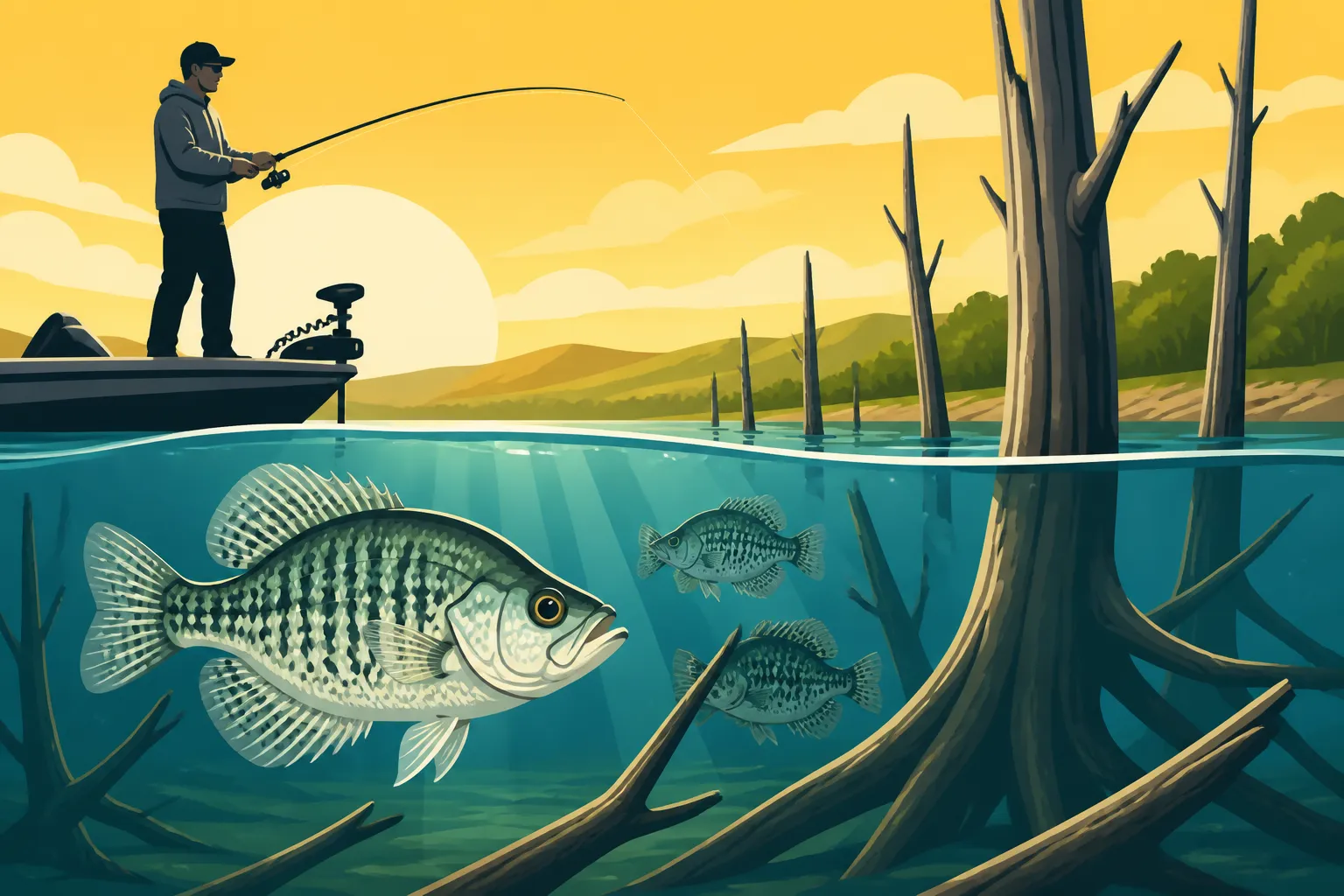
Imagine being a small fish in a big lake. You'd want protection, right? That's exactly what standing timber offers crappie. These submerged trees, whether they're old flooded forests, isolated snags, or carefully placed brush piles, create a complex underwater jungle. They offer dense cover from predators like northern pike and bigger bass, giving crappie a sense of security. Beyond just safety, this structure provides crucial shade during bright, sunny days, which crappie often prefer. The shade acts like a natural umbrella, allowing them to suspend comfortably without being exposed to direct sunlight, which can push them deeper or into less active states.
What's more, timber acts as an incredible attractant for baitfish. Small minnows, insects, and other aquatic life gravitate towards the protection and food sources found around submerged wood. This creates a natural pantry for crappie, allowing them to expend less energy finding food. They can simply hold tight to a branch, waiting for an unsuspecting meal to swim by, making these areas prime ambush points. If you want to learn more about how crappie relate to cover, check out our guide on how to fish crappie around brush piles.
Seasonal Patterns in Timber
The way crappie utilize standing timber can shift dramatically throughout the year, making it crucial to understand their seasonal movements. During the pre-spawn in spring, as water temperatures begin to rise, crappie will often stage in deeper timber near their spawning flats, using the cover as a staging area before moving into shallower waters to spawn. This is a fantastic time to target them, often suspending high in the water column or nestled into the upper branches. If you're wondering how to catch crappie in spring, timber is a great place to start your search.
As summer heats up, crappie will often retreat deeper into the coolest, shadiest parts of the timber, sometimes suspending within the tree canopy or close to the trunk. They might move up to feed during dawn and dusk, but during the bright midday sun, that deep, shady timber is their sanctuary. Come fall, as temperatures cool again, crappie become more active, feeding heavily in timber to fatten up for winter. They might spread out a bit more, but the timber still provides that crucial blend of cover and food access. And even in winter, during the ice fishing season, crappie will often relate to submerged timber, though they'll be much slower and require a more subtle presentation. Understanding these seasonal shifts helps you pinpoint not just where the crappie are in the timber, but also how deep they're likely to be holding.
Essential Gear for Timber Crappie Fishing
Successfully fishing standing timber requires specific gear that can withstand the challenges of snagging while still offering the sensitivity needed for light-biting crappie. Choosing the right tools can make all the difference between a day of frustration and a day of filling the cooler.
Rods, Reels, and Line
When you're fishing in and around standing timber, your rod choice is paramount. You'll want something with a good backbone but a sensitive tip. Many anglers opt for longer rods, perhaps 7 to 9 feet, especially when fishing from a boat. This extra length allows you to reach further into the timber, guide your lure more precisely, and keep crappie from diving back into the branches once hooked. A medium-light action rod with a fast tip is ideal, providing the responsiveness to feel subtle bites while having enough power to pull a fish away from snags.
For reels, a good quality spinning reel is often preferred for its ease of use and ability to handle lighter lines and jigs. Pair it with a smooth drag system, which is critical when a crappie makes a run for cover. When it comes to line, this is where things get interesting. Many seasoned timber anglers will use braided line for their main line, typically 8 to 15-pound test. Braid has excellent strength-to-diameter ratio and incredible abrasion resistance, which is vital when rubbing against submerged wood. However, braid can be visible to fish in clear water, so a fluorocarbon leader of 4 to 6-pound test is often tied to the end. Fluorocarbon is nearly invisible underwater and also offers good abrasion resistance. You can find a wide selection of these specialized lines and other gear on Amazon, making it easy to prepare for your next trip.
Lures and Baits
Crappie in timber can be finicky, but a few lure and bait choices consistently produce results. Small jigs are the undisputed champions. Plastic jigs, often called "tube jigs," "grubs," or "swimbaits," in sizes from 1/32 to 1/8 ounce, are fantastic. Experiment with colors – chartreuse, white, black, and various glitter combinations are popular. Hair jigs and marabou jigs also have an enticing, pulsating action in the water that crappie find hard to resist. The key is finding the right size and color for the day. For insights on color choices, consider our article on the best jig color for Nebraska crappie.
Live bait, particularly small minnows, can also be deadly when fishing timber. A lively minnow suspended near a submerged branch is often irresistible. You can tip your jig with a minnow for an added attractant, or simply use a minnow under a bobber. Small crappie nibblers or scent attractants can also be added to jigs for extra appeal, especially when the bite is tough. The most crucial aspect of your jig or hook setup for timber is to minimize snags. Weedless jig heads, those with a small wire guard, or single hooks instead of trebles, can save you a lot of frustration and lost tackle.
Terminal Tackle and Accessories
Beyond your rod, reel, and lures, having the right terminal tackle and accessories is paramount when tackling standing timber. Slip bobbers are an absolute game-changer here. Unlike fixed bobbers, a slip bobber allows you to easily adjust your fishing depth without having an excessive amount of line hanging down. This means you can fish shallow or deep with the same setup, and cast with much greater ease. Pair your slip bobber with a bobber stop (thread or small rubber stop) and a small bead to protect your knot.
Small split shot weights are essential to get your bait down to the desired depth and keep it there, especially when fishing current or in windy conditions. You'll want a variety of sizes to adjust to different depths and current speeds. Don't forget a good pair of line clippers or scissors, and a hook remover or pliers – these are invaluable for safely unhooking fish and for dealing with those inevitable snags. Having a small tackle box or bag dedicated to your crappie timber setup, perhaps something you picked up on Amazon, will keep you organized and ready for action.
Techniques for Successfully Fishing Standing Timber
Fishing standing timber is less about casting wildly and more about precision and finesse. The goal is to present your bait naturally to crappie holding tight to the structure without getting hopelessly snagged.
Vertical Jigging and Dropping
One of the most effective ways to fish standing timber is through vertical jigging and dropping. This technique involves positioning your boat, kayak, or even canoe directly over or alongside the submerged structure you intend to fish. Using a good fish finder is invaluable here to locate individual trees, brush piles, and schools of crappie holding within or around them. Many anglers find the ability to hover over a spot with a reliable trolling motor to be a huge advantage. If you're exploring this method from a smaller craft, our guide on Nebraska kayak fishing techniques might offer some useful pointers.
Once you've identified your target, carefully drop your jig straight down into the cover. The idea is to keep your bait as vertical as possible, minimizing the chance of snagging on adjacent branches. Let the jig sink until you see it on your fish finder at the depth crappie are holding, or until you feel it hit a branch. Then, slowly lift and drop your rod tip, imparting a subtle jigging motion. Sometimes a gentle shake, sometimes a slightly higher lift, is all it takes. Pay close attention to your line; crappie bites are often incredibly light, sometimes feeling like nothing more than a slight tick or just added weight. You want to feel for that slight hesitation, that subtle change in the jig's movement that indicates a bite.
Slip Bobber Fishing Around Timber
While vertical jigging is fantastic, sometimes you need a different presentation, especially when crappie are spread out or just a bit shy. This is where slip bobber fishing shines in standing timber. The beauty of a slip bobber is its versatility: you can set your bait to any depth you desire, from just a few feet under the surface to twenty feet down, simply by sliding the bobber stop up or down your line. This precision allows you to target crappie holding at specific depths within the timber canopy without needing to be directly overhead.
To use a slip bobber effectively, thread your line through the bobber, then add your bobber stop above it. Tie on your jig or hook, add a split shot or two a foot or so above the bait, and set your depth. Cast your rig gently towards the edges of the timber or into open pockets within the structure. The bait will sink freely until the bobber stop hits the bobber, suspending your lure at the desired depth. This presentation allows for a natural, uninhibited drift that can often entice wary crappie. You can let the wind or a slight current slowly move your bait through the timber, covering more ground than a strictly vertical approach. This technique is also excellent for beginners, and for some great starter advice, check out our article on the best rod and reel combo for beginners in Nebraska.
Managing Snags and Retrieving Lures
Let's be real: fishing standing timber means you will get snagged. It's not a matter of if, but when. The trick is to minimize the frequency and know how to deal with them when they happen. Firstly, fish with confidence but also with a healthy respect for the structure. Try to anticipate where branches are and avoid casting directly into impenetrable areas. Using single hooks and weedless jigs, as mentioned earlier, is your first line of defense.
When you do get snagged, don't just yank hard immediately. Often, a gentle but firm pull straight back in the opposite direction you snagged can free your lure. Sometimes, letting slack in the line and then snapping it quickly can dislodge it. If you're in a boat, carefully motor up to the snag from a different angle and try to free it. Some anglers carry a "lure retriever" or "line thumper" – a heavy weight on a rope that slides down your line to knock the lure free. Having a pair of long-nosed pliers on hand is also crucial for working with hooks and lines. While losing a favorite jig can sting, remember it's part of the game. Carry extra tackle, and remember that sometimes, a lost lure is the price of admission for a successful day of crappie fishing in the timber.
Locating and Approaching Timber Hotspots in Nebraska
Finding the right timber and approaching it correctly can be as crucial as the fishing technique itself. Nebraska's waters offer many opportunities, but knowing what to look for will give you an edge.
Reading the Water and Interpreting Maps
Before you even launch your boat or step foot on the bank, a little reconnaissance can go a long way. Start by studying maps of your chosen Nebraska lake or reservoir. Look for old creek channels that cut through bays, areas where the contour lines are tightly packed (indicating a steep drop-off), or historical maps that show what the landscape looked like before the area was flooded. Often, standing timber will follow these old creek beds or congregate on submerged points. Visible timber sticking out of the water is an obvious clue, but don't overlook areas where you don't see timber – there could be even more extensive submerged forests lurking just beneath the surface.
Once on the water, your electronics are your best friend. Your fish finder can reveal a wealth of information. Use your side imaging or down imaging to scan for submerged trees, individual stumps, and brush piles that don't break the surface. Look for baitfish congregating around this structure, as crappie are never far from their food source. Pay attention to how the crappie are relating to the timber – are they suspended high in the branches, tight to the trunk, or off to the side? The more you observe and interpret what your electronics are telling you, the better you'll become at pinpointing the crappie's hideouts.
Best Practices for Timber Fishing Success
Approaching standing timber requires a methodical and stealthy strategy. Crappie can be easily spooked, especially in shallower water. Use your trolling motor to approach timber quietly, avoiding any sudden loud noises or splashes. If you're bank fishing, move slowly and keep a low profile. Work your way around a single tree or a cluster of timber, casting from different angles and trying various depths until you pinpoint the crappie's preferred zone. Remember that crappie often school together, so where there's one, there are likely many more. This is particularly relevant when you're aware of the Nebraska crappie daily limit and are looking to maximize your catch within regulations.
Patience is another virtue when fishing timber. It's not always about rapid-fire casts. Sometimes, letting your jig or minnow soak for a while, imparting only subtle movements, is what triggers a bite from a wary crappie. Don't be afraid to experiment with different presentations around the same piece of timber. Try lifting and dropping, then a slow retrieve, then just letting it sit. Always ensure you have the necessary permits before heading out; our comprehensive Nebraska fishing license guide will help you understand all the requirements. When you do catch a crappie, handle it gently, especially if you plan to release it. Knowing how to clean and fillet a crappie properly is also a skill that comes in handy after a successful day in the timber.
| Technique | Primary Lure/Bait | Ideal Depth Control | Snag Risk | Best Conditions |
|---|---|---|---|---|
| Vertical Jigging | Small Jigs (plastics, marabou), Minnows | Very precise (depth finder) | Moderate to High | Crappie tight to structure, deeper timber, calm conditions |
| Slip Bobber Fishing | Minnows, Small Jigs | Highly adjustable (bobber stop) | Moderate | Crappie suspended, spread out, shallower timber, light current |
Remember, fishing standing timber for crappie in Nebraska can be one of the most productive and exciting ways to target these popular panfish. With the right gear, a thoughtful approach, and a good dose of patience, you'll soon be mastering these challenging hotspots.
Disclaimer
This article is for general informational purposes only and does not constitute professional advice. Laws, prices and regulations vary by location and change over time. Consult a qualified professional for guidance on your specific situation.