What Streams Hold Wild Trout in Nebraska
Many anglers dream of battling beautiful trout, but when you think of Nebraska, pristine trout streams might not be the first thing that comes to mind. The common perception is often flat farmland and warm-water species, leaving many to believe that wild trout fishing is something you have to travel far west to experience. This couldn't be further from the truth! Nebraska holds a surprising secret: a handful of incredible, spring-fed streams that boast healthy populations of naturally reproducing wild trout. This guide will take you on a journey to discover these hidden gems, explain what makes them unique, and equip you with the knowledge to seek out and appreciate Nebraska's elusive wild trout.
Unraveling the Mystery of Nebraska's Wild Trout Waters
It's easy to assume that a state primarily known for its agriculture and prairie landscapes wouldn't be a hotspot for trout fishing, let alone wild trout. But beneath the surface, quite literally, lies a network of unique aquatic environments that defy expectations. These aren't your typical stocked ponds; these are living, breathing ecosystems where trout thrive and reproduce without human intervention.
More Than Just Cornfields: The Unique Landscape for Trout
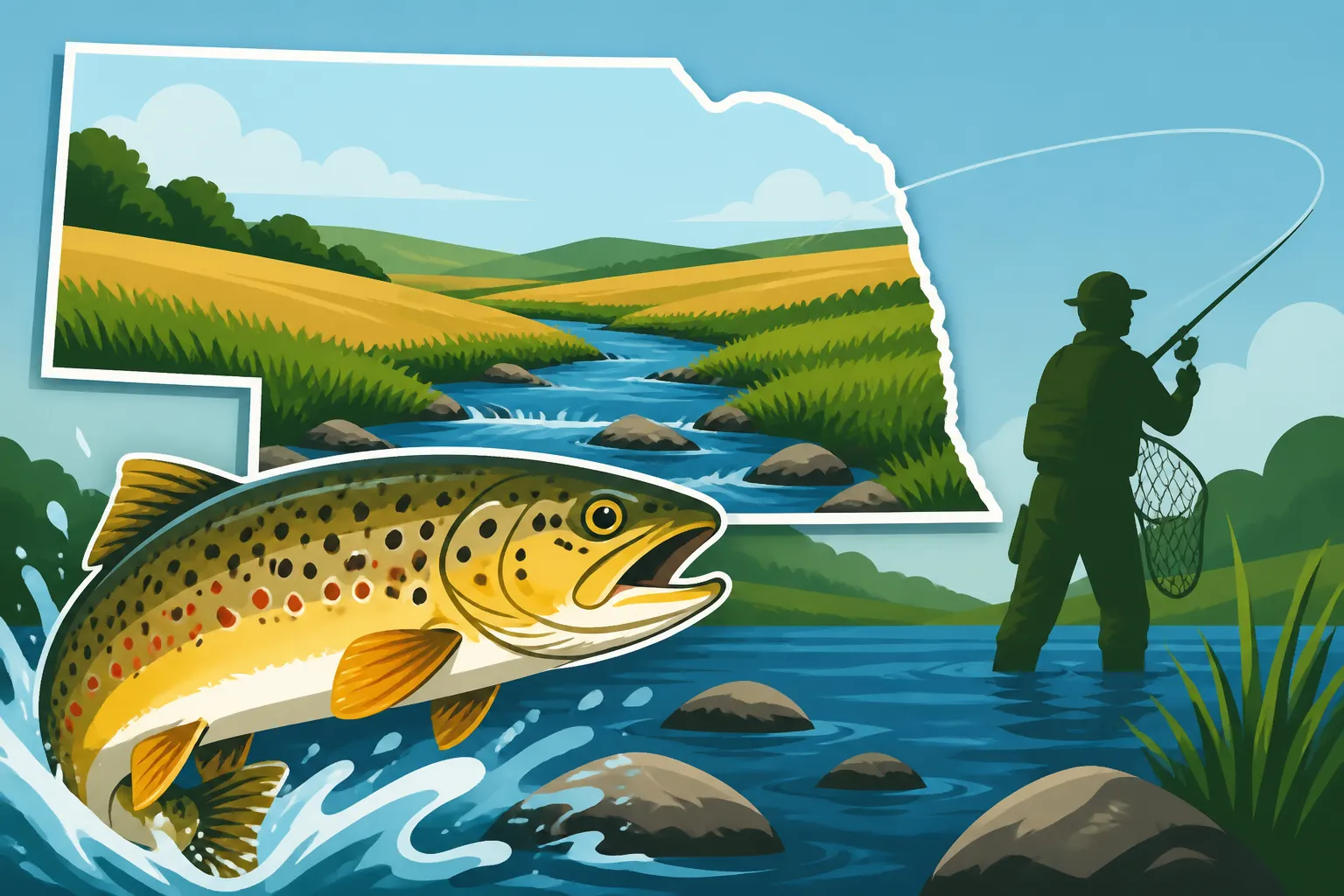
Nebraska's wild trout streams are almost exclusively found within the Sandhills region, a vast expanse of grass-covered dunes in the central and western parts of the state. What makes the Sandhills so special for trout? It's largely thanks to its unique hydrology. The sandy soils act like a giant sponge, absorbing rainfall and snowfall, which then slowly filters down to recharge vast underground aquifers. These aquifers then feed countless springs that bubble up, forming cold, clear streams.
These spring-fed streams maintain remarkably consistent, cold water temperatures year-round – often in the low to mid-50s Fahrenheit – even during the scorching Nebraska summers. This consistent cold water, combined with abundant oxygen, clean gravel bottoms for spawning, and plenty of aquatic insect life, creates the perfect nursery and habitat for trout. It's a truly amazing natural phenomenon, turning a seemingly inhospitable landscape into a trout angler's paradise. The crystal-clear water allows you to literally sight-fish for these wary creatures, making for an incredibly engaging experience.
What Exactly Makes a Stream "Wild Trout" Habitat?
When we talk about "wild trout" habitat, we're not just referring to streams where trout can survive. We're talking about streams where trout reproduce naturally and sustain their populations without the need for regular stocking. This requires a very specific set of environmental conditions that are often fragile and easily disturbed.
A wild trout stream typically boasts:
- Consistent Cold Water: As mentioned, stable temperatures are paramount. Extreme fluctuations or prolonged warm periods can decimate trout populations.
- Clean, Oxygenated Water: Trout need high levels of dissolved oxygen. Siltation, pollution, or excessive algae growth can deplete oxygen and smother spawning beds.
- Suitable Spawning Grounds: Gravel or rocky bottoms are essential for trout to lay their eggs. These "redds" need to be free of silt and allow for good water flow to oxygenate the eggs.
- Abundant Food Sources: A healthy insect population (mayflies, caddisflies, stoneflies) along with small baitfish and crustaceans provides the necessary diet for trout to grow.
- Shelter and Cover: Undercut banks, fallen timber, deep pools, and overhanging vegetation offer protection from predators and strong currents, and provide resting areas.
These factors combine to create a self-sustaining ecosystem. It's a delicate balance, and understanding these elements helps us appreciate why wild trout streams are so rare and precious in a state like Nebraska.
Spotting the Difference: Wild vs. Stocked Trout
For the uninitiated, a trout is a trout, right? Not quite! There's a noticeable difference between a wild trout and one that has been raised in a hatchery and then stocked. Once you've caught a few of each, you'll start to recognize the subtle, and sometimes not-so-subtle, distinctions.
Wild Trout Characteristics:
- Vibrant Colors: Wild trout often display more vivid and intense coloring, adapting to their natural surroundings. Their spots tend to be crisper, and their fins might have brighter margins.
- Pristine Fins: Perhaps the most telling sign. Wild trout's fins, especially the caudal (tail) fin, are typically fully formed, sharp-edged, and undamaged. They've spent their lives navigating natural currents and structures, not bumping against concrete walls or thousands of other fish in a hatchery raceway.
- Streamlined Body: Wild trout are often more slender and muscular, built for navigating currents and actively hunting. They can be incredibly feisty fighters, even smaller ones.
- Behavior: They tend to be warier, more easily spooked, and require a stealthier approach from anglers. This makes catching them all the more rewarding.
Stocked Trout Characteristics:
- Dull or Faded Colors: While still beautiful, their colors might be a bit muted compared to their wild counterparts.
- Worn Fins: Hatchery-raised trout frequently exhibit frayed, stunted, or rounded fins due to the abrasive environment of concrete raceways and constant interaction with many other fish.
- Plumper Body (Sometimes): They can sometimes appear a bit "chunkier" or less streamlined, especially if they've been recently released from a hatchery where food was readily available.
- Less Wary: Freshly stocked trout are often less spooky and easier to catch, having not developed the same natural instincts as wild fish.
While both offer enjoyable angling experiences, the challenge and beauty of a wild trout are truly something special. Learning to spot these differences adds another layer of appreciation to your Nebraska fishing adventures.
Where the Wild Trout Roam: Specific Nebraska Streams
So, you're intrigued and ready to find these elusive wild trout. While Nebraska doesn't boast the sheer number of trout streams found in mountainous regions, the ones we have are truly special. It's a treasure hunt, and like all good treasure, it requires a little effort and respect for the resource.
The Niobrara River Basin and Its Pristine Tributaries
When you think of wild trout in Nebraska, the Niobrara River basin immediately comes to mind. While the main stem of the Niobrara itself is primarily a warm-water fishery for species like smallmouth bass and catfish, its spring-fed tributaries, particularly in the western and central Sandhills, are the true gems. These smaller creeks maintain the ideal cold water temperatures and habitat needed for wild trout.
One of the most notable systems is the Snake River and its feeder streams, which flow into the Niobrara. The Snake River is perhaps Nebraska's most renowned trout stream, famous for both wild rainbow and brown trout. Much of this river flows through private lands, including ranch land, and sometimes through areas that require special access or are within state wildlife management areas. Other lesser-known spring creeks that feed into the Niobrara also harbor wild trout, but finding these often involves local knowledge, diligent map study, and respectful inquiry. Niobrara River Smallmouth Bass Fishing can give you a feel for the main river, but for trout, you're looking for those cold, clear side channels.
Fishing these tributaries is often a wading game, requiring stealth and patience. You'll encounter tight quarters, overhanging trees, and gin-clear water where every move you make is under scrutiny by the fish. It's a challenging but incredibly rewarding experience, offering a unique blend of solitude and intense angling action.
Exploring Other Sandhills Spring-Fed Gems
Beyond the Niobrara basin, other isolated spring-fed creeks and rivers within the vast Sandhills also hold pockets of wild trout. These are often even more remote and require a spirit of adventure to find. Identifying these spots often means looking for areas with significant groundwater discharge, dense vegetation along the banks to provide shade, and gravelly substrates.
A good example, though primarily known for its stocked trout, is the area around Merritt Reservoir. While the reservoir itself is famous for species like walleye and muskellunge, some of the spring-fed streams feeding into or below it can hold wild trout, particularly brown trout, which are known to be more resilient and adapt well to slightly varied conditions. Merritt Reservoir Trout Fishing gives you a sense of the area's potential, but remember, the wild fish are often in the feeder creeks, not the main body of water.
These streams are typically smaller, often just a few feet wide, and are truly hidden away. They're not advertised, and for good reason – their ecosystems are delicate. Finding them often involves studying topographical maps, looking for areas where contour lines suggest significant elevation changes and consistent water sources, and then getting out there to explore.
Accessing These Remote Angling Paradises
Here's the rub with many of Nebraska's wild trout streams: a significant portion of the Sandhills is private ranch land. This means access is often the biggest hurdle. You simply cannot trespass. Always seek explicit permission from landowners before venturing onto private property. A friendly knock on the door and a respectful request can go a long way. Be prepared to be denied sometimes, but often, landowners are willing to grant access to polite, responsible anglers who promise to leave no trace.
Alternatively, some public access points exist within State Wildlife Management Areas (WMAs) or State Recreation Areas (SRAs). These are invaluable resources. Always consult the Nebraska Game and Parks Commission (NGPC) fishing guide and maps for specific regulations and public access information. The key is knowing which specific streams within or bordering these public lands are known for wild trout. It's not always advertised heavily to protect the resource.
For those willing to do their homework and respect the land, the reward is an unparalleled angling experience in some of Nebraska's most beautiful and untouched landscapes.
| Feature | Wild Trout Streams (Nebraska Sandhills) | Typical Nebraska Warm-Water Lake/River |
|---|---|---|
| Water Source | Spring-fed, groundwater | Rainfall runoff, snowmelt, river flow |
| Water Temperature | Consistently cold (50s°F year-round) | Varies greatly by season (40-80s°F) |
| Water Clarity | Exceptionally clear, pristine | Can range from clear to turbid (muddy) |
| Bottom Substrate | Gravel, rock, sand | Silt, mud, sand, some rock |
| Fish Appearance | Vibrant colors, pristine fins, streamlined | Variable, often stocked fish with worn fins |
| Primary Species | Brown Trout, Rainbow Trout (some Brook Trout) | Catfish, Walleye, Bass, Crappie, Panfish |
| Access | Often private land, requires permission; remote | More public access points, boat ramps |
| Angling Style | Fly fishing, ultralight spinning; wading | Boat fishing, bank fishing; various methods |
| Conservation Need | Very high, delicate ecosystems | Varies; generally resilient, some stocking |
Your Blueprint for Catching Wild Nebraska Trout
So, you've found a promising stream and secured access. Now what? Catching wild trout, especially in small, clear streams, requires a different approach than chucking a crankbait in a reservoir. It's about finesse, stealth, and understanding the trout's natural instincts.
Essential Gear for the Discerning Trout Angler
You don't need a boat or heavy tackle for these streams. In fact, lighter is better. Simplicity and portability are your friends.
- Rod and Reel: An ultralight spinning setup (5' to 6.5' rod, small reel with 2-4 lb test monofilament or fluorocarbon) is perfect for spinners and small jigs. For fly anglers, a 7.5' to 9', 3- or 4-weight fly rod is ideal for accurate casts in tight quarters. You can find excellent options for either setup on Amazon, from entry-level combos to more advanced gear. Best Rods and Reels for Nebraska Fishing offers more detail on suitable equipment.
- Waders: Crucial for navigating these streams. Chest waders are often preferred for deeper sections or colder water. Make sure they fit well and you have appropriate wading boots for stability on slippery, rocky bottoms. Best Waders for River Fishing in Nebraska can guide your choice.
- Polarized Sunglasses: Non-negotiable! They cut glare, allowing you to spot fish, observe structure, and make more accurate presentations.
- Small Tackle Bag/Vest: You won't need much. A few small lures or flies, tippet, split shot, and a pair of forceps for hook removal.
- Landing Net: A small, soft-mesh net is highly recommended for safely landing and releasing fish without undue stress.
- Insect Repellent: Depending on the season, mosquitoes and biting flies can be prevalent, especially in vegetated areas.
- Water and Snacks: Hydration and fuel are important, especially if you're hiking into remote areas.
Remember, every piece of gear should contribute to a low-impact approach. The goal is to blend into the environment and minimize disturbance.
Stealth and Presentation: Mastering the Art of Wild Trout Fishing
Wild trout are incredibly wary, a survival instinct honed by generations in clear, shallow water. Your approach and presentation are far more critical than in many other types of fishing.
- Be a Ghost: Move slowly and quietly along the bank. Avoid sudden movements. Stay low, crouch, or even crawl when approaching a likely spot. Your silhouette against the sky is a dead giveaway.
- Stay Out of Sight: Whenever possible, approach from downstream, casting upstream. This puts you behind the fish's natural viewing angle. Use bankside vegetation and stream features for cover. Avoid casting your shadow over the water.
- Accurate Casts: Pinpoint accuracy is key. You often have a small window to present your lure or fly without spooking the fish or getting snagged on overhanging branches. Practice short, precise casts.
- Natural Drift: Whether you're fly fishing with a dry fly or nymph, or spinning with a small in-line spinner, a natural, drag-free drift is paramount. Trout are attuned to how their food moves; anything unnatural will be rejected.
- Lure/Fly Choice: Match the hatch if possible for fly fishing, but generally, small, subtle patterns work best. For spinning, tiny silver, gold, or black in-line spinners (like Rooster Tails or Mepps) are highly effective, as are small spoons or micro jigs. Check out Best Flies for Nebraska Trout Fishing for specific recommendations.
- Target Structure: Trout love cover. Cast to undercut banks, around submerged logs, behind large rocks, or into shaded pools. These are their holding and ambush points.
Patience is a virtue here. You might make many casts for a single fish, but when that wild trout strikes, the effort is instantly forgotten.
Embracing Catch-and-Release: Preserving the Future
Nebraska's wild trout populations are fragile. Many of these streams have low fish densities and limited reproductive potential compared to larger, more robust systems. For this reason, catch-and-release is not just good practice; it's often essential for the long-term health of these fisheries and, in some cases, legally mandated.
- Minimize Handling: Reduce the time the fish is out of water. Keep it wet. Use wet hands when handling.
- Use Barbless Hooks: Crimp down the barbs on your hooks or use barbless hooks to make removal easier and less damaging.
- Forceps/Pliers: Keep a pair of long-nosed forceps or needle-nose pliers handy for quick hook removal.
- Support the Fish: If taking a photo, support the fish horizontally with two hands, ensuring its weight isn't damaging its internal organs or jaw. Get the shot quickly and return it to the water.
- Revive Gently: Hold the fish gently in the current, facing upstream, until it can swim away under its own power. Don't simply toss it back.
By practicing careful catch-and-release, you contribute directly to the survival and future of Nebraska's precious wild trout populations. For more detailed best practices, refer to Catch and Release Best Practices in Nebraska.
Navigating Regulations and Championing Conservation
Just like any other fishery, Nebraska's wild trout streams are governed by specific rules. However, given their sensitive nature, these regulations often come with additional provisions aimed at protection and sustainability. Being a responsible angler means understanding and adhering to these guidelines, and actively participating in conservation efforts.
Deciphering Special Trout Stream Regulations
It cannot be stressed enough: always check the current Nebraska Fishing Guide before heading out. Regulations can change, and specific trout waters often have unique rules that differ from general statewide fishing laws. You can usually find the most up-to-date information on the Nebraska Game and Parks Commission website or by picking up a physical copy of the guide from licensed vendors.
Look out for specific language related to "trout streams" or "put-and-take trout waters." Regulations often include:
- Artificial Lures Only: Many wild trout streams prohibit the use of live bait to prevent accidental hooking mortality of undersized fish or the introduction of invasive species.
- Catch-and-Release Only: As mentioned, some streams are designated purely for catch-and-release, meaning all fish must be immediately returned to the water.
- Special Length Limits: You might find minimum or maximum length limits, or even "slot limits" where fish within a certain size range must be released.
- Reduced Daily Bag Limits: Even in streams where harvest is allowed, the number of fish you can keep might be significantly lower than for other species.
- Trout Stamp Requirements: Beyond your general Nebraska Fishing License Guide, you might need a Do I Need a Trout Stamp to Fish for Trout in Nebraska? to legally fish for trout in designated waters. This stamp directly supports trout management and stocking programs.
These regulations are in place for a reason: to protect a valuable and vulnerable resource. Ignoring them not only risks hefty fines but, more importantly, jeopardizes the future of wild trout fishing in Nebraska. Being informed is your first step in responsible angling.
The Angler's Role in Protecting Nebraska's Wild Trout Legacy
Beyond simply following regulations, every angler has a critical role to play in the long-term conservation of Nebraska's wild trout streams. These ecosystems are highly sensitive to human impact, and our actions can either help them flourish or contribute to their decline.
- "Leave No Trace" Ethic: Pack out everything you pack in, including all trash, fishing line scraps, and even organic waste like orange peels. Leave the stream bank and water as pristine or better than you found it.
- Respect Private Property: Always ask permission if you're on private land, close gates behind you, avoid disturbing livestock, and be mindful of your surroundings. A good relationship with landowners is vital for continued access.
- Prevent Invasive Species: Always clean, drain, and dry your waders, boots, and gear before moving from one water body to another. This prevents the transfer of aquatic invasive species, which can devastate delicate trout ecosystems. The Nebraska Aquatic Habitat Stamp Explained also supports efforts to protect aquatic resources, including combating invasives.
- Report Violations: If you witness illegal activity, such as poaching, pollution, or excessive harvest, report it to the Nebraska Game and Parks Commission. Protecting these resources is a shared responsibility.
- Educate Others: Share your knowledge of responsible angling practices and the importance of conservation with fellow anglers, especially newer generations. Inspire them to cherish these unique natural treasures.
Nebraska's wild trout streams are a testament to the unexpected wonders of our state. They offer a unique challenge and a peaceful retreat for those willing to seek them out. By understanding their fragile nature, adopting ethical angling practices, and adhering to regulations, we can ensure that these hidden gems continue to thrive for generations of anglers to come.
Disclaimer
This article is for general informational purposes only and does not constitute professional advice. Laws, prices and regulations vary by location and change over time. Consult a qualified professional for guidance on your specific situation.