Best Bait for Bluegill and Sunfish
There's nothing quite like the joy of reeling in a feisty bluegill or a colorful sunfish, especially when you're out enjoying the beautiful Nebraska waters. But sometimes, whether you're a seasoned angler or introducing a youngster to the sport, getting those panfish to bite can feel like a mystery. You try one bait, then another, wondering if you're using the right stuff for these eager but sometimes finicky eaters. This guide is all about cutting through that confusion, helping you choose the absolute best baits to consistently catch bluegill and sunfish across Nebraska's diverse ponds, lakes, and rivers.
Understanding Bluegill and Sunfish Feeding Habits
Before we dive into the tackle box, it helps to think like a fish, specifically a bluegill or sunfish. These panfish, while often seen as easy to catch, have distinct preferences that change based on their environment, the time of year, and even the weather. Knowing what makes them tick will give you a serious edge in selecting the perfect bait.
What Attracts Panfish? Their Natural Diet and Sensory Cues
Bluegill and sunfish are opportunistic eaters, constantly on the lookout for their next meal. Their natural diet primarily consists of insects, insect larvae, small crustaceans, and even tiny minnows. They're also not above nibbling on plant matter or algae, especially the younger fish. This varied diet is why such a wide array of baits can be effective. When choosing a bait, you want something that either mimics their natural food sources or stands out enough to pique their curiosity. They rely heavily on sight, spotting movement and color in the water, but don't underestimate their sense of smell. A natural scent can be a huge attractor, especially in murkier waters or when fish are less aggressive. Think about what a worm smells like to a fish – it's an irresistible dinner bell!
These fish are also quite social and often feed in schools. If you catch one, there are likely more nearby, which means your bait and presentation need to be appealing enough to draw in the whole crowd without spooking them. This is where subtlety often wins the day; small baits, presented naturally, tend to be more effective than large, flashy offerings, especially for the typical dinner-plate-sized panfish we're all hoping to catch.
Seasonal Changes in Foraging Behavior
Just like us, bluegill and sunfish's appetites fluctuate with the seasons. Their metabolism slows down in colder water and speeds up when the water warms.
- Spring: As water temperatures rise after the long Nebraska winter, panfish become incredibly active. They're recovering from the lean months and preparing to spawn, meaning they're on the hunt for protein-rich meals. This is an excellent time for live baits like worms and small minnows, as well as tiny jigs that mimic insects emerging from the bottom. They'll often be found in shallower, warming waters.
- Summer: During the heat of summer, bluegill and sunfish maintain a high metabolism. They'll feed throughout the day but often move to deeper, cooler water during the hottest hours or seek shade under docks and submerged cover. Live baits continue to excel, and artificial lures that can be worked quickly through the water column can also be very effective at covering ground and finding active fish. Consider trying different depths if you're not getting bites right away.
- Fall: As autumn arrives and water temperatures start to drop, panfish begin their pre-winter feeding frenzy. They're bulking up for the colder months, making them very aggressive. They might move back into shallower areas during the day to feed on insects and minnows before retreating to deeper water at night. Both live baits and artificial lures can work wonders during this period.
- Winter: Ice fishing for bluegill and sunfish in Nebraska can be incredibly rewarding. Their metabolism slows down, so they're less aggressive, but they still need to eat. Smaller, more subtle baits are key here. Tiny jigs tipped with a maggot or wax worm are often irresistible. Slow, gentle presentations are usually more effective than aggressive jigging. Remember to always prioritize Nebraska Ice Fishing Safety Tips if you're venturing onto the ice.
Water Conditions and Bait Choices
The clarity and temperature of the water play a significant role in how fish perceive and react to your bait.
- Clear Water: In clear lakes and ponds, fish rely heavily on sight. This means your bait needs to look natural and be presented subtly. Lighter lines, smaller hooks, and natural-colored baits or artificial lures that mimic actual insects or forage fish will be most effective. Avoid overly bright or unnatural colors unless you're trying to trigger a reaction strike, which is less common with panfish.
- Stained or Murky Water: When the water is cloudy from rain, runoff, or excessive algae, visibility is reduced. Here, scent and vibration become more important. Live baits that give off a natural aroma, like worms, are excellent. Artificial baits with rattles or those that create a strong vibration can help fish locate them. Brighter colors, like chartreuse, orange, or white, can also provide better contrast against the murky background, making them easier for fish to spot.
- Warm Water: Fish are generally more active and willing to chase in warmer water. You can often present baits more aggressively, using faster retrieves with artificial lures or frequently twitching a bobber with live bait.
- Cold Water: In cold water, fish are sluggish. They're less likely to expend energy chasing a fast-moving meal. Slow presentations are critical. Drift your bait, let it sit motionless, or use very subtle twitches to entice a bite. This is particularly true when you're ice fishing or targeting early spring panfish.
Knowing these feeding behaviors and how they change with conditions will empower you to make smarter bait choices, ensuring you're offering what the fish want, when they want it. It's not just about having the "best" bait, but the "right" bait for the situation.
Top Live Baits for Bluegill and Sunfish in Nebraska
When it comes to bluegill and sunfish, nothing quite beats the appeal of a natural, live offering. These baits are the staples for a reason: they work! Their natural scent, movement, and taste are often irresistible to hungry panfish.
Worms: The Tried and True Classic
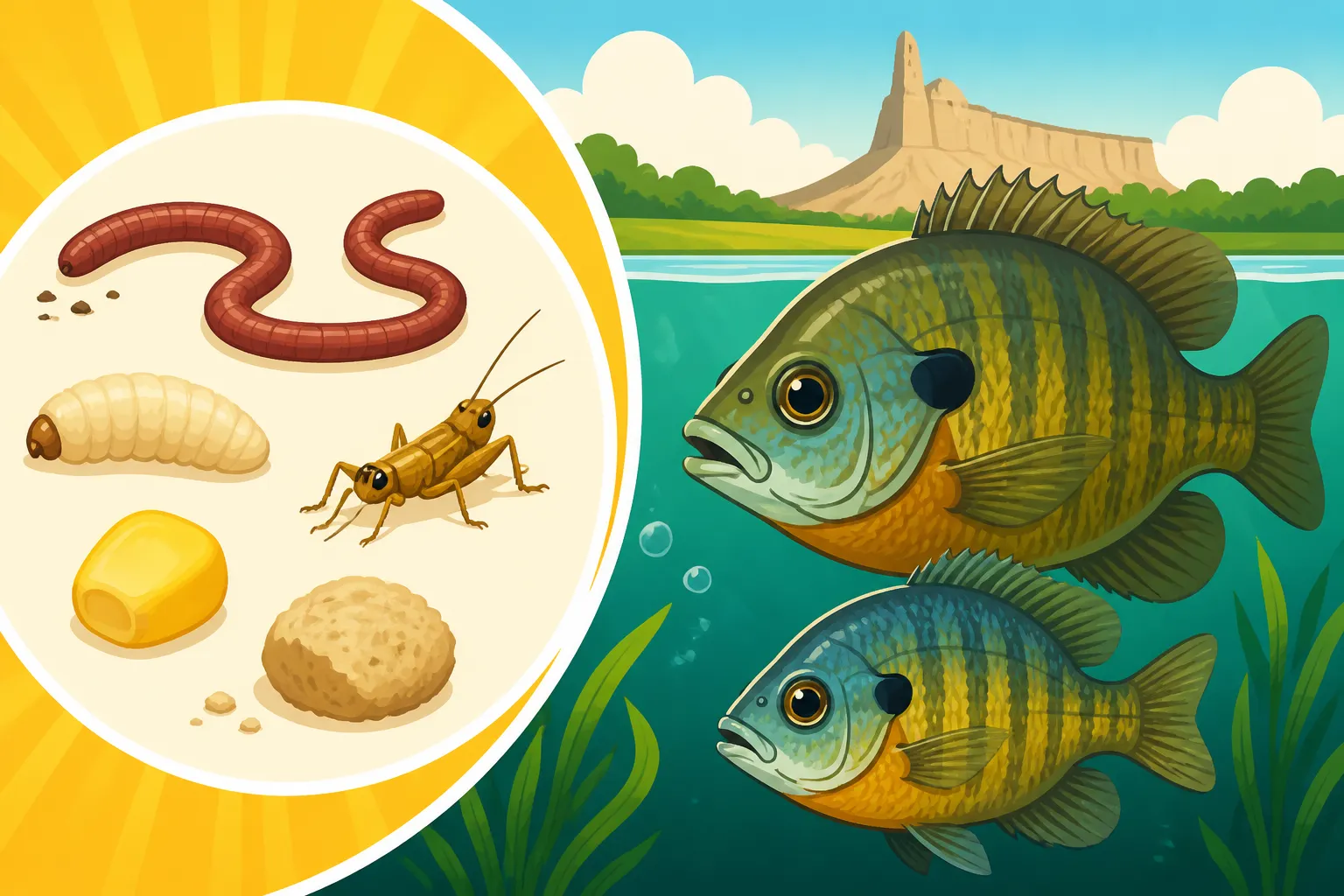
Ah, the humble worm. If there's one bait that has probably caught more bluegill and sunfish than any other, it's the worm. And for good reason! Worms, particularly red wigglers (often called manure worms or compost worms) and nightcrawlers (larger earthworms), are a natural food source for fish. They give off a strong, appealing scent and wriggle enticingly in the water, making them an easy target.
- Red Wigglers: These are often the absolute best choice for bluegill and sunfish. They're smaller than nightcrawlers, which is perfect for a panfish's mouth, and they're incredibly lively on the hook. You can buy them at most bait shops, or even start your own worm farm at home. When hooking them, don't use too much worm. A small piece or just one wiggler hooked once or twice through the body, leaving plenty of it to squirm, is ideal. The goal is to make it look as natural and appetizing as possible.
- Nightcrawlers: While larger, nightcrawlers can also work, especially if you're hoping to catch a slightly bigger bluegill or if they're particularly aggressive. The key is to break them into smaller, bite-sized pieces. A half or even a quarter of a nightcrawler is usually plenty for panfish. The scent trail they put out is fantastic.
Presentation Tips: Worms are incredibly versatile. They can be fished under a bobber, on a simple bottom rig, or even dropped straight down through an ice hole. For a classic setup, a small split shot weight a few inches above a tiny hook (size 8 or 10 is usually perfect) and a sensitive bobber is all you need. This lets the worm drift naturally, often just above the bottom or suspended at a depth where the fish are holding.
Crickets and Grasshoppers: Summer Delights
When summer is in full swing, and insects are buzzing everywhere, crickets and grasshoppers become prime bait. Bluegill and sunfish absolutely love these terrestrials, especially when they accidentally fall into the water from overhanging vegetation. The frantic kicking and buzzing of a live cricket on the surface can drive panfish wild.
- Crickets: These are readily available at bait shops, pet stores, and sometimes even gas stations. They're small, active, and perfect for bluegill mouths. Hook a cricket carefully through the collar, just behind its head, or lightly through the back. You want to keep it alive and kicking as long as possible.
- Grasshoppers: Finding grasshoppers requires a bit more effort, often involving a net and a grassy field. However, their larger size can sometimes attract bigger panfish. Hook them through the tough part of their back to keep them lively.
Presentation Tips: Crickets and grasshoppers are fantastic for fishing on the surface or just below it. A very small bobber or even just a bare hook and light line (often called "float fishing" without an actual float) can be incredibly effective. Cast them near lily pads, submerged timber, or along grassy banks where insects might fall in. The splash and subsequent struggle of the insect on the surface is a visual and auditory cue that panfish can't resist. On Amazon, you can even find containers specifically designed to keep crickets lively, which is a game-changer for a long fishing trip!
Minnows and Larvae: Small Bites for Bigger Panfish
While worms and crickets target the general panfish population, if you're looking for a slightly larger bluegill or sunfish, or if the fish are feeding aggressively on small forage, minnows and various insect larvae can be incredibly effective.
- Small Minnows: Tiny fathead minnows, sometimes called "crappie minnows," are excellent for larger bluegill, especially those aggressive bull bluegill. Hook them lightly through the lips or just behind the dorsal fin to keep them active. These are best fished under a bobber or slowly retrieved on a small jig head. Remember, even smaller panfish can try to nip at a minnow.
- Maggots (Spikes) and Wax Worms: These small larvae are absolute gold, particularly in colder water or for ice fishing. Their small size, natural scent, and subtle wiggling action are perfect for lethargic fish. You can buy them at almost any bait shop. They are fantastic when tipped onto a tiny jig or a bare hook. They're also relatively clean and easy to handle compared to worms. Just a couple of these on a small hook can be all it takes to get bites when nothing else is working. They are frequently used when anglers are targeting Nebraska Trout Fishing as well!
Presentation Tips: For minnows, a standard bobber rig is hard to beat. Set your depth to suspend the minnow just above any cover or structure where panfish might be hiding. For maggots and wax worms, they truly shine when ice fishing or when fishing with ultralight gear. A small, unweighted hook, or a tiny jig (like a custom jig from a brand you might find on Amazon specializing in panfish tackle) is perfect. The key is minimal movement and a natural drift. You want to make it look like an easy meal.
Effective Artificial Baits and Lures
Sometimes, live bait isn't practical or available. Or maybe you just prefer the challenge and satisfaction of catching fish on artificial lures. Good news! There's a fantastic array of artificial baits designed specifically to entice bluegill and sunfish. These can be incredibly productive, especially when you learn how to work them effectively.
Micro Jigs: Tiny Temptations
Micro jigs are perhaps the most versatile and consistently effective artificial lures for bluegill and sunfish. These are essentially tiny lead heads (or sometimes tungsten for more sensitivity) molded with a hook, often weighing just 1/64th to 1/32nd of an ounce, sometimes even smaller. They come in an endless variety of colors and can be tipped with various soft plastic bodies.
- Types of Micro Jigs: You'll find jigs with bare lead heads, painted heads, and even some with small plastic or hair bodies already attached. The most popular are typically those with a small, round lead head and a sharp hook.
- Colors: Panfish are attracted to a wide spectrum of colors. Chartreuse, white, pink, orange, black, and various natural insect colors (like olive or brown) are all excellent choices. Having a selection of colors is key to figuring out what the fish prefer on any given day.
- Tipping with Soft Plastics: The magic often happens when you tip these jigs with tiny soft plastic bodies. These can be miniature tubes, grub tails, tiny worms, or even micro-spoons. The added movement and profile can be irresistible. Look for brands that offer scent-infused soft plastics, which add another layer of attraction.
Presentation Tips: The key to micro jigs is subtle movement. You can cast them out and slowly retrieve, adding small twitches with your rod tip. Or, fish them vertically under a bobber or from a boat, gently jigging them up and down. They're particularly effective for Nebraska Pond Fishing Techniques where panfish abound. For ice fishing, dropping a micro jig and gently pulsing it is a classic method. The light weight makes them fall slowly, giving fish plenty of time to strike.
Spinners and Spoons: Flash and Vibration
Sometimes, panfish need a bit more flash and vibration to get their attention, especially when they're actively feeding or in slightly murky water. That's where tiny inline spinners and spoons come into play.
- Inline Spinners: Brands like Rooster Tail and Mepps make fantastic small inline spinners. These have a small blade that rotates around a central shaft as you retrieve them, creating flash and vibration. Sizes 00 to 1 are usually perfect for panfish. They come in a variety of blade colors (silver, gold, copper) and body colors (chartreuse, white, black, brown).
- Small Spoons: Tiny casting spoons, like those used for trout fishing, can also be very effective. Their wobbling action mimics a wounded baitfish, and the flash can draw in curious panfish. Again, small sizes are key.
Presentation Tips: Spinners are best fished with a steady, slow to medium retrieve. The goal is to keep the blade spinning consistently. Cast them near cover or along weed lines. Spoons can be cast and retrieved with a jigging motion, or even vertically jigged from a boat or through the ice. The flash and vibration can be particularly effective in drawing fish out from cover or in slightly stained water. Just make sure your tackle is light enough to cast these small lures – a good Best Spinning Reels for Panfish setup is essential.
Soft Plastics: Versatility in a Small Package
Beyond tipping micro jigs, tiny soft plastics can also be fished on their own with a small hook or weighted to sink slowly. Their versatility in mimicking a variety of forage makes them a must-have in your panfish tackle box.
- Tiny Grubs and Worms: These small, soft plastic baits often have curly tails or ribbed bodies that create subtle action in the water. Colors can range from natural browns and greens to vibrant chartreuse and pink. Rig them on a small jig head or even weightless with a tiny hook.
- Micro Tubes: These hollow, cylindrical soft plastics have tentacles that pulsate as they move through the water. They're great imitators of small aquatic creatures.
- Small Swimbaits: Even tiny paddle-tail swimbaits, no more than an inch or two long, can be effective, especially for larger sunfish or when targeting areas where panfish are feeding on small minnows.
Presentation Tips: Soft plastics are incredibly flexible. You can fish them like a jig, slowly retrieving and twitching. You can suspend them under a Best Bobbers and Floats for Panfish setup, letting the current or wind give them action. They're also fantastic for drop-shotting for panfish in deeper water, keeping the bait suspended off the bottom. Experiment with different retrieves – sometimes a slow, steady pull is best, other times a stop-and-go retrieve triggers more bites. You can find a huge variety of these tiny soft plastics on Amazon, often in multi-packs, allowing you to experiment with many different styles and colors.
Rigging and Presentation Techniques for Success
Having the right bait is only half the battle; knowing how to present it effectively is just as crucial. Bluegill and sunfish might not be the smartest fish in the pond, but they can be surprisingly finicky about how a bait is offered.
Simple Bobber Rigs
The classic bobber rig is a staple for panfish for a reason: it's effective, easy to use, and incredibly fun, especially for new anglers. This setup suspends your bait at a specific depth and provides a visual indicator of a bite.
- Fixed vs. Slip Bobbers: For shallow water (usually less than 8-10 feet), a fixed bobber works great. You simply attach it to your line at the desired depth. For deeper water, a slip bobber is a game-changer. It slides freely on your main line, allowing you to cast easily, and then a bobber stop (a small piece of string or rubber) determines your bait's depth. This is a crucial technique for reaching fish holding deep without making casting a nightmare. Learning How to Rig a Slip Bobber for Panfish can significantly improve your success in deeper Nebraska lakes.
- Choosing the Right Bobber: Don't go too big! A small, sensitive bobber (like a spring-style clip-on or a small balsa slip bobber) is essential. It should be just large enough to float your bait and any small weights. A sensitive bobber will dip or dance with even the lightest nibble, giving you more time to set the hook.
- Weighting: Use minimal weight, typically one or two small split shot sinkers, placed a few inches above your hook. The goal is to get your bait down to the desired depth without making it sink unnaturally fast or hindering the bait's movement.
How to Fish It: Cast your bobber rig near cover (lily pads, submerged timber, weed lines) or in areas where you've seen fish activity. Let your bait sit for a while, then give it a gentle twitch to create some movement. Watch the bobber closely – a subtle dip, a sideways movement, or a complete disappearance means it's time to set the hook! This technique is perfect for teaching kids How to Teach a Kid to Fish in Nebraska because it's so visual and rewarding.
Bottom Rigs for Deeper Water
Sometimes bluegill and sunfish aren't suspended; they're hunkered down near the bottom, especially in deeper holes or during colder periods. A simple bottom rig can be very effective in these situations.
- Carolina Rig (Simplified): While usually associated with bass fishing, a scaled-down Carolina rig can work for panfish. Thread a small bullet weight onto your main line, then tie on a small barrel swivel. To the other end of the swivel, tie a leader (6-12 inches of lighter line) and your hook. This allows your bait to float or drift freely just above the weight on the bottom.
- Drop Shot Rig (Miniature): Another excellent option for targeting fish off the bottom is a mini drop shot. Tie your hook directly to your main line using a palomar knot (or similar), leaving a long tag end. Attach a small sinker (a pencil weight or tiny bell sinker) to the very end of that tag line. Your bait will suspend perfectly off the bottom.
- Standard Bottom Rig: The simplest version is a small weight (split shot or small egg sinker) above your hook, tied directly to the main line. This is great for still fishing or when you want your bait right on the bottom.
How to Fish It: Cast your bottom rig out and let it sink to the bottom. Keep your line relatively taut so you can feel bites. For the Carolina rig, you can slowly drag it along the bottom. For a drop shot, you can keep it relatively still or gently shake your rod tip to impart subtle action to the bait. Bites might feel like a series of light taps or a steady pull. This method is often preferred for deeper spots in reservoirs or when targeting larger sunfish that might be feeding on benthic (bottom-dwelling) organisms.
Ultralight Gear for Maximum Fun
Fishing for bluegill and sunfish is inherently more fun and sporting when you use ultralight tackle. Not only does it make even a small fish feel like a trophy, but it also allows for better presentation of tiny baits and lures.
- Rods: Look for ultralight spinning rods that are 5 to 6.5 feet long with a fast or moderate action. These rods have very sensitive tips, allowing you to feel the slightest bite and cast very light baits a good distance.
- Reels: Pair your ultralight rod with a small, lightweight spinning reel. A reel in the 1000 or 500 series is usually perfect. Look for smooth drag and a good retrieve ratio. A Best Budget Spinning Reel for Panfish can still offer excellent performance.
- Line: This is crucial. Use very light fishing line, typically 2 to 4-pound test monofilament or fluorocarbon. Lighter line is less visible to fish, allows your small baits to swim more naturally, and increases casting distance with ultralight lures. If you're using braided line, make sure it's micro-braid (like 6-10 lb test, which is equivalent to 2lb mono in diameter) and always use a fluorocarbon leader for stealth.
Why Ultralight? The sensitivity of ultralight gear means you'll detect more bites, even the subtle ones. The light line and small baits allow for incredibly natural presentations, which is key for panfish. And honestly, battling a feisty 8-inch bluegill on ultralight gear provides an exhilarating fight that you just don't get with heavier tackle. It truly transforms the experience, making every catch feel more exciting. It's truly a rewarding way to fish and get the most out of your time on the water.
This table summarizes some of the best bait options for bluegill and sunfish, considering different conditions:
| Bait Type | Best For | Key Features | Pros | Cons |
|---|---|---|---|---|
| Red Worms | All seasons, general panfish | Natural scent, lively movement, common prey | Highly effective, easy to find, versatile | Can be messy, sometimes small bites steal bait |
| Nightcrawlers | All seasons, larger panfish | Strong scent, larger profile | Attracts bigger fish, durable on hook | Too large whole, need to cut |
| Crickets | Summer, surface feeding, active fish | Natural insect, frantic struggle, visual appeal | Exciting topwater action, good for active fish | Harder to keep alive, can jump off hook |
| Wax Worms | Cold water, ice fishing, finicky fish | Small size, subtle movement, natural scent | Excellent for subtle bites, clean to handle | Smaller profile may miss larger fish |
| Small Minnows | Aggressive fish, larger bluegill | Live baitfish imitation, appeals to predators | Targets bigger panfish, good in clear water | Can be expensive, requires aerator |
| Micro Jigs | All seasons, versatile, artificial preference | Wide variety of colors/shapes, mimics larvae | Very versatile, can be tipped, reusable | Requires active presentation, can snag |
| Inline Spinners | Summer/Fall, active fish, searching | Flash, vibration, covers water quickly | Attracts aggressive fish, good for searching | May be too large for smaller panfish |
| Soft Plastics | All seasons, subtle presentation | Mimics various forage, durable, scented options | Versatile, reusable, good for passive retrieves | Needs jig head or specific rigging |
Remember, the "best" bait often changes day to day, or even hour to hour. Don't be afraid to experiment! Start with what's proven to work, then adjust based on what the fish are telling you. Happy fishing, and may your bobber always dip!
Disclaimer
This article is for general informational purposes only and does not constitute professional advice. Laws, prices and regulations vary by location and change over time. Consult a qualified professional for guidance on your specific situation.