How to Tell a Sauger From a Walleye
It's happened to every angler who's spent time on Nebraska's waters: you reel in a beautiful fish, and for a moment, you're not quite sure if it's a walleye or a sauger. The two species are incredibly similar, leading to confusion and, sometimes, even potential legal headaches if you misidentify your catch. This guide is here to untangle that mystery, giving you clear, visual cues and practical tips to confidently tell a sauger from a walleye every single time you pull one out of the water.
Why Distinguishing Sauger and Walleye Matters in Nebraska Fishing
Let's be real, when you're out on the water, heart pounding with a fish on the line, the last thing you want to worry about is whether you've correctly identified your catch. But in Nebraska, knowing the difference between a sauger and a walleye isn't just about showing off your fish ID skills; it's genuinely important for legal compliance and, frankly, for respecting our fish populations. Ignoring these distinctions can turn a fantastic day of fishing into a frustrating one, or worse, lead to penalties.
Legal Implications and Bag Limits
Nebraska's fishing regulations are in place to ensure healthy fish populations for everyone, both now and in the future. Because walleye and sauger often occupy similar waters, but have different population dynamics and harvest goals, the Nebraska Game and Parks Commission (NGPC) sometimes sets distinct rules for each species. This can include different daily bag limits or even length restrictions. Imagine the frustration of having a limit of walleye and thinking you're doing great, only to find out you've actually harvested sauger beyond their specific limit. It's an easy mistake to make if you don't know the key differences, and ignorance of the law isn't usually an excuse that works. Always carry a copy of the current regulations, or have the GoOutdoorsNE Online Permit System app handy on your phone, to double-check any specific rules for the body of water you're fishing.
It's not uncommon for anglers to face fines for overharvesting or keeping undersized fish, and misidentifying a sauger for a walleye (or vice versa) can be the root cause. This is especially true in border waters or rivers where both species thrive. Taking the time to learn these distinctions will not only keep you on the right side of the law but also contribute to responsible angling practices. You'll be a more confident angler, less stressed about that "what if" moment when a game warden checks your cooler.
Habitat and Behavior Differences
Beyond the legal aspect, understanding the differences in habitat and behavior between sauger and walleye can actually make you a better angler. These fish, while cousins, aren't identical in their preferences. Walleye tend to be more light-sensitive and often prefer clearer, larger lake environments, though they adapt well to reservoirs and some rivers. They'll actively cruise structure like points, humps, and submerged islands, especially during low-light periods. You might find them in various depths, from shallow flats during spring to deep water in summer.
Sauger, on the other hand, are often described as "river walleye." They typically prefer more turbid, fast-moving water, like that found in large river systems such as the Missouri River or sections of the Platte. They're more tolerant of low light and muddy conditions and often hug the bottom, seeking out deeper holes, current breaks, and rocky structures within the main channel. Knowing these tendencies can help you target the right species, or at least anticipate what you might hook into based on the environment you're fishing. For instance, if you're Platte River Fishing Guide and specifically targeting sauger, you'll want to focus on different tactics and spots than if you were after walleye in a clearer reservoir like Lake McConaughy.
Key Visual Identifiers: Spotting the Differences
Alright, let's get down to brass tacks – what do you actually look for when you've got one of these slippery critters in your hand? There are a few tried-and-true features that will help you tell them apart with confidence. It's all about paying attention to the details that Mother Nature gave them.
Dorsal Fin Patterns
This is often the easiest and most reliable way to distinguish between the two. Look at the spiny dorsal fin, the one closest to the head.
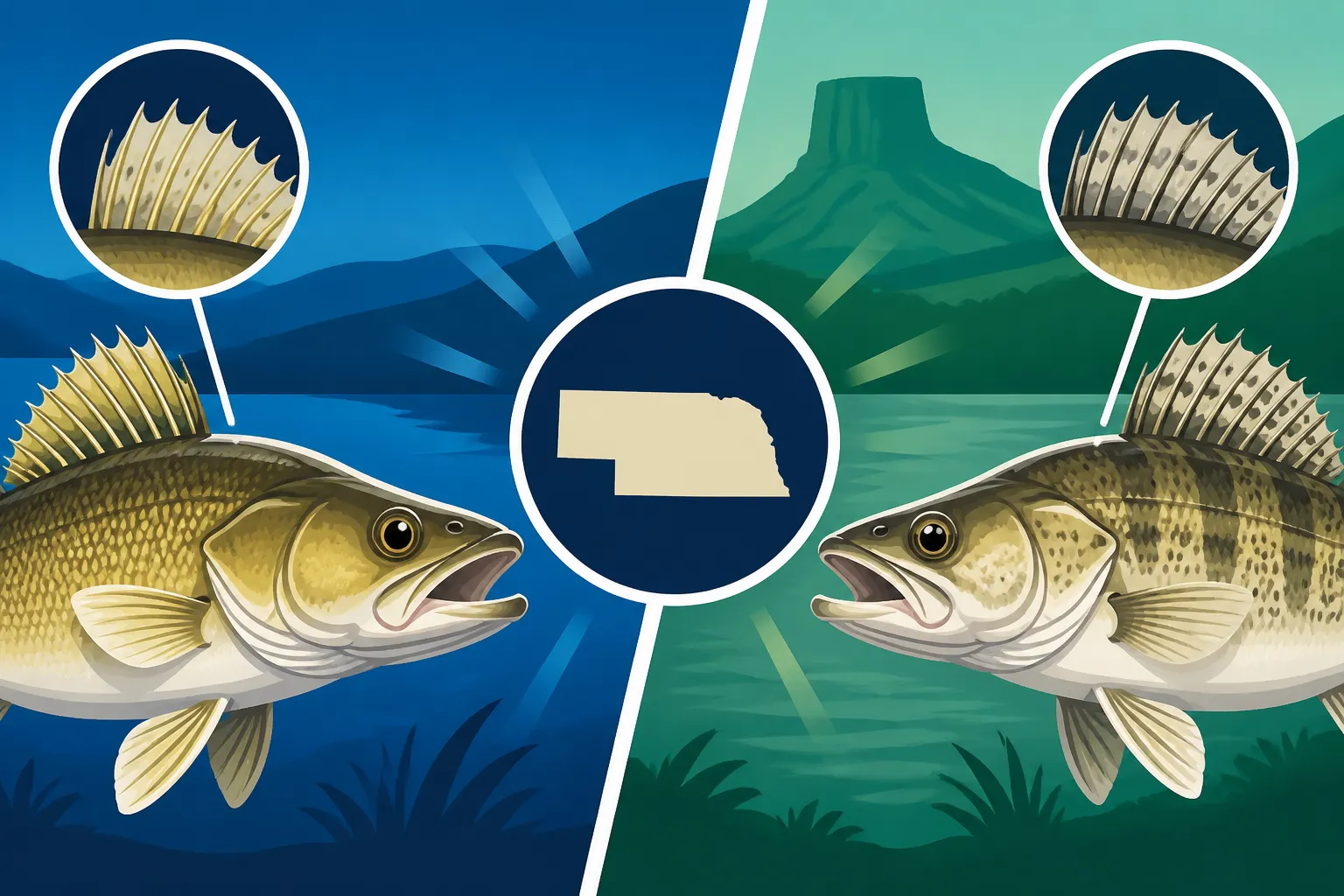
- Walleye: A walleye's spiny dorsal fin will typically have a large, distinct black blotch at the very rear base. The rest of the fin might have some faint mottling, but that solid black spot is the key. Think of it as their signature tattoo. The first dorsal fin itself will usually be clear or have very subtle markings, aside from that specific black blotch.
- Sauger: Sauger, conversely, will have several distinct, dark spots arranged in rows or bands across their entire spiny dorsal fin. These spots are usually quite prominent and cover a good portion of the fin, giving it a mottled or barred appearance. They do not have the large, distinct black blotch at the rear base that walleye do. This is your primary giveaway.
You can often see this difference even before you fully land the fish, making it a crucial identification point. If you're ever in doubt, gently spread that dorsal fin and take a close look.
Body Shape and Coloration
While the dorsal fin is the best indicator, the overall body shape and coloration also offer strong clues.
- Walleye: Walleye tend to have a more uniform, olive-green to golden-brown coloration on their backs, fading to white or cream on their bellies. Their sides are usually relatively clean, without prominent dark blotches. They often have a sleeker, more torpedo-like body, especially when compared to sauger of similar length. The overall impression is one of a clean, streamlined fish.
- Sauger: Sauger usually have more pronounced dark blotches or saddle-like markings along their sides, often extending down from their backs. These blotches give them a somewhat camouflaged, almost tiger-striped appearance, which blends in well with the murkier waters they often inhabit. Their coloration is typically brassier or more brownish-gray than a walleye's. Their bodies might also appear slightly stockier or more robust for their length than a typical walleye. This pattern helps them ambush prey in low visibility.
These subtle differences become more apparent once you've seen both side-by-side a few times. Don't rely solely on color, though, as water conditions and individual fish can cause variations.
Caudal Fin (Tail) and Pectoral Fin Details
Let's not forget the fins on the "back end" and sides!
- Walleye: One of the most consistent identifiers for a walleye, especially for larger fish, is a distinct white tip on the lower lobe of its caudal fin (tail). This bright white patch is almost always present and is another excellent "signature" mark. Their pectoral fins (the pair behind the gills) are usually clear or lightly pigmented.
- Sauger: Sauger's caudal fins will not have that prominent white tip. Instead, their tails will generally be mottled or speckled, matching the rest of their body coloration, or simply translucent without any distinct white marking. Their pectoral fins often have small, dark spots or streaks, unlike the typically clear pectoral fins of a walleye.
This combination of dorsal fin pattern and tail tip should almost always give you a definitive answer. It’s like a checklist; if you see the spotted dorsal, look for the un-tipped tail, and vice versa.
Mouth and Eye Characteristics
While more subtle, there are also slight differences in their heads.
- Walleye: Walleye tend to have larger eyes, which makes sense given their preference for clearer water and low-light feeding. Their mouths are somewhat large, extending back to about the middle of the eye.
- Sauger: Sauger eyes might appear slightly smaller in proportion to their head, and their mouths are generally a bit smaller than a walleye's, not extending quite as far back.
These differences are less pronounced and can be harder to discern quickly, especially if you don't have a direct comparison. They are secondary indicators, but useful to keep in mind for confirmation, especially if you're still unsure after checking the fins.
Here's a handy table to summarize these key identification points:
| Feature | Walleye | Sauger |
|---|---|---|
| Dorsal Fin | One distinct black blotch at the rear base. | Multiple distinct dark spots, banded pattern. |
| Body Color/Pattern | Olive-green to golden-brown, clean sides. | Brassier/brownish-gray, distinct dark blotches on sides. |
| Caudal Fin (Tail) | Distinct white tip on lower lobe. | No white tip, mottled/speckled. |
| Pectoral Fins | Generally clear or lightly pigmented. | Often have small, dark spots/streaks. |
| Overall Shape | More streamlined, torpedo-like. | Slightly stockier, more robust. |
| Preferred Habitat | Clearer lakes & reservoirs, various depths. | Turbid, flowing rivers, deeper holes. |
Habitat and Preferred Conditions: Where You'll Find Them
Knowing where you're fishing can often give you a strong hint about what you're likely to catch. While there's overlap, walleye and sauger generally have preferred haunts in Nebraska. Understanding these tendencies can help you narrow down your identification even before you get the fish to the boat or bank.
Sauger's Preferred Environment
Think "river fish" when you think of sauger in Nebraska. They absolutely thrive in environments that walleye often shy away from: turbid (cloudy) water, strong current, and deeper, darker holes. The mighty Missouri River Fishing in Nebraska is a prime example of sauger territory, as are larger river systems like portions of the Platte and Niobrara. They aren't as keen on bright light as walleye and will often stay tucked into the deepest parts of a river channel, especially around current breaks, wing dams, and rock piles.
You'll typically find them near the bottom, often in areas with significant current where food is swept to them. This preference for murky water and bottom-hugging behavior means your techniques for catching them might involve bottom-bouncing rigs, jigging, or slow-trolling crankbaits that hug the riverbed. They use the reduced visibility to their advantage, ambushing prey that drifts by. If you're fishing a muddy, swift-flowing river, and you pull in something that looks like a walleye, lean towards sauger until proven otherwise by those fin markings! They're masters of blending in with their surroundings.
Walleye's Preferred Environment
Walleye are a bit more versatile than sauger when it comes to habitat, but they still have their favorites. In Nebraska, you'll primarily find them in our large reservoirs and some of the clearer lake systems. Lake McConaughy Fishing Guide, Harlan County Reservoir, and Branched Oak Lake are classic walleye havens. While they tolerate some turbidity, they generally prefer clearer water than sauger and are much more sensitive to light. This is why you often hear anglers talking about "walleye chops" – fishing during low-light conditions like dawn, dusk, or even at night.
They're structure-oriented fish, meaning they love to hang out around points, humps, submerged islands, rock piles, and deep weed lines. You might find them suspended over open water, especially if there's a thermocline, or cruising shallower flats during feeding periods. While they can be found in rivers, especially below dams or in slower-moving sections, their stronghold in Nebraska is definitely the reservoir system. When you're fishing these clearer, expansive waters, and you hook into a fish that resembles a sauger, it's more likely to be a walleye, so check for that white tail tip! Techniques like trolling with crankbaits, jigging spoons, or using How to Use a Crawler Harness for Walleye are often effective.
Overlap and Hybridization (Saugeye)
Now, just to make things a little more interesting (or confusing, depending on your perspective), there are places in Nebraska where walleye and sauger habitat can overlap, particularly in some larger rivers that connect to reservoirs or in reservoir tailwaters. In these areas, you might find both species, making identification even more critical.
And then there's the saugeye! This is a hybrid fish, a cross between a female walleye and a male sauger. These fish are often stocked in Nebraska waters because they combine the best traits of both parents: the saugeye tolerates turbid water and warm temperatures like a sauger, but grows larger and faster like a walleye. Identifying a saugeye can be particularly tricky because they often display characteristics of both species. They might have faint spots on their dorsal fin and a faint white tip on their tail. Often, their body patterns will be a mix – some blotches, but not as distinct as a sauger, and not as clean as a walleye. If you encounter a fish that just doesn't quite fit the description of either a pure walleye or a pure sauger, it very well could be a saugeye. When saugeye are present, always consult the specific regulations for that body of water, as their limits might differ from pure walleye or sauger.
Practical Tips for Anglers: Avoiding Misidentification
It's one thing to read about the differences, and another to apply that knowledge when you're on the water, especially when the fishing is fast and furious. But with a few practical habits, you can become a pro at identifying your catch.
What to Look for Immediately Upon Catching
As soon as that fish is in your net or hand, run through a quick mental checklist. Don't wait until you've got five more in the livewell.
- Check the dorsal fin first: This is your primary indicator. Gently spread the spiny dorsal fin. Do you see a single, distinct black blotch at the very back (walleye)? Or multiple dark spots arranged in rows (sauger)? This is almost always the quickest way to differentiate.
- Look at the tail: While holding the fish, glance at the lower lobe of the caudal fin. Is there a clear, stark white tip (walleye)? Or is it mottled and spotted, or simply translucent (sauger)?
- Observe body pattern: Take a quick look at the fish's sides. Are they relatively clean and uniform (walleye)? Or do you see pronounced dark blotches or saddle markings (sauger)?
- Consider the habitat: Remember where you caught the fish. Were you in a clear reservoir or a muddy, fast-flowing river? This context can support your visual assessment.
Making this a routine will help solidify your identification skills over time. You can even practice with pictures if you want to hone your eye before your next trip. Just like learning to tie a new knot, repetition is key.
Using a Measuring Device and Regulation Guide
Beyond identification, always have your measuring device ready and a copy of the current regulations. This might seem obvious, but in the excitement of a bite, it's easy to forget. A pocket-sized Nebraska Fishing Regulations Explained booklet is invaluable, or you can use the digital version available through the Nebraska Game and Parks Commission website. Many anglers also rely on the GoOutdoorsNE Online Permit System app on their phone, which provides access to current regulations.
Before you put a fish in your cooler, especially if you're not 100% certain of its identity or if it's borderline legal size, measure it and consult the regulations for that specific water body. Some areas might have protected slot limits or different bag limits for sauger versus walleye, or even for saugeye. A quick check can save you a lot of hassle and potential fines. If you're fishing with a group, encourage everyone to do the same. Learning how to properly How to Handle Fish in Hot Summer Water is also crucial for ensuring any released fish survive.
When in Doubt, Release or Seek Expert Advice
Here’s the golden rule, folks: if you're truly unsure, it's always best to err on the side of caution. Releasing a fish you're not confident in identifying or measuring correctly is the most responsible action. This ensures you stay within the legal limits and contributes to the conservation of our fisheries. There's no shame in admitting you're unsure; even seasoned pros can be stumped by an oddball fish now and then, or a saugeye that looks particularly like one parent or the other.
If you consistently find yourself struggling, consider snapping a quick, clear photo of the fish, especially its dorsal fin and tail, before releasing it. Later, you can compare it to online resources, your regulation guide, or even ask a local bait shop attendant or experienced angler for their opinion. Many online forums and fishing groups, like those you might find through an Amazon search for "Nebraska fishing forums," are also great places to share a picture and get helpful feedback from the community. Remember, we all started somewhere, and continuous learning is part of what makes fishing such a rewarding pursuit. By taking the time to truly learn the differences between a walleye and a sauger, you'll not only become a more compliant angler but a more knowledgeable and successful one too!
Disclaimer
This article is for general informational purposes only and does not constitute professional advice. Laws, prices and regulations vary by location and change over time. Consult a qualified professional for guidance on your specific situation.