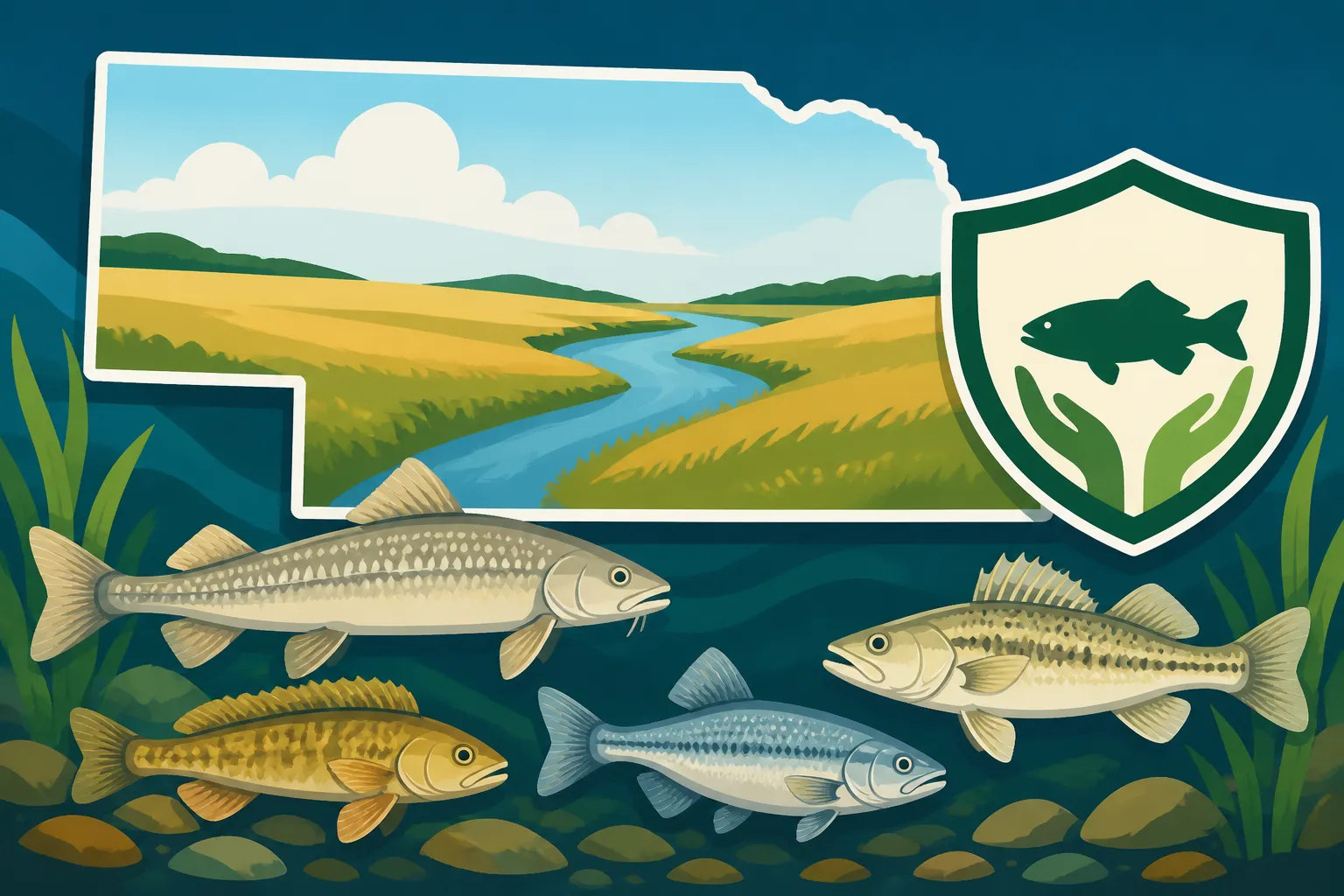
Nebraska Endangered and Protected Fish Species
It's an unsettling feeling to be out on the water, reeling in a catch, and then suddenly wonder if you've just hooked something you're not supposed to. The fear of accidentally harming a protected species or running afoul of conservation laws is a real concern for many Nebraska anglers. This guide is here to untangle that confusion, offering a comprehensive look at Nebraska's endangered and protected fish species, clarifying what to do if you encounter one, and empowering you with the knowledge to fish responsibly and legally.
Why Protecting Nebraska's Fish Species is Crucial
Nebraska's waterways are vibrant, dynamic ecosystems, home to a diverse array of fish species that are all interconnected. From the tiniest shiner to the mighty sturgeon, each species plays a vital role, contributing to the health and balance of our rivers, streams, and lakes. When even one piece of that intricate puzzle is removed or diminished, the ripple effect can be profound, impacting everything from water quality to the populations of the very game fish we love to pursue.
The Delicate Balance of Aquatic Ecosystems
Think of a thriving aquatic ecosystem like a finely tuned machine, where every gear, no matter how small, is essential. Smaller forage fish, for instance, might be a critical food source for larger predators like walleye, bass, and catfish. If the populations of these forage fish decline due to habitat loss, pollution, or other stressors, it directly impacts the ability of game fish to find food, grow, and reproduce. Beyond the food chain, certain species might play roles in nutrient cycling, sediment stabilization, or even water purification. Losing a species isn't just about losing that one type of fish; it's about potentially unraveling the very fabric of the aquatic environment, leading to a cascade of negative consequences that can take decades, if not centuries, to reverse. The biological diversity that Nebraska's waters offer is a treasure, and protecting it ensures that our rivers and lakes remain healthy and productive for generations to come.
Long-Term Benefits for Anglers and the Environment
For those of us who cherish our time on the water, the protection of fish species directly translates to better fishing opportunities in the future. Healthy populations of native, non-game fish often indicate a robust ecosystem that can support robust populations of game fish. When we protect endangered species, we're often protecting the very habitats they rely on – clean water, diverse riparian zones, natural flow regimes – which also happen to be the same conditions that favor healthy populations of the species we target. It's not just about compliance; it's about stewardship. By understanding and respecting the needs of all aquatic life, we ensure that our children and grandchildren will have the same, if not better, fishing experiences we enjoy today. Moreover, a healthy aquatic environment contributes to broader environmental health, supporting wildlife beyond fish, and even impacting the quality of water available for communities and agriculture.
Decoding "Endangered," "Threatened," and "Protected" in Nebraska
The terms "endangered," "threatened," and "protected" can sometimes feel like a confusing jumble of legal jargon, but understanding their distinctions is crucial for responsible angling in Nebraska. These classifications aren't just arbitrary labels; they represent serious conservation concerns and trigger specific regulatory actions aimed at preventing species loss. Both state and federal agencies work to identify, list, and protect species facing significant challenges.
State vs. Federal Designations: What's the Difference?
In Nebraska, fish species can receive protection under both federal and state laws. Federal designations, primarily through the U.S. Endangered Species Act (ESA), classify species as "endangered" (meaning they are in danger of extinction throughout all or a significant portion of their range) or "threatened" (meaning they are likely to become endangered in the foreseeable future). These federal listings carry broad implications and strict protections. States, however, also have their own endangered species acts or conservation programs. In Nebraska, the Nebraska Game and Parks Commission (NGPC) maintains a list of state endangered, threatened, and rare species. A species might be federally threatened but state endangered, or vice-versa, depending on its population status within Nebraska's borders compared to its overall range. It's important for anglers to be aware of both levels of protection, as state regulations often supplement federal ones, providing specific local guidance. Many resources, including those you can find on Amazon like field guides or conservation handbooks, will often detail both federal and state classifications.
Species of Special Concern: A Watchlist for the Future
Beyond "endangered" and "threatened," you might also hear about "species of special concern" or "rare" species. These are species that, while not currently facing imminent extinction, exhibit declining populations, limited distributions, or specific vulnerabilities that warrant close monitoring. They're essentially on a watchlist. Their status serves as an early warning signal, allowing conservationists and managers to intervene with proactive measures before a species reaches a more critical "threatened" or "endangered" status. While direct harvest restrictions might not always be in place for these species, their presence often indicates a need for careful habitat management and angler awareness. Understanding this category helps us appreciate the proactive side of conservation, working to prevent future crises rather than just reacting to current ones.
Key Endangered and Threatened Fish Species You Might Encounter
Nebraska is home to several fish species that are currently listed as endangered or threatened, making it imperative for anglers to be able to identify them and know how to react if one is caught. These species are often elusive, preferring specific habitats, but accidental encounters are possible, especially in certain river systems. Awareness is your first line of defense in ensuring their survival.
Pallid Sturgeon: The River's Ancient Resident
The Pallid Sturgeon ( Scaphirhynchus albus) is perhaps Nebraska's most iconic federally endangered fish. This magnificent, long-lived fish is a true relic of the dinosaur age, perfectly adapted to the turbid, powerful waters of the Missouri and lower Platte Rivers. They are characterized by their flattened snout, long slender body, and lack of scales, instead sporting bony plates called scutes along their sides. They can grow to impressive sizes, often exceeding five feet in length. Pallid sturgeon have suffered due to habitat fragmentation and modification, particularly the channelization of rivers and the construction of dams, which have altered flow patterns and removed essential spawning and rearing grounds.
If you happen to catch a Pallid Sturgeon, it is absolutely critical to handle it with extreme care and release it immediately and unharmed. These fish are incredibly vulnerable, and any stress can be detrimental. Anglers should avoid touching their eyes or gills, and use a soft, knotless net if possible to bring them aboard for hook removal. There are very specific regulations against possessing these fish, so immediate release is not just good practice, it's the law. Learning to distinguish them from the more common (but also protected) Shovelnose Sturgeon is key, which often requires a careful look at their barbels and dorsal fin rays. Nebraska Fishing Regulations Explained delves deeper into specific handling requirements for protected species.
Topeka Shiner: A Small Fish with a Big Impact
Another federally endangered species in Nebraska is the Topeka Shiner (Notropis topeka), a small minnow that rarely exceeds three inches in length. Don't let its diminutive size fool you; this little fish plays a critical role in the food web of the prairie streams it inhabits. Topeka Shiners prefer small, clear-water streams with shallow, slow-moving pools and plenty of submerged vegetation. Their decline is largely attributed to habitat degradation, including stream channelization, siltation from agricultural runoff, and the loss of natural wetlands that help filter water and maintain stable stream flows.
Identifying a Topeka Shiner can be challenging for the untrained eye, as they resemble several other common minnow species. They have a dark, often crescent-shaped spot at the base of their dorsal fin, and typically display a silvery body with a dark lateral stripe. Because of their small size, they are rarely targeted by anglers but can sometimes be caught incidentally on small hooks or in bait traps. If you're fishing in known Topeka Shiner habitat, particularly in eastern Nebraska streams, and you catch a small minnow that you suspect might be one, the safest course of action is to release it immediately and gently. Education on identification, perhaps through resources like the Nebraska Fish Species Identification Guide or field guides purchased on Amazon, can be very helpful for anglers fishing in sensitive areas.
Northern Redbelly Dace: A Cold Water Gem
The Northern Redbelly Dace (Chrosomus eos) is a state-threatened species in Nebraska, signifying its precarious status within our state borders. This small, colorful minnow typically inhabits clear, cool headwater streams, often found in the Sandhills region, where springs provide consistent cold water. As their name suggests, males can develop a vibrant red belly during spawning season, making them quite striking. Like many small fish, they are sensitive to changes in water quality and habitat, and their populations are threatened by stream alterations, groundwater depletion, and increased water temperatures.
Anglers are unlikely to intentionally target Northern Redbelly Dace, but they can be found in the same cool streams where some might pursue trout or other small species. Accidental catches are rare but possible. If you are fishing in sensitive Sandhills streams and encounter a small, unusually colored minnow that fits the description, treat it with the utmost care and release it promptly. Minimizing disturbance to their stream habitats, such as avoiding excessive wading in shallow, vegetated areas, is also a good practice to help protect this vulnerable species.
Here's a quick overview of some protected species and what to do:
| Species | Status (Nebraska) | Identification Tips | Angler Action |
|---|---|---|---|
| Pallid Sturgeon | Federally Endangered | Long, slender body; flattened, shovel-like snout; no scales, bony plates (scutes); barbels closer to mouth than tip of snout; often >3 feet. Can be confused with Shovelnose Sturgeon (which have barbels closer to snout tip, shorter body, and are protected). | Immediate, careful release. Handle gently, keep in water as much as possible. Do not remove from water unless absolutely necessary for quick unhooking. Report sightings if possible. |
| Topeka Shiner | Federally Endangered | Small (up to 3 inches); silvery body, dark lateral stripe; distinctive crescent-shaped black spot at base of dorsal fin. Found in small, clear prairie streams. | Immediate, careful release. Unlikely to be targeted, but if caught incidentally (e.g., while bait fishing for other small species), release gently. |
| Northern Redbelly Dace | State Threatened | Small (up to 3 inches); males bright red belly during spawning; two dark lateral stripes. Found in clear, cool headwater streams. | Immediate, careful release. Treat any unusually colorful small minnow in appropriate habitat with care. Avoid disturbing sensitive stream habitats. |
| Lake Sturgeon | State Protected | Very large (can exceed 6 feet, several hundred pounds); bony plates (scutes); conical snout; four barbels midway between snout tip and mouth. Found in Missouri River and lower Platte. | Immediate, careful release. These are not Pallid Sturgeon, but they are also fully protected. Handle with extreme care, photograph if desired, and release quickly without removing from water entirely. |
| Paddlefish | State Protected | Long, paddle-shaped snout; smooth skin, no scales; large mouth filter feeder. Found in Missouri River system. | Special snagging season only. Must have a Paddlefish permit and follow strict regulations. Catch and release outside of season is mandatory and must be immediate. If caught incidentally on hook and line, immediate, careful release is required. See Nebraska Paddlefish Snagging Season Dates. |
Special Regulations for Other Protected Fish
While the focus often falls on endangered and threatened species, Nebraska also has specific protections for other unique fish that, while not facing immediate extinction, require careful management due to their life history, rarity, or susceptibility to overharvest. Ignoring these regulations can also lead to significant penalties, just like those for federally listed species.
Lake Sturgeon and Paddlefish: Unique Management Needs
Beyond the federally endangered Pallid Sturgeon, Nebraska also manages the Lake Sturgeon (Acipenser fulvescens) under strict protective measures. These are enormous fish, truly magnificent, and while they aren't federally endangered, they are a state-protected species with no open season for harvest. Like their pallid cousins, Lake Sturgeon are susceptible to habitat changes and have slow growth rates and late maturity, making them vulnerable to population declines. If you happen to hook a Lake Sturgeon, perhaps while fishing for catfish in the Missouri River, the protocol is the same as for the Pallid Sturgeon: immediate, careful release. It's truly a once-in-a-lifetime experience for many anglers, so snap a quick photo if you can do so without stressing the fish, and then get it back into the water promptly.
Then there's the Paddlefish (Polyodon spathula), another ancient species recognized by its distinctive, elongated paddle-shaped snout. Nebraska manages a unique, highly regulated snagging season for Paddlefish on portions of the Missouri River. This is a very specific type of fishing, and it requires a special permit, specific gear, and adherence to strict dates and bag limits. Outside of this designated snagging season, or if caught incidentally by hook and line, Paddlefish must be immediately released unharmed. The intricate life cycle and specific habitat needs of Paddlefish necessitate this careful management to ensure a sustainable population for future generations. For more detailed information, look into Nebraska Paddlefish Snagging Season Dates and Nebraska Fishing Regulations Explained.
Recognizing and Respecting Non-Game Fish
It's easy to focus solely on game fish like walleye, bass, or catfish, but Nebraska's waters are teeming with a diverse array of non-game species, many of which are protected by general regulations against wanton waste or unregulated harvest. These include a variety of suckers, carp, various minnows, and other smaller species that form the base of the food chain. While some non-game species like certain carp are legal to harvest, others, particularly those that are small and serve as crucial forage, are generally not targeted and should be released if caught accidentally.
The spirit of these regulations is to maintain healthy aquatic biodiversity. Even if a species isn't "endangered," its wanton destruction or excessive harvest could negatively impact the ecosystem. It's always best practice to identify your catch. If you're not sure what it is, and it's not a common game fish, consider releasing it. Having a good Nebraska Fish Species Identification Guide or a copy of the current regulations, perhaps even a digital version on your phone, can be incredibly helpful. You can often find excellent field guides or waterproof identification charts on Amazon that can be a real lifesaver when you're on the water and unsure about a catch. Respecting all fish, not just the "trophy" ones, demonstrates a true commitment to conservation.
What Anglers Can Do to Help
As anglers, we are often the first line of defense for our aquatic environments. We spend countless hours on the water, observing changes, and interacting directly with fish populations. Our actions, both large and small, have a significant impact on the health and future of Nebraska's fish species, especially those that are endangered or protected. It's about more than just avoiding a fine; it's about being a steward of the resources we cherish.
Responsible Fishing Practices for Conservation
One of the most impactful things an angler can do is adopt responsible fishing practices, particularly those focused on catch-and-release when appropriate. When you encounter a protected species, or even a game fish you intend to release, handling it correctly is paramount. This means minimizing its time out of the water, using wet hands to handle the fish (as dry hands can remove the protective slime coat), and reviving it carefully before release. Using single, barbless hooks can also reduce harm, especially for smaller species or those caught incidentally. Consider using a rubberized landing net, which is much gentler on a fish's scales and fins than traditional knotted nylon nets. You can find a wide variety of these high-quality catch-and-release tools, like proper cradles or rubberized nets, on Amazon, which can help minimize stress on fish, especially those you intend to release.
Beyond handling fish, preventing the spread of aquatic invasive species (AIS) is another critical responsibility. Always "Clean, Drain, Dry" your boat, trailer, and fishing gear after every outing. This simple act prevents the accidental transport of zebra mussels, Asian carp, and other harmful organisms that can devastate native fish populations and their habitats. Ensuring you understand Nebraska Aquatic Invasive Species Stamp requirements and following best practices helps protect our waters.
Reporting Sightings and Violations
You are an extra set of eyes and ears on Nebraska's waters. If you believe you've seen a protected species in an unusual location, or if you witness someone violating fishing regulations – particularly those pertaining to protected species or illegal harvesting – don't hesitate to report it. The Nebraska Game and Parks Commission relies heavily on public assistance to monitor populations and enforce laws. You can usually find contact information for local conservation officers or a dedicated hotline in the current Nebraska Fishing Guide or on the NGPC website. Providing as much detail as possible, such as location, time, and descriptions of individuals or vehicles involved, can be incredibly helpful. Your report could be the crucial piece of information needed to protect a vulnerable population or stop illegal activity.
Educating Yourself and Others
Knowledge is power, especially when it comes to conservation. Take the time to regularly review the latest Nebraska fishing regulations, as they can change from year to year. Familiarize yourself with the appearance and habitat of protected species in the areas you fish. Share this knowledge with fellow anglers, especially newer ones or younger generations. Teach kids about responsible angling, the importance of healthy ecosystems, and how to identify different fish. Leading by example and fostering a culture of conservation within the angling community is one of the most effective ways to ensure the long-term health of Nebraska's fisheries. For those who want to learn more deeply about aquatic ecosystems, there are some fantastic books available on Amazon about conservation efforts in the Midwest that can further deepen your understanding and appreciation. Even things like robust tackle bags on Amazon designed to keep your gear organized and prevent accidental littering can contribute to a healthier environment by keeping our shorelines clean.
Disclaimer
This article is for general informational purposes only and does not constitute professional advice. Laws, prices and regulations vary by location and change over time. Consult a qualified professional for guidance on your specific situation.