What to Do If You Catch an Invasive Carp
It's frustrating, isn't it? You're out on the water, enjoying a peaceful day of fishing in Nebraska, hoping to reel in a beautiful walleye or a feisty channel cat, and then suddenly, you hook into something that looks… different. Something that might even jump out of the water at you! Anglers across the state are increasingly encountering invasive carp species, and the big question always pops up: "What exactly am I supposed to do with this?" This guide is here to clear up that confusion, providing you with practical, actionable steps on identifying, handling, and reporting invasive carp, ensuring you're doing your part to protect Nebraska's precious aquatic ecosystems.
Identifying the Invasive Threat: What is an Invasive Carp?
Before you can know what to do, you first need to know what you've actually caught. Many native fish can be mistaken for carp, and vice versa. However, invasive carp species pose a unique and significant threat to our local waters, and recognizing them is the first critical step in managing their spread. These aren't your friendly common carp, often caught for sport; these are the real trouble-makers.
The Different Species of Invasive Carp Affecting Nebraska Waters
When we talk about "invasive carp" in Nebraska, we're primarily referring to a few specific species that have unfortunately made their way into our rivers and reservoirs. Each has distinct characteristics that can help you tell them apart from native fish, and even from the more common, established carp like the Common Carp. It's a bit like learning the nuances between different types of bass; once you know what to look for, it becomes second nature.
First up, the Silver Carp. These are perhaps the most notorious because of their dramatic leaping behavior. Imagine cruising along on your boat, minding your own business, and suddenly a fish launches itself out of the water, sometimes several feet into the air! That's a Silver Carp. Visually, they have a distinctly low-set eye, almost appearing as if it's below the midline of their body. Their scales are very small and uniform, giving them a smooth, silvery appearance (hence the name). They filter feed on plankton, which directly competes with the food source for many of our valuable sport fish, like crappie and young game fish.
Next, we have the Bighead Carp. While they don't share the same aerial acrobatics as the Silver Carp, they are equally problematic. As their name suggests, they have a disproportionately large head, making up a significant portion of their body length. Their eyes are also set low, similar to the Silver Carp, but they generally have a more patchy scale pattern, not as uniform. A key identification feature is a prominent keel (a sharp ridge) that extends from their anal fin forward to their pelvic fins. Like Silver Carp, they are filter feeders, hoovering up the plankton that sustains the base of the native food chain.
Then there's the Grass Carp. These fish look a bit more like a torpedo, with a long, slender body shape. Their scales are noticeably larger than those of the Silver or Bighead Carp. They have a shorter head and lack the prominent keel found on Bighead Carp. Unlike their filter-feeding cousins, Grass Carp are vegetarian, consuming vast quantities of aquatic vegetation. While this might sound beneficial in some instances, uncontrolled populations can decimate native plant beds, which are crucial habitats for juvenile fish, invertebrates, and waterfowl. Nebraska actively manages Grass Carp populations through stocking sterile (triploid) individuals in some private waters to control vegetation, but naturally reproducing (diploid) Grass Carp are still a concern. You can often find a good, detailed identification guide online, or even physical copies to keep in your tackle box from sources like Amazon, to help distinguish these species. For further help, consider exploring How to Identify an Invasive Carp Species in Nebraska.
Why Invasive Carp Are a Problem for Nebraska Waters
The threat these invasive carp pose isn't just a distant scientific theory; it's a real, tangible issue impacting the quality of fishing and the health of our aquatic ecosystems right here in Nebraska. It's disheartening to see our beautiful lakes and rivers struggling, and these carp are a major part of that struggle.
The most significant problem is competition for food. Silver and Bighead Carp are voracious filter feeders. They consume enormous amounts of plankton—the microscopic organisms that form the very base of the aquatic food web. Our native fish, especially popular sport fish like walleye, crappie, and even smallmouth bass, rely on this same plankton, particularly in their juvenile stages. When invasive carp gobble up all the food, native fish literally starve. This leads to reduced growth rates, lower fish populations, and ultimately, poorer fishing opportunities for all of us. Imagine a buffet where a few guests relentlessly devour everything before others even get a plate; that's essentially what these carp do to the ecosystem.
Beyond food competition, there's habitat degradation. Grass Carp, with their insatiable appetite for aquatic vegetation, can strip lakes and slow-moving river sections bare. Submerged vegetation isn't just "weeds"; it provides crucial cover, spawning habitat, and food for countless native species. Without these plant beds, young fish have nowhere to hide from predators, aquatic insects lose their homes, and water clarity can suffer as sediments are stirred up. This domino effect disrupts the entire ecosystem.
And let's not forget the direct impact on recreational users. Those leaping Silver Carp aren't just a spectacle; they can be a genuine danger. Anglers and boaters have reported serious injuries from colliding with these large, airborne fish. It adds an element of anxiety to what should be a relaxing day on the water, particularly in areas like the Missouri River where their populations are quite high. The presence of these fish fundamentally changes the fishing experience and the overall health of our waterways. For more context on the broader issues, you might want to read Are Silver Carp a Problem in Nebraska Rivers?.
Your Role as an Angler: Catch and Keep (and Report!)
As an angler, you are on the front lines in the battle against invasive carp. Every single fish you identify and remove from our waters makes a difference. This isn't just a suggestion; for these specific invasive species, it's a critical directive that empowers you to be an active participant in conservation.
The "Do Not Release" Mandate and Why It's Crucial
This is perhaps the most important directive when it comes to invasive carp: DO NOT RELEASE THEM ALIVE. Unlike native species where catch-and-release is often encouraged for conservation, releasing an invasive carp back into the water actively harms the ecosystem. It's not about sport; it's about control.
When you hook an invasive Silver, Bighead, or Grass Carp, your responsibility is to remove it from the water and ensure it does not return alive. This might feel counterintuitive to some anglers who have been taught good stewardship practices for native fish. However, invasive species are different. They reproduce rapidly, outcompete native fish, and degrade habitats. Every single individual removed is one less fish that can eat valuable plankton, destroy vegetation, or reproduce to create more problems.
Think of it this way: if you found an invasive weed like bindweed taking over your garden, you wouldn't just pull it up and then replant it. You'd remove it completely. The same principle applies here. Your effort to keep that one fish is a direct contribution to lessening the overall pressure on our native fish populations. You're not just fishing; you're actively managing the ecosystem. Ignoring this mandate, even accidentally, can set back conservation efforts significantly. Always double-check Nebraska Fishing Regulations Explained for the latest guidelines.
Reporting Your Catch: Who to Contact and How
Removing the fish is excellent, but reporting your catch is equally vital. Your report provides invaluable data to wildlife managers, helping them understand the distribution, abundance, and spread of these invasive species. This data informs their strategies for control and management, allowing them to allocate resources effectively to areas that need it most. You become a crucial pair of eyes and ears for the Nebraska Game and Parks Commission (NGPC).
So, who do you contact? The Nebraska Game and Parks Commission. They are the primary agency responsible for managing fish and wildlife resources in the state. While I can't give you a direct phone number, their official website, GoOutdoorsNE, is the best place to start. You can usually find a dedicated section for reporting aquatic invasive species. Many state agencies also offer online reporting forms, making it incredibly convenient to submit your observations from your phone or computer once you're off the water.
What information should you provide? Be as detailed as possible!
- Species Identification: If you're confident, state whether it was a Silver, Bighead, or Grass Carp. Even if you're not 100% sure, describe its characteristics (size, color, eye position, scales, leaping behavior). A good field guide, perhaps one you bought from Amazon, can be a great help here.
- Location: Be specific. Note the body of water (e.g., "Lake McConaughy"), and if possible, a precise location like "near the Cedar Canyon boat ramp" or "approximately 1 mile upstream from the North Platte bridge on the Platte River." GPS coordinates from your phone are ideal if you have them.
- Date and Time: When did you catch it?
- Size/Weight: An approximate length or weight helps.
- Photos: This is perhaps the most important piece of information! Take clear photos of the fish, especially showing its head, eye position, body shape, and scales. Place a ruler or a common object next to it for scale if possible.
Your reports help paint a clearer picture for biologists, enabling them to make informed decisions about future management actions. Every piece of data counts! For serious violations or immediate concerns, you would typically contact a Game Warden; their contact information can also be found on the NGPC website, often under Nebraska Game Warden Contact Information.
Here's a handy table to summarize the key identification features and reporting steps:
| Feature/Action | Silver Carp | Bighead Carp | Grass Carp | Reporting Action |
|---|---|---|---|---|
| Eyes | Low-set (below midline) | Low-set (below midline) | Normal position | Note eye position |
| Head Size | Normal | Very large, disproportionate | Normal, somewhat pointed | Note head size relative to body |
| Scales | Very small, uniform, silvery | Patchy, irregular, silvery with darker spots | Large, distinct, dark outline | Describe scale size/pattern |
| Keel | Absent or only slight between pelvic & anal fins | Prominent, extends to pelvic fins | Absent or only slight | Note presence/absence of keel |
| Behavior | Jumps out of water when startled | Generally stays submerged | Generally stays submerged | Describe any unique behavior |
| Primary Diet | Zooplankton & phytoplankton | Zooplankton & phytoplankton | Aquatic vegetation | (Not visually evident, but good to know for context) |
| Release? | NO – DO NOT RELEASE ALIVE | NO – DO NOT RELEASE ALIVE | NO – DO NOT RELEASE THEM ALIVE | Always keep invasive carp |
| Report To | Nebraska Game and Parks Commission (NGPC) | Nebraska Game and Parks Commission (NGPC) | Nebraska Game and Parks Commission (NGPC) | NGPC website/online form, provide details & photos |
| Information to Include | Species, Location (GPS if possible), Date, Size, Photos | Species, Location (GPS if possible), Date, Size, Photos | Species, Location (GPS if possible), Date, Size, Photos | All available details, especially clear photos |
Handling and Utilizing Your Invasive Carp Catch
Okay, so you've identified an invasive carp and committed to keeping it out of Nebraska's waters. Now what? Don't just leave it on the bank! There are responsible and even beneficial ways to handle these fish once they're out of the water.
Proper Handling and Disposal
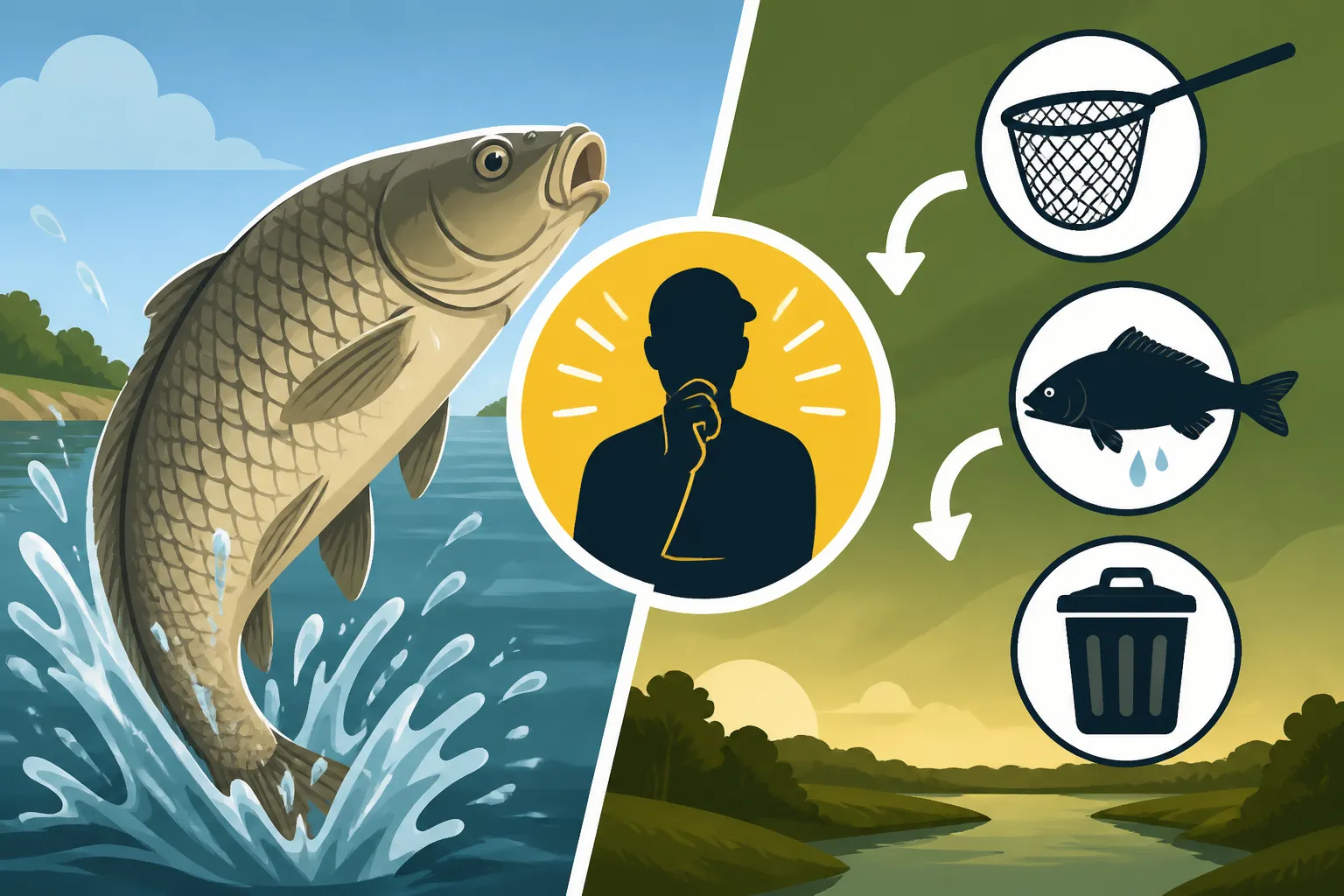
First, let's talk about safety. If you've caught a Silver Carp, remember their jumping habit. Even once hooked, they can put up a fight and potentially thrash or leap in the boat, so be mindful of your face and body. A good, sturdy landing net is always advisable, and protective eyewear is not a bad idea, especially if you're in an area known for high Silver Carp populations.
Once you have the fish in hand and you've confirmed it's an invasive species, the immediate goal is to ensure it doesn't return to the water alive. This usually means dispatching it quickly and humanely. A swift blow to the head with a blunt object, often referred to as a "priest" or fish bat (which you can find on Amazon), is typically effective.
After dispatching, you have a few options for responsible disposal:
- Take it home for consumption: Many people are surprised to learn that invasive carp can be quite edible! We'll dive into this more in the next section.
- Use it as bait: In some instances, it might be legal to use parts of the invasive carp as cut bait for other species, such as channel catfish, in the same body of water where it was caught. However, you absolutely must not transport live fish or even dead fish to other water bodies for use as bait, as this risks spreading diseases or even other invasive species. Always check current regulations regarding bait use.
- Proper Waste Disposal: If consumption or bait isn't an option for you, the fish should be disposed of in a manner that prevents its return to any water body. This means taking it home and putting it in your trash, or burying it on private land where it won't be exposed to scavenging animals or runoff into streams. Never, ever discard an invasive carp carcass near the water's edge or into another body of water. That defeats the entire purpose of removing it.
The key takeaway here is responsibility. You've done the hard work of removing it; now complete the task by ensuring its proper and safe disposal or utilization.
Are Invasive Carp Edible? (And How to Prepare Them)
Here's a common misconception: that invasive carp aren't good to eat. This couldn't be further from the truth! In many parts of the world, carp species, including Bighead and Silver Carp, are highly prized food fish. In Nebraska, they often get a bad rap, but if prepared correctly, they can be delicious and a healthy source of protein. This also aligns with the conservation goal: if you can eat them, you're not just disposing of a problem; you're turning it into a resource!
The main challenge with Bighead and Silver Carp is their bone structure. They have a lot of small, intramuscular bones, particularly in their fillets, which can be tricky to navigate. This is probably the biggest reason why they aren't as popular here. However, there are several ways to deal with this:
- Grinding: This is arguably the easiest and most popular method. Fillet the fish as best you can, remove the skin, and then run the meat through a meat grinder. The grinding process pulverizes the small bones, making them undetectable. You can then use this ground carp meat for fish patties, fish balls, tacos, or even as a ground meat substitute in various recipes. Think of it like making a fishburger!
- Scoring: Some anglers prefer to "score" the fillets. This involves making very thin, closely spaced cuts (every 1/8 to 1/4 inch) across the fillet, through the small bones but not through the skin. When cooked, especially deep-fried, the heat can soften and dissolve these bones to the point where they are not noticeable.
- Smoking: Smoking is another excellent option. The slow cooking process can soften the bones, and the smoky flavor pairs wonderfully with the firm, white meat of these carp.
- Cutting out the "loin": With a bit of practice, you can learn to remove the primary, boneless "loin" sections from larger carp. This requires some skill with a good fillet knife (again, Amazon has a wide selection) but results in larger, bone-free portions.
The meat itself is generally white, firm, and has a mild flavor. It's not "muddy" tasting like some common carp, especially if caught from clean, flowing water. So next time you land one, consider bringing it home for dinner! You might be pleasantly surprised. For general filleting tips that can be adapted, check out How to Clean and Fillet a Channel Catfish.
Other Uses: Fertilizing Gardens or Bait
Beyond the dinner table, invasive carp can still serve a useful purpose, turning a problem into a benefit for your land or future fishing trips.
If you have a garden, invasive carp can be an excellent natural fertilizer. Fish, when buried, release nitrogen, phosphorus, and other micronutrients into the soil as they decompose, boosting plant growth. This is an age-old practice that many gardeners swear by. If you choose this route, make sure to bury the fish deep enough (at least 18-24 inches) to prevent curious animals from digging them up. Breaking them into smaller pieces can also help them decompose faster. Ensure you are burying them on your own property and not in a manner that could attract pests or pollute water sources.
For those who fish with bait, parts of invasive carp can also be utilized as cut bait. As mentioned earlier, this must be done responsibly and legally. The general rule in Nebraska, and many other states, is that you cannot transport live invasive carp. For bait, this usually means that if you cut up a dead invasive carp, you can use those pieces as bait in the same body of water where you caught it. This can be particularly effective for catching large channel catfish or flathead catfish, who often prefer a strong, natural scent. However, you should never take the cut bait to a different lake or river, as this can still lead to the accidental spread of disease or even unnoticed eggs or larvae. Always verify the latest bait regulations with the Nebraska Game and Parks Commission before using any fish as bait.
Using invasive carp in these ways isn't just about disposal; it's about closing the loop and finding value in something that would otherwise be considered waste. It's part of the comprehensive effort to manage their presence in our waters.
Prevention and the Bigger Picture
While removing individual invasive carp is crucial, the long-term solution lies in preventing their spread and understanding the broader efforts being made. Your actions on the water contribute significantly to this larger goal.
Clean, Drain, Dry: Preventing the Spread
This mantra is the cornerstone of aquatic invasive species prevention: Clean, Drain, Dry. It applies to all water users, not just those who fish for carp. Every time your boat, trailer, waders, or fishing gear touches a body of water, it has the potential to pick up and transport invasive hitchhikers, whether they are microscopic larvae, plant fragments, or zebra mussel veligers.
- Clean: Before leaving the boat ramp or shoreline, thoroughly inspect your boat, trailer, and fishing gear. Remove all visible aquatic plants, animals, and mud. Pay close attention to propeller, anchor, fishing lines, and wading boots. Even a tiny fragment of an invasive plant can take root in a new location, and a single zebra mussel can establish a new colony. A stiff brush or even a pressure washer (if available and safe for your equipment) can be very effective.
- Drain: All water from your boat and equipment must be drained before leaving the ramp. This includes your bilge, livewells, baitwells, and engine cooling systems. Many invasive species can survive in small amounts of standing water, and it's impossible to see them with the naked eye. This also includes any water from your waders or fishing nets.
- Dry: This is often the most overlooked step, but it's incredibly important. Allow all equipment to thoroughly dry for an extended period (ideally five days or more) before using it in another body of water. Heat and sunlight are powerful disinfectants. If you can't dry it for that long, consider washing your equipment with hot, high-pressure water (140°F/60°C) or a bleach solution (one cup of bleach per gallon of water) for 10 minutes, followed by a thorough rinse.
By diligently following Clean, Drain, Dry practices, you are directly preventing the spread of not only invasive carp but also other devastating aquatic invasive species like zebra mussels and Eurasian watermilfoil. This effort is so important that Nebraska requires an Nebraska Aquatic Invasive Species Stamp for many boaters, demonstrating the state's commitment to fighting this battle.
What Nebraska is Doing to Combat Invasive Carp
Anglers play an immense role, but it's also important to recognize that the Nebraska Game and Parks Commission (NGPC) is actively engaged in comprehensive strategies to combat invasive carp. This isn't a fight you're in alone; there's a dedicated team working on larger-scale solutions.
NGPC utilizes a multi-pronged approach:
- Commercial Harvest: In many of our larger rivers, like the Missouri River, commercial fishing operations are contracted or permitted to specifically target invasive carp. These commercial anglers use specialized nets and techniques to remove thousands of pounds of carp, helping to reduce their numbers on a significant scale. This is often the most effective way to remove large biomass.
- Research and Monitoring: Biologists continuously study invasive carp populations to understand their movements, reproductive success, and impacts on native species. This research informs management decisions and helps identify new areas of concern. They might use specialized sonar, tagging, or electrofishing surveys to gather data.
- Public Education and Outreach: Programs like the one this article supports are vital for educating anglers and the general public about the threat of invasive species and what individuals can do to help. The more informed citizens are, the more effective prevention and control efforts become.
- Barrier Technology and Habitat Management: In some cases, NGPC explores or implements physical or acoustic barriers to prevent carp from moving into sensitive spawning or nursery habitats. They also work on restoring and enhancing native habitats to make them more resilient to invasive species pressures.
Your individual effort to identify, keep, and report invasive carp directly supports these larger-scale efforts. By participating responsibly, you're not just fishing; you're contributing to the health and future of Nebraska's aquatic resources for everyone. Understanding Nebraska Fishing Regulations Explained is also part of being an informed angler in this fight.
Disclaimer
This article is for general informational purposes only and does not constitute professional advice. Laws, prices and regulations vary by location and change over time. Consult a qualified professional for guidance on your specific situation.