Best Soft Plastics for Nebraska Bass
One of the most frustrating things for a Nebraska bass angler is knowing the fish are there, but just not being able to coax a bite. You might be staring at a beautiful stretch of water, seeing promising cover, but your traditional lures just aren't cutting it. This guide is all about equipping you with the knowledge to conquer those tricky bass days by diving deep into the world of soft plastics – versatile, effective baits that consistently trick even the most pressured largemouth and smallmouth bass across our diverse Nebraska waters.
Why Soft Plastics Are a Bass Angler's Secret Weapon in Nebraska
If you’ve spent any time on the water chasing bass, you’ve probably seen the moment when a flashy crankbait or a loud topwater just doesn't get a reaction. That's where soft plastics come into their own. They offer a subtle, natural presentation that can make all the difference, especially when the bite is tough or the fish are wary. In Nebraska, with our mix of clear reservoirs, muddy rivers, and countless farm ponds, having a good selection of soft plastics is non-negotiable for serious bass anglers.
The Versatility of Soft Plastics in Diverse Nebraska Waters
Nebraska's fishing landscape is incredibly varied. We have vast, clear impoundments like Lake McConaughy, sprawling river systems such as the Platte and Missouri, and thousands of smaller, often murkier, farm ponds and sandpit lakes. No single bait can truly excel in all these environments, but soft plastics come remarkably close because of their inherent adaptability.
Consider fishing a clear sandpit in eastern Nebraska. The bass in these waters can be notoriously skittish, easily spooked by unnatural movements or bright colors. A subtle, natural-colored soft plastic worm, slowly dragged across the bottom or twitched near submerged vegetation, can be absolutely deadly. Its quiet entry and lifelike movement don't alarm the fish, but instead pique their curiosity. Now, imagine yourself on a muddy stretch of the Elkhorn River after a rain. Visibility is low, and bass are relying heavily on vibration and scent. A bulky creature bait, rigged weedless and pitched into current breaks or fallen timber, creates enough displacement and offers enough profile to get noticed. The soft, pliable plastic also holds scent well, making it even more appealing in stained water. This adaptability, from finesse presentations in crystal-clear lakes to aggressive flipping in heavy cover, is what makes soft plastics an indispensable part of any Nebraska angler's tackle box.
Mimicking Natural Prey and Triggering Strikes
The primary reason soft plastics are so effective is their unparalleled ability to imitate the natural forage that bass feed on. Bass are opportunistic predators, constantly on the lookout for an easy meal, and soft plastics can replicate everything from a struggling baitfish to a darting crawfish or a juicy worm.
Take, for instance, a soft plastic stick bait. When rigged weightless and allowed to sink slowly, it shimmers and wiggles with a mesmerizing action, perfectly mimicking a dying shad or a fleeing minnow. This subtle, natural fall is often irresistible to bass, especially those suspended near cover or cruising along weed edges. Then there are creature baits, designed with multiple appendages that flap and vibrate with even the slightest movement. These are phenomenal for imitating crawfish, which are a staple in the diet of Nebraska bass. Pitching a creature bait into a brush pile or around a rocky point can trigger an aggressive territorial strike, as bass often view crawfish as intruders in their domain. Even simple curly-tail grubs can impersonate small baitfish or aquatic insects, and their vibrating tail sends out signals that bass can detect from a distance. The realistic texture of soft plastics also plays a huge role; bass will often hold onto a soft plastic bait longer than a hard lure, giving you those precious extra seconds to set the hook. This natural feel, combined with lifelike action and the ability to hold scent, creates an illusion so convincing that bass can't help but strike.
Essential Soft Plastic Types for Nebraska Largemouth and Smallmouth Bass
When you walk into a store like Bass Pro Shops or browse online at Amazon, the sheer variety of soft plastics can be overwhelming. Don't worry, you don't need every single one. Focusing on a few key categories will cover most of your bass fishing scenarios here in Nebraska.
The Enduring Appeal of Plastic Worms (Stick Baits, Trick Worms, etc.)
Plastic worms are, without a doubt, one of the most iconic and consistently effective soft plastics for bass fishing. They come in a dizzying array of shapes, sizes, and colors, but generally fall into a few key categories, each with its own niche in Nebraska's bass fisheries.
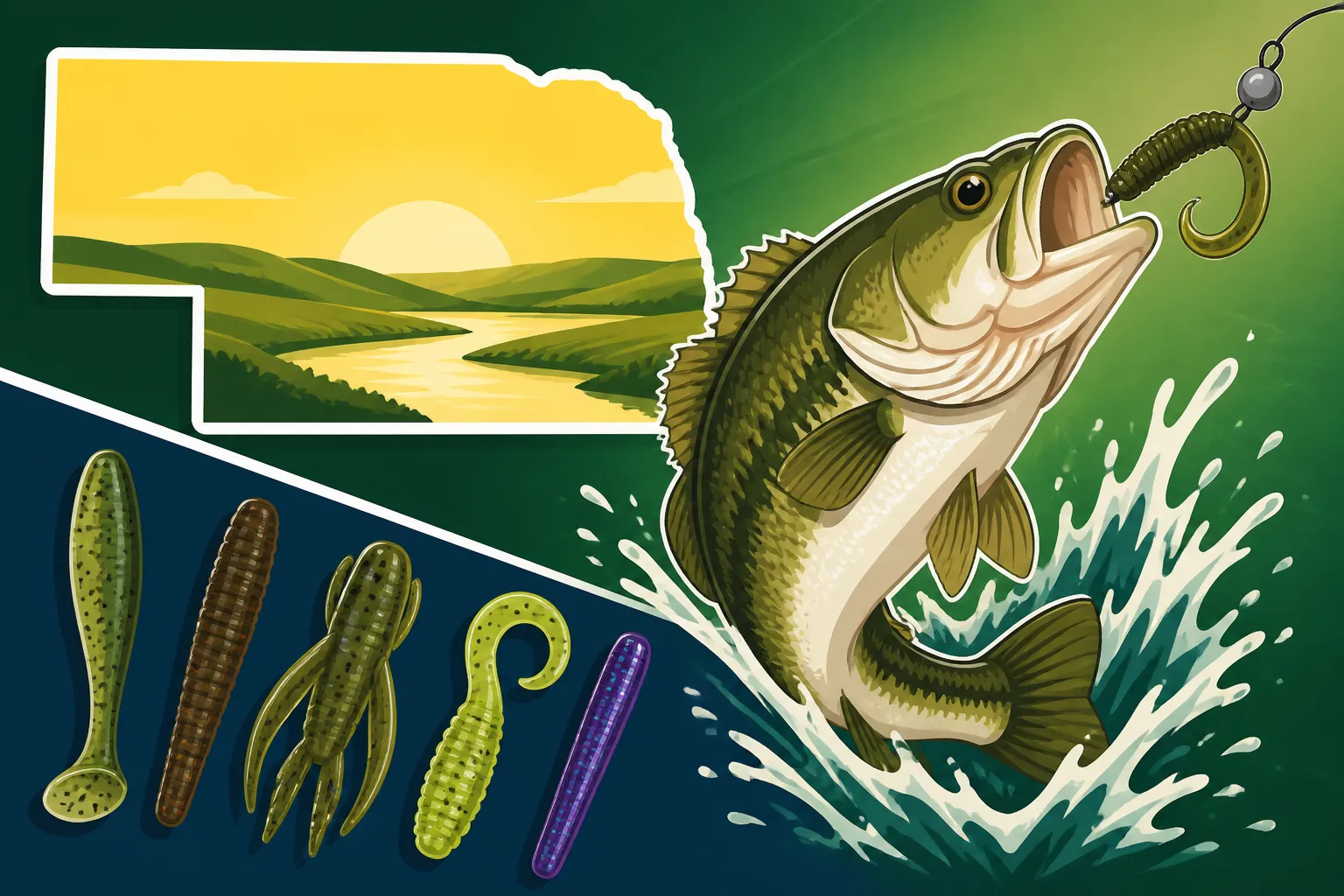
- Stick Baits: These are often unweighted, cylindrical worms, famously popularized by the Yamamoto Senko. Their magic lies in their unique shimmying fall as they sink, which perfectly mimics a dying baitfish or an injured worm. In Nebraska, stick baits are phenomenal for fishing shallow cover, such as docks, weed lines, or submerged timber, particularly on calm days or in clear water where a subtle presentation is key. They're excellent for targeting sluggish post-frontal bass or those that are highly pressured. You can Texas rig them, wacky rig them, or even Neko rig them for different actions. The key is usually a slow, deliberate presentation, letting the bait do most of the work on the fall. You'll often feel nothing more than a slight tick or a feeling of added weight when a bass inhales it.
- Trick Worms: These are typically straight-tail worms, often with a slightly tapered body, designed for a more erratic, darting action. They excel when twitched aggressively or "shaken" on a shaky head jig. In Nebraska, trick worms are fantastic for fishing around sparse cover or in open water where you want to impart a lot of action. They can draw strikes when bass are actively feeding but might not be committing to a faster moving bait. Their buoyancy often allows them to stand up enticingly on the bottom when paired with a light jig head.
- Ribbon Tail and Curly Tail Worms: These are the classics, featuring a long, thin tail that creates a significant amount of action and vibration in the water. The ribbon tail offers a wider, more flowing movement, while the curly tail provides a tighter, pulsating action. These worms are incredibly versatile and can be fished effectively with Texas rigs, Carolina rigs, or even on a jig head. They're great for covering water, especially when bass are scattered or you're trying to locate active fish. The continuous movement of the tail makes them visible and enticing even in slightly stained water or when retrieved at a moderate pace. Whether you're targeting largemouth in the shallow coves of Branched Oak Lake or smallmouth along the rocky banks of the Niobrara River, there's a plastic worm that will get the job done.
Creature Baits and Jigs: Unlocking Aggressive Bites
When it comes to getting aggressive, territorial strikes from Nebraska bass, creature baits and jig combinations are hard to beat. These bulkier soft plastics are designed to mimic larger prey items and provide a substantial profile that bass can't ignore.
- Creature Baits: These baits are truly unique, often featuring multiple appendages, flaps, and tentacles that create a tremendous amount of vibration and visual disturbance in the water. They don't necessarily imitate one specific thing, but rather a generic "critter" – a crawfish, a frog, or even a small panfish. The key is their bulky profile and active appendages. In Nebraska, creature baits are dynamite for flipping and pitching into heavy cover, such as thick cattails, laydowns, brush piles, or beneath boat docks. Rigged on a Texas rig with a heavy tungsten weight, they can penetrate dense cover where other baits would snag. The bass often strike these baits out of aggression or to protect their territory. Popular styles include beaver-style baits, which are compact and dense for punching through mats, and more elongated, crawfish-like designs with waving claws. These are fantastic for exploring the sunken timber at Harlan County Reservoir or the rocky ledges of Sherman Reservoir.
- Jig Trailers: While not a soft plastic type on its own, a creature bait (or a grub, or a chunk) often becomes a jig trailer, and this combination is a potent one. A rubber-skirted bass jig, paired with a soft plastic creature bait, offers a dense, compact, and highly appealing package. The soft plastic trailer adds bulk, profile, and crucial swimming or flapping action that the jig skirt alone can't provide. This combination is particularly effective for imitating crawfish crawling along the bottom or hiding in structure. You can drag, hop, or swim a jig-and-trailer combo, making it incredibly versatile. Whether you're targeting big largemouth tucked away in submerged brush or smallmouth relating to rocky points, a jig with a well-matched soft plastic trailer is a consistent producer. The weight of the jig allows for precise placement and good bottom contact, while the soft plastic ensures a natural look and feel.
Swimbait Soft Plastics for Reaction Strikes
For those moments when bass are actively chasing baitfish or are suspended in open water, soft plastic swimbaits are your go-to option. These baits are designed for a more horizontal presentation, mimicking the effortless glide and flash of a swimming fish.
- Paddle Tail and Boot Tail Swimbaits: These are the most common types of soft plastic swimbaits. They feature a soft, pliable body with a distinct tail that either has a paddle-like shape or a boot-like shape. As the bait is retrieved, the tail kicks and thumps, sending out strong vibrations and creating a lifelike swimming motion. The subtle wobble of the body combined with the tail action is incredibly convincing to predatory bass. In Nebraska, paddle tail swimbaits are incredibly effective for mimicking shad, alewives, or other baitfish that populate our larger reservoirs like Lake McConaughy or Lewis and Clark Lake. You can rig them on a weighted swimbait hook, a jig head, or even as a trailer for a bladed swim jig. They excel when bass are schooling or when you need to cover a lot of water quickly to find active fish. The size of the swimbait should generally match the size of the baitfish in the water you're fishing.
- Line-Through and Jointed Swimbaits: While less common than paddle tails, some soft plastic swimbaits are designed with internal harnesses (line-through) or are multi-jointed to provide an even more realistic, sinuous swimming action. These are often used for targeting larger, more aggressive bass that are focused on bigger meals. They can be incredibly effective when slowly retrieved along deep breaks or over submerged humps where trophy bass might be lurking. The key to successful swimbait fishing is often finding the right retrieve speed that allows the tail to kick naturally without washing out the bait's action. Experiment with steady retrieves, subtle twitches, and short pauses to see what triggers the most strikes.
Rigging Techniques for Nebraska's Best Soft Plastics
Having the right soft plastic is only half the battle; knowing how to rig it properly for different conditions and presentations is crucial. The right rig can make your bait more effective, less prone to snagging, and ultimately lead to more hook-ups.
The Classic Texas Rig and Carolina Rig
These two rigs are staples in any bass angler's playbook, particularly when fishing soft plastics around structure or on the bottom. They are incredibly versatile and should be mastered for Nebraska's diverse waters.
- The Texas Rig: This is perhaps the most fundamental and widely used soft plastic rig, and for good reason: it's incredibly weedless and effective. To tie a Texas rig, you simply thread the hook point into the nose of your soft plastic bait (a worm, creature bait, or stick bait), push it through about a quarter to a half-inch, and then bring the point out. Next, slide the bait up the shank of the hook to cover the eye and knot. Finally, rotate the hook 180 degrees and insert the hook point back into the body of the plastic, ensuring it lays flush against the bait and the point is covered or skin-hooked. This "skin-hooked" or "weedless" presentation allows your bait to glide through heavy cover – think cattails, lily pads, submerged brush, or even dense weeds in a farm pond – with minimal snagging. You can use it with or without a bullet weight, depending on how fast you want the bait to sink and how much cover you're fishing. A common setup involves pegging a bullet weight directly above the hook, which helps the bait penetrate cover and keeps the weight and bait in close contact, enhancing feel. The Texas rig is excellent for pitching and flipping into tight spots or dragging across the bottom in areas with moderate cover. It’s a go-to for Nebraska Largemouth Bass Fishing in places like Branched Oak Lake.
- The Carolina Rig: This rig is designed for covering open water, deep flats, or fishing sparse bottom structure, offering a very natural, free-moving presentation. Unlike the Texas rig where the weight is typically pegged close to the hook, the Carolina rig uses a sliding weight (often a heavier bullet weight or an egg sinker) placed above a swivel, with a leader (often 1 to 4 feet long) separating the weight from the hook and bait. The leader allows your soft plastic bait to float or glide freely behind the weight as you drag it along the bottom. This creates a tantalizing, almost weightless action that can be irresistible to bass, especially those that are lethargic or suspended slightly off the bottom. To tie it, slide a bullet weight onto your main line, then add a glass or plastic bead (to protect your knot), then tie on a swivel. To the other end of the swivel, tie your fluorocarbon leader, and finally, tie your hook to the end of the leader. Texas-rig your soft plastic onto the hook. The Carolina rig is fantastic for searching large areas for scattered bass, particularly on deep humps or points in larger reservoirs. It's a great choice for probing deeper waters for Nebraska Smallmouth Bass Fishing.
Wacky Rig and Neko Rig: Finesse for Finicky Bass
When bass are playing hard to get, or you're fishing in clear, highly pressured waters, finesse techniques like the wacky rig and Neko rig can often tempt strikes where other methods fail. These rigs offer incredibly subtle, natural presentations.
- The Wacky Rig: This rig is deceivingly simple yet remarkably effective. You take a soft plastic stick bait (like a Senko-style worm) and hook it directly through the middle, perpendicular to the body. That's it! When cast, both ends of the worm wiggle and quiver as it slowly falls through the water column, creating an incredibly alluring, natural-looking action. This slow, horizontal descent mimics an injured or struggling worm or baitfish. The wacky rig is exceptional for targeting bass holding near vertical cover like boat docks, seawalls, or isolated clumps of vegetation. It excels in calm conditions and clear water where bass have ample time to inspect the bait. The key is patience; let the bait sink on a slack line, watching for any subtle twitch or movement of your line that indicates a bite. Often, bass will simply pick it up and swim off. You can use a weightless wacky rig for the slowest fall, or add a small O-ring and a nail weight to one end for a slightly faster, head-down fall. This is a brilliant tactic for fishing around the fishing piers at Holmes Lake Fishing Pier Access in Lincoln or targeting bass along the edges of weed lines at Wagon Train Lake Fishing.
- The Neko Rig: This is a variation of the wacky rig, offering a more controlled, head-down presentation. With a Neko rig, you insert a small nail weight into one end of your soft plastic stick bait (or another straight-tail worm). Then, you hook the worm perpendicular to its body, typically using an O-ring (to prevent tearing the plastic) or by skin-hooking it slightly off-center from the weighted end. The weight causes the worm to sink vertically, head-first, while the unweighted tail wiggles enticingly. When twitched on the bottom, the worm stands up on its weighted head, mimicking a feeding critter. This rig is fantastic for fishing hard bottoms, rocky areas, or when you want to keep your bait in a very specific strike zone. It offers a slightly faster and more aggressive presentation than a weightless wacky rig but retains a finesse appeal. It's particularly effective when How to Fish Clear Water in Late Summer where bass might be holding to deeper structure.
Jig Trailer and Drop Shot Applications
Beyond worms and creature baits, soft plastics play a critical role as enhancements for other lures, most notably as jig trailers, and are foundational to the highly effective drop shot technique.
- Jig Trailers: Almost any rubber-skirted jig, whether it's a casting jig, a flipping jig, or a football jig, can be greatly enhanced by adding a soft plastic trailer. The trailer adds bulk, movement, and a larger profile, making the jig more appealing to bass. Common trailers include soft plastic craws, beaver-style baits, chunks (short, blocky pieces of plastic), or even smaller paddle tail swimbaits. The choice of trailer depends on what you're trying to imitate and the action you want. A craw trailer creates a lifelike crawfish imitation when hopped along the bottom, while a chunk adds buoyancy and a slower fall. A small swimbait trailer can give a jig a subtle kicking action as it's reeled. When fishing jigs in Nebraska, selecting the right trailer color and size to match the conditions and the forage is key. For example, a black-and-blue jig with a matching craw trailer is a classic for dark, muddy water or night fishing, while a green pumpkin jig with a subtle beaver-style trailer excels in clearer water around vegetation. This combination is a fantastic way to present a substantial meal to big bass lurking in heavy cover.
- The Drop Shot Rig: The drop shot is a finesse rig designed to present a soft plastic bait precisely in the water column, above a weight that rests on the bottom. This allows the bait to hover tantalizingly in front of suspended fish or those relating to vertical structure, without the weight dragging it down or altering its natural movement. To set up a drop shot, tie your hook directly to your main line using a palomar knot, leaving a long tag end (1 to 3 feet). After tying the hook, pass the tag end back through the eye of the hook from the top, which makes the hook stand out horizontally. Finally, tie a drop shot weight (which typically has a line clamp) to the very end of that tag line. Your soft plastic (often a small straight-tail worm, a minnow imitation, or a creature bait) is then nose-hooked or wacky-rigged onto the hook. The beauty of the drop shot is that you can impart subtle action to the bait by gently shaking your rod tip, while the weight keeps the bait in the strike zone. It's incredibly effective for deep-water bass, fishing around submerged trees, rock piles, or steep breaks. For instance, when fishing deeper water on Lake McConaughy or probing contour lines at Johnson Lake Fishing, a drop shot can be invaluable for presenting a small plastic worm or minnow imitation to finicky bass.
Choosing the Right Color and Scent for Nebraska Bass
Beyond the shape and action of your soft plastic, color and scent play a massive role in whether a Nebraska bass decides to bite. Understanding when to use natural hues versus bold, attention-grabbing colors, and the benefit of added scent, can significantly boost your success.
Matching the Hatch: Natural Colors for Clear Water
In Nebraska's clearer lakes, such as some of the Sandhills lakes or even parts of Lake McConaughy when the water is calm, bass rely heavily on their eyesight to hunt. In these conditions, your best bet is to "match the hatch" by using soft plastic colors that closely resemble the natural forage in the water.
Think about what bass eat: crawfish, bluegill, shad, perch, and various worms and insects. Colors like green pumpkin, watermelon, browns, and subtle greens are incredibly effective because they blend in and appear as natural prey items. Green pumpkin is arguably the most versatile soft plastic color out; it mimics crawfish, frogs, and even some baitfish, making it a universal choice. Watermelon, especially with black or red flakes, imitates juvenile bluegill or other small panfish, a common food source for bass. Browns and tans are excellent for mimicking crawfish, especially when fished on the bottom in rocky or gravelly areas. When bass are feeding on shad in open water, lighter colors like white, pearl, or light grey swimbaits can be deadly. The goal is not to scream "artificial lure," but rather to whisper "easy meal." These natural tones often work best on sunny days or in highly pressured areas where bass are more wary. They allow the bass to inspect the bait without immediately recognizing it as a threat, giving them the confidence to strike. This approach is particularly effective when you are looking for Best Nebraska Lakes for Shore Fishing Without a Boat where fish may be more exposed.
High-Contrast and Bright Colors for Stained or Muddy Water
Conversely, when you're fishing in Nebraska waters with limited visibility—think a rain-swollen Platte River, a muddy farm pond, or a reservoir after a strong wind churns up the bottom—bass primarily rely on their lateral line to detect vibrations and their sense of smell. In these conditions, natural colors can get lost, and it's time to reach for high-contrast or brighter soft plastics.
Colors like black and blue, junebug (a deep purple with green flakes), and chartreuse become incredibly effective. Black and blue is a classic combination: the black provides a strong silhouette against the murky water, while the blue offers just enough contrast to be seen. This combo is killer for creature baits and jigs, especially when flipping into heavy cover or fishing deep. Junebug is another fantastic stained-water color, its dark purple body offering visibility while the green flakes add a subtle flash. Chartreuse, whether solid or as an accent (like a chartreuse tail on a black worm), is a high-visibility color that stands out even in extremely muddy water. While it may not look natural, its ability to be seen and detected by the bass outweighs the need for realism in these conditions. The goal here is to make your bait as noticeable as possible, triggering a reaction strike or drawing the bass in from a distance. The vibrations of the soft plastic, combined with these bold colors, create an irresistible target in low-visibility situations. This approach is essential for scenarios like How to Catch Largemouth Bass in Muddy Water.
The Role of Scent and Attractants
Beyond color, the often-overlooked secret weapon of soft plastics is their ability to hold and disperse scent. Scent can be a game-changer, especially when bass are sluggish, fishing pressure is high, or water visibility is poor.
Many soft plastics today come infused with salt, fish oils, or other proprietary attractants directly in the plastic formulation. The salt in a soft plastic worm, for example, not only adds density for casting but also causes the bass to hold onto the bait longer because it tastes natural, giving you more time to set the hook. Similarly, plastics infused with garlic, anise, or various fish pheromones provide an olfactory cue that can draw bass in and make them commit. For soft plastics that aren't pre-scented, or if you want an extra boost, liquid or gel scent attractants can be applied directly to your bait. Products from companies like Berkley or Pro-Cure are popular choices. You simply squeeze a dab onto your soft plastic, and the scent slowly disperses in the water, creating a "scent trail" that bass can follow. This is particularly effective in stained or muddy water where bass are using their keen sense of smell to locate food. It can also be beneficial in cold water, when a bass might leisurely pick up a bait, and the scent encourages them to swallow rather than spit it out. In short, scent provides an additional layer of appeal that can turn a look into a bite, and a bite into a hooked fish.
Tips for Maximizing Your Soft Plastic Success in Nebraska
Becoming truly proficient with soft plastics goes beyond just having the right baits and rigs. It involves understanding bass behavior, pairing your soft plastics with the correct gear, and refining your presentation and bite detection skills.
Understanding Bass Behavior and Habitat in Nebraska
To consistently catch bass on soft plastics, you need to think like a bass. Their behavior and preferred habitats shift throughout the year in Nebraska, and your soft plastic choices should reflect these changes.
- Spring: As water temperatures rise in spring, bass move from deeper wintering holes into shallower areas to spawn. During this period, they are often cruising flats, staging near points, or guarding beds. Subtle soft plastics like weightless stick baits or Texas-rigged lizards (mimicking bed intruders) are incredibly effective. Bass can be very sensitive to pressure during the spawn, so a quiet, finesse presentation is often best. Spring Fishing in Nebraska is prime time for targeting these shallow-water bass.
- Summer: Once the spawn is over, bass scatter. In the heat of summer, they often relate to deeper structure during the day (e.g., humps, ledges, creek channels) and move shallower to feed during low light periods. This is a great time for Carolina-rigged worms or creature baits dragged along deep contours, or for pitching Texas-rigged plastics into heavy cover like brush piles or weed mats. At night, or during dawn and dusk, bass might chase paddle tail swimbaits in open water. Understanding Summer Fishing in Nebraska patterns will help you choose the right depths and presentations.
- Fall: As water temperatures cool in autumn, bass become highly active, feeding aggressively to build up fat reserves for winter. They often follow baitfish into shallower pockets and coves. This is an excellent time for faster retrieves with soft plastic swimbaits, or for jig-and-trailer combos fished around schools of bait. The fall bite can be one of the most exciting times to fish. For specific tactics, you can dive into Fall Fishing in Nebraska.
- Habitat Diversity: Whether you're on the expansive waters of Lake McConaughy Walleye Fishing (yes, they have bass too!) or a small, private farm pond, understanding where bass hide is paramount. Look for submerged timber, rock piles, weed beds, points, creek channel swings, and man-made structures like docks or bridge pilings. Each of these offers cover and ambush points for bass, and soft plastics can be tailored to fish them effectively.
Proper Rod, Reel, and Line for Soft Plastic Presentations
The right tackle setup can make a world of difference in your ability to cast accurately, feel subtle bites, and effectively fight a bass hooked on a soft plastic.
- Rods: For most soft plastic applications, a medium-heavy to heavy power rod with a fast or extra-fast action is ideal. The stout backbone provides the power needed to drive a hook through plastic and into a bass's jaw, while the sensitive tip allows you to feel those subtle "thumps" or "ticks." For Texas rigging and jig-and-trailer setups, a 7-foot to 7-foot 6-inch baitcasting rod with a medium-heavy power is a fantastic all-around choice. For finesse techniques like the wacky rig, Neko rig, or drop shot, a lighter spinning rod (6-foot 6-inch to 7-foot 2-inch, medium-light to medium power, fast action) offers better sensitivity and casting distance for lighter baits. If you're looking for general recommendations, Best Rods and Reels for Nebraska Fishing provides a good starting point.
- Reels: For Texas rigging, Carolina rigging, and jig-and-trailer presentations, a good quality baitcasting reel with a gear ratio between 6.x:1 and 7.x:1 is excellent. A higher gear ratio allows for faster line pick-up, which is crucial for staying in contact with the bait and quickly taking up slack after a bite. For finesse setups, a smooth spinning reel in the 2500-3000 size range is appropriate, providing excellent line management for lighter lines and baits. You can explore options for Best Baitcasting Reels for Bass Fishing to find a good match.
- Line: Your line choice directly impacts sensitivity and strength. For Texas rigs and jig-and-trailer combos in heavier cover, 15-20 lb braided line is often preferred for its incredible strength, zero stretch (meaning maximum sensitivity), and ability to cut through vegetation. You'll typically tie a 10-20 lb fluorocarbon leader to the braid for invisibility. For Carolina rigs, 12-17 lb fluorocarbon main line or a braid-to-fluorocarbon leader setup works well. Fluorocarbon's low stretch and invisibility make it excellent for feeling subtle bites and fooling wary fish. For finesse techniques, 6-10 lb fluorocarbon or a light braided line with a fluorocarbon leader is best, offering maximum sensitivity for very subtle takes. Remember, selecting appropriate line for your chosen soft plastic technique is just as important as the bait itself. Best Tackle Box Setup for Nebraska Anglers would include a variety of lines for different presentations.
Practicing Your Presentation and Detecting Bites
The final piece of the puzzle for mastering soft plastics is developing a nuanced feel for your bait and recognizing the often-subtle indications of a bite.
- Patience and the Feel: Unlike crankbaits that provide constant feedback, soft plastics, especially on slower retrieves or when fished weightless, demand patience and focus. You need to develop a "feel" for your bait as it moves through the water, understanding the nuances of how it reacts to different bottom compositions (rock, mud, sand) and cover. Pay attention to how your line feels: any slight tap, a spongy feeling, or a sudden added weight could indicate a bite. It often won't be a jarring strike like on a topwater lure.
- Watching Your Line: Many soft plastic bites are visual. Keep a keen eye on your fishing line where it enters the water. A sudden twitch, a jump, or even just a slight swimming off to the side can signal that a bass has picked up your bait. Often, you'll see your line start to move before you feel anything through the rod.
- Setting the Hook: Once you detect a bite, it's crucial to set the hook firmly and quickly. For Texas rigs and jigs, a powerful "sweep set" (sweeping the rod hard to the side) is often more effective than a direct upward hookset, as it helps drive the hook through the plastic and into the fish's mouth. For finesse rigs like the wacky or Neko, a smoother, more controlled sweep might be all that's needed, given the lighter hooks and often less resistance from the bait. Don't be afraid to take up any slack in your line before initiating your hookset.
- Varying Your Retrieve: Don't get stuck in a rut with one retrieve speed. Experiment! Sometimes bass want a slow, dragging presentation; other times, a quick hop-and-fall works wonders. A retrieve might involve long pauses, short twitches, or a slow, steady crawl. The fish will tell you what they prefer on any given day. By practicing these elements, you'll not only catch more bass but also gain a deeper appreciation for the subtle art of soft plastic fishing in Nebraska.
| Soft Plastic Type | Primary Imitation | Ideal Rigging | Best Nebraska Conditions |
|---|---|---|---|
| Stick Bait | Dying baitfish, worm | Wacky, Texas, Neko | Clear water, calm, pressured fish, shallow cover |
| Creature Bait | Crawfish, critter | Texas (flipping/pitching), Jig Trailer | Heavy cover, brush piles, muddy/stained water, aggression bites |
| Paddle Tail Swimbait | Shad, minnow, baitfish | Weighted Swimbait Hook, Jig Head | Open water, schooling baitfish, searching for active fish |
| Ribbon/Curly Tail Worm | Worm, eel, small snake | Texas, Carolina, Jig Head | Covering water, scattered fish, varied depths |
| Grub (single tail) | Small baitfish, insect | Jig Head, Small Swimbait Hook | Panfish, smaller bass, subtle presentation |
Disclaimer
This article is for general informational purposes only and does not constitute professional advice. Laws, prices and regulations vary by location and change over time. Consult a qualified professional for guidance on your specific situation.