Best Circle Hooks for Catfish Fishing
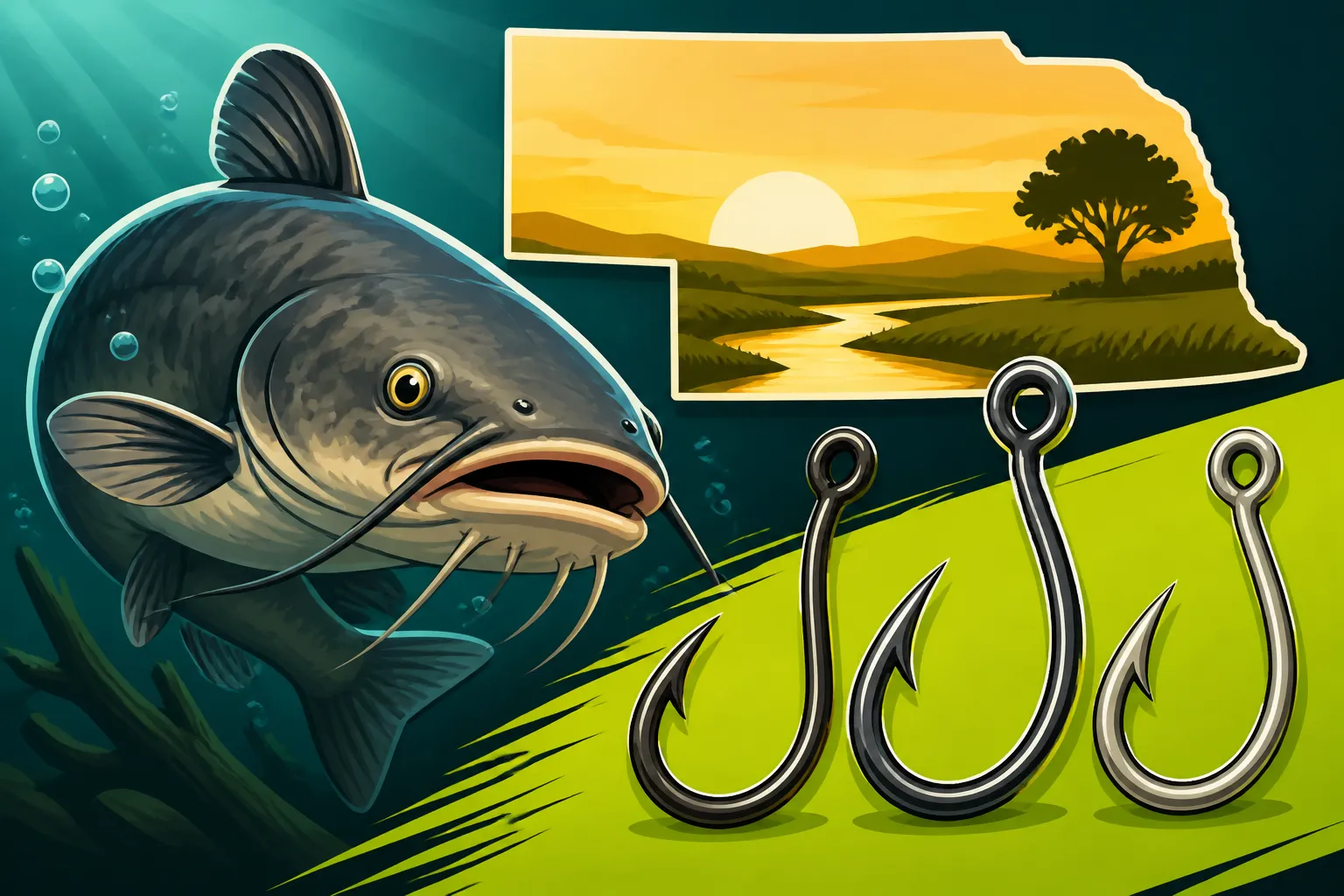
There's nothing quite like the anticipation of a strong bite from a Nebraska catfish, but it can be incredibly frustrating when you set the hook only to miss the fish, or worse, deep-hook it and cause harm. Many anglers struggle with traditional J-hooks leading to lost fish or difficult, often fatal, releases. This guide is all about simplifying your catfish game and making it more ethical and effective by focusing on the best circle hooks for your Nebraska adventures.
Understanding Circle Hooks and Why They Excel for Catfish
For years, many of us grew up using J-hooks for everything, and while they have their place, they're not always the best choice for every fishing scenario, especially when it comes to whiskered giants like catfish. Circle hooks represent a significant leap forward in angling technology, particularly for species that tend to swallow bait deeply.
How Circle Hooks Work Their Magic
The design of a circle hook is truly ingenious. Unlike a J-hook, which is designed to penetrate when you set it, a circle hook is designed to self-set in the corner of the fish's mouth. The inward-pointing point, coupled with a round bend, works like a charm. When a catfish takes the bait and swims away, the line pulls tight. Instead of penetrating the gut, the hook slides out of the throat, rotates, and catches securely in the jaw, typically right in the corner of the mouth. This means less effort from you, fewer missed fish, and a much cleaner hook-up. It's a game-changer, especially when you're targeting those big flatheads in the Missouri River or channel cats in one of Nebraska's many reservoirs.
The magic truly lies in that unique shape. Imagine the hook being pulled. If it's a J-hook, the point is more likely to snag anywhere, including deep in the esophagus. With a circle hook, the initial pull causes the point to hug the fish's jawline, and as tension increases, it simply rotates around until that point finds the soft tissue in the corner of the mouth. It's an incredibly efficient and humane way to hook a fish, making it a favorite for catch-and-release anglers and those who simply want to maximize their chances of a clean fight and landing.
Advantages Over Traditional J-Hooks
The benefits of switching to circle hooks for catfish are numerous and compelling:
- Reduced Mortality Rates: This is perhaps the biggest advantage, especially for those of us who practice Catch and Release Best Practices in Nebraska. Because circle hooks consistently hook fish in the mouth, vital organs are protected. This dramatically increases the survival rate of released fish, ensuring healthy populations for future generations of anglers. It's a responsible choice that contributes to the sustainability of our fisheries.
- Better Hook-Up Ratio: While it might seem counterintuitive at first (no aggressive hook set?), the self-setting nature of circle hooks often leads to more consistent and solid hook-ups. Catfish often mouth their bait before committing. With a J-hook, you might pull the bait away too early or too late. With a circle hook, you simply let the fish take the bait and swim off, allowing the hook to do its job.
- Easier Hook Removal: A hook in the corner of the mouth is far easier to remove than one lodged deep inside. This not only saves the fish stress but also saves you time and frustration, especially when dealing with a feisty channel cat.
- Safety for Anglers: Less deep-hooking means less need to put your hand deep into a catfish's mouth to retrieve a hook, which is a definite plus when dealing with sharp spines and teeth.
When you're out trying to land some Nebraska Channel Catfish Daily Limit for a shore lunch, you want every advantage you can get, and circle hooks provide just that.
The Importance of the Right Size and Style
Just like any other piece of tackle, circle hooks aren't one-size-fits-all. The size and style you choose will depend heavily on the size of the catfish you're targeting and the bait you're using. A tiny hook meant for panfish won't cut it for a monster flathead, nor will a massive hook be effective for smaller channel cats that are just nibbling.
Generally, for Nebraska catfish, you'll want to think in terms of sizes ranging from 2/0 for smaller channel cats up to 10/0 or even larger for trophy flatheads. When using cut bait, ensure the hook size allows the bait to be presented naturally without completely obscuring the hook point. For larger live baits, you'll need a hook substantial enough to hold the bait securely without hindering its movement, yet still capable of rotating and hooking the fish properly. This balance is key to success.
Key Features to Look for in a Great Catfish Circle Hook
Choosing the right circle hook isn't just about size; it's also about understanding the subtle differences in their design and construction. These details can make a real difference in your success on the water.
Material and Construction
When a powerful catfish bites and pulls, you want a hook that can stand up to the fight.
- High-Carbon Steel: Most quality hooks are made from high-carbon steel, which offers a great balance of strength and sharpness. This material can be tempered to be incredibly strong without being brittle.
- Stainless Steel: For those who fish in brackish or saltwater (though less common for pure catfish in Nebraska, unless you're near a unique mineral spring or specific border waters), stainless steel hooks offer superior corrosion resistance. However, for most freshwater applications in Nebraska, high-carbon steel with a good protective coating is more than sufficient.
- Anti-Corrosion Coatings: Many hooks come with black nickel, tin, or other protective finishes. These coatings help prevent rust, which is crucial for maintaining hook integrity and sharpness over time. A dull, rusty hook is a missed fish waiting to happen. Always rinse your hooks with fresh water after a fishing trip, especially if you've been in muddy or silty conditions.
Offset vs. Non-Offset Circle Hooks
This is where things can get a little nuanced, and it's a topic often discussed among serious catfish anglers.
- Non-Offset (Inline) Circle Hooks: These hooks have the point aligned parallel to the shank. This design almost guarantees a corner-of-the-mouth hook-up, making them ideal for maximum fish survival and catch-and-release. In some regions, conservation regulations might even require non-offset circle hooks for certain species, though this isn't a widespread rule for catfish in Nebraska. If you're prioritizing fish health above all else, non-offset is the way to go.
- Offset Circle Hooks: These hooks have a slight bend in the shank, which displaces the point outward, making it slightly easier to penetrate. While still highly effective at mouth-hooking compared to J-hooks, the offset increases the very slight chance of a deeper hook-up. Many anglers find them slightly easier to use and achieve a positive hook-up, especially with certain baits.
For Nebraska catfish, both types are widely used and effective. The choice often comes down to personal preference and your specific goals. If conservation is paramount, lean towards non-offset. If you want a slightly more aggressive, but still humane, hook-up, offset might be your preference.
Shank Length and Eye Type
These seemingly small details can have a big impact on how your bait is presented and how the hook performs.
- Shank Length:
- Short Shank: Offers a compact profile, great for small, natural bait presentations or when you want the hook to be less visible. Good for smaller channel cats or finicky bites.
- Long Shank: Provides more leverage, making hook removal easier, especially from larger fish. It can also be beneficial for keeping the bait from sliding up the line on larger baits like whole shad or bigger chunks of cut bait. However, a very long shank can sometimes impede the circle hook's rotation.
- Eye Type (Ringed vs. Straight Eye):
- Ringed (Up-Eye or Down-Eye): The eye is bent upwards or downwards relative to the shank. For snelled rigs or specific knot types, this can help the hook hang in a more natural position or improve the "bite" of the hook. Many circle hooks designed for self-setting will feature a ringed eye that helps guide the line correctly.
- Straight Eye: The eye is in line with the shank. This is common on many hook types and works perfectly well for most standard knot applications, like a Palomar knot or improved clinch.
For most Nebraska Catfish Bag Limits scenarios, a straight eye or a slight up-eye is perfectly fine, especially when tying direct to your main line or leader. Focus more on the overall strength and sharpness.
Top Recommendations for Nebraska Catfish Anglers
Navigating the vast world of fishing tackle can be overwhelming. Here's a rundown of some reliable circle hook options that Nebraska catfish anglers often turn to.
Proven Brands and Models
When it comes to dependability, certain brands have earned their stripes in the catfish world. You'll find a wide selection of these at reputable retailers like Bass Pro Shops or through online platforms such as Amazon.
- Gamakatsu Octopus Circle Hooks: These are a perennial favorite for a reason. Gamakatsu hooks are renowned for their exceptional sharpness and strength. The Octopus Circle design is versatile and comes in a wide range of sizes, making them suitable for everything from pan-sized channel cats to substantial flatheads. They are typically non-offset, which is excellent for fish care. Many anglers swear by the 5/0 to 8/0 range for general reservoir and river fishing for channel catfish.
- Owner Mutu Light Circle Hooks: Owner hooks are another top-tier choice, known for their innovative designs and incredibly sharp points. The Mutu Light series offers a great balance of wire diameter and strength, perfect for presenting natural baits like cut shad or fresh shrimp. The Mutu Light hooks are typically non-offset, promoting those clean lip hook-ups. Sizes 4/0 to 7/0 are popular for various catfish applications.
- Trokar TK4 Circle Hooks: If you're serious about battling truly big catfish, Trokar hooks are engineered for extreme penetration and holding power. They feature a unique surgically sharpened point that pierces tough mouths with minimal effort. While on the pricier side, their quality is undeniable. The TK4 is a robust, heavy-duty circle hook that can handle trophy flatheads and blue cats where they occur. Expect to look for sizes 8/0 and up for these giants.
- Mustad Demon Perfect Circle Hooks: Mustad has been a staple in fishing for generations, and their Demon Perfect Circle hooks offer a fantastic blend of affordability and performance. They are strong, sharp, and available in a wide array of sizes. Many anglers find them to be excellent workhorse hooks for everyday catfish outings on Nebraska's rivers and lakes. Sizes 3/0 to 6/0 are very common.
Remember, the "best" hook is often the one that gives you confidence and performs consistently in your specific fishing conditions. Don't be afraid to experiment a bit to find your personal preference.
Matching Hooks to Bait and Techniques
The effectiveness of your circle hook rig largely depends on how well you match the hook to your bait and fishing method.
- Cut Bait (Shad, Perch, etc.): For fresh cut bait, which is often the go-to for How to Catch Catfish in Nebraska, you want a hook large enough to pass through the bait once or twice, leaving the point and most of the bend exposed. A 5/0 to 8/0 Gamakatsu Octopus or Owner Mutu Light works well. Thread the hook through the skin side once, allowing the flesh to flutter in the current.
- Worms (Nightcrawlers, etc.): When using a wad of nightcrawlers, opt for a slightly smaller hook, perhaps a 3/0 to 5/0. Hook the worms multiple times to create a tempting cluster, ensuring the point still has plenty of room to grab.
- Stink Bait/Prepared Baits: For dough baits or commercially prepared stink baits, a spring-loaded treble hook is often used to hold the bait, but if you want the benefits of a circle hook, you can use a small circle hook (2/0-4/0) and mold the bait around it, leaving the point exposed. Another method is to use a small bait holder hook for the stink bait and a snelled circle hook as a trailing hook, though check local regulations for multiple hook setups.
- Live Bait (Sunfish, Gizzard Shad): For bigger flatheads, live bait is king. You'll need a stout circle hook, typically 7/0 to 10/0, depending on the size of your baitfish. Hook the baitfish through the back, just behind the dorsal fin, being careful not to hit the spine, or through the lips. This allows the bait to swim naturally while keeping the hook exposed. This technique is often employed on larger systems like the Platte or Missouri Rivers, or bigger reservoirs like Lake McConaughy for those elusive monsters. How to Catch Flathead Catfish at Night often involves robust live bait setups.
Rigging Your Circle Hooks for Success
Getting the most out of your circle hooks means rigging them correctly.
- Knot Choice: A strong, reliable knot is paramount. The Palomar knot is an excellent choice for circle hooks, known for its strength and ease of tying. An improved clinch knot or snell knot also works well. When tying, ensure the hook hangs freely.
- Leader Material: For catfish, a stout monofilament or fluorocarbon leader is usually preferred, especially if fishing around abrasive structures like rocks or sunken timber. A 30-50lb test leader is common for targeting respectable catfish.
- Basic Bottom Rig: A popular and effective rig for still or slow-moving water is a simple slip-sinker rig. Thread your main line through an egg sinker (1-4 oz, depending on current/depth), then tie on a swivel. To the other end of the swivel, tie a 12-24 inch fluorocarbon or monofilament leader, and finally, your circle hook. This allows the fish to take the bait without feeling the weight of the sinker. This is a fantastic setup for How to Catch Channel Catfish From the Bank or from a boat in most Nebraska waters.
- Carolina Rig for Rivers: For river fishing, where current is a factor, a heavier sinker might be needed. The same slip-sinker setup works, but sometimes a three-way swivel rig with a bell sinker on a dropper line can be more effective at holding bottom in stronger currents.
Always check your knots before casting, and ensure your bait is presented naturally with the hook point clear for optimal performance.
Tips for Maximizing Your Circle Hook Success
Switching to circle hooks is a slight paradigm shift for many, but a few simple adjustments to your technique will have you landing more fish cleanly.
The "No Hook Set" Rule
This is, without a doubt, the most crucial aspect of fishing with circle hooks, and it's often the hardest habit to break for anglers used to J-hooks. Forget the mighty "swing for the fences" hook set!
- Be Patient: When you see a bite, resist the urge to immediately yank back on the rod. Let the fish take the bait and swim away, loading up the rod naturally.
- Let the Rod Do the Work: The tension from the fish swimming off is what causes the circle hook to rotate and self-set. Just steadily reel in any slack and let the rod bend, keeping steady pressure.
- Gentle Lift: If you feel the weight, simply lift the rod tip gently and begin to reel. The hook will do the rest. An aggressive hook set will often pull the hook right out of the fish's mouth without ever getting a solid grab.
This "no hook set" rule is critical. It might feel strange at first, but once you trust the hook, you'll see how effective it is.
Choosing the Right Line and Rod
Your rod and line setup should complement your circle hooks to ensure optimal performance.
- Rod Action: A medium-heavy to heavy action rod with a moderate or fast tip is ideal. The softer tip allows the fish to take the bait without feeling too much resistance, letting the circle hook do its job, while the powerful backbone helps you fight big fish once they're hooked. For Best Rod Setup for Nebraska Catfish, look for a rod between 7 to 9 feet.
- Line Choice:
- Monofilament: A classic choice, mono offers good abrasion resistance and a bit of stretch, which can be forgiving when a big cat makes a powerful run.
- Braided Line: Becoming increasingly popular for catfish, braid offers incredible strength-to-diameter ratio and virtually no stretch, giving you excellent sensitivity to feel even subtle bites. Its low diameter also helps in current. If using braid, a mono or fluorocarbon leader is often recommended for invisibility and abrasion resistance.
- Fluorocarbon: A great choice for leaders due to its invisibility underwater and excellent abrasion resistance.
Match your line strength to the size of fish you expect to encounter. For most Nebraska catfish, 15-30lb test mono or 30-65lb test braid are common choices.
Safe Handling and Release
Circle hooks inherently promote safer handling, but a few extra steps ensure the best outcome for the fish.
- Minimize Out-of-Water Time: Get the fish in quickly, unhook it, and get it back in the water as fast as possible.
- Wet Hands: Always wet your hands before handling a fish to protect its protective slime coat.
- Landing Net: A large, rubberized landing net is invaluable for safely corralling larger catfish and protecting their fins and slime. Best Landing Nets for Big Fish are designed for this very purpose.
- Hook Removal Tool: Even with mouth-hooked fish, a good pair of long-nosed pliers or a hook remover can make the process even quicker and safer for both you and the fish.
Using circle hooks is a proactive step towards ethical angling, allowing you to enjoy the thrill of the catch while also being a good steward of Nebraska's aquatic resources.
Circle Hook Recommendations for Nebraska Catfish
Here's a quick guide to help you choose the right circle hook for your next Nebraska catfishing trip:
| Catfish Species Targeted | Hook Size Range (Approx.) | Ideal Bait Types | Key Features to Look For |
|---|---|---|---|
| Small Channel Catfish | 2/0 – 4/0 | Nightcrawlers, small cut bait, shrimp | Sharp, light wire, non-offset preferred |
| Medium Channel Catfish | 4/0 – 7/0 | Cut bait (shad, perch), chicken liver | Strong, sharp, good corrosion resistance |
| Large Channel Catfish | 7/0 – 9/0 | Large cut bait, prepared baits | Heavy duty, wide gap, very sharp point |
| Flathead Catfish (Medium) | 6/0 – 8/0 | Live bluegill, smaller live shad | Extra strong, non-offset, wide gap, stout wire |
| Flathead Catfish (Trophy) | 9/0 – 12/0 | Large live carp, suckers, bullheads | Maximum strength, large gap, surgically sharpened |
Remember, these are general guidelines. Adjust your hook size based on the specific bait you're using and the size of the fish you realistically expect to catch. Always prioritize a hook that leaves plenty of the point exposed after baiting.
Disclaimer
This article is for general informational purposes only and does not constitute professional advice. Laws, prices and regulations vary by location and change over time. Consult a qualified professional for guidance on your specific situation.