Best Rod Setup for Nebraska Catfish
There’s nothing quite as frustrating as feeling that unmistakable tug, setting the hook, and then feeling absolutely nothing because your gear just wasn't up to the task. Or, perhaps you’ve spent hours waiting, only to realize your setup isn't sensitive enough to detect those subtle catfish bites. This guide is all about equipping you with the knowledge to choose the absolute best rod setup for targeting catfish in Nebraska, ensuring you're ready for everything from feisty channel cats to monster flatheads.
Understanding Nebraska Catfish and Their Habits
Before we dive into the nitty-gritty of rods and reels, it's crucial to understand the fish you're after and where they live. Nebraska waters are teeming with fantastic catfish opportunities, primarily focusing on channel catfish and flathead catfish. Each species, and the environment they inhabit, often dictates slightly different gear choices if you want to maximize your success.
Channel Catfish Dominance and Fighting Style
Channel catfish are hands down the most common and widely distributed catfish species in Nebraska. You'll find them in nearly every river, reservoir, and even many ponds across the state. They're opportunistic feeders, meaning they'll eat just about anything, from cut bait and stink bait to worms and even some artificial lures. When hooked, a channel cat is known for its strong, relentless fight, often making powerful runs and dogged dives. While they don't typically reach the gargantuan sizes of their flathead cousins, a 5-10 pound channel cat can put a serious bend in your rod, especially in current.
Given their widespread presence, understanding their habits is key. They often hang around deeper holes, submerged structure like logs or rocks, and channel breaks during the day, becoming more active feeders during low light conditions or at night. Their aggressive feeding behavior means you need a setup that can handle a powerful strike and the subsequent tug-of-war. For a deeper dive into targeting these popular fish, check out our guide on How to Catch Catfish in Nebraska.
Flathead Catfish and Their Ambush Tactics
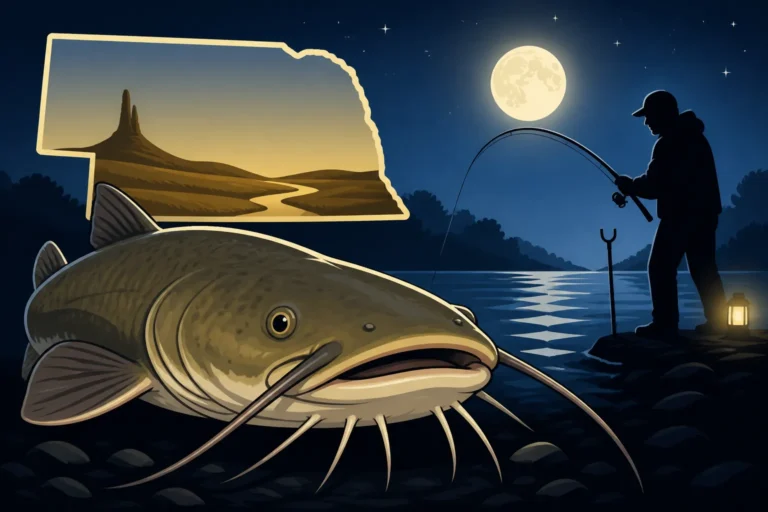
Flathead catfish are the true heavyweights of the Nebraska catfishing scene. These magnificent creatures prefer live bait—think bluegill, suckers, or even large shiners—and are ambush predators, often lurking in heavy cover such as log jams, root wads, or deep rock piles in rivers and larger reservoirs. Unlike channel cats that might peck at bait, a flathead strike is usually a brutal, decisive engulfing. Their sheer size and immense power demand a rod and reel setup that is nothing short of robust.
Hooking into a flathead, especially a true trophy fish, is an experience you won't soon forget. They will try to drag you back into the snags they call home, and if your gear isn't stout enough, it's game over quickly. Targeting flatheads often involves fishing with heavier lines, larger baits, and placing your presentation right in the middle of their chosen lair. For those brave enough to pursue these giants after dark, our article on How to Catch Flathead Catfish at Night offers some excellent tips.
River Versus Reservoir Catfishing
The environment where you're fishing also plays a significant role in your gear selection. Rivers, especially larger ones like the Missouri or Platte, often have strong currents that require heavier sinkers to hold your bait in place. The presence of snags, rocks, and current-loving flatheads also calls for more powerful rods and tougher lines. Fighting a big fish in a river often means battling the fish and the current simultaneously, which doubles the stress on your tackle.
Reservoirs and large lakes, while still holding big fish, often present different challenges. You might be fishing deeper open water, targeting structure on submerged humps, or focusing on points. While current isn't as much of a factor, the ability to cast further or present bait vertically in deeper water becomes more important. Generally, river fishing leans towards heavier, more powerful gear, while reservoir fishing might allow for slightly lighter (though still robust) setups, depending on the specific species and conditions.
Key Components of a Catfish Rod Setup
Getting the right rod setup for catfish isn't just about grabbing the biggest, stiffest rod you can find. It's a thoughtful combination of rod power, action, reel type, and line that all work together to help you land those whisker-mouthed giants.
Rod Power and Action Explained
These two terms are perhaps the most critical when choosing a fishing rod, and they are often misunderstood. Rod Power refers to the rod's strength or its lifting ability. Think of it as how much pressure it takes to bend the rod. For catfish, you'll typically be looking at medium-heavy (MH), heavy (H), or even extra-heavy (XH) power rods.
- Medium-Heavy: Great for smaller to medium channel cats (under 10-15 lbs), providing enough backbone without being overly cumbersome.
- Heavy: This is often the sweet spot for general catfishing, suitable for larger channel cats and smaller flatheads, giving you excellent control and lifting power.
- Extra-Heavy: Essential for targeting trophy flatheads or fishing in heavy current and dense cover, where brute strength is required to turn a big fish.
Rod Action describes where the rod bends when pressure is applied.
- Fast Action: The rod bends mostly in the tip section. This provides excellent sensitivity for detecting subtle bites and quick power transfer for strong hooksets. It's good for channel cats that might "peck" at the bait.
- Moderate-Fast Action: The rod bends in the upper half. This offers a good balance of sensitivity and a more parabolic bend under load, which can be forgiving with powerful runs and reduce the chances of pulling hooks. This is a versatile choice for many catfishing scenarios.
- Moderate (or Slow) Action: The rod bends through the entire length. This provides maximum forgiveness and casting distance for heavier baits. While less common for targeting aggressive catfish, some anglers prefer it for its ability to absorb powerful headshakes.
For most Nebraska catfishing, a heavy power, moderate-fast to fast action rod will serve you incredibly well. The fast action helps detect those initial soft bites, while the heavy power gives you the muscle to pull a big fish out of cover.
Reel Type and Gear Ratio Considerations
When it comes to reels for catfish, you'll generally choose between spinning reels and baitcasting reels. Each has its pros and cons.
Spinning Reels are popular for their ease of use, making them a great choice for beginners or those who prefer simplicity. They excel at casting lighter baits (though we're talking relatively lighter for catfish) and are very forgiving when it comes to backlash. For channel cats, a sturdy spinning reel in the 4000 to 6000 size range, paired with a medium-heavy rod, is a fantastic option. They often have good drag systems, which are crucial for fighting strong fish. If you're looking for a good all-around setup, a spinning reel is a solid choice. Many reliable options are available on Amazon.
Baitcasting Reels are the workhorses for serious catfishing, especially when targeting large flatheads or fishing in heavy current. They offer superior power, torque, and direct control over the line, which is invaluable when battling a big fish trying to dive into structure. You'll typically want a baitcaster in the 200 to 400 size range, known for their strong gears and robust drag systems. Round baitcasters are particularly favored for their line capacity and durability. While they have a steeper learning curve (hello, backlashes!), their raw power and ability to handle heavy lines and big weights make them indispensable for trophy catfishing.
Gear Ratio refers to how many times the spool turns with one crank of the handle.
- Lower Gear Ratio (e.g., 4.1:1 to 5.3:1): These reels prioritize power and torque. They're excellent for cranking in heavy fish or using large, heavy baits against strong current, making them ideal for flathead fishing.
- Higher Gear Ratio (e.g., 6.1:1 to 7.1:1): These reels are faster, allowing you to retrieve line quickly. While not always necessary for catfish, a medium gear ratio (around 5.x:1) offers a good balance for channel cat fishing, allowing for quicker bait checks or moving your presentation.
Fishing Line Considerations
Your fishing line is the direct connection between you and the fish, so choosing the right type and pound test is critical.
Monofilament (Mono) line is a traditional choice, known for its stretch, which acts as a shock absorber during violent strikes and headshakes. It's also relatively inexpensive and easy to tie knots with. For channel catfish, 15-25 lb test monofilament is a common and effective choice. The stretch can be a double-edged sword, however, as it reduces sensitivity and power for a hookset over long distances or in deep water.
Braided Line has become extremely popular for catfishing, and for good reason. It has virtually no stretch, offering incredible sensitivity to detect even the lightest bites and maximum power for strong hooksets, even from afar. Its thin diameter for its strength (e.g., 50 lb braid has the diameter of 12-15 lb mono) means you can spool more line on your reel, which is helpful for long runs. The downside is it can be more visible in clear water, and it's less abrasion-resistant than mono or fluorocarbon. For flatheads, 50-80 lb braided line is the standard. For channel cats, 30-50 lb braid is often used. It's wise to pair braid with a fluorocarbon or heavy monofilament leader for abrasion resistance and reduced visibility.
Fluorocarbon (Fluoro) line offers good abrasion resistance and is nearly invisible underwater, making it an excellent leader material. While some anglers use it as a main line, its stiffness and cost often make it a better choice for leaders in catfishing. A 30-50 lb fluorocarbon leader with a braided main line is a killer combination for both channel and flathead cats.
Pro Tip: Regardless of your main line choice, always use a leader, especially when fishing around rocks or snags. A section of heavy monofilament or fluorocarbon (30-80 lb test) tied to your main line will absorb shock and provide crucial abrasion resistance against sharp objects and the catfish's rough mouth.
Specific Rod and Reel Recommendations
Now that we've covered the basics, let's get into some specific setups you can consider for your Nebraska catfishing adventures. Remember, these are guidelines, and personal preference always plays a role.
Channel Catfish Rod and Reel Pairings
For most channel cat fishing in Nebraska, you're looking for a versatile setup that can handle a decent fight, offer good casting distance, and provide enough sensitivity.
A great starting point is a 7 to 8-foot medium-heavy (MH) power rod with a moderate-fast action. This length offers a good balance of casting distance from shore or a boat and enough leverage to control fighting fish. The moderate-fast action provides sensitivity for those tentative bites but still has plenty of backbone.
- Rod Examples: Look for rods specifically labeled "catfish" or heavy-duty bass rods. Brands like Ugly Stik or Berkley often have affordable yet durable options. You can find many options on Amazon.
- Reel Examples: Pair this with a 4000- to 5000-size spinning reel or a round baitcasting reel in the 200-300 size range with a gear ratio around 5.0:1. Ensure the reel has a smooth, reliable drag system, as channel cats can make surprising runs.
- Line Choice: Spool up with 20-25 lb monofilament or 30-40 lb braided line, always adding a 30 lb fluorocarbon leader about 18-36 inches long. This setup is perfectly suited for most rivers, sandpits, and smaller reservoirs where channel catfish thrive, allowing you to effectively target the abundant Nebraska Channel Catfish Size and Weight Records.
This combination gives you the versatility to fish with various baits—from chicken liver and cut bait to worms and even some smaller live baits. It's strong enough to handle channel cats well into the double digits but still sensitive enough to enjoy the fight of smaller fish. For more detailed information, consider reading up on How to Rig Cut Bait for Channel Catfish.
Flathead Catfish Rod and Reel Pairings
When you're chasing flatheads, it's time to upgrade to heavy-duty equipment. These fish are true brutes, and your gear needs to be able to stand up to their immense power and tendency to dive into heavy cover.
You'll want a 7.5 to 9-foot heavy (H) or extra-heavy (XH) power rod with a moderate or moderate-fast action. The longer length helps with casting heavier baits, provides better line control, and offers more leverage for horsing big fish out of snags. The moderate action is often preferred for flatheads because it allows the entire rod to load up and absorb the powerful shock of a flathead's initial strike and subsequent deep runs, which can prevent break-offs.
- Rod Examples: Dedicated catfish rods from brands known for heavy-duty tackle are ideal. Look for strong blanks and robust guides.
- Reel Examples: A round baitcasting reel in the 300-400 size range is almost mandatory for flathead fishing. These reels are built like tanks, offering superior line capacity, cranking power, and extremely durable drag systems. A lower gear ratio (4.0:1 to 5.0:1) is highly recommended for the brute force needed to move a big flathead.
- Line Choice: Spool your reel with 65-80 lb braided line, or if you prefer monofilament, go with 40-50 lb test. Always use a heavy leader of 50-80 lb monofilament or fluorocarbon, especially when fishing near submerged timber or rocky areas.
This robust setup is critical for tackling the larger flatheads found in the Missouri River, Platte River, or deep in reservoirs like Lake McConaughy or Harlan County Reservoir. It provides the muscle to not only land a trophy flathead but also to pull them away from the structure they invariably try to bury themselves in. This gear is essential for chasing fish that could potentially break Nebraska Channel Catfish Size and Weight Records (or flathead records, for that matter!).
Budget-Friendly Options and Versatility
Let's be real, not everyone has an unlimited budget for fishing gear, and that's perfectly fine! You can still put together an effective catfish setup without breaking the bank. The key is to prioritize durability and appropriate power.
For beginners or those on a tighter budget, a 7-foot medium-heavy spinning rod and reel combo is often the best bang for your buck. Many sporting goods stores and online retailers like Amazon offer complete combo packages that are surprisingly capable.
- Rod: Look for a medium-heavy, moderate-fast action rod from a reputable budget brand. Durability is more important than extreme sensitivity here.
- Reel: A 4000-5000 size spinning reel with a decent drag system is sufficient for channel cats up to 15-20 pounds.
- Line: Spool it with 20 lb monofilament to start. It's forgiving, easy to use, and affordable.
This setup might not be ideal for monster flatheads, but it will handle the vast majority of channel catfish you encounter in Nebraska, making it perfect for enjoyable outings. As you gain experience and decide to target bigger fish, you can always upgrade. A good starting point for exploring options is often a "Best Rod and Reel Combo for Beginners in Nebraska" guide. Remember, consistent effort and knowing your chosen fishing spot often outweigh having the most expensive gear.
Essential Terminal Tackle and Accessories
Having the right rod and reel is only half the battle. Your terminal tackle—the bits and pieces directly attached to your line—are equally important for successfully hooking and landing catfish. Don't skimp on these small but mighty components!
Hooks: Circle Hooks, J-Hooks, and Sizes
Choosing the right hook can dramatically improve your hookup ratio and overall success.
Circle Hooks are arguably the best choice for catfish, especially if you're practicing catch-and-release or want to avoid gut-hooking fish. Their design means the fish hooks itself in the corner of the mouth as it swims away, usually without requiring a forceful hookset from the angler. This leads to fewer missed bites and healthier fish. Sizes typically range from 5/0 to 10/0 for channel cats and 8/0 to 14/0 for flatheads, depending on bait size. Make sure to choose strong, heavy-gauge circle hooks that won't straighten out under pressure.
J-Hooks are traditional hooks that require an active hookset. While they can be effective, there's a higher risk of gut-hooking if you're not vigilant, particularly with channel cats that tend to swallow bait quickly. If you do use J-hooks, opt for robust models in similar sizes to circle hooks (e.g., 6/0 to 10/0) and be ready to set the hook firmly as soon as you feel a definitive pull. For those times you need to fish very heavy cover with live bait, some flathead anglers still prefer J-hooks for immediate, decisive hooksets to prevent the fish from getting into snags.
When choosing hooks, always consider the size of your bait. A small hook on a large piece of cut bait will get buried, while a hook that's too large for your bait might deter fish. The rule of thumb is to match your hook to the bait, ensuring the barb is exposed for a solid hookup.
Weights, Sinkers, and Rigs
To keep your bait on the bottom and in the strike zone, you'll need the right weights and rigs.
Sinkers come in various forms, but for catfishing, you'll primarily use egg sinkers or no-roll sinkers.
- Egg Sinkers: These are ideal for a slip-sinker rig, allowing the line to run freely through the sinker. This means a fish can pick up the bait and swim off without feeling the weight of the sinker, providing a more natural presentation and allowing the angler to detect the bite more easily. They are excellent for channel cat fishing in lighter currents or still water.
- No-Roll Sinkers: As the name suggests, these sinkers are designed to sit firmly on the bottom without rolling, even in moderate current. They are perfect for river fishing or when you need your bait to stay precisely where you cast it.
Rigs: The two most common and effective rigs for catfishing are the slip-sinker rig and the three-way swivel rig.
- Slip-Sinker Rig (Carolina Rig for catfish): This is a go-to for many anglers. Thread an egg sinker onto your main line, then tie on a bead (to protect the knot from the sinker), followed by a swivel. To the other end of the swivel, tie a leader (12-24 inches) and then your hook. This rig is fantastic for still water or light current.
- Three-Way Swivel Rig: Excellent for fishing in heavier current or when you want to present your bait slightly off the bottom. Tie your main line to one eye of the three-way swivel. To a second eye, tie a dropper line with a heavy sinker, ensuring the dropper line is lighter than your main line so you only lose the sinker if it snags. To the third eye, tie a leader (12-36 inches) and your hook. This rig is very effective for flatheads in rivers.
Using the right amount of weight is crucial. You want just enough weight to hold your bait in place without it constantly rolling with the current. This might mean adjusting your sinker weight depending on the current speed or depth you're fishing.
Other Must-Haves: Pliers, Headlamps, Rod Holders
Beyond the rod, reel, and terminal tackle, a few essential accessories will make your catfishing experience much more productive and enjoyable.
- Pliers/Hook Removers: Catfish have tough, bony mouths and often swallow hooks deeply. A good pair of long-nose pliers or a dedicated hook remover is indispensable for safely extracting hooks, especially with circle hooks. This is also important for practicing proper Catch and Release Best Practices in Nebraska.
- Headlamp: If you plan on fishing after dusk, a headlamp is an absolute must. It allows you to tie knots, bait hooks, and navigate your fishing spot safely without having to hold a flashlight. Night fishing can be incredibly productive for catfish, and good illumination makes all the difference. Check out our Nebraska Night Fishing Techniques for more on this.
- Rod Holders: When bank fishing, you'll want sturdy rod holders that can withstand the violent strike of a big catfish. Simple rebar stakes or purpose-built rod holders that push into the ground work perfectly. They keep your rod secure, off the ground, and positioned to easily see bites. A good "Best Rod Holder for the Bank of a Reservoir" guide can show you some great options.
- Gloves: Catfish have sandpaper-like teeth and rough pectoral fins. A pair of fish handling gloves can protect your hands and provide a better grip when landing and unhooking fish, making the process safer for both you and the fish.
- Fillet Knife: If you're planning on keeping your catch (within Nebraska Catfish Bag Limits), a sharp fillet knife is essential for cleaning your fish efficiently.
Putting together the best rod setup for Nebraska catfish involves careful consideration of the species, the environment, and the techniques you plan to use. By investing in quality components and understanding how they work together, you'll be well on your way to enjoying some incredible catfishing action across the Cornhusker State.
| Catfish Species | Rod Power & Action | Reel Type & Size | Recommended Line | Key Features |
|---|---|---|---|---|
| Channel Catfish | Medium-Heavy to Heavy, Moderate-Fast Action | Spinning (4000-5000) or Round Baitcaster (200-300) | 20-25 lb Mono / 30-40 lb Braid (with 30 lb fluoro leader) | Versatile, sensitive enough for smaller bites, good backbone for fighting. |
| Flathead Catfish | Heavy to Extra-Heavy, Moderate Action | Round Baitcaster (300-400) | 40-50 lb Mono / 65-80 lb Braid (with 50-80 lb fluoro leader) | Extreme power and durability, high line capacity, built to pull fish from heavy cover. |
Disclaimer
This article is for general informational purposes only and does not constitute professional advice. Laws, prices and regulations vary by location and change over time. Consult a qualified professional for guidance on your specific situation.