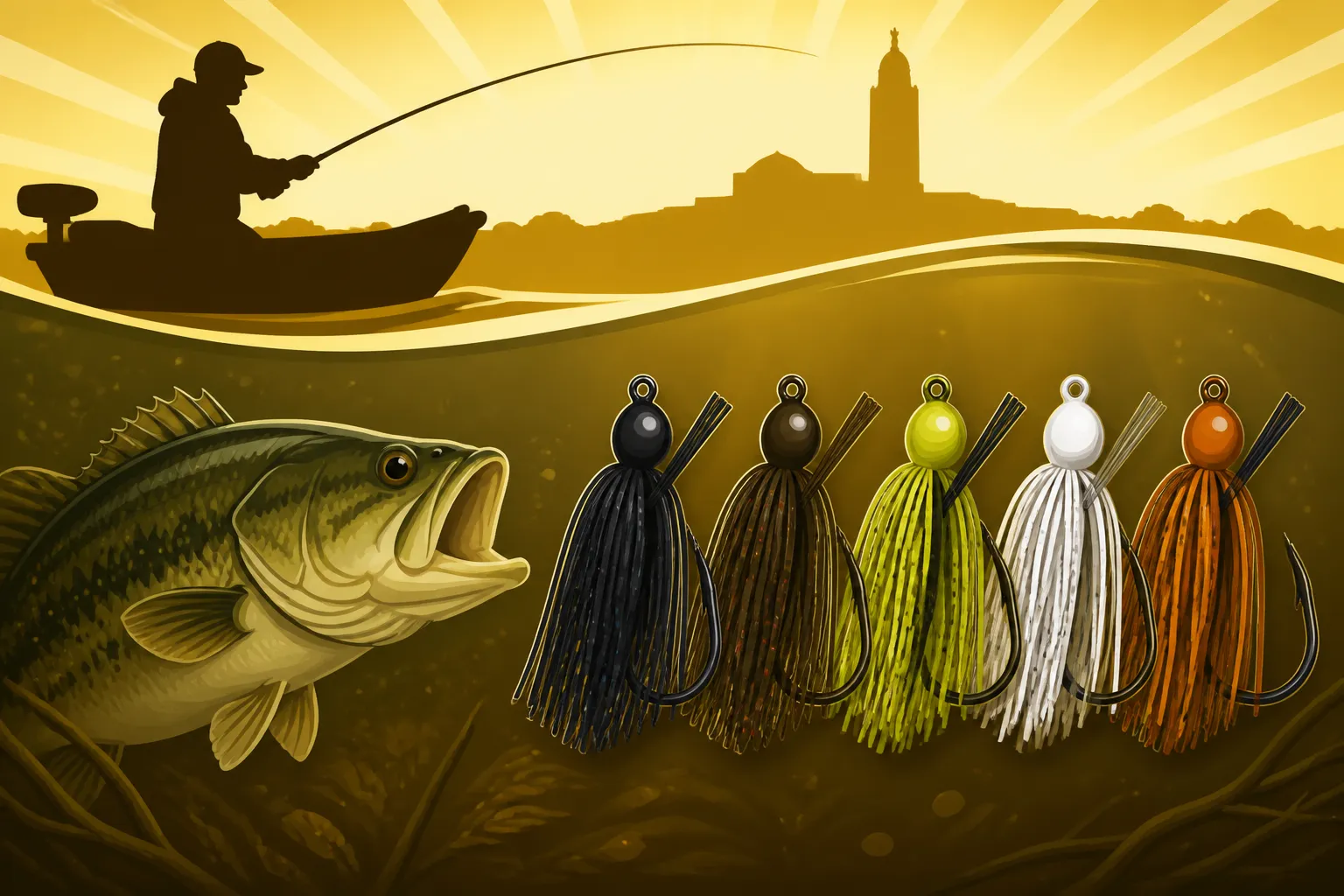
Best Jig Colors for Stained Water
There's nothing quite like the frustration of heading out to your favorite Nebraska fishing spot, only to find the water is murky, muddy, or otherwise stained. That beautiful clear water you envisioned is gone, and suddenly, you're left wondering if your usual go-to lures will even be visible. When the water gets cloudy, whether from heavy rains, spring runoff, or even just high winds stirring up the bottom, choosing the right jig color can make all the difference between a slow day and a successful outing. This guide will dive deep into understanding why certain jig colors excel in stained water and help you pick the best options to entice those Nebraska fish, no matter how cloudy the conditions get.
Understanding Stained Water and Its Impact on Jig Colors
Before we can pick the best jig colors, it's crucial to understand what "stained" water actually means and how it affects the underwater environment for fish and lures alike. It’s not just about visibility for us above the surface; it’s about how light behaves and how fish perceive their world when it's murky.
What Makes Water "Stained"?
"Stained water" is a broad term that covers a range of conditions where the water's clarity is reduced. It's not always just plain mud, though that's a common culprit.
- Turbidity from Sediment: This is probably what most anglers think of when they hear "stained water." Heavy rains can wash soil and silt into rivers and reservoirs, turning the water a soupy brown or tan. Strong winds can also stir up bottom sediments in shallower lakes or bays. This type of staining usually means a lot of suspended particles are blocking light. Places like the Platte River Fishing Guide often experience this after a good rain.
- Organic Staining (Tannins): Sometimes, water can appear tea-colored or dark brown, especially in areas with a lot of decaying vegetation, like swamps, oxbows, or certain sandpit lakes. This isn't mud; it's tannins leaching from leaves and wood. This organic stain still reduces light penetration but in a different way than sediment.
- Algae Blooms: Green-tinted water often comes from microscopic algae, which can sometimes be so dense it reduces visibility significantly. While it might not look "muddy," it's certainly stained and impacts how light travels through the water column. This can be a factor in many of Nebraska's larger reservoirs during warmer months.
How Light Penetrates Stained Water
The way light behaves in water is fascinating, and it's even more complex in stained conditions. When light hits water, some of it is reflected, some is absorbed, and some is scattered. In clear water, most colors of the light spectrum penetrate reasonably well. However, in stained water, especially highly turbid water, a lot of that light is scattered and absorbed by the suspended particles or organic compounds.
Generally, shorter wavelength colors (like blues and violets) are absorbed more quickly in water, even clear water. Longer wavelength colors (reds, oranges, yellows) penetrate further in clear conditions. However, in stained water, everything changes. Muddy water tends to absorb and scatter shorter wavelengths much more aggressively, leaving longer wavelengths with a slight advantage in terms of initial penetration. But even these are quickly diminished. What this means for your jig is that its natural color will quickly become distorted or invisible as it goes deeper or further from the fish's sightline.
The Science Behind Fish Vision in Low Light
Fish don't see the world exactly as we do. Many game fish, especially predators like walleye, bass, and catfish, have excellent low-light vision and are highly adapted to finding prey in less-than-perfect conditions. They rely not just on sight, but also on their lateral line system (to detect vibrations), sense of smell, and hearing.
In murky water, a fish's ability to discern specific colors is significantly reduced. Instead, they often perceive lures as shades of gray, or more importantly, as a silhouette against the available light. That's why contrast becomes absolutely critical. A jig that provides a strong silhouette or, conversely, emits a highly visible color that stands out against the dim backdrop, is going to have a much better chance of being noticed. Their eyes are designed to pick up movement and changes in light intensity, rather than subtle color variations, when clarity is low.
Top Jig Colors for Stained Water in Nebraska
When the water clarity drops in Nebraska, you need to turn to colors that either stand out boldly or create a strong profile. Forget the subtle, naturalistic hues for a bit; it's time to get aggressive with your color choices.
Bright and Bold: Chartreuse, Orange, and Pink
These are often the first colors anglers reach for when the water turns murky, and for good reason. They are highly visible and create a powerful presence in low-light conditions.
- Chartreuse: This neon yellow-green is a universal stained-water slayer. It stands out like a beacon because it reflects light incredibly well, making it visible even when there's very little light to work with. Many anglers swear by chartreuse jigs for species like walleye, crappie, and even bass in muddy water. Imagine trying to see a dark object in a dimly lit room versus a glow stick – that's the chartreuse advantage. It's especially effective in shallower, dirtier water where some sunlight can still penetrate and reflect off its bright pigment. You might find a great selection of chartreuse jigs at your local Bass Pro Shops or online at Amazon.
- Orange: Bright oranges, sometimes called "firetiger" when combined with other colors, are another fantastic choice. Orange has a longer wavelength than chartreuse and can often hold its color well in stained conditions. It's particularly effective for triggering strikes from walleye and sauger, especially in slightly deeper or tannin-stained water where a bold, warm color can still pop. Think of it as a distress signal that fish can't ignore.
- Pink: While less common than chartreuse or orange, hot pink can be a surprisingly effective color in certain stained water scenarios, especially for crappie and even trout in some of Nebraska's stocked ponds or tailwaters. It's an unnatural color that can sometimes trigger an aggressive reaction strike when other colors are ignored. The key here is its sheer contrast against the dull backdrop.
Dark and Silhouetting: Black and Junebug
It might seem counterintuitive to go dark in dark water, but these colors work by creating a strong silhouette against the slightly brighter surface light or the dim background.
- Black: When the water is really thick and muddy, or during very low-light conditions like dawn, dusk, or even night fishing, black jigs can be incredibly effective. Instead of reflecting light, black absorbs it, creating a distinct, unbroken silhouette that fish can easily detect with their superior low-light vision and lateral line. This solid profile is unambiguous. For species like channel catfish or flathead catfish that often feed in low visibility, a black jig dressed with a scented plastic or bait can be deadly. Nebraska Night Fishing Rules often see anglers using dark baits for this very reason.
- Junebug: This color is a deep, dark purple with blue or green flakes, and it's a legendary bass color in stained and murky waters, particularly in the southern US, but it absolutely works in Nebraska too. Junebug provides a dark silhouette similar to black, but the subtle flakes can offer just enough flash to catch a passing fish's eye without being overwhelming. It's like a dark shape with a hint of shimmer, which can be exactly what a cautious fish needs to commit.
Versatile Options: White and Glow
These colors offer different advantages in stained water and can sometimes outperform the more aggressive brights.
- White: A clean, crisp white can be a fantastic choice in a variety of stained water situations. Like chartreuse, white reflects a good amount of available light, making it quite visible. However, unlike chartreuse, it often appears as a more natural baitfish color, especially if the local baitfish (like gizzard shad or various minnows) have silvery or whitish flanks. It offers a good balance between visibility and a somewhat natural appearance. White jigs, especially paddle tail or curly tail varieties, are excellent for crappie, white bass, and wipers in Nebraska's reservoirs. White Bass Fishing in Nebraska often involves white baits.
- Glow: Jigs that actually glow in the dark are a secret weapon for extremely dark or deep stained water, and especially for ice fishing in murky conditions. These jigs emit their own light, creating a strong visual attractor that no other color can replicate. While their glow diminishes over time, a quick charge with a flashlight can refresh them. They can be incredibly effective for enticing a bite from a curious fish that might not otherwise see your presentation.
Factors Beyond Color: When to Adjust Your Approach
While jig color is a huge piece of the puzzle, it's not the only factor when fishing stained water. Fish rely on a whole suite of senses, and a smart angler leverages all of them.
Action and Profile
Even if a fish can't clearly see the color, it can definitely perceive the shape and movement of your lure.
- Size Matters: In murky water, bigger isn't always better, but it's often more noticeable. A slightly larger jig head or a bulkier soft plastic trailer can create a more substantial profile, making it easier for fish to home in on. Don't go overboard, but consider upsizing just a bit.
- Shape and Vibration: Some jig designs, like those with flat sides or specific types of soft plastic trailers (e.g., paddle tails, grub tails with aggressive actions), displace more water and create more vibration. These vibrations are picked up by a fish's lateral line, effectively guiding them to your lure even if they can't see it until the last moment. Think about a vibrating jig or a bladed jig; they're designed specifically to be felt.
- Trailer Selection: Adding a soft plastic trailer to your jig is almost always a good idea in stained water. Whether it's a curly tail grub, a minnow imitation, or a creature bait, the trailer adds bulk, movement, and often, additional scent. Colors that contrast with the jig head can also create a two-tone effect, further enhancing visibility and profile.
Scent and Sound
Since sight is compromised, appealing to a fish's other senses becomes paramount.
- Scent Attractants: Fish have an incredible sense of smell. In stained water, a strong, appealing scent can draw fish in from a distance, giving them a clear path to your jig. Many anglers liberally apply gel or spray attractants to their soft plastic trailers or even directly to bucktail jigs. Common scents include garlic, shad, crawfish, and anise. Products like those from companies found at Bass Pro Shops are designed specifically for this purpose.
- Rattles and Noises: The sound of a rattle or a jig hitting the bottom can also be a significant attractor in murky water. Some jig heads come with built-in rattles, or you can insert small glass or plastic rattles into soft plastic trailers. The sound travels through the water, alerting fish to your lure's presence and encouraging them to investigate. This can be especially effective for actively feeding fish that are relying on sound cues.
Presentation Matters
How you work your jig is just as important as its color in stained water.
- Slow Down: Fish in murky water often have less time to react and may be more hesitant. Slowing down your retrieve allows them more time to find and inspect your jig. A slow, deliberate retrieve with pauses can often be more productive than a fast, erratic one.
- Work Structure Closely: Fish often relate more tightly to cover and structure in stained water, using it for ambush points or as a break from current. Present your jig right up against weed lines, submerged timber, rock piles, or drop-offs. Being precise with your casts and letting your jig linger in these prime zones increases your chances dramatically. You might find fish tucked into structure even in familiar spots like Branched Oak Lake Fishing Guide.
- Increased Contact: Make sure your jig is making contact with the bottom, dragging, bouncing, or swimming just above it. Many species, like walleye and catfish, feed on or near the bottom, and the puff of silt or tap of the jig can mimic natural forage.
Matching Jig Colors to Nebraska's Stained Waters (Practical Scenarios)
Nebraska offers a diverse range of fishing environments, and each can present its own unique challenges when it comes to water clarity. Let's look at some common scenarios.
River Systems (Platte, Missouri, Niobrara)
Nebraska's rivers, particularly the Platte and Missouri, are often prone to turbidity, especially after rainfall or during spring runoff. The current can keep sediments suspended for extended periods.
- Platte River: When the Platte turns chocolate milk, vibrant chartreuse, bright orange, and black are your go-to colors for catfish. Catfish rely heavily on smell and touch, but a strong visual cue helps them pinpoint the bait. For those targeting walleye in the clearer stretches or during lower flow, firetiger can also be a good bet.
- Missouri River: The "Big Muddy" often lives up to its name. For species like walleye, sauger, and even white bass in the Missouri, you'll want those high-visibility colors like chartreuse, orange, and white. Black can be excellent for large channel and blue catfish, especially near deeper holes or wing dams. Don't forget to add plenty of scent and use jigs with rattles to cut through the current and murk. Remember, Missouri River Border Water Fishing License Rules might apply here.
- Niobrara River: While generally clearer than the Platte or Missouri, sections of the Niobrara can also become stained after heavy rains, particularly with fine silts or tannins. For smallmouth bass, a junebug or black jig with a subtle trailer can be very effective in these conditions. White jigs can also produce, especially if there's any baitfish activity.
Reservoir Inflows and Post-Rain Conditions (Lake McConaughy, Branched Oak)
Large reservoirs like Lake McConaughy, Branched Oak Lake, or Harlan County Reservoir can get stained quickly when tributaries dump muddy water into them, or when strong winds churn up the bottom.
- Inflow Areas: The areas where creeks and rivers flow into a reservoir are often the first to get muddy. Fish will often stage at the edges of this stained water, or even push into it if there's an abundance of food being washed in. Here, bright colors like chartreuse and orange are prime for walleye and crappie.
- Wind-Blown Banks: On windy days, the exposed shorelines of reservoirs can become very stained. Focus on white or chartreuse jigs that mimic baitfish struggling in the waves, or switch to dark colors like black if the turbidity is extremely high. Lake McConaughy Walleye Fishing can be very dependent on these conditions.
- Overall Murk: If an entire lake is stained, experiment. Start with chartreuse or white, but have black or junebug ready if those aren't getting hits. Sometimes, the fish prefer a bold contrast rather than a bright pop.
Urban Ponds and Farm Ponds
These smaller bodies of water can also get stained from runoff, leaf decay, or even just heavy recreational use.
- Farm Ponds: Often rich in organic matter, farm ponds can develop a greenish or tea-stained tint. For largemouth bass, junebug and black jigs can be deadly, especially when flipped into dense cover. White or chartreuse can also work for bluegill and smaller bass. How to Catch Largemouth Bass in Farm Ponds often involves patience and the right colors.
- Urban Ponds: These ponds are frequently stocked and can get murky from various factors. Chartreuse and white are excellent all-around choices for the panfish and bass often found there. Don't underestimate the power of a small glow jig if you're fishing in very low light. The Nebraska Urban Fishing Program Ponds can offer fantastic opportunities if you adjust to their unique conditions.
Here’s a quick guide to help you choose:
| Water Clarity | Primary Colors | Secondary Colors | Key Strategy | Species Examples |
|---|---|---|---|---|
| Lightly Stained/Greenish (Algae) | Chartreuse, White | Orange, Junebug | Focus on reflective colors and clear contrasts. | Crappie, Walleye, Bass |
| Moderately Muddy/Brownish (Sediment) | Chartreuse, Orange | Black, White | High visibility and strong silhouette. | Walleye, Catfish, Bass, White Bass |
| Heavily Stained/Chocolate Milk | Black, Glow | Chartreuse, Dark Purple | Strongest silhouette, self-emitting light. | Catfish, Walleye (low light), Bass |
| Tannin-Stained/Tea-Colored | Orange, Brown, Black | Chartreuse, Junebug | Deep, warm tones; strong silhouettes. | Walleye, Bass, Northern Pike |
| Dawn/Dusk/Night Fishing | Black, Glow | Chartreuse | Maximize contrast and internal light source. | Catfish, Walleye, Striped Bass |
Ultimately, fishing in stained water requires a bit of experimentation and a willingness to try different things. Start with the tried-and-true colors like chartreuse and black, but don't be afraid to experiment with orange, pink, white, or junebug, and always consider the factors of action, scent, and sound. The fish are still there; you just need to give them a reason to find your jig.
Disclaimer
This article is for general informational purposes only and does not constitute professional advice. Laws, prices and regulations vary by location and change over time. Consult a qualified professional for guidance on your specific situation.