Best Tackle Bag for a Kayak
If you've ever tried to cram a traditional tackle box into the limited, often wet, space of a kayak, you know the frustration. It slides around, takes up too much room, and leaves your precious lures and gear vulnerable to splashes, capsizing, and the relentless Nebraska sun. This guide is all about helping you navigate the unique challenges of kayak tackle storage and find the perfect tackle bag to keep your essentials organized, protected, and easily accessible while you're out on the water chasing those Nebraska lunkers.
Why Kayak Tackle Storage is Different and Difficult
Kayak fishing has exploded in popularity, and for good reason! It offers unparalleled access to shallow waters, quiet stealth, and a fantastic workout. But with all these perks come some unique challenges, especially when it comes to managing your gear. What works for a bass boat or even shore fishing simply won't cut it in a kayak.
The Kayak's Unique Constraints: Space and Stability
One of the first things you notice about a kayak is how intimate the space is. You're often dealing with a narrow hull, limited deck space, and a seated position that makes reaching for things a whole different ballgame. A bulky, hard-sided tackle box that might be perfectly fine in a larger boat suddenly becomes an unwieldy obstacle, constantly knocking against your knees or taking up valuable legroom. You need gear that's streamlined and compact, designed to fit into the nooks and crannies of your specific kayak, whether it's a sit-on-top with a large tank well or a sit-in with limited cockpit space.
Beyond just space, stability is a huge factor. Anything that adds height or shifts weight unexpectedly can compromise your balance, especially in choppy water or when you're fighting a strong fish. A tall tackle box can act like a sail in the wind, making paddling more difficult, or worse, making you feel unstable. Kayak tackle solutions are engineered to keep weight low and centered, often integrating with the kayak's existing features like bungee cords or scupper holes, to maintain your equilibrium and keep you safely upright.
Exposure to the Elements: Water, Sun, and Grime
Let's face it: fishing from a kayak means you're going to get wet. There are paddle drips, splashes from landing a fish, unexpected waves, and the ever-present threat of a capsize. Traditional tackle boxes, unless specifically designed for marine environments, often aren't truly waterproof. Water seeping in can rust hooks, ruin soft plastics, and damage expensive electronics like a fish finder battery pack or your phone. The sun is another silent enemy, baking your lures and degrading plastic components over time.
Then there's the grime. Muddy banks, fish slime, bait residue, and sand all find their way into every crevice. A good kayak tackle bag needs to be made from materials that are not only water-resistant or waterproof but also easy to clean. You want something that can be rinsed off at the end of the day without trapping all the day's muck and smell inside, keeping your gear fresh and ready for your next adventure on the Platte River or Lake McConaughy.
Accessibility While Seated
Picture this: you've just spotted a school of white bass boiling on the surface at Branched Oak Lake. You need to quickly switch from a jig to a topwater lure. If your tackle is buried in a hard-to-reach compartment or requires you to twist into an awkward position, you're going to miss that bite. Kayak anglers need immediate, one-handed access to their most frequently used items.
This means considering where the bag sits, how it opens, and how easily you can see and grab what you need. A bag that you have to completely unlatch, flip open, and rummage through isn't practical. Many specialized kayak tackle bags feature top-loading designs, clear pockets, or modular systems that allow you to grab a specific lure or tool with minimal fuss, all while maintaining control of your paddle or rod. How to Fish From a Kayak in Nebraska touches on this aspect of practical access during a fishing trip.
Key Features to Look for in a Kayak Tackle Bag
When you're trying to pick out the perfect tackle bag for your kayak, it's easy to get overwhelmed by all the options out there. But by focusing on a few key features, you can narrow down the choices and find something that truly enhances your time on the water. Think about what matters most for your specific fishing style and the conditions you often face in Nebraska.
Material and Waterproofing: Keeping Your Gear Dry
This is arguably the most critical feature for any kayak tackle bag. You simply cannot afford to have your hooks rusting or your electronics getting soaked. Look for bags made from robust, water-resistant materials like heavy-duty PVC or coated nylon. These materials offer a good first line of defense against splashes and rain. However, for true waterproof protection, you'll want to seek out bags with specific features:
- Welded Seams: Instead of stitched seams, which can allow water to seep through needle holes, welded seams create a solid, impenetrable barrier.
- Roll-Top Closures: Similar to dry bags, a roll-top closure involves rolling the top of the bag down multiple times and then securing it with buckles. This creates an excellent seal against water intrusion.
- Water-Resistant or Waterproof Zippers: Even the best fabric is useless if the zipper lets water in. Look for "splash-proof" or "water-resistant" zippers for good protection against splashes. For full immersion protection, you'll need "waterproof" zippers, which are often sealed and can be a bit stiffer to operate.
Remember, there's a difference between "water-resistant" and "waterproof." Water-resistant will handle splashes and light rain, but it won't survive a dunk in the lake. Waterproof will protect your gear even if the bag goes fully submerged. Your choice depends on how much risk you're willing to take with your gear. Brands found on Amazon often clearly label these distinctions in their product descriptions, making it easier to compare.
Organization and Capacity: Smart Storage Solutions
A tackle bag isn't just about protection; it's about organization. You need to be able to find what you need quickly and efficiently. Consider these organizational aspects:
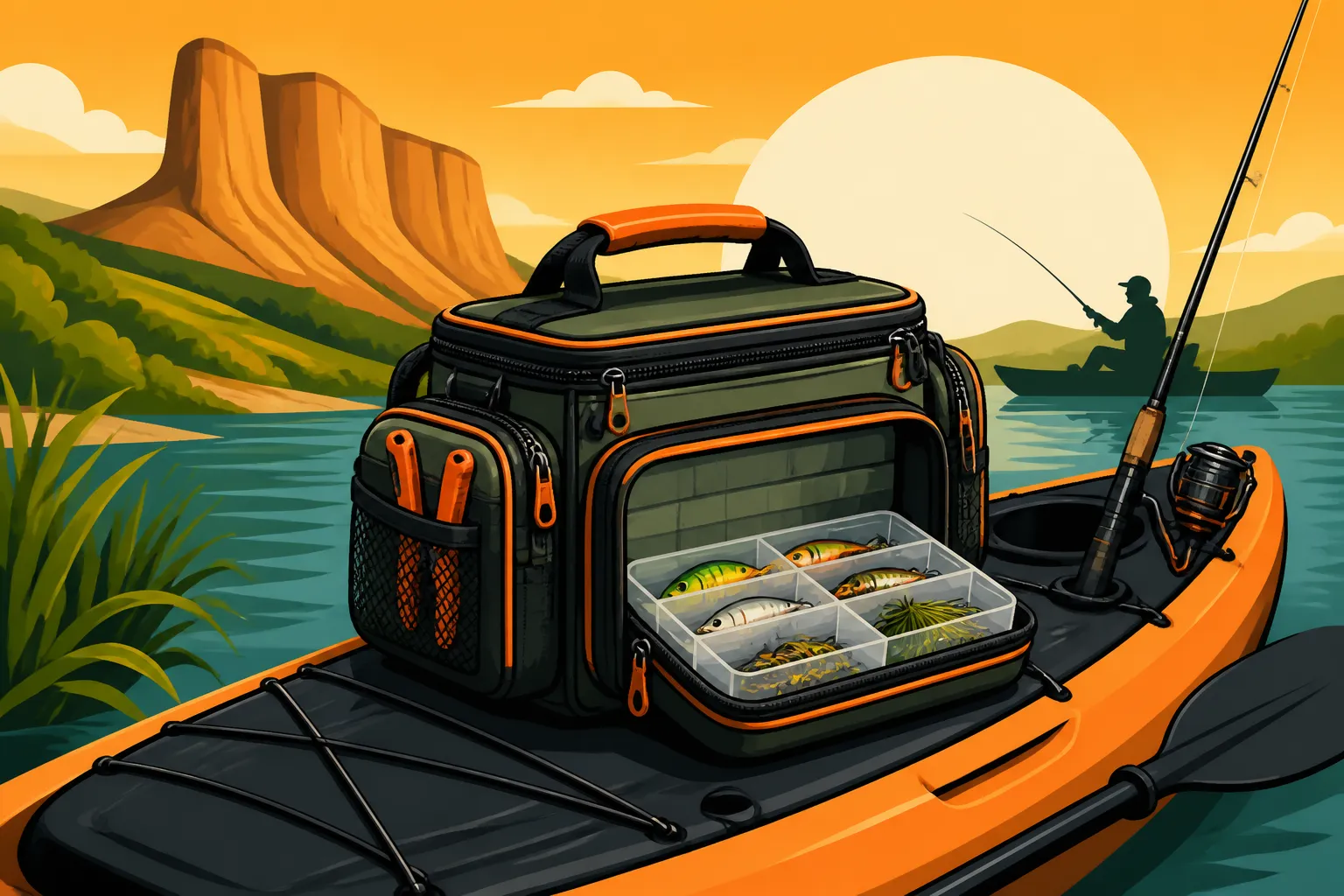
- Internal Dividers and Trays: Many kayak tackle bags come with modular compartments or include plastic utility boxes (like those from Plano or Flambeau) that fit perfectly inside. These keep your lures, hooks, and weights separated and tangle-free. Clear plastic boxes are particularly helpful as you can see their contents at a glance.
- External Pockets: Pockets on the outside of the bag are great for items you need frequently or that might get wet anyway, like pliers, line cutters, or a small measuring tape. Make sure these pockets have drainage or are also water-resistant.
- D-Rings and Attachment Points: These are invaluable for clipping on tools, adding a leash to prevent loss, or securing the bag itself to your kayak's bungee system. The more versatile the attachment points, the better.
- Adequate Space: While you want compact, you also need enough space for the gear you actually use. Don't go so minimalist that you're leaving essential tackle behind. Think about the species you're targeting – Best Bait for Nebraska Walleye or Best Bait for Nebraska Catfish will inform the size and type of tackle you'll carry, which in turn influences bag capacity.
Portability and Attachment Options: Staying Secure
A kayak tackle bag needs to be easy to transport to and from your launch point, and it absolutely must stay put once you're on the water.
- Handles and Shoulder Straps: Padded handles and adjustable shoulder straps make carrying your gear from your vehicle to the water's edge much more comfortable, especially if you have a bit of a hike.
- Secure Attachment Systems: Look for bags with integrated clips, straps, or loops that can be securely fastened to your kayak's deck, tank well, or seat. Some bags are designed to fit perfectly into specific kayak models or even sit directly behind the seat, providing a stable platform.
- Low Profile Design: As mentioned, tall, bulky bags can impact stability. Opt for bags that are designed to be low to the deck, keeping your center of gravity where it should be.
Types of Kayak Tackle Bags to Consider
The world of kayak tackle storage is surprisingly diverse, offering solutions for every type of angler and every kind of kayak. From flexible soft-sided options to rugged hard cases, understanding the main categories can help you choose the best fit for your adventures.
Soft-Sided Tackle Bags: Versatility and Lightness
Soft-sided tackle bags are a perennial favorite among many anglers, and for good reason. They offer a fantastic balance of portability, organizational features, and adaptability. Many are designed to mimic smaller backpacks or duffel bags, but with specific angling features built in.
- Pros: They're often lighter than hard cases, making them easier to carry. Their flexible nature means they can sometimes be squeezed into tighter spaces, or they can collapse somewhat when not completely full, which is a bonus in limited kayak space. They typically feature multiple external pockets, D-rings, and often come with several utility boxes for internal organization. You'll find a huge array of options from brands carried by retailers like Bass Pro Shops, offering various sizes and levels of water resistance.
- Cons: While many are highly water-resistant, few are truly 100% waterproof for full immersion unless they feature advanced roll-top or specialized zipper closures. They can also be less protective against crushing impacts compared to hard cases.
- Ideal for: Anglers who value versatility, need to carry a moderate amount of gear, and prioritize ease of transport. They're great for general-purpose fishing on calmer waters like smaller lakes or slow-moving rivers. If you're targeting bass with various lures or chasing crappie at Pawnee Lake, a soft-sided bag might be just what you need.
Hard Cases and Dry Boxes: Maximum Protection
When absolute protection is your top priority, hard cases and dry boxes are the way to go. These are essentially miniature, ruggedized vaults for your gear.
- Pros: They offer superior protection against impacts, crushing, and, critically, water. Many are designed to be completely submersible and float if dropped, a huge peace of mind feature for kayak anglers. The rigid structure means delicate items or electronics are well-protected. They often feature robust latches and O-ring seals for a watertight closure.
- Cons: They can be heavier and bulkier than soft-sided bags, and their rigid shape means they might not fit into all kayak storage areas as easily. They typically offer less external organization, with most storage being internal.
- Ideal for: Anglers who carry expensive electronics (like a handheld GPS or a backup phone), sensitive tackle, or simply want the ultimate peace of mind against water damage or accidental drops. If you're heading out for Merritt Reservoir Walleye Fishing where conditions can change quickly or planning a trip on the Missouri River where a mishap could mean losing gear to strong currents, a hard case is an excellent choice.
Specialized Kayak Fishing Crates and Systems
Many kayak anglers start with a simple milk crate in their tank well – and for good reason! It’s a cheap, effective way to organize gear. However, the market has evolved, and now there are highly specialized kayak fishing crate systems that build upon that concept.
- Pros: These systems are designed to fit perfectly into a kayak's tank well, providing a stable, low-profile storage solution. They often feature rod holders, tool holders, and modular attachments that allow for extensive customization. Many come with internal dividers or integrated soft-sided bags that fit within the crate, offering a hybrid of organization and protection. They keep gear easily accessible right behind your seat.
- Cons: Can be bulkier than a standalone soft-sided bag, and the open-top nature means items within are exposed to the elements unless paired with a waterproof inner bag or lid. Cost can vary greatly depending on the features and brand.
- Ideal for: Anglers who want a highly organized, customizable, and integrated storage system for their kayak's stern. These are fantastic for those long days on large reservoirs like Harlan County where you might carry multiple rods and a lot of tackle, giving you a full fishing workstation within reach. Many popular fishing brands offer their own versions of these systems, often available through retailers like Bass Pro Shops or online platforms like Amazon.
Choosing the Right Bag for Your Nebraska Kayak Fishing Adventures
Alright, so you understand the unique challenges and the types of bags available. Now it's time to zero in on what truly works for you and your specific Nebraska fishing escapades. This isn't a one-size-fits-all decision; it's about matching your gear to your habits and ambitions on the water.
Matching Your Fishing Style and Species
Think about how you typically fish and what you're usually targeting. Are you a minimalist, bringing only a handful of lures for a quick hour of Fremont Lakes Bass Fishing in the Old Sand Pits? Or are you an all-day warrior on Lake McConaughy, needing a wide array of jigs, crankbaits, and soft plastics for walleye, wipers, and even catfish?
- Minimalist Angler: If you only carry a few essential items, a smaller, compact soft-sided bag or a dedicated dry box for a few trays might be perfect. You prioritize quick access and less clutter.
- Multi-Species Angler: If you like to be prepared for anything, a larger soft-sided bag with multiple utility boxes, or a full-blown crate system with various compartments, will be more suitable. This allows you to organize different bait types and tools for specific species like Nebraska Channel Catfish Fishing or Largemouth Bass Fishing in Nebraska.
- Fly Fishing from a Kayak: For fly anglers, waterproof protection is paramount for fly boxes and leaders. A small, fully waterproof dry box or a specialized waterproof sling pack might be the best bet, keeping your delicate flies safe from splashes.
Your chosen fishing technique also plays a role. If you're constantly changing lures, you need easy access. If you're trolling, you might have more time to rummage, but stability remains key.
Considering Your Kayak Type and Layout
Your kayak itself dictates a lot about your tackle storage options. Not all bags fit all boats, so measure your available space before committing to a purchase.
- Sit-on-Top Kayaks: These often have large "tank wells" in the stern, perfect for accommodating a fishing crate system or a large soft-sided bag secured with bungee cords. They also frequently have deck space forward of the seat, suitable for smaller bags or dry boxes that can be tethered down.
- Sit-in Kayaks: Storage is generally more limited here. You might be looking at smaller bags that fit between your legs, under the deck rigging, or in bow/stern hatches if they are accessible. Waterproof dry bags or smaller, low-profile soft bags are often preferred. Some sit-ins have small scupper holes that can be used for securing items.
- Pedal Drive Kayaks: These often have dedicated areas for gear, sometimes integrated into the hull or designed to sit forward of the seat, leaving the stern open for a crate system. The important thing is to ensure your chosen bag doesn't interfere with your pedal drive's operation or removal.
Always consider how the bag will attach and if it will impede your paddling, pedaling, or access to other essential kayak features. A bag that shifts and slides around is not only annoying but potentially dangerous.
Budget and Durability: An Investment in Your Fun
Like any piece of fishing gear, kayak tackle bags come in a wide range of price points. It's easy to get caught up in wanting the "best," but sometimes the "best for you" is a more budget-friendly option that still gets the job done.
- Entry-Level Options: You can start with a basic soft-sided bag or even a modified milk crate with some DIY additions. These are excellent for beginners or those who only go out occasionally.
- Mid-Range Options: As you fish more, you might want to upgrade to a more purpose-built soft-sided kayak tackle bag with better waterproofing and organization. These offer a great balance of features and value.
- High-End Options: For serious anglers who demand the utmost in protection, organization, and durability, investing in a premium waterproof hard case or a feature-rich modular crate system is worth it. These are built to last through years of abuse and keep your most valuable gear safe.
Think of your tackle bag as an investment in your fishing experience. A durable, well-designed bag will protect your other investments (rods, reels, lures) and prevent frustration on the water, allowing you to focus on the joy of catching fish. Beginner Fishing Gear Guide for Nebraska can provide more insights into starting your fishing journey with the right foundation.
| Tackle Bag Type | Primary Benefit | Water Protection Level | Best For | Considerations |
|---|---|---|---|---|
| Soft-Sided Bags | Versatility, Organization | Good (Splash-resistant) | Moderate gear, calm waters, easy transport | Can be bulky when full, typically not fully submersible. |
| Hard Cases/Dry Boxes | Maximum Protection, Durability | Excellent (Waterproof) | Expensive gear, electronics, rough conditions | Heavier, less flexible, may take up more space, limited external organization. |
| Crate Systems | Customization, Rod Holders | Varies (Open-top) | Integrated kayak storage, multiple rods | May require additional dry bags for true waterproofness, can be bulky for transport. |
Disclaimer
This article is for general informational purposes only and does not constitute professional advice. Laws, prices and regulations vary by location and change over time. Consult a qualified professional for guidance on your specific situation.