Nebraska Ice Fishing Gear Setup
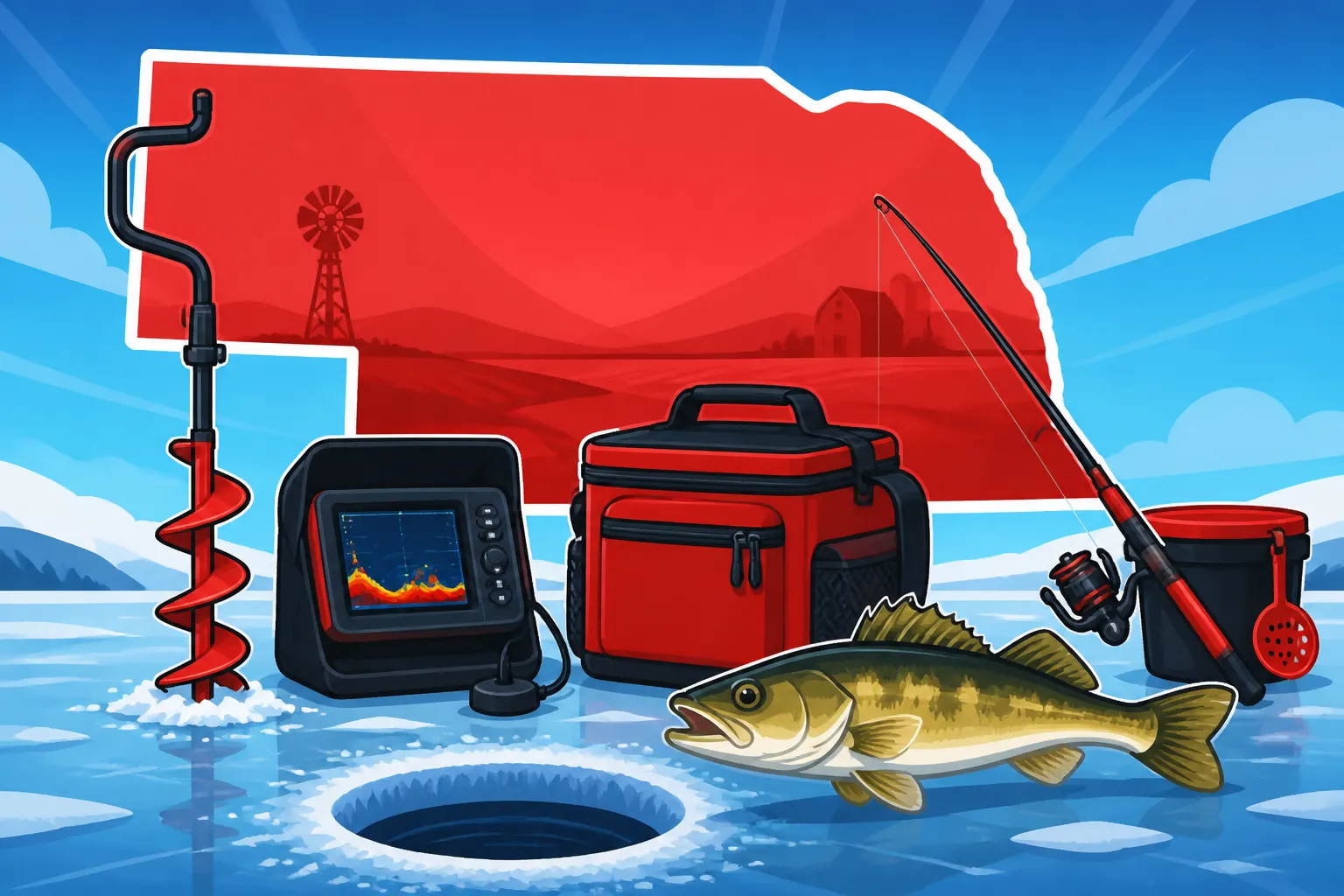
Stepping out onto the frozen expanses of a Nebraska lake for the first time can feel like a leap into the unknown. The sheer amount of specialized gear needed for ice fishing can be overwhelming, making it tough to know where to start or what's truly essential. This comprehensive guide will cut through the noise, breaking down all the vital components of a successful and safe Nebraska ice fishing gear setup, ensuring you're ready to tackle the hard water with confidence.
The Foundation: Shelter and Warmth on the Ice
When you're out on the ice in Nebraska, Mother Nature can be incredibly unforgiving. One minute it's calm, the next a biting wind rolls in, or a snow flurry descends. Having the right shelter isn't just about comfort; it's about extending your time on the ice and staying safe, especially on larger, exposed bodies of water like Lake McConaughy or Harlan County Reservoir.
Ice Fishing Shelters: Pop-ups vs. Hubs vs. Shacks
Choosing an ice fishing shelter really comes down to how you plan to fish and how much gear you want to haul. The most common types you'll see dotting the frozen landscape are portable pop-up shelters (also known as flip-overs), hub-style shelters, and the more permanent, skid-mounted shacks. Each has its own set of advantages and disadvantages.
Pop-up shelters are often preferred by anglers who like to stay mobile. They typically consist of a base that serves as a sled for hauling your gear, with a fabric tent that flips over to enclose you. Brands like Clam and Eskimo are well-known for their robust designs. They set up incredibly fast, often in a matter of seconds, and offer excellent protection from wind and snow. The main downside is that while they are portable, they can be a bit heavy to pull if you're venturing far from your vehicle, especially with all your other gear tucked inside. For a solo angler or a pair, a one or two-person flip-over provides an excellent balance of mobility and warmth.
Hub-style shelters are more like traditional tents, with flexible poles that create a large, enclosed space. These are fantastic for groups or families, offering more interior room for multiple anglers, heaters, and gear. They are surprisingly light for their size when packed down, making them easier to carry if you're walking out a good distance. However, they take a little longer to set up than a flip-over, requiring you to extend the hubs and anchor the shelter, which can be a bit of a wrestle in high winds. Many Nebraska anglers appreciate the spaciousness a four to six-person hub shelter provides when planning a longer outing on a lake like Branched Oak.
Permanent or semi-permanent shacks are a different beast entirely. These are often custom-built, wood or aluminum structures mounted on skis, meant to be towed out onto the ice and left for an extended period, sometimes for the entire season. They offer the most comfort, often equipped with wood stoves, bunks, and even small kitchens. However, they require a substantial vehicle to move, often an ATV or snowmobile, and are subject to specific regulations about leaving structures on the ice. These are less common for casual outings but are the dream setup for dedicated hardwater enthusiasts who spend weeks on end targeting species like walleye or northern pike.
Layering Up for Nebraska's Winter Weather
Staying warm is non-negotiable for a safe and enjoyable ice fishing experience in Nebraska. The cold can creep in, especially when you're sitting relatively still for hours, and hypothermia is a serious risk. The key to warmth is proper layering. Don't just throw on your heaviest coat; think in terms of multiple, breathable layers that you can add or remove as conditions change. You can find many excellent layering options on Amazon, making it easy to prepare for variable weather.
Start with a base layer, which is crucial for wicking moisture away from your skin. Synthetic materials like polyester or merino wool are ideal here, as cotton will absorb sweat and make you colder. Next comes your mid-layers, which provide insulation. Fleece jackets, wool sweaters, or down vests work wonderfully. You might wear one or two mid-layers depending on how cold it is and how active you plan to be.
Finally, your outer layer needs to be windproof and waterproof. A quality ice fishing suit, often a two-piece jacket and bib ensemble, is worth every penny. Many modern ice suits come with built-in flotation, adding a crucial layer of safety in case of an unexpected plunge through the ice. Brands like Striker Ice and Eskimo make excellent suits that are not only incredibly warm but also designed with features like reinforced knees, numerous pockets, and hand-warming capabilities. Don't forget a warm hat that covers your ears, insulated gloves or mittens, and waterproof, insulated boots – your extremities are the first to get cold! For more in-depth advice on keeping warm, check out our guide on What to Wear Ice Fishing in Nebraska.
Making Holes: Augers and Their Power
You can have the best rod, the fanciest fish finder, and the coziest shelter, but without a hole in the ice, you're just sitting on a cold bucket. The auger is your essential tool for accessing the water below, and choosing the right one depends on ice thickness, your physical strength, and your budget.
Hand Augers: Simple and Affordable
Hand augers are the classic choice for a reason: they're simple, reliable, and require no fuel or batteries. They consist of a handle, a shaft, and sharp blades at the bottom. To use one, you simply twist the handle, letting the blades cut through the ice. For occasional anglers, those on a tight budget, or folks who primarily fish early in the season when the ice isn't super thick, a hand auger is a fantastic option.
They are relatively lightweight and easy to transport, making them great for walking out to remote spots on smaller lakes or ponds. The main drawback, as you might guess, is the physical exertion required. Cutting through 18 inches of ice can be a real workout, especially if you plan to drill multiple holes or if you're not in peak physical condition. However, for targeting panfish in shallower waters, or when you only need a few holes, a good quality 6 or 8-inch hand auger can easily get the job done. Make sure the blades are always sharp and carry a spare set if you can.
Power Augers: Gas, Propane, and Electric
For serious ice anglers, those targeting larger species like walleye or pike, or anyone who wants to drill many holes quickly and with minimal effort, a power auger is a game-changer. These come in three main varieties: gas, propane, and electric. Each has its own set of pros and cons.
Gas augers have been the workhorse of ice fishing for decades. They offer immense power and can chew through even the thickest Nebraska ice with ease. Their main advantage is raw power and the ability to drill dozens of holes on a single tank of fuel. The downsides include their weight, the noise and fumes they produce, and the maintenance associated with small gas engines (mixing fuel, spark plugs, carburetors, etc.). They're also not ideal for use inside a small shelter due to the exhaust. However, for sheer power and endurance, they're hard to beat for punching through heavy ice on big reservoirs.
Propane augers emerged as a cleaner, quieter alternative to gas. They use small, readily available propane canisters (like those used for camping stoves) as fuel. This eliminates the need for mixing oil and gas, and they produce far fewer fumes, making them somewhat more acceptable for drilling a quick hole inside a large, well-ventilated shelter. They are generally lighter than gas models but still pack a good punch. The main consideration is ensuring you have enough propane canisters for your trip, especially if you plan an extended outing or will be drilling many holes in thick ice.
Electric augers are the newest and increasingly popular kid on the block. Powered by rechargeable lithium-ion batteries, they are incredibly quiet, produce no fumes, and are surprisingly powerful. They're lighter than most gas or propane models and require almost no maintenance. For many anglers, the silence is a huge benefit, allowing for stealthy approaches to fish. The main limitations are battery life and performance in extreme cold. While modern batteries are much improved, carrying a spare battery (or two) is essential, especially on long, cold days. Despite this, the convenience and environmental benefits make electric augers like those from Strikemaster and Ion a top choice for many. For more details, our Best Ice Fishing Auger for Thick Nebraska Ice guide can help you pick the perfect model.
Choosing the Right Auger Size
The size of your auger, specifically the diameter of the hole it cuts, is an important decision influenced by the type of fish you're targeting. Common sizes range from 4 inches to 10 inches.
A 4- to 6-inch auger is perfect for panfish like bluegill, crappie, and perch. These smaller holes are easier and faster to drill, regardless of auger type, and are more than adequate for landing these smaller species. If you're primarily focused on fast-paced panfishing or frequently moving spots, a smaller auger is your friend.
An 8-inch auger is arguably the most versatile size for Nebraska anglers. It's large enough to comfortably land most walleye, bass, and even smaller northern pike. It still drills relatively quickly, especially with a power auger, and offers a good balance between effort and fish-landing capability. If you're unsure what size to get, an 8-inch is often a safe bet for a wide range of species.
A 10-inch auger is reserved for those seriously targeting trophy-sized fish, such as large northern pike or bigger catfish that might be wintering in deeper holes. While a 10-inch hole gives you plenty of room to maneuver a big fish, it requires significantly more power and effort to drill, even with a robust power auger. You'll also lose heat faster through a larger hole in your shelter. Unless you're specifically pursuing monsters, an 8-inch auger is usually sufficient and more practical for general ice fishing.
Rods, Reels, and Line: Specialized for the Ice
Ice fishing isn't just open-water fishing shrunk down. The specific challenges of fishing through a small hole require specialized tackle that wouldn't perform as well in warmer months.
Ice Fishing Rods: Length, Action, and Power
Ice fishing rods are typically much shorter than open-water rods, ranging from about 24 to 36 inches. This short length is practical for fishing inside a confined shelter and allows for quick, precise jigging movements over a small hole. The action and power of the rod are crucial.
Rod action refers to where the rod bends. Fast action rods bend mostly at the tip, offering excellent sensitivity for detecting light bites, which is common in cold water. Moderate or slower action rods bend more towards the middle, providing a parabolic bend that can be helpful for fighting larger fish on light lines. For panfish, a super-sensitive, light-action rod with a spring bobber integrated into the tip is often preferred. This almost acts like a visual bite indicator, showing the slightest tap.
Rod power refers to the rod's backbone or stiffness. Ultra-light power rods are perfect for delicate presentations and tiny jigs for crappie, perch, and bluegill. Light power rods offer a bit more backbone for slightly larger panfish or small walleye. Medium power rods are great all-around choices for walleye and bass, allowing you to use heavier jigs and absorb the shock of a larger fish's run. Heavy power rods are for monster northern pike or lake trout, providing the necessary strength to muscle big fish out of the hole. Brands like St. Croix and Fenwick offer excellent purpose-built ice fishing rods for various species.
Ice Fishing Reels: Spinning and Inline
Just like rods, reels are also specialized for ice fishing, though you'll find some familiar designs. The two main types are spinning reels and inline reels.
Spinning reels are the most common and versatile choice, especially for beginners. A small, lightweight spinning reel (500-1000 series) paired with an ultra-light or light action ice rod is perfect for panfish. For walleye or bass, a 1000-2000 series reel on a medium power rod works well. The open-face design allows for easy casting (though you're usually just dropping bait down a hole) and smooth line retrieval. They are generally easy to use and maintain. Look for models with a smooth drag system, as even small fish can put up a surprisingly good fight on light line in the cold.
Inline reels are a bit more specialized and have gained popularity in recent years, particularly for panfishing. Unlike spinning reels, the line comes straight off the spool, directly in line with the rod. This design virtually eliminates line twist, which is a common nuisance with tiny jigs and light lines when repeatedly dropping them down a hole. Many inline reels also feature a "free spool" button, allowing for extremely fast drops to get your bait back down to a biting fish quickly. While they take a little getting used to, the reduced line twist and quick drop capabilities make them a favorite among serious panfish anglers.
Best Fishing Line for Nebraska Ice
The choice of fishing line is critical for ice fishing, as water temperatures are low, and fish bites can be extremely subtle. You need line that's sensitive, has low memory in the cold, and is strong enough for the targeted species.
Monofilament line is a classic choice, particularly for panfish. It's affordable, has some stretch (which can be a shock absorber on light rods), and is relatively easy to handle. However, in freezing temperatures, some mono lines can become stiff and develop excessive memory, leading to frustrating coils off the reel. Look for "cold weather" or "ice fishing" specific monofilament lines that are designed to remain limber. Typically, 2-4 pound test is ideal for panfish, while 6-8 pound test works for walleye and bass.
Fluorocarbon line is a fantastic option for ice fishing, especially as a leader. It's nearly invisible underwater, which is a huge advantage in clear ice conditions, and has very low stretch, increasing sensitivity. It also has excellent abrasion resistance. Many anglers will spool their reels with braided line and then tie on a 2-4 foot fluorocarbon leader. When used as a main line, fluorocarbon sinks faster than mono, which can be an advantage for getting small jigs down quickly.
Braided line offers incredible sensitivity and strength-to-diameter ratio, meaning you can use very thin line for high breaking strength. The zero-stretch characteristic of braid transmits even the slightest bite directly to your hand. However, braid can absorb water and freeze, making it stiff and prone to collecting ice on the reel. This is where the fluorocarbon leader comes in, providing invisibility and preventing ice build-up on the main line. Many anglers use 4-10 pound test braided mainline with a fluorocarbon leader for walleye and larger fish. It's often recommended to use a permanent marker to color the last few feet of braid black or brown to make it less visible to fish, or simply rely on a longer leader.
Seeing Beneath the Ice: Electronics
The days of simply dropping a line and hoping for the best are largely over, thanks to modern ice fishing electronics. These tools give you a crucial advantage by showing you fish, bait, and even your lure in real-time beneath the ice.
Flashers, Sonars, and Live Imaging
Electronics are arguably the biggest game-changer for ice anglers, allowing you to instantly assess the activity beneath your hole. There are three main types: flashers, traditional sonars (fish finders), and cutting-edge live imaging units.
Flashers are traditional ice fishing sonars that display information in a circular, real-time graph. They use different colored lights to show the bottom, your lure, and any fish swimming by. They are incredibly simple, robust, and excel at showing instant feedback. You can see your jig descending, how fish react to it, and when a fish is approaching or moving away. Popular brands like Vexilar, Marcum, and Humminbird (with their Ice Helix series) dominate this market. Flashers are often favored for their bulletproof reliability, ease of use in cold temperatures, and the lightning-fast, real-time display that’s perfect for active jigging. They are excellent for understanding fish behavior and adjusting your presentation on the fly, whether you’re targeting crappie or trying to coax a stubborn walleye to bite.
Traditional sonars, like those you might use in open water, have also been adapted for ice fishing. These units typically feature a liquid crystal display (LCD) screen that shows a historical graph of what's beneath the transducer. While they don't have the same real-time immediacy as a flasher, they offer more detailed mapping capabilities, often showing contours and structure. Many include GPS, allowing you to mark hot spots and navigate back to them. The Humminbird Ice Helix series, for example, combines traditional sonar with flasher views, offering the best of both worlds. They also often come with built-in mapping, which can be invaluable on larger lakes like Lewis and Clark Lake. For a portable option, look into the Best Portable Fish Finder for Ice Fishing.
Live imaging sonars are the latest frontier in ice fishing technology, offering a truly revolutionary view. Units like Garmin LiveScope, Lowrance ActiveTarget, and Humminbird Mega Live provide a real-time, video-like display of the underwater world. You can see fish swimming, your lure's precise movement, and even how fish react to other anglers' baits, all in incredible detail. These systems allow you to detect fish far outside your immediate hole, often up to 50-100 feet away, and actively cast or move to intercept them. While significantly more expensive and requiring more power, live imaging drastically increases your efficiency and understanding of fish behavior, turning ice fishing into a dynamic hunting experience. It's certainly a major investment, but one that many serious anglers find pays for itself in increased catch rates.
Underwater Cameras for a Visual Edge
While sonars and flashers show you "blips" on a screen, an underwater camera gives you a direct visual of what's happening beneath the ice. This can be an incredibly educational and often thrilling tool, especially when fish are finicky.
Cameras allow you to see the exact species of fish, their size, how they're reacting to your bait, and even details of the bottom structure that electronics might miss. This visual confirmation is priceless when trying to dial in your presentation. You might see a walleye approach your lure, sniff it, and turn away, giving you clues to change your jigging style or bait. They are particularly effective in clear water bodies, which many Nebraska lakes offer during winter.
However, cameras do have limitations. Their visibility is highly dependent on water clarity and available light. In murky water or deep, dark conditions, their utility decreases significantly. They also tend to spook some fish, especially those that are shy. Despite this, for sheer entertainment and educational value, an underwater camera can be a fun addition to your gear, especially for family outings or teaching kids about what fish actually look like and how they behave in their natural environment. Many models, such as those from Aqua-Vu, are designed specifically for ice fishing, offering durable, cold-resistant components.
Essential Tackle and Baits
Having the right gear to get to the fish is one thing; having the right gear to catch them is another. Ice fishing tackle is often smaller and more specialized than open-water gear, designed for subtle presentations and enticing lethargic, cold-water fish.
Jigs and Lures for Nebraska Panfish and Walleye
The world of ice fishing jigs and lures is vast, but a few staples will cover most of your Nebraska fishing adventures, whether you're after panfish or a trophy walleye.
For panfish like crappie, bluegill, and perch, small jigs are the name of the game. Teardrop jigs, often tipped with a tiny plastic grub, wax worm, or a maggot, are incredibly effective. Tungsten jigs have become very popular because their density allows them to be smaller than lead jigs of the same weight, meaning a tiny profile still gets down to depth quickly. Spoon jigs in sizes from 1/32 to 1/8 ounce are also great, especially when jigged aggressively to attract fish from a distance. Colors vary, but always have a mix of natural colors (black, brown, white) and bright, attractor colors (chartreuse, orange, pink). Perch patterns are often a safe bet on many Nebraska lakes.
Walleye and sauger require slightly larger presentations. Jigging spoons in sizes from 1/8 to 1/2 ounce are highly effective, especially when fished aggressively. Colors like silver, gold, perch, and firetiger are popular. Brands like Northland Tackle and Lindy offer excellent ice fishing spoons. For a more subtle approach, a small leadhead jig tipped with a minnow or a soft plastic can be deadly. Rattle spoons that produce noise can be very good for attracting walleye in low-light conditions or stained water. Don't forget small, lipless crankbaits, which can also be fantastic for aggressive walleye, particularly when fished in a "rip-jigging" fashion. Experimentation is key to figuring out what the walleye are biting on any given day. To learn more about specific techniques for crappie, check out How to Catch Crappie Through the Ice.
Live Bait and Scent for Increased Bites
While artificial lures are incredibly effective, sometimes live bait is the undisputed champion on the ice, especially when fish are slow and finicky.
For panfish, wax worms, euro larvae, and maggots are the go-to baits. These tiny, squirming morsels are irresistible to bluegill, crappie, and perch. Tipping a small jig with one or two of these can significantly increase your strike rate. Always keep them in a temperature-controlled bait puck to prevent them from freezing. Nightcrawlers cut into small pieces can also work, particularly for perch.
For walleye and other larger game fish, minnows are king. Small shiner minnows, fathead minnows, or even larger chub minnows can be fished on a plain hook under a bobber or tipped onto a jigging spoon or jig head. Often, a lively minnow is all it takes to trigger a bite from a hesitant walleye. Using a bait bucket with an aerator is crucial to keeping your minnows alive and active throughout the day. Some anglers also swear by "dead sticking" a minnow — simply setting a rod with a minnow under a bobber in one hole while actively jigging another. The natural movement and scent of a live or recently deceased minnow are often too much for a hungry walleye to resist.
Don't underestimate the power of scent, even with artificial lures. Many anglers add scent products to their jigs and plastics, believing it encourages fish to hold onto the lure longer, giving you more time to set the hook. Gulp! Alive! baits, which are heavily scented soft plastics, are also very popular and effective.
Safety and Comfort: Don't Leave Home Without It
Ice fishing is an incredible winter pursuit, but safety must always be your top priority. The frozen environment demands respect, and being prepared for emergencies is non-negotiable.
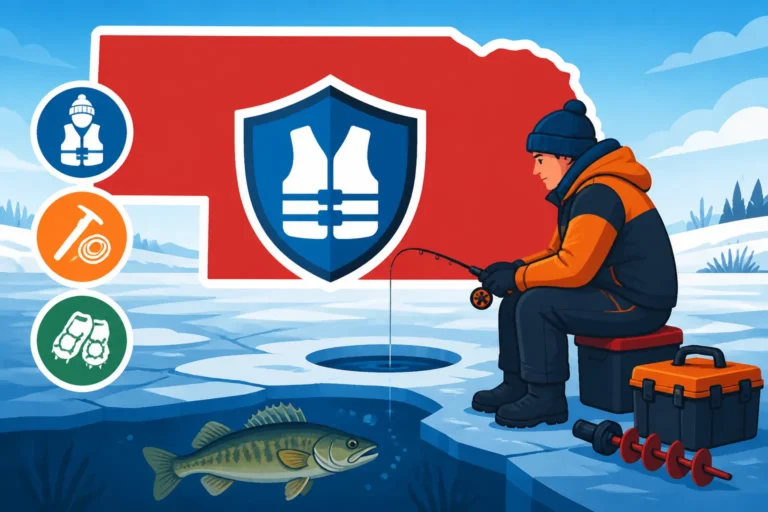
Ice Safety Gear: Spud Bars, Picks, and Floats
Before you even think about drilling your first hole, you need to think about ice safety. The first rule of ice fishing is simple: "No ice is 100% safe." Always check the ice thickness, especially early and late in the season, and avoid areas with current, springs, or pressure ridges. For more information, read our guide on How Thick Ice Needs to Be to Fish Safely in Nebraska.
A spud bar is a heavy, chisel-like tool used to test ice thickness as you walk. Before taking a step, you should hit the ice forcefully with the spud bar. If it goes through in one or two hits, the ice is too thin. This is your first line of defense against falling through.
Ice picks are arguably the most crucial piece of safety gear. These are two sharp, spiked handles connected by a cord, worn around your neck. If you do fall through the ice, you can use the picks to gain purchase on the ice edge and pull yourself out. They are simple, inexpensive, and literally life-saving.
Flotation suits or vests provide buoyancy if you do break through. As mentioned earlier, many modern ice fishing suits have built-in flotation. If your suit doesn't, wear a life vest or an inflatable PFD (Personal Flotation Device) over your layers. These simple items can mean the difference between a quick, cold dunk and a deadly tragedy. A length of rope (at least 50 feet) with a carabiner or a buoyant throw bag should also be carried, allowing you to assist someone who has fallen in from a safe distance. Our full Nebraska Ice Fishing Safety Tips guide goes into much more detail on these critical items.
Lighting, Heating, and Creature Comforts
Beyond safety, a few items significantly enhance your comfort and allow you to fish longer, especially on those short winter days or during a late-night bite for walleye.
A reliable portable heater is a must for any enclosed ice shelter. Propane heaters like those made by Mr. Heater are incredibly popular for their efficiency and warmth. Ensure you have proper ventilation when using any propane heater to prevent carbon monoxide buildup. Carrying extra propane canisters is always a good idea.
Good lighting is essential, especially if you're fishing before sunrise or after sunset. A powerful headlamp allows you to keep your hands free for tying knots or baiting hooks. For ambient lighting inside your shelter, battery-powered LED lanterns provide ample light without the heat or fumes of a gas lantern. Make sure to have spare batteries or a power bank for recharging USB-powered devices.
Finally, don't forget the creature comforts. A comfortable, insulated bucket seat or a small, portable chair makes a huge difference over hours on the ice. A thermos filled with hot coffee, cocoa, or soup is a morale booster and a vital source of internal warmth. Snacks are important too, as your body burns more calories staying warm. And a small shovel is invaluable for clearing snow around your holes or shelter, especially after a fresh snowfall. Packing a small first-aid kit, a multi-tool, and a pair of pliers for hook removal completes your essential setup. With this gear, you'll be well-prepared for any situation, allowing you to truly enjoy the unique experience of ice fishing in Nebraska.
| Gear Category | Essential Items | Description | Considerations |
|---|---|---|---|
| Shelter & Warmth | Ice Fishing Shelter (Pop-up/Hub) | Protection from wind and cold, extends fishing time. | Size for group, portability, ease of setup in wind. |
| Layered Clothing & Ice Suit | Wicks moisture, insulates, waterproof/windproof outer. | Breathable materials, built-in flotation for safety. | |
| Insulated Boots, Hat, Gloves | Keeps extremities warm and dry. | Waterproofing, warmth rating, dexterity for gloves. | |
| Hole Making | Auger (Hand/Propane/Electric) | Creates access to the water for fishing. | Power source preference, ice thickness, desired hole diameter (e.g., 8-inch for walleye). |
| Rods, Reels, Line | Ice Fishing Rods (24-36 inches) | Specialized for small holes, sensitive tips. | Action (fast/moderate), power (ultra-light/medium/heavy) for target species. |
| Ice Fishing Reels (Spinning/Inline) | Small, lightweight, smooth drag, low memory. | Spinning for versatility, inline for no line twist on panfish. | |
| Ice Fishing Line (Mono/Fluoro/Braid + Leader) | Sensitive, low memory in cold, appropriate strength. | Cold-weather specific mono, fluoro for leaders, braid for sensitivity (watch for ice). | |
| Electronics | Flasher or Sonar | Real-time display of fish, lure, and bottom. | Real-time speed vs. historical graph, GPS mapping, battery life. |
| (Optional) Underwater Camera | Visual confirmation of fish species, reactions to bait. | Water clarity, potential to spook fish, battery drain. | |
| Tackle & Baits | Assorted Jigs & Spoons | Attracts and hooks fish (teardrops, tungsten jigs for panfish; spoons, lipless cranks for walleye). | Size and color variety, specific to target species and water conditions. |
| Live Bait (Wax worms, Minnows) | Irresistible natural food source, especially for finicky fish. | Keeping bait alive (aerator for minnows), preventing freezing for worms. | |
| (Optional) Scent Attractants | Encourages fish to hold onto lure longer. | Apply liberally, reapply often. | |
| Safety & Comfort | Spud Bar | Tests ice thickness while walking. | Essential for every step, especially early/late season. |
| Ice Picks | Essential for self-rescue if you fall through. | Worn around neck, easily accessible. | |
| Flotation Device (Suit/Vest) | Provides buoyancy in case of a fall through the ice. | Built-in with suit or separate PFD. | |
| Rope/Throw Bag | For assisting others safely from a distance. | Minimum 50 feet, easily accessible. | |
| Portable Heater | Keeps shelter warm and comfortable. | Propane heaters (e.g., Mr. Heater), always ensure ventilation. | |
| Headlamp & Lantern | Provides hands-free and ambient lighting. | Extra batteries/power bank. | |
| Comfortable Seating | Enhances comfort during long waits. | Insulated bucket seat, portable chair. | |
| Thermos (Hot drinks/food) | Internal warmth and energy. | Keeps contents hot for hours. | |
| First-Aid Kit, Multi-Tool, Pliers | Essential for minor injuries, gear repair, hook removal. | Comprehensive kit, readily accessible. |
Disclaimer: Fishing regulations and ice conditions can change rapidly. Always check the latest Nebraska Game and Parks Commission regulations before heading out. Exercise extreme caution on the ice; safety should always be your highest priority.