Nebraska Post-Spawn Bass Fishing Tips
Catching largemouth or smallmouth bass right after they've finished their annual spawn can feel like hitting a brick wall. One day they're aggressive, protecting their beds, and the next, they've vanished, leaving anglers scratching their heads about where they went and what they'll bite. This period, often called the "post-spawn funk," is a real challenge for many, but with the right approach and a deep understanding of bass behavior, you can still have incredible success. This comprehensive guide will walk you through the nuances of Nebraska's post-spawn bass fishing, helping you locate these elusive fish and entice them to bite.
Understanding Post-Spawn Bass Behavior in Nebraska
When the water temperatures climb into the 60s and low 70s across Nebraska's lakes and reservoirs, bass shift from pre-spawn feeding frenzies to the exhausting business of reproduction. Once that's done, they don't immediately jump back into their aggressive feeding patterns. It's a critical transition that every angler needs to understand to adapt their strategy effectively.
The Post-Spawn Funk and Recovery
Imagine running a marathon, then immediately trying to sprint another one. That's essentially what a bass has just done during the spawn. Both male and female bass are physically drained after weeks of bed building, egg laying, and protecting their fry. Females, in particular, are often very skinny and weak, having put all their energy into egg production. This physical exhaustion leads to a period where their primary instinct isn't to chase down a meal, but to find a safe, comfortable spot to recuperate. They're not looking for a fight; they're looking for recovery.
During this initial recovery phase, which can last anywhere from a few days to a week or more depending on individual fish and environmental conditions, bass will often move to the nearest available cover or slightly deeper water adjacent to their spawning flats. They're still somewhat shallow, often within casting distance of where they just spawned, but they're not actively cruising or chasing bait. Their metabolism is still relatively slow, and they'll prefer an easy, slow-moving meal over anything requiring significant energy expenditure. Think of it as them being "off the bite" but not completely starving.
Transition from Spawning Beds to Deeper Water
As bass regain some of their strength, they begin a gradual migration away from the super shallow spawning areas. This isn't a sudden, mass exodus; rather, it's a slow transition along predictable pathways. They'll use features like creek channels, points, humps, and submerged timber that lead from the shallow flats into deeper, more comfortable water. These transition zones become critical holding areas because they offer access to both deeper refuge and nearby feeding grounds.
The fish aren't usually in their full summer patterns yet, which often involves suspending over deep water or hugging thermoclines. Instead, they're often found suspended just off the bottom in 8-15 feet of water, or relating to the edges of submerged weed lines or rock piles that provide easy access to deeper water. They're essentially staging, waiting for their energy levels to fully recharge before moving to their more stable summer haunts. Understanding these routes is vital for successful post-spawn fishing in Nebraska's diverse waters, from the smaller farm ponds to large reservoirs like Branched Oak Lake.
Hunger Pangs and Increased Aggression
After a week or two of recovery, those initial post-spawn blues start to fade, and a different instinct takes over: hunger. The bass have burned through their reserves, and their bodies are screaming for calories. This is when they begin to feed more actively and aggressively. While they might not be as reckless as during the pre-spawn, they become far more willing to chase and strike a lure.
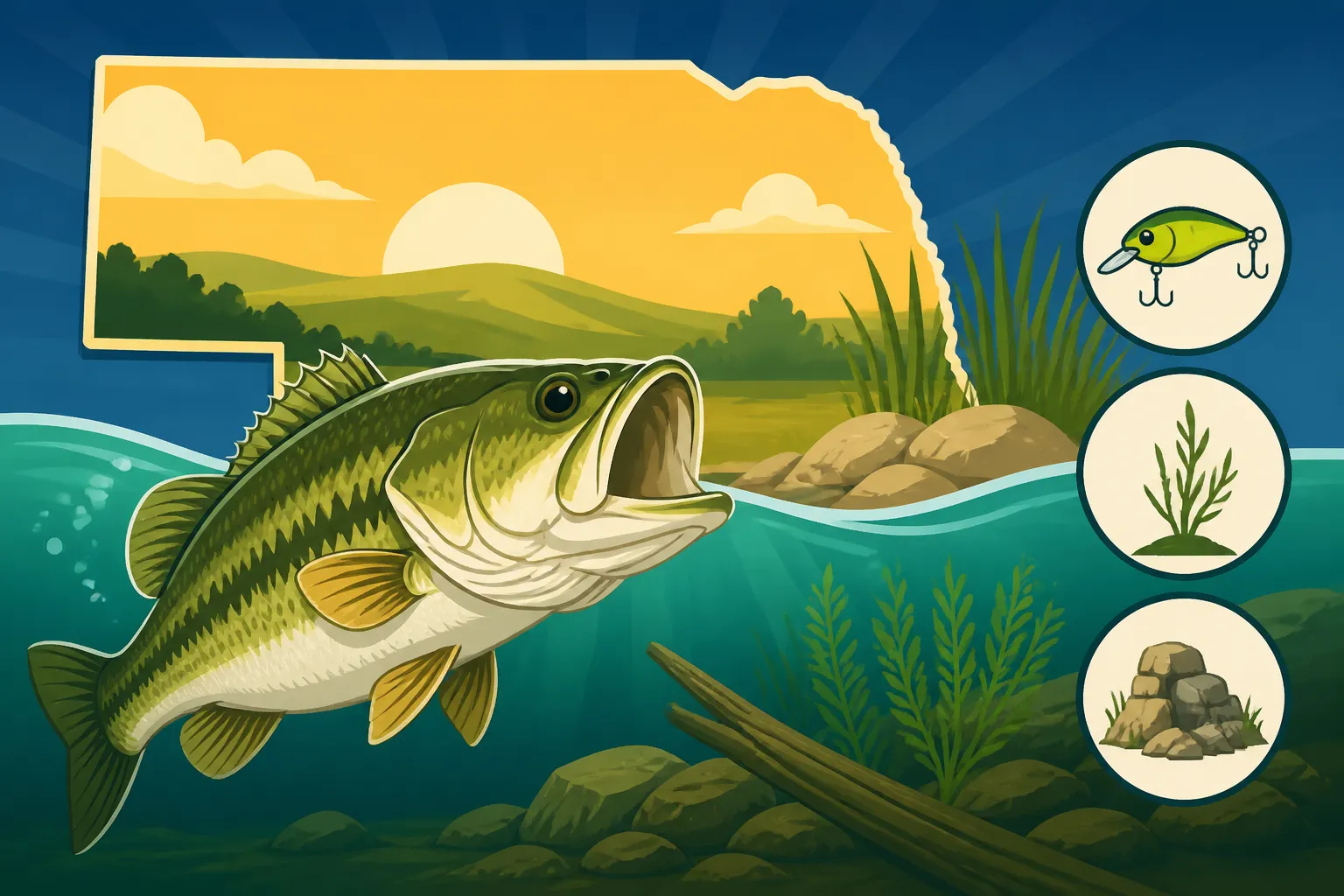
Their feeding patterns often revolve around ambush points. They'll position themselves near cover—like submerged trees, brush piles, or rock formations—and wait for unsuspecting baitfish or crawfish to swim by. This hunger-driven aggression means you can start to incorporate more active presentations and even larger baits into your arsenal. The key is to match your presentation to their current energy level and predatory drive, recognizing that this can vary significantly even among fish in the same body of water.
Locating Post-Spawn Bass in Nebraska Waters
Finding bass during the post-spawn can be one of the biggest challenges, as they're often scattered and not concentrated on beds. However, by understanding their preferred habitats during this recovery period, you can narrow down your search and increase your chances of success. It's all about thinking like a bass and predicting their next move after leaving the spawning grounds.
Key Transition Areas and Structural Elements
Once the spawn is over, bass don't just disappear into thin air. They typically follow underwater highways and structure that lead them away from the shallow spawning flats to slightly deeper, more stable environments. Look for major points that extend into the main lake, especially those with a gradual slope. Submerged humps or ridges that top out in 10-20 feet of water are also prime real estate, as they offer elevated feeding positions with easy access to deeper water. Creek channels, particularly where they wind out of a spawning cove and cut across a flat, act as natural migration routes and holding areas.
These areas are goldmines because they provide a convenient resting spot that is close enough to shallow feeding areas for easy meals, but also deep enough to offer security and stable water temperatures. For instance, in many of Nebraska's larger reservoirs, like Merritt Reservoir or Lake McConaughy, identifying these transition lines on your depth finder can be the difference between a slow day and a banner day. Bass will often stage on the down-current or shady side of these structures, waiting for prey to come to them.
The Importance of Cover and Shade
Post-spawn bass, even as they recover, are still seeking comfort and safety. That means they'll heavily relate to various types of cover and shade. Laydowns (fallen trees), standing timber, and brush piles are prime locations. These offer excellent ambush points for feeding and protection from the sun's intense rays, especially on clear, sunny days. Docks and boat houses, particularly those with deep water nearby, can also hold good numbers of bass, providing overhead cover and shade.
Another key piece of cover to look for is submerged weed lines or patchy grass beds. These provide oxygen, shelter, and a smorgasbord of baitfish and crustaceans. Bass will often position themselves on the edges of these weed beds, darting out to ambush prey. The deeper the weed line extends, the more likely it is to hold bass during the mid-to-late post-spawn period. Focus your efforts on the shady sides of these cover elements, as bass are often trying to conserve energy and avoid direct sunlight.
Following the Baitfish
Ultimately, bass are predators, and their location is intrinsically linked to their food source. During the post-spawn, as they regain their strength and hunger, they will actively follow schools of baitfish. In Nebraska, this often means tracking shad, juvenile panfish, or even crawfish. If you can locate large schools of baitfish on your electronics, or see them dimpling the surface, chances are good that bass are not far behind.
Baitfish tend to congregate around similar transition areas and cover, seeking protection and their own food sources. Points, humps, and creek channels that funnel baitfish are excellent places to start. Pay attention to birds diving, or surface activity, as these can be visual indicators of baitfish being pushed to the surface by predatory fish. A solid understanding of what baitfish bass prefer, and where those baitfish live, will dramatically improve your chances of success.
Top Baits and Techniques for Post-Spawn Success
The "post-spawn funk" often calls for a more nuanced approach than the aggressive tactics used during the pre-spawn. Bass can be finicky, so having a diverse tackle box and being willing to experiment with different presentations is key. The goal is to offer them an irresistible, easy meal without overwhelming their recovering senses.
Soft Plastics for Subtle Presentations
When bass are in that initial post-spawn recovery phase, or simply being lethargic, soft plastics are often your best friend. They offer a subtle, natural presentation that doesn't require a lot of energy for a bass to strike. A Texas rig, fished slowly around submerged timber, brush piles, or weed edges, is incredibly effective. The weedless nature of the Texas rig allows you to probe thick cover where bass are hiding. Pairing it with a creature bait or a standard worm in natural colors like green pumpkin or junebug can be deadly.
Another fantastic option is the Carolina rig, especially for covering larger areas on points or humps. This rig presents your soft plastic — often a lizard, fluke, or straight-tail worm — a few feet behind a lead weight, allowing it to flutter enticingly as you drag it along the bottom. For bass that are still very finicky, a weightless Wacky rig or Neko rig can be irresistible. These rigs allow a stick bait, like a Senko-style worm, to fall slowly and horizontally, quivering as it descends, mimicking an injured baitfish. You can find a wide array of these versatile soft plastics on Amazon, perfect for a subtle presentation. These techniques are often highlighted in guides on How to Catch Largemouth Bass in Farm Ponds.
Crankbaits and Jerkbaits for Active Fish
As bass move past the initial recovery and their hunger increases, they become more receptive to reaction strikes. This is when crankbaits and jerkbaits really shine. Shallow-diving crankbaits that run 3-8 feet deep are excellent for working over submerged weed beds, around shallow points, or along riprap shorelines. Choose colors that mimic local baitfish, like chrome with blue backs or shad patterns, or go with brighter colors like chartreuse if the water has some stain. A steady retrieve with occasional pauses can trigger strikes.
Medium-diving crankbaits (8-15 feet) become effective as bass transition to slightly deeper structure like main lake points, humps, and creek channel edges. Experiment with different retrieve speeds and deflections off submerged cover to get a reaction. Jerkbaits, with their erratic darting action, are fantastic for mimicking dying baitfish. A "twitch, twitch, pause" retrieve is a classic, but varying the length of your pauses can be crucial to figuring out what the bass want on any given day. These lures are excellent for covering water and locating active fish, making them a staple when looking for the Best Lures for Nebraska Bass.
Topwater and Spinnerbaits for Specific Conditions
Don't overlook the thrill and effectiveness of topwater fishing during the post-spawn, especially in the early morning, late evening, or on overcast days when bass are more willing to rise. Poppers and walking baits, like a Heddon Super Spook, can draw explosive strikes when fished over submerged vegetation, along shady banks, or around docks. The key with topwater is often to let the bait sit for a few seconds after casting, then begin your retrieve with deliberate pauses. The noise and disturbance on the surface can be irresistible to a recovering bass looking for an easy meal.
Spinnerbaits are another excellent choice for covering water and targeting bass around cover like laydowns, standing timber, and sparse weeds. The flash and vibration of the blades, combined with the pulsating skirt, can be very attractive. Use tandem blade configurations, with a larger willow leaf blade for flash and a smaller Colorado blade for vibration, in chartreuse, white, or shad patterns. Spinnerbaits are especially effective in stained or choppy water, where their visual and sonic appeal helps bass locate them.
| Lure Type | Best Post-Spawn Phase | Ideal Location | Retrieval Notes |
|---|---|---|---|
| Soft Plastics | Early to Mid-Post-Spawn | Brush piles, laydowns, deep weed edges, creek bends | Slow, methodical; focus on subtle movements. |
| Jerkbaits | Mid to Late Post-Spawn | Points, humps, deep docks, schooling baitfish | Twitch-pause-twitch; vary pause duration. |
| Crankbaits | Mid to Late Post-Spawn | Points, rock piles, channel swings, shallower flats | Vary speed, bump off cover, steady retrieve. |
| Spinnerbaits | Mid to Late Post-Spawn | Weed lines, submerged timber, riprap, stained water | Steady retrieve, slow roll, or "yo-yo" retrieve. |
| Topwater | Mid to Late Post-Spawn | Shady banks, calm mornings/evenings, shallow cover | Walk the dog, pop, or chug; long pauses are key. |
Seasonal Nuances and Water Conditions
Successfully navigating the post-spawn period requires not only knowing the right baits but also understanding how bass behavior changes throughout this extended phase and how environmental factors play a role. The term "post-spawn" isn't a single event but a continuum, with different stages requiring different tactics. This is an important part of understanding Nebraska Fishing Seasons Explained.
Early Post-Spawn Strategies
The very first stage of post-spawn, immediately after the fish have left their beds, is arguably the most challenging. Bass are exhausted, often sluggish, and not particularly interested in chasing down a meal. During this time, the focus should be on slow, subtle presentations in close proximity to where they just spawned. Look for bass recuperating in the nearest available cover, like a submerged brush pile just off a spawning flat, or under a nearby dock.
Your best bet here is to use smaller, more finesse-oriented baits. Think weightless soft plastics, drop shots, or very slowly retrieved shaky head jigs. The idea is to put the bait right in front of their face and make it look like an incredibly easy meal. Light line and a sensitive rod are crucial for detecting these often very subtle bites. Pay close attention to water clarity; in clear water, natural colors are best, while in stained water, slightly brighter or darker natural tones might be needed. Remember, these fish are tired, so don't expect them to move far for a bite.
Mid to Late Post-Spawn Transitions
As the bass recover their energy, usually a week or two after spawning, they enter the mid-to-late post-spawn phase. This is when they start to feed more actively, but they're still often grouped up in transition areas before fully settling into their summer patterns. They'll move further away from the immediate spawning grounds, but will still relate to structures that provide access to both shallow feeding areas and deeper refuge. This is when you can start getting more aggressive with your presentations.
During this period, focus on targeting points, humps, and creek channel swings that are adjacent to spawning areas. Crankbaits, jerkbaits, and even larger soft plastics like big worms or swimbaits become highly effective. Look for schools of baitfish, as the bass will be actively hunting. The bites will generally be more aggressive, and you might find larger groups of fish congregated in these staging areas. Pay attention to the Nebraska Largemouth Bass Length Limit in specific bodies of water, as some lakes have slot limits to protect these transitioning fish.
Understanding Water Temperature and Clarity
Water temperature is a major driving force behind bass behavior, especially during the post-spawn. As the water warms, bass metabolism increases, leading to more aggressive feeding. However, excessively warm water can push them deeper to find more comfortable temperatures. The ideal post-spawn range often falls between 68-75 degrees Fahrenheit, where fish are recovering but also starting to feed actively. Monitoring the water temperature throughout your fishing day can help you predict where the bass might be holding.
Water clarity also heavily influences lure choice and presentation. In clear water, bass rely more on sight, making natural colors, fluorocarbon line, and subtle presentations more effective. Conversely, in stained or murky water, bass rely more on their lateral line (vibration) and sound. This is where baits with more flash and vibration, like spinnerbaits, bladed jigs, or loud crankbaits, often excel. Bright colors like chartreuse or fire tiger can also stand out better in reduced visibility. Always have a variety of colors and lure types ready to adapt to the conditions you encounter on any given Nebraska lake.
Essential Gear and Tips for Nebraska Post-Spawn Bass
Having the right equipment can make a significant difference in your post-spawn success. This isn't just about having expensive gear; it's about having the right tools for the job and knowing how to use them effectively. From your rod and reel setup to the technology that helps you locate fish, every piece plays a role. Many of these items are considered Best Fishing Gear for Nebraska Anglers.
Rods, Reels, and Line Selection
For post-spawn bass fishing, versatility is key. A medium-heavy power, fast action casting rod (around 6'10" to 7'4") is a great all-around choice. This setup provides enough backbone for strong hooksets and fighting larger bass, while the fast action tip allows for sensitivity to subtle bites and accurate casting. Pair this with a reliable baitcasting reel with a gear ratio around 7.1:1 for quickly taking up slack and battling fish out of cover. For finesse techniques, a medium power, fast action spinning rod (6'6" to 7'0") with a matching spinning reel is indispensable. You can find many excellent options for a Best Rod and Reel Combo for Beginners in Nebraska that will serve you well in the post-spawn period.
Line selection is also crucial. For Texas rigs, spinnerbaits, and crankbaits, 15-20 lb fluorocarbon or braided line with a fluorocarbon leader is a solid choice. Fluorocarbon offers low visibility and good abrasion resistance, while braid provides incredible sensitivity and strength. For finesse presentations like drop shots or Wacky rigs, 6-10 lb fluorocarbon or monofilament is preferred. On Amazon, you can explore various options for fishing line, ensuring you have the right strength and type for every technique. Always check your line for nicks and abrasions, as a fatigued line can easily cost you a trophy bass.
Electronics and Mapping
In today's fishing world, electronics are no longer a luxury but a vital tool, especially when trying to locate scattered post-spawn bass. A good fish finder with down imaging and side imaging capabilities is invaluable. Use your sonar to identify key structural elements like creek channels, humps, and points that extend out from spawning flats. These units can help you pinpoint submerged timber, brush piles, and even individual fish holding near cover. Learning How to Use Side Imaging Sonar for Structure can give you a significant advantage, allowing you to scan large areas quickly without disturbing the fish.
Mapping software, either on your fish finder or a dedicated GPS unit, is equally important. High-definition maps show contours, depth changes, and often highlight potential cover like old roadbeds or rock piles. Use these maps to plan your attack, identifying transition routes bass are likely to use. Mark waypoints where you catch fish or find promising structure. Over time, these marked spots will help you build a comprehensive understanding of bass movements on your favorite Nebraska lakes.
Patience and Adaptability are Key
Fishing the post-spawn can test an angler's patience like no other time of year. Bass are often in an unpredictable mood, and what worked yesterday might not work today. This means you need to be incredibly adaptable and willing to experiment. Don't get stuck on one bait or one technique if it's not producing. If you're not getting bites on a fast-moving crankbait, slow down with a soft plastic. If shallow cover isn't producing, try probing deeper points or channel edges.
Keep a detailed log of your catches, noting water temperature, clarity, depth, lure choice, and retrieve speed. Over time, this data will reveal patterns specific to the lakes you fish. Remember, post-spawn bass are recovering, but they will eventually start feeding aggressively. Your job is to be there when they do, with the right bait in the right spot. Persistence, observation, and a willingness to change your approach are your greatest assets during this challenging yet rewarding time of year.
Disclaimer
Fishing regulations and conditions can change rapidly. Always consult the latest Nebraska Game and Parks Commission fishing guide and local advisories before heading out on the water. This information is intended for educational purposes and should not replace official regulations.