How to Rig a Jig for Nebraska Walleye
Trying to coax a walleye into biting, especially when they're playing hard to get, can be one of the most frustrating yet rewarding experiences on Nebraska's waters. These elusive predators often demand a precise presentation, and mastering the art of rigging and presenting a jig is absolutely crucial for consistent success. This guide is going to break down everything you need to know about setting up your jigs perfectly to entice those Nebraska walleye.
The Basics of Walleye Behavior for Effective Jigging
Before you even think about tying on a jig, you've got to get inside a walleye's head. Understanding what makes them tick – where they live, what they eat, and how they react to different conditions – is the foundation of effective jigging. Without this knowledge, you're just casting blindly, hoping for a lucky strike, and that's no fun for anyone.
Understanding Walleye Habitat and Feeding Patterns
Walleye are opportunistic feeders, but they're also notorious for being a bit picky. They thrive in various environments across Nebraska, from the vast expanses of Lake McConaughy to the river systems like the Platte. Generally, you'll find them gravitating towards structure. This means rock piles, submerged timber, weed lines, humps, ledges, and transition areas where different bottom compositions meet. They love to ambush prey from these spots, especially during low light conditions or when the water is a bit stained.
Their eyes are highly adapted for low light, giving them a significant advantage over many baitfish, which is why dawn, dusk, and even night fishing can be so productive. They're primarily piscivorous, meaning they eat other fish, with shad, minnows, perch, and juvenile panfish making up a large part of their diet. Knowing this tells us a lot about what kind of jigs and trailers we should be presenting. If you want a deeper dive into where these fish hang out, check out our guide on the Best Places to Fish in Nebraska or even more specifically, Lake McConaughy Walleye Fishing.
Seasonal Movements and How They Impact Jigging
Walleye aren't static; their movements are heavily dictated by water temperature and spawning cycles, and understanding these shifts is key to knowing where to jig. In early spring, as ice retreats and water temperatures start to rise into the 40s (Fahrenheit), walleye migrate to shallower areas with rocky bottoms or gravel, often near river mouths or shorelines for their annual spawn. This period, often around the Nebraska Walleye Spawning Season, can be excellent for jigging, as fish are concentrated and somewhat aggressive.
As spring transitions to summer, and water temps climb into the 60s and 70s, walleye move deeper. They'll relate to offshore structure, deep points, humps, and thermoclines where they find cooler, oxygen-rich water and abundant baitfish. This is when deep-water jigging techniques become paramount. Come fall, as water temperatures drop again, walleye often move back to shallower flats and points, feeding heavily to bulk up for winter. This "fall bite" can be incredibly strong, with fish aggressively hitting jigs. Even in winter, during the ice fishing season, walleye can be caught jigging, though typically in deeper basins or near submerged structure. Knowing the Nebraska Fishing Seasons Explained will give you a broader context for these movements.
Picking the Perfect Jig and Trailer Combination
This is where the rubber meets the road! A poorly chosen jig or an improperly rigged trailer can be the difference between a limit of walleye and a frustrating skunk. There's an overwhelming array of options out there, but let's simplify it for Nebraska's common conditions.
Choosing the Right Jig Weight, Size, and Color
The "perfect" jig is a moving target, depending heavily on the depth, current, wind, and water clarity you're facing.
- Weight: This is probably the most critical factor. You need a jig heavy enough to get to the bottom quickly and stay there, but light enough to present naturally.
- 1/8 to 1/4 ounce: Ideal for shallower water (under 10 feet), calm conditions, or light current. You want it to drift and fall slowly, mimicking dying baitfish.
- 3/8 to 1/2 ounce: Your workhorse for most Nebraska situations – moderate depths (10-25 feet), slight wind, or moderate current. This is often the sweet spot.
- 3/4 to 1 ounce+: Essential for deep water (25+ feet), strong currents (like in river systems), or very windy days where maintaining bottom contact is tough.
Remember, the goal is always to feel that jig tick the bottom. If you can't feel it, go heavier. If it's plummeting like a rock, you might be spooking fish, so try lighter.
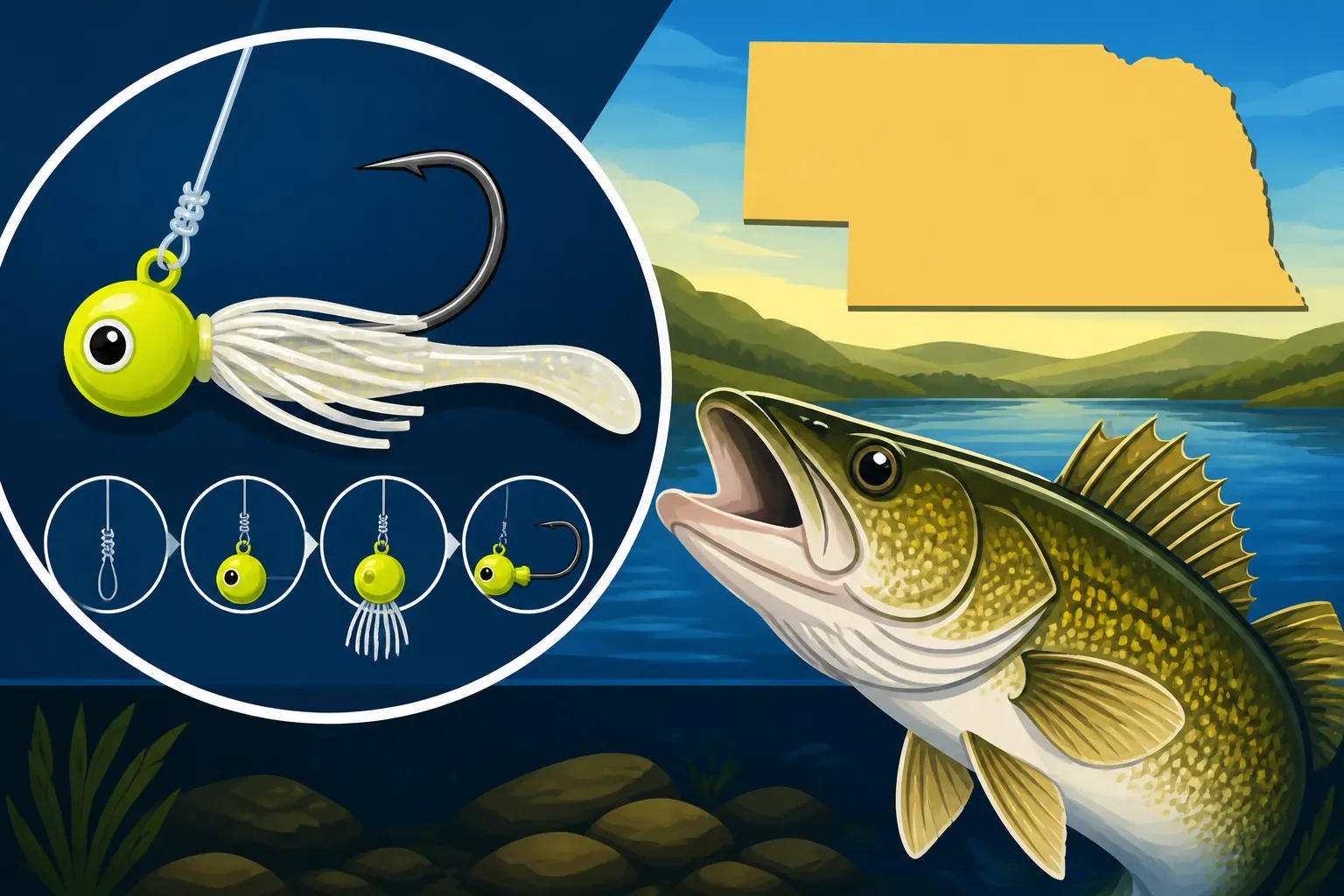
- Size: This usually refers to the hook size and the overall profile. Match the hatch! If walleye are feeding on small baitfish, go with a smaller jig and trailer. If bigger prey is around, don't be afraid to size up. Most common jig heads for walleye will have hook sizes ranging from 1/0 to 3/0.
- Color: This is often debated, but generally, it comes down to water clarity and light conditions.
- Clear Water: Natural colors like browns, greens, silver, and white often work best. Think realistic baitfish patterns.
- Stained/Murky Water: Brighter, more aggressive colors tend to get noticed. Chartreuse, orange, hot pink, and firetiger patterns can be dynamite. Even black can be surprisingly effective in very dark conditions, as it creates a strong silhouette.
- Low Light (Dawn/Dusk/Overcast): Again, brighter colors can shine, but sometimes a subtle glow or reflective finish can trigger bites.
Many anglers swear by specific colors, but having a variety in your tackle box from brands available on Amazon is always a good strategy.
Selecting Your Trailer: Live Bait vs. Soft Plastics
The trailer is what gives your jig its appeal – its scent, action, and profile. This choice is vital and often depends on walleye mood and personal preference.
- Live Bait: This is the traditional walleye killer, and for good reason. Live bait provides natural scent, texture, and movement that artificial lures simply can't perfectly replicate.
- Minnows: Shiners, fatheads, or chubs are probably the most popular live bait for walleye. They're fantastic for jigging because their natural darting and struggling action is irresistible. Typically, you'll hook a minnow through both lips or lightly through the back, just behind the dorsal fin, being careful not to hit the spine. This allows it to swim naturally and stay alive longer. This is often listed as the Best Bait for Nebraska Walleye.
- Nightcrawlers: While often associated with crawler harnesses, a piece of a nightcrawler (half or a third) on a jig can be deadly, especially when walleye are feeding on worms or when a subtle, scent-laden presentation is needed. Thread it onto the hook, leaving a juicy tail to wiggle.
- Leeches: In some waters, leeches are a walleye magnet. They're incredibly hardy and provide a tempting, slithering action. Hook them through the sucker at one end.
- Soft Plastics: Modern soft plastics have come a long way and can often out-fish live bait, especially when fish are aggressive or when you need to cover water quickly. They offer incredible versatility in shape, size, color, and scent.
- Paddle-tail Grubs/Swimbaits: These are fantastic for mimicking shad or small baitfish. The paddle tail creates a thumping vibration that walleye can detect, even in murky water. Rig them straight on the jig hook, ensuring the plastic is perfectly aligned so it swims true without spinning.
- Twister Tails/Grubs: Simple, effective, and endlessly versatile. The curled tail provides a rapid, seductive action on the fall and retrieve. Again, thread them on straight.
- Minnow Imitators/Shad Bodies: Plastics designed to look exactly like small baitfish, often with realistic eyes and fin details. These can be incredibly convincing in clear water. Brands like Berkley Gulp! or Z-Man ElaZtech offer scent and durability that can be a real advantage. You can find a huge selection of these plastics on Amazon.
The key to rigging soft plastics is to make sure they are perfectly straight on the hook. If the plastic is crooked, it will spin in the water, which looks unnatural and can cause line twist.
Essential Tools for Rigging Your Jigs
While rigging a jig might seem straightforward, having the right tools makes the job much easier and more effective.
- Pliers/Forceps: Essential for crimping split shot (if adding extra weight to your line above the jig, which is often done for finesse presentations) or for safely removing hooks from a walleye's mouth. A good pair of long-nosed pliers from Amazon is a lifesaver, especially with toothy walleye.
- Line Clippers: For clean cuts when tying knots. Dull scissors or teeth can weaken your line.
- Knot Tying Tool (Optional but helpful): While not strictly necessary for rigging jigs, a knot-tying tool can ensure consistent, strong knots, especially in cold weather or with light line.
- Fishing Line: I usually recommend a good quality fluorocarbon leader (6-10 lb test) for its invisibility and abrasion resistance, tied to a main line of braided superline (10-20 lb test) for sensitivity and casting distance. The braid allows you to feel even the most subtle taps.
| Jig Weight (oz) | Water Depth (ft) | Current Speed | Wind Conditions | Trailer Type Suggestion |
|---|---|---|---|---|
| 1/8 – 1/4 | 0-10 | Light | Calm | Small minnow, grub |
| 3/8 – 1/2 | 10-25 | Moderate | Light to Moderate | Medium minnow, paddle-tail |
| 3/4 – 1 | 25+ | Strong | Windy | Large minnow, shad body |
Mastering Jigging Techniques for Nebraska Walleye
Having the right jig is only half the battle; knowing how to work it is where true angling skill comes into play. Walleye can be incredibly finicky, and sometimes a slight change in retrieve speed or jig cadence can make all the difference.
Vertical Jigging: The Slow, Deliberate Approach
Vertical jigging is your bread and butter when you've located a school of walleye directly beneath your boat, or when you're fishing precise structure in deeper water. This is a very controlled method, allowing for extreme precision.
- The Setup: Position your boat directly over the target structure or fish. Use your fish finder to stay on top of them. Drop your jig straight down until it hits the bottom.
- The Retrieve: Once on the bottom, reel up the slack until your line is taut. Then, use short, sharp lifts of your rod tip – anywhere from 6 inches to 2 feet – quickly snapping the jig upwards. Immediately let it fall back down on a semi-slack line. The bite often occurs on the fall, as the jig flutters down, mimicking a stunned or dying baitfish.
- The Feel: Pay close attention. Walleye bites on the fall can be incredibly subtle – sometimes just a slight "thump," a feeling of weightlessness, or simply your line going slack when it should still be falling. Set the hook hard at the first sign of anything unusual! This technique is perfect for those deep humps and points we discussed in How to Find Walleye on Deep Humps and Points.
Pitching and Casting Jigs: Covering More Water
When walleye are scattered, or you're fishing shallow flats, weed lines, or shorelines from a boat, pitching or casting jigs allows you to cover more water efficiently than strictly vertical jigging. It's also a go-to method for shore anglers.
- The Cast: Make a long cast past your target area. Let the jig sink to the bottom.
- The Retrieve: Once it hits bottom, engage your reel. You can use several retrieves:
- Lift and Drop: Similar to vertical jigging, but horizontal. Lift your rod tip sharply, then let the jig fall on a semi-slack line, reeling in slack as it falls. Repeat this all the way back to the boat.
- Bottom Hopping: Reel in slowly while giving your rod tip short, subtle lifts, causing the jig to "hop" along the bottom. This kicks up sediment and attracts attention.
- Slow Roll: In some cases, a steady, slow retrieve where the jig just ticks the bottom can be incredibly effective, especially with paddle-tail plastics.
- Fan Casting: When searching for fish, make a series of casts in a fan-like pattern, covering a wide area before moving to a new spot. This method is particularly useful when exploring new areas or during periods of scattered fish.
Snap Jigging and Dragging: When to Get Aggressive
Sometimes, a more aggressive presentation is needed to trigger a reaction strike, especially when fish are lethargic or pressured.
- Snap Jigging: This involves a more pronounced, aggressive upward snap of the rod (2-4 feet), followed by a controlled fall. The idea is to quickly rip the jig off the bottom, making it dart and flash, then let it glide back down. This erratic movement often triggers strikes from inactive fish. This is often used with plastics in a slightly deeper presentation.
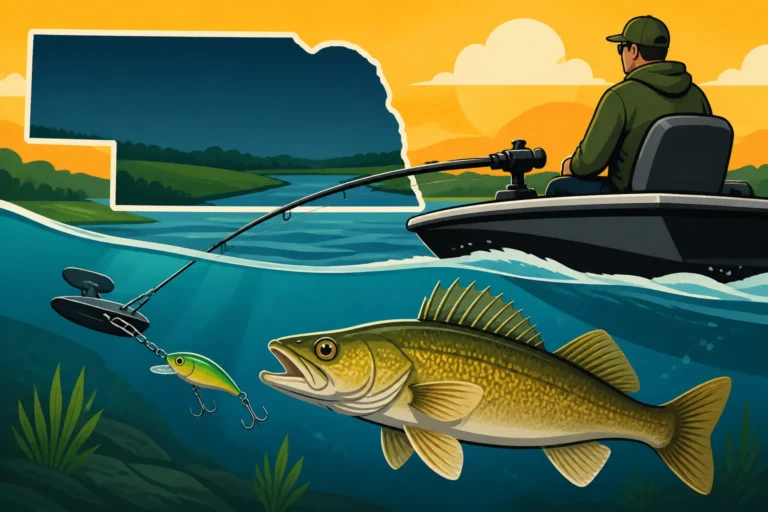
- Dragging: While not strictly jigging in the traditional sense, dragging a jig is a highly effective way to cover ground and present your bait to walleye that might not react to aggressive snaps. This is often done by slowly drifting or trolling with your electric motor, allowing your jig to drag or lightly bounce along the bottom. You can use a bottom bouncer rig, but simply dragging a heavier jig (1/2 oz to 1 oz) with a minnow or plastic can be incredibly effective, especially on hard bottoms. This technique is especially useful on large bodies of water like Lake McConaughy when you're trying to locate fish. If you're looking for different ways to present baits, you might also consider learning How to Troll for Walleye in Nebraska.
Advanced Tips and Troubleshooting for Nebraska Walleye Anglers
Even with the right gear and techniques, walleye can test your patience. These final tips will help you fine-tune your approach and overcome common challenges.
Reading the Conditions: Wind, Current, and Water Clarity
Nebraska's weather and water conditions are constantly changing, and successful walleye anglers adapt.
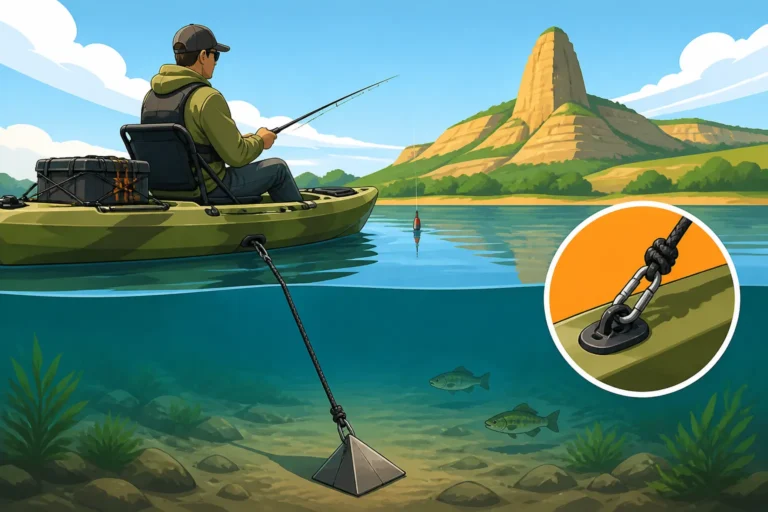
- Wind: Wind is often a walleye angler's friend, as it creates a chop on the water's surface, breaking up light penetration and often activating a bite. It also helps position your boat for drifts. Use a drift sock to control your speed when wind is excessive. However, too much wind can make boat control and feeling subtle bites almost impossible. On extremely windy days, focus on protected shorelines or deeper, calmer areas.
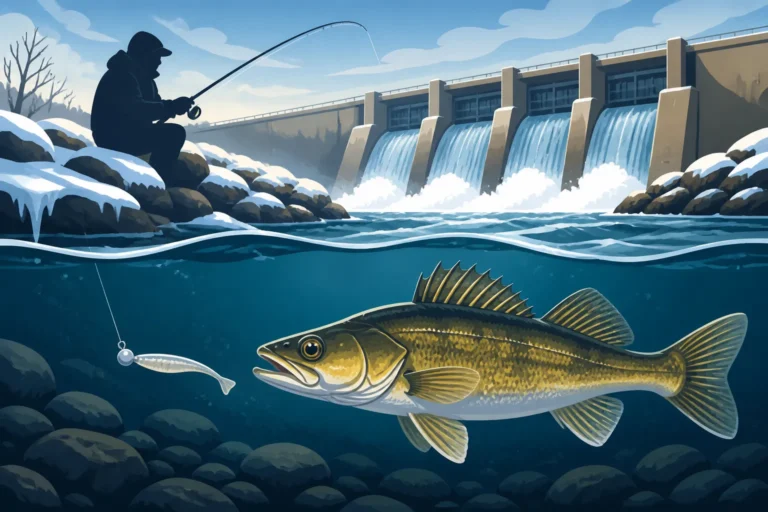
- Current: In river systems or reservoir tailwaters, current is a major factor. Walleye will position themselves out of the main current, often behind submerged rocks, wing dams, or log jams, waiting to ambush prey. You'll need heavier jigs to maintain bottom contact, and presenting your jig upstream and allowing it to drift naturally into these holding areas can be incredibly productive. For river fishing, understanding Nebraska Fishing Regulations for Reservoir Tailwaters is crucial.
- Water Clarity: As mentioned before, clear water generally calls for more natural colors and subtle presentations, while stained or muddy water allows for brighter, more aggressive colors and scents. After a heavy rain, water might be murky, impacting visibility and requiring adjustment.
Knowing When and Where to Focus Your Efforts
Walleye are constantly moving and reacting to their environment. Your strategy needs to be dynamic.
- Time of Day: While walleye are known for biting during low light, don't rule out midday, especially on overcast days or in deeper water. Early mornings and late evenings are prime times, as walleye move shallower to feed. Our guide on the Best Time of Day to Catch Walleye in Nebraska delves into this more.
- Structure vs. Open Water: Always start by targeting structure. That's where walleye ambush bait. However, if you're not finding them on structure, they might be suspended in open water, chasing schools of baitfish. Your fish finder is indispensable for locating these suspended fish.
- Experimentation: Never be afraid to change things up. If one jig color isn't working, switch it. If vertical jigging isn't producing, try pitching. Change retrieve speeds, depths, and even the type of trailer. Walleye often have a preferred presentation on any given day, and it's up to you to figure it out.
- Electronics are Your Friend: A good fish finder is arguably the most valuable tool for jigging walleye. It helps you find structure, identify schools of baitfish, mark individual walleye, and stay on top of your target. When fishing deep, it's invaluable. You can find excellent fish finders suitable for Nebraska waters on Amazon.
Common Mistakes and How to Avoid Them
Even experienced anglers make mistakes, but being aware of them can help you improve.
- Not Maintaining Bottom Contact: This is probably the most common error. If you're not feeling your jig hit the bottom, you're likely fishing too light, or your boat is drifting too fast. Walleye are bottom-oriented feeders, and if your jig is suspended above them, they might never see it.
- Using Too Heavy a Jig: Conversely, if your jig is too heavy, it crashes down, looking unnatural, and you lose the subtle feel that often indicates a bite. The goal is the lightest jig possible that still maintains consistent bottom contact.
- Too Much Line Slack: While a semi-slack line is needed for the jig's natural fall, too much slack means you can't feel subtle bites and can't set the hook effectively. Always try to maintain some tension or visual contact with your line to detect strikes.
- Not Setting the Hook Hard Enough: Walleye have bony mouths. You need a firm, sweeping hookset to drive that hook home. Don't be shy!
- Staying in One Spot Too Long: If you're not getting bites within a reasonable amount of time (say, 15-20 minutes), move. Walleye will often be concentrated, and if they're not there, they're somewhere else.
- Ignoring the Wind: As frustrating as wind can be, it's often a key factor in successful walleye fishing. Learn to work with it, using drift socks or your trolling motor to control your drift and cover water efficiently.
Mastering how to rig a jig for Nebraska walleye is a journey, not a destination. It requires patience, observation, and a willingness to adapt. But when you feel that solid thump on the end of your line and reel in a beautiful Nebraska walleye, all that effort will be worth it.
Disclaimer
The information provided in this guide is for general informational purposes only and should not be considered legal advice regarding Nebraska fishing regulations. Fishing rules and regulations, including license requirements, bag limits, and season dates, are subject to change. Always consult the most current Nebraska Game and Parks Commission regulations before heading out on the water. Following all state and local laws is the angler's responsibility.