Best Bank Fishing Rigs for Nebraska Reservoirs
There's nothing quite like the peace of bank fishing, but if you've spent any time casting from the shore of a Nebraska reservoir, you know it can also be incredibly frustrating. Unlike fishing from a boat where you can chase schools or scan with electronics, you're often left wondering if your bait is even in the strike zone or if it's simply tangled in underwater debris. This guide is all about giving you the best bank fishing rigs to confidently tackle Nebraska's reservoirs, making those shore-bound adventures much more productive and enjoyable.
Understanding the Unique Challenges of Reservoir Bank Fishing in Nebraska
Bank fishing might seem straightforward, but when you're targeting fish in large, dynamic environments like Nebraska's reservoirs, it presents a unique set of obstacles. It's not just about throwing a line in; it's about strategizing around your limited perspective and reach.
The Mystery of What Lies Beneath
One of the biggest hurdles for bank anglers is the inability to see what's happening under the water. From a boat, fish finders reveal drop-offs, submerged timber, rock piles, and schools of fish. From shore, you're largely guessing. This lack of insight means your rig needs to be adaptable, able to explore different depths and structures effectively, or designed to target areas you can reasonably expect fish to be, such as points or submerged creek channels that might extend close to the bank. It forces you to rely on knowledge of fish behavior and the subtle clues the shoreline provides.
Imagine standing on the bank of Harlan County Reservoir, looking out at the vast expanse. You know there are walleye, catfish, and bass out there, but where? Without sonar, you're trying to read ripples, anticipate submerged structures, and cast to promising areas. The right rig won't just present your bait; it will help you feel the bottom, detect subtle bites, and avoid constant snagging in unknown territory. It's a game of educated guesses and tactical presentations.
Navigating Snags and Bottom Obstacles
Nebraska reservoirs, particularly those created by damming rivers, are often full of surprises beneath the surface. Old fence lines, flooded timber, rock slides, and riprap around causeways can be absolute tackle destroyers. There's nothing more disheartening than a perfect cast followed by an immediate snag and the disheartening snap of your line. It costs money, wastes time, and can seriously dampen your fishing spirit.
These obstacles aren't just annoying; they are often prime habitat for fish. Bass love to ambush from fallen trees, walleye relate to rocky points, and catfish scavenge around debris. The challenge is presenting your bait near these fish-holding structures without getting hung up every other cast. This is where specific rigs designed to be more snag-resistant or to allow for quick disentanglement become invaluable. Choosing the wrong rig can turn a promising spot into a frustrating graveyard for your hooks and weights.
Overcoming Casting Limitations and Reach
When you're confined to the shoreline, your casting distance and accuracy are paramount. You can't simply motor over to a promising humpor a schooling baitfish blitz in the middle of the lake. Instead, you need to be able to accurately place your bait a good distance out, especially if the fish are holding in deeper water or beyond the immediate drop-off. A short cast with a light rig might keep your bait in unproductive shallows.
Furthermore, current and wind can severely impact your ability to keep your bait in the desired zone from the bank. If you're fishing a riverine reservoir like Lewis and Clark Lake, currents can quickly sweep a lightweight rig away. Strong winds common on the open plains can make precision casting a nightmare, pushing your line and bait off target. Your chosen rig needs to be heavy enough to reach the strike zone and maintain its position, yet aerodynamic enough to cast effectively. This often means balancing weight for distance with a natural bait presentation that doesn't just plummet to the bottom.
Proven Bank Fishing Rigs for Nebraska Reservoir Success
To combat these challenges, seasoned bank anglers in Nebraska have a few trusty rigs in their arsenal. These aren't just random knots and weights; they are strategic setups designed to optimize your chances of a bite from shore.
The Versatile Carolina Rig for Structure
The Carolina rig is an absolute workhorse for bank anglers, especially when you suspect fish are relating to bottom structure like submerged humps, rock piles, or even scattered timber. It's fantastic for covering ground and presenting your bait just off the bottom in a natural, enticing way.
To set up a Carolina rig, you'll thread an egg sinker or bullet weight onto your main line first. The weight should be heavy enough for good casting distance and to keep contact with the bottom, but not so heavy it feels unnatural. After the weight, slide on a glass or plastic bead (this protects your knot from the weight) and then tie on a barrel swivel. To the other end of the swivel, attach a fluorocarbon leader, typically 18-36 inches long, using a strong knot. Finally, tie your hook to the end of the leader. The beauty of this rig is that the weight drags along the bottom, but your bait (often a soft plastic creature bait, lizard, or a live worm) floats or flutters freely above, making it less prone to snagging directly on the bottom. When a fish bites, they feel the bait, not the weight, which increases your hook-up ratio. You can find all the components, from weights to swivels, on sites like Amazon. For more insights on fishing specific structures, check out our guide on How to Fish a Drop-Off From the Bank.
The Sensitive Slip Sinker Rig for Stealth
When fish are a bit more finicky, or when you need a sensitive setup to detect subtle bites, the slip sinker rig (often called a "Texas rig" when using a bullet weight and weedless hook, but here we're talking about a more general bottom setup) is invaluable. This rig is particularly effective for walleye, crappie, and even catfish that are gently mouthing your bait.
The key to the slip sinker rig is that the weight slides freely on your main line. You'll thread an egg sinker or bullet weight onto your main line, followed by a small bead to protect your knot. Then, tie a barrel swivel to the end of your main line. To the swivel, attach a leader of 12-24 inches, and then your hook. When a fish takes your bait, the line slides freely through the weight, so the fish feels minimal resistance. This makes it ideal for shy biters. You can present live baits like minnows or nightcrawlers, or artificials. When targeting walleye with this setup, consider what baits work best by reading our guide on Best Bait for Nebraska Walleye. The slip sinker rig also helps you feel the bottom composition as the weight drags, providing valuable information about the structure you're fishing.
The Elevating Drop Shot Rig for Suspended Fish
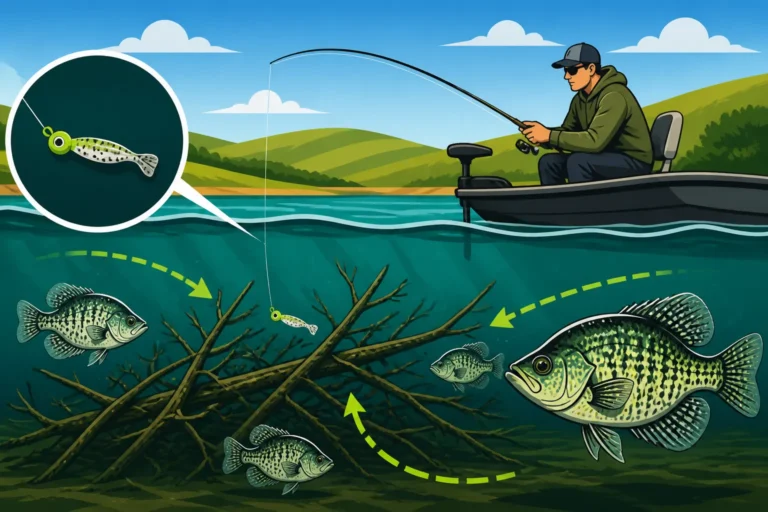
While many bank fishing scenarios focus on the bottom, fish often suspend at various depths, especially bass and crappie relating to cover or thermoclines. The drop shot rig, traditionally a finesse technique, can be surprisingly effective from the bank for targeting these suspended fish, particularly when you need a precise vertical presentation.
To tie a drop shot, you'll tie your hook directly to your main line using a Palomar knot, leaving a long tag end (12-36 inches). Instead of trimming that tag end, you'll tie a specialized drop shot weight to it. This allows your hook, with a soft plastic bait threaded on, to sit horizontally at a precise distance above the bottom, dictated by the length of your tag end. This rig minimizes snags because the weight is usually a slender, cylindrical shape, designed to hang up less, and if it does, the weight can often be pulled off, saving your hook and bait. It's excellent for fishing around docks, flooded timber, or anywhere fish might be holding just off the bottom. If you're focused on bass, knowing the Nebraska Largemouth Bass Length Limit is crucial for compliance. You can purchase specific drop shot weights and hooks, often in bulk, from online retailers like Amazon.
The Dependable Fish-Finder Rig for Bottom Dwellers
For the angler chasing larger, bottom-feeding species like channel catfish or carp, the classic fish-finder rig is hard to beat. It's a robust, straightforward setup designed for heavy bait and maximum scent dispersion, making it a go-to for many Nebraska reservoir enthusiasts.
This rig starts by threading a pyramid sinker or a flat, no-roll sinker onto a special "fish-finder slide" or directly onto your main line (though a slide is better for detecting bites). The slide has a snap swivel that connects to your weight, allowing the line to run freely. After the slide, tie on a barrel swivel to prevent line twist. Then, attach a heavy monofilament or fluorocarbon leader (12-30 inches) to the other end of the swivel, and finally, a sturdy circle hook or J-hook. The beauty here is similar to the slip sinker rig: the fish takes the bait, and the line slides through the weight, allowing for a natural pickup without immediate resistance. This rig is perfect for presenting cut bait, chicken livers, or dough balls directly on the reservoir bottom. If you're serious about your catfish game, understanding How to Catch Channel Catfish From the Bank offers further valuable strategies. Remember to check the Nebraska Catfish Bag Limits before you head out.
Essential Strategies to Master Nebraska Bank Fishing
Beyond the rigs themselves, a few strategic considerations can drastically improve your success rate when you're limited to fishing from shore in Nebraska's expansive reservoirs.
Bait, Lure, and Presentation Pairing
The rig is only as good as what you put on the end of it, and how you present it. For the Carolina and slip sinker rigs, live bait like nightcrawlers, shiners, or cut bait can be incredibly effective, especially for walleye and catfish. Soft plastic worms, creature baits, or swimbaits can also shine when worked slowly along the bottom. For the drop shot, small finesse worms, minnow imitations, or grub-style baits are ideal. The fish-finder rig excels with robust, scent-heavy baits such as chicken liver, cut shad, or commercially prepared stink baits, making it perfect for targeting big catfish.
Consider the clarity of the water and the time of day. In clear water, more natural baits and subtle presentations work best. In murky water or low light, scent and vibration become more important. Knowing when to use what bait, and how to effectively present it with your chosen rig, is a huge part of the puzzle. Our guide on Best Bait for Nebraska Catfish offers more detailed recommendations for those whiskered fighters.
Identifying Productive Shoreline Spots
Since you don't have a fish finder, learning to "read the water" from shore is a critical skill. Look for:
- Points and Peninsulas: These extend into the lake, often acting as highways for fish moving between shallow and deep water. Casting from a point allows you to hit multiple depth zones.
- Riprap: Rock-lined banks and causeways offer habitat for baitfish and invertebrates, attracting predators like walleye and bass. The rocks also absorb heat, drawing fish in cooler months.
- Inflows and Outflows: Any area where a creek or stream enters the reservoir can be a hotspot, especially after rain, bringing in food and creating current breaks.
- Wind-Blown Banks: Wind pushes baitfish and plankton to a shoreline, attracting game fish. These areas can be fantastic, especially for walleye.
- Visible Cover: Look for fallen trees, brush piles, or weed lines. Fish will relate to these for ambush points and safety.
- Public Access Areas: Often, parks and recreation areas have designated fishing piers or improved bank access. Check out the Best Nebraska State Recreation Areas for Fishing for ideas on where to go. While you're there, make sure you understand the Nebraska State Park Fishing Permit Rules.
Even without a boat, a keen eye and understanding of fish behavior can guide you to productive spots. Some of the Best Nebraska Lakes for Shore Fishing Without a Boat are places where shore access is deliberately good.
Selecting Your Bank Fishing Arsenal
The right gear makes a difference. For most reservoir bank fishing, a medium-heavy to heavy action spinning rod, 7 to 9 feet long, paired with a reliable spinning reel, is a fantastic all-around choice. The longer rod aids in casting distance and line control, while the heavier action helps with fighting larger fish and casting heavier rigs. Your fishing line should be robust; 10-20 lb monofilament or fluorocarbon main line is common, or you might opt for braided line with a fluorocarbon leader for increased sensitivity and casting distance.
Don't forget essentials like a good pair of pliers for hook removal, a tape measure, and a net, especially if you're targeting bigger fish. A net like those found on Amazon can prevent losing a prized catch right at the bank. Having a well-stocked tackle box or backpack with extra weights, hooks, swivels, and a variety of baits will ensure you're ready for any situation. For more detailed gear advice, consider our guide on Best Rod Setup for Nebraska Catfish or Best Tackle Box Setup for Nebraska Anglers. Always be sure to carry your valid Nebraska fishing license, which you can often purchase through the GoOutdoorsNE Online Permit System.
| Rig Type | Best For | Key Feature | Pros | Cons |
|---|---|---|---|---|
| Carolina Rig | Walleye, Bass, Catfish on structured bottoms | Weight slides, bait floats/drags freely | Great for covering ground, snag-resistant bait presentation | Can be cumbersome to cast with very long leaders |
| Slip Sinker Rig | Walleye, Crappie, Finicky Catfish | Weight slides freely on main line | Excellent bite sensitivity, natural bait presentation | More prone to snags than Carolina if weight is buried in structure |
| Drop Shot Rig | Suspended Bass, Crappie | Hook sits above weight at a set distance | Precise vertical presentation, good for finesse and vertical cover | Less effective for covering large areas, lighter tackle often required |
| Fish-Finder Rig | Large Catfish, Carp | Heavy weight anchors, line slides through | Designed for heavy bait, maximum scent dispersion, strong for big fish | Can be less sensitive for lighter bites, heavy gear needed |
Disclaimer
This article is for general informational purposes only and does not constitute professional advice. Laws, prices and regulations vary by location and change over time. Consult a qualified professional for guidance on your specific situation.