Can Landowners Fish Without a License on Their Own Pond in Nebraska?
You own the land, you paid for the dam work, and you stocked the bass and bluegill yourself, so it feels strange to buy a fishing permit just to cast off your own pond bank. Many Nebraska landowners assume private water is exempt, and many guests assume the landowner’s exemption covers them too. The real answer is more specific than either. This guide explains who qualifies for Nebraska’s landowner exemption, who still needs a permit, and how to stay legal when friends and family come out to fish.
The Short Answer: A Limited Exemption, Not a Blanket One
What the Landowner Exemption Covers
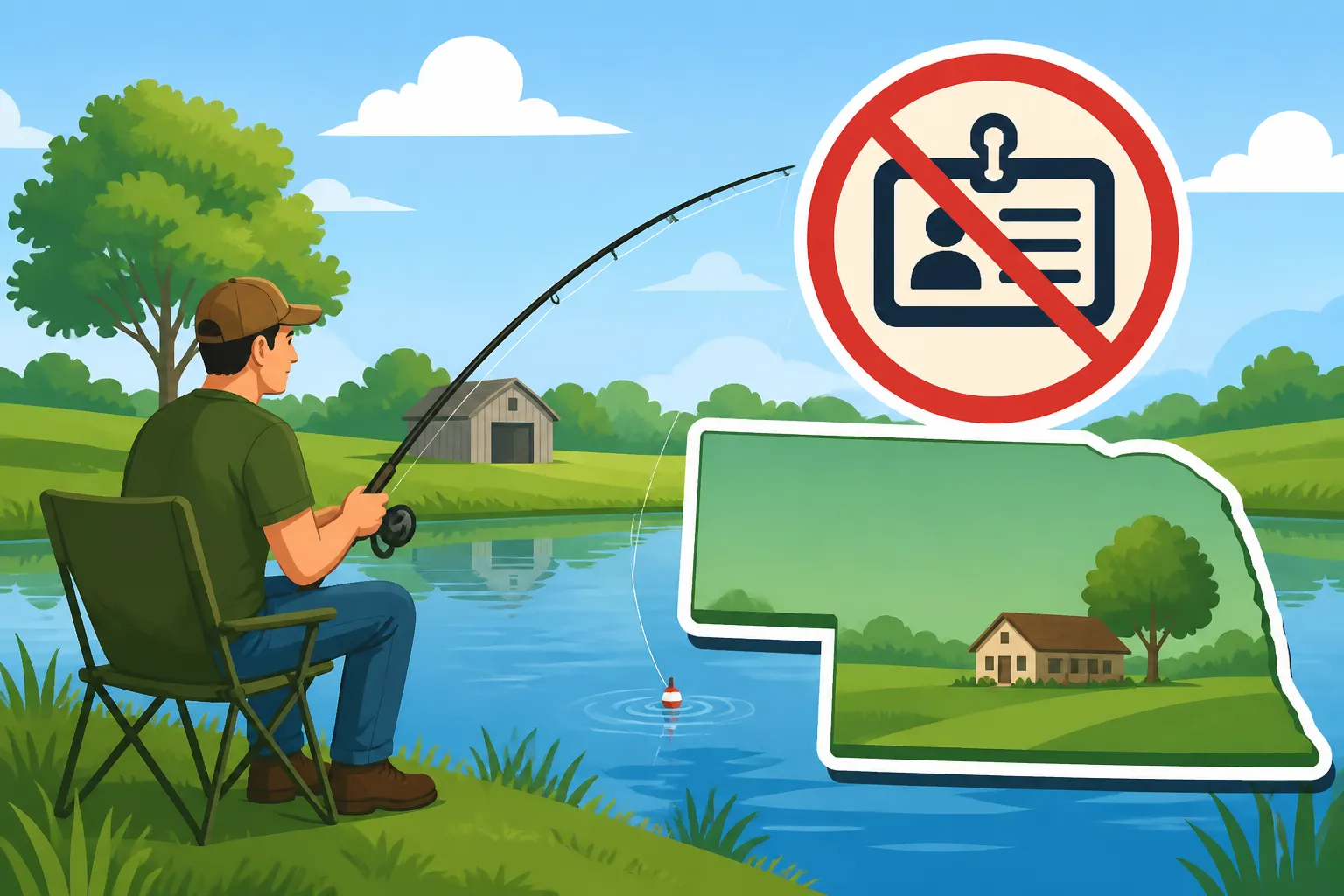
Nebraska does not treat private ponds as a license-free zone. Fishing permit requirements generally apply to all waters of the state, including farm ponds, sandpits and private lakes. What Nebraska does offer is a specific exemption for certain resident landowners and their families.
In general terms, the exemption allows a Nebraska resident who owns or operates farm or ranch land, and who lives on that land, to fish on that land without buying a fishing permit. Members of the landowner’s immediate family who live with them on that land are typically covered as well. The exemption is tied to the land and the household, not to the pond itself and not to anyone who happens to be invited.
The details matter, and the wording in the regulations is what counts. Questions like whether a tenant operator qualifies, how “immediate family” is defined, and whether the land must be used for agriculture are spelled out in the official rules. Before you rely on the exemption, read the current Nebraska fishing guide or contact the Nebraska Game and Parks Commission. Nebraska Landowner Fishing Permit Exemption goes deeper into the qualifying conditions.
Who Usually Does Not Qualify
The exemption is narrow. People who commonly assume they are covered but usually are not include:
| Situation | Usually Covered by the Exemption? | What They Should Do |
|---|---|---|
| Resident owner who lives on the farm with the pond | Generally yes, on that land | Confirm the current rule wording |
| Spouse or children living in the same home on the land | Generally yes, on that land | Confirm how immediate family is defined |
| Adult children who live in town and visit | Generally no | Buy a fishing permit if 16 or older |
| Friends, neighbors and hunting buddies | No | Buy a fishing permit if 16 or older |
| Owner who lives elsewhere and owns the pond as an investment or acreage | Often no | Check the rule, plan to buy a permit |
| Nonresident who owns Nebraska land | Generally no | Buy a nonresident permit |
| Kids under 16 | Do not need a permit regardless | Follow all other fishing rules |
The pattern is clear. Living on the land as a Nebraska resident is the key. Owning a pond on an acreage outside Lincoln while living in an apartment in town is not the same as running a farm with a stock pond out back. If you are unsure, buying an annual fishing permit is a small cost compared with the hassle of a citation.
Why the Rule Exists
The fishing permit system funds fisheries management, research, stocking programs, habitat projects and enforcement across the state. Every angler who buys a permit contributes to those programs, and the money supports the lakes, rivers and urban ponds that the public uses.
The landowner exemption reflects Nebraska’s long agricultural tradition: farm families who live on their land and fish their stock ponds are given a break. Extending that break to everyone who fishes on private water would remove a large share of anglers from the funding base. That is why the exemption focuses on resident farm and ranch families rather than on private water in general.
Guests, Kids and Common Situations
When Friends and Family Come to Fish
The most common problem is a well-meaning landowner who invites friends to fish and tells them they do not need a permit because it is private water. The landowner’s exemption does not extend to guests. Anyone 16 or older who is not covered by the exemption needs a valid Nebraska fishing permit, even on a private pond, even with the landowner’s permission.
Picture a farmer near Columbus who invites a coworker and their teenager out for an evening of bluegill fishing. The farmer and the farmer’s spouse are covered. The coworker needs a permit. The teenager may or may not need one, depending on age. If a conservation officer drives by, the coworker is the one who gets a citation. A quick text before the trip, reminding guests to buy a permit online, avoids that awkward moment entirely.
Permits are easy to buy online or through the Game and Parks app, and short-term options are available for occasional anglers. See How to Buy a Nebraska Fishing License Online to share with your guests.
Kids and Youth Anglers
Nebraska does not require anglers under 16 to buy a fishing permit. That means young kids, grandkids and their friends can fish your pond without a permit as long as they are under the age cutoff. Once they reach 16, they need their own permit unless they qualify under the landowner exemption by living on the land.
Farm ponds are some of the best places in Nebraska to introduce kids to fishing. Bluegill bite readily, bass are plentiful in many ponds, and kids can fish from the bank without worrying about crowds or boats. For more on the rules, read Do Kids Need a Fishing License in Nebraska?.
Free Fishing Days and Other Exceptions
Nebraska typically holds a Free Fishing Day when anyone can fish without a permit. It is a good opportunity to invite friends who rarely fish or who are not sure they want to buy a permit. All other regulations still apply on Free Fishing Day, including limits. Check Nebraska Free Fishing Day for details.
Some special events or group permits may also apply for organized outings, such as youth groups or camps. If you are hosting a large group, contact Game and Parks to see which options fit.
Sandpits, Acreages and Shared Ponds
Not every private pond in Nebraska sits on a working farm. Along the Platte River, many former sand and gravel pits have become lakes surrounded by homes, and a pond might be shared by several lot owners through a homeowners association. Across the state, acreages carved out of farmland often include a small pond that the new owner never planned to manage.
These situations rarely fit the landowner exemption neatly. A homeowner on a sandpit lake near Fremont or Kearney usually lives on a residential lot rather than on farm or ranch land, so the exemption may not apply, even though the homeowner owns lakefront property. Shared ponds raise the same question for every owner. In these cases, the safest approach is to assume a permit is needed for everyone 16 and older unless Game and Parks confirms otherwise.
Associations can make this easier by including a reminder about fishing permits in their lake rules and welcome packets. It saves neighbors from learning the rule from a conservation officer.
Rules That Still Apply on Private Water
Limits, Methods and Regulations
Even if you qualify for the exemption, many fishing regulations still apply. Nebraska’s statewide rules on legal methods, such as the number of lines and how fish may be taken, generally apply on private waters. Daily bag and length limits can also apply, depending on the species and the water. Some private waters may be treated differently, so read the regulations carefully or ask Game and Parks how they apply to your pond.
Many pond owners choose to set their own stricter rules for guests, such as releasing all bass above a certain length or keeping only a set number of bluegill. That is a smart management choice, but it does not replace the state’s rules. Think of your pond rules as additional restrictions on top of state law. For more, see Nebraska Fishing Rules for Farm Ponds and Private Lakes.
Stocking Your Pond Legally
Nebraska regulates fish stocking to protect native species and prevent the spread of disease and invasive species. Private pond owners generally must buy fish from licensed commercial suppliers, rather than moving fish from public lakes or rivers. Transporting live fish from public waters to private ponds is often illegal and can spread disease or invasive species.
Grass carp and other species used for weed control often come with special rules, such as requiring certain types of fish or permits. Check the current rules before you stock. A typical stocking plan for a Nebraska farm pond includes largemouth bass, bluegill and channel catfish, but the right mix depends on pond size, depth and goals. Many owners buy aeration systems, fish feeders and water test kits from Amazon or local farm stores to keep their ponds healthy. For a look at how pond fish grow, read How Fast Largemouth Bass Grow in Nebraska Ponds.
Access, Permission and Liability
If you are not the landowner, you must have permission to fish private water. Nebraska law requires permission to enter private land for fishing. Ask well ahead of time, be respectful, and follow the landowner’s rules about gates, vehicles and fish harvest. Nebraska Farm Pond Fishing Permission and Access has tips for asking permission.
Landowners who allow public access may want to understand how liability protections work in Nebraska, since recreational use statutes in many states provide some protection to landowners who allow free recreational access. Talk with an attorney or insurance agent about your specific situation.
What Happens if an Officer Stops By
Conservation officers can check anglers on private waters, just as they can on public lakes. An officer may ask for your fishing permit, ask about your catch, and confirm that you have permission to be on the land. If you are relying on the landowner exemption, be ready to explain that you are a resident who lives on the land and owns or operates it, and be prepared to show identification with your address.
A calm, cooperative conversation usually resolves questions quickly. If you are unsure whether you qualify, it is better to buy a permit than to try to argue the point on the pond bank.
Penalties for Fishing Without a Permit
Fishing without a required permit can result in a citation, fines and court costs. Penalties vary with the circumstances and can be more serious for repeat violations. In most cases, the cost of a citation is far higher than the cost of a permit. For more, see Fine for Fishing Without a License in Nebraska.
Making It Simple for Your Pond
A Landowner’s Checklist
- Confirm whether you qualify for the landowner exemption by checking the current regulations.
- Identify which family members living with you are covered.
- Tell guests 16 and older to buy a fishing permit before they arrive.
- Set clear pond rules for guests, such as catch-and-release for bass, and share them in writing.
- Buy stocking fish only from licensed suppliers and follow stocking rules.
- Keep a few loaner rods and life jackets for kids, especially if your pond has steep banks or a small boat.
- Recheck the rules each year, since regulations can change.
Pond Management That Keeps Fishing Good
A pond that fishes well year after year usually has an owner who pays attention to it. Balance between predators and prey is the main goal. In many Nebraska ponds, that means harvesting some bluegill and smaller bass while releasing larger bass that help control the bluegill population. Ponds with too many small bass often produce stunted fish, while ponds with too few bass can become crowded with small bluegill.
Water quality matters too. Shallow, nutrient-rich ponds can lose oxygen during hot summer stretches or under long ice cover, leading to fish kills. Aeration, careful management of runoff from feedlots and fields, and controlling excessive weed growth all help. Many owners keep a simple log of what they catch and keep each year, which helps them spot trends early. Inexpensive tools help here as well. A basic dissolved oxygen or water test kit, a thermometer on a string, and a measuring board for fish are all easy to find on Amazon or at a farm supply store, and they turn guesswork into real information about how your pond is doing through the seasons.
If you are unsure where to start, contact a Game and Parks fisheries biologist or a private pond consultant. They can suggest a stocking plan, harvest goals and habitat improvements that fit your pond.
Gear and Practical Tips
A small pond fishing kit makes visits easy. Keep a few spinning rods, a tackle box with hooks, bobbers, small jigs and soft plastics, and a net. Many landowners buy simple kits from Amazon or local sporting goods stores. A small jon boat or kayak can be useful for larger ponds, but make sure everyone wears a life jacket. For tactics, read Nebraska Pond Fishing Techniques.
Disclaimer
This article is for general informational purposes only and does not constitute professional advice. Laws, prices and regulations vary by location and change over time. Consult a qualified professional for guidance on your specific situation.