Nebraska White Bass Spring Run
The annual white bass spring run in Nebraska is one of the most anticipated events for many anglers, offering fast-paced action and the chance to fill a cooler, but knowing exactly when and where these fish will congregate can be a real puzzle. This comprehensive guide will peel back the layers of this exciting phenomenon, equipping you with the crucial knowledge about why it happens, where to find them, what gear works best, and the most effective techniques to make your next white bass trip a roaring success.
Understanding the White Bass Spring Run Phenomenon
For many Nebraska anglers, the white bass spring run isn't just a fishing trip; it's a rite of passage, a yearly event that signals the warming of the water and the awakening of the fish. But what exactly triggers this migration, and why do these fish seemingly disappear and then show up in such massive numbers in certain areas? It all comes down to their biological imperative to reproduce.
The Spawning Migration Trigger
As the longer days of spring arrive and the ice recedes from Nebraska's reservoirs, white bass begin to stir from their deeper wintering grounds. Their internal clocks, tuned to the changing seasons, tell them it's time to spawn. Unlike some other fish species that create nests, white bass are "broadcast spawners." This means they release their eggs and milt randomly into the water column, often over rocky or sandy bottoms in moving water. To do this, they undertake a significant migration upstream into tributary rivers and creeks that feed the main reservoirs and lakes. They're looking for those perfect conditions: flowing water that will carry and oxygenate their eggs, and temperatures that signal prime spawning readiness. It’s a mass movement, and when you hit it right, it feels like every fish in the lake is in one spot.
Key Environmental Factors
Several environmental cues play a critical role in initiating and sustaining the white bass spring run. First and foremost is water temperature. As water temperatures consistently climb into the upper 40s and low 50s Fahrenheit, the migration really kicks into gear. Once it hits the mid-50s to low 60s, you can expect the peak of the spawning activity. This warmth signals to the fish that conditions are optimal for their eggs to develop.
Another crucial factor is water flow. Significant inflows from snowmelt or spring rains can draw white bass upstream. The increased current provides the necessary environment for broadcast spawning. However, too much flow can make fishing difficult due to muddy water and strong currents that disperse the fish. A steady, moderate flow is often ideal. Lastly, day length subtly plays a role, contributing to the overall seasonal changes that prompt fish movement. Local conditions, such as recent rainfall, wind direction, and air temperature, will all influence the exact timing and intensity of the run in specific locations. Anglers who pay attention to these environmental signals, often found in local fishing reports, are usually the most successful.
Prime Locations for Intercepting the Spring Run
Knowing where to go is half the battle when it comes to the white bass spring run. These fish aren't just everywhere; they concentrate in specific areas, making them predictable for those in the know. Nebraska offers several fantastic opportunities, particularly in its major river systems and the upper reaches of its larger reservoirs.
Nebraska's Major River Systems
The state's prominent rivers become highways for white bass during their spring migration. The Platte River is arguably one of the most famous, with fish pushing far upstream from Lake McConaughy in the west and from the Missouri River in the east. Access points along the Platte, especially those with public access or near bridges, can be phenomenal. You'll often find anglers lining the banks, particularly below diversion dams or other current breaks. The Platte River Fishing Guide can give you more specific insights into this legendary waterway.
Similarly, the Elkhorn River and Loup River systems, both tributaries of the Platte, see robust white bass runs. These rivers offer a mix of public and private access, and smaller boats or kayaks can be incredibly effective for navigating upstream to less pressured areas. Look for bends, sandbars, and areas where smaller creeks merge, as these often create current seams where fish stack up. The sheer volume of water flowing through these systems means white bass have plenty of room to roam, but they'll always gravitate towards the easiest path upstream to spawn.
Reservoir Inflows and Tributaries
While the main rivers are hotspots, don't overlook the myriad of smaller creeks and streams that feed into Nebraska's larger reservoirs. Reservoirs like Harlan County, Sherman, and Branched Oak Lake all have specific arms or creeks where white bass will stage before making their run, or actively spawn within those feeder systems. These smaller waters can sometimes be less crowded than the major rivers and offer excellent fishing. Think about the upper reaches of Lake McConaughy where the North and South Platte rivers converge, or the various creeks flowing into larger bodies of water across the state. These areas often warm up faster, drawing the fish in.
Identifying Productive Holding Spots
Once you're in a general area, how do you pinpoint the exact spot where the white bass are? It comes down to understanding current, structure, and depth. White bass, especially during the run, are often found in or near current seams. These are areas where fast-moving water meets slower water, creating an ideal ambush point for baitfish and a resting spot for the white bass. Look for eddies, the downstream side of sandbars, bridge pilings, or submerged wing dams.
Depth changes are also key. While they'll be in shallower water to spawn, they might hold in deeper pools just downstream of riffles or rapids before making their final push. Structure, such as submerged logs, rock piles, or even changes in the riverbed, can offer current breaks and places for fish to hide. Keep an eye out for active baitfish, especially shiners or shad, as white bass are never far from their food source. Bird activity, like gulls diving into the water, can also signal schooling fish below. Using a fish finder, even a portable one, can help identify schools of fish in deeper channels or scour holes.
Essential Gear and Tackle for White Bass
You don't need a boatload of specialized equipment to get into spring white bass, but having the right setup can significantly improve your experience and success rate. These fish are aggressive, but they're not huge, so lighter tackle often makes the fight more enjoyable and can lead to more bites.
Rods, Reels, and Fishing Line
For white bass, I usually recommend a light to medium-light spinning rod, somewhere between 6 to 7 feet in length. This length gives you good casting distance from shore or a boat, and the lighter action allows you to feel those subtle bumps while still having enough backbone to handle a feisty white bass. A fast action tip is also helpful for quick hook sets.
Pair that rod with a small to medium-sized spinning reel (a 1000 to 2500 series is usually perfect). Look for a smooth drag system, as white bass can make surprisingly strong runs, especially in current. For line, 6 to 10-pound monofilament or fluorocarbon is a solid choice. Many anglers prefer a braided line in the 10 to 15-pound range for its sensitivity and casting distance, often with a 4 to 6-pound fluorocarbon leader to reduce visibility. You can find a great selection of reliable rods, reels, and lines on online retailers like Amazon, making it easy to stock up before the season. Check out Best Rod and Reel Combo for Beginners in Nebraska for more general advice.
Top Lures and Baits for Spring White Bass
White bass are aggressive feeders, especially when they're concentrated during the run, and they respond well to a variety of artificial lures. Here are some of my go-to options:
- Small Jigs: Think 1/8 to 1/4 ounce jigs, often tipped with a soft plastic grub, curly-tail, or paddle-tail in white, chartreuse, or pearl colors. These are incredibly versatile for casting or jigging.
- Inline Spinners: Brands like Mepps or Panther Martin in sizes #0 to #2 are classic white bass producers. Silver or gold blades are usually best, sometimes with a colored dressed hook.
- Small Crankbaits: Shallow-diving crankbaits that mimic small baitfish can be very effective, especially in areas with consistent depth. Choose colors like chrome/blue, shad patterns, or firetiger.
- Spoons: Casting spoons, especially thin, flashy ones like Kastmasters or Little Cleos in 1/8 to 1/4 ounce sizes, can be cast a mile and have a great action on the retrieve. Silver is often a top producer.
Live bait can also be deadly, especially small minnows fished under a bobber or on a jig head. However, with the sheer numbers of fish during the run, artificial lures often allow for faster fishing and easier release. For more specific recommendations, refer to Best Lures for the White Bass Run in Nebraska.
Other Tackle Box Necessities
Beyond your rods, reels, and lures, a few other items are critical for a successful white bass trip.
- Terminal Tackle: Bring an assortment of small swivels (barrel or snap swivels to prevent line twist), small split shots or bullet weights if you're fishing live bait or needing to get jigs deeper faster, and extra hooks (jig heads or Aberdeen hooks if using minnows).
- Pliers/Forceps: Essential for quickly and safely removing hooks, especially if you plan on catch and release. White bass mouths can be bony, and pliers protect your fingers.
- Leader Material: A spool of fluorocarbon leader (4-8 lb test) is good to have, especially if you're fishing braided mainline, as it provides invisibility in clearer water and abrasion resistance.
- Fishing Vest or Small Backpack: White bass fishing can be highly mobile. A small vest or backpack helps keep your essential lures, extra line, and pliers organized and accessible. I often use a small fishing backpack from Amazon to carry everything I need, making it easy to move along the bank.
- Net: A small, rubberized landing net is helpful for quickly scooping up fish, especially when the action is fast, and it's much gentler on the fish if you plan to release them.
Effective Techniques for Landing Spring Run White Bass
The beauty of white bass fishing during the spring run is how aggressive these fish can be. They're often so focused on their spawning migration and feeding that they'll hit just about anything that looks like a meal. However, a few techniques consistently outperform others.
Casting and Steady Retrieves
This is perhaps the most common and often the most productive method for spring white bass. Find a spot where fish are likely to be staging or actively moving upstream, then cast your chosen lure (jig, spinner, small crankbait, or spoon) and retrieve it steadily. The key is to match the retrieve speed to the current and the fish's mood.
- Vary Your Speed: Sometimes a fast retrieve will trigger a reaction strike; other times, a slower, more deliberate pace is needed. Experiment until you find what they want.
- Work the Current: Cast upstream and allow your lure to drift naturally with the current while reeling in the slack, or cast directly across the current and let it swing downstream. White bass will often hold just out of the main current, darting into it to ambush bait.
- Cover Water: Don't stay in one spot if you're not getting bites. White bass school, so if you find one, there are usually many more. Fan cast to cover a wide area, moving along the bank or with your boat.
When you feel that characteristic "thump" or twitch, set the hook with a firm, upward sweep of the rod.
Jigging and Vertical Presentations
When white bass are holding in deeper pools or tightly schooled, jigging can be incredibly effective. This is particularly useful from a boat, where you can position yourself directly over the fish, or from a bridge or high bank where you can drop a lure vertically.
- Boat Fishing: Use your fish finder to locate schools of white bass. Once you're over them, drop a 1/4 to 3/8 ounce jig (tipped with a soft plastic grub or a live minnow) straight down. Lift your rod tip sharply a foot or two, then let the jig fall on a semi-slack line. Most bites will occur on the fall.
- Shore/Pier Fishing: If you're fishing a deep current break or a bridge piling, a heavier jig might be needed to get down quickly. Cast out and let the jig sink to the bottom, then work it with a series of short hops and pauses as you retrieve.
- Spoons: Vertically jigging spoons can also be very effective. Their flash and flutter on the drop often imitate a dying baitfish, which is irresistible to aggressive white bass.
Mastering Boat and Shore Fishing Strategies
Whether you have a boat or are limited to shore, understanding how to maximize your access during the run is crucial.
Shore Fishing: This is how many anglers experience the white bass run, and it can be incredibly productive. Focus on areas with easy public access:
- Public Access Points: Boat ramps, state park shorelines, and designated fishing areas along rivers and reservoirs are prime spots. Check the Best Free Public Fishing Access in Nebraska for ideas.
- Bridge Crossings: Bridges often create current breaks and deep pockets, making them white bass magnets. Always be mindful of safety and legality when fishing near bridges.
- Wading: In shallower river sections, wading can allow you to reach otherwise inaccessible areas and get closer to the fish. Always be aware of current strength and riverbed conditions.
Boat Fishing: Having a boat, even a small Jon boat or kayak, opens up many more possibilities:
- Upstream Access: Boats allow you to navigate upstream into the smaller, less pressured tributaries where white bass often spawn.
- Cover More Water: You can quickly move between different river bends, sandbars, and current seams to find active schools.
- Vertical Jigging: As mentioned, a boat allows you to position directly over deep schools of fish for vertical jigging. Consider a sturdy Best Jon Boats for River Fishing if you plan to frequent moving waters.
Regardless of your platform, always practice good boating etiquette and be respectful of other anglers.
Timing Your White Bass Adventures for Peak Action
Timing is everything when it comes to the white bass spring run. You can have the perfect gear and the best techniques, but if the fish aren't there, you won't catch anything. Knowing when to hit the water can mean the difference between an empty stringer and a cooler full of fish.
Best Time of Day and Ideal Weather
White bass are often active throughout the day during their spring run, but certain periods can be exceptionally productive. Early mornings and late evenings often provide the best action, especially as the sun gets higher later in the spring. During these low-light conditions, white bass tend to be more aggressive and less wary, pushing baitfish into shallower water.
Overcast days can also extend the prime bite throughout the midday, as the reduced light penetration makes fish more comfortable in open water. While white bass are often caught during bright, sunny periods, the bite can sometimes be slower. A light chop on the water from a gentle breeze can also improve fishing by breaking up the surface and making lures seem more natural, while also concentrating baitfish. Heavy winds, however, can make casting difficult and muddy the water.
Monitoring Water Conditions
As discussed earlier, water temperature and flow are the absolute keys to the white bass run. You need to keep a close eye on these factors leading up to and during the season.
- Temperature: The ideal range for the most intense spawning activity is typically when water temperatures are consistently in the mid-50s to low 60s Fahrenheit. You can often find current water temperature readings through local fishing reports or by checking online hydrological data for major rivers. A small thermometer can also be part of your essential gear.
- Flow/Clarity: Moderate flow is desirable. Too much current from heavy rains can blow out rivers, making them muddy and unfishable. Conversely, very low flow can sometimes stall the migration. Ideal conditions are typically when the water is slightly stained but not opaque, with a consistent, fishable current. Look for reports on river levels and clarity from local bait shops or online resources.
| Condition | Impact on White Bass Run | Action for Anglers |
|---|---|---|
| Water Temp: 40-50°F | Pre-spawn staging, fish moving up | Fish deeper holes, main river channels |
| Water Temp: 50-60°F | Peak migration and spawning | Target current breaks, eddies, shallower spawning flats |
| Water Temp: 60°F+ | Post-spawn, fish dispersing, still active | Follow fish as they move back to main lakes/reservoirs |
| Moderate Flow | Ideal for spawning and concentrating fish | Focus on current seams, structure |
| High/Muddy Flow | Fish dispersed, difficult fishing | Wait for water to drop and clear, target slack water |
| Low Flow/Clear Water | Fish can be spooky, migration may slow | Use lighter line, smaller lures, fish early/late |
Reading the Signs of a Productive Run
Beyond just checking the weather and water conditions, there are other subtle signs that the white bass run is in full swing. One of the most obvious is other anglers. If you see many boats or bank anglers congregated in a specific area, it's often a good indicator that fish are present. Local bait shops are invaluable resources; they often have the most up-to-date information on where the fish are biting. Don't be afraid to ask!
Keep an eye out for surface activity. While not as common as a full-blown summer "boil," during peak times, white bass might push bait to the surface, creating a visible commotion. Also, watch for bird activity, particularly gulls or terns diving into the water, as they are often targeting the same baitfish that white bass are pursuing. The general buzz in the fishing community, both online and in person, will often be the first sign that the white bass run has officially begun.
Regulations, Limits, and Responsible Angling
While the white bass spring run is synonymous with fast action and often generous limits, it's crucial to remember that responsible angling ensures the sustainability of this fantastic fishery for years to come. Understanding and adhering to Nebraska's fishing regulations is not just good practice, it's the law.
Nebraska's White Bass Bag and Possession Limits
The Nebraska Game and Parks Commission sets specific daily bag and possession limits for various fish species, including white bass. These limits are designed to manage fish populations and prevent overharvesting. It's vital to check the current Nebraska Fishing Regulations Explained before heading out, as these can change. Generally, white bass often have quite liberal limits, reflecting their abundance and reproductive capacity, but always verify.
- Daily Bag Limit: This is the maximum number of fish of a particular species you can keep in one calendar day.
- Possession Limit: This refers to the maximum number of fish of a particular species you can have in your possession at any given time, whether in your livewell, cooler, vehicle, or at your home. This limit is often twice the daily bag limit.
Exceeding these limits can result in significant fines and penalties. Ignorance of the law is generally not considered an excuse, so carry a copy of the regulations (digital or physical) with you. Remember, a valid Nebraska Fishing License Guide is always required for anglers aged 16 and older.
Practicing Ethical Catch and Release
Even with generous limits, many anglers choose to practice catch and release, especially for fish they don't plan to eat or for smaller individuals. If you intend to release fish, proper handling is paramount to ensure their survival.
- Minimize Handling: Try to keep the fish in the water as much as possible. If you must bring it out, do so quickly.
- Wet Hands: Always wet your hands before handling a fish. Dry hands can remove the fish's protective slime coat, making it susceptible to disease.
- Support the Fish: Cradle the fish horizontally, supporting its belly. Avoid holding it by just the jaw or gill plates, especially for larger fish, as this can damage internal organs or the jaw itself.
- Quick Hook Removal: Use pliers or forceps to remove hooks quickly and gently. If a fish is deeply hooked, it's sometimes better to cut the line as close to the hook as possible than to try and tear the hook out, as the hook will eventually dissolve.
- Revive If Necessary: If a fish seems stressed or is struggling to swim away, gently hold it upright in the water, facing into the current, until it regains its strength and swims off on its own. For more general guidelines, see Catch and Release Best Practices in Nebraska.
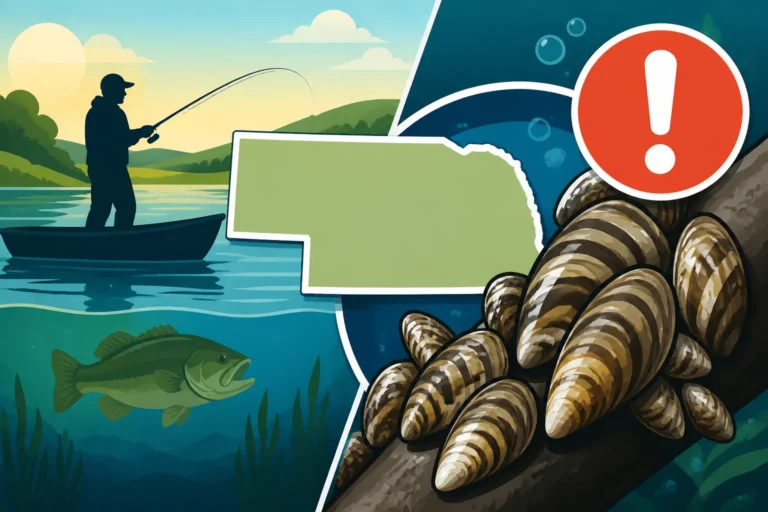
Preventing Aquatic Invasive Species Spread
The health of Nebraska's waters depends on all of us doing our part to prevent the spread of aquatic invasive species (AIS). White bass, like many fish, move between different water bodies, and so do anglers. It's critical that we don't inadvertently transport unwanted hitchhikers like zebra mussels, Eurasian watermilfoil, or Asian carp from one lake or river to another.
The mantra is "Clean, Drain, Dry":
- Clean: Before leaving any boat ramp or access point, remove all visible plants, mud, and debris from your boat, trailer, waders, and fishing gear. Pay special attention to anchors, ropes, and inside livewells.
- Drain: Pull your boat's drain plug and completely drain all water from the bilge, livewell, and bait buckets. This also applies to kayaks and canoes – drain all compartments.
- Dry: Allow all equipment to thoroughly dry for at least five days before using it in a different body of water. If you can't dry it, wash it with high-pressure, hot water.
By following these simple steps, we can all contribute to protecting Nebraska's valuable aquatic ecosystems and ensure the white bass run remains a vibrant and healthy part of our angling heritage. Don't forget that many waters may also require a Nebraska Aquatic Invasive Species Stamp for boaters.
This article is for general informational purposes only and does not constitute professional advice. Laws, prices and regulations vary by location and change over time. Consult a qualified professional for guidance on your specific situation.