Nebraska Black Crappie vs White Crappie
It's a scene many of us Nebraska anglers know all too well: you've just pulled in a beautiful panfish, its silvery flanks gleaming in the sun, and immediately the question pops into your head – is it a black crappie or a white crappie? The truth is, distinguishing between these two popular species can be surprisingly tricky, even for seasoned veterans, and mistaking one for the other happens more often than most of us care to admit. This comprehensive guide is here to unravel that mystery, helping you confidently identify, locate, and ultimately catch more of both black and white crappie across Nebraska's diverse waters.
The Crappie Conundrum: Why Proper Identification in Nebraska Matters
For many anglers, a crappie is a crappie, especially when they're biting! And while both species offer fantastic sport and delicious table fare, there are subtle yet significant differences that can impact everything from where you look for them to how you rig your line. Understanding these distinctions isn't just about showing off your fish ID skills; it's about becoming a more effective and knowledgeable angler on Nebraska's lakes and rivers.
Common Misconceptions and Angler Frustrations
One of the biggest misconceptions is that color alone is enough to tell them apart. It sounds logical, right? Black crappie are darker, white crappie are lighter. But anyone who's spent enough time on the water knows that fish coloration can vary wildly depending on water clarity, bottom composition, light conditions, and even their diet. A black crappie from murky water might look surprisingly light, and a white crappie from clear, dark-bottomed water might have a pronounced dark sheen. This variability often leads to frustration, making it seem like the "rules" for identification are constantly changing. You might be convinced you've got a white crappie, only to scrutinize it later and second-guess yourself, wondering if you missed a key detail. This indecision can take away from the joy of the catch, and sometimes, even cause you to misremember a fantastic fishing spot for a particular species.
Beyond color, another common oversight is the focus solely on spots or bars. While white crappie are often characterized by distinct vertical bars and black crappie by irregular speckles, even these patterns can be less obvious in certain specimens or under poor light. This is particularly true when you're rapidly unhooking a fish to get your line back in the water, or if the fish is particularly stressed. The quick glance often isn't enough to catch the subtle nuances that truly differentiate them. Many anglers find themselves flipping through a fish identification chart back home, trying to match a photo they snapped, only to realize the picture isn't clear enough to make a definitive call. This frustration underscores the need to look beyond superficial markings and delve into more reliable anatomical features.
The Real-World Impact of Knowing Your Crappie
So, why bother with the details? It goes far beyond simply satisfying your curiosity. Different crappie species often prefer different habitats and react to different fishing techniques. If you're consistently targeting what you think is a black crappie in a spot better suited for whites, you might be missing out on a lot of action. Knowing which species dominates a particular area, or which one you're predominantly catching, can inform your strategy for the rest of the day. For example, if you're pulling white crappie out of a shallow, brushy cove, you know to stick to similar cover. If you suddenly start catching black crappie, it might signal a change in depth or cover preference, prompting you to adjust your approach.
Furthermore, while Nebraska's general crappie regulations for bag and possession limits usually apply to both species collectively, there can be subtle differences in their growth rates and population dynamics in specific lakes. Understanding which species you're catching can give you insights into the health of the fishery. If you're regularly catching smaller black crappie in a lake known for larger whites, it might suggest different population pressures or food sources at play. This knowledge makes you a more informed and adaptive angler. It allows you to refine your search, choose the right bait and presentation, and ultimately, increase your chances of a successful outing. Moreover, for those passionate about trophy fish, knowing the average size and potential for a Nebraska State Record Crappie Weight for each species can guide your quest.
Decoding the Black Crappie: Distinctive Features
The black crappie ( Pomoxis nigromaculatus) is a beautiful and often chunky fish highly sought after by Nebraska anglers. While its name suggests a darker hue, as we discussed, color alone isn't the most reliable identifier. Instead, we need to focus on consistent anatomical features that define this species, regardless of environmental variables.
Key Anatomical Markers for Black Crappie
The most definitive way to identify a black crappie is by counting the spines in its dorsal fin. A black crappie will almost always have seven or eight dorsal fin spines. This is a consistent and reliable characteristic that doesn't change with water clarity or diet. To check this, gently lay the fish on its side and carefully count the stiff, pointed rays at the front of the dorsal fin. These are distinct from the softer, segmented rays further back. Once you get used to this, it becomes second nature and is far more dependable than trying to discern subtle color differences.
In terms of body shape, black crappie tend to have a deeper, more compressed, and almost disc-like body compared to their white crappie cousins. Imagine a slightly more rounded, fatter profile. Their back will appear more arched, giving them a more "tall" appearance when viewed from the side. This robust body shape is often associated with their preference for clearer water and deeper structure, providing them with a streamlined profile for navigating submerged timber and weed lines. You'll notice a more uniform curve from the top of its head down its back to its tail, without the pronounced "hump" often seen on white crappie.
Understanding Black Crappie Coloration and Patterns
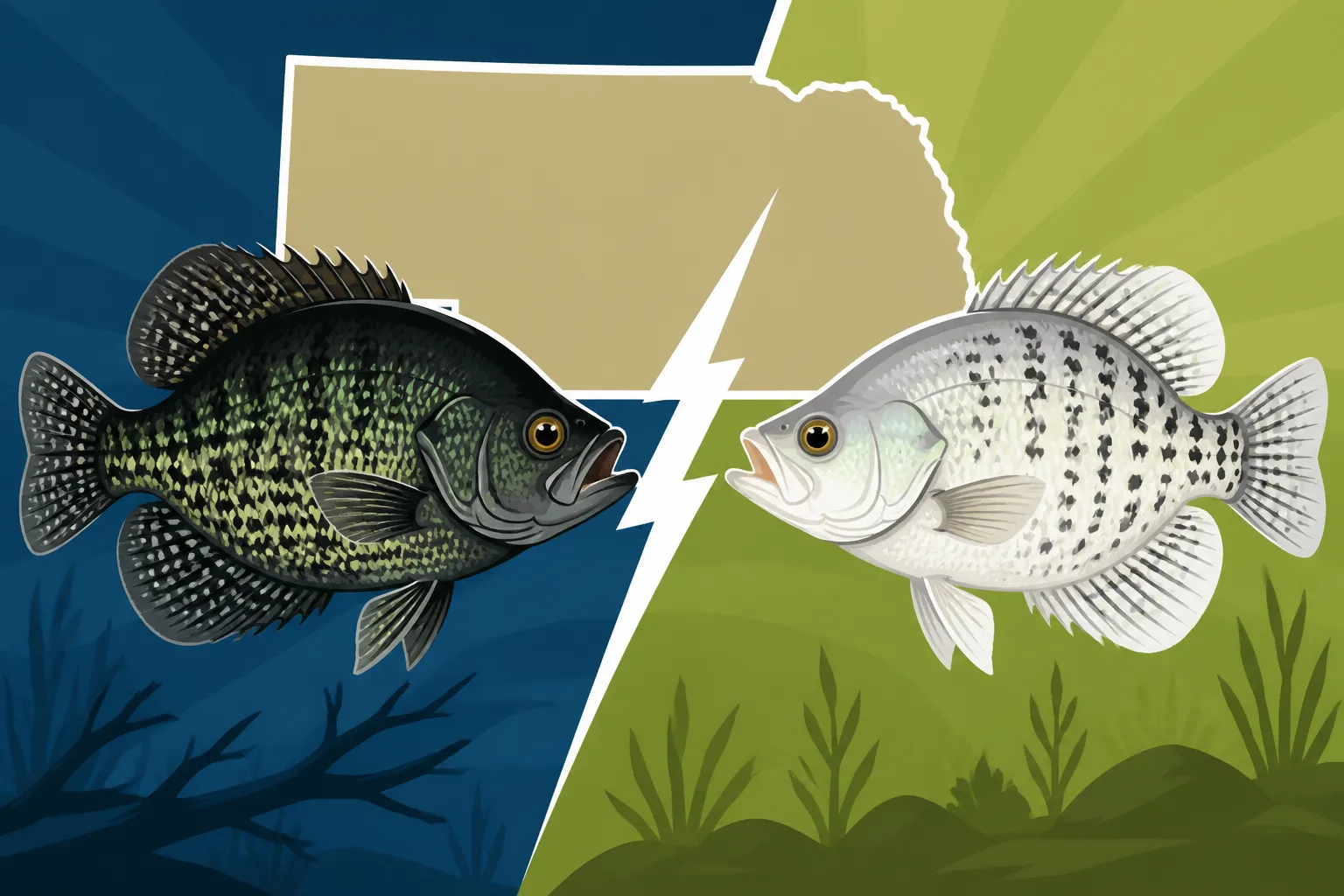
While not the definitive identifier, black crappie do generally exhibit a darker, more mottled appearance. Their bodies are typically silver to olive green, heavily speckled with irregular black spots that are scattered seemingly at random across their flanks. These spots don't usually form distinct vertical bands or bars. Instead, they create a kind of "salt and pepper" effect, often denser towards the back and top of the fish. This mottled pattern serves as excellent camouflage among the dense vegetation and submerged cover where they often reside.
Another subtle but helpful cue is the presence of dark pigmentation on the webbing between the dorsal fin spines, giving the fin a somewhat darker, more opaque look. The overall impression is one of a "dirty" or "splotchy" fish, rather than one with clear, defined stripes. Their fins often have a darker hue as well, and sometimes you'll even see a dark spot on the gill cover, though this isn't always present or pronounced enough to be a reliable primary identifier. If you're looking for a quick identifier, after counting the dorsal spines, look for these irregularly scattered spots rather than distinct vertical lines. Sometimes, if you're having trouble, it helps to take a quick photo and zoom in later, or even better, invest in a small, waterproof field guide you can bring along. Many good ones can be found on Amazon.
Decoding the White Crappie: Telling Them Apart
The white crappie ( Pomoxis annularis) is another beloved panfish in Nebraska, offering fantastic angling opportunities. Just like with the black crappie, its common name can be misleading. While generally lighter, there are more reliable physical traits that will help you confidently identify this species in your net.
Key Anatomical Markers for White Crappie
For the white crappie, the most reliable characteristic to look for is the number of dorsal fin spines. White crappie consistently have five or six dorsal fin spines. This is the key distinguishing feature from the black crappie's seven or eight. When you're out on the water, getting into the habit of gently counting these spines will eliminate most of the guesswork. It might take a moment, but it's a sure-fire way to confirm your catch.
In terms of body shape, white crappie tend to be more elongated and slightly less compressed than black crappie. They have a body that's often described as being more "football-shaped" or having a "longer" profile. A key anatomical tell is a noticeable dip or concavity in the profile of the head and back, particularly above the eyes, before rising to the dorsal fin. This creates a slightly more angular profile compared to the smoother, more rounded curve of a black crappie. This body shape is often advantageous for fish that inhabit more open or turbid waters, allowing for efficient movement through less structured environments. When you hold one, it often feels a bit slimmer and longer, even if they are the same overall length as a black crappie.
Understanding White Crappie Coloration and Patterns
While their name suggests a lighter overall appearance, the most distinguishing color-related feature of the white crappie is its distinct vertical bars. These bars are typically darker than the rest of the body and run from their back down to their belly, creating a striped or banded effect. These stripes are usually quite pronounced and evenly spaced, making them a much more reliable visual cue than the random speckling of a black crappie. The body coloration itself usually ranges from a silvery-white to light olive, often with a pearlescent sheen, especially after being freshly caught from clear water.
Unlike the black crappie, the webbing between the dorsal fin spines of a white crappie is generally clear or only lightly pigmented, contributing to their overall lighter appearance. The fins themselves also tend to be lighter and less speckled than those of black crappie. When you combine the count of 5-6 dorsal spines with these clear vertical bars, you've got a very strong identification. Even if the fish is particularly pale or dark for some reason, these bars are almost always present and distinct enough to be a reliable secondary identifier. Always remember, if you're ever in doubt, rely on that spine count first and foremost; it's the biological fingerprint that doesn't lie.
Crappie Identification Cheat Sheet
To help solidify these differences, here's a quick comparison table of the key identifiers for both black and white crappie:
| Feature | Black Crappie | White Crappie |
|---|---|---|
| Dorsal Fin Spines | 7-8 spines (most reliable indicator) | 5-6 spines (most reliable indicator) |
| Body Shape | Deeper, more compressed, disc-like; arched back | More elongated, "football-shaped"; slight dip in head profile |
| Coloration/Pattern | Silvery-olive, irregularly speckled with dark spots; no distinct vertical bars | Silvery-white to light olive, distinct vertical bars along flanks |
| Dorsal Fin Webbing | Often dark or heavily pigmented | Usually clear or lightly pigmented |
| Mouth | Slightly smaller, more upturned | Slightly larger, more forward-facing |
Habitat Preferences: Where Each Crappie Species Thrives in Nebraska
Understanding where black and white crappie prefer to live is crucial for successful angling. While both can be found in a variety of Nebraska waters, they generally gravitate towards different environments, which directly influences how and where you should target them.
Black Crappie's Preferred Nebraska Haunts
Black crappie are often considered the "clear water crappie." They tend to favor environments with clearer, cooler water, and a good amount of submerged cover. Think about lakes or reservoirs with ample aquatic vegetation, standing timber, brush piles, and rock piles. They love to ambush their prey from these hiding spots. In Nebraska, this often means deeper main lake points, submerged humps, weed lines, and areas with rip-rap. These fish are more sensitive to turbidity, meaning they prefer waters where they can easily see their prey.
Lakes like Merritt Reservoir Fishing Guide in the Sandhills or Box Butte Reservoir Fishing in the Panhandle, known for their clearer water and extensive underwater structure, can be prime black crappie territory. They'll often suspend over deeper water near these structures, especially during the warmer months, making them a bit more challenging to locate sometimes. During the spawn, they'll move into shallower areas, but still often seek out harder bottoms and denser cover than white crappie might. If you're exploring a new lake and notice exceptionally clear water with plenty of submerged weeds or timber, your chances of finding black crappie are likely higher.
White Crappie's Favorite Nebraska Waters
In contrast, white crappie are often dubbed the "turbid water crappie." They are more tolerant of warmer, shallower, and often murkier water conditions. Their preferred habitats include areas with extensive brush piles, laydowns, stump fields, and dock structures, particularly in creeks, rivers, and shallower, nutrient-rich reservoirs. They thrive in environments where black crappie might struggle due to lower visibility.
Major river systems like the Platte River Fishing Guide and the Missouri River Fishing in Nebraska, along with many of Nebraska's large, shallower reservoirs, frequently hold robust populations of white crappie. You'll often find them congregating in dense schools around visible cover in shallower bays, coves, and river bends. During the spawn, they'll aggressively move into very shallow water, often right up against the bank, particularly around submerged roots and brush. If you're fishing a lake known for its stained water or a slower-moving river stretch, targeting areas with abundant woody cover, you're likely to encounter a good number of white crappie. Their ability to thrive in these conditions means they can often be found in waters that might seem less appealing to other species.
When Their Worlds Collide: Mixed Crappie Populations
While black and white crappie generally have their preferences, it's not uncommon to find both species coexisting in the same body of water, and sometimes even in the same general area. This often happens in larger, more diverse reservoirs that offer a range of habitats – clear water sections, vegetated areas, and murkier, brushy coves. For instance, a large Nebraska reservoir might have clear, deep rock-lined areas on one end that favor black crappie, and shallow, silty bays with numerous laydowns on the other end where white crappie dominate.
The overlap can be particularly noticeable during seasonal migrations, such as the spring spawn, when both species move shallower. In these situations, knowing the subtle identification differences becomes even more critical. You might be targeting white crappie in a brush pile and suddenly start catching black crappie, indicating that the cover extends into slightly deeper, clearer water where the black crappie prefer to stage. Paying attention to these shifts can help you fine-tune your presentation and location. Always remember to check your catch against the reliable spine count and body shape to confirm which species you're encountering, especially in waters where both are known to thrive. This adaptability in identifying your catch helps immensely in adapting your strategy on the fly.
Tailoring Your Approach: Fishing Strategies for Each Crappie Type
Knowing where crappie live is one thing, but knowing how to catch them is the angler's ultimate goal. Because of their differing habitat preferences and behaviors, a subtle shift in your fishing strategy can significantly increase your success when targeting either black or white crappie in Nebraska.
Effective Techniques for Black Crappie
Black crappie, with their preference for clearer water and often suspended positions, tend to respond well to more subtle, finesse presentations. Since they rely more on sight, lure color and profile can be very important. Smaller jigs, often 1/32 to 1/16 ounce, fished on light line (4-6 lb test monofilament or fluorocarbon) are frequently effective. Tipping these jigs with a small minnow, a piece of Berkley PowerBait, or a tiny plastic tube or grub can entice bites. When How to Find Crappie in Cold Water, a slow, vertical presentation, jigging directly over submerged brush or timber, is often key. You might need to experiment with different depths, as black crappie can suspend anywhere from just under the surface to several feet off the bottom, especially when relating to deep structure or baitfish schools.
A common technique is to use a slip bobber rig, allowing you to present your bait at a precise depth over structure without having to constantly adjust your setup. If you're fishing a large area, slow trolling with small jigs or crankbaits can help you cover water and locate suspended schools. Black crappie can be a bit more finicky, so patience and a willingness to try different presentations are often rewarded. Consider experimenting with jig colors that mimic natural baitfish, or brighter "chartreuse" or "pink" options if the fish are aggressive. You can find a vast array of these small jigs and plastics on Amazon, allowing you to be well-prepared for any scenario.
Go-To Methods for White Crappie
White crappie, often found in shallower, more turbid waters and around dense cover, tend to be a bit more aggressive and respond well to presentations that make more of a disturbance or are easily seen. They're often less shy than their black crappie cousins. Jigs ranging from 1/16 to 1/8 ounce, sometimes even heavier, are popular, frequently fished with a minnow or a larger soft plastic grub that displaces more water. The vertical bars on their bodies also make them camouflaged in brushy areas, so a bait that stands out visually can be very effective.
Casting jigs or small crankbaits directly into brush piles, along dock lines, or near fallen trees is a classic white crappie strategy. You'll often need to be prepared for snags, as you're fishing right in their living room! A good tip when How to Catch Crappie Around Brush Piles is to use a sturdy rod and reel combo that can handle pulling fish out of thick cover. Spider rigging, where multiple rods are deployed from a boat with different bait presentations, is also highly effective for covering large areas of shallow, brushy water. During the spring spawn, white crappie will move into extremely shallow water, and a simple jig-and-minnow under a fixed bobber, cast close to the bank, can be incredibly productive. Don't be afraid to use a slightly more aggressive retrieve or jigging motion to trigger those reaction strikes.
Essential Gear for Nebraska Crappie Fishing
Regardless of whether you're chasing black or white crappie, having the right gear makes all the difference. A medium-light action spinning rod, typically 6 to 7 feet long, paired with a matching spinning reel (like those versatile options often found on Amazon) spooled with 4-8 pound test monofilament or fluorocarbon line, is an excellent all-around setup. This combination offers the sensitivity to detect subtle bites and the backbone to handle decent-sized crappie. Many anglers prefer Best Spinning Reels for Panfish for their smooth drag and lightweight feel.
Beyond your rod and reel, a well-stocked tackle box is essential. This should include a variety of small jigs (marabou, hair, soft plastic grubs, tubes), small crankbaits, slip bobbers, split shot weights, and an assortment of hooks for live bait. Don't forget a good pair of fishing pliers for hook removal and a small landing net, especially if you're targeting larger specimens. A small cooler to keep your minnows lively and your catch fresh is also invaluable. For specific crappie jig colors, you might want to consult a guide like Best Jig Color for Nebraska Crappie, but generally, natural colors for clear water and brighter colors for stained water are good starting points. You'll also want to keep an eye on local regulations for Nebraska Crappie Bag Limits.
Beyond the Catch: Ecological Role and Conservation in Nebraska
Crappie are more than just a fun fish to catch or a tasty meal; they play a vital role in Nebraska's aquatic ecosystems. Understanding their place in the food web and how they're managed helps us appreciate these fish even more and ensures that future generations of anglers can enjoy them.
Crappie in the Nebraska Ecosystem
Both black and white crappie are important forage fish for larger predatory species such as walleye, bass, and northern pike. Their prolific breeding habits mean they can provide a consistent food source, contributing to a healthy and balanced aquatic food chain. Conversely, crappie themselves are opportunistic predators, feeding on a wide array of invertebrates, insects, and smaller baitfish like shad and minnows. They help keep insect populations in check and play a role in controlling smaller fish species.
Their presence and abundance can also be indicators of a lake's health. Thriving crappie populations often suggest a productive environment with good water quality and sufficient cover. However, overpopulation can sometimes be an issue, particularly with white crappie, leading to stunted growth if there isn't enough forage for too many fish. This delicate balance is something fisheries biologists continually monitor, ensuring that crappie populations remain healthy for both the ecosystem and for anglers. Understanding their diet and behavior can also influence your bait choices; for example, knowing What Crappie Eat in the Spring can help you select the most enticing lure.
Angler Responsibility and Management
Nebraska's Game and Parks Commission actively manages crappie populations across the state through stocking programs, habitat improvements, and regulations. These regulations, including daily bag and possession limits, are designed to ensure sustainable fishing pressure and healthy fish populations. It's crucial for every angler to be aware of and adhere to these rules, not just to avoid penalties, but to contribute to the long-term health of our fisheries. You can always find the latest information in the official Nebraska fishing guide, often available online or at license vendors.
Practicing responsible catch and release, especially for larger breeding fish, can also benefit the fishery. If you're planning to keep fish for a meal, only keep what you'll realistically consume and handle your catch respectfully. For those interested in deeper conservation, supporting organizations that work on aquatic habitat restoration and water quality initiatives directly benefits crappie and all other aquatic life. By being informed, responsible, and ethical anglers, we can all help ensure that Nebraska remains a fantastic place to fish for crappie for many years to come. Remember, even little things like properly disposing of your fishing line or educating a new angler about fish identification and regulations makes a difference.
Disclaimer
This article is for general informational purposes only and does not constitute professional advice. Laws, prices and regulations vary by location and change over time. Consult a qualified professional for guidance on your specific situation.