Nebraska Panfish Species Guide
There’s something truly special about panfishing in Nebraska. Maybe it’s the simplicity, the accessibility, or perhaps it's the sheer joy of a bobber disappearing under the water. However, for many anglers, especially those new to the Cornhusker State or just starting out, the sheer variety of these smaller, often overlooked fish can be a little confusing. This guide is here to demystify the wonderful world of panfish in Nebraska, helping you identify your catch, understand their habits, and ultimately, put more fish on your line and perhaps even on your dinner plate!
Why Panfish are the Perfect Catch in Nebraska
Let's be real, sometimes the pursuit of trophy walleye or giant catfish can feel like a full-time job. You need specialized gear, prime conditions, and often, a hefty dose of patience that can wear thin. That's where panfish shine! They offer a delightful alternative, making fishing enjoyable and rewarding without all the fuss.
Accessibility and Abundance
One of the greatest appeals of panfish in Nebraska is how incredibly widespread and accessible they are. You don't need a fancy boat to find them, nor do you typically need to travel to remote, faraway lakes. Panfish thrive in nearly every type of water body across the state – from small farm ponds and local city park lakes to the sprawling reservoirs and quiet river backwaters. This means that even if you only have an hour or two to spare after work or school, there’s likely a panfish hotspot just a short drive away. This ease of access makes them perfect for spontaneous fishing trips or when you're just looking to get a quick bend in your rod.
The Nebraska Game and Parks Commission does a fantastic job managing these populations, often stocking urban and community ponds specifically for angling enjoyment. These efforts ensure that populations remain robust, providing consistent fishing opportunities year after year. It's truly a blessing for anglers who want to spend more time fishing and less time driving or navigating complex waters. They’re truly the everyman’s fish!
Fun for All Ages and Skill Levels
If you're introducing a youngster to the joys of fishing, or if you're a seasoned angler simply looking for some consistent action, panfish are your best friends. Their aggressive nature and willingness to bite make them ideal targets for kids who might get bored waiting for a less active species. The excitement of a bobber dance and then plunging under is a universal thrill that never gets old. For beginners, it’s an incredible way to learn the basics of casting, setting the hook, and reeling in a fish, building confidence with every catch. You don't need complex techniques or expensive electronics; a simple rod, a bobber, and some bait are often all it takes.
Even experienced anglers find immense joy in panfishing. It can be a relaxing way to unwind, practice light tackle skills, or simply enjoy the outdoors. Targeting larger "slab" crappie or "bull" bluegill on ultralight gear can be a thrilling challenge, providing a fight far beyond their size. Plus, the sheer numbers you can often catch mean there's rarely a dull moment, keeping the fishing exciting from start to finish. For tips on getting the little ones involved, check out How to Teach a Kid to Fish in Nebraska.
Delicious Table Fare
Let's be honest, for many of us, the ultimate reward of a successful fishing trip is a delicious meal. Panfish truly excel in this department! Species like crappie, bluegill, and yellow perch are renowned for their delicate, flaky white meat and mild flavor. They are absolutely fantastic when lightly battered and fried, making for a perfect family fish fry.
While they may be smaller than a walleye or catfish, their generous numbers mean that gathering enough for a meal is often quite achievable within the legal limits. There's a real satisfaction that comes from catching your own dinner, and panfish provide that opportunity in spades. Just remember to always consult the current Nebraska Fishing Daily Bag and Possession Limits before you head out, and be sure to understand any Nebraska Fish Consumption Advisory to ensure your catch is safe to eat.
The Big Three: Bluegill, Crappie, and Perch
When most people talk about panfish in Nebraska, they're usually referring to one of these three fantastic species. They're widespread, eager to bite, and offer slightly different challenges and rewards for anglers.
Bluegill: The Sunny Staple
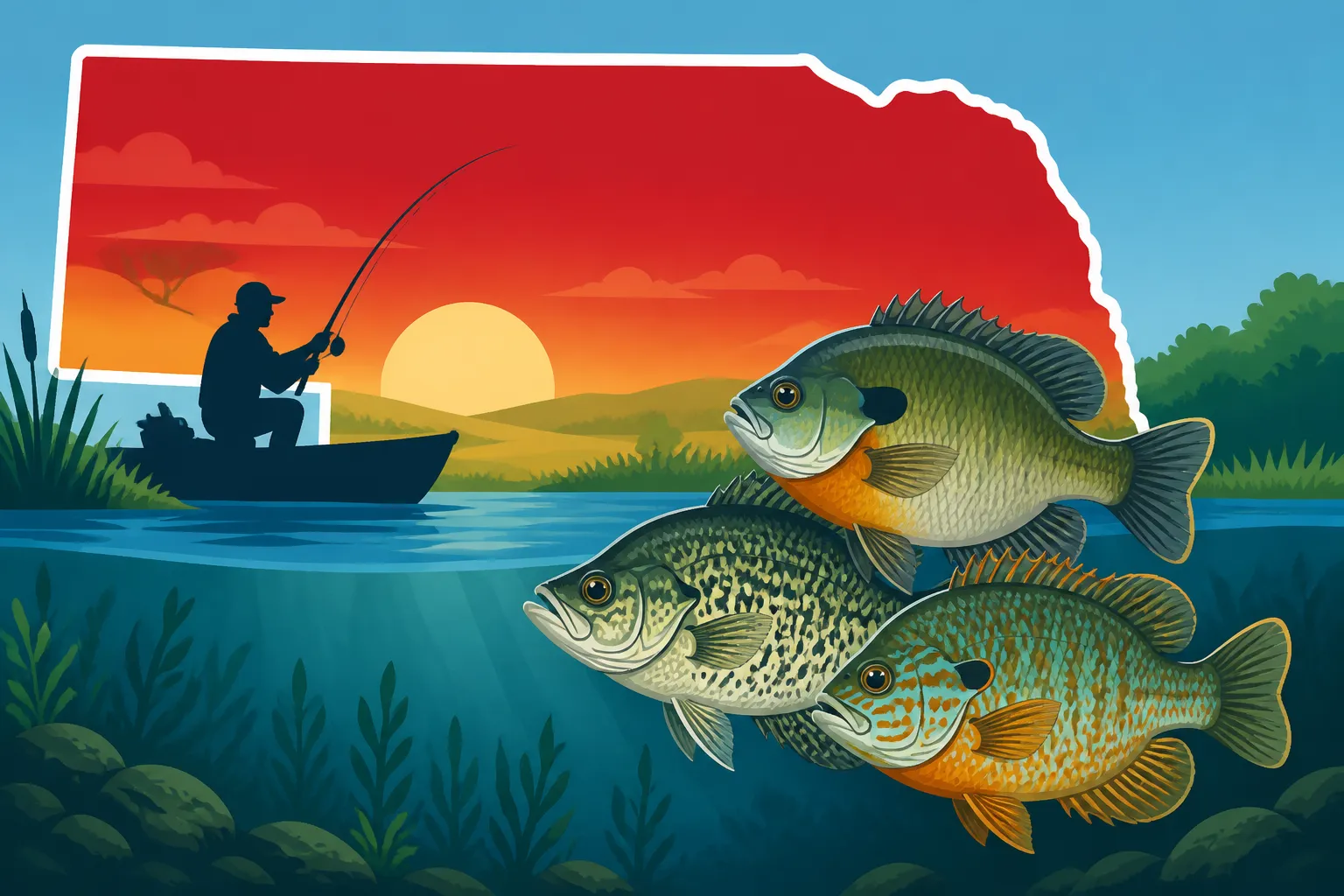
Ah, the humble bluegill! This is arguably the most common and recognizable panfish across Nebraska, and for good reason. Bluegill (often called "sunnies" or "bream" in other regions) are generally olive-green to dark blue on their backs, fading to a lighter yellow or orange on their bellies. Their most distinctive feature is the dark, often iridescent blue-black "ear flap" on the gill cover, which gives them their name. They also typically have several dark, vertical bars along their sides, though these can vary in prominence. They tend to have a small mouth, perfect for nibbling on small insects and crustaceans.
You can find bluegill in almost any calm, shallow water with some kind of cover – think weed beds, submerged brush, fallen trees, or around docks. They thrive in ponds, lakes, and the slow-moving backwaters of rivers. They are prolific spawners, often nesting in colonies in shallow areas during late spring and early summer, making them easy targets during this time. For specific information on what these little guys love to eat, take a look at Best Bait for Bluegill and Sunfish.
Fishing for bluegill is usually a straightforward affair. A small hook (size 8 or 10) baited with a piece of nightcrawler, a red worm, crickets, or even corn, fished under a tiny bobber, is often all you need. Ultralight spinning gear with light line (2-4 lb test) is ideal for maximum fun, allowing you to really feel the fight of even a modest-sized bluegill. They're notorious nibblers, so watch that bobber closely!
Crappie: The Slabs of Spring
Crappie are another wildly popular panfish in Nebraska, revered for their delicious fillets and their tendency to grow into impressive "slabs." In Nebraska, you'll primarily encounter two species: Black Crappie and White Crappie. While similar, there are subtle differences to tell them apart, which you can learn more about in Nebraska Black Crappie vs White Crappie. Generally, Black Crappie tend to be deeper-bodied and have irregular, mottled black spots all over their silvery sides, with 7 or 8 dorsal spines. White Crappie are usually more elongated, with 5 or 6 distinct dark vertical bars on their sides, and typically have 6 dorsal spines. Both have relatively large mouths compared to bluegill, making them opportunistic predators.
Crappie love structure – brush piles, submerged trees, old road beds, bridge pilings, and even drop-offs. They often suspend in the water column rather than hugging the bottom. Spring, during their pre-spawn and spawn, is a prime time to target crappie as they move into shallower waters to feed and reproduce. However, they can be caught year-round, often moving to deeper water during the heat of summer or under the ice in winter.
When it comes to techniques, small jigs (1/32 to 1/16 ounce) tipped with a small plastic grub, minnows, or even just a bare jig under a bobber are incredibly effective. Spider rigging with multiple rods fishing different depths or trolling small crankbaits can also be very productive, especially on larger reservoirs. If you’re looking for a good all-around reel for crappie, checking out options on Amazon can give you a wide selection of Best Spinning Reels for Panfish at various price points.
Yellow Perch: The Striped Delights
Yellow perch are a true delight to catch and are another excellent eating fish found in various Nebraska waters. They are easily identified by their distinctive golden-yellow to brassy green bodies, adorned with 6-8 prominent dark vertical bars along their sides. They have a spiny dorsal fin and tend to be schooling fish. Their mouths are somewhat small but capable of engulfing small minnows and invertebrates.
While not as ubiquitous as bluegill, yellow perch are prevalent in many of Nebraska's larger reservoirs, sandpits, and some deeper lakes. They prefer cooler, clearer water than crappie or bluegill and often inhabit areas with moderate vegetation or rocky bottoms. You'll frequently find them in deeper main lake basins or around submerged humps and points, especially during the colder months.
Fishing for yellow perch often involves light tackle similar to bluegill, but with a slight preference for small minnows, tiny jigs, or spoons, especially in winter. Ice fishing for yellow perch is a very popular pastime in Nebraska, where anglers will often drill multiple holes and use small jigs tipped with a grub or waxworm. They are aggressive feeders, and once you find a school, the action can be fast and furious! Getting a good set of Best Bobbers and Floats for Panfish is key for detecting their subtle bites.
Other Notable Panfish Species in Nebraska
While bluegill, crappie, and yellow perch get most of the panfish glory, Nebraska is home to several other species that anglers might encounter. These offer unique challenges and can be just as fun to target.
Green Sunfish: The Feisty Cousins
The green sunfish is often mistaken for a bluegill, but once you learn their subtle differences, they become easy to distinguish. Green sunfish are typically chunkier and more olive-green in color, often with iridescent blue or green spots on their cheeks and gill covers. Their distinguishing feature is a larger mouth that extends back past the front of the eye, which is notably different from the bluegill's smaller mouth. They also have a less prominent "ear flap" than the bluegill, and it usually has a lighter, often orange or white, margin.
These feisty little fish are incredibly hardy and can tolerate a wider range of water conditions than many other sunfish species. You'll find them in almost any pond, ditch, stream, or lake, often in areas that might be too muddy or overgrown for bluegill. Their aggressive nature means they're quick to strike at baits, making them great for teaching kids how to fish, even if they don't grow to be very large. They’re truly one of the most widespread What Panfish Species Live in Nebraska Ponds.
Due to their aggressive feeding habits and larger mouth, green sunfish will readily hit the same baits as bluegill, but they might also take slightly larger offerings. Small spinners, tiny crankbaits, or even larger pieces of worms work well. They'll often give a surprisingly strong fight for their size, providing plenty of entertainment on light tackle.
Rock Bass and Warmouth: Less Common, Still Fun
While not as common across Nebraska as bluegill or crappie, rock bass and warmouth are occasionally encountered, particularly in certain river systems and clear, rocky lakes or streams. These species add an interesting dimension to panfishing and are definitely worth celebrating when you find them!
The Rock Bass gets its name from its preference for rocky habitats. It's a chunky fish, typically bronze to olive-brown with dark, mottled spots. Its most striking feature is its large, often reddish-orange eye and a large mouth. They're more prevalent in the eastern and southeastern parts of the state, especially in clearer streams and rivers with good rock structure. They're opportunistic feeders, hitting small minnows, worms, and jigs with gusto.
The Warmouth is a fascinating, almost prehistoric-looking sunfish. It has a stout body, a very large mouth, and often a mottled brown and green pattern that provides excellent camouflage in dense vegetation. They prefer warm, slow-moving water with abundant aquatic plants and submerged cover. While rarer, they can be found in some of Nebraska's backwaters and oxbow lakes. Their diet consists of insects, small fish, and crustaceans. Like other panfish, they readily take worms, small jigs, and tiny lures. Catching one is often a pleasant surprise for anglers expecting a bluegill!
Bullheads: The Muddy Bottom Dwellers
While technically catfish, many anglers colloquially consider bullheads a panfish due to their smaller size, widespread abundance, and ease of capture. In Nebraska, you'll primarily find black bullheads, though yellow and brown bullheads might also be present. They are characterized by their smooth, scaleless skin, eight barbels ("whiskers") around their mouth, and generally a dark, mottled brown or black coloration. They have a stout body and can tolerate very murky or low-oxygen water where other fish might struggle.
Bullheads are bottom feeders, using their sensitive barbels to locate food in murky conditions. They are incredibly hardy and found in almost every pond, lake, and slow-moving river channel in Nebraska, especially those with soft, muddy bottoms. They are particularly active at night but will bite throughout the day. They’re often among the first fish kids catch, providing constant action.
Fishing for bullheads is as simple as it gets. A piece of nightcrawler, a dead minnow, or even some stink bait fished directly on the bottom with a simple sinker and hook is usually all it takes. They are not picky eaters! While they may not offer the acrobatic fight of a crappie, their consistent biting makes them a reliable target for anglers looking for action. Plus, many folks swear by their taste, especially when cleaned and fried.
Identifying Your Panfish Catch: Key Differences
Sometimes, even experienced anglers can pause and wonder exactly what kind of panfish they've just pulled from the water. With some practice, and by knowing what to look for, you'll be able to identify your catch quickly and accurately. This is important for following regulations and simply appreciating the diversity of Nebraska's waters.
Spotting the Nuances: Fins, Spines, and Mouths
The devil is in the details when it comes to panfish identification. While color can be a good starting point, it can vary significantly depending on water clarity, diet, and even the fish's mood. Instead, focus on anatomical features that are more consistent.
- Dorsal Fin Spines: This is perhaps the most reliable way to differentiate crappie species. Black Crappie typically have 7 or 8 sharp dorsal fin spines, while White Crappie usually have 6. Bluegill and other sunfish will have fewer, usually 5-7.
- Mouth Size and Jaw Extension: Look at how far back the mouth extends relative to the eye. Bluegill have small mouths that generally don't extend past the front of the eye. Green Sunfish have larger mouths, extending to or past the middle of the eye. Crappie have very large mouths that extend well past the eye, indicative of their predatory nature.
- Ear Flap: The opercular flap (the "ear flap" on the gill cover) is a key identifier for sunfish. Bluegill have a prominent, flexible, solid black or dark blue-black flap. Green Sunfish often have a smaller flap with a light, sometimes orange or white, margin.
- Body Shape and Pattern: Bluegill are generally deeper-bodied and more disc-shaped. Crappie are also deep-bodied but tend to be more compressed laterally. Yellow Perch are more elongated, almost torpedo-shaped. Look for distinct patterns like the vertical bars on white crappie and yellow perch, or the mottled spots on black crappie. Bullheads, being catfish, are easily distinguished by their scaleless skin and barbels.
By systematically observing these features, you can confidently identify most panfish species you encounter.
A Quick Identification Table
To help you keep track of these key differences, here's a handy table summarizing the distinguishing features of Nebraska's common panfish species.
| Species | Mouth Extends Past Eye? | Dorsal Spines | Ear Flap (Opercular Flap) | Body Shape & Markings | Primary Habitat |
|---|---|---|---|---|---|
| Bluegill | No (small mouth) | 5-7 | Large, solid black/dark blue | Deep-bodied, dark vertical bars (variable) | Weeds, docks, shallow cover in lakes/ponds |
| Black Crappie | Yes (large mouth) | 7-8 | Small, dark | Deep-bodied, mottled black spots | Brush piles, submerged structure, deeper water |
| White Crappie | Yes (large mouth) | 6 | Small, dark | More elongated, 5-6 distinct vertical bars | Brush piles, submerged structure, deeper water |
| Yellow Perch | No (moderate mouth) | 13-15 | Not prominent | Elongated, 6-8 distinct dark vertical bars | Cooler, clearer lakes/reservoirs, rocky bottom |
| Green Sunfish | Yes (medium mouth) | 9-11 | Small, often with light/orange margin | Chunky, iridescent spots, larger mouth | Muddy ponds, streams, hardy conditions |
| Rock Bass | Yes (large mouth) | 10-12 | Large, dark | Chunky, reddish eye, dark mottled spots | Clear, rocky streams and lakes |
| Warmouth | Yes (very large mouth) | 10 | Small, dark, sometimes red spot | Stout, mottled brown/green camouflage | Warm, vegetated, slow-moving water |
| Bullhead | Yes (barbels present) | N/A (no scales) | None | Scaleless, whiskered, dark/mottled | Muddy bottoms, turbid waters, active at night |
Note: The number of dorsal spines for sunfish (Bluegill, Green Sunfish, Rock Bass, Warmouth) refers to the hard, spiny rays in the front part of their dorsal fin. Crappie have distinct spiny and soft-rayed dorsal fins.
Essential Gear and Techniques for Nebraska Panfish
You don't need a boatload of expensive gear to have a blast panfishing in Nebraska. Simplicity is often key, but having the right tools for the job can certainly enhance your experience and increase your catch rates.
Light Tackle Setup for Panfish
The beauty of panfishing lies in its simplicity, but that doesn't mean you can't optimize your setup for maximum enjoyment. For bluegill, crappie, and perch, an ultralight or light action spinning rod and reel combo is usually your best bet.
- Rod: A rod between 5 to 6.5 feet in length with an ultralight or light action is perfect. This flexibility allows you to cast those tiny baits and lures effectively while still providing enough backbone to handle a feisty fish. The lighter action also makes even small panfish feel like giants!
- Reel: A small spinning reel (size 500 to 1000) that balances well with your rod is ideal. You don't need a lot of line capacity or heavy drag for panfish. Smoothness is more important. If you're in the market for a new reel, you can find a huge variety of Best Spinning Reels for Panfish on Amazon, often with helpful customer reviews.
- Line: Opt for light monofilament or fluorocarbon line, typically 2 to 6 pound test. Monofilament is a popular choice for its stretch and ease of handling, especially when using bobbers. Fluorocarbon can be a good option for its low visibility, especially in clear water. For specific recommendations, check out what’s available on Amazon.
- Hooks: Small hooks are crucial! Size 8, 10, or even 12 Aberdeen or snelled hooks are perfect for panfish, as they have smaller mouths. The thin wire of Aberdeen hooks makes them less likely to harm the fish if you're practicing catch and release, and they straighten out when snagged, often saving your line.
- Bobbers/Floats: A good bobber is your strike indicator and depth control. Small clip-on bobbers or slip bobbers (which allow you to fish deeper by letting the line slide through) are both excellent choices. When using light baits, sometimes the smallest pencil or toothpick bobber is all you need to detect those subtle bites. You can find a great selection of various styles of Best Bobbers and Floats for Panfish to experiment with.
- Sinkers: Tiny split shot sinkers are all you need to get your bait down. Pinch them on a few inches above your hook. Start with just one or two and add more if needed to get your bait to the desired depth.
This simple setup is incredibly versatile and will serve you well for almost any panfish scenario in Nebraska.
Best Baits and Lures for Each Species
While there's certainly overlap, understanding the preferred forage of each panfish species can help you select the most effective bait or lure.
- Bluegill & Green Sunfish: These species are primarily insectivores and opportunistic feeders.
- Live Bait: Hands down, red worms, pieces of nightcrawlers, crickets, and grasshoppers are king. Waxworms and mealworms are also highly effective.
- Artificial Lures: Tiny jigs (1/64 to 1/32 ounce) tipped with a small plastic grub, micro-spoons, or even fly-fishing nymphs can be deadly. Small spinners like a Rooster Tail or Panther Martin can also entice aggressive bluegill.
- Crappie: Crappie are more predatory than bluegill, with a diet that includes insects, crustaceans, and small minnows.
- Live Bait: Live minnows are incredibly effective, especially when fished under a bobber or slowly trolled. Small fathead minnows are ideal.
- Artificial Lures: Jigs are the undisputed champion for crappie. Soft plastic tube jigs, grubs, and spider baits (multiple tails) in various colors (chartreuse, white, pink, black) are go-to choices. Small crankbaits and blade baits can also be effective when crappie are aggressive or scattered.
- Yellow Perch: Perch have a varied diet, including insects, small fish, and invertebrates.
- Live Bait: Minnows are a top choice, especially in colder water or when ice fishing. Pieces of nightcrawler, waxworms, and grubs are also excellent.
- Artificial Lures: Small jigs (1/32 to 1/16 ounce) tipped with live bait or a small plastic, tiny spoons, and blade baits are very effective. Small jigging raps or Swedish pimples are popular for ice fishing.
- Bullheads: These scavengers aren't picky.
- Live Bait: Nightcrawlers, red worms, cut bait (small pieces of dead fish), and live minnows are all excellent.
- Prepared Baits: Stink baits, chicken livers, and even hot dogs can work wonders.
Always remember that fish can be finicky, so carrying a variety of bait and lure options is always a smart move.
Seasonal Strategies and Top Spots
Knowing what to use is only half the battle; knowing when and where to use it is the other. Panfish behavior changes throughout the year, driven by water temperature, spawning cycles, and available food.
- Spring (Pre-Spawn & Spawn): This is prime time for many panfish! As water temperatures rise (usually into the 50s and 60s Fahrenheit), bluegill and crappie move into shallower waters to feed aggressively before spawning. Look for them around shallow cover like docks, submerged brush, weed edges, and points.
- Strategy: Present baits and small jigs in these shallow areas. Look for dark bottom areas that warm up faster. This is also when crappie will often stack up in large schools.
- Summer: During the heat of summer, panfish often retreat to deeper, cooler water. However, they can still be found in shallower areas during early morning, late evening, or on cloudy days.
- Strategy: Target deeper brush piles, drop-offs, submerged humps, and the edges of weed lines in 10-20 feet of water. A slip bobber can be very effective for presenting bait at specific depths. Night fishing can also be productive for crappie and bullheads.
- Fall (Turnover & Cooling): As water temperatures cool and lakes experience "turnover," panfish can be found scattered or schooling up again as they feed heavily to prepare for winter.
- Strategy: Focus on transition areas – where shallow water meets deep water, points, and remaining green weed beds. Crappie might return to brush piles. Perch often become more active in deeper main lake areas.
- Winter (Ice Fishing): Nebraska's hard water season offers fantastic panfishing opportunities. Ice fishing requires different gear and safety considerations, but it can be incredibly rewarding.
- Strategy: Perch and crappie are popular ice fishing targets. Look for them over deep structure, basin areas, or around weed edges. Use small jigs, spoons, and live bait. Always prioritize safety on the ice! You can find a lot of information on How to Ice Fish in Nebraska if you’re new to it.
When it comes to specific locations, Nebraska has countless options. For easy access and family-friendly fishing, many Nebraska Urban Fishing Program Ponds are regularly stocked and managed specifically for panfish. For a more expansive experience, check out some of the Best Nebraska Lakes for Bank Fishing With Kids which often have excellent panfish populations accessible from shore. Even larger reservoirs like Branched Oak Lake, Pawnee Lake, and Wagon Train Lake are fantastic for crappie and bluegill in their coves and shallow bays.
Conservation and Responsible Panfishing in Nebraska
As passionate anglers, it's our responsibility to ensure the health and sustainability of Nebraska's fantastic panfish populations for future generations. Responsible angling practices are not just about following the rules, but about being a good steward of our natural resources.
Understanding Bag and Possession Limits
The most critical aspect of responsible panfishing is adhering to the regulations set forth by the Nebraska Game and Parks Commission. These rules are designed to protect fish populations from overharvest and ensure that everyone has an opportunity to enjoy the resource.
- Daily Bag Limit: This is the maximum number of fish of a particular species you can keep in a single day. For panfish, these limits are generally quite generous, reflecting their abundance and reproductive rates.
- Possession Limit: This refers to the maximum number of fish of a particular species you can have in your possession at any given time, whether that's in your cooler, at your campsite, or at home. It's often twice the daily bag limit, but not always, so always double-check.
- Species-Specific Regulations: While panfish often have general limits, it’s not uncommon for specific lakes or reservoirs to have special regulations for certain species or sizes to manage populations. For instance, a particular lake might have a slot limit on crappie, meaning you can only keep fish within a certain size range, or a reduced bag limit on perch.
It cannot be stressed enough: always check the current Nebraska Fishing Regulations Explained booklet or the Nebraska Game and Parks website before you go fishing. Regulations can change, and ignorance is not an excuse for a violation. These rules are in place for a reason – to keep our fishing waters healthy and productive.
Catch and Release Best Practices
Even when keeping fish for a meal, many anglers practice selective harvest, releasing the largest fish (which are often the best spawners) and keeping mid-sized fish for the table. For those fish you intend to release, employing proper catch and release techniques is vital to ensure their survival.
- Minimize Handling: The less you handle a fish, the better. Try to keep the fish in the water as much as possible.
- Wet Hands: Always wet your hands before touching a fish. Dry hands can remove the fish's protective slime coat, making it vulnerable to disease.
- Handle Gently: Support the fish horizontally, especially larger ones, to avoid damaging internal organs. Avoid squeezing or putting fingers in their gills.
- Remove Hook Quickly: Use a pair of needle-nose pliers or a de-hooking tool to remove the hook as quickly and gently as possible. If the fish is deeply hooked, it’s often best to simply cut the line as close to the hook as you can, as removing a deep hook can cause more damage.
- Revive If Necessary: If a fish looks sluggish or has been out of water for a while, hold it gently in the water, facing into the current, until it can swim away on its own. This is especially important in warm water.
- Proper Tools: Consider investing in a rubberized landing net, which is much gentler on a fish's slime coat and fins than traditional nylon nets. Forceps or long-nosed pliers are also invaluable for quick hook removal. You can find more detailed advice on How to Release a Fish Safely to Survive.
By practicing these responsible angling habits, we can all contribute to the thriving panfish populations that make Nebraska such a wonderful place to cast a line. Whether you're chasing the next crappie slab or introducing a child to their first bluegill, panfish offer endless opportunities for enjoyment and delicious meals.
Disclaimer
This article is for general informational purposes only and does not constitute professional advice. Laws, prices and regulations vary by location and change over time. Consult a qualified professional for guidance on your specific situation.