How Big Was the Biggest Paddlefish Ever Caught in Nebraska
That moment when you’re out on the water, whether it’s the broad expanse of the Missouri River or a calmer backwater, and you hook into something truly enormous—it’s the stuff of angler dreams. For many in Nebraska, that dream often involves the majestic paddlefish, a prehistoric giant that roams our waters. It's a question I hear all the time: "Just how big do these things get here in Nebraska?" Well, let's dive deep into the fascinating world of Nebraska's biggest paddlefish, uncover the state record, and explore what it takes to encounter one of these living fossils.
Nebraska's Official Paddlefish Record: A True Giant
The paddlefish is an undeniably impressive creature, a relic from a bygone era that still thrives in our Nebraska rivers. When it comes to state records, they truly stand apart. Anglers often chase bass, walleye, or catfish, but snagging a paddlefish often means encountering a fish of truly monumental proportions. It's not just about the fight; it's about connecting with something ancient and magnificent.
The Weight and Where It Was Caught
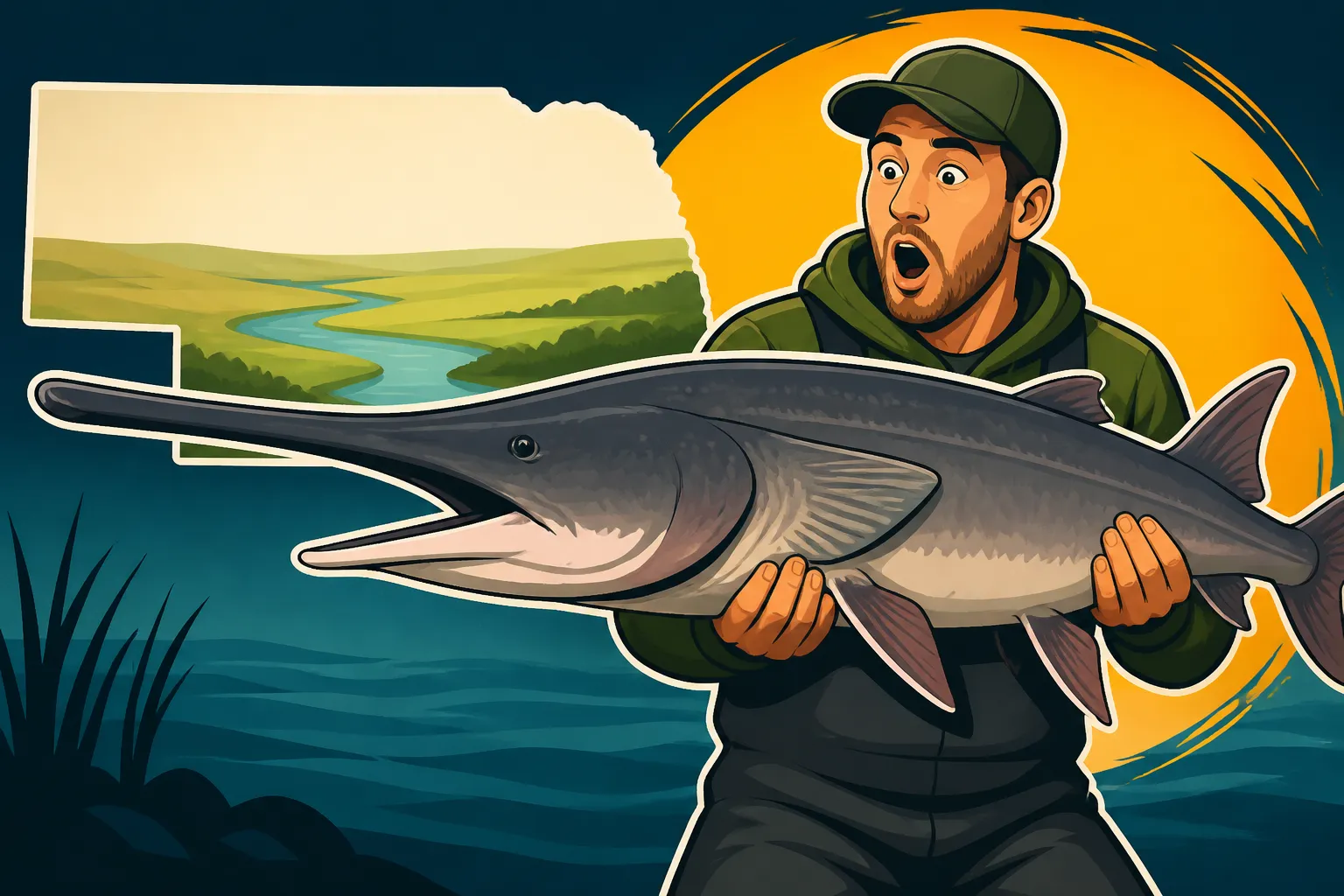
Nebraska proudly boasts some truly incredible fish records, and the paddlefish is no exception. The current state record for paddlefish is an absolute behemoth, weighing in at 151 pounds, 0 ounces. This colossal fish was snagged by angler Jerry K. Ficke on the mighty Missouri River back in 2005. Imagine the sheer power of an animal that size, especially in the strong currents of the Missouri. It’s not just a fish; it’s a legend that swims through our state's angling history.
This particular stretch of the Missouri River is renowned for its potential to produce trophy-sized paddlefish. These ancient fish thrive in large, free-flowing river systems, and our portion of the Missouri provides exactly the kind of expansive, nutrient-rich habitat they need to grow to such astounding sizes. This record isn't just a testament to one angler's skill; it's a testament to the incredible fishery we have right here in Nebraska.
The Story Behind the Catch: An Angler's Dream
While I can't recount the exact moment Jerry Ficke hauled in that 151-pound paddlefish, I can certainly paint a picture of what such an experience would be like. Picture this: you're out on the Missouri River, perhaps during the dedicated Nebraska Paddlefish Snagging Season Dates, with heavy-duty gear specifically designed for this intense sport. The river is wide, the current is strong, and the air is crisp. You've been methodically casting and retrieving, working a heavy treble hook through the water column, hoping for that tell-tale thump that signifies a snagged paddlefish.
Suddenly, it happens. Not just a bump, but a solid, unyielding weight. The rod bends dramatically, the drag screams, and you realize instantly that this is no ordinary fish. The fight begins – a grueling tug-of-war against a powerful, torpedo-shaped creature that knows every inch of its river home. You might spend what feels like an eternity, arms aching, back protesting, as the fish makes powerful runs, testing your tackle and your resolve. Every inch gained feels like a victory, every burst of speed from the fish a heart-stopping challenge.
Finally, after a monumental struggle, you get a glimpse of it. A massive, gray form beneath the surface, its distinctive paddle-like snout unmistakable. The adrenaline surges. Getting a fish of this size into the boat—or even to shore—is a team effort, often requiring a large net or even a gaff. It's a moment of triumph, exhaustion, and awe, a memory that will be retold around campfires for years to come. That 151-pound paddlefish wasn't just a catch; it was an epic encounter with a true river monster.
The Incredible Paddlefish: Biology and Habitat
Paddlefish are truly unique, often called "living fossils" because their lineage dates back millions of years. Understanding their biology and preferred habitats is key to appreciating why they can grow to such immense sizes, and why Nebraska is a prime location for them.
A Living Fossil: Understanding Paddlefish Anatomy and Diet
The American paddlefish (Polyodon spathula) is an extraordinary freshwater fish easily recognized by its elongated, paddle-shaped snout, which can be up to one-third the length of its entire body. This isn't just for show; it's a highly specialized electroreceptive organ used to detect weak electrical fields produced by zooplankton, their primary food source. Imagine a built-in sonar system helping them navigate and feed in murky river waters!
Unlike many other large game fish that are predators, paddlefish are filter feeders. They swim with their mouths open, sifting vast quantities of water through their gill rakers to strain out microscopic organisms. This unique feeding strategy allows them to grow incredibly large, as long as there is an abundant supply of plankton in their environment. They have a cartilaginous skeleton, much like sharks and rays, which further sets them apart from most bony fish. These characteristics make them a truly fascinating species, and one that requires specific management to ensure their populations thrive. You can learn more about their diet in What a Nebraska Paddlefish Eats.
Prime Paddlefish Waters in Nebraska
When we talk about trophy paddlefish in Nebraska, the conversation invariably turns to the Missouri River. This colossal waterway forms Nebraska's eastern border and provides the ideal conditions for paddlefish to flourish. The extensive free-flowing sections, deep channels, and abundant plankton make it a prime habitat. Areas along the Missouri River, particularly where the water flows freely and creates large scour holes or eddies, are known hotspots for these giants.
While the Missouri River is the undisputed champion for large paddlefish, some of its larger tributaries and associated backwaters, especially those with connections that allow for migration, can also hold paddlefish. However, if you're seriously looking to target a true trophy, the main stem of the Missouri River is where you'll want to focus your efforts. Understanding Missouri River Fishing in Nebraska will be crucial for anyone hoping to tangle with one of these giants.
The Hunt for Nebraska's Next Trophy Paddlefish
Catching a paddlefish isn't like casting for bluegill. It's a specialized pursuit that requires specific gear, techniques, and a deep understanding of regulations. For those dreaming of breaking that 151-pound record, preparation is key.
The Specialized Art of Paddlefish Snagging
Because paddlefish are filter feeders and don't typically strike traditional baits or lures, they are caught through a technique known as "snagging." This involves using a heavy rod, a powerful reel spooled with strong line, and a large, weighted treble hook. Anglers cast these rigs out into the river and retrieve them with powerful, sweeping motions, hoping to snag the fish as it swims by. It's a physically demanding method, often done from a boat or sometimes from accessible river banks in designated areas.
The sheer force required to cast such a heavy rig repeatedly, and then the even greater force to pull in a fish that can easily weigh over 100 pounds, means this isn't for the faint of heart. It's a full-body workout and a test of endurance. Success in snagging often comes down to timing, knowing where the fish are concentrating, and having the stamina to keep at it. For more detailed techniques, check out How to Snag Paddlefish on the Missouri River.
When gearing up for paddlefish snagging, you'll want the beefiest setup you can comfortably handle. Think offshore fishing gear adapted for freshwater giants. Online retailers like Amazon are fantastic for finding specialized, heavy-duty fishing tackle, from robust rods designed for brute strength to reels with incredible drag capabilities. You'll need a line with a high breaking strength, usually 80-100 pound test braided line, because these fish can really pull. Also, don't forget quality hooks and heavy sinkers, sometimes weighing several ounces, to get your rig down in the current.
Key Regulations and Seasons for Paddlefish
Paddlefish populations are carefully managed to ensure their long-term health, given their slow growth and late maturity. As such, there are very specific regulations you must follow to legally pursue them in Nebraska. This isn't just a suggestion; it's a legal requirement that carries significant penalties for violations.
Here’s a general overview of what you can expect, but always, always consult the official Nebraska Game and Parks Commission regulations before heading out:
- Permit Requirements: You'll need a valid Nebraska fishing license, naturally. But for paddlefish, there's typically an additional special permit or tag required. This is often allocated through a drawing system due to limited harvest quotas. Make sure you understand the Nebraska Fishing License Guide and any additional stamps or permits required.
- Designated Snagging Areas: Paddlefish snagging is only permitted in specific areas of the Missouri River, not just anywhere. These areas are clearly outlined in the regulations.
- Season Dates: The paddlefish snagging season is usually very short, often only a few weeks in the fall, and sometimes another short season in the spring. These dates are strictly enforced. Knowing the Nebraska Fishing Season Dates and Limits is crucial.
- Daily Bag and Possession Limits: There are very strict limits on how many paddlefish you can harvest and possess. Often, it's just one fish per person per season, and once you keep a fish, your season is usually over.
- Mandatory Check Stations: Any paddlefish harvested often needs to be taken to a designated check station for biological data collection (weight, length, sex) and to ensure compliance with regulations. This data is vital for managing the fishery.
These regulations are put in place to protect these incredible fish and ensure future generations of anglers can also experience the thrill of a paddlefish encounter. Make sure you're up to date on all Nebraska Fishing Regulations Explained.
Essential Gear for Landing a Monster
Landing a 151-pound paddlefish, or even a smaller one, requires gear that can stand up to extreme stress. Your typical bass or walleye setup simply won't cut it.
| Gear Category | Key Features | Why It's Essential |
|---|---|---|
| Rod | Heavy action, 7-9 feet, strong backbone, often fiberglass or composite. | Provides the leverage and power needed to cast heavy rigs and fight massive fish. |
| Reel | Large conventional or spinning reel with robust drag system, high line capacity. | Holds enough heavy line and provides the stopping power for long, powerful runs. (Think brands like Penn, Shimano, Daiwa—often found on Amazon) |
| Fishing Line | 80-120 lb test braided line. | Extremely strong, low stretch for solid hooksets, and resistant to abrasion in river currents. |
| Hooks | Large, heavy-gauge treble hooks (e.g., 8/0 to 12/0). | Needed to effectively snag and hold onto a large, powerful fish. |
| Sinkers/Weights | Heavy pyramid or no-roll sinkers (4-10 oz). | Gets the rig down to the fish in strong currents and allows for efficient snagging. |
| Landing Net/Gaff | Extra-large, heavy-duty landing net or a sturdy gaff (check regulations for gaff legality). | Essential for safely securing and landing such a massive fish once it's subdued. Best Landing Nets for Big Fish |
| Gloves | Heavy-duty fishing gloves. | Protects hands from sharp hooks, rough line, and the fish's rough skin. |
| Measuring Tape/Scale | Long, flexible measuring tape and a certified scale. | For accurately measuring and weighing your catch, especially if it's a potential record. Amazon offers many digital scales suitable for large fish. |
This kind of specialized gear ensures that when you do connect with a trophy paddlefish, you have the best chance of landing it safely and ethically. Investing in quality gear for this pursuit is paramount, and many anglers find exactly what they need on platforms like Amazon. Check out Best Fishing Gear for Nebraska Anglers and Best Rods and Reels for Nebraska Fishing for more general advice that applies to heavy-duty setups.
Understanding Fishing Records and Conservation
The pursuit of state records, like that incredible 151-pound paddlefish, adds an exciting dimension to fishing. But it's also important to understand the process behind these records and the crucial role conservation plays in maintaining healthy fish populations.
How a State Record is Certified
So, you've just landed what you believe might be a new state record paddlefish. What now? It’s not enough to simply weigh it on your bathroom scale. There's a stringent process to ensure the integrity of official state records.
- Immediate Reporting: As soon as you suspect a record, you typically need to contact the Nebraska Game and Parks Commission as quickly as possible. Time is often of the essence, especially with perishable evidence.
- Certified Scale: The fish must be weighed on a certified scale. This usually means a commercial scale, like those found at grocery stores, bait shops, or certain wildlife check stations, that is regularly calibrated and inspected for accuracy. Often, two witnesses are required to be present during the weighing.
- Measurement: Accurate length and girth measurements are also crucial. You'll need a reliable measuring device.
- Species Verification: A Game and Parks biologist or official will often need to verify the species, ensuring it's indeed a pure paddlefish and not a hybrid or another species.
- Documentation: You'll typically need to submit an official application, often with photographs of the fish, the angler, the scale reading, and potentially the fishing location and method.
This meticulous process ensures that state records are accurate, verifiable, and truly represent the largest fish caught within the state, giving credit where credit is due and inspiring future anglers.
The Importance of Conservation for Giant Paddlefish
Catching a truly massive paddlefish is a once-in-a-lifetime experience, but it's vital to remember that these magnificent fish are a precious resource. Their slow growth rate, late maturity (some don't spawn until they are 7-10 years old!), and susceptibility to habitat changes make them particularly vulnerable. The state record fish are often very old, having survived many years in the river.
Conservation efforts are paramount. The strict regulations regarding season dates, harvest limits, and permit drawings are all designed to protect the breeding stock and ensure that paddlefish populations remain healthy. Anglers play a critical role in this. Practicing responsible catch and release, especially if you're not targeting a harvestable fish or if you already have your season's limit, helps protect these vital larger fish. Even for a species harvested through snagging, quick handling and minimizing time out of water for released fish are important. Understanding Nebraska Paddlefish Snagging and Is It Legal to Catch and Release a Paddlefish in Nebraska? will provide more context on these conservation aspects.
The Missouri River ecosystem that supports these giant paddlefish is constantly changing, facing pressures from development, agriculture, and river modification. Protecting this habitat is just as important as managing the fish themselves. Every angler has a part to play in being good stewards of our natural resources, ensuring that the legacy of Nebraska's incredible paddlefish, including the chance to catch another state record contender, continues for generations to come.
Disclaimer
This article is for general informational purposes only and does not constitute professional advice. Laws, prices and regulations vary by location and change over time. Consult a qualified professional for guidance on your specific situation.