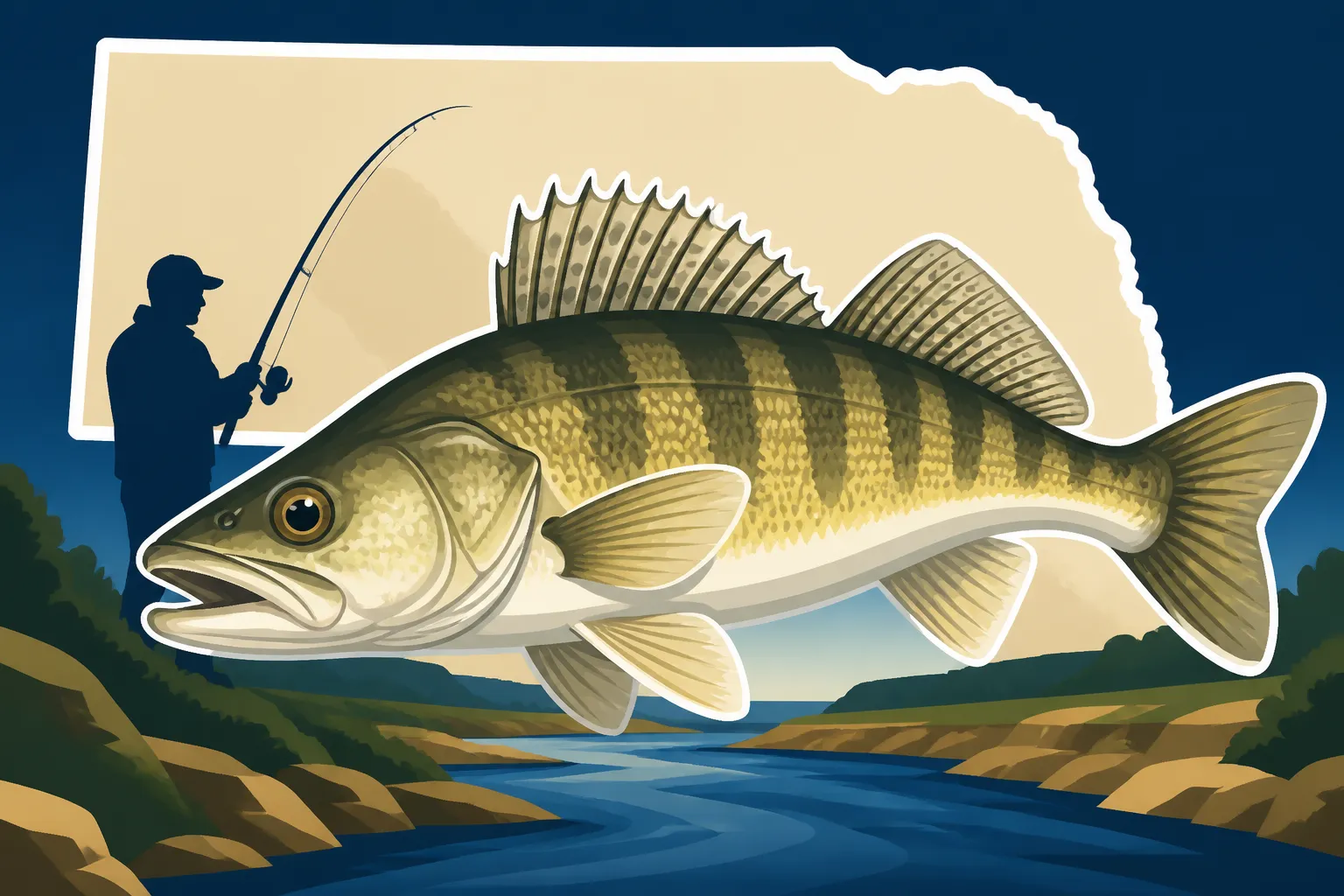
What a Sauger Looks Like
It's incredibly frustrating when you're out on the water, you land a beautiful fish, and then you're left scratching your head, wondering exactly what kind of fish you're holding. Especially in Nebraska, where some species look remarkably similar, it can be tough to tell them apart, leading to confusion about regulations or even just the satisfaction of knowing your catch. This guide is here to clear up that mystery, focusing specifically on how to identify a sauger, highlighting its unique characteristics and distinguishing it from its often-confused cousin, the walleye.
The Distinctive Features of a Nebraska Sauger
When you pull a sauger out of the water here in Nebraska, you'll immediately notice some key differences if you know what to look for. They might resemble walleye at first glance, but a closer inspection reveals their true identity. These beautiful fish have adapted perfectly to certain Nebraska river and reservoir environments, and understanding their appearance is the first step to becoming a more informed angler.
Body Shape and Coloration
Sauger typically have a more slender, elongated body compared to the bulkier walleye. Their overall color tends to be a bit darker, often a brassy or brownish-olive green on their backs, fading into a lighter, creamy white on their bellies. What really sets them apart, though, is their distinctive body pattern. Instead of the more uniform, mottled coloring of a walleye, sauger display a series of irregular, dark blotches or saddle-like markings along their sides. These blotches are a dead giveaway, almost like camouflage painted directly onto their scales, helping them blend into the murkier, rockier bottom environments they often prefer. It’s a subtle but significant difference that keen-eyed anglers learn to spot quickly.
Key Markings and Fin Characteristics
Beyond the body blotches, the fins are your best friends when identifying a sauger. The most prominent feature to look for is on the spiny dorsal fin – that first, sharp fin on its back. A sauger's spiny dorsal fin will have very distinct, dark spots arranged in clear rows, giving it a speckled appearance. This is a critical identifier that almost never lies. In contrast, the walleye's spiny dorsal fin is generally unspotted, though it might have a dark blotch at the very rear base.
Another fin to check is the caudal fin, or tail fin. While not as dramatically different as the dorsal, a sauger's tail fin often has a more pronounced white lower tip, though this can vary. Look also at the pectoral fins (the ones behind the gills) and pelvic fins (on the belly). These fins might also exhibit some subtle spotting, further adding to the sauger's speckled overall look. Pay close attention to these details; they're nature's own identification tags.
Size and Weight Expectations
In Nebraska, sauger generally don't grow as large as walleye. While a trophy walleye might push into the double-digit pounds, sauger are typically smaller. You'll commonly catch sauger in the 1 to 3-pound range, with fish over 5 pounds considered quite a respectable catch. Their average length often hovers around 12 to 18 inches. This isn't to say a big sauger isn't a powerful fight or a delicious meal, but they tend to be more modest in stature. Knowing these general size expectations can also be a helpful clue when you're trying to figure out if you've landed a sauger or a juvenile walleye, though relying on visual markings is always more reliable for true identification. It's an important part of understanding Nebraska Fishing Daily Bag and Possession Limits, as these can differ by species.
Sauger vs. Walleye: A Closer Look at the Differences
The sauger and walleye are members of the perch family, making their resemblance understandable. However, distinguishing between them is crucial, not just for personal satisfaction, but also because regulations for each species can vary. Misidentifying your catch could lead to unintentional violations, which is something no angler wants. Let's really dig into the subtle nuances that make them distinct.
Dorsal Fin Distinctions
This is arguably the most reliable and easiest way to tell a sauger from a walleye without getting too invasive. As mentioned earlier, a sauger's first dorsal fin (the spiny one) is covered with very clear, round, dark spots, usually arranged in distinct rows. It looks like someone took a tiny paintbrush and dotted it meticulously. The overall fin itself often appears somewhat translucent with these spots.
Now, imagine a walleye's dorsal fin. It will typically be quite clear, sometimes a bit cloudy, but crucially, it lacks these distinct spots. Instead, a walleye often has a prominent, dark, opaque blotch or smudge at the very bottom-rear of the spiny dorsal fin. It's like a thumbprint where the fin meets the back. If you catch a fish and you see rows of spots on that front dorsal fin, you've almost certainly got a sauger. If it's clear with a dark smudge at the back, it's a walleye. This one detail alone can save you a lot of guesswork.
Body Pattern and Lateral Line
Beyond the dorsal fin, take a good look at the fish's flanks. Sauger possess a more pronounced, often irregular blotchy or saddle-like pattern along their sides, giving them a somewhat "cloudy" or "barred" appearance. These dark markings interrupt the background color of the fish, making them stand out. It's part of their natural camouflage for hiding in the more turbid waters and rocky structures they frequent.
Walleye, on the other hand, usually have a more uniform, mottled golden-olive coloration, with less distinct or absent dark blotches on their sides. They might have some faint vertical barring, but it won't be the irregular, saddle-like pattern you see on a sauger. Additionally, when you examine the lateral line (the sensory line running down the side of the fish), a sauger's lateral line often has dark spots along its length, further emphasizing its speckled appearance. A walleye's lateral line is typically less adorned.
Pyloric Caeca Count
While not a visual cue you'd use on the water, the difference in pyloric caeca is a scientific distinction that solidifies their separate species status. Pyloric caeca are small, finger-like digestive glands located near the stomach. Walleye typically have 3 large and 4 small pyloric caeca, totaling around 7. Sauger, however, have significantly more, usually 10 to 14, and they are generally longer and more uniform in size. This anatomical difference won't help you identify a fish for immediate release, but it's a fascinating biological characteristic that scientists use for definitive classification. It's a reminder that beneath the scales, even similar-looking fish have distinct biological blueprints. For more general species knowledge, consider checking out a Nebraska Fish Species Identification Guide.
Habitat and Behavior Clues
Where you catch the fish can sometimes offer a strong hint about its identity. Sauger tend to prefer slightly different environments than walleye, though there can be overlap. Sauger are often found in larger, more turbid rivers and reservoirs with significant current, deeper channels, and rocky or sandy bottoms. They thrive in murkier water conditions and often inhabit tailwaters below dams or areas with a good current flow. The Platte River and the Missouri River in Nebraska are prime examples of sauger habitat.
Walleye, while also found in rivers, are more commonly associated with larger, clearer lakes and reservoirs, often relating to structure like points, humps, and submerged timber. While they can tolerate some current, they might prefer the calmer, deeper sections. If you're fishing in a swift, muddy river section known for good current, your chances of hooking a sauger might be higher. Conversely, if you're working a clean, rocky point on a vast reservoir, you might be leaning more towards walleye territory. These habitat preferences aren't hard and fast rules, but they can be a helpful contextual clue.
Here’s a quick visual comparison table to help differentiate:
| Feature | Sauger | Walleye |
|---|---|---|
| Spiny Dorsal Fin | Distinct dark spots in rows | Clear, unspotted, often with a dark blotch at rear base |
| Body Markings | Irregular dark blotches/saddle patterns | More uniform, mottled golden-olive, less distinct blotches |
| Pectoral/Pelvic Fins | Often subtly spotted | Generally clear |
| Caudal (Tail) Fin | Often has a white lower tip | No distinct white tip |
| Overall Body Shape | More slender, elongated | Generally heavier, more robust |
| Preferred Habitat | Murkier, flowing rivers; deeper channels | Clearer lakes, reservoirs; varied structure |
| Average Size in NE | 12-18 inches, 1-3 lbs | 15-25 inches, 2-8+ lbs |
Why Accurate Identification Matters for Nebraska Anglers
Knowing exactly what fish species you've caught isn't just about bragging rights (though those are nice!). It's a fundamental part of responsible and enjoyable fishing in Nebraska. There are very practical reasons why taking the time to correctly identify your catch is important, impacting everything from legal compliance to the health of our fisheries.
Understanding Regulations and Bag Limits
This is perhaps the most critical reason for accurate identification. The Nebraska Game and Parks Commission sets specific regulations for different fish species, and these rules can vary significantly between walleye and sauger. For instance, there might be different length limits, daily bag limits, or even possession limits for sauger compared to walleye. In some waters, you might find specific "sauger/walleye combination" limits, but knowing which is which is still essential for calculating your catch correctly.
Imagine you're out fishing, having a great day, and you keep a limit of what you think are walleye, only to find out later some of them were sauger, and you've accidentally exceeded the sauger limit. This isn't just an honest mistake; it could lead to fines or penalties for violating Nebraska Fishing Regulations Explained. Keeping a current copy of the Nebraska fishing guide, perhaps downloaded to your phone or a waterproof printout purchased from Amazon, is always a smart move.
Conservation and Species Management
Accurate identification plays a vital role in fisheries management and conservation efforts. Wildlife agencies use catch data and angler reports to monitor fish populations, understand spawning success, and tailor stocking programs. If anglers are consistently misidentifying sauger as walleye (or vice-versa), it skews the data, making it harder for biologists to assess the health of each specific population.
By correctly identifying and reporting your catches, you contribute to better scientific understanding and more effective management strategies. This helps ensure that both sauger and walleye populations remain healthy and abundant for future generations of Nebraska anglers. It's about being a good steward of our natural resources and participating in the bigger picture of conservation.
Enjoying the Nebraska Fishing Experience
Beyond the legal and conservation aspects, there's a profound satisfaction that comes with truly knowing the fish you've caught. Each species has its own unique characteristics, fight style, and preferred habitats. When you can confidently say, "I caught a sauger!" instead of just "I caught a fish," it deepens your connection to the sport and the natural world around you.
It allows you to learn more about Nebraska Sauger Fishing specifically, tailoring your techniques, baits, and even your choice of fishing spots. Knowing the species enriches your entire fishing narrative, making each catch a distinct experience. It turns a generic fishing trip into a targeted, knowledgeable pursuit, which, for many of us, is what makes angling truly special.
Tips for Identifying Your Catch On the Water
When that fish comes over the rail or onto the bank, the adrenaline is pumping, and sometimes identification can feel rushed. But with a few simple techniques and tools, you can confidently identify your sauger (or walleye) right there, ensuring you comply with regulations and appreciate your catch fully.
Visual Cues Checklist
Having a mental (or even physical) checklist of key features can make all the difference. When you land a fish that looks like a sauger or walleye, quickly run through these points:
- Dorsal Fin Spots: Look at the first, spiny dorsal fin. Are there clear, distinct rows of dark spots? (Sauger) Or is it mostly clear with a dark smudge at the rear base? (Walleye)
- Body Pattern: Examine the sides. Are there irregular, dark blotches or saddle patterns? (Sauger) Or is it a more uniform, mottled golden-olive? (Walleye)
- Overall Shape: Does the fish seem more slender? (Sauger) Or is it thicker and more robust? (Walleye)
- Tail Fin: Is there a noticeable white lower tip on the tail? (Often a sauger trait, though less reliable than dorsal spots).
Running through this quick mental checklist will help you focus on the most reliable indicators rather than getting overwhelmed by minor variations.
Resources for On-the-Spot Identification
You don't have to carry a biology textbook with you, but having a few handy resources can be incredibly helpful.
- Nebraska Fishing Guide: Always keep a current copy of the Nebraska fishing regulations booklet. It often contains illustrations or clear descriptions of common game fish. You can usually pick these up for free wherever you buy your Nebraska Fishing License Guide or fishing supplies.
- Smartphone Apps: There are many excellent fish identification apps available that can help you cross-reference features with photos. A quick search on Amazon for "fish identification app" or checking your app store for "Nebraska Game and Parks" might yield useful results.
- Waterproof Field Guides: Small, laminated, waterproof fish identification cards or booklets are perfect for keeping in your tackle box or boat. They often feature clear, side-by-side comparisons of similar species. These are readily available from outdoor retailers or online, like on Amazon.
- GoOutdoorsNE: The official GoOutdoorsNE Online Permit System portal often has resources or links to identification guides.
Photographing for Later Verification
If you're still unsure after reviewing your resources, especially if you plan to release the fish, snap a few good photos! Take clear pictures of the entire fish, focusing on the dorsal fin, side patterns, and any other distinctive markings. If possible, get a shot from directly above the fish as well.
You can then review these photos later, comparing them to reliable online resources or asking an experienced angler or fisheries biologist for help. This is a great way to learn without accidentally breaking regulations. Just remember, if you're keeping the fish, it's always best to be sure of its identity before you put it on the stringer or in the cooler. Being diligent now will make you a more confident angler in the long run!
Disclaimer
This article is for general informational purposes only and does not constitute professional advice. Laws, prices and regulations vary by location and change over time. Consult a qualified professional for guidance on your specific situation.