What a Muskellunge Is and Where They Live in Nebraska
Catching a muskellunge in Nebraska is often seen as the ultimate angling challenge, a true test of patience and persistence that can feel like you're chasing a ghost in our waters. Many anglers spend countless hours, making thousands of casts, without ever seeing one of these elusive giants, and it can certainly be discouraging. This guide will demystify the muskie, explain exactly what this formidable predator is, and reveal the specific places in Nebraska where you have the best chance of encountering one of these magnificent fish, turning those long hours into potential glory.
The Elusive Muskellunge: An Introduction to Nebraska's Freshwater Predator
Imagine a fish that grows to impressive sizes, possesses a powerful, elongated body, and is armed with a mouth full of razor-sharp teeth. That, my friends, is the muskellunge, often simply called a "muskie." In the world of freshwater fishing, especially here in Nebraska, the muskie holds a legendary status, not just because of its size, but because of its incredibly challenging nature. It's not a fish you stumble upon by accident very often; it's a fish you deliberately hunt, knowing full well the odds are stacked against you.
What Exactly is a Muskie?
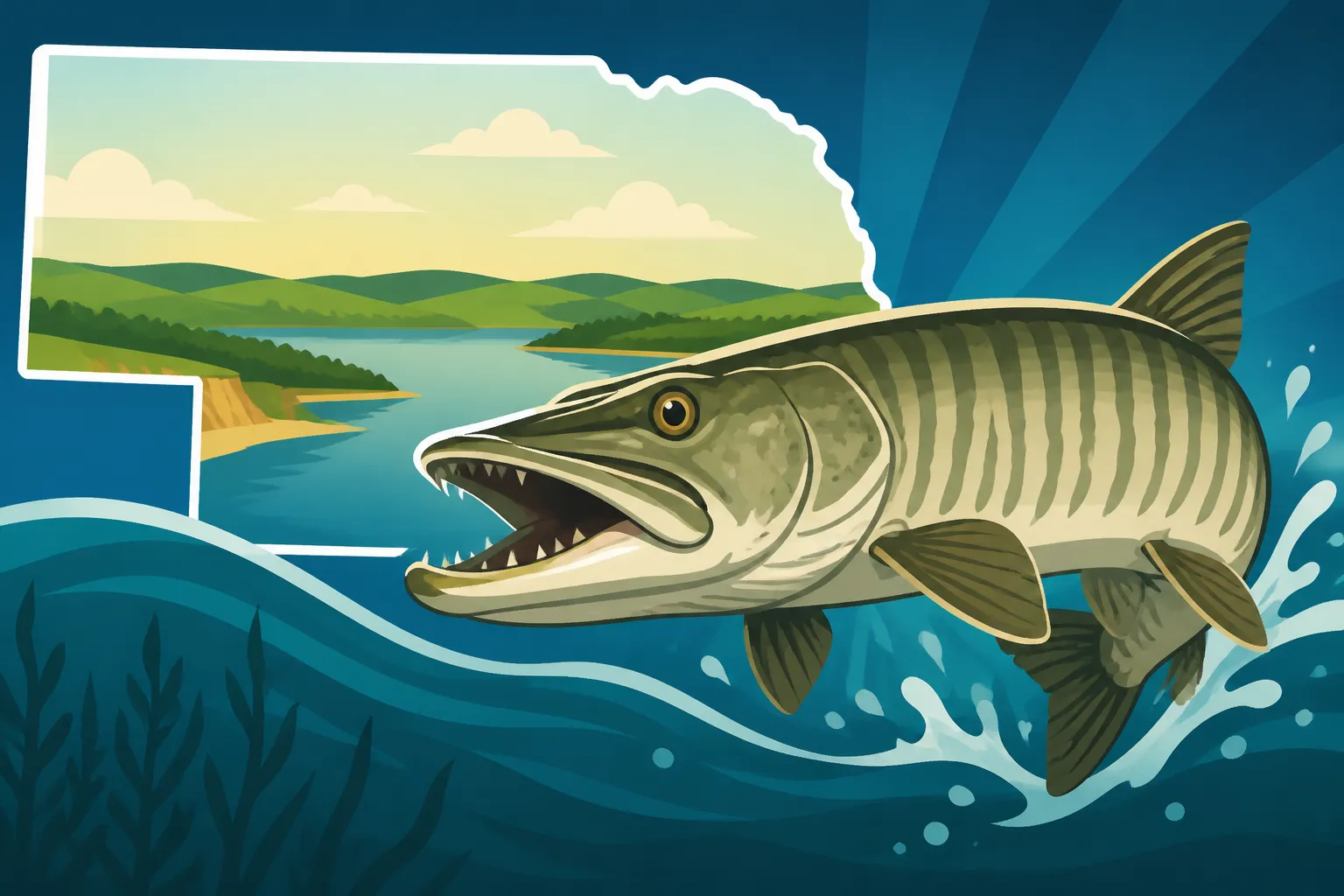
A muskellunge (Esox masquinongy) is the largest member of the pike family, a group of predatory freshwater fish renowned for their ambush tactics. They have a long, cylindrical body that is perfectly designed for explosive bursts of speed to snatch unsuspecting prey. Their coloration can vary, but typically they display light bodies with darker vertical bars or spots, though sometimes these markings can be quite subtle. The dorsal fin is set far back on the body, close to the tail, giving them a sleek, torpedo-like appearance. When you look at a muskie, you're looking at a pure predator, a fish that commands respect in its environment.
What really sets the muskie apart is its sheer size potential. While many fish can grow large, muskies regularly exceed 30 inches and can easily push past 40 or even 50 inches in length, weighing upwards of 30 pounds. This makes them one of the true freshwater giants in North America, and certainly in Nebraska. Their powerful jaws, lined with formidable teeth, are capable of crushing smaller fish, making them the apex predator in many lakes. For those seeking the thrill of a lifetime, hooking into a muskie is an unparalleled experience, even if it feels like finding a needle in a haystack in our state.
The Allure of Muskie Fishing in Nebraska
For many dedicated anglers, the pursuit of the muskellunge is more than just fishing; it's an obsession. The moniker "the fish of 10,000 casts" exists for a reason, and it rings true for many who chase these giants. The long hours, the countless casts, the moments of doubt – they all contribute to the immense satisfaction when you finally feel that powerful tug on your line. It's a game of patience, persistence, and often, a little bit of luck. Nebraska anglers, perhaps more than most, understand this dedication, as our muskie opportunities are relatively limited compared to some other states.
The sheer excitement of a muskie strike is unlike anything else. They often follow a lure right to the boat, inspecting it with an almost unsettling intelligence before either striking violently or simply turning away at the last second. This visual aspect adds to their mystique and the thrill of the chase. When they do commit, the fight is fierce and often acrobatic, testing both angler and gear. Because of their relative rarity and the significant investment made in stocking programs, catch-and-release is the cornerstone of muskie fishing in Nebraska. It's about the experience and the fight, not necessarily the harvest, ensuring these incredible fish continue to challenge future generations of anglers.
Where to Find Muskellunge in Nebraska: Key Habitats and Stocking Programs
Given their reputation and specific habitat needs, you can't just expect to find a muskellunge in every Nebraska lake or river. These fish thrive in certain conditions, and their presence in our state is largely due to strategic stocking efforts by the Nebraska Game and Parks Commission. Understanding these locations and the efforts behind them is crucial for any angler hoping to tangle with a muskie.
Nebraska's Prime Muskie Waters
When you talk about muskie fishing in Nebraska, one name instantly comes to mind: Merritt Reservoir. Located in the beautiful Sandhills region near Valentine, Merritt Reservoir is the premier muskie destination in the state. This reservoir boasts incredibly clear water, a diverse forage base, and ample underwater structure, all of which are ideal for supporting a healthy muskie population. Anglers specifically targeting muskies almost always head to Merritt, and for good reason—it's where the vast majority of our muskie catches occur.
Merritt's unique characteristics, including its deep channels, submerged timber, and rocky points, provide the perfect ambush points and hunting grounds for these top-tier predators. While you might occasionally hear whispers of a muskie sighting or an accidental catch in other large reservoirs across the state, these instances are incredibly rare. Merritt Reservoir is the consistent focus of muskie management and stocking in Nebraska, making it truly unique. If you're planning a trip to specifically target these fish, Merritt Reservoir Fishing Guide is an essential resource, and you'll want to dive into Merritt Reservoir Muskellunge Fishing Tips for specialized advice.
Understanding Nebraska's Muskie Stocking Efforts
It's important to remember that muskellunge are not native to Nebraska. Their presence in our waters, particularly in Merritt Reservoir, is a direct result of dedicated and ongoing stocking programs. The Nebraska Game and Parks Commission works diligently to raise and stock muskie fingerlings into designated waters to establish and maintain a fishable population. These programs are vital because without them, we simply wouldn't have these magnificent fish to pursue.
These stocking efforts represent a significant investment in time and resources. Young muskies are typically stocked at a size where they have a better chance of survival, but even so, it takes years for them to grow to the impressive sizes that anglers dream of. The success of these programs relies heavily on anglers practicing strict catch-and-release, which ensures that the stocked fish have the opportunity to mature and contribute to the overall population for years to come. It’s a collective effort, truly, where responsible angling plays just as big a role as the stocking itself in keeping the muskie dream alive in Nebraska.
Identifying and Catching Nebraska Muskies: Tips for the Dedicated Angler
Before you even think about casting for a muskie, it's essential to know what you're looking for and how to handle these powerful fish safely and responsibly. Distinguishing a muskie from its smaller, more common cousin, the northern pike, is a critical first step. Then, gearing up properly is paramount, not just for catching them, but for ensuring their safe release.
Key Identification Features
One of the most common questions anglers have is how to tell a muskie apart from a northern pike, especially since both are members of the Esox family and share similar body shapes. While they look alike at a glance, there are distinct differences that will help you identify which fish you've caught. This is particularly important because regulations and conservation practices can differ.
The easiest way to tell them apart is by examining their tail fins and the scale patterns on their cheek and gill cover. Northern pike typically have dark bodies with lighter spots or bean-shaped markings, whereas muskies often have lighter bodies with darker vertical bars or spots (though, as mentioned, muskie markings can sometimes be faint). More reliably, look at the scales:
- Muskellunge: Has scales only on the upper half of both cheek and gill cover.
- Northern Pike: Has scales covering the entire cheek and the upper half of the gill cover.
Additionally, the tail fin of a muskie is typically more pointed and deeply forked compared to the more rounded or less deeply forked tail of a northern pike. Knowing these subtle differences is key, especially if you're trying to meet a specific length limit or just curious about your catch. For more detailed identification, check out our Nebraska Fish Species Identification Guide.
Here's a quick comparison table to help:
| Feature | Muskellunge | Northern Pike |
|---|---|---|
| Body Markings | Light body with dark bars or spots (often faint) | Dark body with lighter spots/bean shapes |
| Cheek Coverage | Scales on upper half only | Scales covering entire cheek |
| Gill Cover Coverage | Scales on upper half only | Scales on upper half only |
| Tail Fin Shape | More pointed and deeply forked | More rounded or less deeply forked |
| Jaw Pores (underside) | Typically 6-9 per side | Typically 5 or fewer per side |
| Reputation | "Fish of 10,000 casts," elusive | Aggressive, more commonly caught |
Essential Gear and Techniques for Nebraska Muskie
Chasing muskies is not for the faint of heart, nor is it a task for ultralight tackle. These are big, powerful fish, and you need gear that can handle the abuse. Investing in specialized muskie gear is almost a rite of passage for those truly dedicated to the chase.
You'll want a stout, heavy-action rod, typically between 8 to 9 feet long, paired with a robust baitcasting reel capable of handling heavy line. Braided line, often in the 80 to 100-pound test range, is standard because of its strength and sensitivity. A strong fluorocarbon or wire leader is absolutely essential to prevent their sharp teeth from cutting your line. You can find a great selection of these specialized items on Amazon, ensuring you're ready for the fight. For a deeper dive into tackle choices, consider our guides on Best Fishing Gear for Nebraska Anglers and Best Rods and Reels for Nebraska Fishing.
As for lures, muskies prefer large presentations. Bucktails, jerkbaits, glide baits, and large topwater lures are all popular choices. These lures can be quite expensive, another reason why losing one to a snapped line is a real gut punch! The techniques typically involve relentless casting, covering vast amounts of water, and executing a "figure eight" at the side of the boat before lifting your lure out. This last-ditch effort often triggers a strike from a following muskie that was just observing. Many anglers spend hours meticulously working their lures, only to have a muskie appear out of nowhere and follow right to the boat, making your heart pound as you try to coax a strike.
Safety and proper handling tools are non-negotiable for muskie fishing. You need a large, knotless landing net big enough to scoop a 40-inch fish. Long-nosed pliers, jaw spreaders, and heavy-duty bolt cutters (for cutting hooks if necessary) are crucial for quickly and safely unhooking the fish, especially considering their sharp teeth and violent head shakes. Having all these tools readily available, perhaps even ordered from Amazon before your trip, will make the difference in a smooth, safe release versus a stressful, potentially harmful one for the fish.
Conservation and Responsible Muskie Angling in Nebraska
The very existence of muskies in Nebraska relies heavily on conservation efforts and, crucially, responsible angling practices. These fish are a precious resource, and protecting them ensures that future generations of anglers can also experience the thrill of chasing a "fish of 10,000 casts."
Catch-and-Release: Protecting Nebraska's Muskies
Due to their limited numbers, the considerable investment in stocking, and their slow growth rate, catch-and-release is not just encouraged for muskies in Nebraska – it's practically mandatory. Releasing these fish unharmed allows them to continue growing, spawning, and challenging other anglers. The goal is to minimize stress on the fish and get it back into the water as quickly and safely as possible. It's a testament to the angling community's dedication that most muskie anglers prioritize the fish's well-being above all else.
When you do hook into a muskie, proper handling is paramount. Keep the fish in the water as much as possible, using a large net to secure it. If you need to remove it from the water for a quick photo, support its entire body horizontally to avoid internal damage. Never hold a muskie vertically by the jaw or gills. Use your long-nosed pliers to remove hooks gently and efficiently. If a hook is deeply set or difficult to remove, use your bolt cutters to snip the hook, allowing the barb to slide out easily. Get that picture quickly and then release the fish, making sure it swims off strongly. Learning How to Release a Fish Safely to Survive is a skill every muskie angler must master.
Regulations and Permits for Muskie Fishing
Fishing for any species in Nebraska requires adherence to the state's regulations, and muskies are no exception. While specific bag and length limits can change, muskie regulations are typically very restrictive, reflecting their trophy status and the conservation focus. It's common to see a very high minimum length limit, sometimes allowing for only one fish per year, or even a zero possession limit, meaning all caught muskies must be released immediately.
Before heading out, always consult the most current Nebraska Fishing Regulations Explained booklet or the Nebraska Game and Parks website. This will ensure you are aware of any specific requirements, such as a general Nebraska Fishing License Guide which is always necessary, or any special stamps that might be needed. Understanding these rules is not just about avoiding fines; it's about being a responsible steward of Nebraska's unique muskie fishery. Staying informed about Nebraska Fishing Season Dates and Limits for all species can also help you plan your trips effectively. Many of these resources are available online, making it easy to check details even before you browse gear on Amazon.
Disclaimer
This article is for general informational purposes only and does not constitute professional advice. Laws, prices and regulations vary by location and change over time. Consult a qualified professional for guidance on your specific situation.