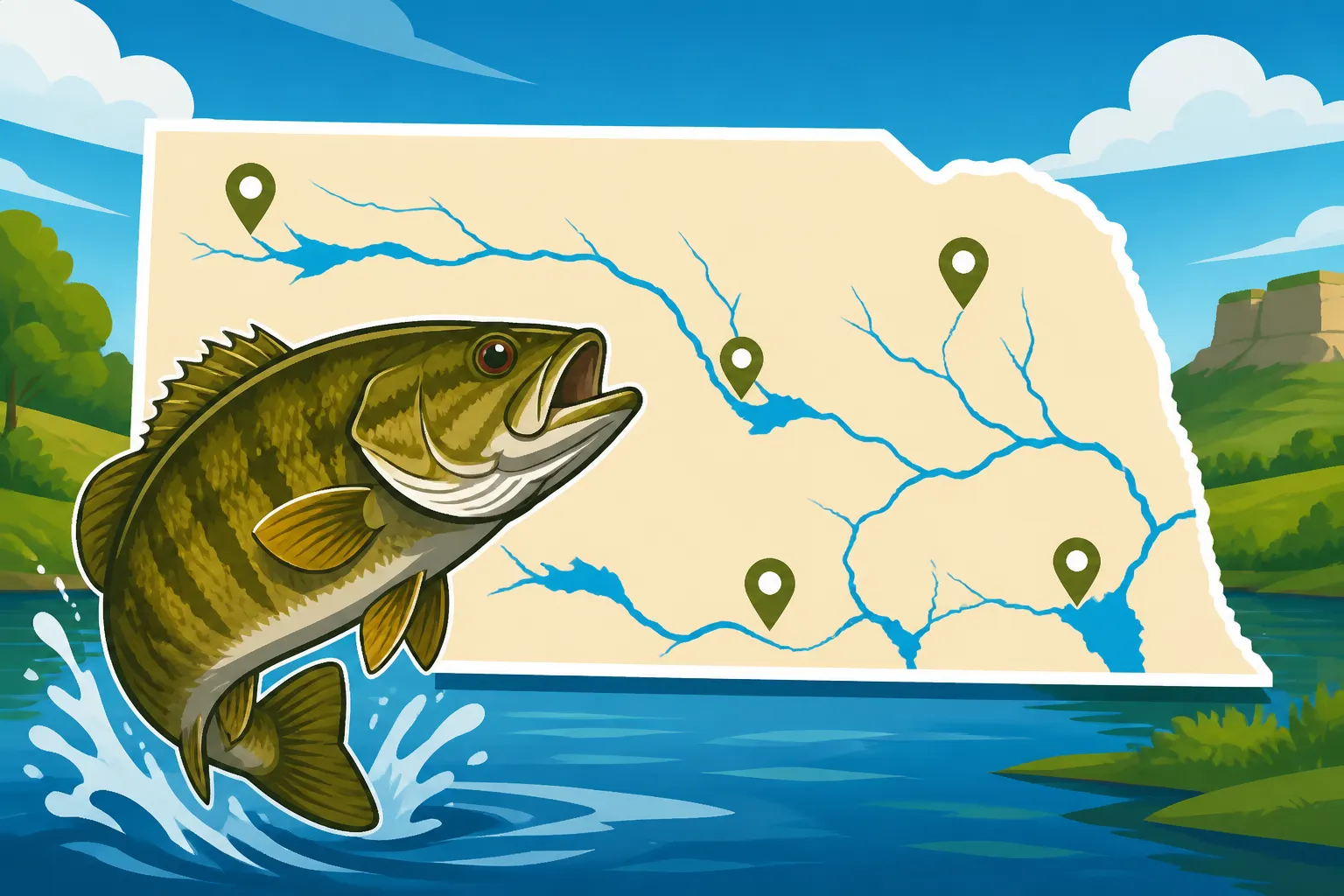
Where Smallmouth Bass Are Found in Nebraska
Finding smallmouth bass in Nebraska can sometimes feel like searching for a needle in a haystack, especially if you're used to states famous for their bronze beauties. Many anglers get frustrated because our state isn't a widely recognized smallmouth haven, but don't despair! With a little know-how and a willingness to explore, you can absolutely find these hard-fighting fish. This guide is dedicated to pulling back the curtain on where smallmouth bass are found in Nebraska, giving you the insights you need to embark on your next smallmouth adventure.
Understanding Smallmouth Bass Habitat in Nebraska
To consistently find smallmouth bass, you first need to understand what makes them tick. Unlike their largemouth cousins who often prefer weed-choked coves and sluggish backwaters, smallmouth bass are creatures of current and clear water. They thrive in environments that offer a mix of rocky structure, gravel beds, and moderate flow. In Nebraska, this means focusing your efforts primarily on certain rivers and a select few reservoirs.
Preferred Water Conditions
Smallmouth bass are incredibly particular about their environment. They prefer water that is clean, clear, and well-oxygenated. Murky, silty conditions that a channel catfish might love are generally not ideal for smallmouth. You'll often find them in areas with a good amount of current, as this brings food to them and helps keep the water fresh. Think about rivers with riffles, runs, and eddies, or reservoirs where wind-driven currents create similar conditions. They appreciate slightly cooler water temperatures compared to largemouths, making them active earlier in spring and later into the fall.
Beyond clarity and current, water depth is also a factor. While they'll certainly move shallow to feed, especially during low light conditions or spawning, smallmouth often relate to deeper areas, particularly those with rock piles, ledges, or submerged timber. These deep structures provide ambush points and thermal refuge. Understanding these preferences is key to narrowing down your search in the vast waters of Nebraska.
Structural Preferences
When you're out on the water, looking for the tell-tale signs of smallmouth habitat, pay close attention to structure. Smallmouth bass are notorious for holding tight to cover. This isn't just any cover, though; it's specific types of structure that provide them with protection, current breaks, and prime ambush locations.
Their absolute favorite kind of structure is rock. This can manifest as boulder fields, rocky points, riprap banks, gravel bars, or even submerged rock piles. These rocky areas provide ample crayfish, minnows, and insect larvae, all staples of the smallmouth diet. In rivers, look for current breaks created by large boulders, fallen trees, or bends in the river. These spots allow smallmouth to sit out of the main current, expending less energy while waiting for prey to drift by. On reservoirs, rocky points that drop off into deeper water, submerged humps, and dam faces are classic smallmouth haunts. Understanding this relationship with structure is far more important than just knowing a general location; it helps you pinpoint the exact spots within a given body of water.
Top Nebraska Waters for Smallmouth Bass
While Nebraska might not be globally renowned for its smallmouth bass fishing, we certainly have some gems where these feisty fish can be found. It often requires a bit more effort and specific targeting, but the reward of a hard-fighting smallmouth is well worth it.
Western Nebraska Rivers and Reservoirs
When you talk about smallmouth in Nebraska, especially good river fishing, the conversation quickly turns to the western part of the state.
The Niobrara River is arguably Nebraska's premier smallmouth bass destination. This incredibly scenic river, often referred to as a "river of national significance," boasts clear water, numerous rapids, and abundant rocky structure – a perfect recipe for smallmouth. Anglers float portions of the Niobrara, particularly downstream from Valentine, to access prime smallmouth habitat. The fish here are known for their strong fights in the river's current. If you're planning a trip to this area, checking out resources like Niobrara River Smallmouth Bass Fishing can give you an edge. Beyond smallmouth, the Niobrara is a fantastic river for float trips, offering beautiful scenery and diverse fishing opportunities.
Another key area in western Nebraska is Box Butte Reservoir near Crawford. This reservoir is known for having a healthy population of smallmouth bass, often caught in good numbers and respectable sizes. The reservoir features plenty of rocky shorelines, submerged rock piles, and points that smallmouth love. It's not uncommon to find anglers targeting them here with crankbaits, jigs, and soft plastics.
While perhaps less consistent, sections of the Platte River can also hold smallmouth, particularly in its upper reaches where the water is clearer and the substrate is rockier. It’s not the primary target species for many Platte River anglers, who often focus on channel catfish, but don't discount the possibility. Fishing around bridge pilings, rocky stretches, and confluence areas with smaller, clearer tributaries can sometimes yield a surprise smallmouth. For more general information on this large river system, consider reading Platte River Fishing Guide.
Northeastern Nebraska Waters
Moving further east, we find other river systems that can offer smallmouth bass opportunities, though perhaps not as robust as the Niobrara.
The Elkhorn River in northeastern Nebraska is a diverse fishery, primarily known for its channel catfish and northern pike. However, in certain sections, particularly those with clearer water and rocky or gravelly bottoms, smallmouth bass can be found. These areas are often in the upper and middle stretches of the river, away from the more silty lower sections. Fishing around current breaks, log jams, and bridge abutments can be productive. While not a dedicated smallmouth fishery, it offers a chance to catch them as part of a multi-species outing. For detailed insights, refer to Elkhorn River Fishing.
Other Potential Spots and Stocking Efforts
Beyond the primary locations, smallmouth bass can sometimes turn up in other Nebraska waters due to natural dispersal or past stocking efforts. Some smaller, rock-bottomed streams that feed into larger river systems may hold isolated populations. Additionally, the Nebraska Game and Parks Commission periodically stocks smallmouth bass into various lakes and reservoirs across the state to establish or enhance populations. Keeping an eye on their stocking reports can sometimes reveal new or emerging smallmouth fisheries.
It's also worth noting that some deeper, clearer sandpit lakes, especially those with introduced rock structure, might develop smallmouth populations over time. These are often hit-or-miss propositions, but a local bait shop or fellow angler might share a whispered secret about a hidden gem. Patience and persistence are key when seeking out smallmouth in Nebraska's lesser-known waters.
| Location Category | Primary Waters | Key Characteristics for Smallmouth | Best Approach |
|---|---|---|---|
| Rivers (Western) | Niobrara River | Clear, rocky, strong current, rapids | Float fishing, wading |
| Reservoirs (Western) | Box Butte Reservoir | Rocky points, humps, clear water | Boat fishing, shore casting |
| Rivers (Central/Eastern) | Platte River (upper sections), Elkhorn River | Clearer, rocky sections; current breaks | Wading, small boat/kayak |
| Smaller Lakes/Ponds | Select clear sandpits with rock | Less common, very specific habitat | Exploratory bank fishing |
How to Target Smallmouth Bass in These Locations
Once you know where smallmouth bass are found in Nebraska, the next step is understanding how to catch them. These aggressive fish respond well to specific gear and techniques, whether you're battling them in a river current or pulling them from a rocky reservoir.
Essential Gear and Tackle
Having the right equipment makes all the difference when targeting smallmouth. They are powerful fighters, even when small, and can surprise you with their acrobatic leaps.
For rods, a medium-light to medium power spinning rod, typically 6'6" to 7' in length, is a versatile choice. This allows for good casting distance and sensitivity while still having enough backbone to handle a strong fish. Pair this with a reliable spinning reel spooled with 6-10 lb test fluorocarbon or braided line with a fluorocarbon leader. Fluorocarbon is nearly invisible underwater and has excellent abrasion resistance, which is crucial when fishing around rocks. You can often find excellent deals on quality spinning combos and various fishing lines on Amazon, making it easy to get geared up without visiting multiple stores.
When it comes to lures, smallmouth have a few favorites:
- Crankbaits: Smaller, crawfish-imitating crankbaits or shallow-diving jerkbaits are deadly in rocky river runs or along reservoir points. Colors like brown, red, or natural baitfish patterns work well.
- Jigs: Grubs, tubes, and hair jigs rigged on light jig heads are incredibly effective for probing rocky bottoms. Bounce them along the bottom or swim them through current breaks.
- Soft Plastics: Senkos, small worms, and creature baits rigged weightless, on a dropshot, or with a light Texas rig can entice finicky smallmouth.
- Topwater Lures: Poppers, walk-the-dog baits, and small prop baits can be exhilarating when smallmouth are actively feeding on the surface, especially during low light conditions.
- Spinners and Spinnerbaits: Small inline spinners or compact spinnerbaits can be great for covering water quickly and drawing reaction strikes.
Don't forget a good pair of polarized sunglasses to help spot structure and cruising fish, especially in clearer waters, and a pair of pliers for easy hook removal.
Best Techniques for River and Reservoir Smallmouth
The approach you take will vary slightly depending on whether you're fishing a river or a reservoir.
For river smallmouth, especially on the Niobrara, float fishing by canoe or kayak is often the most effective method for covering water. As you drift, cast your lures towards current breaks, eddies behind large boulders, and areas with submerged timber or rocky banks. Position your craft to allow for precise casts and natural drifts of your baits. Wading is also a fantastic option in accessible river stretches; focus on reading the water and identifying prime holding spots. Cast upstream and let your lure drift naturally downstream through promising areas, maintaining a tight line to feel for bites. When wading, safety is paramount, especially in strong currents; wearing appropriate waders and a wading belt is crucial. Consider reading Best Kayak for Fishing Moving River Water for tips on river navigation and fishing.
For reservoir smallmouth, targeting rocky points, humps, and submerged islands is key. These fish will often hold on the wind-blown side of structures, as the wave action dislodges bait. Boat anglers can use electronics to locate deep rock piles and then cast jigs, dropshots, or crankbaits to them. Shore anglers should focus on accessible riprap banks, rocky points that jut out into the lake, and areas near dam structures. Long casts with crankbaits or heavy jigs can cover water effectively. Pay attention to the wind, as it often dictates where the baitfish, and thus the smallmouth, will be concentrated. For a deeper dive into techniques for specific fish, you might find How to Fish for Walleye in Nebraska helpful, as some deeper water techniques cross over for bass as well.
Conservation and Responsible Angling
Nebraska's smallmouth bass fisheries, while not as widespread as some other states, are a valuable resource that we all need to protect. Practicing responsible angling ensures that future generations can enjoy the thrill of catching these hard-fighting fish.
Catch and Release Practices
Many smallmouth bass anglers, particularly those targeting them in rivers or for sport, choose to practice catch and release. Smallmouth bass populations can be slower to recover than some other species, especially in smaller, more isolated waters. By releasing your catch, you contribute to the sustainability of the fishery.
When practicing catch and release, handle the fish as little as possible. Use a rubberized landing net to minimize scale damage. If you plan to take a photo, do so quickly and support the fish horizontally with both hands. Avoid dragging the fish onto dry land or gravel. Use pliers to carefully remove hooks, or consider using barbless hooks, which makes release much easier and less traumatic for the fish. Always ensure the fish is revived and swims away strongly before letting it go. Proper handling increases the chances of survival significantly. More specific guidelines can be found in How to Release a Fish Safely to Survive.
Respecting Regulations
Always be aware of and follow the current Nebraska Fishing Regulations Explained. This includes understanding daily bag and possession limits, as well as any length limits that may be in place for smallmouth bass. Regulations are designed to protect fish populations and ensure healthy ecosystems. Before heading out, make sure you have your valid Nebraska Fishing License Guide.
Sometimes, specific areas might have special regulations for smallmouth or other bass species, such as catch-and-release only sections or slot limits. Always check the latest Nebraska Fishing Guide or the Nebraska Game and Parks website for the most up-to-date information for the specific body of water you plan to fish. Adhering to these rules is not just about avoiding penalties, but about being a responsible steward of our natural resources. Understanding Nebraska Bass Length Limits is especially important, as keeping undersized or oversized fish can significantly impact the population structure.
Disclaimer
This article is for general informational purposes only and does not constitute professional advice. Laws, prices and regulations vary by location and change over time. Consult a qualified professional for guidance on your specific situation.