Do Nebraska Lakes Have Smallmouth Bass or Only Largemouth?
It’s a question I hear whispered around bait shops and shouted across the water on many a Saturday morning: "Do Nebraska lakes even have smallmouth bass, or is it just largemouth?" It’s a completely fair question, because while largemouth bass are practically synonymous with Nebraska fishing, their smallmouth cousins can feel a bit like a phantom. This guide is here to clear up the confusion, explore where both of these fantastic bass species hang out in our great state, and help you understand their unique preferences so you can target them effectively.
The Ubiquitous Largemouth Bass in Nebraska Waters
Ah, the largemouth bass. If you’ve ever thrown a worm into a farm pond or cast a crankbait in one of our many reservoirs, chances are you’ve encountered one of these feisty green machines. They are truly the kings of Nebraska's warm-water fisheries, and for good reason. They're adaptable, aggressive, and widely distributed, making them a favorite target for anglers of all skill levels.
Where Largemouth Reign Supreme
Largemouth bass are incredibly versatile when it comes to habitat, which is precisely why they're so prevalent across Nebraska. You'll find them thriving in practically every nook and cranny of our aquatic landscape, from the smallest farm ponds to our largest impoundments. They absolutely love structure – think submerged timber, weed beds, lily pads, rock piles, and even old tires or sunken boats. Anywhere a baitfish or crawfish can hide, a largemouth will likely be lurking, ready to ambush its next meal.
Our countless state recreation areas and reservoirs, like Branched Oak Lake, Wagon Train Lake, and Pawnee Lake, are absolutely teeming with largemouth. These waters offer the perfect blend of cover, forage, and generally warmer, murkier water that largemouth prefer. Even many of the quiet, out-of-the-way farm ponds that dot the Nebraska landscape are prime largemouth territory, often holding surprisingly large fish that have grown fat on a diet of frogs and sunfish. You can learn more about targeting these fish in our Largemouth Bass Fishing in Nebraska guide.
Why Largemouth Are So Popular
The appeal of largemouth bass isn't just their prevalence; it's their personality. They hit lures hard, fight with determination, and often make spectacular jumps when hooked. For many of us, catching a largemouth bass was our introduction to the thrilling world of fishing. They're accessible to beginners yet offer enough challenge to keep seasoned pros coming back for more. Plus, the sheer variety of techniques you can use to catch them is astounding. Whether you prefer flipping jigs into heavy cover, twitching a topwater bait at dawn, or slow-rolling a spinnerbait along a weed line, there's a largemouth technique for every angler.
Furthermore, these fish grow to impressive sizes in Nebraska. While they may not reach the double-digit weights of their southern cousins, a five-pound largemouth is a true trophy here, and bigger ones are certainly out there for those willing to put in the time. Their widespread availability and willingness to bite make them a go-to species for a casual afternoon outing or a competitive tournament. If you're just starting out, check out our Beginner Fishing Gear Guide for Nebraska for tips on getting set up to chase these fun fish.
The Elusive Smallmouth Bass: A Nebraska Rarity
Now, for the other half of the question: do smallmouth bass exist in Nebraska? The answer is a resounding "yes," but with a significant caveat – they are far less common and much more restricted in their distribution compared to largemouth bass. Finding them often requires a specific approach and a good understanding of their preferred habitats. For many anglers, catching a Nebraska smallmouth feels like a special achievement, a testament to their dedication and knowledge of our state's more nuanced fisheries.
Where Smallmouth Prefer to Roam
Unlike their largemouth relatives, smallmouth bass are not fans of murky, warm, weedy waters. They are true connoisseurs of clear, cool water with rocky bottoms, gravel shoals, and plenty of current. Think riverine environments or the rocky shorelines and main lake points of our deeper, clearer reservoirs. Because these conditions are less common across much of Nebraska, smallmouth populations are more localized.
The Niobrara River is arguably the most famous smallmouth fishery in Nebraska, offering fantastic opportunities for those willing to float or wade its pristine waters. Here, smallmouth thrive among the rocky outcrops and swift currents. Beyond rivers, you might find pockets of smallmouth in certain large, clear reservoirs with extensive rocky structure, especially in the western and central parts of the state. These fish are more sensitive to water quality and habitat, making their presence a good indicator of a healthy, clean waterway. Exploring specific stretches of the Platte River, particularly below dams where current is stronger and the bottom is rocky, can also yield smallmouth. Our guide to Smallmouth Bass Fishing in Nebraska delves deeper into these unique opportunities.
Challenges of Targeting Smallmouth in Nebraska
Targeting smallmouth bass in Nebraska presents a distinct set of challenges, which adds to their allure for many anglers. First, simply locating them can be tough. They aren't in every lake or pond; you need to seek out those specific, colder, rockier environments. Second, their preference for clear water means they can be spookier than largemouth. A subtle approach, longer casts, and lighter line are often necessary to avoid alarming them.
Third, the gear and techniques might differ slightly. While many bass lures work for both, smallmouth often respond well to finesse presentations like tube jigs, small crankbaits that mimic crawfish, or even fly fishing setups. Their fight is also different – less about explosive jumps and more about deep, bulldogging runs and incredible stamina. They'll use the current to their advantage, making for a truly memorable battle, especially when fishing light tackle. It’s a rewarding pursuit, but definitely one that demands patience and an appreciation for their unique preferences. You might find a good selection of specialized smallmouth lures on sites like Amazon to help you with your search.
Key Differences: Largemouth vs. Smallmouth Bass
Knowing the physical and behavioral distinctions between largemouth and smallmouth bass is crucial for any angler in Nebraska. Not only does it help with identification, but it also informs your fishing strategy. While both are "bass," they are truly distinct species with different needs and characteristics.
Physical Characteristics
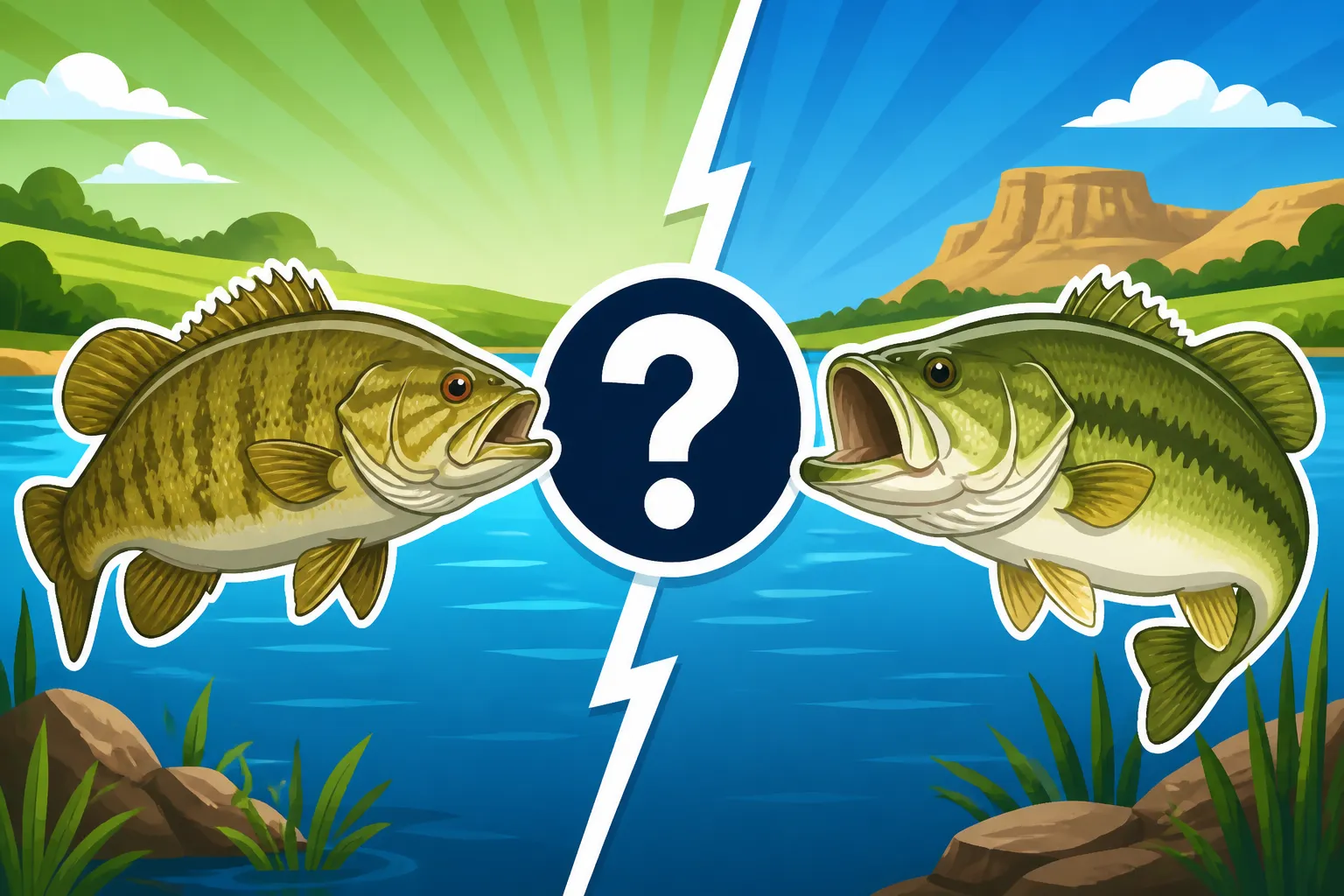
The most obvious difference, as their names suggest, lies in their mouths. A largemouth bass has a mouth that extends well past the back of its eye when closed. Its upper jawbone (maxilla) extends beyond the rear margin of the eye. A smallmouth bass, on the other hand, has an upper jaw that does not extend past the middle of its eye.
Beyond the mouth, look at the coloring and body shape. Largemouth bass typically have a dark, horizontal stripe running down their side, often with more blotchy patterns. Their body tends to be more elongated and football-shaped. Smallmouth bass usually have vertical bars or splotches on their sides, and their overall color is more bronze or brownish, hence their nickname "bronze back." Their body shape is also more compressed and muscular, giving them a stockier appearance, which contributes to their powerful fights in current. Another key difference is the dorsal fin: on a largemouth, there's a deep indentation or almost a complete separation between the spiny front dorsal fin and the soft-rayed rear dorsal fin. On a smallmouth, this separation is much less pronounced, often appearing as one continuous fin.
Here's a quick comparison table:
| Feature | Largemouth Bass | Smallmouth Bass |
|---|---|---|
| Upper Jaw | Extends noticeably past the back of the eye | Does not extend past the middle of the eye |
| Coloration | Green with a prominent dark horizontal stripe | Bronze to brownish with vertical bars/blotches |
| Body Shape | More elongated, "football" shaped | Stockier, more compressed, "bronze back" |
| Dorsal Fin | Deep indentation or near-complete separation | Shallow indentation, appears more continuous |
| Habitat | Warm, often murky, weedy lakes, ponds, slow rivers | Clear, cool, rocky rivers, deep, clear reservoirs |
If you're ever unsure, a good fish identification guide (many available on Amazon) can be a great companion on your fishing trips.
Behavioral Tendencies and Preferences
Their physical differences directly influence their behavior and preferred habitats. Largemouth are ambush predators, perfectly designed to hide in dense cover like weed beds or fallen trees, darting out to strike unsuspecting prey. They are comfortable in warmer water and will seek out the densest cover available, whether it's submerged brush or thick lily pads. This makes them a prime target for lures that can be worked through or over heavy cover, like weedless jigs, Texas-rigged worms, or topwater frogs.
Smallmouth, on the other hand, are more open-water predators, often schooling up around rocky points, ledges, and current breaks. They are highly active hunters, chasing down baitfish in clear water. Their preference for cooler, oxygen-rich water and rocky environments means you'll often find them deeper or in moving water where largemouth typically wouldn't thrive. Their diet often includes crawfish, minnows, and aquatic insects, making lures that mimic these prey items particularly effective. Techniques like dropshotting, tube jigging, or throwing small crankbaits are often deadly for Nebraska smallmouth. The Nebraska Fish Species Identification Guide can offer even more insights into these fascinating creatures.
Where to Find Your Preferred Bass in Nebraska
So, you know the difference, but how do you actually put yourself in a position to catch one over the other? It really comes down to scouting the right water and understanding what each species truly desires in a home. It's not just about luck; it's about being intentional with your location choice.
Targeting Largemouth: Embrace the Cover
If largemouth bass are your primary target, you're in luck because they are truly abundant across the state. Focus your efforts on Nebraska's numerous reservoirs and state park lakes, especially those known for their weed growth, submerged timber, or extensive shoreline cover. Places like Branched Oak Lake, with its diverse structures, or the many smaller city and county parks that participate in the Nebraska Urban Fishing Program, are prime examples. Look for shallow bays with lily pads in spring, deep weed lines in summer, or timber-filled creek channels in fall.
The key to largemouth success is often patience and precision casting. Flip a jig into that dark patch of weeds, pitch a worm under that overhanging tree, or rip a spinnerbait past a sunken log. Don't be afraid to try different depths and presentations until you find what triggers a bite. For example, if you're fishing a pond with lots of emergent vegetation, a weedless frog or soft plastic rigged to glide over the top can be incredibly effective. Even simple bank fishing at places like Holmes Lake in Lincoln or Standing Bear Lake in Omaha can yield plenty of largemouth, especially around docks, fallen trees, or rocky points. Best Nebraska Lakes for Shore Fishing Without a Boat can give you more ideas for accessible largemouth spots.
Targeting Smallmouth: Seek the Rocks and Current
For those eager to tangle with a Nebraska smallmouth, you'll need to adjust your strategy and seek out specific types of water. Your best bet will be cooler, clearer rivers with rocky bottoms and good current flow, such as the Niobrara River in its upper and middle stretches. When fishing rivers, consider floating in a canoe or kayak to cover more ground and access less pressured areas. Look for current breaks behind large rocks, eddies, gravel bars, and deeper pools with noticeable bottom structure.
In reservoirs, focus on the main lake body, especially rocky points, riprap shorelines, dam faces, and underwater humps. These areas typically have the clearer, cooler water and hard bottom that smallmouth prefer. While Lake McConaughy is famous for its walleye, its sheer size and rocky structure might hold some smallmouth, particularly around its deeper, clearer areas. The Missouri River, with its extensive riprap and wing dams, can also be a surprising smallmouth producer, especially in areas with good current. Remember, smallmouth are often sight feeders in clear water, so natural colors and subtle presentations can be more effective. Good polarized sunglasses (you can find quality ones on Amazon) are essential for spotting structure and even the fish themselves in clear water. For specific locations, our guide on Best Nebraska Rivers for Fishing might offer further clues.
Conclusion: Two Bass, Two Experiences
So, to definitively answer the question: yes, Nebraska lakes (and rivers!) are home to both largemouth and smallmouth bass. However, they couldn't be more different in terms of their prevalence and preferred real estate. The largemouth is the friendly, accessible neighbor found almost everywhere, ready to jump on a variety of lures. The smallmouth is the more discerning, adventurous type, seeking out specific, rugged environments and offering a challenging, rewarding pursuit for those who seek them out.
Understanding these differences isn't just about identifying your catch; it's about appreciating the diverse angling opportunities Nebraska offers. Whether you're a fan of throwing big topwaters for a trophy largemouth or patiently working a jig through river current for a bronzeback, our state has a bass fishing experience waiting for you. So next time you're heading out, consider what kind of bass adventure you're craving and pick your water accordingly. Happy fishing!
Disclaimer
This article is for general informational purposes only and does not constitute professional advice. Laws, prices and regulations vary by location and change over time. Consult a qualified professional for guidance on your specific situation.