Are Nebraska Farm Pond Bass Different From Reservoir Bass?
It's a question many of us ponder while rigging up our tackle: is the bass lurking in that small, secluded farm pond truly different from its cousin in the sprawling, windswept reservoir? While they share the same species name, the environments they inhabit can shape their lives and behaviors in fascinating ways. This guide will dive deep into the distinct characteristics, habits, and challenges faced by Nebraska's farm pond bass and reservoir bass, helping you understand how to approach each one for a more successful day on the water.
The Intimate World of Nebraska Farm Pond Bass
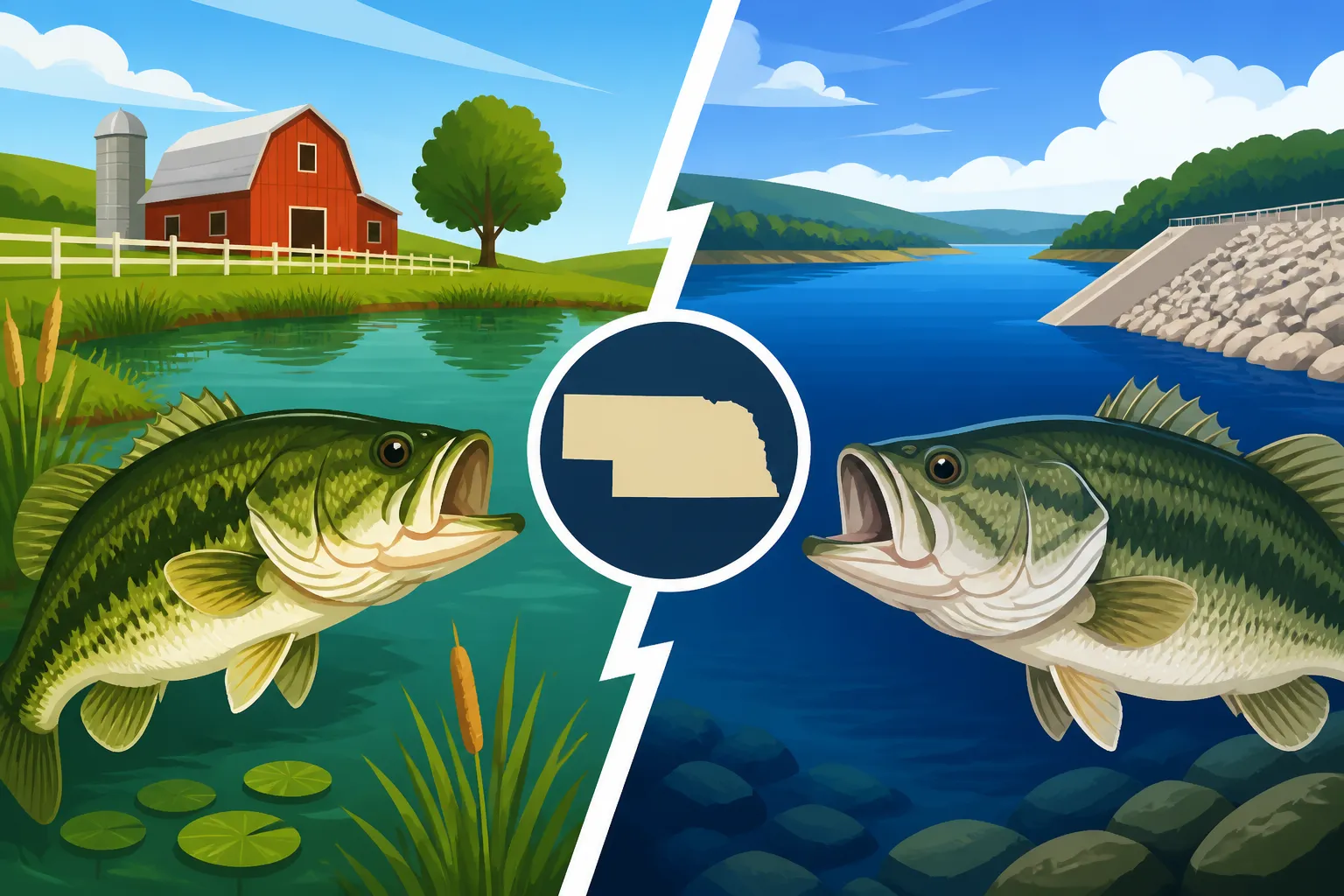
Farm ponds are often microcosms, isolated ecosystems where bass live out their lives within relatively confined spaces. These smaller bodies of water present a unique set of circumstances that profoundly influence the bass residing within them.
Habitat and Environment in Farm Ponds
Think of a farm pond as a compact, self-contained world. Its size is usually limited, ranging from a quarter-acre to a few acres, and depths can vary significantly but rarely reach the extremes of large reservoirs. The water clarity in ponds can be anything from crystal clear to quite murky, depending on the surrounding agricultural runoff, bottom composition, and aquatic vegetation. Often, you'll find an abundance of natural cover: lily pads, cattails, fallen trees, and even old tires or cattle watering troughs. This limited space means that every piece of structure is a potential bass hideout.
The forage base in farm ponds is typically less diverse than in larger systems. Bass in ponds primarily feed on what's readily available: bluegill, minnows, crayfish, frogs, and a plentiful supply of insects and their larvae. This can lead to very distinct feeding patterns based on the dominant prey species. Furthermore, water temperatures in ponds can fluctuate more rapidly than in large reservoirs, warming quickly in spring and summer, and cooling just as fast in fall and winter. This rapid change can make pond bass more reactive to weather shifts. The fish population itself can also be very concentrated, making for quick action, but also the risk of overpopulation and stunted growth if not managed properly.
Behavior and Characteristics of Farm Pond Bass
Because of their smaller, often simpler environments, farm pond bass tend to exhibit some predictable behaviors. They often become more territorial due to limited prime real estate, and their feeding habits can be very opportunistic. If a pond is well-managed and has a healthy forage base, you can find some truly giant bass in these waters, as they don't expend as much energy foraging across vast distances. However, in unmanaged ponds, overpopulation of bass can lead to stunted growth, where many small bass compete for limited food, resulting in thin, less robust fish.
Their reliance on specific, often visible, cover means you'll find them tight to structure. A fallen tree, a culvert, a patch of weeds – these are obvious ambush points. Pond bass can also be less wary of anglers if the pond doesn't receive heavy fishing pressure. This can make them more aggressive strikers, sometimes hitting almost any lure thrown their way. However, if a pond is fished heavily, they can become incredibly educated and finicky, requiring very subtle presentations. Their coloration might also be darker, reflecting the often stained or tannin-rich waters and heavy cover they inhabit, providing better camouflage against muddy banks or dense vegetation. Many anglers find How to Catch Largemouth Bass in Farm Ponds a helpful resource for targeting these particular fish.
The Expansive World of Nebraska Reservoir Bass
Nebraska's reservoirs are vast, dynamic bodies of water, often created by damming rivers, resulting in complex and ever-changing habitats. Bass here live a very different life compared to their pond-dwelling counterparts.
Habitat and Environment in Reservoirs
Reservoirs are enormous in comparison to farm ponds, covering thousands of acres in many cases, like Lake McConaughy or Branched Oak Lake. Their sheer size means bass have immense areas to roam and explore. Depths can plunge hundreds of feet, and the environment can shift dramatically from shallow, flooded timber flats to steep, rocky bluffs, and expansive open-water basins. Water levels in reservoirs often fluctuate significantly throughout the year, especially with agricultural or power generation demands, which constantly reshapes available cover and prime feeding areas. This means what was a productive shallow flat one week might be high and dry the next, forcing bass to adapt.
The forage base in reservoirs is typically far more diverse and abundant. Shad, various species of panfish like crappie and bluegill, suckers, and even smaller game fish like walleye or sauger can be on the menu. This variety means reservoir bass often develop specific feeding patterns based on the most prevalent baitfish. Thermoclines, layers of distinct water temperature, form in deeper reservoirs during summer, pushing bass and their prey to specific depths. The sheer volume of water and constant influx from rivers also means water clarity can range widely, from turbid river arms to clear main lake basins, sometimes within the same body of water. Anglers looking to explore these vast waters often consider specialized gear, and there are many options available on Amazon for everything from advanced sonar units to specialized tackle.
Behavior and Characteristics of Reservoir Bass
The behavior of reservoir bass is generally more complex and often less predictable than their pond cousins. They have to adapt to a constantly changing environment, including shifting water levels, varying forage availability, and often, significant fishing pressure. Reservoir bass tend to be more nomadic, following schools of baitfish across vast stretches of water, rather than holding tight to a single piece of cover. This makes patterning them a much greater challenge.
Growth rates in reservoirs can be excellent, especially in waters with a rich shad population, leading to robust, strong fish. However, the competition is also much higher, and they often expend more energy in their daily movements. Reservoir bass can be highly selective feeders, keying in on specific sizes, colors, and actions of baitfish, making lure selection crucial. While they will still use cover, much of their life is spent relating to offshore structure: humps, points, old creek channels, and submerged timber. Locating these subtle structures often requires advanced electronics. Because of heavy fishing pressure, especially in popular spots, reservoir bass can become very wary and challenging to catch, demanding finesse techniques and a keen understanding of their environment. Nebraska Bass Length Limits are often in place for these larger bodies of water to help manage the population and promote healthy growth.
Key Differences in Bass Behavior and Physicality
While both are largemouth bass (or occasionally smallmouth, depending on the water), the environments of farm ponds and reservoirs shape them in distinct ways.
Physical Differences and Growth Rates
One of the most immediate differences an angler might notice is the overall health and size distribution of the fish. As mentioned, pond bass can be either exceptionally large (if managed and fed well) or notably stunted (if overpopulated). Reservoir bass, by contrast, often show a more consistent growth pattern, with a wider range of sizes but generally healthier, chunkier individuals due to a more stable and diverse food supply. You might find a higher proportion of "average-sized" bass in a reservoir and fewer extreme examples unless you hit a very specific bite.
Coloration can also differ. Pond bass in murky or heavily vegetated ponds might be darker green or even brownish, with pronounced lateral lines. Reservoir bass, especially those from clear, deep waters or sandy bottoms, might appear lighter, silvery-green, with less distinct markings. Their physical stamina also varies; a reservoir bass that has to fight current or swim long distances to chase shad might be a stronger fighter than a pond bass that has spent its life ambushing frogs from lily pads.
Feeding Habits and Lure Preferences
This is where the angler needs to pay close attention. Farm pond bass, with their limited forage and territorial nature, can often be caught on a wider variety of baits. Simple spinnerbaits, plastic worms, topwater poppers, or even live worms are frequently effective. They might be less picky about the exact presentation, especially in low-pressure ponds. For this reason, a simple Best Lures for Nebraska Bass guide can be extremely effective for pond fishing.
Reservoir bass, however, are often specialists. If a reservoir has a dominant shad population, bass will be "shad-oriented" and respond best to lures that imitate shad in size, color, and action—think crankbaits, jerkbaits, and swimbaits. If crayfish are abundant, jigs and soft plastic creatures might be more effective. Their preferred depths also change dramatically throughout the seasons, often requiring different lure types and presentations, from shallow topwaters in spring to deep-diving crankbaits or jigs over structure in summer and fall. Understanding this specialization is key to consistent success on reservoirs. Many anglers stock up on a variety of lures from Amazon to ensure they have options for different conditions.
Response to Angler Pressure
The amount of fishing pressure each environment receives heavily influences the bass's wariness. A secluded farm pond that sees anglers only a few times a year might have bass that are practically suicidal, hitting anything thrown near them. You could easily fish Nebraska State Park Fishing Permit Rules in a quieter state park pond and find very aggressive fish.
Conversely, a popular public reservoir, especially near boat ramps or accessible shorelines, can have highly educated bass. These fish have seen every lure and heard every trolling motor for years. They become incredibly wary, requiring longer casts, lighter lines, subtle presentations, and often, more specialized techniques to coax a bite. They might even move to deeper, less pressured areas, making them harder to locate. This difference in pressure is one of the biggest factors separating a "gimme" day on a pond from a challenging grind on a reservoir.
Adapting Your Fishing Strategy for Each Environment
Knowing these differences isn't just academic; it directly translates into how you approach your fishing trip.
Tackle and Gear Selection
For farm ponds, you can often get away with lighter, more versatile tackle. A medium-light to medium power spinning rod with 6-10 lb test monofilament or fluorocarbon line is often perfect. You don't usually need heavy-duty gear for long casts or fighting strong currents. A small tackle box with a few key lures (worms, spinnerbaits, topwater) and some basic hooks and weights will suffice. For a beginner, a good quality, budget-friendly spinning combo from Amazon would be an excellent start for pond fishing.
Reservoir fishing demands more specialized and robust gear. You might need a range of rods and reels: heavier casting setups for pitching jigs into thick cover, sensitive spinning rods for finesse techniques, and stout cranking rods for deep-diving baits. Line choices become more critical, with braided line often favored for sensitivity and strength, and fluorocarbon leaders for invisibility. A fish finder becomes almost essential for locating offshore structure and baitfish schools. A bigger boat with a reliable trolling motor is often needed to cover vast expanses of water. Understanding Best Rods and Reels for Nebraska Fishing is crucial when planning a reservoir trip.
| Feature | Farm Pond Bass | Reservoir Bass |
|---|---|---|
| Habitat Size | Small, confined (acres) | Large, expansive (hundreds/thousands of acres) |
| Water Levels | Generally stable, less fluctuation | Often fluctuate, reshaping habitat |
| Forage Base | Less diverse (bluegill, minnows, insects) | Highly diverse (shad, panfish, crawfish, etc.) |
| Cover | Visible, shoreline-oriented (weeds, logs) | Visible & offshore (humps, points, channels) |
| Growth Potential | Can be stunted or trophy-sized (management-dep.) | Generally robust, consistent growth |
| Diet | Opportunistic, generalist | Often specialized (e.g., shad-oriented) |
| Wariness | Less wary in low-pressure ponds | Highly wary in pressured areas |
| Movement | Territorial, confined | Nomadic, follows baitfish |
| Best Lures | Versatile: worms, spinnerbaits, topwaters | Specialized: crankbaits, jigs, swimbaits |
| Typical Gear | Lighter, versatile spinning combo | Diverse, specialized casting & spinning setups |
| Electronics Need | Low to none | Often essential (fish finder, GPS) |
Locating Fish
In a farm pond, locating bass often boils down to finding obvious cover. Scan the shoreline for anything out of the ordinary: a submerged log, a weed line, a dock, or a cluster of lily pads. Bass will almost certainly be nearby. You can often walk the bank, casting to these visible targets. How to Fish From Shore in Nebraska becomes a very effective strategy here.
Reservoir fishing is a whole different ballgame. While shoreline cover is still important, especially during certain seasons, a significant portion of the bass population lives offshore. This means using your boat's electronics to scan for submerged humps, ledges, creek channels, and schools of baitfish. Understanding contour maps and paying attention to subtle depth changes are critical skills. When the water temperatures are right, you might find bass suspended over open water, or schooling on deep points. For those newer to the game, learning How to Read a Fish Finder for Walleye can also teach you a lot about locating bass in similar deep-water structures. It's about thinking three-dimensionally, not just horizontally along the bank.
Choosing the Right Baits and Techniques
For farm ponds, keep it simple but effective. Soft plastic worms (like a good old Texas-rigged worm or a wacky rig), small spinnerbaits, buzzbaits, and basic crankbaits are often highly effective. Topwater lures can be explosive, especially during low-light conditions. Focus on accuracy and covering all the visible structure. Don't be afraid to experiment with live bait like nightcrawlers or shiners if artificials aren't working.
For reservoirs, your tackle box should be much more diverse. Deep-diving crankbaits for probing ledges, heavy jigs for punching through vegetation or fishing timber, finesse worms and shaky heads for pressured fish, jerkbaits for suspending over deep water, and big swimbaits for imitating shad are all common tools. Trolling, casting, jigging, and even dropshotting can all be effective techniques depending on the season, water depth, and baitfish patterns. Pay attention to local fishing reports and guide services, as they often key in on what baits are working for reservoir bass at any given time. And always remember, Nebraska Fishing Regulations Explained will cover any specifics on what baits are allowed.
In the end, while both farm pond bass and reservoir bass are the same species, their worlds are miles apart. Understanding these differences isn't just about catching more fish; it's about appreciating the incredible adaptability of these popular game fish and becoming a more versatile, knowledgeable angler in the diverse waters of Nebraska.
Disclaimer
This article is for general informational purposes only and does not constitute professional advice. Laws, prices and regulations vary by location and change over time. Consult a qualified professional for guidance on your specific situation.