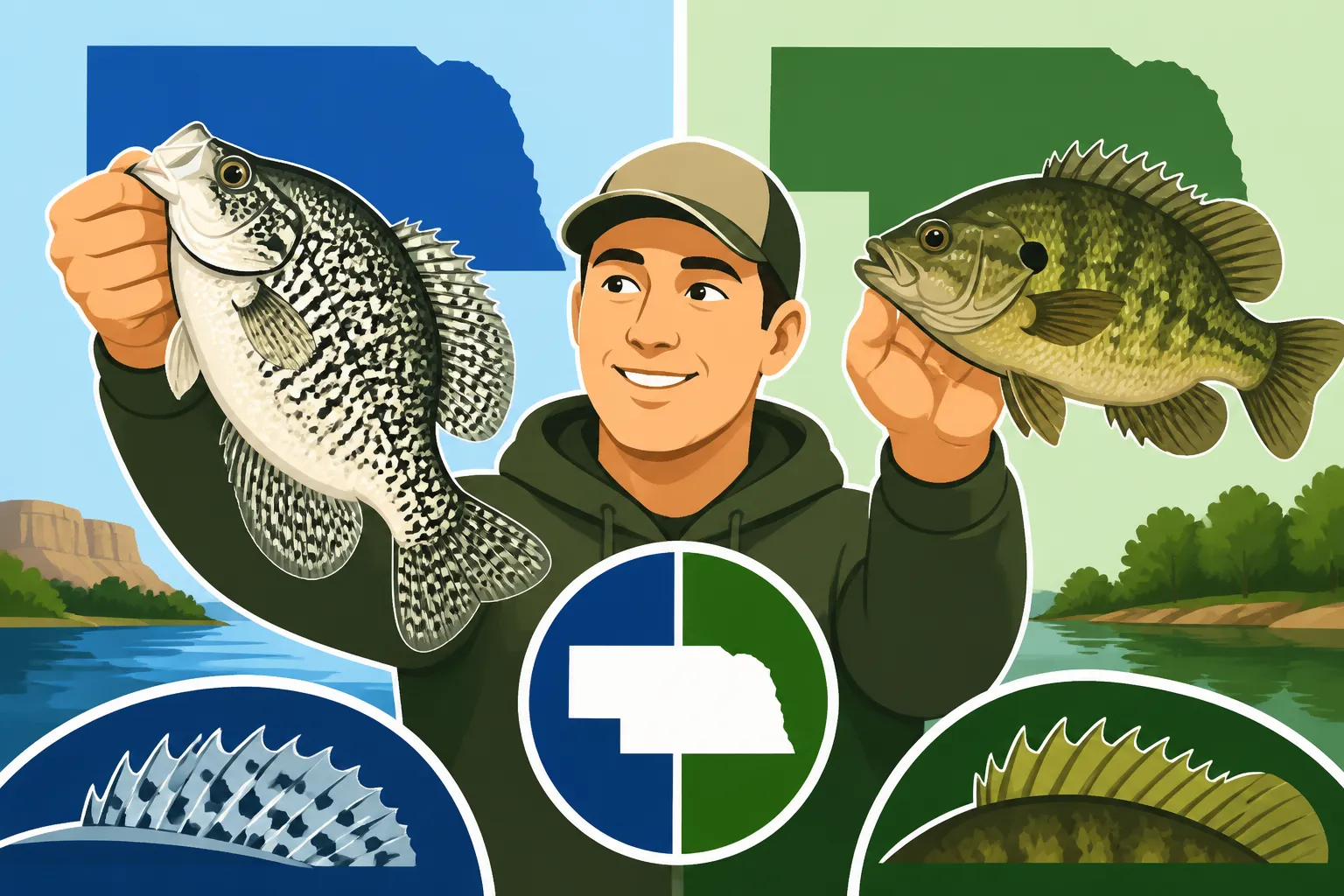
How to Tell a Crappie From a Rock Bass
It's incredibly common to be out on a beautiful Nebraska lake or river, pull in a feisty panfish, and then scratch your head wondering, "Is this a crappie, or a rock bass?" These two species, while distinctly different in their characteristics and habits, share enough superficial similarities to confuse even seasoned anglers. This guide is here to untangle that confusion, providing you with the clear, visual, and behavioral cues you need to confidently identify your catch every single time.
Why Distinguishing Crappie and Rock Bass Matters (And Why It's So Tricky!)
There's nothing quite like the satisfaction of a good day of panfishing in Nebraska, but that satisfaction can quickly turn to uncertainty when you're trying to identify your catch. Many anglers feel a pang of worry when they look at two similar-looking fish, wondering if they're about to put the wrong one on the stringer or accidentally break a regulation. It's a real frustration, and you're not alone in feeling it.
Nebraska's Diverse Panfish and the Confusion
Nebraska is blessed with a fantastic array of panfish, from bluegill to various sunfish, and of course, our beloved crappie and rock bass. The problem is, many of these species share similar overall shapes and mottled patterns, especially when they're fresh out of the water and flopping around. Crappie and rock bass, in particular, often get lumped together because they're both relatively flat-bodied, sport some dark spots, and can be found in similar general areas. However, their subtle differences are key to proper identification, and those subtle differences can be surprisingly hard to pinpoint in the moment, especially if you're excited or the fish is putting up a good fight. You might be targeting one species, only to realize you've been catching the other all day. This isn't just a matter of curiosity; it has tangible implications for your fishing trip and even for the health of our fisheries.
The Legal and Practical Implications of Misidentification
Mistaking a crappie for a rock bass, or vice versa, isn't just an innocent mistake; it can actually have legal and practical consequences for your fishing experience in Nebraska. Each fish species in Nebraska has specific regulations regarding Nebraska Fishing Daily Bag and Possession Limits, including daily bag limits and sometimes even length limits. If you're mistakenly identifying a crappie as a rock bass, for example, you might unintentionally exceed the bag limit for crappie while thinking you're still within limits for "panfish." This could lead to a citation if a game warden checks your cooler. Understanding these regulations, which are clearly laid out in the Nebraska Fishing Regulations Explained booklet, is paramount.
Beyond legalities, accurate identification impacts your fishing strategy. Crappie typically school in open water or around submerged brush, while rock bass often prefer rocky shorelines and current. If you think you're catching crappie but are actually pulling in rock bass from a rocky point, you might be using the wrong bait or technique for crappie, missing out on a potentially better bite elsewhere. Knowing your target species helps you dial in your presentation, understand their preferred habitat, and ultimately, become a more successful and responsible angler. You want to make sure you're using the right approach, whether you're casting small jigs for crappie or slowly retrieving a crawler for rock bass.
Key Visual Indicators: What to Look For on Your Catch
When that fish comes to hand, there are a few tell-tale signs that will quickly help you determine if it's a crappie or a rock bass. Don't just look at the overall shape; focus on specific anatomical features.
The Crappie's Distinctive Features
Crappie, whether black crappie or white crappie (and yes, there are differences between them, but they both share these crappie traits), are often described as having a very "discus-like" or "dinner plate" shape. They are laterally compressed, meaning they're quite thin from side to side but very tall from back to belly. This gives them that characteristic roundish appearance.
- Body Shape: Thin and tall, almost disc-like.
- Mouth: The mouth of a crappie is relatively small and upturned, almost as if it's designed for sipping insects or small minnows from the surface or mid-water column. It typically doesn't extend much beyond the middle of the eye.
- Dorsal Fin Spines (CRITICAL!): This is one of your absolute best indicators. Crappie typically have 6-8 spines in their dorsal fin. These spines are usually quite sharp and distinct. We'll dive deeper into this below because it's that important.
- Coloration: Crappie often have a silvery-green or olive base color, adorned with irregular dark blotches or vertical bars. Black crappie (How to Tell a Black Crappie From a White Crappie) tend to have more scattered, irregular spots, while white crappie often have more distinct vertical bars, but both share this general pattern.
- Eyes: Crappie have relatively large eyes, which is characteristic of fish that often feed in lower light conditions or clearer water.
When you're looking for that tell-tale crappie, imagine a fish that looks like a flattened coin with dark spots. They're built for quick bursts of speed through brush, grabbing small prey. If you're looking for Nebraska Crappie Daily Limit, knowing these features is your first step.
The Rock Bass's Unique Characteristics
The rock bass, on the other hand, is a sturdier, more robust fish. While still a panfish, it has a bulkier build compared to the crappie, designed for muscling its way around rocky structures and currents.
- Body Shape: More elongated and chunkier than a crappie, resembling a small bass or a sunfish. It's not as compressed (thin) as a crappie.
- Mouth: The rock bass has a noticeably larger mouth that extends further back on its head, often past the middle of its eye, and sometimes even past the back edge of the eye. This larger gape allows it to take in larger prey, like crayfish or small fish.
- Dorsal Fin Spines (CRITICAL!): Here's another key differentiator: rock bass have a significantly higher number of dorsal fin spines, usually 10-12. These spines are also sharp, but there are simply more of them.
- Coloration: Rock bass typically have a mottled, bronze to olive-brown coloration, often with distinct dark spots or rows of spots along their sides. These spots can sometimes look like horizontal lines.
- Eyes: Perhaps the most famous feature of the rock bass is its vibrant red eye. This striking color is a dead giveaway for many anglers. If you catch a panfish with bright red eyes, you've likely found a rock bass.
Think of a rock bass as a compact, feisty brawler. Its stout body and large mouth are perfect for its preferred habitat of rocky areas where it ambushes prey.
The Dorsal Fin: Your Number One Clue
While eye color and body shape are excellent visual cues, the number of spines in the dorsal fin is the most consistently reliable method for differentiating between a crappie and a rock bass. It's like a secret code embedded right on the fish!
Here's how to do it:
Gently but firmly hold the fish. Locate the dorsal fin, which is the fin on its back. Carefully run your finger lightly along the front edge of the fin. You'll feel distinct, sharp points – these are the spines. Count them!
- Crappie: You will consistently count 6 to 8 dorsal spines.
- Rock Bass: You will consistently count 10 to 12 dorsal spines.
This method is almost foolproof. It takes a little practice to feel the spines without poking yourself, but once you get the hang of it, you'll be able to identify them with confidence every time. Having this skill means you won't have to guess or worry about regulations when you're out fishing for Nebraska Crappie Bag Limits.
Habitat, Behavior, and Diet: Beyond Just Looks
Knowing where to find them and what they like to eat can also dramatically help in identification, as you're more likely to catch one in its preferred environment with the right bait. It's like knowing what kind of coffee shop your friend hangs out in; you're more likely to find them there than at a hardware store!
Where Crappie Call Home in Nebraska
Crappie are masters of structure. In Nebraska's lakes, reservoirs, and even some slower-moving river backwaters, you'll typically find them congregating around submerged brush piles, standing timber (old drowned trees), docks, bridge pilings, and weed lines. They love areas with a little bit of depth but plenty of cover to ambush baitfish. Think of them as dwellers of the "underwater forest."
They tend to school, sometimes in large numbers, so if you catch one crappie, there's a good chance more are nearby. They prefer slightly warmer, murkier water than some other panfish, and they're especially active during low light conditions – dawn, dusk, or overcast days. How to Catch Crappie Around Brush Piles is a great resource if you want to specifically target them using these habitat clues. When you find that perfect submerged timber or a brush pile, you might find a whole school of crappie just waiting for your offering. Anglers often find excellent crappie fishing in reservoirs like Branched Oak Lake or Pawnee Lake around their submerged structures.
The Rock Bass's Preferred Nebraska Haunts
Rock bass, as their name subtly suggests, are true lovers of rocky environments. You'll find them holding tight to riprap along dam faces, rocky points, boulder fields, and even in clear, rocky-bottomed streams and rivers. Unlike crappie, they often prefer areas with a bit more current and clearer water. Their stout build and larger mouth are perfectly suited for navigating these rugged underwater landscapes and snatching up crayfish or insects hiding among the stones.
They might not school in the massive numbers that crappie do, but you'll often find several rock bass in close proximity if you've located a good rocky outcrop or a stretch of river with ample boulders. Lakes and rivers with good rocky shorelines and clear water, such as parts of the Niobrara River or Lewis and Clark Lake, can be prime rock bass territory. When fishing these areas, you'll often encounter them more frequently.
Dietary Differences and Fishing Strategy
The distinct habitats and body forms of crappie and rock bass also point to differences in their diet, which in turn informs your fishing strategy.
- Crappie Diet & Strategy: Crappie are primarily piscivorous (fish-eating), meaning they love small minnows, but they also gorge on insects, insect larvae, and zooplankton. Their smaller, upturned mouth is perfect for gently sucking in these smaller food items.
- Best Baits/Lures: Small live minnows (often suspended under a bobber), tiny jigs (like 1/32 or 1/16 oz) tipped with a small plastic grub or tube, and sometimes small crankbaits or spoons. Colors can matter, so exploring Best Jig Color for Nebraska Crappie can be helpful. When shopping for these specific, tiny jigs or minnow-imitating soft plastics, sites like Amazon can be a treasure trove of options you might not find locally.
- Rock Bass Diet & Strategy: Rock bass are more opportunistic feeders. While they will eat small fish, their diet also heavily includes crayfish, aquatic insects, worms, and even larger terrestrial insects that fall into the water. Their larger mouth is a clear advantage for these varied prey items.
- Best Baits/Lures: Live nightcrawlers (often fished on the bottom or near structure), small jigs, spinnerbaits, small crankbaits, and even fly fishing techniques that imitate insects or crayfish. They're less picky than crappie and will often strike a variety of offerings meant for general panfish, similar to what you might use as Best Bait for Bluegill and Sunfish.
Understanding these dietary preferences allows you to choose the right bait and presentation, increasing your chances of success for your intended species. If you're consistently catching rock bass on worms in rocky areas, and your goal is crappie, it tells you that you need to adjust your location, bait, or presentation to target brushier areas with smaller, more delicate offerings. Looking for a Best Rod and Reel Combo for Beginners in Nebraska might lead you to versatile setups that can handle both, but specific lures will make a difference.
Putting It All Together: A Quick Reference Guide and Best Practices
With all this information, let's condense it into a handy reference, and then discuss how to apply it confidently on the water.
Comparative Table for Quick Identification
Here’s a simple table to help you quickly compare the main features of crappie and rock bass:
| Feature | Crappie (Black & White) | Rock Bass |
|---|---|---|
| Body Shape | Very compressed (thin), tall, disc-like | Stouter, more elongated, like a small bass |
| Dorsal Spines | 6-8 distinct spines (Count them!) | 10-12 distinct spines (Count them!) |
| Mouth Size | Relatively small, upturned, rarely extends past eye | Larger, extends past middle of eye, sometimes past back of eye |
| Eye Color | Standard fish eye, dark or golden | Distinctive red or reddish-orange eye |
| Coloration | Silvery-green/olive with irregular dark blotches/bars | Mottled bronze/olive-brown with distinct dark spots/rows |
| Habitat | Submerged brush, timber, docks, weed lines, open water | Rocky bottoms, riprap, boulder fields, clear current |
| Behavior | Often school in larger groups, often suspended | More solitary or small groups, bottom-oriented |
| Diet | Small minnows, insects, zooplankton | Crayfish, insects, worms, small fish |
This table provides a quick visual reference for when you're on the water, trying to remember the key characteristics.
Pro Tips for Confident Identification on the Water
Even with all the knowledge, real-world application takes practice. Here are some pro tips to help you confidently identify your panfish and ensure you're fishing responsibly and effectively:
- Gentle Handling is Key: Always handle fish gently, especially if you intend to release them. This gives you a moment to observe without causing undue stress. A landing net for releasing fish unharmed can make this process even smoother.
- Focus on the Dorsal Fin First: As highlighted, the dorsal fin spine count is your most reliable identifier. Train your eye and finger to quickly count these spines. It’s a game-changer for quick, accurate ID.
- Check Multiple Features: Don't just rely on one feature. If the eye is red, great – but double-check the dorsal spines and body shape to confirm. This layered approach minimizes errors.
- Carry a Regulation Guide: Always have the current Nebraska fishing regulations with you. Whether it’s a physical booklet (Where to Find the Nebraska Fishing Regulations Booklet) or a digital version on your phone, knowing the specific bag and length limits for Nebraska Crappie Bag Limits or any other species is crucial.
- Utilize Fishing Apps: Many modern fishing apps offer fish identification tools or allow you to upload photos for community ID. This can be a helpful learning aid.
- Practice Makes Perfect: The more you fish and purposefully identify your catches, the easier and faster it will become. Take photos of your catches (especially if you're unsure) and review them later. This visual library will solidify your knowledge over time.
- Consider a Magnifying Glass or Camera: If you're really struggling with tiny details, a small, waterproof magnifying glass (available cheaply on Amazon) or even just using your phone's camera to zoom in on fins can help immensely.
- Know Your What Panfish Species Live in Nebraska Ponds: While this guide focuses on crappie and rock bass, being aware of other common panfish like bluegill and various sunfish will help you further narrow down identifications. They all have their own subtle clues.
- Release Responsibly: If you're still unsure about a fish's identity, especially concerning size or bag limits, the safest bet is to gently release it. Knowing How to Release a Fish Safely to Survive is a valuable skill for all anglers, protecting our resources for future enjoyment.
By using these tips and truly understanding the visual differences, habitat preferences, and dietary habits, you'll soon be able to confidently tell a crappie from a rock bass, ensuring you're compliant with regulations and making the most of your time on Nebraska's beautiful waters.
Disclaimer
This article is for general informational purposes only and does not constitute professional advice. Laws, prices and regulations vary by location and change over time. Consult a qualified professional for guidance on your specific situation.