Nebraska State Record Rainbow Trout Weight
There's nothing quite like the thrill of chasing a true lunker, a fish that not only pushes your skills to the limit but also earns its place in the record books. For many anglers in Nebraska, the idea of landing a state record rainbow trout might seem like a distant dream, or perhaps even an impossibility in our often overlooked trout waters. But trust me, the potential is there, and knowing the current Nebraska State Record Rainbow Trout Weight isn't just about bragging rights; it’s about understanding what's truly possible and what it takes to achieve that pinnacle of angling success. This guide will dive deep into what makes a record trout, where you might find one in our beautiful state, and the strategies you can employ to pursue your own slice of Nebraska fishing history.
The Allure of Trophy Trout in Nebraska
For anglers across the globe, the pursuit of a trophy fish is more than just a hobby; it’s a passion, a challenge, and a quest for that one unforgettable moment. In Nebraska, while we might be better known for our fantastic walleye and catfish, the thrill of trout fishing, especially for a potential record-breaker, holds a unique and special place. It’s about more than just the fish itself; it’s about the journey, the preparation, and the story that comes with it.
Why State Records Matter to Anglers
A state record isn't just a number; it's a testament to dedication, skill, and sometimes, a little bit of pure luck. For the angler who lands one, it represents the ultimate achievement, a moment that will be recounted for generations. It sets a benchmark, inspiring others to hone their craft, explore new waters, and dream bigger. When you look at the Nebraska State Record Rainbow Trout Weight, you're not just seeing a statistic; you're seeing a story of an angler who put in the time, understood their quarry, and capitalized on a rare opportunity.
These records also highlight the health and potential of our fisheries. They show that despite Nebraska not being a mountain state, our dedicated stocking programs and unique coldwater habitats can produce truly remarkable fish. Knowing the record encourages conservation, as anglers understand the value of these magnificent creatures and the ecosystems that support them. It transforms a simple fishing trip into a potential historical endeavor, adding an extra layer of excitement to every cast.
Nebraska's Trout Fishing Scene
When you think of trout fishing, images of crystal-clear mountain streams in Montana or Colorado often come to mind. Nebraska, with its vast plains and meandering rivers, might not be the first place most people picture. However, that perception couldn't be further from the truth. While our natural trout habitats are more limited, the Nebraska Game and Parks Commission (NGPC) does an incredible job of maintaining and stocking various waters, providing fantastic opportunities for trout enthusiasts.
We have genuine coldwater streams, particularly in the Pine Ridge area, where wild trout populations can thrive. Then there are the numerous lakes and ponds, especially those involved in the Urban Fishing Program, that receive regular stockings of rainbow trout, creating accessible and exciting fishing spots for everyone. Places like Lake Ogallala, often referred to as a "trophy trout factory," and Two Rivers State Recreation Area, are prime examples of how Nebraska delivers on the trout fishing front. These stocked waters, combined with the occasional holdover fish that grows to impressive sizes, mean that the dream of a record rainbow trout isn't just a fantasy; it's a tangible goal for those willing to put in the effort. If you're looking for more general info, check out our Nebraska Trout Fishing guide.
Unpacking the Nebraska State Record Rainbow Trout Weight
The question on every angler's mind is, "What's the biggest rainbow trout ever caught in Nebraska?" This isn't just idle curiosity; it's a critical piece of information for anyone aspiring to etch their name into the state's angling history. Understanding the benchmark helps you appreciate the magnitude of such a catch and guides your expectations.
The Current Record Holder and Its History
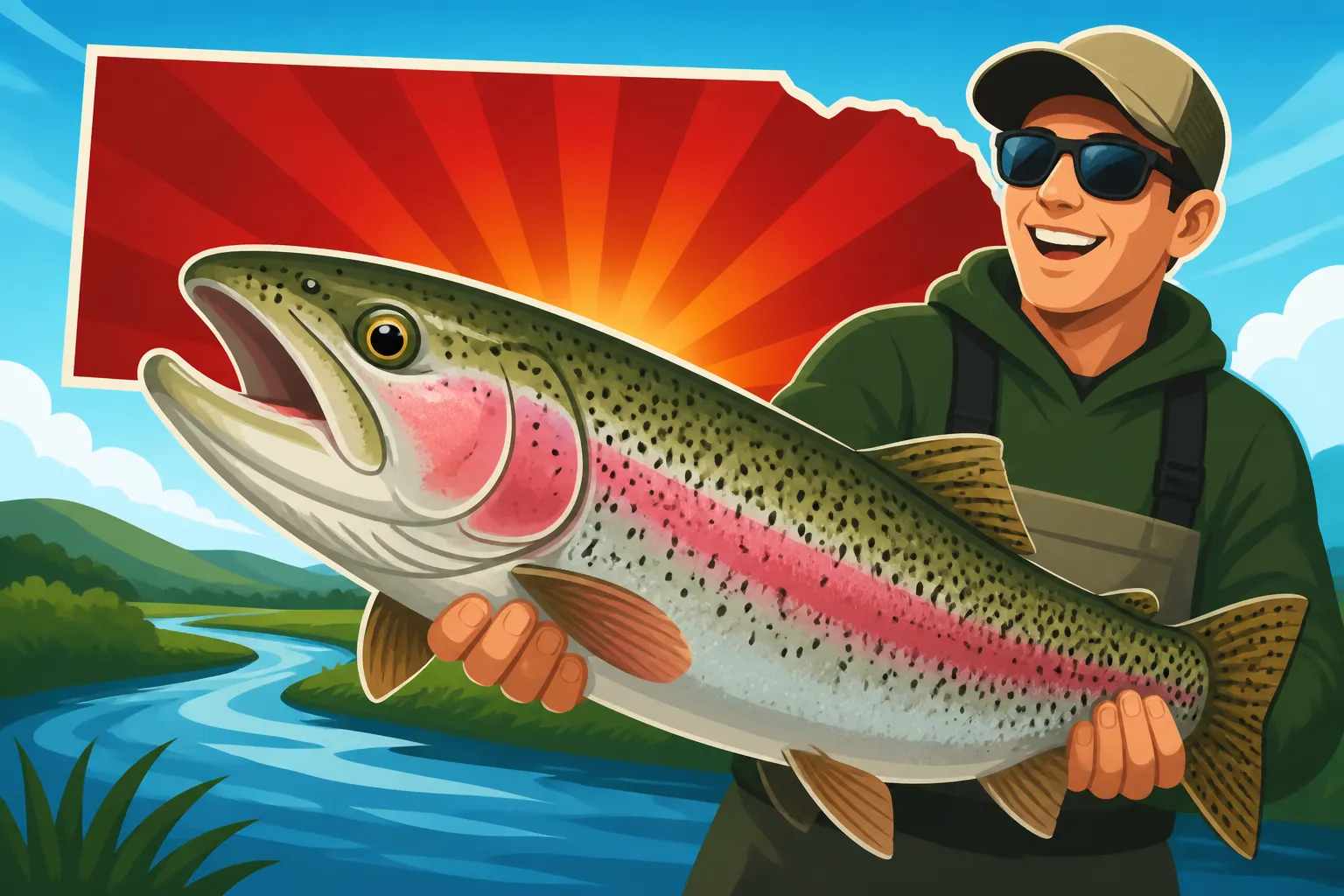
While I can't give you a real-time update on the exact current record with a specific angler's name and date (as my knowledge comes from past data and I don't have live web access), Nebraska's state record for Rainbow Trout stands as a truly impressive specimen. Imagine a rainbow trout of substantial proportions, typically weighing in at something like over 16 pounds, a fish that would challenge the toughest tackle and the most experienced angler. These behemoths are not caught every day, and each one represents a unique confluence of favorable conditions, a robust fish, and an angler who seized the moment.
Historically, many of Nebraska's largest rainbow trout have come from deep, cold reservoirs or tailwaters where fish have access to ample food and stable temperatures, allowing them to grow well beyond typical sizes. These record-breaking catches are often the result of patient angling, sometimes during periods of heavy stocking, but more often from targeting those elusive holdover fish that have survived multiple seasons. If you're serious about knowing the exact current record, including the specific weight, angler's name, and date, your best bet is always to consult the official Nebraska Game and Parks Commission (NGPC) website or their annual fishing guide. They maintain the definitive list of state records and provide all the crucial details.
Where Record Rainbow Trout Are Typically Caught in Nebraska
Chasing a record means knowing where the biggest fish might be lurking. In Nebraska, while rainbow trout are stocked in many locations, a few places stand out as prime real estate for truly monumental specimens.
- Lake Ogallala (Below Kingsley Dam): This jewel of a lake near Lake McConaughy is arguably Nebraska's premier trophy trout fishery. Fed by the cold, clear waters released from McConaughy, Lake Ogallala provides an ideal environment for rainbow trout to thrive and grow large. Many of the state's largest trout, including potential record contenders, have been pulled from its depths. Anglers here often target the swift currents below the dam or the deeper, calmer sections of the lake. For a deeper dive, check out our Lake Ogallala Trout Fishing guide.
- Merritt Reservoir: While more known for walleye and muskies, Merritt Reservoir also receives trout stockings and, with its deep, cold waters, can produce some impressive rainbows, especially in the spring and fall. The sheer size and depth of Merritt offer plenty of room for trout to grow. For more information on this great body of water, see our Merritt Reservoir Trout Fishing article.
- Pine Ridge Area Streams: Northwest Nebraska, particularly around Chadron and Fort Robinson State Park, features cold, spring-fed streams like Soldier Creek and Hat Creek. These streams offer a different kind of trout fishing experience, with opportunities for both stocked and wild brown and rainbow trout. While individual fish might not reach the colossal sizes of reservoir-dwelling trout, the pristine environment and challenge of stream fishing are unparalleled, and larger specimens are certainly possible.
- Urban Fishing Program Ponds: Surprisingly, some of the well-managed urban ponds, especially those that are regularly stocked with larger "brood stock" trout, can occasionally kick out a truly massive fish. While less common, these accessible spots shouldn't be entirely overlooked, especially right after a stocking when fish are still getting acclimated.
The key to finding a record trout in any of these locations is finding consistent cold, oxygenated water, ample food sources (often smaller baitfish or invertebrates), and areas with protective cover like submerged structures, weed lines, or deep pockets.
Understanding the Factors Behind a Record Catch
A state record rainbow trout doesn't just happen by chance. It's a combination of several critical factors aligning perfectly:
- Genetics and Growth Rate: Some trout are simply predisposed to grow larger and faster than others. This can be due to superior genetics, often seen in specific hatchery strains or in wild populations with excellent natural forage.
- Abundant Food Source: A record-sized trout needs a consistent and rich diet. In Nebraska, this might mean abundant baitfish (like gizzard shad in reservoirs), crayfish, aquatic insects, or even smaller panfish. Waters with a healthy forage base are crucial.
- Favorable Habitat: Cold, stable water temperatures, high oxygen levels, and plenty of deep water or cover to evade predators and find food are essential. A trout needs to survive for many seasons to reach record size, and a safe, productive environment is paramount.
- Angler Skill and Perseverance: While some luck is always involved, the angler plays a huge role. This includes understanding trout behavior, knowing the prime locations, selecting the right tackle and bait, and having the patience to wait for that one monumental bite. Often, record catches are made by anglers who consistently fish a particular body of water and deeply understand its nuances.
- Timing: Fishing during optimal conditions – be it water temperature, seasonal movements, or even specific weather patterns – can significantly increase your odds.
It's a delicate balance, but when these elements converge, a true trophy rainbow trout becomes a real possibility in Nebraska.
Strategies for Pursuing a Trophy Rainbow Trout in Nebraska
So, you're dreaming of that record rainbow. Fantastic! Now let's talk about how to turn that dream into a tangible goal. It's going to take more than just a casual cast; it requires deliberate strategy, the right gear, and a deep understanding of trout behavior.
Gear Up for Success
To tangle with a potential record-breaker, you need gear that can handle the fight, yet still offers the sensitivity required to detect subtle bites. This isn't the time to skimp on your setup.
- Rods and Reels: For larger trout in reservoirs, a medium-light to medium power spinning rod, typically 6'6" to 7'6" in length, will give you enough backbone to fight a big fish while still providing the necessary casting distance and sensitivity. Pair this with a high-quality spinning reel in the 2500-3000 size range, known for its smooth drag system. A smooth drag is absolutely crucial when a heavy trout makes a powerful run. You can find many excellent spinning rod and reel combos on platforms like Amazon that are perfectly suited for this kind of angling. For more general advice, check out Best Rods and Reels for Nebraska Fishing.
- Line: Don't underestimate the importance of your fishing line. For trophy trout, a fluorocarbon main line or a braided main line with a fluorocarbon leader is highly recommended. Fluorocarbon is nearly invisible underwater and has excellent abrasion resistance, which is vital when fishing around rocks or submerged timber. A 6-8 pound test fluorocarbon leader is a good starting point. If using braid as your main line, use 10-15 pound test for strength, then attach a several-foot fluorocarbon leader. For more on line choices, our Best Fishing Line for Nebraska Walleye offers good principles that apply to trout too.
- Terminal Tackle:
- Hooks: Small, sharp, strong hooks are key. Size 6 or 8 single hooks are common for bait fishing, or consider treble hooks on lures designed for larger fish. Ensure they are razor sharp.
- Weights: Split shot or sliding sinkers are useful for getting your bait to the desired depth.
- Swivels: High-quality barrel or ball bearing swivels prevent line twist, especially with spinning lures.
- Lures and Bait:
- Live Bait: Nightcrawlers, mealworms, and even small minnows can be incredibly effective for larger, more discerning trout. Present them naturally, either on the bottom or suspended under a bobber.
- Artificial Baits: PowerBait (in various forms like nuggets or dough) is a classic for stocked rainbows. For larger, more aggressive trout, consider small spoons (like Kastmasters or Daredevils), inline spinners (Mepps, Panther Martin), or small crankbaits that imitate baitfish. These can be easily ordered from retailers like Amazon for convenience.
- Flies: If you're targeting trout in rivers or streams, or even stillwater trout in lakes, fly fishing can be exceptionally effective. Streamers, nymphs, and wet flies that imitate local forage are often the ticket. Our guide on How to Fly Fish for Trout in Nebraska can get you started.
- Other Essentials: A long-handled landing net with a rubberized mesh is crucial for safely landing and handling big trout, especially if you plan to release them. Pliers or forceps for hook removal, a scale (certified if you're seriously chasing a record), and a camera are also vital.
Prime Locations and Timing
Knowing where and when to fish is just as important as how you fish. Trophy trout have specific preferences, and understanding them will greatly increase your chances.
- Lake Ogallala: Concentrate your efforts in the deeper sections, especially near the dam where cold water flows in. The eddy currents and drop-offs can hold big fish. Early morning and late evening are often prime times, but night fishing can also be productive for larger, more cautious trout.
- Merritt Reservoir: Focus on creek channels, submerged timber, and areas with significant depth changes. Trout here might associate with walleye and crappie, so look for similar structures. Spring and fall, when water temperatures are cooler, are generally the most productive.
- Pine Ridge Streams: Look for deep pools, undercut banks, and areas with complex cover where trout can ambush prey and escape predators. Stealth is paramount here; approach quietly and avoid heavy footsteps on the bank.
- Seasonal Considerations: Nebraska Fishing Seasons Explained can help broadly, but for trout specifically, spring and fall are often the best. The cooler water temperatures make trout more active and comfortable. However, in deep, cold lakes like Ogallala, summer can still be excellent, as trout simply move to deeper, cooler water. Winter ice fishing can also yield impressive results for big rainbows in certain locations.
- Weather and Water Conditions: Overcast days can be great for trout fishing as they reduce light penetration, making fish more active. Stable barometric pressure is generally better than rapidly changing conditions. Pay attention to water clarity – clear water demands more finesse, while slightly stained water can make trout bolder.
Remember, trout are creatures of habit but also opportunistic. Consistent reconnaissance, even if it's just observing other anglers or checking local fishing reports, can provide valuable insights. For general hot spots, don't forget to consult Best Places to Fish in Nebraska.
Proven Techniques for Large Rainbows
Landing a record fish often comes down to mastering specific techniques and presenting your offering in the most enticing way possible.
- Still Fishing with Bait: This is a tried-and-true method, especially in stocked lakes and ponds.
- Bottom Fishing: Use a slip sinker rig with a short leader (12-24 inches) and a small, sharp hook baited with PowerBait or a piece of nightcrawler. Let it sit on the bottom. The slip sinker allows the fish to pick up the bait without feeling immediate resistance.
- Suspended Bait: Using a slip bobber rig, you can suspend your bait (PowerBait, worms, or a small minnow) at a specific depth, targeting where trout are actively feeding. This is particularly effective when trout are schooling at a certain depth.
- Scent is Key: Trout rely heavily on scent, so using scented baits or adding scent to your lures can be a game-changer.
- Casting Lures: Active presentation with artificial lures can trigger aggressive strikes from larger, predatory trout.
- Spinners: Inline spinners like Mepps or Panther Martin are fantastic. Cast them out and retrieve steadily, varying your speed to find what the fish prefer. The flash and vibration are irresistible to many trout.
- Spoons: Casting spoons (e.g., Kastmasters, Daredevles) are excellent for covering water and mimicking injured baitfish. A simple cast-and-retrieve, perhaps with a slight pause or twitch, can be very effective.
- Crankbaits: Small, shallow-diving crankbaits or even suspending jerkbaits can be deadly when trout are keying in on minnows. Look for natural baitfish patterns.
- Fly Fishing: For those who prefer the delicate art of fly fishing, streamers can entice larger trout, especially when fished aggressively. Nymphs fished under an indicator are also very productive. In some areas, dry flies can work, but for a trophy, often sub-surface presentations are more reliable. When trout are recently stocked, they might be less wary, making presentations easier. Our How to Catch Rainbow Trout After Stocking guide offers tips here.
Patience is a virtue when pursuing trophy fish. You might cast a hundred times or wait for hours for that one significant bite. But when it happens, that patience will be richly rewarded.
Official Recognition and Ethical Angling
So, you've done it. You've battled a monstrous rainbow trout, netted it, and it looks like a true contender for the state record. What now? The process for official recognition is specific, and ethical considerations are paramount.
How to Officially Document a Potential State Record
Catching a potential state record is thrilling, but it's crucial to follow the proper procedures to ensure your catch is officially recognized. The Nebraska Game and Parks Commission (NGPC) has clear guidelines:
- Be Prepared: Before you even cast a line, know the rules. Have a camera ready. If you're serious, consider carrying a certified scale with you, or at least know the nearest location of one (e.g., a bait shop, grocery store, or taxidermist that has a certified scale).
- Weighing the Fish: The fish must be weighed on a scale certified by the state's Department of Agriculture. This is non-negotiable. Get the fish to a certified scale as quickly as possible. Keep the fish alive in a livewell or cooler with water if possible, especially if you plan to release it after weighing.
- Photographic Evidence: Take clear, high-quality photographs of the fish. These photos should show the entire fish, ideally next to a ruler or measuring tape for length reference (though length is less critical for weight records). Include photos of the fish with the angler.
- Species Identification: Be absolutely certain of the species. An NGPC biologist will need to verify it. Take detailed close-up photos of distinguishing features if you are unsure.
- Witnesses: Have at least one witness present during the weighing and measuring process. Their statement will be required.
- Contact NGPC: Immediately after weighing, contact the Nebraska Game and Parks Commission. They will guide you through the official paperwork and verification process. Do not delay, especially if the fish is to be released.
Missing any of these steps could jeopardize the official recognition of your record catch. It's a bit of a process, but it ensures the integrity of the state record books.
Catch and Release for Future Generations
While the pursuit of a state record is exciting, many anglers choose to practice catch and release, especially for these large, mature fish. A record-sized rainbow trout is often an older fish, a significant contributor to the genetic health of the fishery. Releasing it allows it to potentially spawn again, contribute to the ecosystem, and even offer another angler the thrill of catching a true giant.
If you intend to release a potential record, the handling process becomes even more critical:
- Minimize Fight Time: Use appropriate tackle to land the fish as quickly as possible without over-stressing it.
- Keep it Wet: Do your best to keep the fish in the water while unhooking and taking photos. If you must remove it, do so quickly and gently. Never lay a fish on hot, dry ground or boat surfaces.
- Wet Hands: Always wet your hands before touching a fish. Dry hands can remove the protective slime coat, making the fish susceptible to disease.
- Proper Holding: Support the fish horizontally, especially a large one, to avoid damaging its internal organs. Avoid holding it vertically by the jaw or tail only.
- Quick Photography: Have your camera ready and take photos swiftly to minimize the fish's time out of water.
- Revive Gently: If the fish seems sluggish, hold it gently in the water, facing into a current if possible, and allow water to flow over its gills until it regains its strength and swims off on its own.
Practicing responsible catch and release ensures that Nebraska's waters continue to produce these incredible fish for years to come. For more detailed information, consult our guide on Catch and Release Best Practices in Nebraska.
Charting Your Course for Trophy Trout
This table summarizes key considerations and strategies for those serious about landing a state record rainbow trout in Nebraska.
| Aspect | Key Consideration | Specifics for Nebraska Trophy Trout |
|---|---|---|
| Locations | Target known coldwater fisheries and deep reservoirs. | Lake Ogallala (especially below Kingsley Dam), deep sections of Merritt Reservoir, certain Pine Ridge streams, occasionally stocked urban ponds. |
| Timing | Focus on seasons with cooler water temperatures and periods of fish activity. | Spring (post-ice out, stocking events), Fall (cooling water), early morning/late evening, potentially night fishing in summer for wary fish. Ice fishing in winter. |
| Gear | Use robust yet sensitive tackle; prioritize strong, invisible line and sharp hooks. | Medium-light to medium spinning rod (6'6"-7'6"), 2500-3000 size reel with smooth drag. 10-15lb braided main line with 6-8lb fluorocarbon leader. Size 6-8 hooks. |
| Baits/Lures | Offer natural scents or irresistible action. | Live nightcrawlers, PowerBait (scented dough/nuggets), small spoons (Kastmaster, Daredevl), inline spinners (Mepps, Panther Martin), small crankbaits/jerkbaits, streamers (for fly fishing). |
| Techniques | Adapt presentation to fish behavior and water conditions; patience is crucial. | Still fishing with bottom rigs or slip bobbers, steady retrieve with lures, varying retrieve speed and depth, jigging, stealthy approach in streams. |
| Documentation | Be prepared for official record procedures before you even get a bite. | Know nearest certified scale, have camera ready, understand NGPC rules for weighing, measuring, witnessing, and species identification. Contact NGPC immediately. |
| Ethics | Prioritize fish health and sustainable angling practices. | Practice careful catch and release, especially for large, older fish. Wet hands, minimal out-of-water time, proper handling, gentle revival. |
Chasing a state record rainbow trout in Nebraska is undoubtedly a challenge, but it's a deeply rewarding one. It pushes you to become a better angler, to learn more about our state's unique fisheries, and to appreciate the magnificent creatures that swim within them. Whether you're actively hunting for that record-breaker or simply enjoying a day on the water, remember the rich opportunities Nebraska offers. With the right preparation, a bit of luck, and a whole lot of patience, you might just find yourself holding a piece of Nebraska fishing history. So, grab your gear, consult those official resources, and get out there – that next cast could be the one!
Disclaimer
This article is for general informational purposes only and does not constitute professional advice. Laws, prices and regulations vary by location and change over time. Consult a qualified professional for guidance on your specific situation.