Do You Need a Trolling Motor on a Kayak?
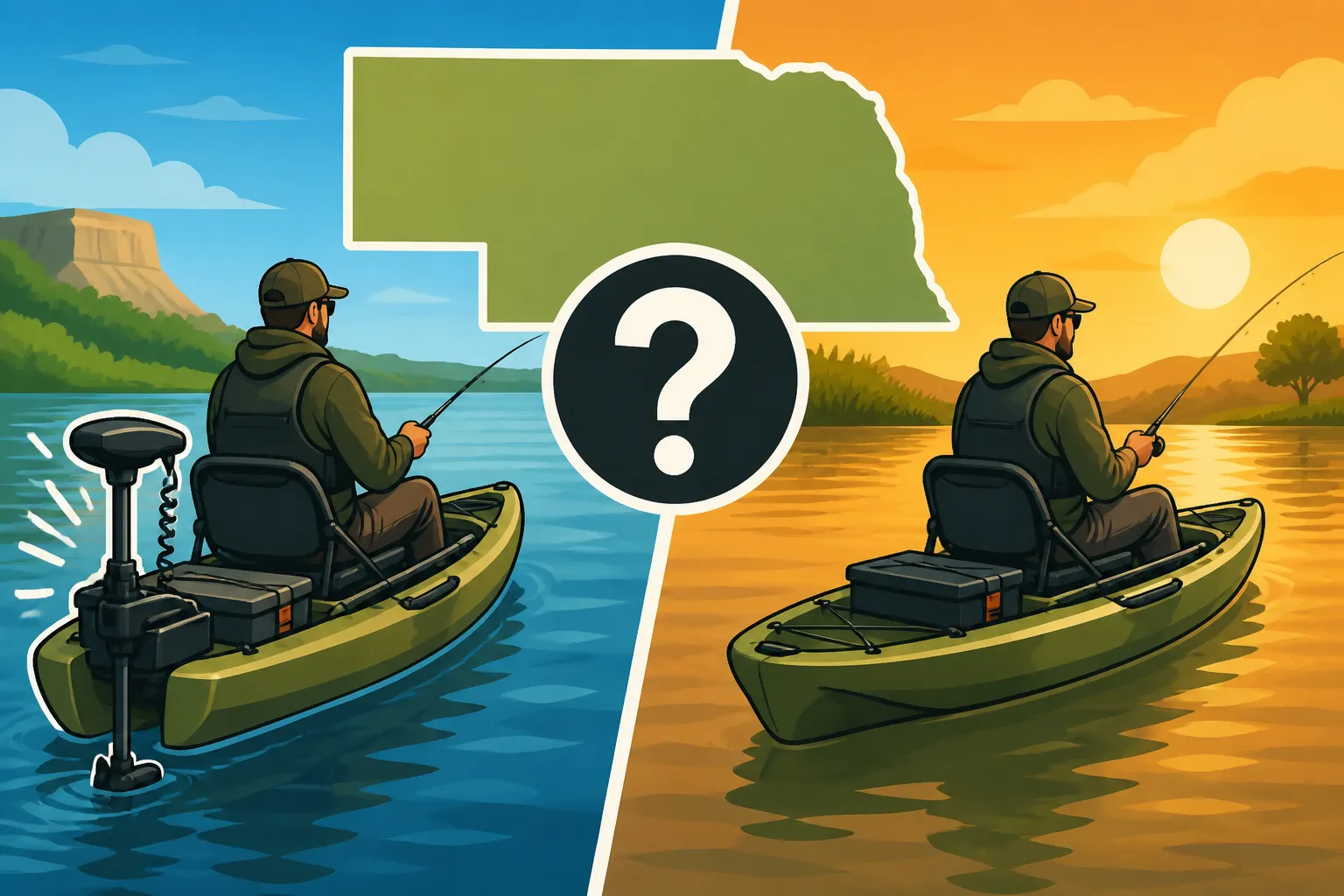
You've been out on the water in your fishing kayak, paddling hard against a stiff Nebraska wind, or maybe trying to hold your position over that perfect submerged brush pile at Branched Oak Lake, only to be constantly pushed off target. It's in moments like these that the question invariably pops into your head: "Do I really need a trolling motor on my kayak?" It's a valid question, born from the desire to make your time on the water more productive and less exhausting. This guide will dive deep into this very dilemma, exploring whether a trolling motor is a game-changer for your kayak fishing adventures here in the Cornhusker State.
The Lure of the Trolling Motor: Why Anglers Consider It
There's no denying the appeal of a trolling motor on a fishing kayak. It whispers promises of easier days, more fish, and access to places that were once just out of reach. For many, it feels like the natural evolution of their kayak fishing journey, especially as they get more serious about targeting specific species or covering larger bodies of water.
Expanding Your Range and Accessing New Waters
Think about some of Nebraska's larger reservoirs – places like Lake McConaughy or Harlan County Reservoir. These aren't exactly small ponds where a few paddle strokes get you across. The sheer size of these waters, coupled with the often-unpredictable winds, can make covering significant distances a real chore with just a paddle. A trolling motor allows you to venture further from the launch, exploring those distant points, coves, and creek channels that harbor trophy fish, without exhausting yourself before you even make your first cast.
Imagine you're at Merritt Reservoir, known for its fantastic muskie fishing. You want to cover a long stretch of shoreline with submerged timber, but paddling constantly takes away from your casting rhythm. With a motor, you can glide along, focusing purely on presenting your lure. It dramatically changes what's considered "fishable" water from a kayak, opening up opportunities on vast bodies of water where pedal power might be too slow, and paddle power simply too tiring. This extended range means more time with your line in the water in prime locations, and less time just getting there.
Effortless Position Holding and Hands-Free Fishing
One of the biggest frustrations for kayak anglers is maintaining position, especially when the wind kicks up or you're fishing a current seam in a river. Trying to simultaneously paddle, cast, and fight a fish can feel like a circus act. This is where a trolling motor truly shines. With a quick tap of a foot pedal or a remote control, you can hold your kayak precisely over that fishy structure, or slowly drift along a contour line without touching your paddle.
This hands-free operation is a game-changer for many fishing techniques. Picture yourself jigging for walleye on a deep ledge at Sherman Reservoir. You need to keep your lure vertical and feel every subtle bite. If you're constantly fighting the wind with your paddle, your concentration is broken, and your presentation suffers. A motor with a spot-lock or anchor mode frees up both your hands for casting, reeling, and managing your tackle. It allows for a level of precision and focus that's incredibly difficult to achieve with traditional paddling, leading to more effective fishing and, often, more hook-ups. It helps you become a much more efficient angler, focusing on the fishing rather than the propulsion.
Battling Nebraska's Winds and Currents
Anyone who's spent time on Nebraska's waters knows how quickly the weather can change. A calm morning can turn into a blustery afternoon, creating whitecaps on larger lakes or making river currents feel twice as strong. Fighting these elements with a paddle is not only exhausting but can also be dangerous. The constant effort can wear you out, and when you're tired, mistakes happen.
A trolling motor provides a significant advantage in these conditions. It gives you the power to confidently navigate choppy waters, hold your course against strong currents, and, most importantly, get back to shore safely when conditions worsen. While it doesn't replace good judgment or proper safety equipment, it adds a crucial layer of control and propulsion that a paddle simply can't match when battling against nature's whims. For anglers who love to explore the larger reservoirs or even the wider sections of the Platte River, a motor can transform a frustrating, exhausting day into a manageable and enjoyable one, ensuring you spend more time fishing and less time just trying to stay put. This increased control also means you can approach fishing spots more stealthily, especially when dealing with spooky fish in shallower water.
Weighing the Pros and Cons: Is a Trolling Motor Right for Your Kayak Fishing?
Deciding whether to add a trolling motor to your kayak involves a careful consideration of benefits versus drawbacks. It’s not a one-size-fits-all solution, and what works for one angler might not be ideal for another. Let's break down the realities of going motorized.
The Advantages: More Fish, Less Sweat
The benefits of a trolling motor on a fishing kayak are compelling, especially for those who spend a lot of time on the water. Primarily, it means you can cover significantly more water than you could by paddling alone. This is particularly valuable on expansive bodies like Lewis and Clark Lake or Calamus Reservoir, where prime fishing spots can be spread out. Covering more ground increases your chances of finding active fish. You're not limited to the areas directly accessible by short paddle trips from the launch.
Beyond covering distance, motors offer unparalleled boat control. Imagine trying to hold your kayak perfectly still while battling a strong crosswind at Harlan County Reservoir, or attempting a precise retrieve along a timber line. With a motor, particularly those with GPS spot-lock features, you can lock onto a position or set a specific course, freeing both your hands to focus on casting, retrieving, and fighting fish. This precision helps you present your lure exactly where you want it, for longer, which often translates directly into more bites. Furthermore, the reduction in physical exertion is a huge plus. Long days of paddling can be exhausting, leading to fatigue that impacts your fishing performance and overall enjoyment. A motor reduces this strain, allowing you to fish longer, stay sharper, and simply enjoy your time on the water without feeling completely worn out by the end of the day.
The Disadvantages: Added Weight, Cost, and Complexity
While the advantages are clear, it's crucial to acknowledge the downsides. The first major consideration is weight. Adding a trolling motor isn't just about the motor itself; it also requires a substantial battery, often a deep-cycle marine battery, which can weigh anywhere from 40 to 70 pounds or more. This significant extra weight not only makes transporting your kayak to and from the water more challenging but also impacts the kayak's performance, stability, and carrying capacity once on the water. You'll need to consider how this additional bulk will affect your ability to car-top your kayak or launch it from less accessible spots.
Then there's the cost. Motors, batteries, chargers, and mounting hardware represent a notable financial investment. While you can find budget-friendly options, a reliable setup can certainly add up. You might find a good selection of motors and mounting brackets at a place like Bass Pro Shops, or research different battery options on Amazon, but it's not a trivial purchase. Beyond the initial outlay, there's the ongoing maintenance of the battery and motor, ensuring everything is charged and in working order before each trip.
Finally, there's the added complexity. Integrating a motor requires understanding basic electrical connections, ensuring waterproof housing, and often involves custom mounting solutions. While many kayaks are "motor-ready," few come with a fully integrated system. This means more setup time before launching and more breakdown time after your trip. It's a trade-off: convenience on the water versus complexity on land.
Legalities and Regulations for Motorized Kayaks in Nebraska
Before you even think about installing a trolling motor, it's absolutely vital to understand the legal landscape in Nebraska. Adding any form of mechanical propulsion to your kayak can change its classification from a "vessel propelled by paddle or sail" to a "motorized vessel," which comes with a whole new set of rules.
In Nebraska, any watercraft propelled by machinery, regardless of size or horsepower, generally requires registration. This means your kayak, once motorized, will likely need to be registered with the state, complete with a registration number displayed on the bow. The process involves paperwork, fees, and ensuring your kayak meets specific requirements. You'll want to review the official Nebraska Boat Registration and Equipment Requirements carefully. The cost for registration can vary, often depending on the length of your vessel, so it's a good idea to look into Nebraska Boat Registration Cost by Boat Length to get an idea of potential expenses.
Beyond registration, there are safety equipment requirements. Motorized vessels typically need certain items on board, such as a U.S. Coast Guard-approved life jacket for every person, a sound-producing device (like a whistle or horn – yes, even on a motorized kayak, you might Do You Need a Whistle or Horn on a Nebraska Kayak?), and potentially navigation lights if you plan to be on the water after sunset or before sunrise. These regulations are in place for everyone's safety, and ignoring them can lead to fines and an unpleasant encounter with law enforcement. It’s always best to be fully compliant and well-prepared before heading out with a motorized kayak.
What to Consider Before Taking the Plunge: Kayak Type and Setup
So, you're leaning towards adding a motor? Fantastic! But before you hit "add to cart," there are some critical considerations specific to your kayak and how you plan to use it. Not all kayaks are created equal when it comes to motor integration, and a little planning now can save a lot of headaches later.
Kayak Design and Stability
The fundamental design of your kayak plays a huge role in how well it will accommodate a trolling motor. Wider, more stable kayaks, often designed specifically for fishing, are generally better candidates. They offer a more stable platform for the added weight of the motor and battery, reducing the risk of tipping. Look for kayaks with a broad beam and a relatively flat hull, as these tend to be more stable.
Beyond stability, consider the stern design. Many fishing kayaks come with a "transom-style" stern, or at least a flat area, that makes it easier to mount a traditional transom-mount trolling motor. If your kayak has a pointed, V-shaped stern, you might need specialized side mounts or a more complex DIY bracket, which can affect steering and performance. The material of your kayak is also a factor – ensure it's robust enough to handle the stresses of a motor mount without cracking or flexing excessively. Some kayaks are specifically branded as "motor-ready" and may even have pre-drilled holes or designated mounting plates, making the transition much smoother. If your kayak isn't designed with a motor in mind, you might want to look at options specifically built for this purpose, like those often featured in a guide on Best Kayaks for Nebraska Fishing.
Battery Power and Runtime Expectations
The battery is the heart of your motorized kayak setup, and choosing the right one is crucial. Deep-cycle marine batteries are the standard, designed for prolonged, steady power discharge. You'll primarily encounter two types: lead-acid (including flooded, AGM, and gel) and lithium-ion.
- Lead-acid batteries are typically more affordable upfront, but they are heavy and have a more limited number of charge cycles. They also require more careful maintenance (especially flooded batteries, which need water level checks).
- Lithium-ion batteries (specifically LiFePO4 for marine use) are significantly lighter, offer more power in a smaller package, last for many more charge cycles, and require less maintenance. However, their initial cost is considerably higher.
When considering runtime, you need to match your battery's amp-hour (Ah) rating with your motor's power draw and your fishing style. A motor's thrust rating (e.g., 30 lbs, 55 lbs) correlates with its power consumption. If you plan to run your motor at full throttle for extended periods, you'll burn through battery faster than if you're just using it intermittently for position holding. For example, a 50 Ah battery might give you a few hours of intermittent use on a small motor, but only an hour or two at higher speeds. Think about the average length of your fishing trips to places like Pawnee Lake or Wagon Train Lake, and choose a battery that can comfortably last, allowing for a buffer. It's almost always better to over-spec your battery capacity than to run out of juice miles from the launch.
Mounting Options and Installation
How you mount your trolling motor will depend heavily on your kayak's design and your personal preferences. There are a few common approaches:
- Transom Mounts: This is the most traditional method, where the motor clamps directly to the stern of the kayak. Many kayaks have flat transoms or accessories that create one. This is straightforward but means the motor is always behind you, which can make steering less intuitive for some, especially if you have to turn around constantly.
- Side Mounts: These brackets attach to the side of the kayak, positioning the motor off to one side. They keep the motor out of the way of your casting and allow for easier access to the tiller handle. However, they can create asymmetrical drag and potentially affect steering, especially at higher speeds.
- Bow Mounts: These are often found on larger, more stable kayaks and offer the best control and hands-free operation, particularly with advanced GPS-enabled motors. The motor is mounted at the front, pulling the kayak rather than pushing it, which is ideal for precise maneuvering and spot-lock features. However, bow-mount systems are usually more complex, require more significant modification to the kayak, and are more expensive.
Installation can range from a simple clamp-on job to requiring drilling and wiring. For transom or side mounts, ensure the mounting point is reinforced and stable. For bow mounts, you'll need a dedicated space and usually a foot pedal control that needs to be routed. Whether you're a DIY enthusiast or prefer professional assistance, having a clear plan for mounting before you buy is essential to ensure a secure, functional, and safe setup. Remember to consider how the motor will be deployed and stowed, especially if you're frequently launching from remote areas or battling thick vegetation.
Alternative Solutions and When to Stick to Paddle Power
While the idea of a motorized kayak is appealing, it's not always the best or only solution. Many anglers find immense satisfaction and efficiency with alternative propulsion methods, and sometimes, simplicity is king.
Pedal Drives and Paddle Power: The Traditional Approach
Before trolling motors became a common kayak accessory, anglers relied on their own muscle power, and for many, that's still the preferred way to fish. Pedal drive kayaks, for instance, offer a fantastic middle ground. They allow for hands-free propulsion, often using a fin or propellor system, which means you can cover water and maintain position while keeping your hands on your rod. Systems like those from Hobie or Old Town have revolutionized kayak fishing, providing excellent speed and maneuverability without the need for batteries or complex wiring. For many, a pedal drive is a perfect balance of efficiency and simplicity, especially when fishing for bass in relatively calm waters or traversing long distances on bodies like Fremont Lakes State Recreation Area.
Then there's the pure paddle power approach. While it might seem less efficient on paper, it forces you to become a more intimate part of your environment. You learn to read the wind and current, to use them to your advantage, and to move stealthily through the water. For certain types of fishing, like sneaking up on wary trout in a quiet stream or exploring shallow backwaters for crappie, the silence and low profile of a purely paddle-driven kayak are unmatched. It's also significantly lighter, easier to transport, and has zero mechanical parts to break down. Learning to properly How to Anchor a Kayak for Still Fishing or even How to Anchor a Kayak in Current with a traditional anchor can often provide the stability you need without the motor.
When a Motor is Overkill: Small Ponds and Rivers
Let's be realistic: not every fishing scenario calls for a trolling motor. There are plenty of fantastic fishing opportunities in Nebraska where a motor would be completely unnecessary, and in some cases, even a hindrance.
Think about the numerous urban fishing program ponds scattered across the state, or the smaller, calmer farm ponds that dot the landscape. These bodies of water are often compact, sheltered from strong winds, and don't require extensive travel. Hauling a heavy battery and motor for a quick trip to one of these spots, which are often stocked and easily accessible, simply isn't practical. For these environments, a lightweight paddle kayak or even a Best Small Boat for Farm Pond Fishing is much more appropriate. The simplicity of just grabbing your rod and a paddle is hard to beat for a spontaneous evening outing. Many of these ponds are part of the Nebraska Urban Fishing Program Ponds, designed for easy access.
Similarly, on smaller rivers or narrow creek systems, a trolling motor might be more of a navigational challenge than an asset. The maneuverability required to navigate tight bends, avoid snags, and float with the current is often best achieved with a paddle. The added bulk and draft of a motor can make shallow water difficult, and the propeller can get tangled in weeds or hit submerged rocks. In these intimate settings, the natural quiet of a paddle kayak allows for a more immersive and often more successful fishing experience, as you can approach fish without the tell-tale hum of a motor.
Maximizing Efficiency Without a Motor
If you decide that a trolling motor isn't for you, either due to cost, complexity, or simply a preference for simplicity, there are still plenty of ways to maximize your efficiency and enjoyment on the water. It’s all about smart paddling and utilizing your surroundings.
Firstly, understanding how to effectively paddle and conserve energy is key. Use efficient strokes, learn to track straight, and utilize the momentum of your kayak. Instead of constantly fighting the wind, try to position yourself so the wind works with you, allowing for long, controlled drifts. Learning to read the current in a river, for example, can save you immense effort as you let it carry you to your next spot, only paddling to steer or slow down.
Anchoring is your best friend when going motor-free. A good anchor system, whether it's a traditional grapple anchor, a stake-out pole, or a drag chain, can keep you precisely where you want to be. Knowing How to Anchor a Kayak for Still Fishing and mastering techniques like using two anchors to hold your position against a crosswind can be just as effective as a spot-lock feature on a motor. For river fishing, a small drag chain can slow your drift without requiring constant paddling. These skills, combined with a thoughtful approach to planning your fishing trip around weather conditions and launch access, can make a paddle-powered kayak incredibly effective and enjoyable. Remember, a well-equipped angler, even without a motor, can be highly successful. For example, ensuring you have an Essential Gear Checklist for a First Kayak Fishing Trip can make all the difference. Also consider that proper care, like knowing How to Store Fishing Gear Over the Winter, will extend the life of all your equipment. Focusing on these fundamentals can truly enhance your overall experience. If you are starting out, having a solid Best Kayak Fishing Setup for Beginners can go a long way.
Ultimately, the decision to add a trolling motor to your kayak is a personal one, weighing convenience and expanded capability against added cost, weight, and complexity. For some, it will unlock new fishing potential, while for others, the joy lies in the simplicity and challenge of paddle power. Consider your typical fishing grounds, your target species, and your budget carefully. There's no wrong answer, only the right one for you and your Nebraska fishing adventures.
| Feature | Motorized Kayak | Paddle/Pedal Kayak |
|---|---|---|
| Speed/Range | Significantly increased, covers large waters easily | Limited by paddler endurance, slower |
| Boat Control | Excellent, precise positioning, hands-free options | Good with practice, requires constant attention |
| Effort | Minimal physical exertion, reduces fatigue | High physical exertion, can be tiring |
| Cost | Higher (motor, battery, charger, mounts, registration) | Lower (kayak, paddle, minimal accessories) |
| Weight/Bulk | Heavier, more gear to transport and store | Lighter, easier to transport and store |
| Setup/Teardown | More complex (wiring, battery, motor mounting) | Simple (grab and go) |
| Maintenance | Motor and battery care required | Minimal, basic kayak and paddle care |
| Stealth | Quiet, but motor hum can be audible | Silent, ideal for wary fish |
| Best Use | Large reservoirs, fighting wind/current, trolling | Small ponds, calm rivers, stealth fishing, exercise |
Disclaimer
This article is for general informational purposes only and does not constitute professional advice. Laws, prices and regulations vary by location and change over time. Consult a qualified professional for guidance on your specific situation.