Do You Need a Depth Finder for Shore Fishing?
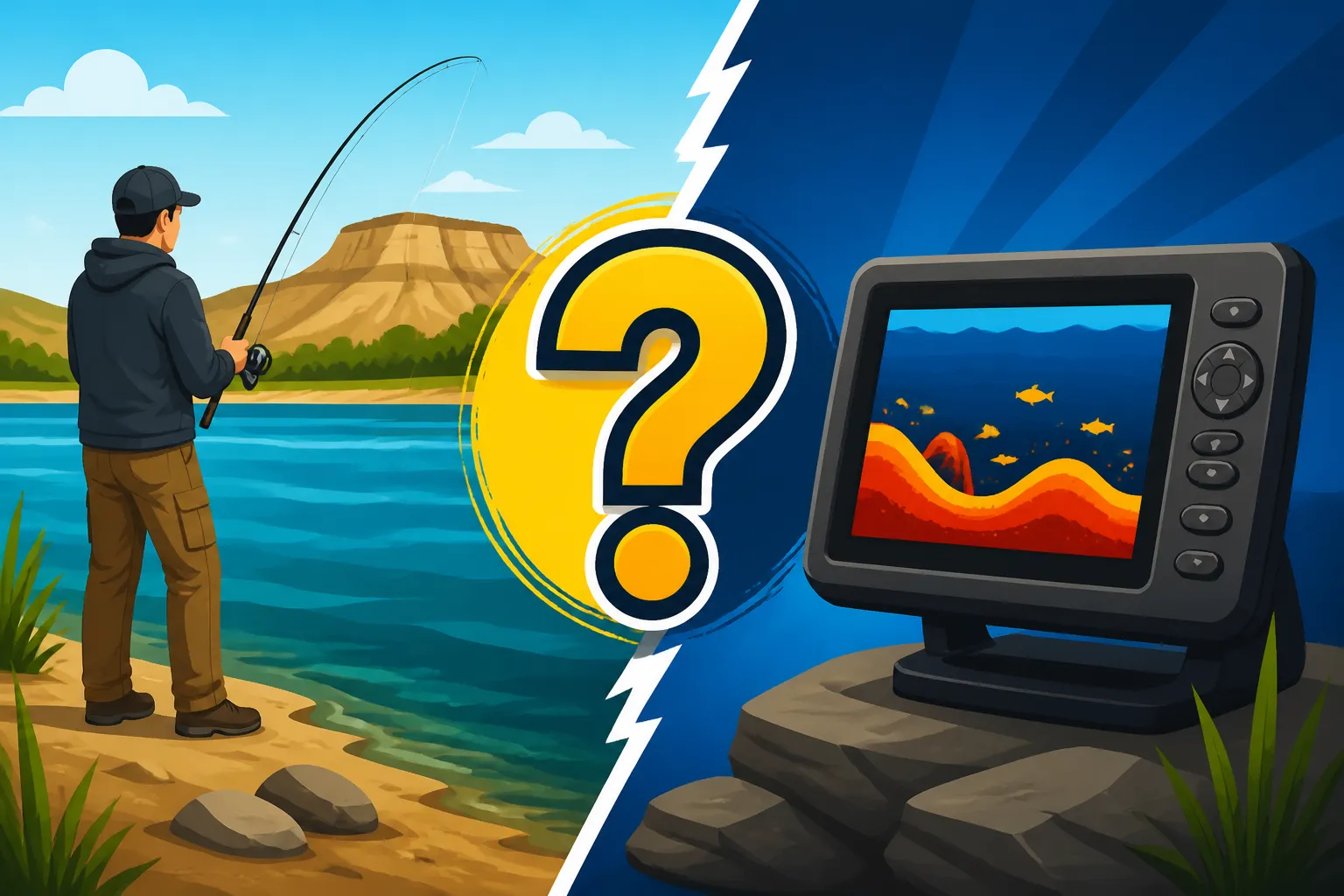
It's a question I hear all the time from folks who love to fish from shore: "Do I really need a depth finder?" And honestly, it's easy to feel a bit left out when you see those fancy boats out on Lake McConaughy with their giant screens, displaying every hump, dip, and fish arch. You wonder if you're missing a crucial piece of the puzzle. But let me tell you, while a depth finder is invaluable for boat anglers, shore fishing success hinges on a different set of skills and tools, and this guide is going to walk you through exactly how to tackle that.
Understanding Depth Finders and Their Primary Purpose
Let's break down what a depth finder actually does and why it's such a staple for boat anglers. It's not just a fancy gadget; it serves a very specific purpose.
What is a Depth Finder, Really?
At its core, a depth finder, often called a fish finder or sonar unit, is a piece of electronic equipment that uses sound waves to "see" underwater. A transducer sends out sound pulses, and when those pulses hit something—the bottom, a fish, a submerged log—they bounce back. The unit measures the time it takes for the sound to return and uses that information to create a visual representation on a screen. This tells you the depth of the water, the contours of the lake or river bottom, and even objects or fish suspended in the water column.
For us anglers, it's about getting an X-ray view of what's beneath the surface. It’s an incredibly powerful tool for understanding the underwater world, allowing you to pinpoint structure, track depth changes, and locate fish that might be holding in those specific spots. You might feel a little frustrated standing on the bank, staring at a vast expanse of water, wishing you knew what lay just beyond your casting reach. That's a completely natural feeling, especially when you know what technology is out there.
How Boaters Utilize Depth Finders
Boaters leverage depth finders for a multitude of reasons that are directly tied to their mobility on the water. Imagine cruising along Branched Oak Lake. A boater can use their depth finder to:
- Find Structure: They can easily identify submerged humps, creek channels, rock piles, old roadbeds, and standing timber – all prime spots where fish love to hang out. If you're looking for walleye, finding those subtle depth changes and hard bottom transitions is key.
- Gauge Depth Accurately: Knowing the precise depth is critical for presenting baits effectively. Are you trying to fish a 15-foot deep weed line or target a 30-foot deep thermocline for crappie? A depth finder gives them that exact number.
- Locate Baitfish and Game Fish: The sonar can often show schools of baitfish, which are like magnets for larger predatory fish. They can also mark individual fish arches, indicating where game fish like bass or catfish might be holding. This allows them to "follow the food" and position their boat directly over active fish.
- Navigate Safely: Beyond finding fish, a depth finder helps boaters avoid shallow hazards, especially in unfamiliar waters or when water levels fluctuate, like they often do on the Platte River or Lewis and Clark Lake.
Essentially, a depth finder transforms the vast, unknown underwater world into a detailed map that boaters can react to in real-time. It's a tool for active, mobile fishing, which is a very different game from what we typically do from the bank.
The Realities of Shore Fishing Without a Boat
Now, let's bring it back to the shore. Your feet are planted on solid ground, and you're looking out over the water. The dynamics change significantly.
The Limitations of Traditional Depth Finders from Shore
When people ask if they need a depth finder for shore fishing, they're usually picturing those big, boat-mounted units. And the truth is, a traditional boat-mounted depth finder is largely impractical, if not impossible, to use effectively from shore.
Think about it:
- Transducer Placement: These units require a transducer mounted in or on the water, sending signals straight down. From shore, how would you get that transducer far enough out, and stable enough, to get a meaningful reading beyond the immediate shoreline? You can't just hang it off the bank and expect to map the middle of Lake Ogallala.
- Limited Range: Even if you could rig something up, the effective range of these units is generally limited to the cone angle directly beneath the transducer. You'd be seeing what's right in front of you, which you could likely deduce by simply casting and feeling the bottom.
- Mobility is Key: The power of a boat-mounted depth finder comes from the boat's ability to move and scan large areas. As a shore angler, your mobility is confined to where you can walk, so that sweeping search capability is completely lost.
So, for the vast majority of shore fishing scenarios, a traditional depth finder is simply not the right tool for the job. You might feel a pang of longing, seeing what boaters can do, but rest assured, your success as a bank angler isn't dependent on mimicking their electronics.
Why You Might Think You Need One (and Why You Probably Don't)
It's totally understandable to feel like you're at a disadvantage without one. There's a certain "fear of missing out" (FOMO) when it comes to technology in fishing. You see an advertisement showing a screen full of fish, and you think, "If only I had that, I'd catch more!" Or maybe you've had a few slow days and wonder if knowing the exact depth or where the fish are hiding would have made all the difference.
But here’s the kicker: shore fishing is fundamentally different. It's about maximizing your limited access, focusing on observable clues, and understanding how fish relate to the bank. A depth finder, in its traditional sense, doesn't actually enhance those core shore fishing skills. Instead, it might distract you from honing the crucial art of "reading the water" and strategically presenting your bait in accessible areas.
Success in shore fishing isn't about covering vast expanses of water with sonar; it's about intimately understanding the small, accessible areas you can reach and fishing them thoroughly and intelligently. For those looking for general guidance, understanding the Best Fishing Gear for Nebraska Anglers can help you focus on what truly matters for bank fishing.
Reading the Water: Old-School Techniques That Still Work
Instead of electronics, seasoned shore anglers rely on keen observation and a deep understanding of fish behavior. These "old-school" techniques are completely free and incredibly effective.
- Look for Visible Structure: Are there fallen trees, weed lines, rock outcroppings, or even old tires visible along the bank? These are fish magnets. Predators like bass and crappie love to ambush from cover, and catfish often patrol these areas for food.
- Observe Wind and Ripples: Wind pushes baitfish, which in turn attracts game fish. A ripple line or a point where wind is pushing against the bank can be a hotspot. Even subtle changes in water current can indicate submerged features or flow patterns that fish use.
- Water Color and Clarity: Clear water versus stained water can tell you a lot about where fish might be holding. In clear water, fish might be deeper or near more cover. In stained water, they might be shallower and more aggressive.
- Drop-Offs and Contours: While you can't see them directly, you can often infer drop-offs. A steeply sloped bank on land often continues underwater. Areas where small feeder creeks enter a larger body of water often carve out channels. When you cast, pay attention to how your lure falls and where it snags or gets stuck—these are clues to underwater topography.
- Bird Activity and Baitfish: Are you seeing herons wading shallow or terns diving into the water? That often means baitfish are present, and where there's bait, there are usually bigger fish. Similarly, if you see small minnows jumping at the surface, you know food is in the area.
These are the "depth finders" of the shore angler. They require patience, observation, and a willingness to learn from your environment. And trust me, mastering these skills is far more rewarding than just staring at a screen.
Modern Alternatives: Portable Sonar for Shore Anglers
While traditional depth finders are out, technology hasn't completely forgotten the shore angler. There are some innovative portable options that can provide useful information for those who want a digital edge.
Castable Sonar Devices: A Game-Changer?
Enter the castable sonar device. These little gadgets are exactly what they sound like: small, often spherical or egg-shaped units that you tie onto your fishing line and cast out into the water. Once in the water, they activate and wirelessly send sonar data to an app on your smartphone or tablet via Bluetooth or Wi-Fi.
Brands like Deeper and Lowrance (with their FishHunter series) make popular castable sonar units. You can find these readily available at fishing retailers like Bass Pro Shops or online platforms like Amazon.
Here's how they can be a "game-changer" for some shore anglers:
- Portability: They're small, lightweight, and easily fit into a tackle box or pocket. No bulky units or wiring needed.
- Real-time Data: You get immediate feedback on depth, water temperature, bottom contour, and even fish arches right on your phone screen.
- Mapping Capabilities: Some advanced models can create bathymetric maps of the area you're casting over, which can be invaluable for understanding the underwater landscape.
- Reach Beyond Your Cast: You can cast these units further than you might typically cast a heavy lure, allowing you to explore deeper water or areas far from the bank.
However, they do come with their own set of considerations:
- Cost: While not as expensive as high-end boat units, they are an investment.
- Battery Life: They run on internal batteries that need recharging, and intense use (especially in cold weather) can drain them quickly.
- Phone Dependency: You need a smartphone or tablet with sufficient battery life to run the app.
- Accuracy in Current: In strong river currents, maintaining a stable reading can be challenging.
So, while not a "need," a castable sonar can certainly be a helpful tool for specific situations. If you're considering enhancing your bank fishing setup, you might also be interested in Best Kayak Fishing Setup for Beginners which often discusses portable electronics that can crossover for shore use.
When a Castable Sonar Actually Makes Sense
A castable sonar isn't for every shore angler, but there are definite scenarios where it shines and provides genuine utility:
- Exploring Unfamiliar Waters: If you're visiting a new lake or reservoir in Nebraska for the first time, a castable sonar can give you a quick lay of the land. You can map out a section of shoreline, find those hidden humps or drop-offs, and quickly identify potential holding areas for fish without ever stepping foot in a boat. This helps you narrow down where to focus your actual fishing efforts.
- Identifying Structure Beyond Casting Range of Lures: Sometimes you suspect there's a submerged brush pile or a rock reef just a little too far out for your usual casting. A castable sonar allows you to explore that area, confirm its presence, and understand its depth and shape. Once you locate it, you can then try to target it with a longer cast or a different retrieve.
- Pre-Fishing for Tournaments: If you're a competitive shore angler, a castable sonar can be a secret weapon for scouting. It lets you identify prime locations and develop a strategy before the actual event.
- Learning About Your Home Waters: Even on waters you know well, a castable sonar can reveal nuances you might have missed. Perhaps there's a subtle depth transition or a small patch of weeds you never knew existed. This can deepen your understanding of fish behavior in that specific location over time.
- Ice Fishing: This is another area where castable sonar excels. You drill a hole, drop the transducer in, and get instant readings of depth, bottom composition, and fish beneath your hole. This is far more efficient than guessing or using a simple lead weight.
It's important to remember that it's a tool to help you find fish, not a guarantee. You still need to know how to present your bait, choose the right lure, and understand fish behavior. If you want to delve deeper into how these devices work, checking out articles like How to Read a Fish Finder for Walleye can give you more insights, even if the primary context is boat fishing.
Setting Up and Using a Castable Sonar From Shore
Using a castable sonar is pretty straightforward, but a few tips can help you get the most out of it.
- Charge It Up: Always make sure your device and your smartphone are fully charged before heading out. Cold weather can drain batteries faster.
- Download the App: Before you leave home, download the specific app for your castable sonar device onto your smartphone. Familiarize yourself with its interface and settings.
- Tie it On Securely: Use a strong knot, like a Palomar knot, to attach the sonar to your fishing line. These devices can weigh a bit, so you'll want a medium-heavy rod and reel setup with sturdy braided line (at least 20-30 lb test) to cast and retrieve it safely. You don't want to lose your investment!
- Cast it Out: Cast the sonar to the area you want to explore. Avoid casting near dense vegetation or heavy cover where it might get snagged.
- Retrieve Slowly: As you slowly reel it back in, the sonar will continuously scan the water. Watch your phone screen for changes in depth, bottom contours, and any fish arches. Many apps allow you to mark waypoints for interesting finds.
- "Fan Cast" to Map an Area: Instead of just one straight cast, try fan casting, like spokes on a wheel, to cover a wider area. This can help you build a more comprehensive picture of the underwater terrain.
- Interpret the Data: Learn what different colors and shapes on your screen mean. A hard bottom might appear as a thicker, more intense line than a soft, muddy bottom. Fish often appear as arches, and the size and intensity of the arch can give you clues about the fish's size.
By carefully and systematically using a castable sonar, you can gain a significant understanding of the underwater world right from your bankside position.
| Feature | Traditional Boat-Mounted Sonar | Castable Sonar Device | No Sonar (Shore Fishing) |
|---|---|---|---|
| Mobility | High (Boat Required) | Moderate (Cast & Retrieve) | Very Low (Foot Traffic) |
| Data Type | Detailed 2D/3D maps, structure, fish | Basic 2D depth, structure, fish | Visual cues, casting feel, maps |
| Range | Broad, continuous scan from boat | Limited by casting distance | Very limited to visible/feelable |
| Ease of Use | Requires boat installation & power | Simple, app-driven | Requires observation & experience |
| Cost | High | Moderate | Free (excluding maps) |
| Power Source | Boat battery | Rechargeable internal battery | Angler's brain power |
| Primary Benefit | Pinpoint fish & structure from mobile platform | Explore hidden features from shore | Deep understanding of local water |
Strategic Shore Fishing Without Any Sonar
So, what if you don't want to invest in a castable sonar? Or perhaps you prefer the simplicity of traditional shore angling? Fear not, my friend! You absolutely do not need a depth finder to be a successful shore angler. Many of us, myself included, have spent countless enjoyable hours catching fish from the bank using nothing more than our eyes, ears, and intuition.
Mapping and Research: Your Best "Depth Finder"
Before you even step foot near the water, some of the most powerful "depth finding" tools are right at your fingertips.
- Online Satellite Maps: Google Maps, Apple Maps, or other online satellite imagery can be incredibly revealing. Look for points, coves, changes in shoreline vegetation, old roadbeds that might lead into the water, and even patterns of docks or structures that suggest deeper water access. You can often spot darker areas that indicate deeper water or weed beds.
- Bathymetric Charts: Many state wildlife agencies (like the Nebraska Game and Parks Commission) provide free bathymetric (depth) maps of popular lakes and reservoirs. These are goldmines! They show precise depth contours, creek channels, and underwater structure. Study these maps like a pirate searching for treasure. You can identify exactly where that deep drop-off is, or where a submerged hump rises from the main basin.
- Local Fishing Reports and Forums: Check online forums, local bait shops, or even Facebook groups dedicated to Nebraska fishing. Anglers often share information about recent catches, depths, and productive areas. While you won't get GPS coordinates, you can piece together patterns and hot spots.
- State Park and Recreation Area Maps: If you're fishing in places like Fremont Lakes State Recreation Area or Branched Oak Lake, check their official maps. They sometimes show deeper sections, fishing piers, or other helpful access points.
By doing a bit of homework, you can arrive at your fishing spot with a strong understanding of what lies beneath the surface, greatly increasing your chances of success. This kind of preparation is just as important as the gear you choose, and it's free! For general regulations and seasonal information to consider, reviewing the Nebraska Fishing Regulations Explained is always a good idea.
Fan Casting and Varying Depths: Let Your Lure Do the Work
Once you're on the bank, your lures become your "eyes" underwater. Don't just cast in the same spot over and over.
- Systematic Fan Casting: Imagine you're standing at the center of a clock. Cast to 10 o'clock, then 11, 12, 1, and 2 o'clock, systematically covering a wide fan-shaped area in front of you. This helps you explore different depths and structures within your casting range.
- Vary Your Retrieve Depth: Don't just retrieve your lure at the same speed and depth every time. Try letting a Texas-rigged worm sink all the way to the bottom and slowly crawl it back. Then try a crankbait that dives to 5 feet, followed by one that dives to 10 feet. Experiment with swimbaits fished at different depths in the water column. If you're fishing for walleye, for instance, knowing the Best Time of Day to Catch Walleye in Nebraska can help you determine if they'll be shallower or deeper.
- Feel the Bottom: This is a crucial skill. As you retrieve, pay close attention to what your lure is doing. Does it feel sandy, rocky, muddy, or do you feel it ticking through weeds? A sudden change in feel can indicate a drop-off, a rock pile, or a weed line—all prime fish habitat. A good sensitive rod and braided line can really enhance this "feel."
- Bottom Bouncing Rigs: Using a simple bottom bouncer with a worm or a soft plastic can be incredibly effective for feeling out the contours of the bottom. It's like having a little underwater probe. When you identify promising areas, you can then switch to other lures.
Let your tackle do the scouting for you. With enough casts and retrieves, you'll start to build a mental map of the underwater terrain, identifying those sweet spots where fish are likely to be holding. And having the Best Rod Holders for Bank Fishing can make this systematic approach much easier, allowing you to set a rod and actively work another area.
Observing Other Anglers and Natural Signs
Sometimes, the best intelligence comes from your fellow anglers and nature itself.
- Watch Other Anglers: Are people consistently casting to a certain area? Are they catching fish? While you never want to encroach on someone's spot, observing where successful anglers are focusing their efforts can provide valuable clues. What kind of gear are they using? Are they fishing a particular type of structure?
- Look for Fish Activity: Keep an eye out for surface boils, jumping baitfish, or even the subtle rings left by a feeding fish. These are all indicators that fish are present and active. On a calm morning, you might see a largemouth bass slurping bugs off the surface near a lily pad patch.
- Animal Behavior: We talked about birds earlier, but other animals can also offer clues. Beavers and muskrats can create underwater channels and structure. Even insects buzzing around can indicate sheltered areas that attract smaller fish, and therefore larger predators.
Fishing is as much about detective work as it is about casting. The more you observe and interpret the signs around you, the better you'll become at locating fish.
The Value of Patience and Persistence
Ultimately, shore fishing is a game of patience and persistence. Without the ability to quickly move to new spots like a boater, you often need to thoroughly work the area you can access.
- Thoroughly Work a Spot: Don't just make five casts and move on. If an area looks promising, work it from different angles, with different lures, and at different depths. Fish might not bite on the first cast, but a persistent and varied approach can often trigger a strike.
- Adapt to Conditions: The fish might be shallow in the morning and deeper as the sun gets high. They might prefer Best Bait for Nebraska Walleye at one time and artificial lures at another. Be willing to change your approach based on what the water and the fish are telling you.
- Embrace the Challenge: Shore fishing has its own unique charm and challenge. It forces you to slow down, connect with nature, and sharpen your fundamental angling skills. The satisfaction of catching a fish from the bank, knowing you found it through your own observation and effort, is truly rewarding. This often means learning How to Fish From the Bank Without a Boat for various species and conditions.
You don't need a depth finder for shore fishing. It can be a helpful tool in its castable form, but it's far from essential. With good research, keen observation, systematic casting, and plenty of patience, you can absolutely find and catch fish from the banks of Nebraska's beautiful lakes and rivers.
Disclaimer
This article is for general informational purposes only and does not constitute professional advice. Laws, prices and regulations vary by location and change over time. Consult a qualified professional for guidance on your specific situation.