Missouri River Border Water Fishing License Rules
Fishing the mighty Missouri River, with its expansive waters and diverse fish populations, is a dream for many Nebraska anglers. However, the unique situation of a major river forming a state border often leads to a tangled web of confusion regarding fishing licenses. It's frustrating to just want to wet a line and instead be left wondering which state's rules apply to you, or worse, risk a hefty fine. This guide is here to clear up that confusion, diving deep into the Missouri River border water fishing license rules so you can cast with confidence.
Understanding Missouri River Border Water Designations
The Missouri River isn't just a big river; it's a dynamic boundary. Because it separates Nebraska from neighboring states like Iowa, Missouri, and South Dakota, special rules, known as reciprocity agreements, come into play. These agreements are designed to make it easier for anglers without needing a license from every single state whose waters you might briefly drift through. But it's not always as simple as it sounds.
What Exactly is "Border Water"?
When we talk about "border water" on the Missouri River, we're referring to the main channel and its immediately adjacent backwaters, sloughs, and chutes that define the state boundary. For Nebraska anglers, this primarily means the stretches of the Missouri River that form the border with Iowa, Missouri, and South Dakota. It’s not just about the big wide-open channel; it also includes all those little nooks and crannies where fish love to hide. The key is that these waters are shared, and because they're shared, the states involved have to come to an understanding about who can fish them and under what conditions. This is where those critical reciprocity agreements become your best friend. Without them, you'd need multiple licenses just to fish one river, which would be a nightmare for recreational anglers.
The Importance of Reciprocity Agreements
Reciprocity agreements are basically handshake deals between states. They acknowledge that it's impractical and confusing for anglers to constantly switch licenses or require two licenses just to fish a shared body of water. For the Missouri River, Nebraska has established these agreements with Iowa, Missouri, and South Dakota. What these agreements generally mean is that if you possess a valid resident or non-resident fishing license from one of the bordering states, you are often permitted to fish the main stem of the Missouri River border waters.
However, and this is a crucial "however," these agreements almost always have nuances. They usually cover the main channel itself, but might not extend to tributary streams entering the river, oxbow lakes entirely within one state's jurisdiction, or specific embayments. For example, if you're licensed in Nebraska, you can typically fish the Missouri River all the way to the Iowa bank, but if you venture even a few feet up a creek on the Iowa side, you'd then need an Iowa license. This is why understanding the specifics of these agreements is paramount to avoiding a potential fishing violation. Knowing these specific rules is part of being a responsible angler, ensuring you're compliant with the law and respectful of each state's conservation efforts.
Specific License Requirements for Nebraska Anglers
So, you're a Nebraska angler eyeing that big walleye or catfish in the Missouri. What license do you actually need? It depends heavily on where you are on the river and what your intentions are. The rules try to be fair, but "fair" doesn't always mean "simple."
Fishing from the Nebraska Side
If you're fishing from the Nebraska bank, wading out into the river from the Nebraska shore, or if your boat is entirely within the perceived Nebraska waters of the Missouri River, then yes, a valid Nebraska fishing license is generally all you need. This is the most straightforward scenario. This includes everything from casting a line from a popular public access point along the river, like those near Omaha or Bellevue, to wading into a shallow sandbar on the Nebraska side. Even if you're in a boat, and you launch from a Nebraska ramp and stay primarily on what would be considered the Nebraska half of the river, your Nebraska license is sufficient. This covers most casual fishing trips where you're not intentionally venturing too far across the invisible state line in the middle of the channel. For residents, this typically means obtaining a standard Nebraska Resident Fishing License Requirements or an Nebraska Annual Fishing Permit.
Fishing from Bordering States and Cross-Boundary Fishing
This is where things get a bit more complex, and where those reciprocity agreements really come into play.
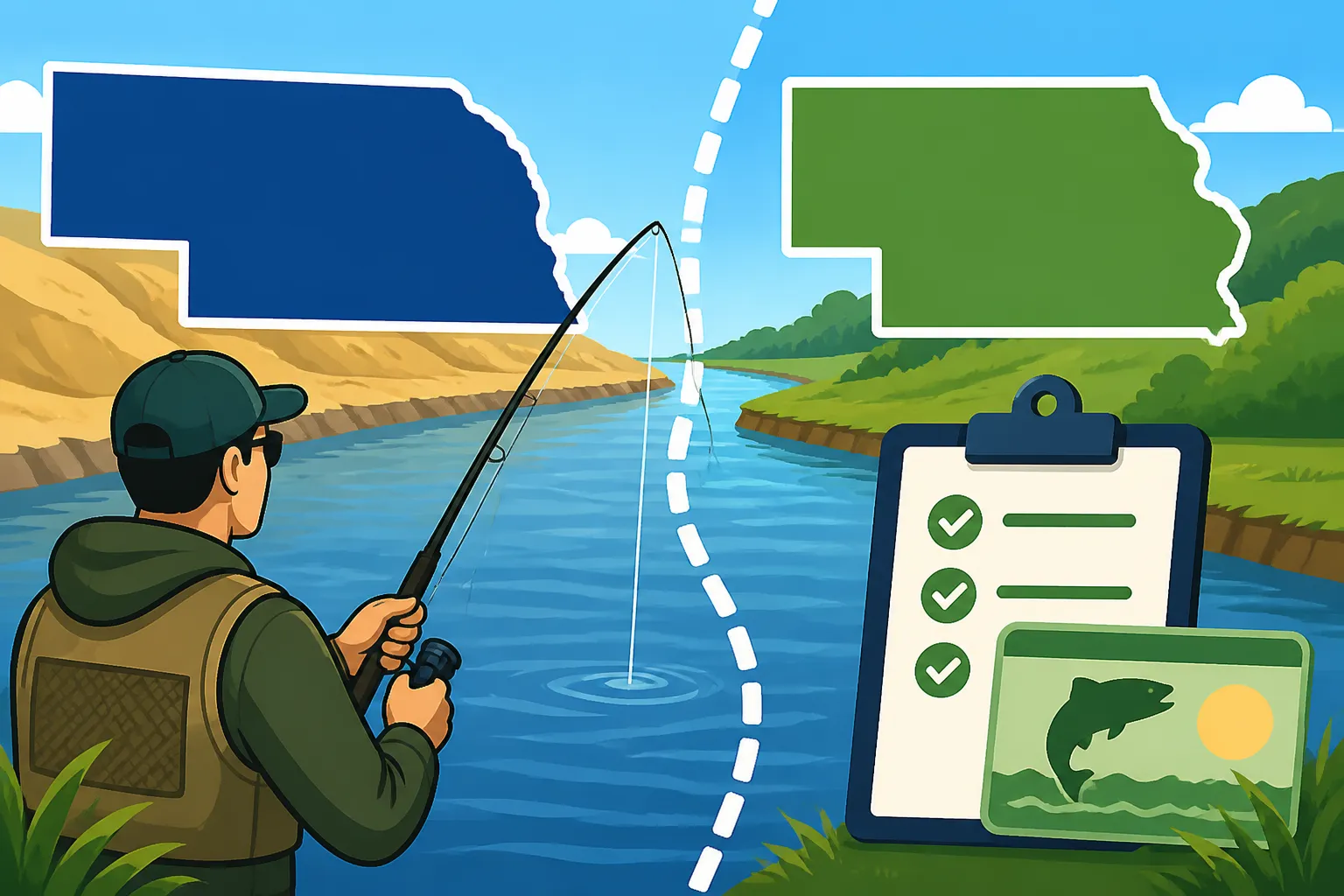
With a Nebraska License: If you possess a valid Nebraska fishing license, you are typically authorized to fish the main stem of the Missouri River from bank to bank in areas that border states with which Nebraska has an agreement. This means you could launch your boat in Nebraska, motor out to the main channel, and then fish all the way up to the Iowa or South Dakota bank without needing an additional license from those states. The same applies if you're fishing from the bank on the Nebraska side, but your cast extends into what would technically be the Iowa side of the main channel.
However, there's a huge caveat: if you step foot on the Iowa (or South Dakota/Missouri) bank, or if you enter any tributary, bay, or oxbow lake that is clearly on the other state's side of the established border, your Nebraska license usually won't cover you. You would then need a valid fishing license from that respective state. This is a common pitfall. Imagine you’re fishing from your boat with a Nebraska license, and you pull up to an island on the Iowa side to take a break or fish a small cove. The moment you enter that cove or step onto that island, you’re often considered to be in Iowa's exclusive jurisdiction, and you’d better have an Iowa license. It's a subtle but critical distinction that many anglers overlook. This applies equally to Nebraska Nonresident Fishing License Guide holders who are visiting our great state.
Consider this scenario: You launched your boat in Nebraska and are fishing the main channel of the Missouri River. You see a promising looking backwater slough on the Iowa side. If you enter that slough, even just a few yards, you are now officially fishing in Iowa waters and need an Iowa fishing license. The reciprocity agreement applies to the main flow of the river, not necessarily every single body of water connected to it, especially if it's clearly within the geographical boundaries of the adjacent state. Always check the specific wording of the reciprocity agreements, usually found in the official fishing regulations booklet for both states.
Special Considerations for Non-Resident Anglers
If you're not a resident of Nebraska or any of the bordering states, but you plan to fish the Missouri River border waters, you typically need to purchase a non-resident license from one of the states involved. Once you have that non-resident license from, say, Nebraska, the same reciprocity rules apply to you as they would to a Nebraska resident. For instance, if you're visiting from Kansas and buy a Nebraska Nonresident Fishing License Requirements, you can then fish the border waters of the Missouri River as outlined above (main channel, bank-to-bank).
However, you can't just buy a non-resident license from any state and expect it to work. For example, a Kansas non-resident license will not permit you to fish the Missouri River border waters between Nebraska and Iowa. You'd specifically need a non-resident license from Nebraska, Iowa, Missouri, or South Dakota to take advantage of their respective reciprocity agreements on the Missouri River. Many out-of-state visitors find the GoOutdoorsNE system to be the most convenient way to acquire their permits, often checking out options like the Nebraska 1-Day Fishing Permit or a Nebraska 3-Day Fishing Permit if their trip is short.
It’s always a good idea for non-residents to contact the wildlife agencies of the states they plan to fish from or travel through. The rules can be intricate, and a quick phone call can save you a lot of grief and potential fines. For instance, sometimes RV travelers from distant states assume their home state license carries over, which is almost never the case for inland waters.
Navigating Regulations: Beyond Just the License
Getting the right fishing license for the Missouri River border waters is a huge step, but it’s not the only piece of the puzzle. Just because you have a valid license doesn't mean you can ignore all other rules. Each state still maintains its own specific regulations regarding what you can catch, how much, and what gear you can use. This is where it gets really interesting – and sometimes frustrating.
Different State, Different Rules: Bag and Length Limits
This is probably the most common trap for anglers fishing border waters. Even if your Nebraska license allows you to fish to the Iowa bank, you are generally required to abide by the bag and length limits of the state whose water you are actively fishing. This means if you're casting your line and your bait lands in the Iowa side of the main channel, you should adhere to Iowa's regulations for species like walleye, catfish, or crappie.
Let's illustrate with an example: Nebraska might have a Nebraska Walleye Daily Bag Limit of four walleye with a 15-inch minimum, while Iowa might have a bag limit of six walleye with no minimum length limit for certain times of the year, or even a slot limit. If you're on the Nebraska side of the river and catch a 14-inch walleye, you'd have to release it. But if you're fishing on the Iowa side (under reciprocity rules) and catch that same 14-inch walleye, it might be legal to keep under Iowa's rules. This discrepancy can be a real headache, especially when the invisible line down the middle of the river is more conceptual than physical. The best practice is to know the regulations for both states that border the section of the Missouri River you're fishing. Many anglers choose to err on the side of caution and follow the more restrictive of the two states' rules to avoid any doubt.
Here's a simplified comparison for illustrative purposes (always check current regulations!):
| Species | Nebraska Border Water Regulations (Example) | Iowa Border Water Regulations (Example) |
|---|---|---|
| Walleye | 4 per day, 15-inch minimum | 6 per day, no length limit (main channel) |
| Channel Catfish | 10 per day, no length limit | 15 per day, no length limit |
| Crappie | 15 per day, no length limit | 25 per day, no length limit |
| Largemouth Bass | 5 per day, 15-inch minimum | 5 per day, 12- to 16-inch slot limit (only 1 over 16") |
Note: These are illustrative examples and should NOT be used as current legal guidance. Always consult official state regulation booklets.
As you can see, the differences can be substantial. For detailed current information, you'll want to consult the official Nebraska Fishing Regulations Explained and the regulations of the bordering state.
Gear and Method Restrictions
Beyond bag limits, states can also differ on the type of gear and methods you're allowed to use. For instance, the number of lines or poles an angler can use might vary. Nebraska typically allows up to two lines, but some other states might permit more or fewer in specific areas. Some states might have restrictions on certain types of bait, like gizzard shad, or rules about snagging, trotlines, or jug fishing that aren't uniform.
For example, if you're a fan of night fishing for catfish, you need to be aware that while Nebraska Night Fishing Rules might permit certain methods, a bordering state could have different regulations regarding illumination or the placement of unattended lines. It's not uncommon for states to have varying rules on bowfishing or spearfishing as well. An easy way to think about it: if you're actively using gear from your boat that's physically located in state A's waters, then state A's gear rules apply. But if you've cast into state B's waters, the catch limits for state B apply. It's a confusing situation, which is why many anglers often stock up on versatile gear, available on sites like Amazon, that complies with the most restrictive rules they anticipate encountering.
Aquatic Invasive Species (AIS) Regulations
The Missouri River is a major pathway for aquatic invasive species, like zebra mussels and Asian carp, which pose a significant threat to our native ecosystems. Because of this, both Nebraska and its neighboring states have strict regulations concerning the transport of boats and bait to prevent the spread of these species.
Even if you're just moving your boat from a Nebraska ramp across the river to fish the "Iowa side" under a reciprocity agreement, you are subject to the AIS regulations of both states. This means before you launch, and especially before you leave, you must "Clean, Drain, and Dry" your boat, livewell, and any other equipment that has been in the water. This includes draining all water from your boat, checking for and removing any visible aquatic vegetation or mud, and drying all equipment before transporting it. Nebraska Aquatic Invasive Species Stamp requirements are also in place, and it’s critical to ensure you’re compliant. Failing to comply can result in substantial fines and even impoundment of your vessel, far more costly than just a few extra minutes of vigilance. It's not just about protecting Nebraska; it's about protecting the entire river system.
Practical Tips for Missouri River Anglers
Given the complexities, fishing the Missouri River border waters requires a bit more preparation than fishing a lake entirely within Nebraska. A little foresight can save you a lot of headache and ensure your day on the water is enjoyable and legal.
Checking Current Regulations
The single most important piece of advice for fishing the Missouri River border waters is to always check the most current regulations from all states involved in the section you plan to fish. Wildlife agencies regularly update their rules, and what was legal last year might not be this year. Don't rely on old pamphlets or hearsay from a buddy.
The Nebraska Game and Parks Commission website is your primary resource for Nebraska rules. For bordering states, you'll need to visit their respective wildlife agency websites (e.g., Iowa Department of Natural Resources, Missouri Department of Conservation, South Dakota Game, Fish and Parks). Often, you can download digital copies of the regulation booklets directly to your phone or tablet, which is incredibly handy when you're out on the water. Many anglers even print out the relevant pages and keep them in a waterproof pouch in their tackle box, a trick you might find valuable. Sometimes, you can even pick up a physical copy of the Where to Find the Nebraska Fishing Regulations Booklet at sporting goods stores or bait shops.
Carrying Proper Identification and Licenses
Always, and I mean always, carry your valid fishing license and a photo ID with you when fishing. This is true for any fishing trip, but it's especially critical on border waters. Game wardens from either state have the authority to check your license and ensure compliance with their state's regulations.
Whether you prefer a physical permit or rely on digital proof via the GoOutdoorsNE Online Permit System on your smartphone, make sure it's accessible and charged. A dead phone battery is not an excuse for not having your license readily available. Law enforcement officers are not typically sympathetic to technical difficulties when it comes to compliance. An experienced angler always carries a backup power bank or a printed copy, just in case.
When in Doubt, Get Both Licenses
While reciprocity agreements are designed to simplify things, they sometimes introduce more confusion for the cautious angler. If you find yourself consistently questioning which state's rules apply or if you plan to frequently move between specific backwaters, tributaries, or banks that might cross state lines, the most straightforward and stress-free solution is often to simply purchase a non-resident fishing license from the bordering state as well.
Yes, it costs a little more, but consider it an investment in peace of mind. A non-resident Iowa license, for example, will typically cover you for all Iowa waters, including any Missouri River backwaters that aren't covered by reciprocity. This completely removes the guesswork from your trip. You won't have to worry about accidentally drifting into a non-reciprocal zone or misinterpreting a specific regulation. You'll be covered no matter which side of the river you find yourself fishing on. For a small fee, it can prevent significant Nebraska Fishing Violation Penalties that could ruin your day and cost much more than a second license. Many items like tackle boxes, quality line, and even portable fish finders can be easily found on Amazon, allowing you to focus your local purchases on licenses and bait.
For many, the cost of an additional non-resident license is a small price to pay for the freedom to fish without constant anxiety about crossing an invisible line. It's the ultimate hack for worry-free Missouri River fishing.
Disclaimer
The information provided in this guide is for general informational purposes only and is not intended as legal advice. Fishing regulations, license requirements, and reciprocity agreements can change frequently. Always consult the official websites and publications of the Nebraska Game and Parks Commission and the wildlife agencies of any bordering states (Iowa, Missouri, South Dakota) before fishing. Compliance with all current laws and regulations is the sole responsibility of the angler.