Johnson Reservoir Crappie Fishing Tips
Crappie fishing at Johnson Reservoir can be an incredibly rewarding experience, but it often feels like solving a puzzle, especially when those slabs seem to vanish without a trace. Whether you're a seasoned angler or just starting out, consistently finding and catching these elusive panfish requires a deep understanding of their behavior and the unique characteristics of this popular Nebraska fishery. This comprehensive guide is designed to equip you with the essential tips and strategies to consistently put crappie in your livewell at Johnson Reservoir.
Understanding Johnson Reservoir's Crappie: Habitat and Behavior
Johnson Reservoir, often referred to as Johnson Lake, is a massive body of water in south-central Nebraska near Lexington, and it offers diverse habitats that crappie absolutely love. To consistently catch them, you first need to understand where they prefer to hang out and how their locations shift throughout the year. It’s not enough to just cast and hope; you need a game plan based on their natural tendencies.
Key Structures and Depths to Target
Crappie are ambush predators, and they inherently seek out cover and structure. At Johnson Reservoir, this means looking for a variety of underwater features. Think about anything that offers shade, protection from current, or a place to hide from larger predators. These spots also tend to concentrate baitfish, which is like ringing the dinner bell for crappie.
You'll find crappie congregating around flooded timber, especially in the larger coves and along creek channels that once ran through the area before the reservoir was filled. These submerged trees provide fantastic vertical cover, allowing crappie to suspend at various depths. Brush piles, whether naturally formed or strategically placed by anglers, are also prime locations. They offer dense cover that both crappie and their forage base utilize. Often, finding these can be a matter of careful sonar use or talking to locals at the bait shops around Lexington. Rocky points and riprap along causeways are another major draw, particularly during certain seasons when baitfish are schooling there. These areas provide structure that warms quickly in the spring and holds heat longer in the fall. Lastly, pay attention to subtle contour changes, humps, and submerged roadbeds or foundations. These less obvious structures can be crappie magnets, especially if they are adjacent to deeper water. During cooler months, crappie might hold anywhere from 10 to 25 feet deep, often suspending just above or within these structures.
Crappie Movement Through the Seasons
Crappie don't stay in one spot all year; their movements are heavily dictated by water temperature, spawning cycles, and food availability. Understanding these seasonal shifts is critical for success.
In early spring, as water temperatures start to climb into the upper 40s and low 50s, crappie begin moving from their deeper wintering holes towards shallower staging areas. They'll often gather in coves or along northern banks that receive more sunlight, positioning themselves near the mouths of creeks or channels, waiting for the water to warm enough for the spawn. Once the water hits the mid-50s to low 60s, typically from late April to May, the spawning frenzy begins. During this time, crappie will move into very shallow water, often less than 5 feet deep, around flooded bushes, weeds, or old cattail edges. After the spawn, they'll gradually retreat to slightly deeper water, often suspending around submerged timber or brush piles in 8-15 feet of water. For a deeper dive into the seasonal rhythms of this fishery, check out our guide on Nebraska Fishing Seasons Explained.
Summer sees crappie retreat to deeper, cooler water, often suspending over channel edges, main lake humps, or deep brush piles. They might be found anywhere from 15 to 30 feet deep, often following schools of baitfish. Night fishing can be particularly productive during the summer as crappie move shallower under the cover of darkness to feed. As fall approaches and water temperatures cool again, crappie will become more active, moving back towards shallower points and flats to feed heavily before winter. They'll gorge themselves on baitfish, often schooling up in larger groups. In winter, during ice fishing season, they typically return to deeper basin areas, often suspending off the bottom or near deep structures in 20-40 feet of water. These movements are predictable once you understand the pattern, making it easier to pinpoint their likely locations.
Essential Techniques and Tackle for Johnson Reservoir Crappie
Having the right gear and knowing how to use it effectively is paramount for crappie success at Johnson Reservoir. It's not about having the most expensive setup, but rather the right tools for the job and the finesse to present your offerings in a way that entices these often finicky fish.
Best Baits and Lures
When it comes to crappie, live bait is often king, but artificial lures can be incredibly effective when presented correctly. For live bait, nothing beats a lively minnow. Small shiner or fathead minnows are often irresistible to crappie, especially when they're less active in colder water or after a cold front. You can present them under a bobber, on a jig head, or even on a simple hook with a split shot.
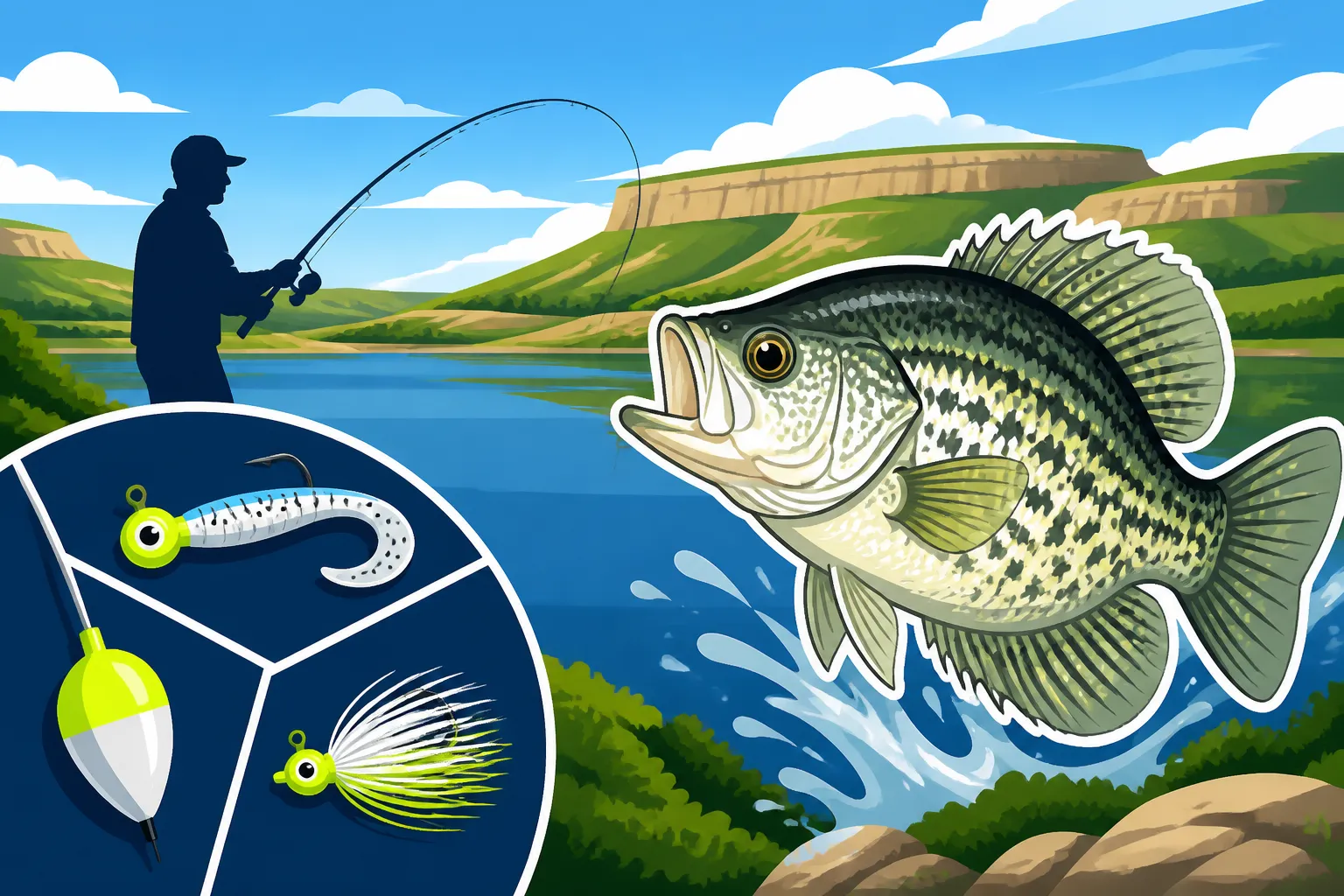
For artificials, small jigs are the go-to. Tiny 1/32 to 1/16 ounce jigs tipped with soft plastic bodies are incredibly versatile. Popular soft plastic styles include tiny tubes, grub tails, or minnow imitations. Color can make a huge difference; chartreuse, white, black/chartreuse, and electric chicken are consistent producers at Johnson Reservoir. Sometimes, a subtle presentation with a natural color like clear with silver flake can be more effective in clear water, while brighter colors excel in stained conditions. Small crankbaits, especially those designed for shallow to medium depths, can also be productive when crappie are aggressive or scattered, particularly during the pre-spawn and fall feeding frenzies. Make sure to check our guide on Best Bait for Nebraska Walleye for some crossover tips that might surprise you!
Effective Presentation Strategies
How you present your bait or lure can be the difference between a full livewell and an empty one. Crappie often prefer a subtle, slow presentation. One of the most common and effective techniques is simply jigging. Whether you're vertical jigging over a brush pile from a boat or casting and slowly retrieving from shore, imparting a slight twitching motion to your jig can make it irresistible.
Another highly effective method, especially when crappie are suspended, is the use of a slip bobber rig. This allows you to precisely set your bait at a specific depth, which is crucial when fish are holding tight to a particular thermocline or structure. Just remember to use a small enough bobber that offers minimal resistance when a crappie takes the bait. Trolling with small jigs or crankbaits can also be very effective for covering water, especially when crappie are scattered or when you're trying to locate schools. Experiment with different speeds and depths until you find the sweet spot. When crappie are holding extremely tight to cover, dipping a jig or minnow straight down into the brush pile, known as "spider rigging" or "dock shooting," can produce excellent results. The key is to be patient and work the cover thoroughly.
Seasonal Crappie Fishing Hotspots and Tactics
Johnson Reservoir truly shines as a multi-season crappie destination, but your approach needs to adapt significantly throughout the year. What works in April won't necessarily work in August, and vice-versa. Being prepared for these changes will put you ahead of the game.
Spring Spawning Action and Post-Spawn
Spring is arguably the most anticipated time for crappie anglers at Johnson Reservoir. As ice melts and water temperatures gradually rise, crappie begin their annual migration. In early spring, focus your efforts on the northern arms and shallower bays like the inlets of Plum Creek and Cottonwood Canyon. These areas warm up faster due to direct sunlight. You’ll find crappie staging in slightly deeper water (8-12 feet) at the mouths of these bays, often near submerged timber or rocky transitions. Slow-trolling small jigs or minnow-tipped jigs along these channel edges can be incredibly effective.
Once the water hits the magical 55-65 degree Fahrenheit range, typically late April into May, the crappie move into the super shallow water for their spawn. Look for them in less than 5 feet of water, often tucked right into flooded brush, cattails, or dense weed beds along the shoreline. This is a fantastic time for shore anglers. Pitching tiny jigs (1/32 to 1/16 ounce) or live minnows under a small bobber into these visible cover areas is a proven tactic. The fish are often aggressive as they defend their nests. After the spawn, usually in late May or early June, crappie transition to a post-spawn phase. They're often recovering and can be found in slightly deeper water (6-12 feet), still relating to cover, but now they might be more scattered. Slow retrieves and precise presentations around submerged brush piles and standing timber become key. If you're looking for more specific tactics for this time, our guide on How to Catch Crappie in Spring offers some excellent advice.
Summer Deep Water and Night Fishing
Summer at Johnson Reservoir can be a bit more challenging for crappie, but certainly not impossible. As the surface water heats up, crappie retreat to deeper, cooler waters, often suspending over channel edges or around deep structures. This means you’ll need to target depths anywhere from 15 to 30 feet, sometimes even deeper. Your fish finder becomes your best friend here, helping you locate schools of crappie suspending over humps, points, or along the old river channel. Vertical jigging with heavier jigs (1/8 to 1/4 ounce) or drop-shot rigs with minnows or soft plastics can be very effective. Look for areas with good oxygen levels, often near underwater springs or deeper points that get some current flow.
Night fishing for crappie in the summer at Johnson Reservoir is a highly productive, and often overlooked, tactic. As the sun sets, crappie move shallower to feed under the cover of darkness. Many anglers use submersible green lights to attract baitfish, which in turn attracts crappie. Positioning your boat over deep water near a prominent point or structure and dropping a light down can concentrate fish directly below you. Then, it's a matter of fishing jigs or minnows at various depths until you find where they're actively feeding. This can be a relaxing and very rewarding way to fill a cooler during the warmer months. Consider using a service like FishingBooker to find local guides who specialize in night fishing or deep-water summer crappie tactics if you're unfamiliar with the lake.
Fall Transition and Winter Ice Fishing
Fall is another fantastic time for crappie at Johnson Reservoir. As water temperatures begin to drop from the summer highs, crappie enter a "feed-up" mode, gorging themselves in preparation for winter. They become more active and can often be found in large schools, moving between shallow flats and deeper channel edges. Focus on main lake points, large bays, and areas with submerged brush or timber in 10-20 feet of water. Trolling small crankbaits or casting and retrieving jigs with a slow, deliberate cadence are excellent strategies. Keep an eye on your electronics for baitfish schools; crappie won't be far behind. This period often sees some of the biggest crappie of the year caught, as they are actively feeding and putting on weight.
Once the ice sets in, Johnson Reservoir transforms into an ice fishing paradise, and crappie are a primary target. Winter crappie typically retreat to deeper basins or suspend over deep structure. Look for them in 20-40 feet of water, often suspending 5-10 feet off the bottom, or nestled into deep brush piles. Small ice jigs (1/32 to 1/16 ounce) tipped with a waxworm, maggot, or a tiny plastic tail are the ticket. Finesse is key; a subtle lift and pause, often called "pounding" the jig, can trigger bites. Using a flasher or an underwater camera can dramatically improve your success, allowing you to see exactly where the fish are in the water column and how they are reacting to your lure. For comprehensive safety tips and gear recommendations, be sure to read our guide on How to Catch Crappie Through the Ice and Nebraska Ice Fishing Regulations. Many anglers looking for a guaranteed ice fishing trip will consult platforms like FishingBooker to book a guide with the right equipment and local knowledge.
Planning Your Crappie Trip: Regulations and Resources
A successful fishing trip isn't just about what bait you use; it's also about being informed and prepared. Understanding local regulations and utilizing available resources can make your time on Johnson Reservoir much more enjoyable and productive.
Navigating Nebraska's Crappie Regulations
Before you even wet a line, make sure you're up to speed on Nebraska's fishing regulations. Every angler 16 years and older needs a valid Nebraska fishing license. These are easily obtainable online through the GoOutdoorsNE system, or from various vendors across the state. You can find detailed information in our Nebraska Fishing License Guide.
Specifically for crappie, Nebraska has daily bag and possession limits to ensure the sustainability of the fishery. At Johnson Reservoir, the statewide crappie bag limit is generally 15 fish, with a possession limit of 30. However, regulations can change, and some specific waters might have special restrictions, so always double-check the current Nebraska Game and Parks Commission (NGPC) fishing guide. For more in-depth information, refer to our Nebraska Crappie Daily Limit and Nebraska Fishing Regulations Explained. Keeping track of these rules not only keeps you legal but also contributes to maintaining healthy fish populations for everyone. A quick call to a local tackle shop or checking the NGPC website before your trip can save you a lot of hassle.
Leveraging Technology and Local Expertise
In today's age, technology can be a huge asset to crappie anglers. A quality fish finder with sonar and mapping capabilities can help you locate those submerged brush piles, channel edges, and baitfish schools that crappie are hiding in. Many modern units, like those from Humminbird or Lowrance, even offer side imaging or 360 imaging to help you scan wide areas around your boat. GPS functionality is also crucial for marking hot spots and navigating the large waters of Johnson Reservoir safely. Using apps like Navionics or C-MAP on your phone or tablet can provide detailed contour maps of the lake, giving you a virtual look at the underwater topography before you even launch your boat.
Beyond technology, local knowledge is invaluable. Strike up conversations with bait shop owners, other anglers at the boat ramp, or check online forums dedicated to Nebraska fishing. These sources can provide real-time conditions, recent hot spots, and specific tips that only locals would know. Sometimes, even booking a guide, especially if it's your first time on a large lake like Johnson Reservoir, can accelerate your learning curve dramatically. Platforms like FishingBooker connect you with experienced guides who can teach you the ropes and put you on fish. They often have intimate knowledge of the lake's seasonal patterns and current crappie behavior.
Here's a quick reference table summarizing seasonal crappie tactics at Johnson Reservoir:
| Season | Typical Water Temp Range | Primary Locations | Recommended Depths | Key Techniques |
|---|---|---|---|---|
| Early Spring | 40-50°F | Channel edges, bay mouths, warming flats | 8-12 feet | Slow troll jigs/minnows, vertical jigging |
| Spawn (Spring) | 55-65°F | Flooded brush, cattails, shallow weeds | 2-5 feet | Pitching small jigs, bobber fishing minnows |
| Post-Spawn (Late Spring) | 65-70°F | Slightly deeper brush, standing timber | 6-12 feet | Slow jigging, slip bobbers |
| Summer | 70°F+ | Deep channels, humps, main lake structure | 15-30+ feet (suspended) | Vertical jigging, night fishing with lights |
| Fall | 65-50°F | Main lake points, large bays, deep brush | 10-20 feet | Trolling crankbaits, casting jigs, tight-lining |
| Winter (Ice Fishing) | 32-40°F | Deep basins, offshore structure | 20-40+ feet (suspended) | Ice jigging with bait, use of electronics |
Following these tips and adapting to the dynamic conditions of Johnson Reservoir will significantly improve your crappie fishing success. Remember, every day on the water is a learning experience, so be patient, observe, and enjoy the beautiful Nebraska outdoors! You might even find yourself landing a trophy crappie, a memorable experience at one of the Best Places to Fish in Nebraska.
Disclaimer
The information provided in this guide is for general informational purposes only. Fishing regulations, conditions, and fish behavior can change rapidly. Always consult the most current Nebraska Game and Parks Commission regulations before fishing. Exercise caution and practice safe boating and ice fishing practices. Fishing involves inherent risks, and adherence to safety guidelines is the responsibility of each individual angler.