How to Fish Deep Structure for Summer Walleye
That moment when the scorching summer sun beats down, and your usual shallow water walleye spots go completely silent? It's a frustrating, all-too-common scenario for anglers across Nebraska. Those trophy walleye don't just vanish; they simply retreat to the cooler, more stable environments of the deeper water, often clinging to subtle underwater structures that are notoriously tricky to find and fish. This guide is dedicated to helping you unlock the secrets of "How to Fish Deep Structure for Summer Walleye," equipping you with the knowledge and techniques to consistently put these elusive fish in your boat, even when the heat is on.
The Summer Walleye Riddle: Why They Go Deep
When summer truly settles in across Nebraska, our lakes undergo some significant changes, both visible and invisible, that directly influence where walleye choose to hang out. If you've ever wondered why your spring and fall hotspots dry up in July, it's not because the fish left town – they just moved to more comfortable quarters.
Understanding Thermal Stratification
One of the biggest reasons walleye vacate shallow areas is a phenomenon called thermal stratification. Simply put, during the warm summer months, lakes tend to divide into distinct layers based on temperature. The top layer, called the epilimnion, is warm and oxygen-rich but often too warm for walleye's liking. Below that is the thermocline, a transitional zone where the temperature drops rapidly. And beneath the thermocline lies the hypolimnion, the deepest and coldest layer.
Walleye, being cool-water fish, are constantly seeking that "sweet spot" within this stratification. They want water that's cool enough to be comfortable and metabolically efficient, but also rich enough in oxygen to thrive. This often puts them right in or just below the thermocline, where the temperature is ideal, and oxygen levels are still good. This depth can vary significantly from lake to lake and even within different areas of the same body of water, making it a crucial factor to pinpoint with your electronics. If you're not fishing at the right depth, you're simply not fishing where the walleye are.
Forage Fish Movement and Walleye Follow
It's not just about comfort; it's also about dinner! Walleye are opportunistic predators, and their movements are heavily dictated by the location of their primary food sources. As the lake stratifies, so too do the baitfish – things like shad, ciscoes, and even yellow perch. These smaller fish also have their own preferred temperature and oxygen ranges, and they'll often suspend in schools along the thermocline or congregate around deep structure where they feel safe or find microscopic food.
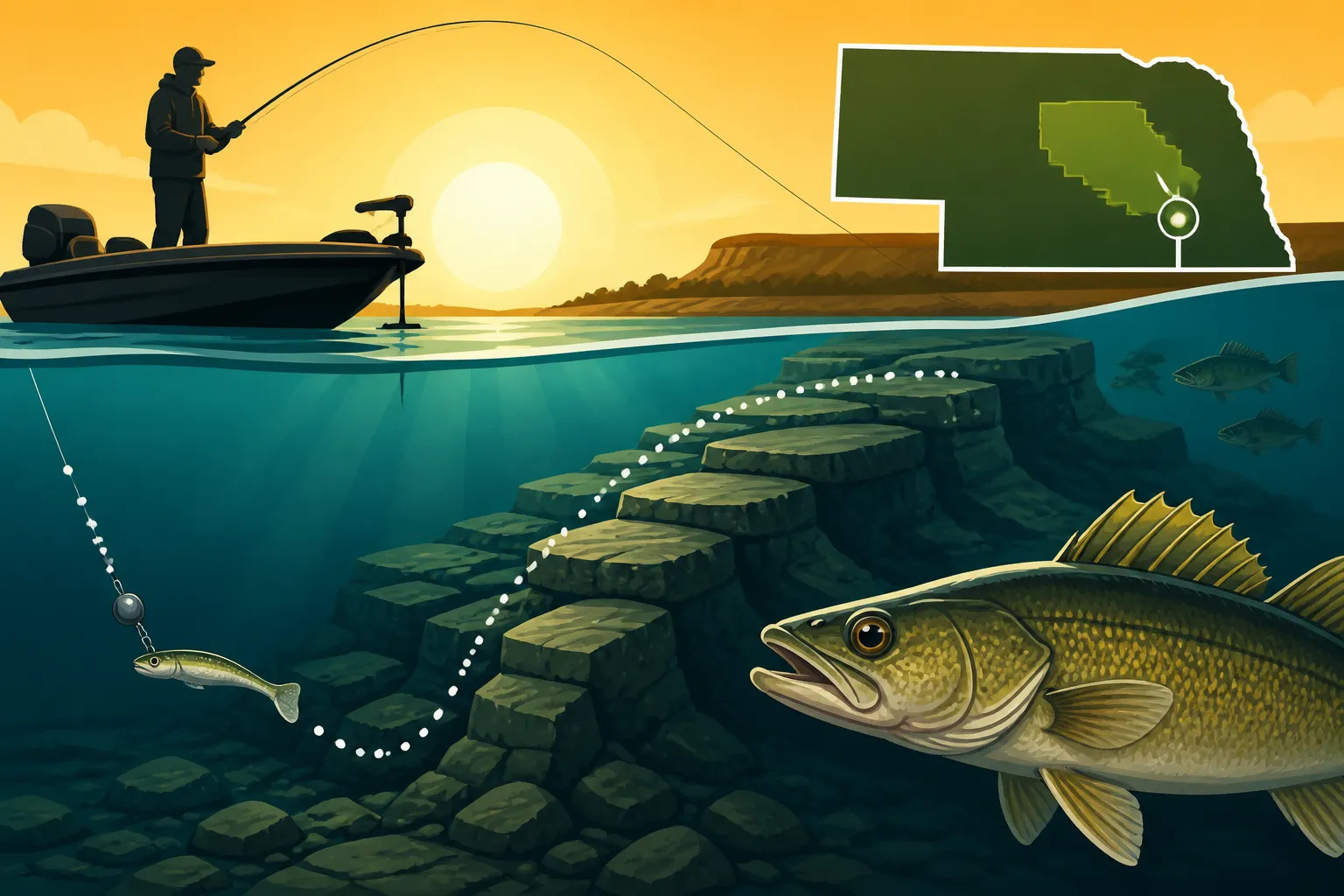
When these baitfish move to deeper, more stable environments, the walleye are sure to follow. They become oriented to these deep-water forage schools, using subtle changes in bottom contours, submerged humps, or deep points as ambush points. It's a classic predator-prey relationship; find the bait, and you'll likely find the walleye. Understanding these movements is key to understanding "Nebraska Fishing Seasons Explained" for all species, not just walleye. This connection means that simply looking for structure isn't enough; you need to look for structure with baitfish present, or at least structure that provides excellent ambush opportunities near where baitfish are likely to pass.
Essential Gear for Deep Water Walleye Success
Fishing deep water for walleye isn't just a matter of changing tactics; it often requires a specific set of tools to do it effectively. Without the right gear, you'll be spending more time guessing and less time catching.
Sonar and Electronics are Your Best Friends
If there's one piece of equipment that goes from "nice to have" to "absolutely essential" for deep water walleye, it's your sonar unit. Forget old-school paper graphs; modern electronics offer an incredible window into the underwater world. A good 2D sonar will show you depth, bottom composition, and most importantly, fish arches. But to truly excel, you'll want to leverage Down Imaging (or DownScan) and Side Imaging (or SideScan).
Down Imaging provides a photographic-like view directly below your boat, making it easier to distinguish between baitfish schools, individual walleye, and actual structure like brush piles or rock formations. Side Imaging, however, is the game-changer for deep structure. It allows you to scan wide swaths of the lake bottom on either side of your boat, revealing subtle humps, long points, old creek channels, and even isolated boulders that you might completely miss with traditional sonar. You can literally "see" walleye holding tight to the bottom on a deep breakline 50 feet to your left. Learning to use and interpret these displays is paramount. Check out our guide on "How to Read a Fish Finder for Walleye" for a deeper dive into this technology. Many excellent units are available on platforms like Amazon, offering various price points and features. Mastering your electronics transforms deep water from a mystery to a map.
Rods, Reels, and Line for Deep Presentation
When you're dealing with deep water, you need gear that offers both sensitivity to detect subtle bites and enough power to handle a good-sized walleye from significant depth.
- Rods: Look for spinning or baitcasting rods in the 6'6" to 7'6" range, typically with a medium-light to medium action and a fast or extra-fast tip. The fast tip is crucial for transmitting those light taps that walleye are famous for, even with a lot of line out. A moderate backbone helps absorb the shock of a strike and keep fish pinned during the fight.
- Reels: For spinning setups, a 2500-3000 series reel is a good all-around choice, offering sufficient line capacity and a smooth drag. Baitcasting reels, particularly low-profile models, are excellent for jigging heavier baits or trolling, providing precise line control.
- Line: This is where many anglers make mistakes. Monofilament stretches too much for deep water, making bite detection difficult. Braided line is the clear winner. Its no-stretch properties offer incredible sensitivity, allowing you to feel every bump and tick. A 10-20 lb test braided main line is usually sufficient. To combat the visibility of braid and provide a little abrasion resistance, tie on a 6-10 lb fluorocarbon leader of about 6-10 feet. Fluorocarbon is nearly invisible underwater and has a much lower stretch than mono, still offering good feel. Getting the right line is a critical part of having the "Best Fishing Gear for Nebraska Anglers" for deep water.
Terminal Tackle for the Depths
Successfully presenting baits in deep water requires specific terminal tackle designed to get down quickly and stay in the strike zone.
- Heavy Jigs: For vertical jigging over specific structure, jigs ranging from 3/8 oz to 3/4 oz (or even heavier in strong current or wind) are essential. Pair them with soft plastics, live minnows, or plastic grubs.
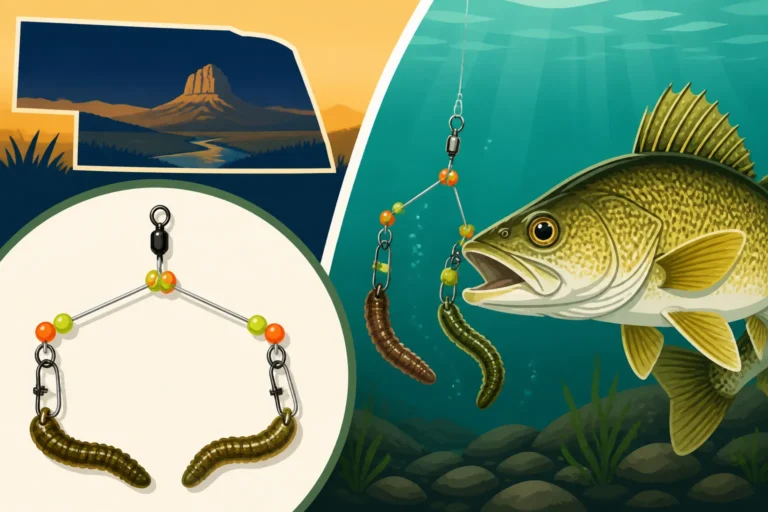
- Dropshot Rigs: This finesse technique is incredibly effective for suspending a bait above deep-sitting walleye. Use a heavier dropshot weight (1/4 oz to 3/4 oz) to maintain bottom contact and a small hook (sizes 4-1/0) for plastics or live bait.
- Bottom Bouncers: A classic for covering ground, bottom bouncers keep your bait just off the bottom. Weights from 1 oz to 3 oz are common for deep water, depending on depth and speed. Pair them with a snell and a crawler harness or a plain hook with a minnow or leech.
- Deep-Diving Crankbaits: For trolling, you'll need crankbaits designed to reach significant depths. Lures like Rapala Deep Tail Dancers, Berkley Flicker Shad Pro, or Reef Runner 800 Series are popular choices that can dive 20-30+ feet on their own. For even greater depths, combine them with lead core line or snap weights. These are often available on Amazon with descriptions detailing their diving capabilities.
Decoding Deep Structure: Where Walleye Hide
Finding "deep structure" isn't as simple as just finding the deepest part of the lake. Walleye aren't just in the deep; they are on something. Learning to identify and interpret these underwater features is paramount to consistent success.
Identifying Key Structure Types
Deep walleye rarely just suspend in open water for long periods, unless they're actively chasing a massive bait ball. More often, they relate to specific topographical features that offer ambush points, shelter, or access to different depths.
- Main Lake Points: These are often extended fingers of land that continue underwater, dropping off into deeper water. Walleye will position on the sides or tips of these points, especially where there's a current or wind pushing baitfish past.
- Submerged Humps and Islands: These are underwater hills or peaks that rise from the deep bottom, sometimes topping out dozens of feet below the surface. Walleye will hold on the tops, sides, or around the base of these humps, depending on forage and light conditions.
- Deep Rock Piles and Boulders: Rocky bottom provides excellent cover and habitat for baitfish and invertebrates, which in turn attract walleye. These can be natural formations or man-made reefs.
- Channel Edges and Breaks: In reservoirs formed from flooded rivers, the old river channel provides a distinct deep water highway. Walleye will often patrol the edges or breaks where the channel rises to a shallower flat.
- Sunken Timber and Brush Piles: While sometimes snaggy, submerged trees, stumps, and brush piles offer excellent cover and ambush points, especially in clearer waters. Using your electronics, you can often pinpoint individual trees or even smaller brush.
Learning to spot these features on your electronic maps and then confirm them with your sonar is a critical skill for success. This is a foundational element in understanding "How to Fish Deep Structure for Summer Walleye" effectively.
The Importance of Transition Areas
While specific structures are vital, truly productive deep water spots often lie in transition areas. These are places where one type of bottom or depth changes dramatically to another. Think of them as the highways and intersections of the underwater world.
For example, a hard, rocky bottom abruptly transitioning to a soft, muddy flat. Walleye, and their prey, will often frequent these edges. The hard bottom might hold crayfish or provide good egg-laying habitat for some baitfish, while the soft bottom might be home to insect larvae. Or perhaps a shallow flat that drops sharply into a deep channel. The "breakline" where that slope occurs is a prime walleye hangout. They can move up to feed on the flat during low light or specific conditions, and then quickly retreat to the safety and comfort of the deep channel.
Another critical transition is the "inside turn" or "outside turn" of an underwater contour. Just like a road, the inside of a curve provides a sheltered pocket, while the outside might be a prime ambush point for fish waiting for current to wash food by. Paying attention to these subtle changes in depth, bottom composition, and contour lines on your map and sonar will reveal the absolute best spots within larger structural elements.
Proven Techniques for Targeting Deep Summer Walleye
Once you've located the walleye and their preferred deep structure, it's time to put your techniques to the test. Deep water fishing often requires more precision and patience than shallow water tactics.
Precision Jigging and Blade Baits
When walleye are tightly schooled on a specific piece of deep structure—say, the top of a submerged hump or along a rock pile—vertical jigging can be incredibly effective. The key is to position your boat directly over the fish you see on your sonar.
- Vertical Jigging: Drop a heavy jig (often 3/8 to 3/4 oz, paired with a soft plastic grub, live minnow, or a piece of nightcrawler) straight down to the bottom. Lift it a foot or two with a sharp snap, letting it fall back on a semi-slack line. Most bites occur on the fall. Pay close attention to your line; any pause, twitch, or sudden slack could indicate a bite. This method allows you to precisely target individual fish or small groups.
- Blade Baits: Lures like the Heddon Sonar or Johnson ThinFisher are excellent for deep walleye. They're heavy for their size, getting down quickly, and their vibration on the retrieve is irresistible. Drop them to the bottom, then rip them up with a strong snap, letting them flutter back down. These are particularly good when walleye are aggressive. For "How to Jig for Walleye in Nebraska" specifically, heavier jigs are often preferred in deeper scenarios.
Mastering the Bottom Bouncer and Crawler Harness
For covering larger areas of deep structure, especially along breaklines or over subtle changes in depth, the bottom bouncer and crawler harness combo is a Nebraska staple. This technique allows you to present live bait effectively while maintaining constant bottom contact.
- Bottom Bouncers: These L-shaped wire weights are designed to "bounce" along the bottom without snagging excessively. Choose weights (1 oz to 3 oz) appropriate for your depth and trolling speed. The goal is a 45-degree angle of your line from the rod tip to the water.
- Crawler Harnesses: These are snelled rigs with multiple hooks (usually two or three) designed to hold a full nightcrawler straight. The blades on the harness (Colorado, Indiana, Willowleaf) create flash and vibration, attracting walleye. You can also use a plain snell with a minnow or leech.
- Method: Slowly troll your boat (0.8-1.5 mph) along the contours of your chosen deep structure, letting the bottom bouncer occasionally tap the bottom. Walleye often pick up the bait and run with it, so don't set the hook immediately. Let them take it, drop your rod tip, and then sweep-set. This method is incredibly versatile for finding active fish on extensive deep flats or transitions. It's often considered one of the "Best Bait for Nebraska Walleye" in summer.
Deep Trolling with Crankbaits and Lead Core
When walleye are scattered over large, deep areas or suspending off the bottom, trolling deep-diving crankbaits is a fantastic way to cover water efficiently and locate active fish.
- Deep-Diving Crankbaits: As mentioned in the gear section, select crankbaits known for reaching substantial depths (20-30+ feet). Match the color to the forage in the lake and water clarity. Experiment with different speeds (1.5-3.0 mph) and zig-zag patterns to vary the lure's depth and action.
- Lead Core Line: For truly exceptional depths (30-50+ feet) or to run smaller crankbaits deeper, lead core line is invaluable. This line has a lead core encased in a Dacron sheath, causing it to sink. Each color segment (typically 10 yards) adds a certain amount of depth. By letting out a specific number of "colors," you can precisely control your lure's depth. A fluorocarbon leader is tied to the end of the lead core, and then your crankbait. This method allows you to target walleye holding deep over open water or deep structure when standard cranks won't reach. Our guide on "How to Troll for Walleye in Nebraska" provides more nuanced advice on this powerful technique.
Reading the Water and Adjusting Your Approach
Fishing isn't always about sticking to one plan; it's about being a detective, constantly observing, experimenting, and adapting. This is especially true when tackling deep summer walleye, where conditions can change rapidly.
Factors Influencing Deep Walleye Behavior
Just because walleye are deep doesn't mean they're immune to environmental influences. Several factors can affect their precise location and willingness to bite, even in their comfortable deep-water retreats.
- Wind: Wind can be your friend! Even in deep water, sustained wind can create currents and push baitfish against deep points or humps, concentrating walleye in these areas. On a windy day, focus on the windblown side of structure. The chop on the surface also helps break up light penetration, potentially encouraging walleye to move higher in the water column or closer to the structure.
- Current: In river systems or reservoir tailwaters, current is a dominant factor. Walleye will position themselves in current breaks—behind humps, boulders, or inside turns—to conserve energy while waiting for food to be swept to them. Understanding the strength and direction of the current is crucial for bait presentation.
- Cloud Cover and Light Levels: While deep water is naturally darker, extreme light changes can still affect walleye. Overcast days or periods of low light might encourage them to move up shallower on a deep structure or become more active. Conversely, bright sun might pin them tight to the bottom or deeper within cover. This is a subtle nuance, but paying attention to the sky can sometimes help you predict if the fish will be hugging the bottom or suspended a bit higher.
Experimentation and Pattern Recognition
No two days are exactly alike on the water, and what worked yesterday might not work today. The most successful deep water walleye anglers are those who are willing to experiment and pay close attention to the details.
- Vary Depth: Even if your sonar shows fish at 30 feet, try fishing a few feet above or below that mark. Walleye often look up to feed, and sometimes a bait presented slightly higher will draw them out.
- Change Lure Colors and Sizes: If one color isn't producing, don't be afraid to switch to another. Natural colors (perch, shiner) are often good starting points, but sometimes a brighter, more aggressive color (chartreuse, orange) can trigger a reaction bite. Similarly, try different sizes of jigs, crankbaits, or the length of your crawler harness snell.
- Adjust Speed: Whether you're trolling bottom bouncers or crankbaits, slight changes in your boat speed can make a huge difference. Sometimes a slower presentation is needed for lethargic fish, while other times a faster, more aggressive approach triggers bites.
- Note Everything: Keep a mental or even physical log of what worked: depth, speed, lure color, time of day, wind direction, and even moon phase. Over time, you'll start to recognize patterns that can help you anticipate where and how to fish on future trips. This commitment to detail is what separates a lucky catch from consistent success.
Top Nebraska Deep Water Walleye Locations
Nebraska might be known for its vast plains, but it also boasts some fantastic reservoirs with significant deep water, perfect for summer walleye fishing. Knowing where to start is half the battle.
Lake McConaughy's Depths
Hands down, Lake McConaughy is Nebraska's premier walleye destination, and it truly shines during the summer months when walleye go deep. "Big Mac" is a massive reservoir, often referred to as Nebraska's "ocean" due to its size and clear, deep waters.
- Key Areas: Look for main lake points that extend far into the lake, especially on the north and south sides. Submerged humps and roadbeds are also crucial. Areas around the face of the dam, the "spillway" area (below Kingsley Dam, though rules apply there), and the large bay areas with significant depth changes, are excellent places to start.
- Tactics: Deep trolling with lead core line and large crankbaits is exceptionally popular and effective here for covering vast amounts of water. Bottom bouncing with crawler harnesses is also a staple. Vertical jigging on specific humps or rock piles seen on your sonar can produce big fish. The clear water here means walleye often stay deeper, even in low light, making this a true deep water fishery. For more specific insights, check out our guide on "Lake McConaughy Walleye Fishing"!
Other Notable Deep Water Reservoirs
While Big Mac gets most of the glory, several other Nebraska reservoirs offer excellent deep water walleye opportunities in summer.
- Branched Oak Lake: Located near Lincoln, Branched Oak is the largest reservoir in eastern Nebraska. It has several deep areas, including the main dam area and old creek channels. While not as clear or as deep as McConaughy, its walleye population still seeks out the cooler, deeper structure during summer. Trolling crankbaits along the main lake channel or bottom bouncing points and humps can be effective.
- Sherman Reservoir: In central Nebraska, Sherman is another popular walleye lake. It has some excellent deep channels and submerged timber, which can be fantastic for walleye. Early mornings or late evenings can see walleye moving shallower on deep structures, but during the day, they'll often be holding tight to creek channels or deep humps.
- Harlan County Reservoir: This large reservoir on the Republican River often has a healthy walleye population. While known for its expansive flats, it also has deeper channels and points. Current from the river can play a role here, concentrating walleye in specific areas. Trolling is a primary method, but finding discrete deep structures with your electronics is key.
- Merritt Reservoir: While renowned for its muskellunge, Merritt also holds good numbers of walleye. Its Sandhills location gives it unique characteristics, including clear water and some significant deep areas. The walleye here can be found on deep points, submerged islands, and along the main lake basin.
Each of these lakes offers a slightly different challenge and reward, but the core principles of understanding stratification, using advanced sonar, and employing deep water tactics remain constant. Before heading out, always consult the "Nebraska Fishing Regulations Explained" to ensure you're compliant with all local rules, including specific bag and length limits like the "Nebraska Walleye Daily Bag Limit" for the body of water you're fishing.
| Deep Water Walleye Technique | Best for | Typical Depth Range | Key Gear | Advantages | Considerations |
|---|---|---|---|---|---|
| Vertical Jigging | Concentrated fish on specific structure (humps, rock piles) | 20-50+ feet | Heavy jigs (3/8-3/4 oz), soft plastics/live bait, sensitive rod (fast tip), braid line | Precise presentation, excellent for targeting individual fish, good in wind | Requires boat positioning directly over fish, slower coverage of water |
| Bottom Bouncing | Covering breaklines, flats, and contours | 15-40 feet | 1-3 oz bottom bouncers, crawler harnesses (or minnow/leech snells), braid to fluorocarbon leader | Excellent for searching large areas, keeps bait near bottom, good live bait presentation | Slower boat speed required, can snag in heavy cover, less precise than jigging |
| Deep Trolling (Crankbaits) | Scattered fish, covering vast open water or long breaks | 20-30+ feet (crankbait specific) | Deep-diving crankbaits (Rapala, Berkley, Reef Runner), medium action rods, line counters | Covers a lot of water quickly, triggers reaction strikes, good for locating schools | Requires boat control, limited depth without additional weights/lead core, specific lures needed |
| Deep Trolling (Lead Core) | Reaching extreme depths with smaller lures, finicky fish | 30-60+ feet (depending on colors out) | Lead core line, crankbaits/spoons, longer rods (8-10 ft), line counters | Extreme depth control, can run smaller baits deep, effective in clear water | Heavy, less sensitive, requires specialized reels, longer leaders can make netting tricky |
| Dropshotting | Finicky fish, suspending walleye over structure | 20-50 feet | Dropshot weights (1/4-3/4 oz), small hooks, finesse plastics, sensitive spinning rod, braid to fluorocarbon leader | Excellent for picky eaters, very natural presentation, keeps bait off bottom | Can be slower to rig, best in calmer conditions, less effective for covering large areas |
Disclaimer
Fishing regulations, including license requirements, seasons, and bag limits, can change. Always consult the latest Nebraska Game and Parks Commission regulations before heading out on the water. This information is for general guidance and educational purposes only.