How to Catch Wipers in Nebraska Reservoirs
Trying to target those feisty wipers in Nebraska's expansive reservoirs can feel like a guessing game sometimes. These hard-fighting hybrids offer an incredible challenge and an even better fight, but locating them and getting them to bite takes a specific approach. This guide is here to unravel the mystery, providing you with the know-how to consistently catch wipers across the Cornhusker State.
Understanding Wipers in Nebraska Reservoirs
Before you even think about casting a line, it's crucial to understand what makes wipers tick. They're not your average fish, and their unique biology and behavior dictate how and where you'll find them. Knowing your target is half the battle won when you're out on the water.
What Exactly is a Wiper?
A wiper, often called a "hybrid striped bass," is exactly what it sounds like: a cross between a striped bass and a white bass. Nebraska doesn't have naturally reproducing populations of true striped bass, so wipers are stocked by the Nebraska Game and Parks Commission into many of our larger reservoirs. This stocking program ensures a robust population for anglers to pursue, offering a thrilling fight unlike many other freshwater species. Because they're a hybrid, they often exhibit a fantastic blend of aggression, growth potential, and schooling behavior from both parent species. They grow much larger than white bass and fight with the sustained power of a striped bass, making them a premier sport fish.
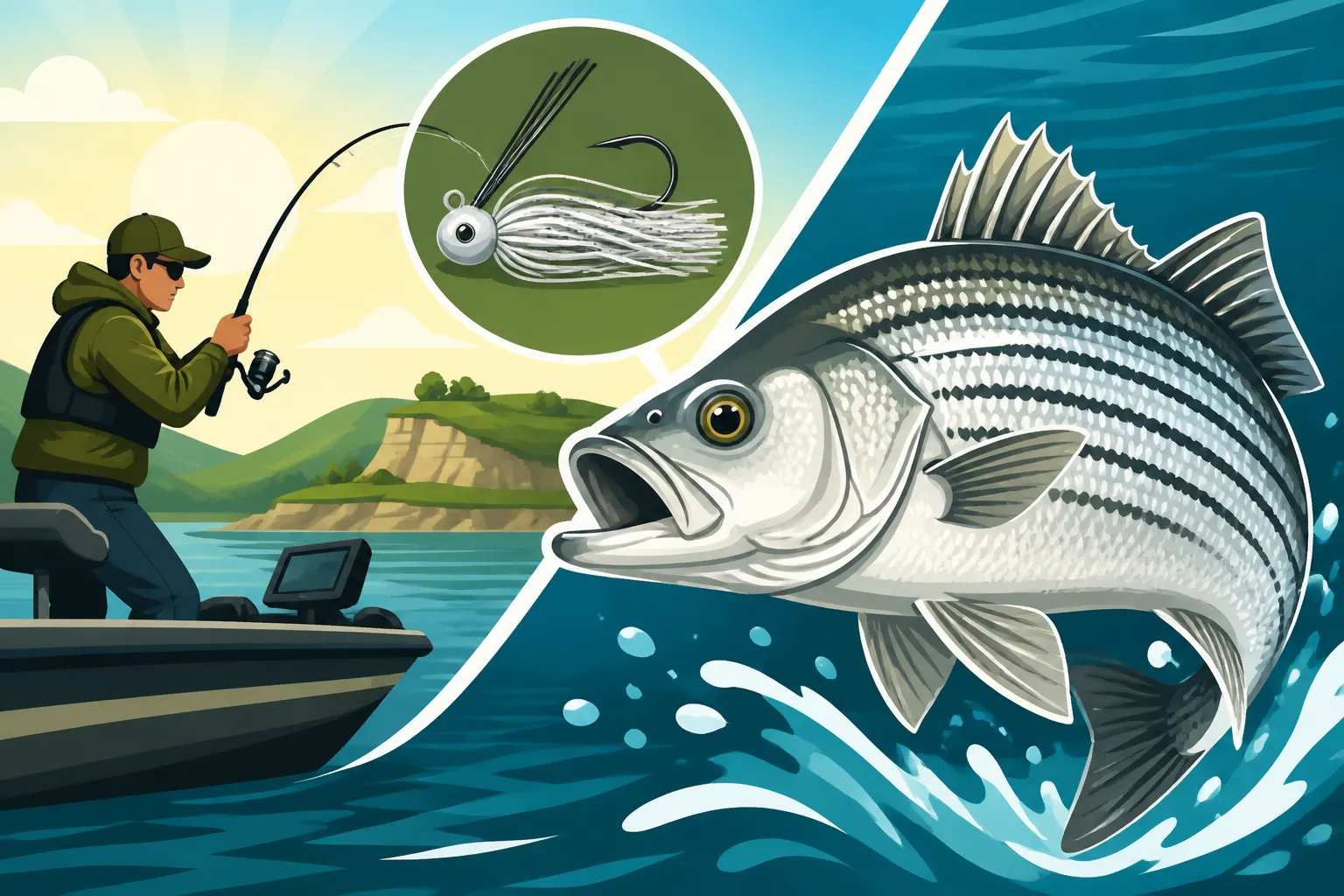
Identifying a wiper can sometimes be tricky, especially if you're used to catching white bass. Look for broken or irregular horizontal stripes along their sides; unlike the clean, unbroken lines of a true striped bass, or the typically fainter lines of a white bass, a wiper's stripes are distinctively interrupted. They also tend to have a deeper body profile than a pure white bass. These hybrids are voracious predators, constantly chasing schools of shad and other baitfish, which is why understanding baitfish movements is so important to their pursuit. You can learn more about these fascinating fish in our article on The Nebraska Wiper Hybrid Fish Explained.
Where Wipers Thrive in Nebraska
Wipers are primarily found in Nebraska's larger reservoirs, those expansive bodies of water that can sustain large populations of shad – their primary food source. These fish prefer open water and actively chase baitfish, so finding areas where bait congregates is often the key to finding wipers. They don't typically hang around shallow, weedy cover like largemouth bass, but instead, roam open water, often near submerged structure, humps, points, and old river channels where baitfish schools are plentiful.
Reservoirs with large main bodies and deep water access are prime wiper habitat. They need plenty of room to roam and pursue their prey. This means you'll often find them suspended over significant depths or cruising along main lake points and ledges. Understanding the underwater topography of a reservoir is critical when targeting wipers, as they'll use these features to ambush bait or to orient themselves in the vastness of the lake.
Seasonal Movements and Behavior
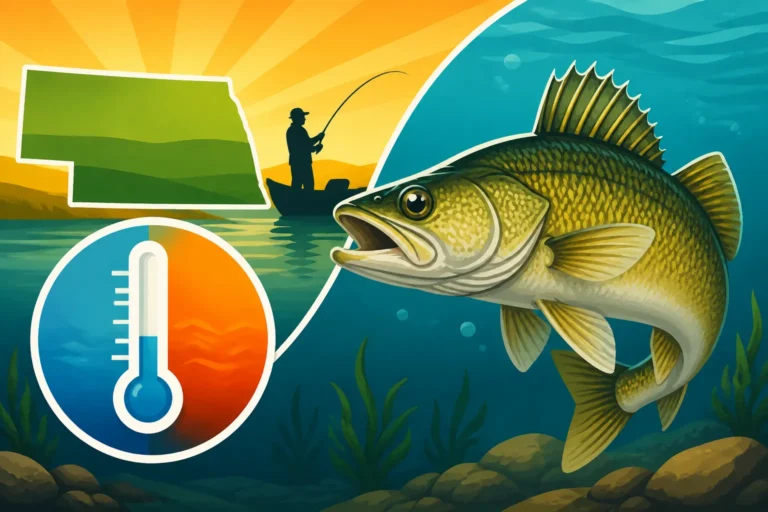
Wipers are highly migratory within their reservoir homes, their movements dictated largely by water temperature and the availability of baitfish. In the spring, as water temperatures rise, wipers will often move towards shallower, warmer waters, particularly those areas where white bass might be looking to spawn. They'll also follow baitfish into coves and arms of the reservoir. This can be a fantastic time for shore anglers or those in smaller boats, as wipers become more accessible.
As summer progresses and water temperatures climb, wipers often move to deeper, cooler water in the main lake basin. They'll suspend over significant depths, following schools of shad in open water. This is when trolling or using advanced electronics to find suspended fish becomes incredibly effective. During the fall, as water temperatures begin to drop, wipers will once again become very active, often forming massive schools and aggressively feeding to prepare for winter. They can be found shallower again, pushing bait into coves and along points, creating exciting "runs" or "boils" on the surface. When winter arrives, if the lake doesn't freeze solid, they'll be deep, but still catchable with vertical presentations. Understanding these seasonal shifts is fundamental to successful wiper fishing, aligning with broader Nebraska Fishing Seasons Explained.
Essential Gear for Nebraska Wiper Fishing
Fishing for wipers isn't necessarily about highly specialized gear, but having the right tools for the job will significantly increase your success rate. These fish fight hard, and they live in big water, so your setup needs to be able to handle the challenge.
Rods, Reels, and Line
For wiper fishing, you'll want a medium-heavy to heavy action spinning or baitcasting rod, typically in the 7 to 8-foot range. This length provides good casting distance when you need to reach distant boils, and the backbone to handle powerful runs. A fast tip is beneficial for detecting subtle bites while trolling or casting, but enough power in the blank is essential to set the hook and turn a big fish. My go-to is often a 7'6" medium-heavy rod – it's versatile enough for both casting and trolling.
Pair your rod with a quality spinning reel in the 3000-4000 size range, or a baitcasting reel with a good drag system. Wipers can make blistering runs, so a smooth, reliable drag is non-negotiable. For line, I highly recommend using braided line as your main line, typically 20-30 pound test. Braid offers incredible strength, sensitivity, and casting distance with a small diameter. Because braid is so visible and lacks stretch, I always recommend tying on a fluorocarbon leader of 12-20 pound test. Fluorocarbon is nearly invisible underwater and offers good abrasion resistance, which is important when fishing around potential snags or through toothy wipers. For more specific setups, check out our guide on Best Rods and Reels for Nebraska Fishing.
Lures and Baits That Get Bites
Wipers are aggressive predators, and they respond well to lures that imitate their primary forage: shad. Therefore, spoons, lipless crankbaits, swimbaits, and topwater lures are staples in a wiper angler's tackle box.
- Spoons: Casting spoons like the Kastmaster or Little Cleo, especially in silver or white, are deadly when wipers are schooling and busting bait on the surface. Their erratic flutter on the retrieve or fall can perfectly mimic a dying shad. Jigging spoons can also be effective when fish are deeper and suspended.
- Lipless Crankbaits: These lures, such as a Rat-L-Trap or a Bill Lewis Lures Rat-L-Trap, fished with a "rip-pause" retrieve, are excellent for covering water and triggering aggressive strikes. Colors that imitate shad or perch work wonders.
- Swimbaits: Soft plastic swimbaits on a jig head, particularly those with a paddle tail, are incredibly versatile. They can be cast and retrieved, slow-rolled along the bottom, or vertically jigged. Sizes from 3 to 5 inches are usually productive.
- Topwater Lures: When wipers are actively feeding on the surface, pushing schools of shad into "boils," topwater lures like poppers, walking baits, or prop baits can create explosive strikes. This is one of the most exciting ways to catch them!
- Live Bait: While artificials are highly effective, live shad or large shiners can be absolutely irresistible to wipers, especially when fished under a bobber or on a bottom rig near deep structure. Make sure to check Nebraska Fishing Regulations Explained for rules on live bait use.
When shopping, you'll find a wide variety of these effective lures on platforms like Amazon, making it easy to stock up for your next trip.
Electronics and Boat Setup
Having good electronics can be a game-changer when chasing open-water wipers. A quality fish finder with Down Imaging and Side Imaging capabilities will help you locate schools of baitfish and the wipers feeding on them, often suspended over open water or relating to subtle changes in bottom contours. Spotting these schools is often the first step to a successful day. Many anglers find their Best Fish Finders for Nebraska Lakes provide critical intel.
For boaters, a reliable trolling motor, particularly one with GPS spot-lock capabilities, is invaluable. It allows you to precisely hold your position over a school of fish or slowly troll areas without having to constantly manage your boat with the main engine. This is especially helpful in windy Nebraska conditions. A well-organized boat with ample rod holders for trolling and quick access to casting rods is also a huge plus. Being able to swiftly switch tactics from trolling to casting at a topwater boil can mean the difference between a few fish and a fantastic day.
| Gear Type | Recommended Specs | Why It's Important |
|---|---|---|
| Rod | 7-8 ft, Med-Heavy to Heavy, Fast Tip | Casting distance, power to fight strong fish, sensitive tip |
| Reel | 3000-4000 spinning or quality baitcaster | Smooth, reliable drag for powerful runs |
| Main Line | 20-30 lb Braided Line | Strength, sensitivity, casting distance, low stretch |
| Leader | 12-20 lb Fluorocarbon | Nearly invisible, abrasion resistance, less stretch than mono |
| Lures | Spoons, Lipless Cranks, Swimbaits, Topwater | Mimic shad, trigger aggressive strikes, cover various depths |
| Electronics | Fish Finder w/ Down/Side Imaging | Locate baitfish and suspended wipers, identify structure |
| Trolling Motor | GPS Spot-Lock feature | Precise boat control, hands-free fishing, stealthy approach |
Proven Techniques for Catching Wipers
Wipers are dynamic fish, and success often comes from adapting your techniques to their current behavior and location. Whether they're spread out or schooled up, there's a method to target them effectively.
Trolling for Open Water Wipers
Trolling is arguably one of the most effective ways to cover vast amounts of water and locate scattered or suspended wipers, especially during the summer and early fall months. This technique involves dragging lures behind a moving boat, allowing you to present baits at specific depths and speeds. The key to successful trolling for wipers is to pay close attention to your electronics. Look for schools of baitfish, often appearing as large clouds, and any larger arches or marks indicating wipers near them. These fish love to feed on shad, so wherever the bait goes, the wipers are usually close behind.
Deep-diving crankbaits are a staple for trolling. Choose lures that can reach the depth where you're seeing bait and fish. Color patterns mimicking shad, perch, or bluegill are often most effective. Experiment with trolling speeds; wipers can be particular, and a slight increase or decrease in speed can trigger strikes. Often, a speed between 2.5 and 4.0 mph is a good starting point, but let the fish tell you what they prefer. Using planer boards can help spread out your lines and cover a wider path, preventing tangles and increasing your chances of finding a hot zone. This approach is very similar to how anglers effectively How to Troll for Walleye in Nebraska.
Casting and Retrieving Near Structure
While wipers are often found in open water, they also utilize submerged structure, points, and ledges as ambush points for baitfish. Casting and retrieving lures in these areas can be incredibly productive, particularly during spring and fall when wipers are more likely to be shallower. Look for long points that extend into the main lake, humps, or even old roadbeds and creek channels that are now submerged. Wipers will often cruise these areas, waiting for an easy meal.
Lipless crankbaits, heavy spoons, and swimbaits are fantastic choices for casting. Fan-cast to cover a wide area, paying attention to any subtle changes in depth or bottom composition that might hold fish. A fast retrieve with occasional pauses or jerks can often entice a hesitant wiper. If you notice a "boil" on the surface – where wipers are actively thrashing and chasing bait – cast a topwater lure into the commotion immediately. This is perhaps the most exciting way to catch wipers, as the strikes are often violent and breathtaking. Keep an eye on the water's surface, as these feeding frenzies can erupt quickly and disappear just as fast.
Fishing During the Spring Runs and Fall Turnover
The spring and fall offer some of the most consistent and exciting wiper fishing opportunities. In the spring, as water temperatures rise, wipers will often move into the shallower main lake areas or even river arms and creek channels feeding the reservoir. They're often on the hunt for easy meals as the water warms and baitfish become more active. During this time, they might be found chasing smaller white bass or shad in areas that aren't typically productive later in the year. Casting lipless crankbaits, swimbaits, or even simple jigs and grub combos can be highly effective. Look for areas with slightly warmer water or incoming flows.
The fall turnover (when the surface water cools and mixes with deeper layers) and subsequent cooling periods can trigger an intense feeding frenzy for wipers. They will aggressively chase baitfish, often forming massive schools and driving shad to the surface in spectacular "boils" or "blowups." This is the prime time for topwater action or quickly casting spoons and lipless crankbaits into the fray. As the water continues to cool, wipers will often school up tighter and move to deeper main lake points and humps. Vertical jigging spoons or swimbaits can be very effective when they're positioned deep. Pay attention to How Fishing Changes From Spring to Summer in Nebraska can transition into these productive fall patterns.
Best Nebraska Reservoirs for Wipers
Nebraska is home to several fantastic reservoirs where wipers thrive, offering diverse fishing experiences. Knowing which lakes consistently produce these hard-fighting fish is key to planning your next adventure.
Harlan County Reservoir
Nestled in south-central Nebraska near Republican City, Harlan County Reservoir is a true gem for wiper enthusiasts. It's one of the largest reservoirs in the state, offering vast expanses of open water and plenty of shad to support a thriving wiper population. Anglers often find success here by trolling the main lake basin, especially around the major points and channels. The dam area can also be a hotspot, as wipers often congregate there, particularly during certain seasons.
Harlan County Reservoir is known for its strong populations of both wipers and white bass, and the two often intermingle. Keep an eye out for surface activity, especially in the mornings and evenings, when wipers may be driving bait to the surface. Vertical jigging spoons or casting lipless crankbaits near submerged humps and old creek beds can also yield impressive results. Harlan's sheer size means there's always a new area to explore, making it a favorite for many. You can find more detailed information in our Harlan County Reservoir Fishing guide.
Lake McConaughy
"Big Mac" isn't just famous for its trophy walleye; it's also a powerhouse for wipers and pure striped bass. Located in western Nebraska near Ogallala, Lake McConaughy is the state's largest reservoir and offers an unparalleled big-water experience. The sheer volume of water and abundant gizzard shad population create an ideal habitat for large wipers to grow. Fishing here often requires larger boats and a willingness to cover considerable distances.
Wipers at Lake McConaughy are frequently found in the main lake body, often suspended over deep water. Trolling deep-diving crankbaits or large spoons is a very popular and effective method. Pay close attention to prominent structure like the famous "towers" or submerged points along the north and south banks. When wipers are schooling, they can create explosive surface boils, offering incredible topwater action. Anglers who venture out on McConaughy will discover its immense potential for these hard-fighting hybrids, as detailed in our Lake McConaughy Fishing Guide. It's a challenging lake, but the rewards can be truly spectacular.
Sherman Reservoir
Located in central Nebraska near Loup City, Sherman Reservoir is another excellent destination for targeting wipers. While smaller than McConaughy or Harlan, Sherman holds a healthy population of wipers that provide fantastic angling opportunities. The reservoir features a mix of open water and varied shoreline structure, including submerged timber and rock piles, which can hold both baitfish and predatory wipers.
Anglers at Sherman Reservoir often have success trolling the main lake points and submerged structure. The area near the dam is frequently a productive spot, as wipers will funnel baitfish there. During spring and fall, wipers can be found shallower in the arms of the reservoir, chasing shad into coves. Casting lipless crankbaits, swimbaits, or even larger jigs can be very effective here. Like other wiper lakes, observing surface activity for busting fish is always a good strategy at Sherman. It's a more manageable size for many anglers, offering excellent opportunities without the vastness of the state's largest reservoirs. Our Sherman Reservoir Fishing article has more specifics on this location.
Disclaimer
Fishing regulations, license requirements, and local conditions can change. Always check the latest Nebraska Game and Parks Commission regulations before heading out on the water. This article is for informational purposes only and does not constitute official advice.