Best Nebraska Fishing Techniques for Windy Days
We've all been there: you wake up early, the coffee's brewed, the tackle box is packed, and you're ready for a fantastic day of fishing on your favorite Nebraska lake or river. You arrive, full of anticipation, only to be greeted by a relentless wind whipping across the water, making casting a nightmare and boat control a constant battle. It's incredibly frustrating when your well-laid plans are seemingly blown away by blustery conditions. This guide is here to help you turn those challenging, windy days into successful fishing adventures by equipping you with proven techniques and strategies for Nebraska's waters.
Understanding the Wind's Impact on Your Nebraska Fishing Trip
Wind isn't just an inconvenience; it's a significant factor that dramatically influences both fish behavior and your ability to present baits effectively. Knowing how to read the wind and anticipate its effects is the first step toward turning a challenging day into a productive one.
How Wind Affects Fish Behavior and Location
Believe it or not, wind can actually be your friend when it comes to locating fish, especially on large reservoirs like Lake McConaughy or Branched Oak Lake. The wind creates current, even in still waters, and this movement stirs up the water column. This turbulence can dislodge baitfish, insect larvae, and other food sources from the bottom or shorelines, making them more accessible prey. Game fish, being opportunistic, will often follow these currents and concentrate on the "wind-blown" side of a lake or reservoir. This means looking for points, coves, or shorelines where the wind has been consistently pushing water and bait. It's like a conveyor belt delivering dinner right to their mouths.
However, too much wind, or wind that's been consistently brutal for days, can push warmer surface water around, potentially stacking up baitfish and game fish in specific areas. It can also create a turbid, muddy band along certain shorelines, which might attract some species like catfish that don't mind low visibility, but deter others like walleye that rely on sight. The key is finding that sweet spot where the wind is creating a beneficial current and food aggregation without making the water too dirty or the fishing too impossible. Understanding Nebraska Fishing Regulations Explained can also help you know where certain species might be more prevalent based on their preferred habitats.
The Challenges Wind Poses for Anglers
For us anglers, wind introduces a whole host of frustrations. First, there's boat control. Trying to hold a precise position or drift a specific line when the wind is gusting can feel like wrestling an alligator. Your boat might swing wildly, making it hard to keep your lure in the strike zone. Then there's casting. Light lures become unmanageable kites, and even heavier baits are difficult to cast accurately against a strong headwind or with a crosswind that sends your line off course. This leads to tangled lines, lost lures, and general exasperation.
Line management is another huge issue. Wind puts a massive bow in your fishing line, reducing sensitivity to subtle bites and making hooksets sluggish. It can also cause your line to get caught on boat fixtures, vegetation, or even your own clothing. Finally, visibility can be impaired. Choppy water makes it harder to spot structure, fish activity, or even your own bobber. It's easy to feel defeated before you even make your first cast, but with the right approach, these challenges are totally surmountable.
Essential Techniques for Conquering Windy Nebraska Waters
Successfully fishing in the wind requires a thoughtful approach, focusing on control, presentation, and adaptation. It's about working with the wind where possible, and strategically countering its negative effects.
Mastering Boat Control and Drifting Strategies
When the wind is blowing, precise boat control becomes paramount, whether you're in a big bass boat on Lake McConaughy or a smaller craft on Merritt Reservoir. If you have a trolling motor, especially one with GPS anchoring capabilities, it's your best friend. Use it to "spot lock" on a specific piece of structure or to maintain a slow, controlled drift along a contour line. If you're drifting, try to drift with the wind, letting it push your boat over productive areas while using your main engine or trolling motor for minor adjustments to speed and direction. This "controlled drift" is much more effective than fighting the wind directly.
For those without advanced trolling motors, anchors can still be effective in some situations, but setting and retrieving them in strong winds can be a chore and even dangerous. Drift socks are a fantastic alternative. These parachute-like devices are deployed off the bow or stern to slow your drift speed significantly, allowing for better lure presentation and more time in the strike zone. You can often find a variety of drift socks on platforms like Amazon, offering different sizes for various boat types and wind conditions. They're a game-changer for maintaining control without constantly battling your motor. Many of these principles apply when choosing Best Boats for Nebraska Reservoir Fishing, as certain designs handle wind better than others.
Effective Casting and Presentation in Wind
Casting in the wind demands technique adjustments. When casting into a headwind, use heavier lures than you normally would for the depth or species. This extra weight helps punch through the wind. Keep your casts low, close to the water's surface, to minimize wind resistance on your lure and line. Think of it like skipping a stone rather than throwing a baseball. If you have a crosswind, cast slightly upwind of your target, allowing the wind to push your lure or bait into the desired spot.
For presenting your bait, minimize slack line. As soon as your lure hits the water, try to pick up any slack by reeling quickly and keeping your rod tip low. This reduces the "bow" in your line, which is critical for feeling bites and setting the hook. Consider using bottom-contact presentations like jigging or using a Carolina rig, which keep your bait grounded and less susceptible to being swept away by currents. For catfish, heavy weights are often the norm anyway, making How to Catch Catfish in Nebraska in windy conditions a bit more manageable than for other species.
Shore Fishing Tactics When the Wind Howls
Just because you don't have a boat doesn't mean you're out of luck on a windy day. Shore anglers can actually benefit from wind-blown banks, as this is often where baitfish and therefore game fish congregate. Focus your efforts on the wind-blown side of the lake or pond. Look for areas where the waves are crashing, as this turbulence disorients bait and creates feeding opportunities.
Use heavier weights or lures than usual to help your cast reach the desired distance and sink quickly. Carolina rigs, slip sinker rigs, or heavy jigging spoons can be very effective from shore in these conditions. Keep your rod tip low and pointed towards the water to minimize wind interference with your line. If possible, find natural windbreaks like trees, brush, or bluffs that can offer some shelter and make casting a little easier. For panfish or smaller species, a simple Best Rod and Reel Combo for Beginners in Nebraska paired with a heavier sinker might be all you need.
Gear Adjustments to Maximize Your Success on Windy Days
The right equipment can make a world of difference when battling the wind. Small changes to your setup can greatly improve your casting, bite detection, and overall success.
Selecting the Right Rod, Reel, and Line
On windy days, consider a slightly longer, medium-heavy or heavy power rod. The extra length can aid in casting distance, and the stiffer backbone provides more leverage against both the wind and fighting fish. For reels, a baitcasting reel often offers more control and accuracy in strong winds compared to a spinning reel, especially when casting heavier lures. However, if spinning is your preference, ensure it's a good quality reel with a smooth drag system.
Line selection is crucial. Many anglers switch to braided line on windy days because it has less stretch and a thinner diameter than monofilament or fluorocarbon, which helps cut through the wind and reduce line bow. This increased sensitivity allows you to feel subtle bites even with slack in the line. A strong braid in the 20-30 lb test range for walleye or bass, possibly with a fluorocarbon leader, is an excellent choice. For example, you can find a wide range of high-quality braided lines and fluorocarbon leaders on Amazon to fit your specific needs. Understanding how the fish behave, such as during Nebraska Walleye Spawning Season, can help dictate line choice as well.
Choosing Baits and Lures for Windy Conditions
The wind affects lure presentation significantly. Avoid light, highly buoyant lures that get easily tossed around by surface chop. Instead, opt for heavier, more streamlined baits that can cut through the wind during the cast and maintain a stable retrieve underwater.
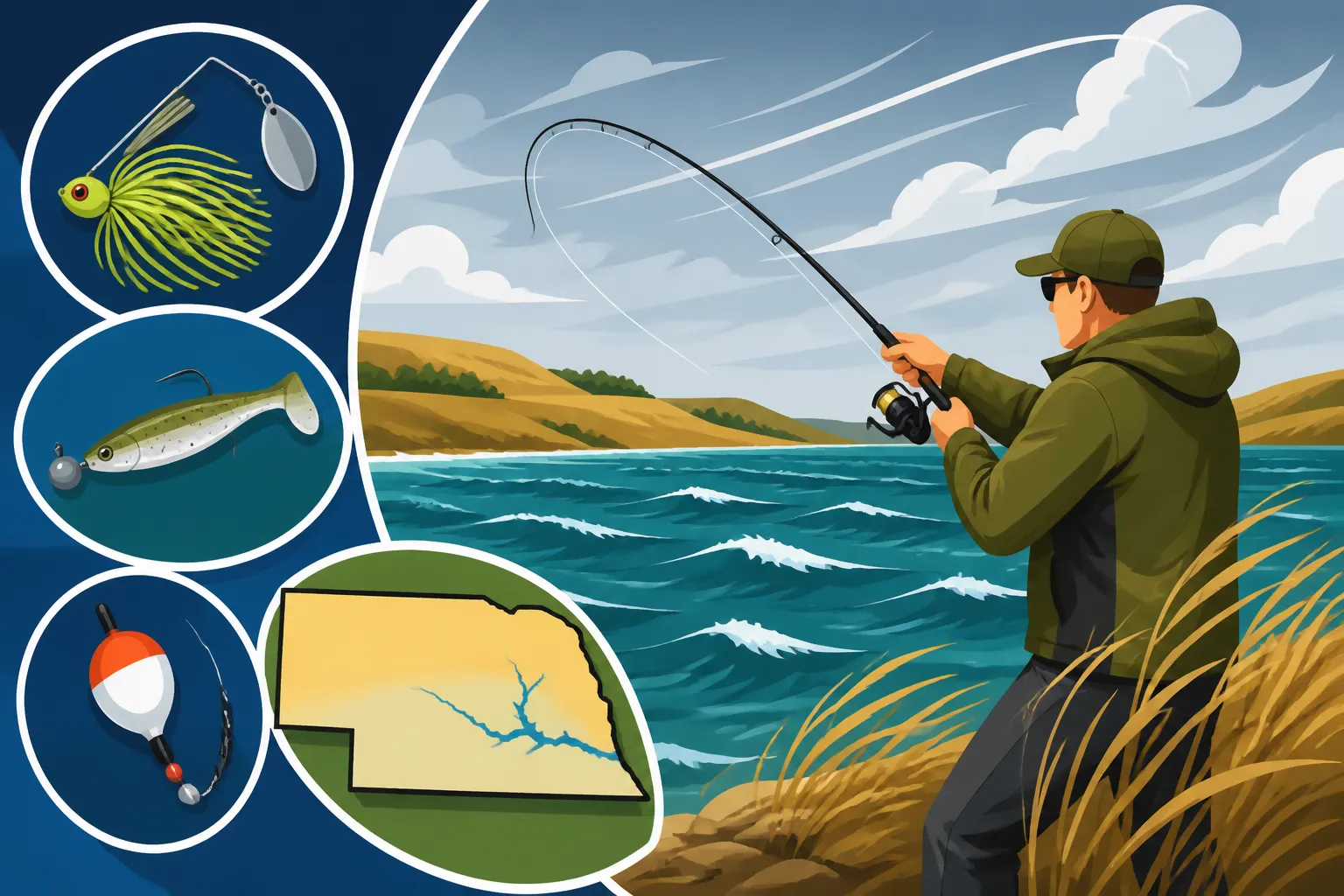
- Jigs: Heavy jigs (1/2 oz to 1 oz or more) are fantastic for cutting through the wind and maintaining bottom contact. Tip them with plastic trailers or live bait like minnows or nightcrawlers.
- Bladed Baits: Blade baits or heavy lipless crankbaits sink quickly and vibrate intensely, making them great for attracting fish in turbulent water.
- Crankbaits: Choose deep-diving crankbaits that quickly get below the surface chop. Look for models with a tight wobble, as a wide wobble can be harder to control in strong currents.
- Bottom Bouncers/Carolina Rigs: These rigs are designed to keep your bait near the bottom and are less affected by wind and surface currents. They're excellent for targeting walleye and catfish.
- Live Bait Rigs: When all else fails, a simple live bait rig with enough weight to stay put is often irresistible. Minnows, worms, or cut bait on a bottom rig are hard for fish to pass up. For targeting species like walleye, check out Best Live Bait for Walleye at Lake McConaughy.
Essential Accessories for Angling in the Breeze
Beyond your core tackle, a few accessories can make a windy day much more tolerable and productive.
- Polarized Sunglasses: Wind often means glare on the water. Good polarized sunglasses are indispensable for reducing glare, allowing you to see through the chop and spot any subtle signs of fish activity or submerged structure.
- Fishing Gloves: Handling cold, wet line in windy conditions can be tough on your hands. Light fishing gloves can offer grip and protection.
- Heavy-Duty Rod Holders: If you're bank fishing or still fishing from a boat, sturdy rod holders can prevent your rod from being pulled into the water by a strong gust or a hard-striking fish.
- Drift Socks/Sea Anchors: As mentioned, these are vital for boat control. Having a few different sizes available can help you adapt to varying wind strengths.
- Net with a Long Handle: Landing a fish in choppy water can be tricky. A long-handled net, easily found on Amazon or local tackle shops, gives you the extra reach and control needed to secure your catch. Consider a Best Landing Nets for Big Fish to handle those larger catches.
Safety and Comfort: Staying Prepared for Nebraska's Blustery Conditions
Fishing in windy weather isn't just about technique and gear; it's also about ensuring your safety and staying comfortable enough to enjoy the experience. Nebraska weather can change quickly, and wind can amplify any discomfort.
Prioritizing Boating Safety in High Winds
Safety should always be your number one concern, especially when the wind kicks up. Strong winds can quickly turn calm waters into dangerous whitecaps, particularly on large bodies of water like Lake McConaughy or Lewis and Clark Lake. Always check the weather forecast before heading out, and if high winds are predicted, consider postponing your trip or opting for a more sheltered location.
If you do find yourself on the water when the wind picks up, ensure all passengers are wearing properly fitted life jackets. The state of Nebraska has specific Nebraska Boat Safety Equipment Requirements that you should always adhere to. Avoid running across open water at high speeds in rough conditions; slow down and navigate carefully. Be mindful of your boat's capacity and stability. If conditions become too severe, don't hesitate to head for shore or find a sheltered cove. No fish is worth risking your life over.
Dressing for Success and Staying Comfortable
Wind has a way of cutting right through you, even on a warm day. Layering is key. Start with a moisture-wicking base layer, add insulating layers, and top it off with a windproof and waterproof outer shell. A good quality windbreaker or rain jacket will be your best friend. Don't forget a warm hat and gloves, even if it doesn't feel particularly cold when you leave the house.
Staying comfortable is crucial for maintaining focus and enjoyment. Hydrate regularly, and bring plenty of snacks. Wind can be dehydrating and tiring. Applying a good, broad-spectrum sunscreen, especially one designed for water sports, will protect your skin from windburn and sun exposure. You can often find durable, high-SPF options from reputable brands on Amazon. Having a Best Sunscreen for a Full Day on the Water is a must for any extended trip.
Finding Sheltered Spots and Reading the Water
One of the smartest strategies on a very windy day is to simply find areas that are naturally sheltered from the wind. Look for leeward sides of islands, deep coves, river bends, or areas below bluffs and tree lines. These spots will often have calmer water, making casting easier and allowing fish to move more freely.
Even in sheltered areas, learn to read the water. Look for current lines, eddies, or subtle changes in water color that indicate where baitfish might be congregating or where current is moving food. Pay attention to how the wind is interacting with different features. Sometimes, a short move to a different side of a point or a slightly different depth can put you right on top of the fish. Don't be afraid to experiment with different depths and retrieve speeds until you find what the fish are responding to. Just remember to adapt and keep a positive attitude – sometimes, the toughest conditions lead to the most rewarding catches! How to Plan a Nebraska Fishing Trip Around Weather covers more general planning, but these windy day specifics are crucial.
Disclaimer
This article is for general informational purposes only and does not constitute professional advice. Laws, prices and regulations vary by location and change over time. Consult a qualified professional for guidance on your specific situation.