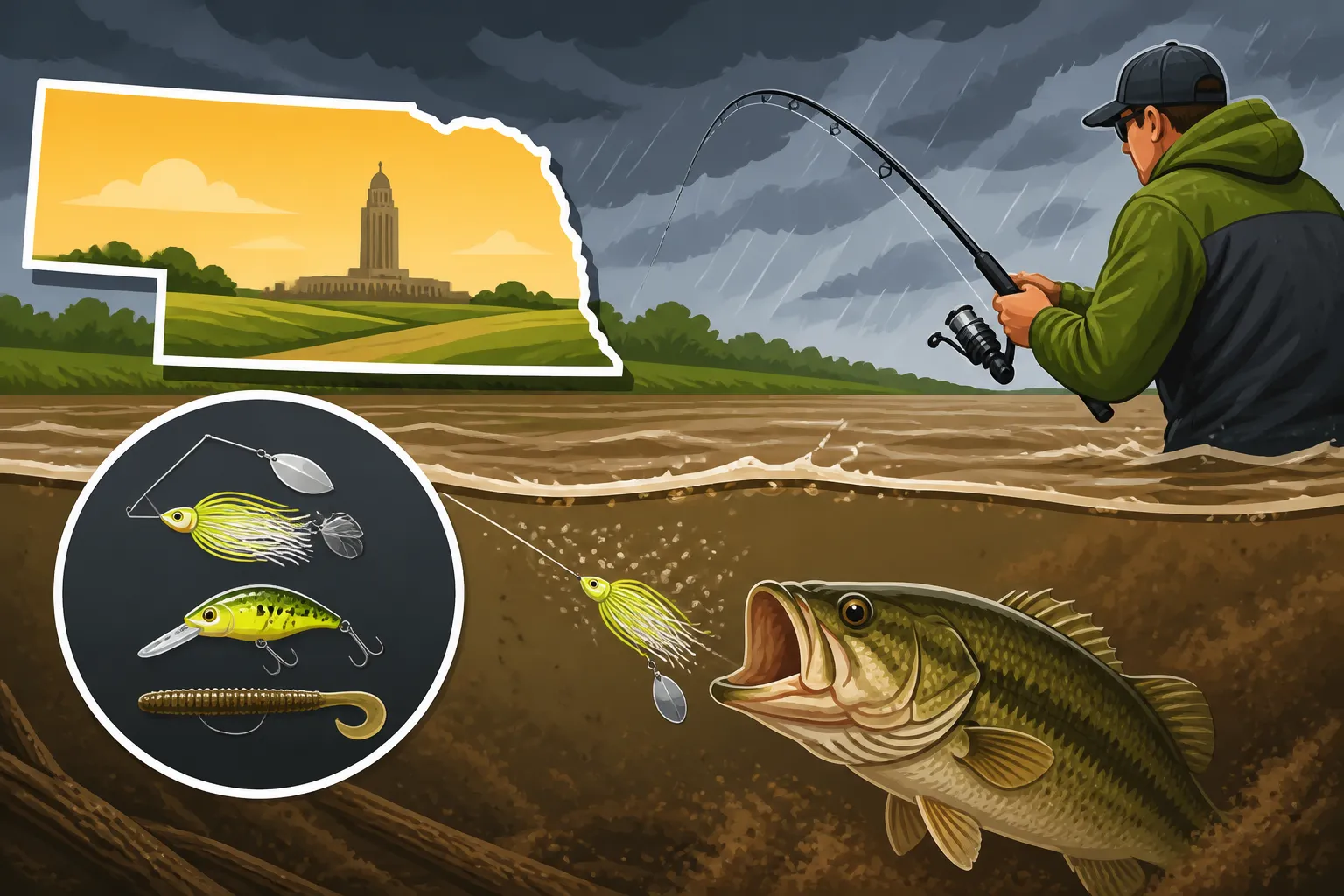
How to Fish Muddy Water After Heavy Rain
Oh, the classic post-rain dilemma! You wake up after a good downpour, eager to hit your favorite Nebraska fishing spot, only to find the water resembling a cup of chocolate milk. It's enough to make any angler sigh and think about packing it in for the day. But don't give up hope just yet! Fishing muddy water after heavy rain isn't just possible; it can actually be incredibly productive if you know how to adjust your approach. This guide is all about equipping you with the right strategies, gear, and mindset to turn those murky challenges into memorable catches.
Understanding Muddy Water: Why It Changes the Game
When heavy rains hit, they don't just dump water; they often wash a significant amount of sediment, dirt, and debris from the surrounding land into our lakes, rivers, and reservoirs. This sudden influx of suspended particles drastically reduces water clarity, creating what we affectionately (or sometimes not so affectionately) call "muddy water." But it's more than just a visual change; it alters the entire aquatic environment, and consequently, fish behavior.
The Science Behind the Murk
The immediate impact of muddy water is, of course, reduced visibility. This is a huge factor for sight-feeding fish like walleye and bass, who rely on their keen eyesight to ambush prey. When they can't see, they can't hunt effectively, or at least not in their usual manner. But there's more to it. Turbidity can also affect water temperature, as murky water tends to absorb more sunlight, leading to slight temperature increases in shallow areas. This might sound minor, but even a small shift can influence fish activity.
Another critical, though often overlooked, aspect is oxygen levels. Heavy runoff can carry organic materials into the water, and as these decompose, they consume dissolved oxygen. While not always a dramatic drop, a subtle change in oxygen can make certain areas less desirable for fish. Furthermore, the incoming freshwater from rain can create distinct current breaks and temperature gradients, which fish will absolutely notice and often use to their advantage. Understanding these underlying changes is the first step in formulating a successful strategy.
How Fish React to Turbidity
Fish aren't just passive observers when their world turns murky; they react in various ways, and knowing these reactions is key to finding them. Some species, like channel catfish, absolutely thrive in cloudy water. They're primarily scent-feeders anyway, so reduced visibility barely impacts their ability to find a meal. In fact, the lower light conditions often make them bolder and more active during the day.
Other species, especially those that rely heavily on sight, will either move to clearer water pockets (if available) or adjust their feeding tactics. Walleye, for instance, might move shallower, especially towards the surface, where light penetration is still best, or they might hug cover and structure, ambushing prey that gets too close. Bass might retreat to dense cover or areas with slightly clearer water, or they might become more attuned to vibrations and scent. Predator fish often use the reduced visibility to their advantage, becoming less wary and more willing to strike lures they might ignore in clear conditions. It’s all about adapting to their new normal, and we, as anglers, need to adapt right along with them.
Gear and Bait Choices for Low Visibility Conditions
Fishing muddy water isn't about throwing the same old stuff harder; it's about making deliberate choices in your tackle to compensate for the lack of visibility. Your goal is to appeal to the fish's other senses: their lateral line (which detects vibrations), their olfactory senses (smell), and in some cases, their ability to pick up on distinct color contrasts.
Lures and Baits That Stand Out
When fish can't see well, you need baits that practically scream "I'm here!" This means focusing on vibration, scent, and high-contrast colors.
- Vibration: Anything that displaces a lot of water is your friend. Crankbaits with wide wobbles, chatterbaits, spinnerbaits with large thumping blades, and even soft plastics with big paddle tails all create distinct vibrations that fish can feel with their lateral line. Imagine trying to find something in the dark—you'd rely on touch and sound. Fish do the same. Look for lures that really send out those sonic waves. You might even find some excellent vibrating jigs and crankbaits on Amazon that are specifically designed for these conditions.
- Scent: This is where natural baits and heavily scented artificials shine. Catfish, in particular, will follow a scent trail from a mile away. Think cut bait, chicken liver, or shrimp for catfish. For other species, consider adding scent attractants to your soft plastics or jigs. Many anglers swear by garlic or anise-flavored attractants. If you're wondering How to Catch Catfish in Nebraska, strong scent is almost always a part of the equation, especially in murky water.
- Color: While fish can't see colors as clearly in muddy water, they can still perceive contrast. Bright, fluorescent colors like chartreuse, orange, and neon green tend to show up better. Dark colors like black or junebug can also create a strong silhouette against the slightly lighter murky water, making them visible. Avoid natural, subtle colors that blend in too much. Sometimes, a combination of bright and dark, like a black and chartreuse jig, can be incredibly effective.
For Best Bait for Nebraska Catfish, you'll almost always lean into strong smells, and muddy water makes that even more critical. Similarly, for Best Lures for Nebraska Bass in these conditions, opt for those with maximum vibration and visual pop.
Rods, Reels, and Line for Muddy Water
Your tackle setup might need a slight adjustment for muddy water, focusing on sensitivity and strength.
- Rods: While heavy rods aren't always necessary, a rod with a sensitive tip but good backbone is ideal. The sensitive tip helps detect subtle bites that might not be visual in the murky water, as fish often "thump" or just lightly mouth the bait. A medium-heavy to heavy power rod can be beneficial when fishing with heavier vibrating lures or when you might need to pull a fish out of heavy cover, which is often where they'll hide in these conditions. Consider a longer rod for better castability, especially if you're trying to reach specific current seams or cover from shore. For specific needs, check out Best Rod Setup for Nebraska Catfish for some excellent heavy-duty options.
- Reels: A reliable reel with a smooth drag is always important, but particularly when you're relying more on feel than sight. You want to be able to smoothly fight a fish that might surprise you. Baitcasting reels are great for precision casting heavy lures, while spinning reels offer versatility for lighter presentations.
- Line: Braided line really shines in muddy water. Its lack of stretch provides incredible sensitivity, allowing you to feel every bump, tic, and subtle bite even when you can't see what's happening. Plus, its strength-to-diameter ratio means you can often use a slightly lighter line for more stealth, or heavier line for pulling fish out of snags without fear of breaking. If you're concerned about fish seeing the line, a short fluorocarbon leader (12-24 inches) can be added, as fluorocarbon is nearly invisible underwater. For a comprehensive look at what to arm yourself with, check out our guide on Best Fishing Gear for Nebraska Anglers.
Strategic Approaches: Where and How to Find Fish
Knowing what gear to use is only half the battle; you also need to know where to present it and how to work your lures. Muddy water changes fish distribution and their willingness to chase, so your strategy needs to shift from clear-water tactics.
Targeting Specific Structures and Depths
Fish don't just disappear when the water gets muddy; they relocate. Your mission is to predict those relocations.
- Current Breaks: Heavy rains often mean increased current, especially in rivers and reservoir inflows. Fish will seek out current breaks where they can expend less energy. Think about eddies, behind submerged trees, large rocks, bridge pilings, or even subtle changes in bottom contour. These areas offer a reprieve from the flow and often concentrate baitfish, making them prime ambush points. If you're fishing the Platte River, understanding How to Fish Fast Current on the Platte River becomes paramount.
- Shallow Water: Surprisingly, after heavy rain, fish often move shallower. The incoming runoff can be slightly warmer and carry new food sources. In very turbid water, light penetration is best near the surface, and baitfish might also be pushed shallow by current. Don't be afraid to target depths of 1-5 feet, even for species you typically catch deeper.
- Edges and Transitional Zones: Look for the edges of the muddy water. Sometimes, there's a distinct line where the murky runoff meets clearer water. Fish will often stage right along this seam, able to dart into the murk for food or retreat to clearer water. Also, consider the edges of vegetation, flooded timber, or even riprap shorelines. These areas offer cover, structure, and a potential buffet of dislodged insects and worms washed in by the rain.
- Inflow Areas: The areas where feeder creeks or culverts dump into a larger body of water are often fish magnets. The incoming water brings new food, oxygen, and potentially slightly different temperatures, all of which attract baitfish and subsequently, the predators. However, be mindful of overly strong currents that might push fish out of the area; look for the slack water nearby.
Slow and Steady Wins the Race
When visibility is low, fish have less time to react to a fast-moving bait. Therefore, slowing down your presentation is often the most effective strategy.
- Slow Retrieves: Work your crankbaits, spinnerbaits, and soft plastics at a slower pace than usual. This gives fish more time to locate the bait by scent and vibration, and more time to decide to strike. A "slow roll" with a spinnerbait, just fast enough to get the blades turning, can be incredibly deadly.
- Pauses and Jerks: Incorporate pauses into your retrieve, especially with jigs and soft plastics. Many strikes occur on the fall or during the pause as the bait settles. A subtle twitch or jerk can send out a puff of mud, attracting attention, or make the bait look like struggling prey.
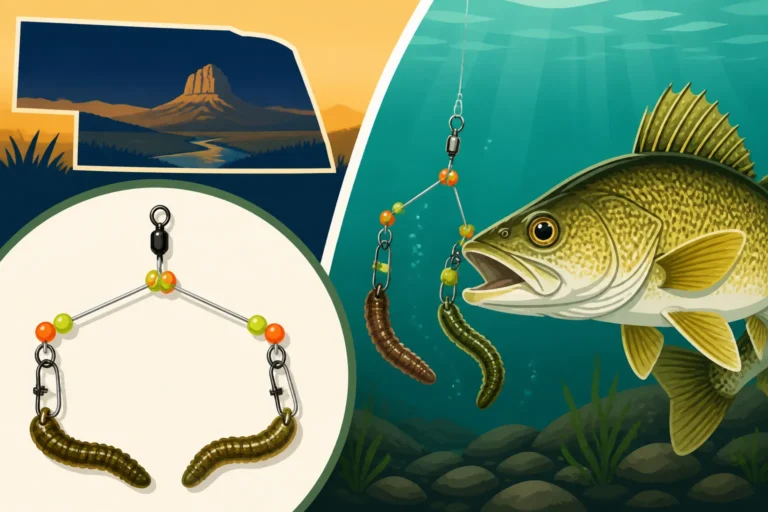
- Bottom Bouncing: Many species, particularly catfish and walleye, will hug the bottom in muddy water. Employ tactics that keep your bait in the strike zone, like bouncing jigs, dragging soft plastics, or using a Carolina rig with live bait. For How to Fish for Walleye in Nebraska in these conditions, keeping your presentation slow and near the bottom, often with scent added, can be a game-changer.
- Heavy Tackle & Strong Hooks: Given the potentially strong currents and the need to pull fish from heavy cover, don't shy away from slightly heavier lines and stronger hooks. A quick hookset with a stout rod can prevent a fish from burying itself in a snag.
Remember, the goal isn't to blast through the water; it's to create an irresistible, easy target for fish that are working harder to find their next meal.
Species-Specific Tips for Nebraska's Muddy Waters
While the general principles apply, understanding how different fish species commonly found in Nebraska react to muddy water can further refine your approach. Each species has its own strengths and weaknesses when it comes to low visibility.
Catfish in the Chocolate Milk
If there's one fish that truly shines in muddy water, it's the humble catfish. Whether you're after channel cats or flatheads, these whiskered wonders thrive when visibility plummets. They rely almost entirely on their incredible sense of smell and touch (via those barbels) to locate food.
- Location: Catfish will often move into shallower areas, especially near inflows where worms and other terrestrial edibles are washing in. Look for submerged logs, brush piles, and undercut banks. In rivers, they'll often be in slower current areas adjacent to the main flow.
- Bait: This is where strong scents come into play. Cut bait (shad, suckers, sunfish), chicken livers, shrimp, and commercial stink baits are all excellent choices. The stronger the smell, the better. You can find a vast array of these potent baits on Amazon or at your local tackle shop. Don't be afraid to chum a little with some old oats or corn if allowed by Nebraska Fishing Regulations Explained to draw them in.
- Presentation: A simple bottom rig, like a slip sinker rig, is often all you need. Cast it out, let it settle, and let the scent do the work. Remember, patience is key. Catfish might take their time to find your bait. If you're aiming for the Nebraska Channel Catfish Daily Limit, fishing after a good rain is often your best bet.
Walleye and Bass: Adapting to the Murk
While not as naturally adapted to muddy conditions as catfish, walleye and bass can still be caught effectively if you adjust. They're more visually oriented, but they can still be triggered by vibration, sound, and scent.
Walleye Strategies
Walleye are often nicknamed "low-light feeders," so muddy water, which mimics perpetual low light, can actually make them more aggressive during the day.
- Location: Look for walleye to move shallower, especially onto flats, points, and humps that are adjacent to deeper water. They might also tuck into current seams or behind cover. Focus on areas where baitfish might be pushed or concentrated. In a lake like Lake McConaughy, for instance, after a major rain, walleye might move closer to the shorelines near inflowing creeks.
- Lures: Vibrating crankbaits (like lipless crankbaits or deep-diving models with a wide wobble), spinnerbaits with large thumping blades, and jigs tipped with scented soft plastics or live minnows (if legal and available) are highly effective. Bright colors like chartreuse, orange, and firetiger patterns tend to get noticed.
- Presentation: A slow, methodical retrieve is crucial. "Slow rolling" a spinnerbait or dragging a jig-and-minnow along the bottom allows walleye more time to locate and strike. Don't be afraid to impart small jerks and pauses to your retrieve to trigger a reaction strike. Understanding the Nebraska Walleye Daily Bag Limit is always important, so make sure you're aware of the specific regulations for the body of water you're fishing.
Largemouth and Smallmouth Bass Tactics
Bass also adapt by relying more on their lateral line and ambush instincts in muddy water.
- Location: Bass will often hold tight to heavy cover—submerged brush, flooded timber, rock piles, or dense vegetation. They'll use this cover as an ambush point, darting out to grab anything that passes too close. Focus on the darkest, thickest cover you can find in shallower water.
- Lures: Power fishing techniques often excel. Chatterbaits, spinnerbaits (with Colorado or Indiana blades for maximum thump), squarebill crankbaits that deflect off cover, and heavily weighted jigs with bulky trailers are excellent choices. Again, bright or dark, high-contrast colors are best. Black and blue, junebug, or chartreuse are consistent performers. Soft plastics with scent, like a Texas-rigged worm or creature bait, also work well when fished slowly through cover. You can find a huge selection of these specific baits and lures on Amazon.
- Presentation: Pitching and flipping your baits into heavy cover and working them slowly and deliberately is key. Allow jigs and soft plastics to sit on the bottom for extended periods, then give them a subtle twitch. With crankbaits, retrieve them just fast enough to make them wobble and deflect off cover, creating erratic movements.
By understanding the distinct preferences and behaviors of these fish in muddy conditions, you can tailor your approach for a much higher chance of success. It might feel counterintuitive at first, but embracing the mud can lead to some of your most rewarding fishing days in Nebraska.
| Bait/Lure Type | Primary Attraction | Best for Muddy Water? | Species Focus | Notes |
|---|---|---|---|---|
| Scented Live Bait | Scent, Natural Movement | Excellent | Catfish, Walleye, Bass | Worms, minnows, cut bait. Freshness and strong scent are key. |
| Stink Baits | Intense Scent | Excellent | Catfish | Chicken liver, commercial dough baits. |
| Spinnerbaits | Vibration, Flash, Color | Excellent | Bass, Walleye, Pike | Large Colorado/Indiana blades for maximum thump. Bright skirts. |
| Chatterbaits | Vibration, Flash, Profile | Excellent | Bass, Walleye, Pike | Erratic action and vibration. Bright or dark colors. |
| Crankbaits | Vibration, Profile, Color | Good | Bass, Walleye, Wiper | Wide-wobbling, rattle-filled models. Squarebills for cover. |
| Jigs (w/ trailers) | Vibration, Scent (w/additions) | Good | Bass, Walleye, Crappie, Catfish | Bulky trailers (paddle tails, grub bodies). Add scent. Slow presentation. |
| Soft Plastics | Scent (w/additions), Profile | Good | Bass, Walleye | Ribbed worms, creature baits, paddle-tail grubs. Add strong scent. |
Disclaimer
This article is for general informational purposes only and does not constitute professional advice. Laws, prices and regulations vary by location and change over time. Consult a qualified professional for guidance on your specific situation.