How to Fish Fast Current on the Platte River
Trying to fish the Platte River when the current is really ripping can be incredibly frustrating, can't it? Your bait washes downstream too fast, your line bows out, and it feels like you’re just throwing lures into a watery washing machine with no hope of a bite. This guide is here to cut through that frustration, offering practical, in-depth strategies and gear recommendations specifically designed to help you successfully target fish in the Platte's swift and challenging currents.
Understanding the Platte River's Unique Challenges
The Platte River isn't just any river; it's a dynamic system with characteristics that make fishing its fast currents a distinct adventure. Many anglers, even seasoned ones, find themselves baffled by how quickly conditions can change and how challenging it can be to present a bait effectively. But once you understand what you're up against, you can start to develop a winning strategy.
Water Dynamics and Bottom Structure
The Platte River is famous, or perhaps infamous, for its braided nature, shallow stretches, and ever-shifting sand and gravel bottom. Unlike some rock-bottomed rivers with predictable structure, the Platte is constantly sculpting its own landscape. A deep scour hole you fished last year might be filled with sand now, and a new channel could have formed overnight. This constant change means you can't rely solely on old spots; you have to learn to read the water in real-time.
When the current is running fast, it often means higher water levels or recent rains have energized the system. This swift flow can scour out deeper holes on the outside bends of channels, create substantial sand dunes and troughs on the bottom, and pile up debris like submerged logs and branches. These features are critical for fish, as they offer respite from the current, ambush points, and cover. Learning to spot subtle differences in water surface patterns – swirling eddies, slick spots, or areas where the current seems to slow – can clue you into what's happening underneath. Fishing a stretch where the main current is raging often means looking for those slight breaks or depressions where a fish can sit comfortably out of the main flow, conserving energy while waiting for food to drift by.
Seasonal Flow Changes and Their Impact
The Platte River's flow is heavily influenced by snowmelt from the Rockies and agricultural demands, leading to significant seasonal variations. Spring runoff can turn the river into a powerful, muddy torrent, while late summer might see sections reduced to a trickle. High, fast water in spring and early summer often brings excellent opportunities, especially for species like channel catfish and flathead catfish, but it also presents the most significant challenges for presentation. The increased volume and speed of the water mean fish often pull out of the main channel and seek refuge in slower side channels, deeper pools, or behind larger obstacles like wing dams or fallen trees.
Understanding these flow changes is paramount. Before heading out, always check the river gauges for your target section. Resources like the USGS National Water Information System can provide real-time data on discharge rates and gauge height. If the river is rising rapidly or flowing exceptionally high, you might adjust your expectations for specific spots or even consider waiting for conditions to stabilize. Conversely, a moderate, steady flow after a period of high water can be fantastic, as fish are often very active, having been displaced or stimulated by the fresh inflow. These seasonal changes dictate not only where fish are but also what techniques will be most effective. You might find more insight on this in our guide on How High Water Affects River Fishing in Nebraska.
Essential Gear for Tackling Fast Currents
Fishing fast current is a game of specific gear. If you show up with your standard still-water setup, you're going to have a bad time. The Platte River’s swift flows demand robust rods, reels, and lines, as well as specialized lures and bait that can get down to the fish and stay there. Don't underestimate the importance of your wading gear either; safety and stability are key when the water is pushing hard against you.
Rods, Reels, and Line for High-Velocity Water
When the current is strong, your rod and reel need to be able to handle both the pressure of the water on your line and the potential for a powerful fish fighting in that same current. For rods, think medium-heavy to heavy power with a fast action. A rod in the 7 to 8-foot range is often ideal. This length provides the leverage needed to cast heavier weights and manage long drifts, while the backbone helps you control a fighting fish against the current. A fast action tip allows for sensitive bite detection, even when your line is stretched taut by the flow. You want a rod that can absorb the shock of a big head shake but still have the power to turn a fish. For serious catfish anglers, a dedicated heavy-duty rod is non-negotiable. You can read more about selecting the right stick in our article on Best Rod Setup for Nebraska Catfish.
For reels, durability is the name of the game. A baitcasting reel is often preferred for its superior winching power and ability to handle heavier lines and weights. Look for a model with a robust drag system and a strong gear ratio. Spinning reels can also work, especially for lighter presentations, but ensure it's a high-quality model designed for heavy use, not a budget panfish reel. Spool capacity is also important; you'll need enough line for long casts and potential runs from powerful fish.
Line selection is perhaps the most critical component. Braided line is almost a must-have for fast current fishing. Its low stretch means incredible sensitivity, allowing you to feel subtle bites even through the pull of the current. More importantly, its thinner diameter for its breaking strength means less surface area for the current to push against, reducing line bow and helping your weight sink faster and stay down. Use 30-65 lb test braid, depending on your target species and the river's snagginess. For a leader, 20-40 lb fluorocarbon or monofilament about 18-36 inches long offers abrasion resistance against rocks and logs, and its invisibility in water can be an advantage. You can find excellent quality braided lines and fluorocarbon leaders on Amazon, ensuring you have the right tools to cut through the current effectively. For more on this, check out our guide on Best Braided Line for Catfish Fishing.
Lure and Bait Selection for Moving Water
In fast current, getting your offering into the strike zone and keeping it there is the biggest challenge. This means your lure and bait choices, along with how you rig them, are crucial. Heavy-duty weights are your best friend. Flat, coin-shaped sinkers, pyramid sinkers, or bell sinkers ranging from 1 ounce up to 6 ounces (or even more in extreme conditions) will be necessary to anchor your bait. You'll literally be battling the current with lead.
For baits, natural offerings that are scent-heavy and durable are ideal. Cut bait, like shad, carp, or even commercially prepared frozen baits, works wonders for catfish. It releases a strong scent trail that fish can follow even in turbid, fast-moving water. Worms, especially large nightcrawlers or chunked garden worms, can also be effective, but they tend to get picked apart faster. For those targeting flatheads, live bluegills or suckers are unparalleled, but require careful rigging to keep them alive and swimming naturally without being swept away.
When it comes to lures, think robust and vibration-heavy. Deep-diving crankbaits with strong lip designs can be effective for species like walleye or larger bass that might hold in current breaks. Spinnerbaits with heavy Colorado blades can also generate enough thump to attract attention in stained, fast water. Jigs, especially heavier ones (1/2 oz to 1 oz+) tipped with soft plastics or live bait, can be vertically jigged in deeper holes or slowly dragged along the bottom. The key with any lure is to select one that can get down quickly and maintain its depth without being instantly swept into an undesirable zone. Sometimes, buying a variety of these heavier lures and sinkers from Amazon can save you time and ensure you have what you need for changing river conditions.
Wading Gear and Footwear Considerations
When fishing the Platte River, especially its faster sections, you'll often find the best spots are only accessible by wading. This means your wading gear isn't just about staying dry; it's about safety and stability. A good pair of chest waders made from durable, breathable material is essential. Neoprene waders are great for colder water, while breathable nylon or Gore-Tex waders are more comfortable in warmer weather. The durability is key because you'll be navigating rough, snaggy terrain.
More important than the waders themselves is your footwear. Studded or felt-soled wading boots provide superior grip on slippery rocks and gravel, which are abundant on the Platte's bottom. Trust me, losing your footing in swift current is no joke, and a good pair of boots can be the difference between a successful outing and a dangerous one. Many anglers even add wading staffs for extra stability, using them to probe the bottom ahead and maintain balance. A sturdy wading belt is also critical; in the event of a fall, it can help prevent your waders from filling completely with water, which can be extremely dangerous. Don't skimp on this aspect of your gear; your safety depends on it. For specific recommendations, check out our article on Best Waders for River Fishing in Nebraska.
Proven Techniques for Success in Swift Water
Successfully fishing fast current is less about brute force and more about finesse and understanding how fish behave in these conditions. It requires a keen eye for reading the water, precise casting, and a mastery of specific presentation methods that allow your bait or lure to reach the fish where they are holding.
Reading the Current and Finding Holding Lies
The first step to catching fish in fast water is learning to "read the river." Fish in strong currents are energy conservationists. They won't sit directly in the fastest flow unless they're actively feeding in a very specific, short burst. Instead, they'll find "holding lies" – spots where the current is significantly slower, but they still have easy access to the main current's food conveyor belt.
Look for several key indicators:
- Eddies and Current Seams: These are perhaps the most obvious. An eddy is a circular current that forms behind an obstruction (like a large rock, log, or bridge pillar) or where a faster current meets a slower one. Fish will often sit right on the "seam" where the fast water meets the slower, swirling water, darting out to grab passing food.
- Depth Changes: Deeper holes and channels often have slower bottom currents, providing refuge. The Platte often has scour holes on the outside bends of channels, where the fastest water has dug out a deeper area.
- Submerged Structure: Fallen trees, large rocks, bridge pilings, or wing dams create current breaks. Anything that disrupts the flow will create a calmer area immediately downstream where fish can hide.
- Inside Bends: While outside bends are scoured deeper, inside bends of a river tend to be shallower with slower current, often collecting slower-moving water and debris, which can attract baitfish and subsequently, predators.
- Confluence of Currents: Where two currents meet, or where a tributary joins the main river, creates turbulent but often food-rich zones. Fish will hold just out of the main turbulence.
Your goal is to cast upstream of these holding lies, allowing your bait to drift naturally into the strike zone. This takes practice, but once you start seeing the river as a series of current breaks and feeding lanes, your success rate will soar. Learning to identify these spots is a key part of becoming proficient at Platte River Catfish Fishing.
Effective Casting and Presentation Strategies
Casting accurately and presenting your bait naturally are paramount in fast water. A poorly placed cast will instantly be swept away from the target zone.
- Upstream Angle: The most common strategy is to cast upstream and slightly across the current, allowing your bait or lure to sink and drift naturally towards your target. The angle of your cast will depend on the speed of the current and how quickly your weight or lure sinks. In very fast water, you might need to cast almost directly upstream.
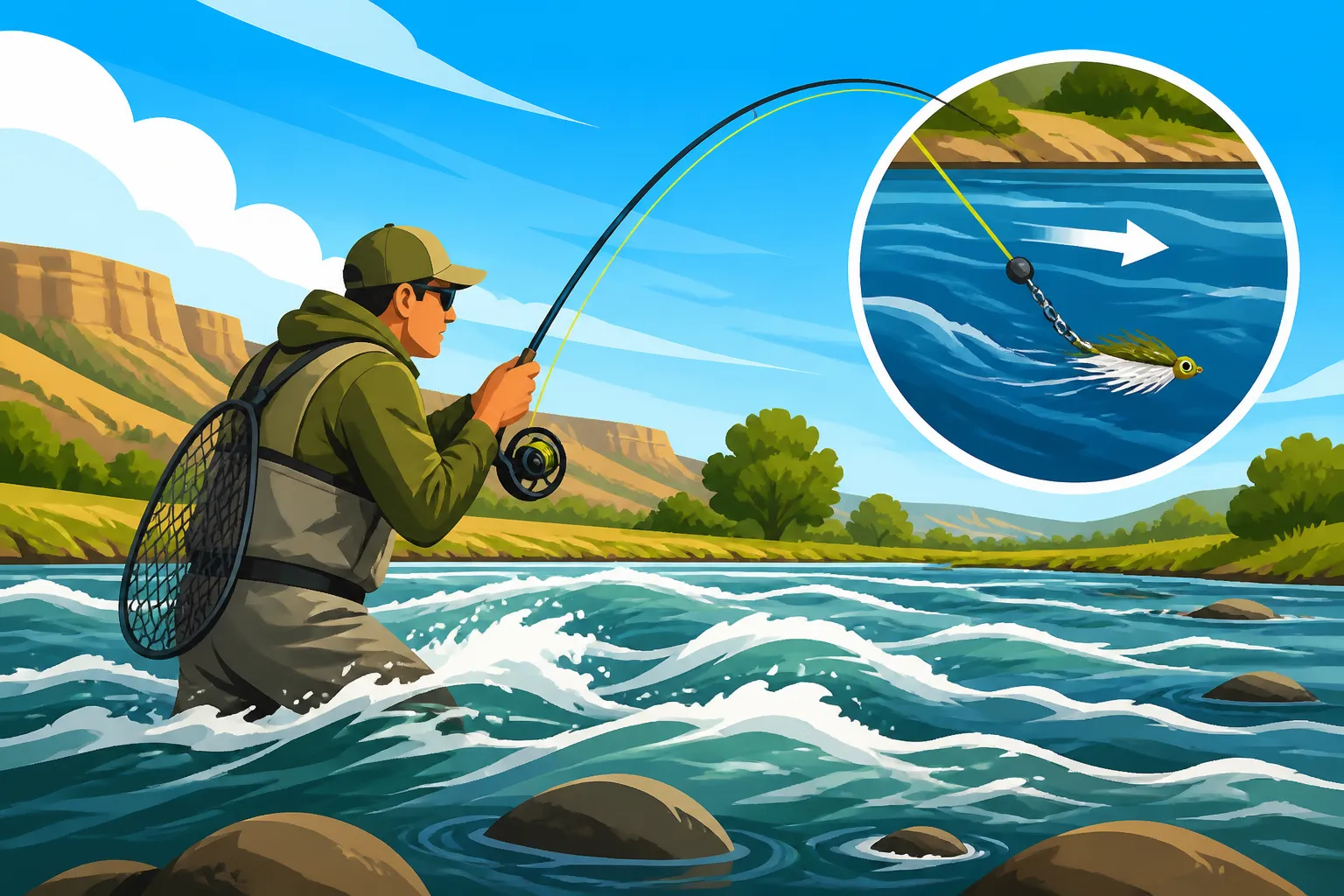
- Mending Your Line: As your line drifts downstream, the current will create a "belly" in it, pulling your bait faster than the bottom current and reducing sensitivity. To counteract this, "mend" your line. This involves quickly lifting your rod tip and throwing a loop of line upstream, essentially moving the belly of the line back above your bait. This reduces drag and keeps your bait in the strike zone longer. This is a technique that is often used when learning How to Fly Fish for Trout in Nebraska, but it applies well here too.
- Controlling the Drift: The goal is a natural, drag-free drift. Imagine your bait is a natural piece of food being carried by the current. You want your line to follow suit. Maintain just enough tension to feel what's happening but not so much that you're pulling your bait unnaturally. This often means slowly retrieving line as your bait drifts downstream, always keeping a slight bend in your rod tip. If you feel a snag, immediately release tension to allow your weight to roll over it, then gently apply tension again.
Mastering these casting and presentation techniques will allow you to explore more parts of the river. For anglers who prefer to wade, knowing Platte River Wading Access Points can help find spots where these techniques can be practiced safely.
Drift Fishing and Bottom Bouncing Methods
When fishing the Platte's fast currents, two techniques stand out for their effectiveness: drift fishing and bottom bouncing.
Drift Fishing is all about letting the current do the work. You cast upstream of a likely holding lie with a weighted bait and allow it to drift downstream naturally. The key is to use just enough weight to keep your bait near the bottom without constantly snagging. You want it to occasionally tick the bottom, indicating it's in the strike zone. As the bait drifts, you'll be mending your line and maintaining light contact. Bites in this scenario can be subtle—just a slight pause in the drift, a gentle tap, or sudden added weight. It requires constant attention and a feel for the bottom. This method is exceptionally good for covering water and presenting your bait to fish that are spread out. For catfish, especially, a drift with cut bait can be deadly. If you're looking for Platte River Flathead Catfish Hotspots, drifting a live baitfish near structure can be very effective.
Bottom Bouncing is a more active presentation, often used to cover specific areas more thoroughly or to keep your bait in a tighter zone. This involves using a heavier weight (like a three-way swivel rig with a dropper weight or a specialized bottom bouncer) that is designed to "bounce" or drag along the riverbed. You cast upstream and slightly across, and then use a slow retrieve, allowing the weight to make intermittent contact with the bottom. This method is excellent for maintaining a consistent depth and keeping your bait in the feeding zone for longer. It's particularly effective for targeting walleye or catfish that are hugging the bottom in current. The constant contact with the bottom also generates a small amount of disturbance, which can attract fish in murky water. Both drift fishing and bottom bouncing are prime examples of how understanding current dynamics can lead to increased success, particularly when paired with the right gear purchased from a reliable source like Amazon.
| Technique | Target Species | Ideal Current Speed | Weight Needed | Key Feature/Benefit |
|---|---|---|---|---|
| Drift Fishing | Catfish, Walleye | Moderate to Fast | 1-4 oz | Natural presentation, covers water, excellent for scent baits |
| Bottom Bouncing | Walleye, Catfish | Moderate to Fast | 2-6 oz | Maintains depth, good for specific structure, active retrieve |
| Anchored Bait | Catfish, Drum | Slow to Moderate | 3-8 oz | Stationary presentation, targets known holes, less active |
Safety First: Navigating the Platte River's Currents
Fishing fast current, especially in a river as unpredictable as the Platte, always requires a strong emphasis on safety. The river's beauty can quickly become dangerous if you're not prepared or underestimate its power. Your well-being should always be your top priority.
Personal Safety Equipment
Never, ever wade into fast-moving water without the proper safety equipment. This isn't just about adhering to regulations; it's about protecting yourself.
- Personal Flotation Device (PFD): A PFD is non-negotiable. Even if you're an excellent swimmer, the force of fast current, combined with slippery footing and potential submerged obstacles, can quickly overwhelm you. A PFD will keep you afloat and visible if you lose your footing. You can find comfortable and practical fishing PFDs on Amazon that allow for a full range of motion.
- Wading Staff: As mentioned earlier, a sturdy wading staff is incredibly useful for maintaining balance and probing the bottom ahead of you. It acts as a third point of contact and can help you avoid unexpected drop-offs or soft spots.
- Appropriate Footwear: We can't stress this enough. Wading boots with good ankle support and felt or studded soles are critical for grip. Standard hiking boots, even waterproof ones, are rarely adequate for the slick, uneven bottom of a river.
- First-Aid Kit: Always carry a small, waterproof first-aid kit. Minor cuts, scrapes, or punctures from hooks are common, and having supplies on hand for immediate treatment is important.
- Communication Device: A fully charged cell phone in a waterproof case is essential. Ensure someone knows where you are fishing and when you expect to return. In remote areas, consider carrying a satellite communication device.
Remember, the Platte River can be incredibly dynamic. What looks like a calm stretch from the bank might have powerful undertows or sudden drop-offs. If in doubt, stay out. It's always better to err on the side of caution. For more information on staying safe, review How to Wade Fish the Platte River Safely.
Weather and Water Level Awareness
The Platte River's conditions can change rapidly, and being aware of the weather forecast and current water levels is crucial for a safe and enjoyable trip.
- Check the Forecast: Always check the weather forecast before you go. Strong winds can make casting difficult and create dangerous chop on wider sections. Thunderstorms bring lightning and can rapidly increase water levels upstream, leading to flash floods downstream. Even a distant rain shower can significantly impact river flow. If you hear thunder or see lightning, get off the water immediately.
- Monitor Water Levels and Flow Rates: Utilize online resources like the USGS National Water Information System or the Nebraska Game and Parks Commission website to check real-time river gauge readings. Pay attention to both the gauge height (how deep the water is) and the discharge rate (how much water is flowing). A rapidly rising gauge or significantly increased discharge rate can indicate dangerous conditions, especially if it's accompanied by increased turbidity (muddy water). These conditions can also impact Nebraska Fishing Season Dates and Limits for certain species or areas.
- Know Your Limits: Never attempt to wade across currents that are stronger than you can comfortably manage. A good rule of thumb is if the water is above your knees and the current is strong, it might be too dangerous. If the water is muddy, it's even harder to see obstacles or depth changes. Be mindful of your physical fitness and skill level.
Being prepared with information about Nebraska Fishing Regulations Explained and understanding the river's dynamic nature will not only enhance your safety but also increase your chances of a successful and enjoyable day on the water.
Disclaimer
Fishing in fast-moving currents carries inherent risks. This guide provides general information and recommendations. Always exercise caution, adhere to all local fishing regulations, and prioritize your personal safety. River conditions can change rapidly, and it is your responsibility to assess the safety of any situation before wading or fishing.