Best Pliers for Removing Hooks
We've all been there: you've landed a beautiful walleye or a feisty channel cat on one of Nebraska's fantastic lakes or rivers, and the hook is set deep. Fumbling with inadequate tools not only risks injury to yourself but can also severely harm the fish you might want to release. This guide is dedicated to helping you choose the best pliers for safely and efficiently removing hooks, ensuring better outcomes for both you and your catch across Nebraska's diverse fishing waters.
Why Good Fishing Pliers Are Non-Negotiable for Nebraska Anglers
Fishing in Nebraska means encountering a wide variety of species, from the sharp-toothed northern pike in Merritt Reservoir to the powerful jaws of a flathead catfish in the Platte River. Each presents its own challenges when it comes to hook removal, and having the right tool isn't just a convenience; it's a necessity for ethical angling and personal safety.
The Frustration of Improper Hook Removal
Imagine reeling in a prize-winning largemouth bass from Branched Oak Lake, only to find the hook buried deep in its throat. Without the proper pliers, you're faced with a frustrating dilemma. You might struggle to reach the hook, potentially tearing the fish's delicate tissues, increasing its stress, and ultimately reducing its chances of survival if you plan to release it. Many an angler has also experienced the painful prick of a hook through a finger trying to dislodge a stubborn treble from a thrashing fish. It ruins the moment, can lead to infection, and certainly puts a damper on an otherwise perfect day on the water. The wrong tools can turn a joyful catch into a stressful ordeal, making a simple act like hook removal into a complex problem.
Beyond the immediate pain, improper hook removal can have lasting consequences for the fish population. When a fish is unnecessarily injured, especially in sensitive areas like the gills or esophagus, it might not recover. For anglers who practice catch-and-release, this goes against the very principle of conservation. You want that fish to swim away strong and healthy, ready to be caught another day, perhaps even as a Nebraska State Record Largemouth Bass Weight contender. Good pliers minimize the time the fish is out of the water and reduce physical trauma, making catch-and-release a truly effective conservation strategy.
Protecting the Fish and Your Hands
The primary goal of any responsible angler, especially those committed to catch-and-release, is to ensure the fish's well-being. This is particularly crucial for species in Nebraska that have length or slot limits, meaning many fish must be returned to the water. A pair of well-designed fishing pliers allows for quick, precise extraction of hooks, minimizing handling time and physical stress on the fish. This is vital for fish like walleye, which can be sensitive to prolonged handling, or crappie, which have delicate mouths. You want to get that hook out clean and fast, allowing the fish to recover quickly and return to its habitat, whether that's the cool depths of Lake McConaughy or a brush pile in Pawnee Lake.
Moreover, let's be honest, fish don't always cooperate with hook removal. A flopping fish, especially one with sharp fins or gill plates (like a channel catfish), combined with a sharp hook, creates a recipe for injury. Northern pike, with their rows of needle-sharp teeth, are a prime example of why long-nose pliers are essential. Trying to reach into a pike's mouth with your bare hands is simply asking for trouble. Investing in quality pliers is an investment in your own safety, preventing painful punctures, cuts, and even more serious injuries that could cut short your fishing trip. Think of it as essential safety gear, right alongside your life jacket and first-aid kit.
Key Features to Look for in Fishing Pliers
Choosing the right pliers involves more than just picking up the first pair you see. There are specific features that distinguish a truly effective tool from a frustrating one, especially when you consider the unique conditions and fish species found across Nebraska.
Material and Durability for Nebraska Conditions
The material of your fishing pliers dictates their longevity and performance, particularly when exposed to water, mud, and varying temperatures, which are all common elements of Winter Fishing in Nebraska or a humid summer day on the Missouri River.
- Stainless Steel: This is a popular choice for its balance of strength and corrosion resistance. While "stainless" doesn't mean "stain-proof," good quality stainless steel pliers will hold up well against rust, especially if rinsed after use. They are generally heavier but offer robust construction.
- Aluminum: Lighter than stainless steel, aluminum pliers are fantastic for reducing fatigue during long days of fishing and for those who value a lightweight setup, perhaps for kayak fishing in Nebraska. They are highly resistant to corrosion but can be softer than steel, potentially showing wear faster if subjected to extreme abuse. Many high-end pliers use aircraft-grade aluminum for a blend of strength and lightness.
- Carbon Steel: These pliers are often very strong and durable, capable of handling tough jobs. However, they are highly susceptible to rust and corrosion if not meticulously maintained. If you opt for carbon steel, ensure it has a protective coating (like nickel plating or Teflon) and be diligent about drying and oiling them after every trip, especially after fishing saltwater-like conditions or after a heavy rain.
Here's a quick comparison of common plier materials:
| Feature | Stainless Steel | Aluminum | Carbon Steel |
|---|---|---|---|
| Weight | Moderate to Heavy | Lightweight | Heavy |
| Corrosion Resist. | Good (if good quality and maintained) | Excellent (anodized) | Poor (requires diligent maintenance) |
| Strength | Very Good | Good (can be softer than steel) | Excellent |
| Cost | Mid-range | Higher-end | Lower to Mid-range |
| Maintenance | Rinse and dry | Rinse and dry | Rinse, dry, oil (essential for longevity) |
| Best Use | General freshwater, good all-rounder | All-day use, saltwater, weight-conscious | Heavy-duty tasks, budget-friendly (with care) |
Jaw Design and Functionality
The jaws are the business end of your pliers, and their design directly impacts how effectively you can remove hooks.
- Jaw Length: You'll typically find standard-length jaws and long-nose jaws. Long-nose pliers are incredibly valuable for reaching hooks swallowed deep by fish like a Nebraska walleye or catfish. They allow you to get into tight spaces without putting your hands at risk. Shorter jaws are fine for hooks set right at the lip.
- Jaw Shape: Most fishing pliers have a tapered or needle-nose design. Some might have a slight bend at the tip (bent-nose pliers), which can be incredibly useful for getting a better angle on hooks in awkward positions. Think of trying to get a treble hook out of a flapping fish's mouth – that slight bend can make all the difference.
- Serrated vs. Smooth Jaws: Many pliers feature serrated jaws for a better grip on hooks, especially slippery ones. While serrations provide excellent grip, some anglers worry they might damage the hook or the fish's mouth if not used carefully. For most general-purpose hook removal, serrated jaws are highly effective. For delicate fly fishing or very small hooks, smoother jaws might be preferred, but these are less common for general angling.
- Spring-Loaded Action: Pliers with a spring-loaded mechanism are a game-changer. They stay open when not in use, making them much easier to operate one-handed. This is invaluable when you're trying to hold a fish with one hand and manipulate the pliers with the other. Once you try spring-loaded pliers, you'll wonder how you ever managed without them. Many brands, including some found at Bass Pro Shops, offer this convenient feature.
Ergonomics and Grip
When you're out on the water, whether you're battling a stiff breeze on Harlan County Reservoir or meticulously unhooking panfish from a small pond, comfort and control in your tools are paramount.
- Handle Material and Design: Look for handles that are comfortable to hold, even when wet. Textured rubber or non-slip synthetic grips provide excellent traction, ensuring the pliers don't slip from your grasp when your hands are covered in fish slime or it's raining. Ergonomically shaped handles fit better in your hand, reducing fatigue over time. You might be making dozens of hook removals in a day, especially during a hot bite, so a comfortable grip is essential.
- Size and Weight: While heavy-duty pliers can be powerful, they might become cumbersome. Conversely, overly light pliers might not feel substantial enough for tougher hooks. Find a balance that suits your hand size and the type of fishing you do most often. For anglers pursuing big catfish on the Platte River, a more robust pair might be preferred over something designed for delicate trout fishing in the Niobrara.
- Lanyard Compatibility: Many good fishing pliers come with a lanyard attachment point. A coiled lanyard can prevent your pliers from sinking to the bottom of Lake Ogallala if they slip out of your hand. This is a small but mighty feature that can save you from losing an essential tool.
Additional Features That Help (Cutters, Lanyards, Sheaths)
Beyond the core function of hook removal, many fishing pliers come equipped with extra features that enhance their utility on the water.
- Integrated Line Cutters: A sharp pair of line cutters is arguably the most common and useful additional feature. Different fishing lines (monofilament, fluorocarbon, braided) require different cutting capabilities. Look for carbide cutters or hardened steel cutters that can handle braided line cleanly, without fraying. Nothing is more annoying than trying to cut braid with dull pliers. This eliminates the need for a separate pair of scissors or nippers, streamlining your tackle.
- Crimping Sleeves: Some pliers include crimping sleeves near the pivot point, useful for securing lead weights, leaders, or even repairing a damaged split ring on a lure. While not an everyday use for all anglers, it can be a handy feature for those who tie their own rigs or perform quick repairs on the fly.
- Split Ring Openers: A small protrusion on the tip of one of the plier jaws can be designed to open split rings. This is invaluable for changing out hooks on lures or attaching new hardware without damaging your fingernails or struggling with a tiny flathead screwdriver. This is particularly helpful for Best Lures for Nebraska Bass or Best Lures for the White Bass Run in Nebraska where hook changes are common.
- Sheaths and Lanyards: As mentioned, a lanyard is a fantastic safeguard against losing your pliers overboard. A durable sheath, often made of nylon or hard plastic, protects the pliers from the elements when not in use and provides a safe way to carry them on your belt or tackle bag. This prevents the sharp points or cutters from snagging on clothing or other gear and keeps them readily accessible. When buying a pair from Amazon, check if it includes a quality sheath and lanyard.
Types of Pliers Best Suited for Nebraska's Diverse Fishing
Nebraska offers such a diverse fishing experience, from targeting panfish in small ponds to chasing trophy catfish in big rivers. This means a "one-size-fits-all" approach to fishing pliers isn't always the most effective. Understanding the different types available will help you match the tool to the task at hand.
Standard Fishing Pliers
These are your everyday workhorses, and often the first type of pliers an angler acquires. Standard fishing pliers typically feature a moderate jaw length, robust construction, and often include basic line cutters. They are incredibly versatile and perfectly suited for the majority of fishing scenarios you'll encounter in Nebraska.
For example, if you're spending a day with the family at Fremont Lakes State Recreation Area catching bluegill or small bass, a good pair of standard fishing pliers will handle 90% of your hook removal needs. They are excellent for hooks set in the lip of panfish or for smaller single hooks on lures. They're also great for simple tasks like crimping split shot or cutting monofilament line. Most anglers will find a standard pair of pliers invaluable for their general utility, making them a cornerstone of any basic tackle box. You can often find reliable, affordable options at local sporting goods stores or through online retailers.
Long-Nose Pliers
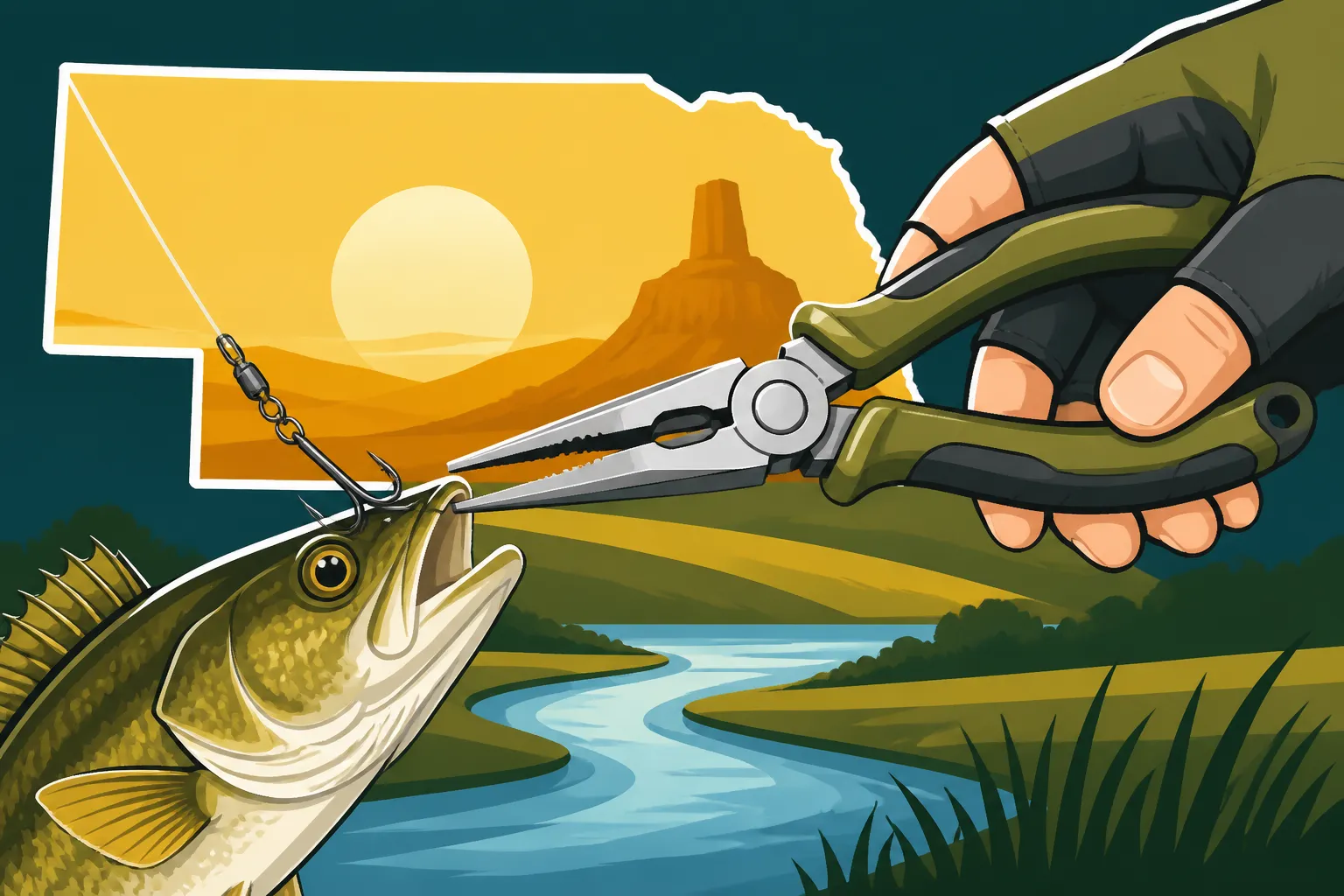
When the hooks are deep, or the fish has a mouthful of teeth, standard pliers just won't cut it. That's where long-nose pliers become absolutely indispensable. Their elongated jaws allow you to reach far into a fish's mouth, providing the leverage and precision needed to extract deeply embedded hooks without causing further harm to the fish or risking your fingers.
Think about targeting northern pike in Box Butte Reservoir or walleye in Lake McConaughy. These species are notorious for swallowing baits, and their sharp teeth demand respect. Trying to get a small hook out of a pike's maw with short pliers is an exercise in futility and danger. Long-nose pliers give you the necessary extension to safely maneuver around teeth and gills, minimizing stress on the fish and keeping your hands well clear of any potential bites. They are also fantastic for reaching hooks on larger catfish, whether they're channel cats from Branched Oak Lake or flatheads from the Missouri River, which often take baits aggressively and deep. For any serious angler pursuing these species in Nebraska, a pair of long-nose pliers is an absolute must-have in your tackle.
Hemostats/Forceps
For those incredibly delicate situations, particularly with smaller fish or when hooks are deeply swallowed and positioned precariously, hemostats or forceps are the unsung heroes of hook removal. These look like surgical tools because, in essence, they are. They offer unparalleled precision and a locking mechanism that allows you to clamp down on a hook and apply steady pressure without your hand cramping.
Consider fly fishing for trout in the cold, clear waters below Kingsley Dam on Lake Ogallala. Trout often have small mouths and can inhale tiny flies, setting the hook deep. Standard pliers might be too bulky to maneuver without damaging the fish. Hemostats, with their fine tips and locking jaws, allow you to grasp the hook shank with surgical precision, twist it free, and release the fish quickly and gently. They are also fantastic for panfish like crappie or bluegill, whose mouths can be quite delicate. While they might not have the cutting power of larger pliers, their ability to handle small, deeply set hooks with minimal trauma makes them an essential tool for finesse fishing and catch-and-release practices where every bit of care counts. If you're into Nebraska Trout Fishing, you'll definitely want a pair of these.
Where to Find Your Next Pair of Essential Pliers
Once you know what you're looking for, the next step is actually getting your hands on a quality pair of fishing pliers. Thankfully, options abound, whether you prefer browsing online or getting a tactile feel in a physical store.
Online vs. In-Store Shopping
Each shopping method offers distinct advantages when it comes to selecting fishing pliers.
Online Shopping: Websites like Amazon offer an incredible selection, often at competitive prices, with the convenience of delivery right to your door. You can compare countless brands, read detailed reviews from other anglers, and sift through product specifications without leaving your couch. This is a great way to research specific features, materials, and designs before making a decision. You might find a wider range of specialized pliers, or models from international brands that aren't widely stocked locally. Plus, if you're looking for a very specific type of cutting material or handle grip, the online marketplace will usually have more choices. When ordering online, always double-check the return policy, just in case the pliers don't feel right in your hand once they arrive.
In-Store Shopping: On the other hand, visiting a physical store like Bass Pro Shops or a local bait and tackle shop offers a hands-on experience that online shopping simply can't replicate. You can pick up different pliers, feel their weight, test the spring-loaded action, and assess the grip and ergonomics firsthand. This is crucial for determining if a pair of pliers feels comfortable and natural in your hand. You can also get expert advice from staff who often have extensive local fishing knowledge, which can be invaluable when choosing tools specifically for Nebraska Fishing. Plus, supporting a local business helps keep your community's fishing culture vibrant. If you're unsure about material quality or jaw strength, being able to physically inspect the product can make all the difference. Many anglers prefer this method for such a critical piece of gear.
Investing in Quality
It's tempting to grab the cheapest pair of pliers you can find, especially when you're stocking up on other gear. However, fishing pliers are one area where skimping on quality can quickly lead to frustration, potential injury, and ultimately, a wasted purchase. Think of your pliers as an investment in your fishing experience. A well-made pair of pliers will last for years, perform reliably under pressure, and ensure that every hook removal is as smooth and safe as possible.
Cheaper pliers often use inferior materials that rust quickly in Nebraska's humid summers or near water, rendering them useless. Their cutters might dull rapidly, struggling with braided line, and their pivot points can seize up. Handles might be uncomfortable, or the jaws might not align properly, leading to fumbled hook removals and increased stress on both you and the fish. Investing a little more upfront in a reputable brand, whether from Bass Pro Shops, Amazon, or your local tackle dealer, will pay dividends in durability, performance, and peace of mind. A good pair of pliers isn't just a tool; it's an essential partner that enhances your time on the water, protects your hands, and promotes responsible angling.
Disclaimer
This article is for general informational purposes only and does not constitute professional advice. Laws, prices and regulations vary by location and change over time. Consult a qualified professional for guidance on your specific situation.